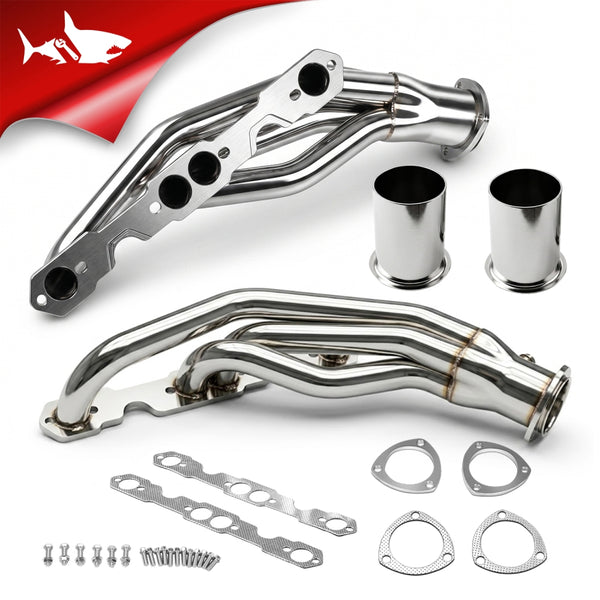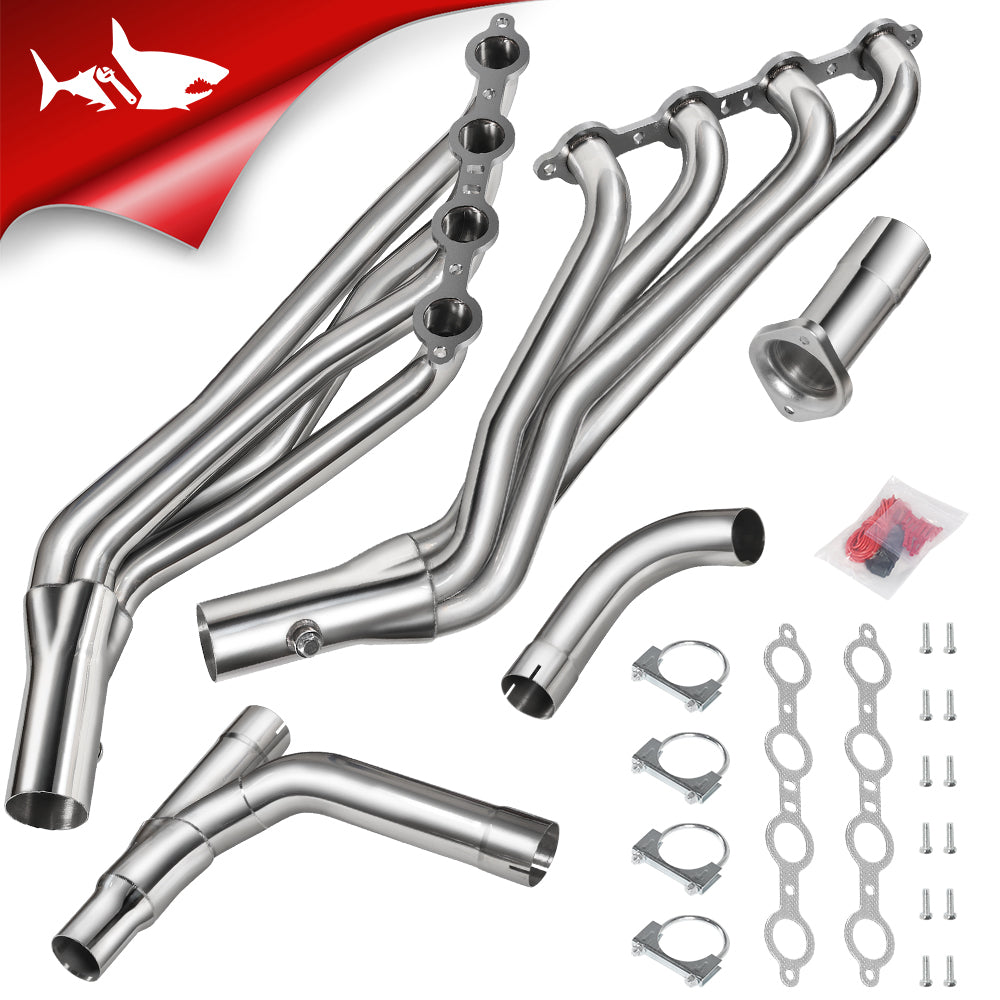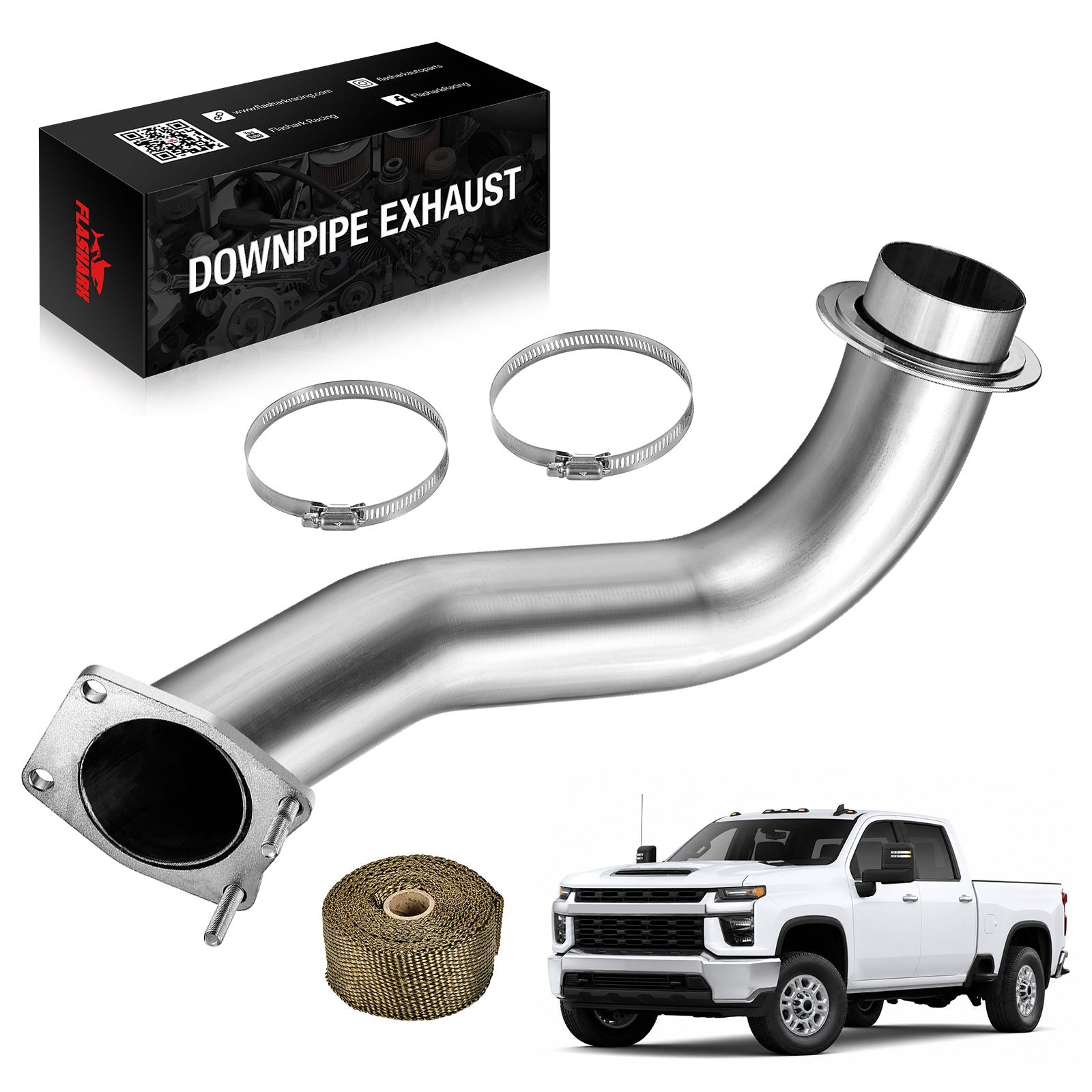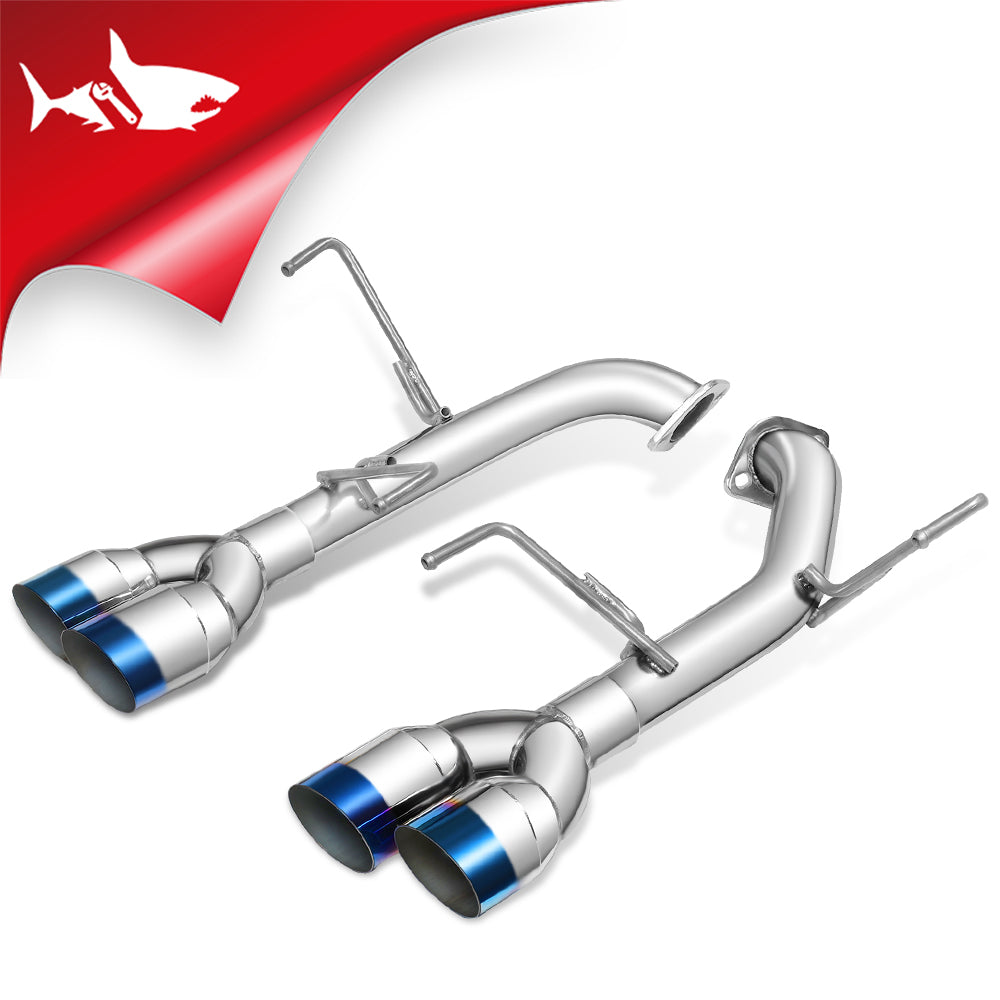
Headers can be worth upgrading when the complete exhaust path, the vehicle's packaging, and the intended use all point in the same direction. The choice is rarely just about the biggest-looking tubes. A street-driven vehicle that needs compact packaging and a factory-style connection may call for a different approach than a build that can accommodate a longer collector and matching exhaust components.
- Shorty headers are often considered when packaging, a simpler exhaust connection, or a mild street build matters most. The outlet and catalytic-converter arrangement still need to match the vehicle.
- Long-tube headers are often chosen when the build can accommodate a farther-downstream collector and the rest of the exhaust is planned around it. Clearance and connection requirements matter as much as tube length.
- Neither layout guarantees a fixed horsepower number, fuel-economy change, tune requirement, warning-light result, or road-use status. Those outcomes depend on the vehicle and the complete installed system.
What Exhaust Headers Change
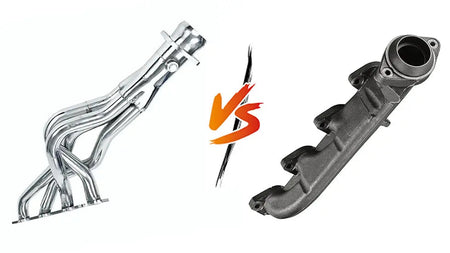
A factory exhaust manifold often combines several cylinder outlets in a compact casting. A header uses individual primary tubes that merge at a collector. That layout can change how exhaust pulses travel through the system. Compared with a restrictive or leaking manifold, a well-matched header can reduce unnecessary restriction and improve scavenging. The final result depends on primary-tube design, collector placement, engine condition, the downstream exhaust, and calibration.
Here is the part that matters: a bigger pipe is not automatically the right pipe. Tube diameter, length, bends, collector placement, and the engine's operating range work together. An oversized primary can weaken exhaust-pulse energy at lower engine speeds, while a compact layout can be the better fit when clearance and connection points are the priority.
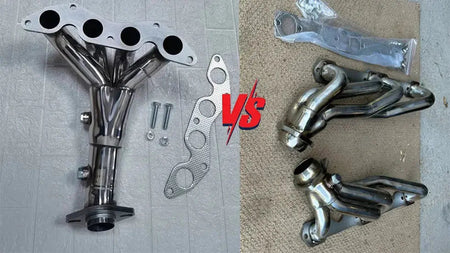
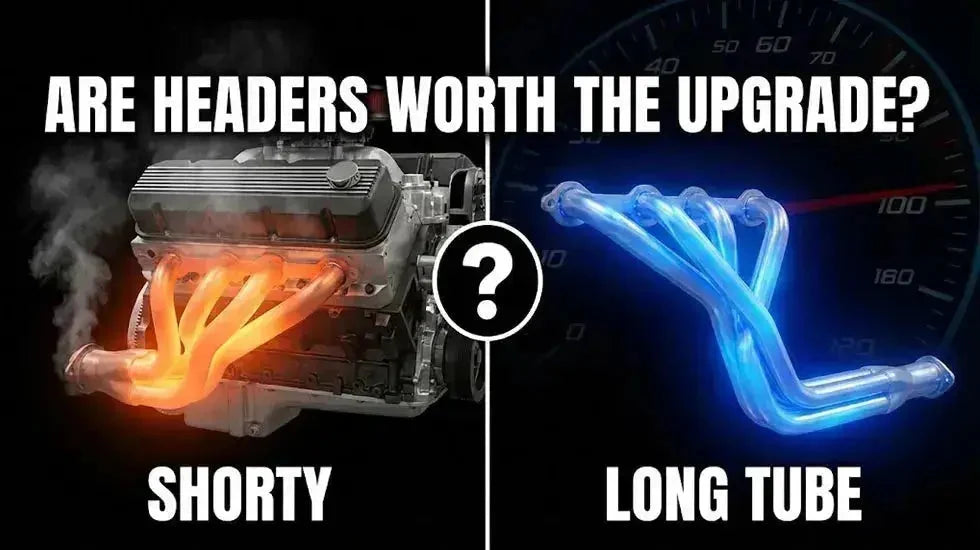
Shorty Headers vs. Long-Tube Headers
| Consideration | Shorty headers | Long-tube headers |
|---|---|---|
| Primary-tube and collector layout | More compact, with a collector closer to the engine. | Longer primary routing and a collector farther downstream. |
| Exhaust connection | May be easier to integrate with factory-style downstream components on some applications; the exact outlet must still be matched. | Often changes the collector location and may require a vehicle-specific connection pipe or exhaust modification. |
| Build focus | Compact packaging, restoration, mild street builds, or applications where the existing exhaust path matters. | Builds that can support the required clearance, collector location, and downstream exhaust plan. |
| Before ordering | Match year, engine, drivetrain, outlet, emissions equipment, and downstream connection. | Check all shorty-header items, plus ground, steering, starter, frame, transmission, and mid-pipe clearance. |

Which Layout Fits Your Build?
When shorty headers may make sense
Shorty headers are often the practical choice when the engine bay is tight, the vehicle is used primarily on the street, or the goal is to work within an existing exhaust layout. They are not automatically bolt-on, tune-free, or emissions-compliant. Two similar-looking parts are not automatically interchangeable, so compare the flange, outlet position, catalytic-converter arrangement, and vehicle-specific fitment before ordering.
When long-tube headers may make sense
Long-tube layouts are often chosen when the goal is to influence scavenging through the midrange and upper portion of the operating range. Collector placement and chassis clearance can be just as important as tube length. A matching mid-pipe, oxygen-sensor routing, and complete exhaust plan should be considered before the header is installed.
Power, Sound, MPG, and Calibration: What Can Actually Change?
Headers can affect the engine's exhaust path, but they do not create the same result on every vehicle. Primary size, collector design, camshaft timing, cylinder-head flow, fuel, engine condition, catalytic converters, Y-pipe design, mufflers, resonators, and calibration all affect the outcome. Without vehicle-specific testing, a fixed horsepower or torque figure is not a responsible expectation.
Sound can change because the exhaust pulses are traveling through different tubing, but the final tone is set by the entire system. Catalytic converters, the Y-pipe, mufflers, resonators, tailpipes, and even an exhaust leak can matter more than the header alone. Fuel economy can also move in either direction depending on the vehicle, the calibration, and how the vehicle is driven.
Do headers need a tune?
Tune requirements vary by vehicle and installed hardware. Sensor location, exhaust leaks, wiring condition, emissions equipment, and calibration can affect warning-light behavior. Treat the intake, exhaust, emissions equipment, and calibration as one system rather than assuming a fixed tune or CEL outcome.
Fitment and Installation Checks Before You Buy
- Match the selected part to the vehicle year, engine, drivetrain, body style, and transmission.
- Compare the flange, collector or outlet location, and downstream exhaust connection.
- Check clearance around the steering shaft, starter, engine mounts, frame, transmission, floor, and heat-sensitive wiring.
- Confirm oxygen-sensor locations and make sure the wiring will be clear of hot exhaust components.
- Review the selected configuration and package contents before installation.
- Review local emissions and road-use requirements before modifying emissions-related equipment.
For a vehicle-specific starting point, browse Flashark exhaust headers. Owners comparing compact layouts can also review the shorty headers collection. If your question is specifically about measured-output expectations, read How Much Horsepower Do Long Tube Headers Add? before treating any single number as universal.
FAQ
Q1: What is the difference between shorty and long-tube headers?
A1: Shorty headers use a more compact primary-tube layout with a collector closer to the engine. Long-tube headers route the primaries farther before the collector. The outlet position, chassis clearance, and downstream exhaust connection are part of the decision.
Q2: Are shorty headers worth it for a daily driver?
A2: They can be worth considering when compact packaging and a factory-style exhaust path are priorities. Match the outlet, emissions equipment, and vehicle-specific fitment before choosing a part.
Q3: Are long-tube headers worth it for a street car?
A3: They can suit a street build when the complete exhaust, clearance, heat management, and local road-use requirements have been considered. A long-tube layout is not a universal fit for every street vehicle.
Q4: Do headers increase horsepower?
A4: A matched header can reduce unnecessary restriction and improve scavenging compared with a restrictive or leaking manifold. The final result depends on the engine, primary and collector design, downstream exhaust, calibration, and supporting hardware.
Q5: Do shorty headers increase horsepower?
A5: Shorty-header results vary by the original manifold, outlet design, engine combination, and rest of the exhaust. Choose them for the complete package rather than a promised universal gain.
Q6: Do long-tube headers require a tune?
A6: Tune requirements vary by vehicle and installed hardware. Sensor location, emissions equipment, leaks, wiring condition, and the existing calibration can all affect how the vehicle responds.
Q7: Will headers cause a check-engine light?
A7: Warning-light behavior depends on the vehicle, sensor arrangement, emissions equipment, wiring, leaks, and calibration. Check the complete system instead of assuming a fixed outcome.
Q8: Do headers improve gas mileage?
A8: Fuel-economy changes are not guaranteed. Exhaust restriction, calibration, driving conditions, engine load, and driving style all influence the result.
Q9: Do headers change exhaust sound?
A9: They can change the character of exhaust pulses, but catalytic converters, the Y-pipe, mufflers, resonators, tailpipes, and leaks determine the final sound.
Q10: Are headers legal for road use?
A10: Mechanical installation does not establish road legality. Review local emissions and road-use requirements, and match the selected configuration to the vehicle before modifying emissions-related equipment.

Steven Chen
Automotive Performance Specialist | Engine & Exhaust Systems
Steven focuses on practical engine performance, exhaust fitment, and real-world upgrade paths for classic and modern enthusiast vehicles. He reviews small-block Ford, LS, truck, and street/strip applications with one goal in mind: helping builders choose parts that actually work together. His philosophy: "Good power starts with the right combination, not the biggest part."