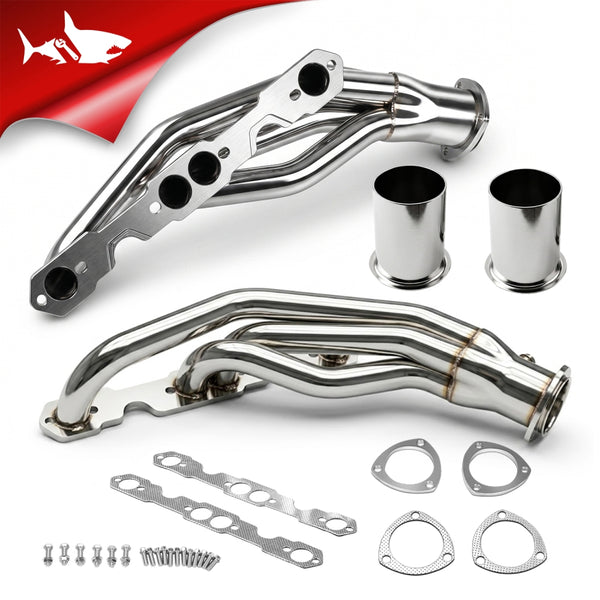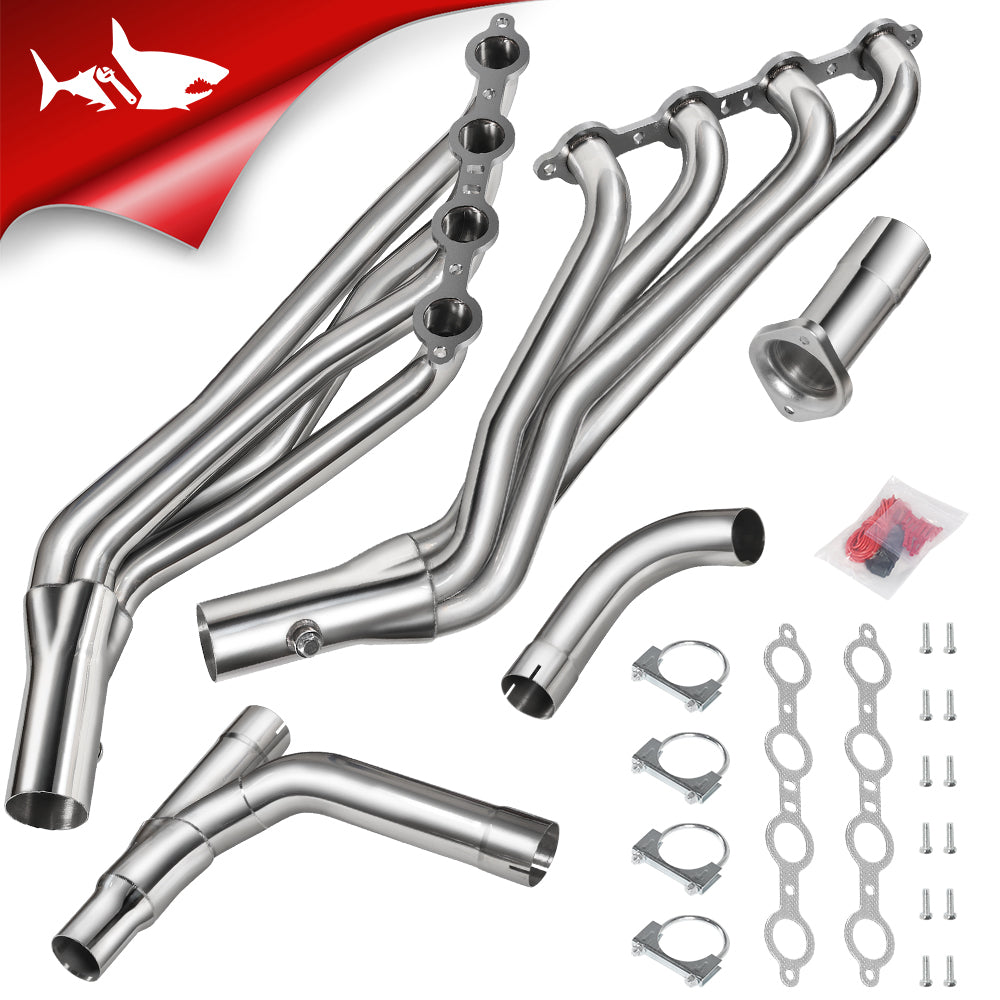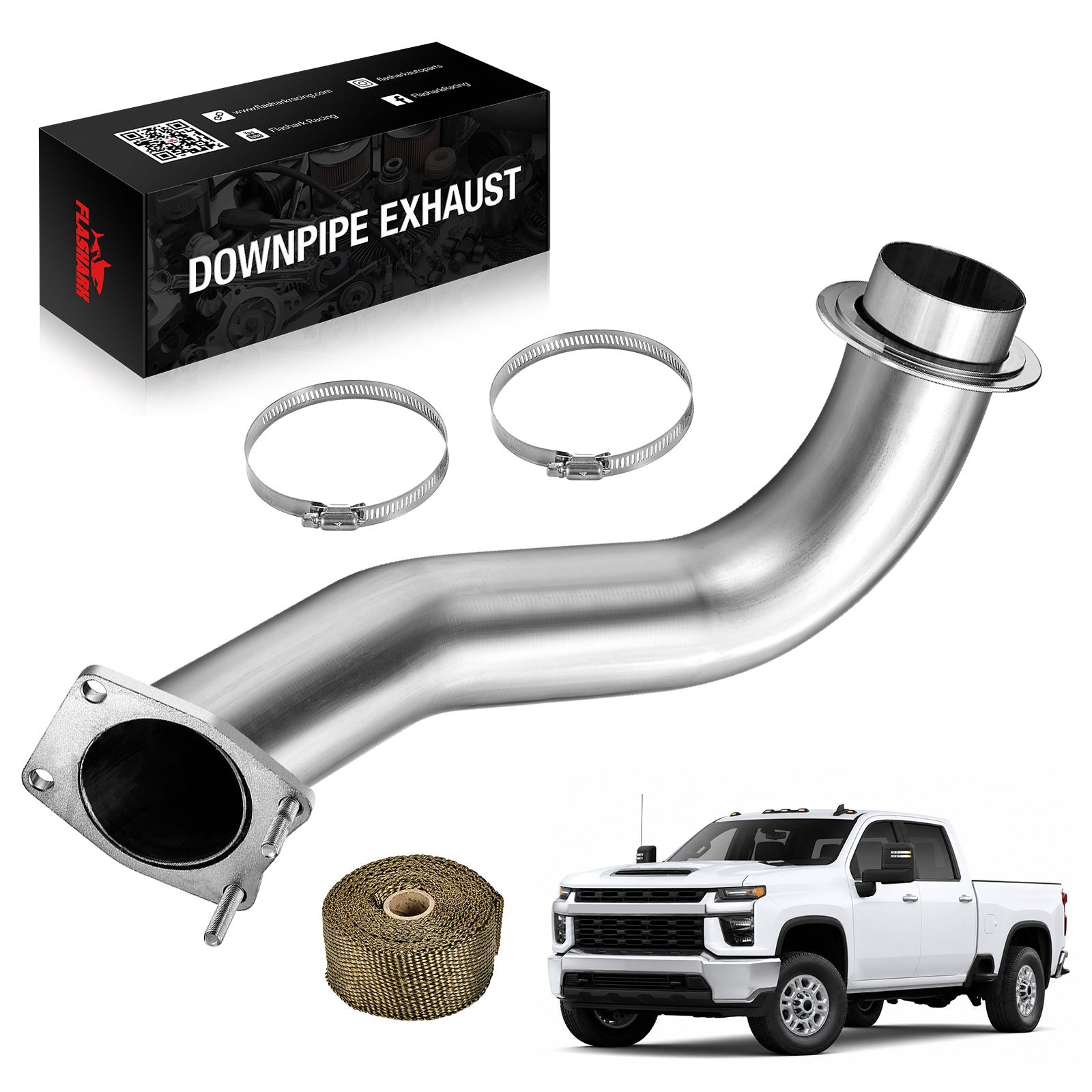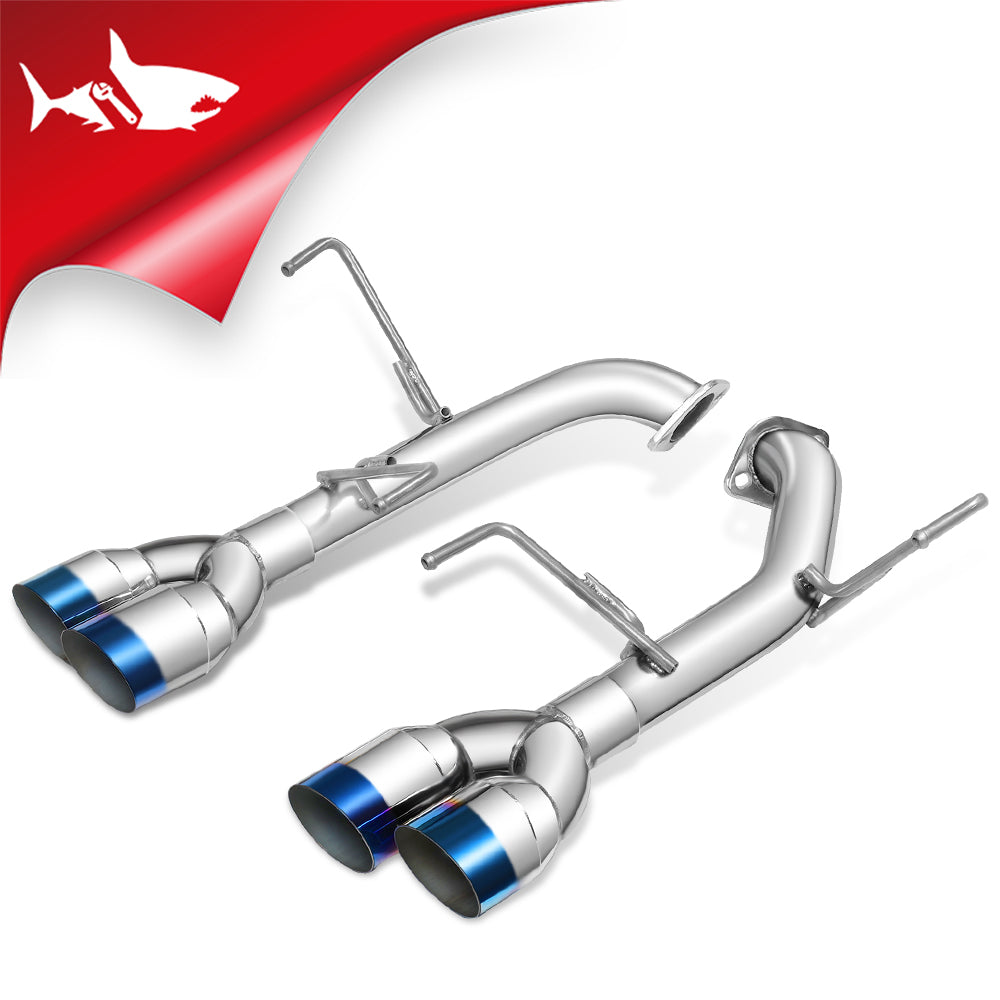
How much horsepower do long tube headers add? On a mild naturally aspirated V8, a realistic starting point is roughly 8–18 wheel horsepower from the hardware. With the right primary size, a compatible mid-pipe, a healthy exhaust system, and vehicle-specific ECU calibration, many combinations land in the 15–30 WHP range.
That is the useful answer. Not the flashy answer.
You will see claims of 40, 50, or even 80 horsepower online. Some of those numbers are real, but they usually come from modified, high-output, or boosted engines where the headers were installed with a tune and several other parts. That is not the same test as bolting long tubes onto an otherwise stock street car.
Quick answer:
- Mild naturally aspirated V8: Approximately 8–18 WHP from the header installation alone.
- V8 with calibration and supporting exhaust parts: Approximately 15–30 WHP in many street combinations.
- Modified naturally aspirated V8: Gains can move into the 20–40 WHP range when the original manifolds are a serious restriction.
- Modern V6 or inline-six: Often around 5–12 WHP from hardware, with more available on the right tuned combination.
- Naturally aspirated four-cylinder: Commonly around 3–10 WHP, usually higher in the RPM range.
- Boosted or very high-output engine: The range is much wider. Headers can support 20–50+ WHP gains in some builds, but the result cannot be separated from boost, fuel, calibration, camshaft, cylinder heads, and the rest of the exhaust.
Important: These are practical planning ranges, not guaranteed dyno numbers. Your baseline engine, dyno type, test conditions, fuel, transmission, catalytic converters, and tune can move the result in either direction.
Quick Answer: Realistic HP Gains
A long tube header does not manufacture horsepower by itself. It helps the engine spend less energy pushing exhaust out and can improve cylinder scavenging in the RPM range the header was designed for.
That last part matters. A properly sized header can improve average torque and top-end power. An oversized or poorly matched header may give you a slightly larger number near redline while making the car feel softer during normal street driving.
Before comparing any dyno result, check whether the number is crank horsepower or wheel horsepower. Factory engine ratings are usually measured or calculated at the crankshaft. Chassis dynos measure power after drivetrain losses at the wheels. A gain of 15 WHP is not the same thing as adding 15 horsepower to an advertised crank rating.
Dyno comparison rule: Compare runs from the same vehicle, on the same dyno, in the same gear, using the same correction factor and similar temperature conditions. Comparing a Dynojet chart from one car with a Mustang Dyno chart from another car is not a clean before-and-after test.
Mechanics of Long Tube Headers
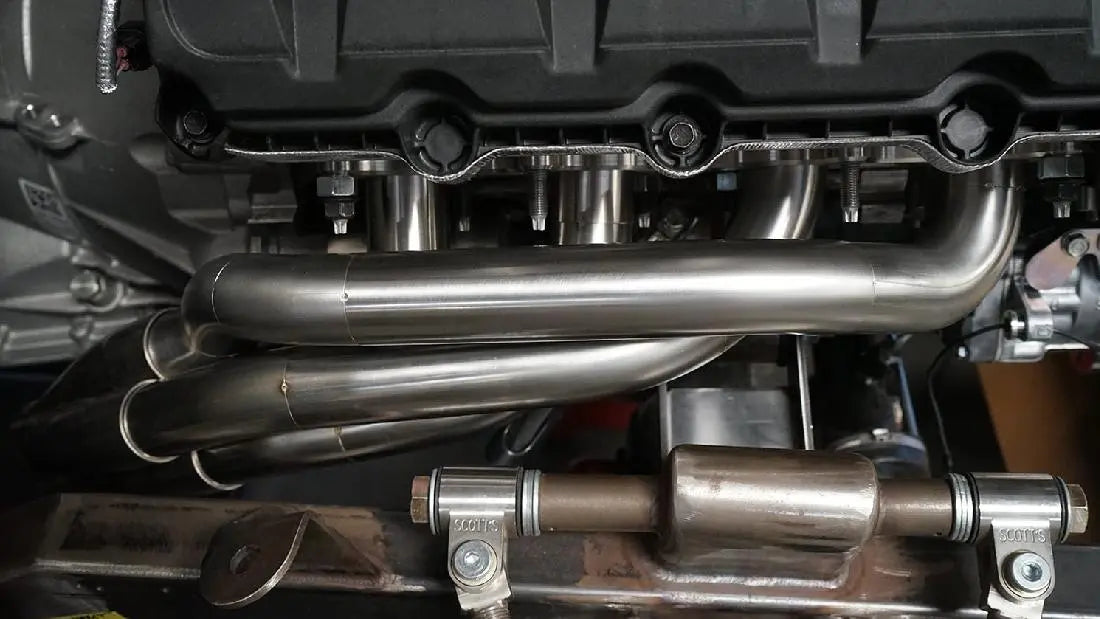
Long tube headers replace the short, compact passages of a factory exhaust manifold with individual primary tubes that merge farther downstream at a collector.
The basic job sounds simple: move exhaust out of the cylinder. The actual process is not.
Every time an exhaust valve opens, a high-pressure pulse enters the primary tube. As that pulse travels through the tube and collector, pressure waves move in both directions. When the tube length, diameter, collector design, cam timing, and engine speed work together, a low-pressure wave can reach the exhaust valve during valve overlap and help pull residual exhaust from the cylinder.
That is exhaust scavenging.
It is more accurate than saying an engine gains power because it “needs less backpressure.” Engines do not need a restrictive exhaust. They need the correct balance of flow capacity, gas velocity, and pressure-wave timing. A pipe can be too small and become a restriction. It can also be too large and weaken exhaust velocity at the RPM where the vehicle spends most of its time.
For a deeper look at the physical differences between the two designs, read the guide to headers versus factory exhaust manifolds.

Mechanic's note: Bigger primaries are not automatically better.
A stock or mildly modified street V8 usually does not need a 2-inch primary. The larger tube may provide useful flow on a high-RPM, large-displacement, or boosted engine, but it can be unnecessary on a mild build. Fitment also gets tighter around the steering shaft, starter, frame, and spark plug wires.
Choosing between common sizes such as 1-3/4-inch and 1-7/8-inch should be based on displacement, airflow, camshaft, RPM range, and future plans—not the largest option in the catalog. See the detailed 1-3/4 vs. 1-7/8 header sizing guide.
Comparison: Long Tube vs Short Tube Headers
Long tube and shorty headers are not two versions of the same part. Their tube length, collector position, installation requirements, emissions impact, and intended power bands can be very different.

| Comparison | Long Tube Headers | Shorty Headers |
|---|---|---|
| Typical power effect | Usually greater midrange and upper-RPM potential when properly sized. | Usually a smaller improvement over factory manifolds. |
| Collector position | Farther downstream; often requires a matching or modified mid-pipe. | Closer to the stock manifold outlet and factory exhaust position. |
| Installation | More difficult. Clearance around the starter, steering, transmission, frame, and engine mounts can be tight. | Generally easier and less likely to require major exhaust changes. |
| Catalytic converters | May change converter position or require a model-specific catted connection pipe. | More likely to retain the factory converter layout, depending on the application. |
| Best fit | Performance street cars, naturally aspirated builds, cammed engines, track cars, and high-output combinations. | Mild street builds, tight engine bays, towing vehicles, and applications where factory-style packaging matters. |
For a platform-specific example, the comparison between long tube and shorty headers on a 5.3L Silverado shows why the right choice depends on the truck, drivetrain, exhaust layout, and intended use—not just peak horsepower.
The "Hidden" Loss - Low-End Torque
Long tube headers do not automatically kill low-end torque. A well-designed, correctly sized header can improve torque through much of the curve.
The trouble starts when the combination is wrong.
Oversized primaries, an excessive collector diameter, poor port alignment, a badly designed transition, or a header tuned for an RPM range far above normal street use can soften throttle response below the power band. The effect is most noticeable on heavy trucks, towing vehicles, stock-displacement engines, and automatic cars that spend a lot of time below 3,000 RPM.
Do not blame “too little backpressure.” The real issue is usually weaker gas velocity and pressure-wave timing at low engine speed.
Street-car check: If your engine is stock or mildly modified and the car spends most of its life between 1,500 and 4,500 RPM, prioritize average torque, ground clearance, fitment, and primary size before chasing the biggest possible redline number.
Potential HP Increase with Long Tube Headers
Here is the honest version: there is no single long tube header horsepower number that applies to every engine.
A stock 6.2L V8 with efficient factory manifolds will not respond exactly like an older 5.7L engine with pinched cast manifolds. A cammed LS engine will not respond like a stock truck engine. A supercharged combination moving twice the airflow cannot be placed in the same row as a naturally aspirated daily driver.

| Engine and Setup | Typical Header-Only Change | With Calibration and Supporting Parts | What Usually Controls the Result |
|---|---|---|---|
| Mild naturally aspirated V8 | Approximately 8–18 WHP | Approximately 15–30 WHP | Factory manifold restriction, primary size, cats, mid-pipe, fuel, and calibration. |
| Modified naturally aspirated V8 | Approximately 12–25 WHP | Approximately 20–40 WHP | Camshaft, cylinder heads, displacement, compression, RPM range, and collector design. |
| Modern V6 or inline-six | Approximately 5–12 WHP | Approximately 8–20 WHP | Exhaust layout, integrated converters, engine speed, and factory calibration. |
| Naturally aspirated four-cylinder | Approximately 3–10 WHP | Approximately 5–15 WHP | Header layout, displacement, cam timing, intake flow, and high-RPM operation. |
| Boosted or high-output engine | Approximately 10–30+ WHP | Approximately 20–50+ WHP on some builds | Boost level, fuel, ignition timing, turbine or supercharger flow, camshaft, cats, and total exhaust restriction. |
Read the table correctly: The “with calibration” column is not always an additional gain on top of the header-only column. It represents a typical total improvement after the combination is installed and calibrated. A tune may add only a few horsepower on one vehicle and considerably more on another.
Dyno results also move because of:
- Different chassis dyno brands and correction factors
- Wheel horsepower versus engine horsepower
- Manual versus automatic transmission losses
- Different test gears
- Air temperature, humidity, coolant temperature, and heat soak
- Fuel octane and ethanol content
- Catted versus catless connection pipes
- Stock versus modified cat-back exhaust systems
- ECU learning and fuel trim condition
- Exhaust leaks before or near an oxygen sensor
What a useful dyno test should show:
- The same vehicle before and after the installation
- Baseline and modified WHP and wheel torque
- The complete power curve, not only peak numbers
- Whether the vehicle was tuned before or after the header test
- Every other part changed during the test
- The dyno type, correction factor, fuel, and test conditions
A single peak number without those details is advertising, not a clean comparison.
Ideal Vehicles for Long Tube Headers
Long tubes tend to make the most sense on engines that move enough air to benefit from longer tuned primaries and a less restrictive collector. Large-displacement V8s are the obvious examples, but engine design, factory manifold efficiency, and the intended RPM range still matter.
- Ford Mustang: Coyote and older modular V8 applications can respond well when the primary diameter, transmission, steering clearance, mid-pipe, and tune are matched correctly. Browse Ford exhaust headers, or read the dedicated guide to Mustang GT header horsepower gains.
- Chevrolet Camaro and Pontiac Firebird: LS- and LT-based applications often have strong long tube support, but year, engine, transmission, steering, emissions layout, and mid-pipe fitment must be confirmed. One existing option is the 1993–1997 Camaro and Firebird 5.7L LT1 long tube header.
- 5.7L HEMI trucks and cars: Long tubes can replace restrictive or leaking factory manifolds while supporting future intake, camshaft, and tuning upgrades. Check the 2009–2018 Ram 1500 5.7L HEMI header options and the separate guide explaining how much horsepower headers can add to a 5.7L HEMI.
- 5.3L Silverado and Sierra: The headers, Y-pipe, drivetrain, transmission, oxygen sensor wiring, and chassis generation must work as one system. Read the 5.3L Silverado long tube versus shorty comparison before choosing a layout.
- Modified naturally aspirated engines: A camshaft, cylinder head, intake manifold, or displacement increase can raise exhaust mass flow and make the factory manifold a more obvious restriction.
- Boosted engines: Greater airflow can make the exhaust side more important, but heat, tube material, collector size, fuel system capacity, and calibration become more critical as output rises.

Case example: Why one “28 WHP gain” does not fit every HEMI.
A 5.7L HEMI may gain roughly 20–30 WHP when long tube headers, connection pipes, exhaust repairs, and calibration are completed together. But that does not prove the headers alone created the entire gain.
If the baseline vehicle had leaking manifolds, broken bolts, poor fuel trims, restrictive converters, or an unsuitable tune, part of the improvement came from fixing those problems. Always separate the repair gain, hardware gain, and calibration gain before using one dyno result as a promise.
Acoustic Changes Post-Installation
Long tube headers change more than peak horsepower. They change the character of the exhaust.
The longer, thinner primary tubes transmit more mechanical sound than thick cast-iron manifolds. The collector also changes how exhaust pulses combine. Depending on the engine and the rest of the system, the result can be deeper, sharper, more metallic, or noticeably more aggressive under load.
Cold starts usually become louder. Wide-open throttle becomes much louder. Highway cruising may or may not develop drone.
The final sound depends heavily on:
- Whether catalytic converters remain in the system
- Converter type and location
- X-pipe, H-pipe, or Y-pipe design
- Pipe diameter
- Resonators
- Muffler construction
- Camshaft overlap
- Engine firing order
- Exhaust leaks at the flange or collector
A straight-through exhaust behind long tubes can sound excellent at wide-open throttle and miserable at 2,000 RPM on the freeway. Plan the complete system. Your ears will spend far more time at cruise than at redline.
Necessity of Vehicle Tuning After Installation
Does every vehicle mechanically require a tune immediately after installing long tube headers? No.
Is tuning strongly recommended on many modern performance vehicles? Yes.
Some vehicles can start, idle, and drive with long tubes while the factory ECU adapts within its normal fuel-trim range. That is more likely when:
- The correct upstream oxygen sensors remain installed
- The vehicle has no exhaust leaks
- Catalytic converters remain functional
- Sensor wiring is not stretched, melted, or damaged
- The header and mid-pipe were designed for that exact vehicle
- No intake, camshaft, injector, fuel, or forced-induction changes were made at the same time
Still, “the engine runs” is not the same as “the combination is optimized.” A vehicle-specific calibration may improve throttle response, ignition timing, fueling under load, torque management, transmission behavior, and overall power delivery.
Warning: A check-engine light is possible, but it is not guaranteed.
Long tube headers can trigger oxygen-sensor, catalyst-efficiency, or fuel-trim codes when sensor locations change, catalytic converters are removed or relocated, wiring is damaged, or an exhaust leak pulls outside air into the system.
Do not assume every P0420, P0430, lean code, or rich code is “normal after headers.” Scan the vehicle. Check the flange, collector, sensor wiring, converter condition, and fuel trims before changing the calibration.
Disabling rear oxygen-sensor monitoring or other emissions diagnostics is not a standard street-use repair and may violate federal or state law.
Common header-related CEL causes include:
- Leak at the cylinder-head flange
- Leak at the collector or connection pipe
- Upstream and downstream oxygen sensors installed in the wrong positions
- Damaged sensor wiring or poor-quality extensions
- Sensor wires routed against hot primary tubes
- Catalytic converter moved too far downstream to reach operating temperature quickly
- Low-efficiency, damaged, missing, or incorrectly sized catalytic converters
- Calibration that does not match the engine's airflow and fuel requirements
The Hidden Realities: Material Choices and Installation
A long tube header can be beautifully polished and still fit badly. It can also look plain, fit correctly, seal cleanly, and perform well for years.
Pay attention to the parts that affect the actual job:
- Correct port shape and flange alignment
- Flange thickness and flatness
- Weld penetration and internal transitions
- Primary routing around steering and suspension components
- Starter, transmission, frame, and floor clearance
- Collector angle and outlet position
- Oxygen sensor bung position
- Spark plug and plug-wire access
- Compatibility with the required mid-pipe
- Ground clearance at normal ride height
Stainless Steel vs. Ceramic Coated Headers
Material affects corrosion resistance, heat cycling, appearance, cost, and service life. It does not automatically create horsepower.

| Material or Finish | Advantages | Limitations |
|---|---|---|
| 304 stainless steel | Strong corrosion resistance and a cleaner appearance in wet or salted environments. | Usually costs more and can still discolor from heat. |
| 409 stainless steel | Durable under repeated heat cycles and widely used in production exhaust systems. | Can develop surface oxidation and may not retain a polished appearance. |
| Mild steel | Lower material cost and easy fabrication or repair. | Needs a quality coating and can corrode quickly if the finish fails. |
| Ceramic coating | Can reduce radiant heat and protect nearby wiring, hoses, starters, and body panels. | Coating quality and surface preparation matter; damaged coating can chip or deteriorate. |
If two headers have the same internal dimensions, port alignment, tube routing, and collector design, choosing 304 instead of 409 stainless steel does not automatically add horsepower. The design controls flow. The material controls how the part survives.
Can You DIY the Installation?
Yes. Sometimes.
On an older truck with good access and clean hardware, a header installation may be manageable in a home garage. On a late-model performance car, the job can involve the steering shaft, starter, engine mounts, transmission clearance, oxygen sensors, subframe components, and a mid-pipe that refuses to line up by half an inch.
That half-inch can burn an entire Saturday.

Installation checklist:
- Confirm year, model, engine, drivetrain, transmission, and emissions configuration.
- Verify whether the kit includes a matching Y-pipe, X-pipe, or connection pipes.
- Check whether oxygen-sensor extensions are required.
- Inspect plug-wire and starter clearance before final tightening.
- Use quality gaskets and verify flange surfaces are clean and flat.
- Support the vehicle safely; never rely on a hydraulic jack alone.
- Plan for rusted hardware, broken studs, and seized oxygen sensors.
- Check collector and floor clearance before tightening the full system.
- Heat-cycle the engine, let it cool, and recheck accessible bolts and clamps.
- Inspect for leaks before scheduling a tune or making a full-throttle dyno pull.
Silverado and Sierra owners should also review the 5.3L long tube header installation and preparation guide. The Y-pipe, 4WD clearance, oxygen-sensor wiring, and plug-wire heat issues are where many truck installations go sideways.
If the vehicle has badly rusted fasteners, limited ground clearance, broken manifold bolts, or requires welding, professional installation is usually the cheaper path after you count damaged parts and lost weekends.
Emissions and Legality: Will You Pass Smog?
Do not order a header based only on whether it bolts to the cylinder head. Check what happens to the catalytic converters and oxygen sensors after installation.
Some long tube systems include application-specific catalytic converters. Others relocate the factory converter position. Some are intended only for competition vehicles and do not retain a street-legal emissions layout.
In the United States, federal law prohibits tampering with required emissions-control equipment. State inspection and enforcement requirements can be even stricter. A part being physically installable does not mean it is legal for highway use.
The "Off-Road Use Only" Tag
“Off-road use only” is not a magic phrase that makes an emissions modification legal on a street-driven car. Before purchasing, confirm:
- Whether the vehicle will be registered or driven on public roads
- Whether the header changes catalytic-converter location
- Whether a valid emissions exemption applies to the exact vehicle and engine
- Whether the system retains all required oxygen sensors and converters
- Whether your state performs a visual inspection, OBD inspection, tailpipe test, or all three
Street-use warning: Removing a catalytic converter, installing a replacement pipe in its place, or defeating required emissions monitoring may violate federal law. California buyers should verify that an aftermarket emissions-related part has a valid Executive Order for the exact application.
Review the EPA guidance on emissions tampering and defeat devices and the California Air Resources Board aftermarket-parts guidance before changing a street vehicle's emissions system.
If emissions compliance is a priority, a legal shorty header or a vehicle-specific system that retains the approved converter layout may be the smarter choice. Confirm the paperwork before turning the first bolt.
Additional Performance Upgrades to Maximize Horsepower
Long tube headers work best when the rest of the engine can use the extra exhaust capacity. That does not mean every build needs a shopping cart full of parts.
Start with the bottleneck.
- Vehicle-specific ECU calibration: Can optimize fueling, ignition, throttle response, torque management, and transmission behavior for the completed combination.
- Compatible mid-pipe: The collector and mid-pipe must align correctly without necking down, leaking, or hanging below the chassis.
- Appropriate catalytic converters: Street vehicles should retain legal, correctly sized, functional emissions equipment.
- Cat-back exhaust: A restrictive muffler or crushed pipe can limit the benefit of an otherwise capable header.
- Cold air intake: May support airflow on combinations where the factory inlet is restrictive, but it should not be added simply because the engine now has headers.
- Camshaft and cylinder heads: These can increase airflow demand and make header sizing more important.
- Fuel system: Larger injectors or pumps are needed only when the engine's airflow, fuel type, and horsepower target exceed the capacity of the original system.
- Heat protection: Plug-wire boots, starter shields, wiring sleeves, and heat barriers may be necessary where the new primaries sit closer to sensitive components.
Do not install larger injectors merely because you installed headers. Do not buy the largest primary because you may add boost one day. And do not expect a cat-back system to correct a leaking flange or a poorly matched collector.
Good power comes from parts that agree with each other.
Ready to compare vehicle-specific header options?
Confirm the year, model, engine, drivetrain, emissions layout, collector connection, and included hardware before ordering.
Shop Long Tube Headers by Vehicle and EngineConclusion
So, how much horsepower do long tube headers add?
For a mild naturally aspirated V8, roughly 8–18 WHP from the hardware is a sensible expectation. A properly matched combination with calibration and supporting exhaust parts may reach roughly 15–30 WHP. Modified naturally aspirated and boosted engines can gain more because they move more air and may expose a larger restriction in the factory exhaust.
But the peak number is only half the job.
The right header needs the correct primary diameter, collector, mid-pipe, oxygen-sensor layout, ground clearance, catalytic converters, and calibration. A set that makes 5 more horsepower at redline but rubs the steering shaft, drags the collector, burns plug wires, or softens the street torque curve is not an upgrade.
Match the part to the engine. Check the legal requirements. Plan the installation before the car is in the air. Then judge the result by the complete dyno curve—not one oversized number in an advertisement.
Frequently Asked Questions (FAQs) About Long Tube Headers
Q1: Do I need a tune right after installing long tube headers?
A1: Not every vehicle mechanically requires an immediate tune just to start and drive. However, vehicle-specific calibration is strongly recommended on many modern performance applications to optimize fueling, timing, throttle response, torque management, and power delivery. Diagnose leaks, sensor wiring, and emissions-system faults before assuming a tune will fix every problem.
Q2: Will long tube headers throw a Check Engine Light (CEL)?
A2: They can, but a CEL is not guaranteed. Codes may appear if the catalytic converters or oxygen sensors are relocated, an exhaust leak affects sensor readings, wiring is damaged, or converter efficiency falls outside the ECU's expected range. Read the actual code and diagnose the system before changing parts or calibration.
Q3: Do long tube headers reduce low-end torque?
A3: Properly sized long tubes can improve torque, but oversized primaries or a poorly matched collector can soften response at low RPM. The issue is usually exhaust velocity and pressure-wave timing—not an engine needing restrictive backpressure.
Q4: Are long tube headers street legal and will they pass emissions?
A4: It depends on the exact header, vehicle, catalytic-converter layout, emissions exemption, and local law. Many long tube systems alter the original converter position and may not be legal for highway use. Confirm federal, state, and local requirements before purchasing or installing them.
Q5: What is the difference between 1-5/8-inch and 1-7/8-inch primary tubes?
A5: Smaller primaries generally maintain stronger exhaust velocity on lower-output and lower-RPM engines. Larger primaries provide more flow capacity for engines moving greater exhaust volume. The correct size depends on displacement, airflow, camshaft, RPM range, horsepower target, and available chassis clearance.
Q6: Do I need O2 sensor extensions for long tube headers?
A6: Many applications need extensions because the oxygen-sensor bungs move farther downstream. Other kits retain enough harness length or include application-specific wiring. Confirm the kit requirements and never stretch or route sensor wiring against hot primary tubes.
Q7: Can I install long tube headers on jack stands at home?
A7: Some experienced DIY mechanics can, provided the vehicle is safely supported and they have the correct tools. The job becomes much harder when the steering shaft, starter, engine mounts, transmission, crossmember, or mid-pipe must be moved. Rusted hardware and broken studs can quickly turn a driveway project into a professional repair.
Q8: Do long tube headers make the car significantly louder?
A8: Usually, yes. Cold starts and wide-open throttle often become noticeably louder. The final volume, rasp, tone, and drone depend on the catalytic converters, mid-pipe, resonators, mufflers, pipe diameter, and camshaft.
Q9: Will I lose gas mileage after installing long tube headers?
A9: Headers do not guarantee better or worse fuel economy. A correctly calibrated engine may operate efficiently during steady cruising, but louder exhaust sound and more aggressive driving often reduce real-world mileage. Exhaust leaks, poor sensor readings, or incorrect calibration can also hurt fuel economy.
Q10: Can I run long tube headers with a stock exhaust system?
A10: Sometimes, but long tubes usually move the collector away from the factory connection point. A matching Y-pipe, X-pipe, short connection pipe, or custom exhaust work may be required. Confirm collector diameter, outlet angle, catalytic-converter location, and cat-back connection before ordering.

Steven Chen
Automotive Performance Specialist | Engine & Exhaust Systems
Steven focuses on practical engine performance, exhaust fitment, and real-world upgrade paths for classic and modern enthusiast vehicles. He reviews small-block Ford, LS, truck, and street/strip applications with one goal in mind: helping builders choose parts that actually work together. His philosophy: "Good power starts with the right combination, not the biggest part."