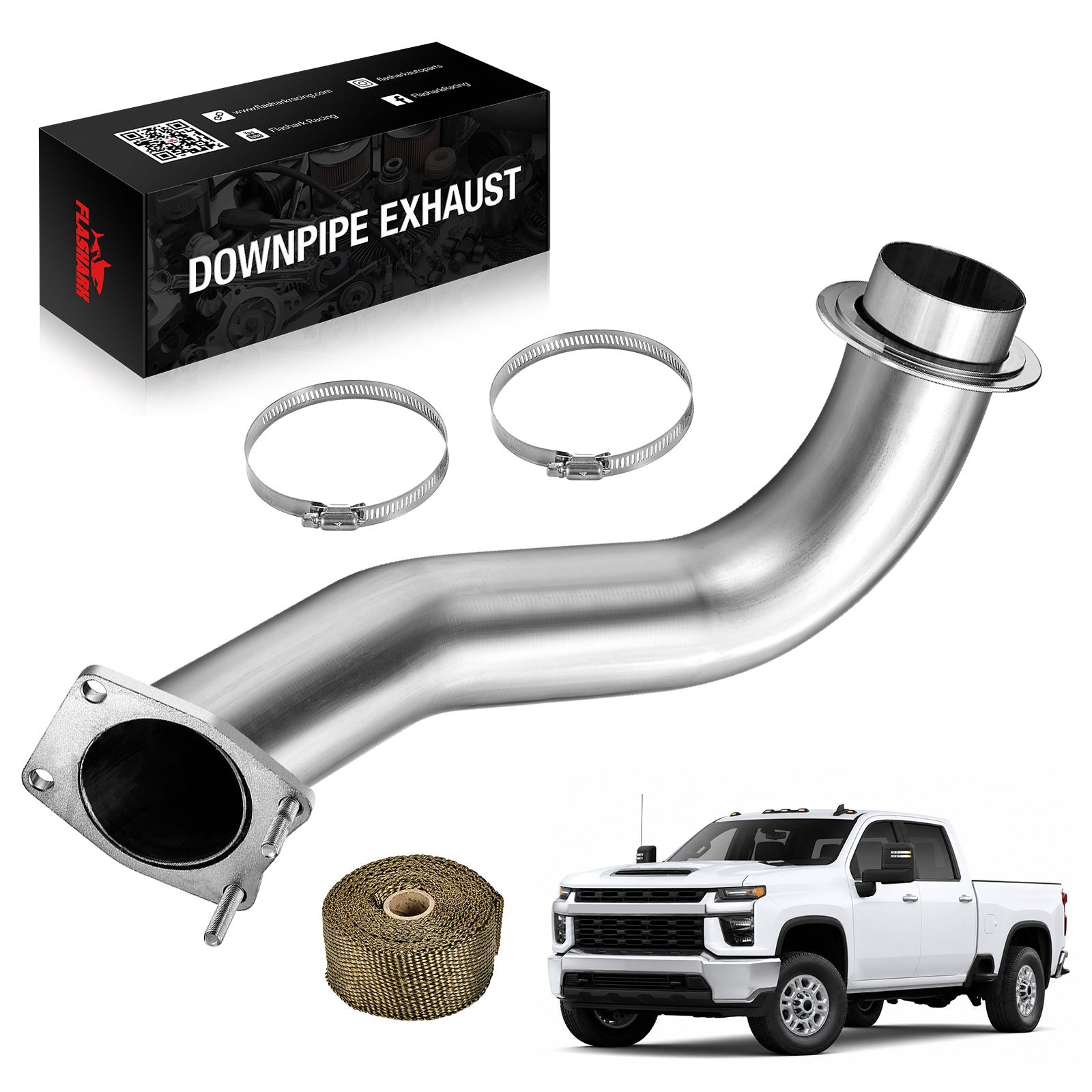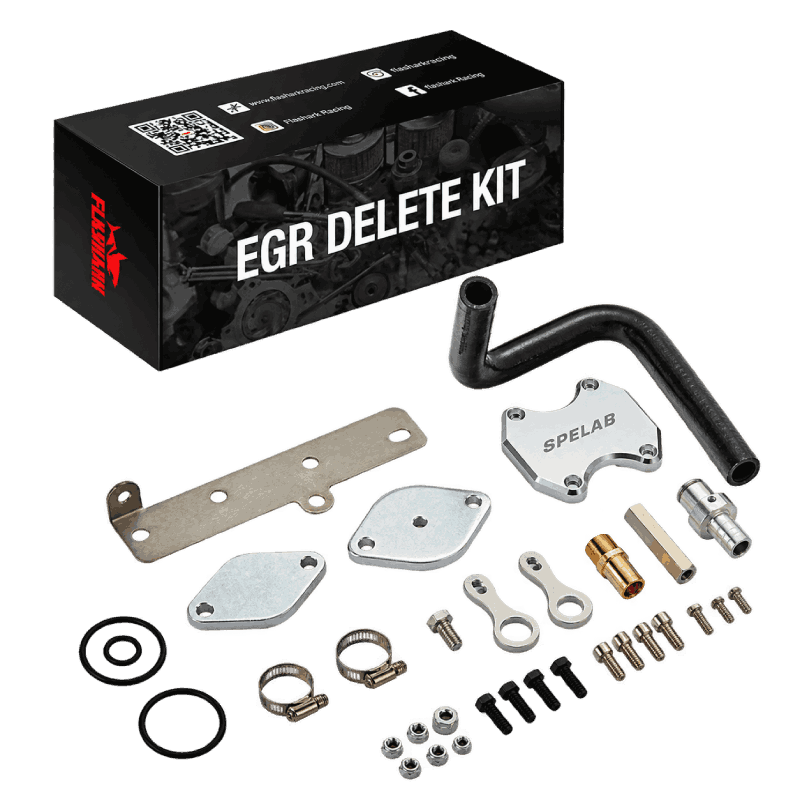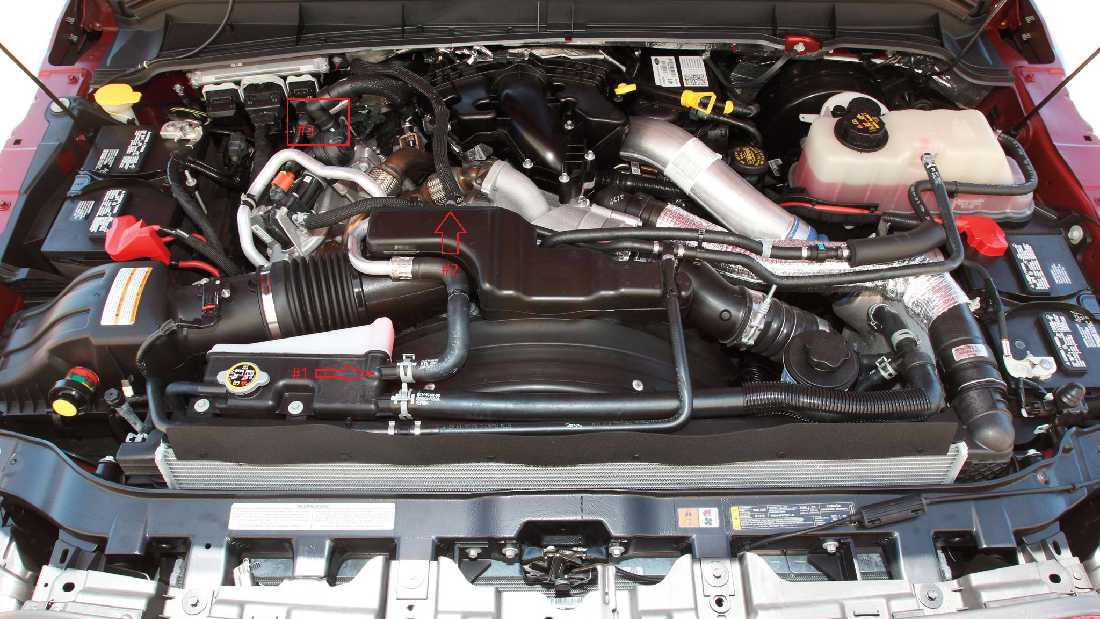
Choosing an EGR delete kit for a 6.0L Power Stroke is mostly a fitment and configuration decision. The kit needs to match the truck’s model year, engine, EGR hardware, and intended use. Similar-looking parts are not automatically interchangeable, and broad performance promises should not replace a careful compatibility check.
This guide focuses on 2003–2007 Ford F-250, F-350, and F-450 trucks equipped with the 6.0L Power Stroke V8 diesel. It explains what an EGR delete kit changes, what to compare before ordering, how EGR components differ from DPF components, and which installation and legal questions deserve attention.
- The right kit must match a 2003–2007 Ford F-250, F-350, or F-450 with the 6.0L Power Stroke diesel engine.
- Check whether the selected configuration covers the EGR valve, EGR cooler, seals, hoses, and hardware needed for that specific installation.
- An EGR delete is not the same modification as a DPF delete. The two systems perform different emissions-control functions.
- Do not choose a kit on fuel-economy or horsepower claims alone. Results depend on the truck’s condition, calibration, installed hardware, and how the work is completed.
- Tune requirements vary by vehicle and installed hardware. Diagnostic trouble codes and warning lights must be considered before parts are removed.
- Removing or disabling emissions equipment can violate federal, state, provincial, or local requirements. Review the rules that apply to the vehicle and its use.
What Does an EGR Delete Kit Do?
EGR stands for exhaust gas recirculation. On the 6.0L Power Stroke, the system routes a controlled portion of exhaust gas back into the intake path. This lowers combustion temperature under specific operating conditions and helps control nitrogen oxide emissions.
An EGR delete changes or removes part of that emissions-control system. Depending on the selected configuration, the physical work can involve the EGR valve, cooler, connecting passages, coolant routing, block-off components, gaskets, and mounting hardware. Package contents vary by selected configuration, so the parts should be matched to the truck before installation begins.
The EGR system does not “filter” exhaust gas. It recirculates a measured amount of gas. That distinction matters because an EGR delete should not be confused with exhaust filters, catalytic components, or other diesel emissions hardware.
EGR Delete vs. DPF Delete
An EGR delete and a DPF delete are different modifications. The EGR system manages exhaust-gas recirculation through the engine, while a diesel particulate filter captures particulate matter in the exhaust system. Parts, control strategies, diagnostic effects, and legal considerations are not interchangeable.
| System | Primary function | General location | Why the distinction matters |
|---|---|---|---|
| EGR system | Recirculates a controlled amount of exhaust gas to help reduce NOx emissions. | Connected to the engine’s exhaust, intake, cooling, and control systems. | Work can affect coolant routing, intake sealing, electronic controls, and diagnostic behavior. |
| DPF system | Captures particulate matter in the exhaust stream. | Installed in the exhaust aftertreatment system. | DPF hardware and control requirements cannot be treated as EGR components. |
Here is the part that matters: a product description that discusses DPF protection does not make that claim relevant to every 6.0L Power Stroke configuration. Match the advice to the actual engine, emissions equipment, and model year in front of you.
Types of EGR Delete Components
EGR delete products are not all configured the same way. Some are centered on blocking an EGR passage, while other configurations address the valve, cooler, coolant connections, or several parts of the system together. A plate by itself should not be assumed to perform the same job as a configuration intended to address the valve and cooler.
Before comparing products, identify exactly which components will remain on the truck and which components the selected configuration is designed to replace or bypass. This is one of those jobs where fitment matters more than the marketing number.
How to Choose the Best 6.0 Powerstroke EGR Delete Kit
The best EGR delete kit for a 6.0 Powerstroke is the one that matches the truck and gives the installer a clear, complete path through the mechanical work. Price matters, but an inexpensive kit is not useful if its coolant routing, block-off components, or mounting hardware do not match the selected application.
| Selection point | What to check | Why it matters |
|---|---|---|
| Vehicle fitment | Model year, F-Series model, and 6.0L Power Stroke engine. | Ford applications with similar names can use different engines and emissions hardware. |
| System coverage | Which EGR valve, cooler, passage, coolant, and sealing components the configuration addresses. | A partial configuration and a more extensive cooler-and-valve configuration do not create the same installation path. |
| Package contents | Plates, tubes, hoses, gaskets, seals, clamps, fasteners, and instructions for the selected SKU. | Missing seals or mismatched hardware can stop the job after disassembly has started. |
| Construction | Material, weld condition, sealing surfaces, threads, and flange alignment. | Coolant and exhaust connections need flat sealing surfaces and correctly aligned joints. |
| Electronic effects | Diagnostic trouble codes, warning lights, sensors, and calibration requirements. | Mechanical fitment does not guarantee that the engine control system will accept the change. |
| Intended use | Road use, competition use, registration location, and emissions-inspection requirements. | Emissions-related modifications can be prohibited even when the parts physically fit. |
Fitment for the 6.0L Power Stroke Application
This article covers the following 6.0L Power Stroke truck applications:
- 2003 Ford F-250, F-350, and F-450 with the 6.0L Power Stroke V8 diesel
- 2004 Ford F-250, F-350, and F-450 with the 6.0L Power Stroke V8 diesel
- 2005 Ford F-250, F-350, and F-450 with the 6.0L Power Stroke V8 diesel
- 2006 Ford F-250, F-350, and F-450 with the 6.0L Power Stroke V8 diesel
- 2007 Ford F-250, F-350, and F-450 with the 6.0L Power Stroke V8 diesel
Check the vehicle year, engine identification, installed EGR hardware, and selected product configuration together. Do not use the model name alone to choose parts.
FLASHARK 6.0L Power Stroke EGR Delete Kit
For the 2003–2007 truck applications listed above, the FLASHARK 6.0L Power Stroke EGR Delete Kit, part number FLOS00129, is an available configuration to compare with the truck’s installed hardware.
The product specification identifies 304 stainless steel and machined billet aluminum construction, with TIG-welded and pressure-tested components. Those construction details are useful, but they do not replace a package-content and fitment check. Select the required SKU before ordering, and inspect the selected configuration before disassembling the truck.

Drivers who are still comparing configurations can also browse the EGR delete kit collection. Keep the comparison limited to products that match the vehicle year, engine, and installed emissions equipment.
Performance, Fuel Economy, and Engine Temperature
An EGR-system change can alter intake contamination, exhaust-gas recirculation, coolant routing, and engine-control behavior. That does not support a fixed horsepower, torque, fuel-economy, or temperature claim for every truck.
Results depend on engine condition, existing EGR faults, cooling-system health, calibration, installed hardware, vehicle load, driving conditions, and installation quality. A truck with an existing EGR cooler or valve problem also has a different baseline from a properly operating stock truck.
Do not use a percentage fuel-economy claim as the main reason to select a kit. Without the same truck, route, load, fuel, tires, weather, calibration, and measurement method, before-and-after mileage figures are not directly comparable.
Tune, Warning Light, and Diagnostic Considerations
Mechanical installation and electronic compatibility are separate issues. Changing EGR flow can affect monitored system behavior and may lead to diagnostic trouble codes or a warning light. Tune requirements vary by vehicle and installed hardware.
Do not remove sensors, disable warning systems, or change the engine calibration without understanding how that change affects diagnostics, engine operation, emissions compliance, and future troubleshooting. Clearing a warning light does not correct a leak, a cooling-system problem, or an installation error.
In the United States, the Clean Air Act prohibits tampering with emissions controls and prohibits the manufacture, sale, or installation of parts intended to bypass or render those controls inoperative. EGR systems are included among those emissions controls. Review EPA guidance on tampering and aftermarket defeat devices, along with state and local requirements, before modifying emissions-related equipment.
Installation Planning for a 6.0 Powerstroke EGR Delete Kit
This is not a job to begin with only a product photo and a general parts list. The EGR system connects to hot exhaust components, the intake path, the cooling system, electrical controls, and several sealing points.
Before Disassembly
- Identify the truck’s model year, engine, and installed EGR configuration.
- Match the selected SKU to the vehicle and review its complete package contents.
- Read the instructions for that exact configuration from beginning to end.
- Inspect plates, tubes, sealing surfaces, hoses, gaskets, fasteners, and threaded connections.
- Determine how coolant will be drained, contained, and refilled.
- Plan for diagnostic checks after reassembly.
- Review the emissions and road-use rules that apply to the vehicle.
During Assembly
- Keep dirt and loose material out of open intake, exhaust, and coolant passages.
- Do not force a plate, pipe, or hose into alignment with fasteners.
- Start mating fasteners by hand to reduce the chance of cross-threading.
- Keep hoses away from sharp edges, moving parts, and hot exhaust surfaces.
- Use the tightening sequence and torque values supplied for the selected configuration.
- Refill and bleed the cooling system using the correct service procedure.
Honestly, this is where many installs go wrong. Tightening one component before the remaining parts are aligned can place a tube, hose, or flange under tension. Start the fasteners, check the routing and clearances, and then tighten the assembly in the specified sequence.
Post-Installation Checks
- Inspect every disturbed coolant and exhaust connection for leakage.
- Check hose routing and clearance with the engine cold and again after a complete heat cycle.
- Monitor coolant level and engine temperature.
- Scan for diagnostic trouble codes rather than relying only on the dashboard light.
- Stop and investigate any coolant loss, exhaust leak, abnormal temperature, unusual noise, or drivability problem.
Common Selection and Installation Mistakes
- Using a broad year range: A title that covers several years does not prove that every included component fits every engine or product configuration.
- Treating a gasket set as a complete delete kit: Service parts and delete components have different purposes.
- Starting without checking package contents: A missing seal, hose, or fastener can leave the truck disassembled.
- Ignoring electronic controls: A mechanically sealed system can still trigger diagnostic faults.
- Reusing damaged sealing parts: A flattened, torn, corroded, or heat-damaged seal can create a coolant or exhaust leak.
- Applying final torque before alignment: This can pull flanges and hoses out of position.
- Assuming a delete repairs every cooling problem: Cooling-system faults must be diagnosed on their own merits.
Frequently Asked Questions
Q1: What years does this 6.0 Powerstroke EGR delete guide cover?
A1: It covers 2003–2007 Ford F-250, F-350, and F-450 trucks equipped with the 6.0L Power Stroke V8 diesel. Match the selected SKU to the vehicle year, engine, and installed EGR hardware before ordering.
Q2: What makes one 6.0 Powerstroke EGR delete kit better than another?
A2: The strongest choice is the configuration that matches the truck, addresses the intended EGR components, provides the required sealing and mounting parts, and gives the installer clear instructions. Material and construction matter, but they do not correct poor fitment.
Q3: Is an EGR delete kit the same as a DPF delete kit?
A3: No. The EGR system recirculates a controlled amount of exhaust gas through the engine, while a DPF captures particulate matter in the exhaust. Their components, control strategies, and service considerations are different.
Q4: Does a 6.0 Powerstroke EGR delete require a tune?
A4: Tune requirements vary by vehicle and installed hardware. Changing EGR operation can affect diagnostic monitoring, so the electronic consequences should be understood before mechanical work begins.
Q5: Will an EGR delete turn on the check-engine light?
A5: A warning light or diagnostic trouble code can occur when monitored EGR behavior no longer matches the engine control system’s expectations. Scan the truck for codes and diagnose the complete system rather than removing a sensor or clearing the light without finding the cause.
Q6: Will an EGR delete add horsepower or torque?
A6: No fixed gain applies to every truck. The result depends on engine condition, calibration, installed hardware, existing faults, and installation quality. Without controlled before-and-after testing, a specific horsepower or torque claim is not meaningful.
Q7: Will an EGR delete improve fuel economy?
A7: Fuel economy can vary after any change to engine operation, but there is no universal percentage. Vehicle load, route, tires, weather, engine condition, calibration, and measurement method all affect the result.
Q8: Will an EGR delete make a 6.0 Powerstroke louder?
A8: An EGR-system change is not the same as replacing the main exhaust system. Any sound difference depends on the complete truck configuration, so a specific volume or tone change should not be assumed.
Q9: What should be checked before installing an EGR delete kit?
A9: Check the model year, engine, installed EGR components, selected SKU, package contents, coolant-routing plan, sealing surfaces, instructions, electronic effects, and applicable emissions requirements.
Q10: Can an EGR delete fix an overheating problem?
A10: It should not be treated as a universal overheating repair. Coolant loss, restricted flow, damaged components, air in the cooling system, and other faults require separate diagnosis.
Q11: Is a 6.0 Powerstroke EGR delete legal for road use?
A11: In the United States, federal law prohibits tampering with emissions controls and prohibits parts intended to bypass or render those controls inoperative. State and local requirements can add further restrictions. Review the rules that apply to the vehicle and its intended use.
Q12: What should be checked after installation?
A12: Inspect coolant and exhaust connections, check hose routing and heat clearance, monitor coolant level and temperature, and scan for diagnostic trouble codes. Stop and investigate any leak, abnormal temperature, unusual noise, or drivability issue.

Steven Chen
Automotive Performance Specialist | Engine & Exhaust Systems
Steven focuses on practical engine performance, exhaust fitment, and real-world upgrade paths for classic and modern enthusiast vehicles. He reviews small-block Ford, LS, truck, and street/strip applications with one goal in mind: helping builders choose parts that actually work together. His philosophy: "Good power starts with the right combination, not the biggest part."