A D16Y8 header upgrade can be worthwhile when the factory manifold is restrictive, leaking, or simply no longer fits the direction of your build. The important question is not just “how much horsepower?” A better question is whether the header design, collector, downstream exhaust, engine condition, and calibration work together.
For a 1996–2000 Honda Civic with a D16Y8 SOHC VTEC engine, a header is usually part of a balanced intake-header-exhaust combination rather than a stand-alone answer. A properly matched setup can reduce unnecessary restriction and improve exhaust scavenging. The final result varies with the complete combination.
- A D16Y8 header can improve exhaust flow compared with a restrictive or damaged stock manifold, but power results depend on the full setup.
- Header layout, primary-tube size, collector position, exhaust diameter, engine health, and tuning all affect the result.
- A 4-2-1 layout is commonly chosen for a street-driven D-series build because it can support midrange response; a 4-1 layout is often selected when the build spends more time at higher engine speeds.
- Match the part to the vehicle year, D16 engine configuration, drivetrain, emissions equipment, and exhaust connection before ordering.
- Sensor placement, exhaust leaks, downstream components, and calibration can all affect warning-light behavior after installation.

Understanding the D16Y8 Engine and Header Basics
The D16Y8 is a 1.6-liter SOHC, 16-valve VTEC engine used in selected late-1990s Honda Civic applications. It is known for being compact, reliable, and responsive to sensible bolt-on changes, but it does not respond well to treating every exhaust part as interchangeable.
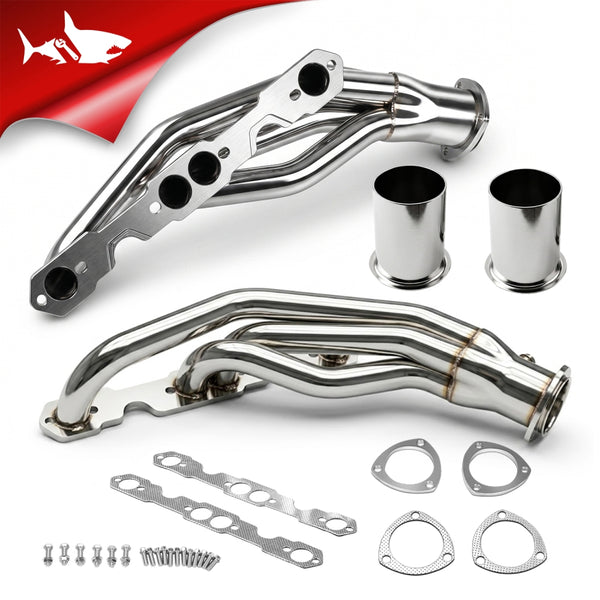
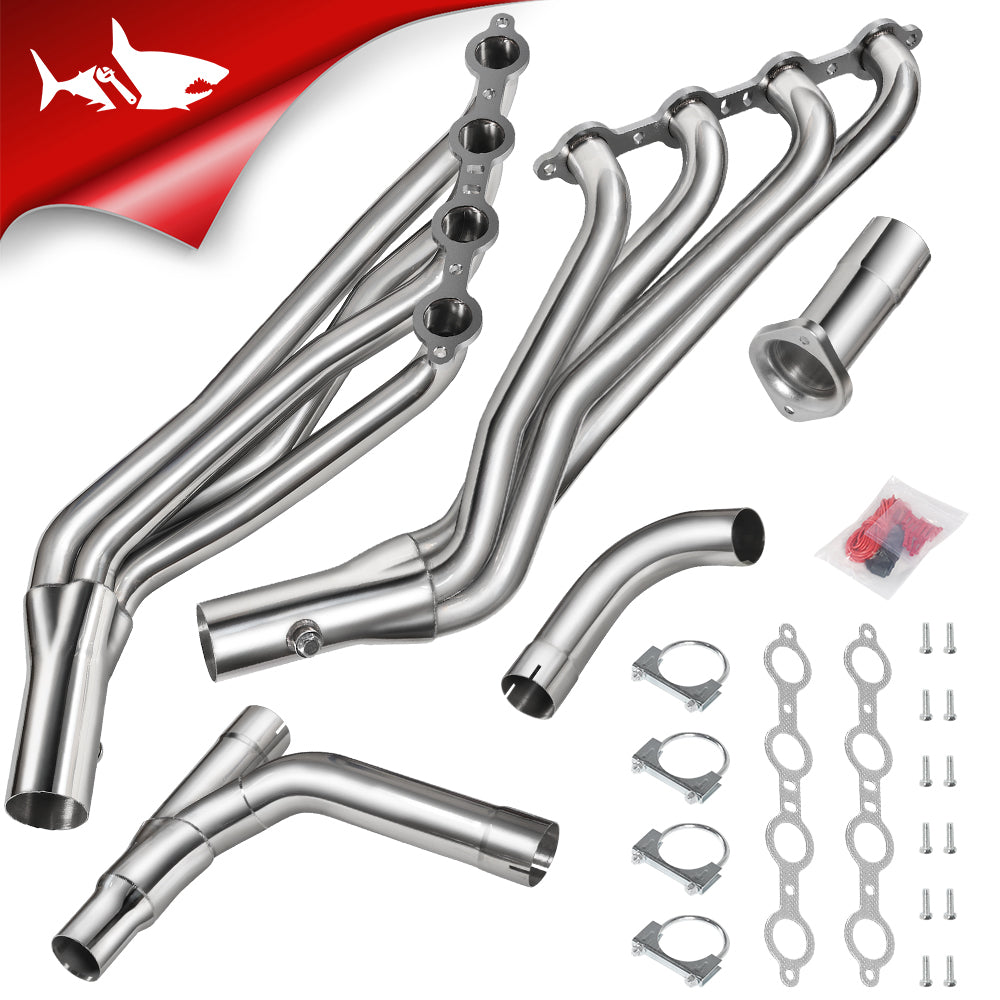
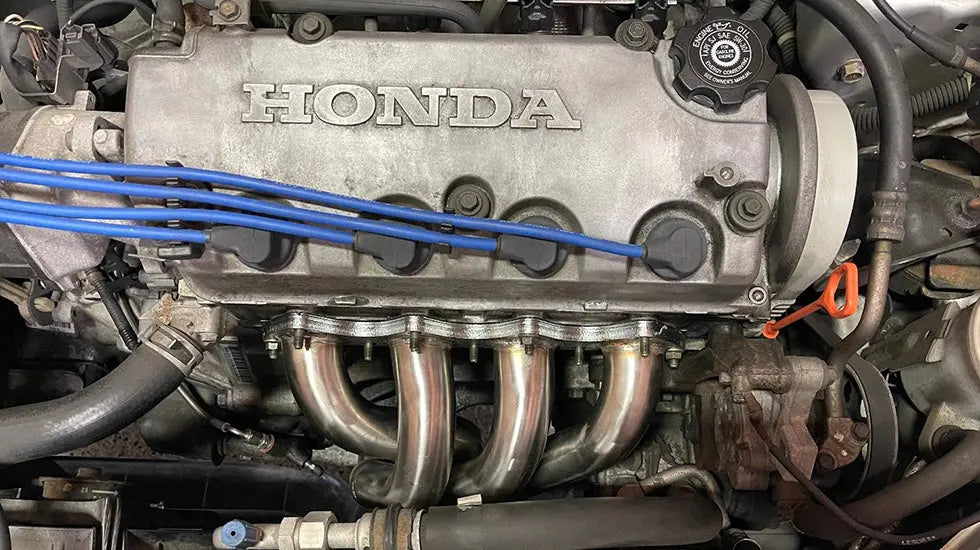
A header replaces the factory exhaust manifold. Instead of routing exhaust through a compact cast manifold, a header uses individual primary tubes that merge into a collector. Tube length, diameter, bend quality, collector design, and the connection to the rest of the exhaust influence how exhaust pulses leave the engine.
That is why a bigger pipe is not automatically the right pipe. A tube that is oversized for the engine and intended rpm range can reduce exhaust-pulse energy at lower engine speeds. On the other hand, a restrictive, damaged, or poorly designed manifold can limit the benefit of the rest of the exhaust system.
For a broader look at available designs across different vehicle platforms, see the Flashark exhaust headers collection.
How Much HP Can D16Y8 Headers Add?
A D16Y8 header does not have one fixed horsepower number. The answer depends on whether the engine is stock or modified, whether the car has a properly matched intake and exhaust, how healthy the engine is, and whether the fuel and ignition calibration suit the installed hardware.
A header can reduce restriction and improve scavenging when it is matched to the engine and the downstream exhaust. It may also change where the engine feels more responsive in the rev range. On a street car, that usable response can matter more than a peak-number claim.
What Changes the Result?
- Header layout: Primary routing and collector placement influence where a header may support exhaust scavenging.
- Primary and collector size: Diameter must suit the engine’s airflow demand and intended rpm range.
- Downstream exhaust: Catalytic converter condition, pipe diameter, resonator, muffler, and leaks affect the complete system.
- Engine condition: Compression, ignition health, valve adjustment, fuel delivery, and existing exhaust leaks matter.
- Calibration: Tune requirements vary by vehicle and installed hardware.
- Installation quality: A leak at the head flange or collector can affect sound, sensor readings, and drivability.
4-2-1 vs. 4-1 Headers for a D16Y8
Owners often use “long tube headers” as a broad shopping term. The details that actually matter are the primary routing, collector position, available clearance, and how the collector connects to the rest of the exhaust.
| Design | Typical Character | What to Check | Common Use Case |
|---|---|---|---|
| 4-2-1 | Pairs exhaust pulses before the final collector; often selected for a broad, street-friendly operating range. | Collector location, ground clearance, O2 sensor routing, and connection to the catalytic converter or front pipe. | Daily-driven Civic builds and mixed street use. |
| 4-1 | Merges all four primaries into one collector; often considered for builds operating at higher engine speeds. | Collector clearance, exhaust connection, heat around nearby components, and intended rpm range. | Higher-rpm naturally aspirated combinations where the rest of the setup supports it. |
| Compact or short layout | Prioritizes packaging and a shorter installation path. | Factory-style connection points, heat shielding, and clearance around accessories. | Replacement-oriented or space-limited installations. |
Here is the part that matters: two similar-looking D-series headers are not automatically interchangeable. Check the head flange, collector outlet, O2 sensor provision, catalytic-converter or front-pipe connection, and chassis clearance as one system.
Choosing a D16 Header for Civic, CRX, and Del Sol Applications
Flashark offers a D16 exhaust header for selected 1988–2000 Honda Civic, CRX, and Del Sol SOHC D16 applications, including D16A6, D16Z6, and D16Y8 configurations. The product listing identifies a 1.75-inch inlet and 2.0-inch outlet. Select the exact vehicle configuration before ordering rather than relying on engine code alone.
View the D16 header for Honda Civic, CRX, and Del Sol applications when you are ready to compare the selected configuration with your vehicle.

Fitment Checks That Matter Before Ordering
- Vehicle year, make, model, body style, and engine code.
- Manual or automatic transmission and drivetrain configuration where applicable.
- Factory catalytic converter, front-pipe, and collector connection style.
- Oxygen-sensor location and wiring path.
- Air-conditioning, power-steering, subframe, and ground-clearance constraints.
- Existing aftermarket exhaust parts that may change the connection point.
- Local emissions and road-use requirements for emissions-related modifications.
Installation Considerations for a D16Y8 Header
Header installation is straightforward only when the replacement part, fasteners, sensors, and downstream exhaust all line up correctly. Most problems come from rushing final assembly or assuming that one D-series configuration uses the same connection points as another.

Practical Installation Sequence
- Let the exhaust cool fully and support the vehicle securely before working underneath it.
- Inspect the factory manifold, studs, nuts, gasket surfaces, sensor wiring, and downstream exhaust connection before removal.
- Remove the old manifold carefully and protect oxygen-sensor wiring from twisting or stretching.
- Clean the cylinder-head sealing surface without gouging it.
- Install the header loosely enough to align the collector and downstream connection without forcing the system into position.
- Check clearance around the radiator fan, subframe, oil pan, shift linkage, steering components, hoses, wiring, and heat-sensitive parts.
- Align the complete exhaust path before final tightening.
- After the first complete heat cycle, inspect for exhaust leaks, contact marks, loose hardware, and sensor-wire exposure.
Sensor, Tune, and Warning-Light Considerations
A header can change the location of exhaust components and the routing around oxygen-sensor wiring. Warning-light behavior depends on sensor placement, wiring condition, exhaust leaks, emissions equipment, and calibration. Do not assume that every vehicle needs the same tuning step or will react the same way after installation.
Look for leaks at the head flange, collector, and downstream connection before treating a warning light or drivability issue as a calibration problem. A small leak can pull outside air into the exhaust stream and affect sensor readings.
Sound, Heat, and Daily-Driving Tradeoffs
Headers can change exhaust tone, but the final sound comes from the whole system. Catalytic converters, resonators, mufflers, pipe diameter, tailpipe design, and even small leaks have a larger effect on the finished sound than a header alone.
Under-hood heat also deserves attention. Tubular headers can change how heat is radiated around nearby wiring, hoses, boots, and plastic components. Clearance, heat shielding, routing, and the condition of the cooling system all matter. Do not wrap, coat, or shield a header without considering the material, installation space, and service access.
How to Build a Balanced D16Y8 Exhaust Combination
A D16Y8 header works best when it is treated as one part of the exhaust path. Start by correcting leaks and maintenance issues. Then match the header, catalytic converter or front pipe, exhaust diameter, resonator, muffler, intake, and calibration to the intended use of the car.
- For a street-focused car: Prioritize fitment, clearance, midrange response, manageable sound, and dependable sealing.
- For a higher-rpm naturally aspirated build: Consider header routing, collector design, camshaft choice, intake flow, fuel delivery, and calibration together.
- For a car with an existing cat-back: Check the collector outlet and connection style before assuming the parts will join without additional work.
- For a car with emissions equipment: Review local requirements and retain a practical plan for sensors, converter location, and service access.
Pairing a header with intake and exhaust changes can make sense, but each added part should solve a specific restriction or fit the build plan. More parts do not automatically produce a better combination.
Is a D16Y8 Header Worth It?
A D16Y8 header can be a sensible upgrade when the original manifold is cracked, restrictive, or no longer suits the exhaust system. It is also a useful way to address fitment and serviceability while moving toward a more balanced naturally aspirated build.
The best choice is the one that matches the vehicle, the intended rpm range, the rest of the exhaust, and the owner’s tolerance for sound, heat, installation work, and emissions-related constraints. Good power starts with the right combination, not the biggest part.
Frequently Asked Questions
Q1: How much horsepower can a D16Y8 header add?
A1: There is no fixed result for every D16Y8. A matched header can reduce unnecessary restriction and improve scavenging compared with a restrictive or leaking factory manifold. The outcome depends on the header design, engine condition, intake, downstream exhaust, fuel, calibration, and test method.
Q2: Is a 4-2-1 header a good choice for a street D16Y8?
A2: A 4-2-1 design is commonly considered for street-driven D-series combinations because it can support a broad operating range. The correct choice still depends on collector placement, exhaust connection, intended rpm range, and available chassis clearance.
Q3: Is a 4-1 header better for high-rpm D16Y8 builds?
A3: A 4-1 layout is often selected for combinations that operate at higher engine speeds, but it is not automatically better for every D16Y8. Primary size, collector design, camshaft, intake, exhaust, and calibration need to work together.
Q4: Do I need a tune after installing D16Y8 headers?
A4: Tune requirements vary by vehicle and installed hardware. A header may work with an otherwise mild setup, while a more heavily modified intake and exhaust combination may benefit from calibration changes. Check the complete intake, exhaust, emissions, and calibration combination as one system.
Q5: Will a D16Y8 header cause a check engine light?
A5: A warning light is not guaranteed, and neither is a warning-free result. Sensor location, wiring condition, exhaust leaks, emissions equipment, and calibration can affect what happens after installation. Inspect for leaks and protected sensor wiring first.
Q6: Can a D16 header fit with air conditioning and power steering?
A6: Clearance depends on the exact header routing and the vehicle configuration. Check the selected part against the vehicle year, engine, accessory layout, subframe, and exhaust connection before ordering or beginning installation.
Q7: What exhaust size should I use after a D16Y8 header?
A7: Exhaust diameter should suit the engine’s airflow demand and intended rpm range. An oversized system is not automatically better. The collector outlet, catalytic converter or front pipe, resonator, muffler, and the rest of the engine combination should be considered together.
Q8: Why does my new header leak or tick after installation?
A8: Common causes include an uneven sealing surface, loose hardware after heat cycling, a damaged gasket, collector misalignment, or an exhaust system installed under tension. Check the head flange, collector, downstream connection, and hardware after the system has completed a heat cycle.
Q9: Will headers make a D16Y8 much louder?
A9: Headers can change the exhaust tone, but the final sound is determined by the complete system. Catalytic converters, resonators, mufflers, pipe diameter, tailpipe design, and leaks all influence how loud or raspy the car becomes.
Q10: How do I choose the correct Flashark D16 header configuration?
A10: Match the selected configuration to the vehicle year, make, model, SOHC D16 engine, drivetrain, emissions equipment, sensor layout, and downstream exhaust connection. Review the product configuration carefully and contact customer support if you need help identifying the correct option.
For additional header-related reading, see What Are M52 Headers For? and How Much HP Does a Downpipe Add to a Mk7 GTI?.

Steven Chen
Automotive Performance Specialist | Engine & Exhaust Systems
Steven focuses on practical engine performance, exhaust fitment, and real-world upgrade paths for classic and modern enthusiast vehicles. He reviews small-block Ford, LS, truck, and street/strip applications with one goal in mind: helping builders choose parts that actually work together. His philosophy: "Good power starts with the right combination, not the biggest part."