A vehicle suspension supports weight, controls wheel and body movement, and helps tires stay in contact with the driving surface. The right repair or upgrade depends on your vehicle, load, driving conditions, and the condition of the existing parts.
- Springs carry load; dampers control motion.
- Control arms, sway bars, bushings, and struts each have different jobs.
- Inspect wear and verify fitment before choosing replacement or adjustable parts.

Why do you need a good suspension system?
A suspension in good condition can help manage bumps, body motion, and tire contact. Worn or mismatched parts can affect comfort and control. Off-road use and heavier loads add demands, but no single suspension setup is best for every surface or vehicle.
Technician tip: Before buying an upgrade, inspect the tires, steering, bushings, joints, springs, and dampers. A new part will not correct an unrelated fault.
What is a suspension system?
It is the set of components connecting the vehicle body or frame to the wheels. The design balances load support, wheel travel, motion control, tire contact, and comfort within the vehicle's intended use.
Components of a suspension system
Springs
Coil or leaf springs carry vehicle weight and allow the wheels to move over uneven ground. Spring rate and available travel need to match the vehicle and its load.
Dampers (shock absorbers)
Dampers control spring movement and reduce repeated bouncing. Settings that are too firm or too soft for the application can compromise ride quality or control.
Coilovers and the Subaru example
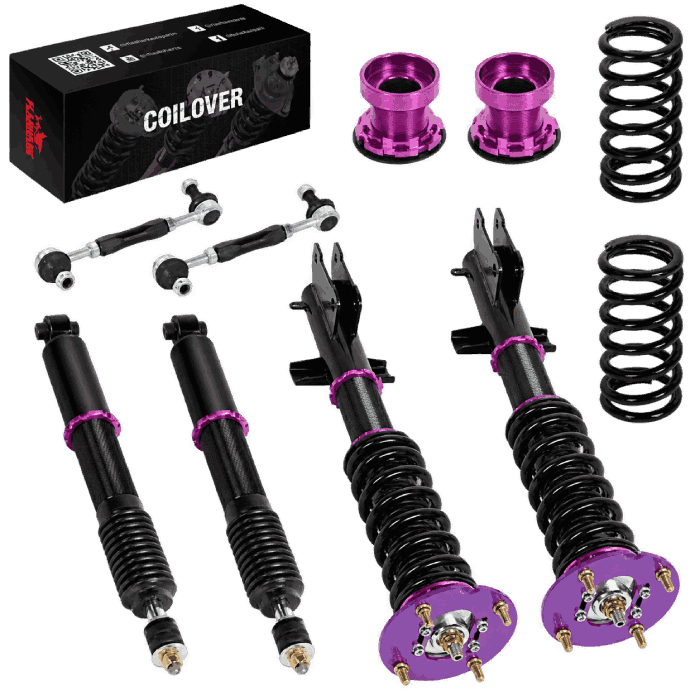
A coilover combines a spring and damper in an adjustable assembly. The original article mentions a 2000–2007 Subaru Impreza WRX STI application; exact model, trim, drivetrain, included hardware, and available adjustments must be checked against the current listing before purchase. Adjustment does not guarantee a particular ride or handling result.
Control arms
Control arms locate the wheel and guide its movement. Joints and bushings are wear points. Some lifted vehicles may need a suitable control-arm design to achieve the required geometry, but fitment and alignment specifications are vehicle specific.

The original article shows a Ford F-150 and Lincoln upper-control-arm example. Confirm the precise year, model, drivetrain, lift range, and part position on the current product page; the broad model range in the original article is not a fitment guarantee.
Sway bars (anti-roll bars)
Sway bars resist body roll by linking suspension movement across an axle. They can also affect independent wheel movement, which matters when choosing a setup for uneven terrain.
Bushings
Bushings allow controlled movement at suspension joints and can affect noise, vibration, and handling. Material choice and condition matter more than a blanket claim that one type is always better.
Struts
A strut is a structural part of some suspension layouts and may combine a damper with a spring assembly. A replacement assembly must match the vehicle's suspension design.

The original article uses a 2014–2018 Chevy/GMC Sierra 1500 4WD front strut assembly as an example. Verify the actual vehicle and current listing before ordering; included parts and fitment cannot be inferred from the illustration.
Functions of a suspension system
| Function | Main parts to inspect | Decision check |
|---|---|---|
| Support vehicle weight | Springs, mounts | Confirm load and ride-height requirements. |
| Control movement over bumps | Dampers, springs | Check leaks, bouncing, and available travel. |
| Guide wheel movement | Control arms, joints, bushings | Check looseness and alignment geometry. |
| Manage body roll | Sway bars, links, bushings | Consider handling and articulation needs. |
Safety warning: Suspension springs can store substantial energy. Follow the vehicle service procedure and use appropriate tools; have a qualified technician handle work beyond your equipment or experience.
Choosing suspension parts for an outdoor adventure
The former promotion described on this page has ended. For current options, review the Flashark suspension collection and confirm each product's present specifications and fitment. Consider the vehicle's actual use, tires, cargo, terrain, and alignment requirements before choosing a repair part or upgrade.

Why choose a suitable part?
The useful question is whether the part matches the vehicle and the job. Compare the current product listing, installation instructions, included components, and support options. Avoid choosing solely on a claimed handling or off-road benefit.
Frequently asked questions
Q1. What does a vehicle suspension system do?
A1. It supports vehicle weight, controls body and wheel movement, and helps the tires maintain contact with the driving surface.
Q2. What is the difference between a spring and a shock absorber?
A2. A spring carries load and allows movement; a shock absorber, or damper, controls how quickly that movement occurs.
Q3. Are a strut and a shock absorber the same thing?
A3. No. A strut is a structural part of some suspension layouts; a shock absorber primarily damps movement. Check the vehicle design before ordering.
Q4. Do coilovers always improve ride comfort?
A4. No. Comfort depends on spring rate, damping, travel, tire setup, vehicle load, and adjustment. A poorly matched setup can ride worse.
Q5. Does a lift automatically increase ground clearance?
A5. A lift can raise parts of the vehicle, but clearance at the differential or axle may remain limited. Measure the relevant points on the specific vehicle.
Q6. Can new control arms fix uneven tire wear?
A6. They may address worn joints or geometry limits in a suitable setup, but uneven wear can have several causes. Inspect the suspension and check alignment first.
Q7. What do sway bars do?
A7. They resist body roll by coupling movement across the axle. Their effect on wheel articulation and handling depends on the vehicle and use.
Q8. How can I tell if a suspension component is worn?
A8. Common clues include leaks, excessive bouncing, clunks, looseness, uneven tire wear, or a change in handling. A qualified inspection is needed to identify the cause.
Q9. What should I check before buying replacement suspension parts?
A9. Confirm year, make, model, trim, drivetrain, current ride height, part position, included hardware, and any required alignment or supporting parts against the current product listing.
Q10. Is an alignment needed after suspension work?
A10. Alignment should be checked after work that changes ride height or suspension geometry. Follow the vehicle and component instructions for the specific repair.

Steven Chen
Automotive Performance Specialist | Engine & Exhaust Systems
Steven focuses on practical engine performance, exhaust fitment, and real-world upgrade paths for classic and modern enthusiast vehicles. He reviews small-block Ford, LS, truck, and street/strip applications with one goal in mind: helping builders choose parts that actually work together. His philosophy: "Good power starts with the right combination, not the biggest part."