Pregúntale a diez propietarios de una F-150 sobre el escape y cinco de ellos hablarán del sonido, tres hablarán de la capacidad de remolque, uno hablará de la potencia y el último dirá: "Simplemente que no haga zumbido a 105 km/h". Ese último probablemente ha vivido con una mala configuración.
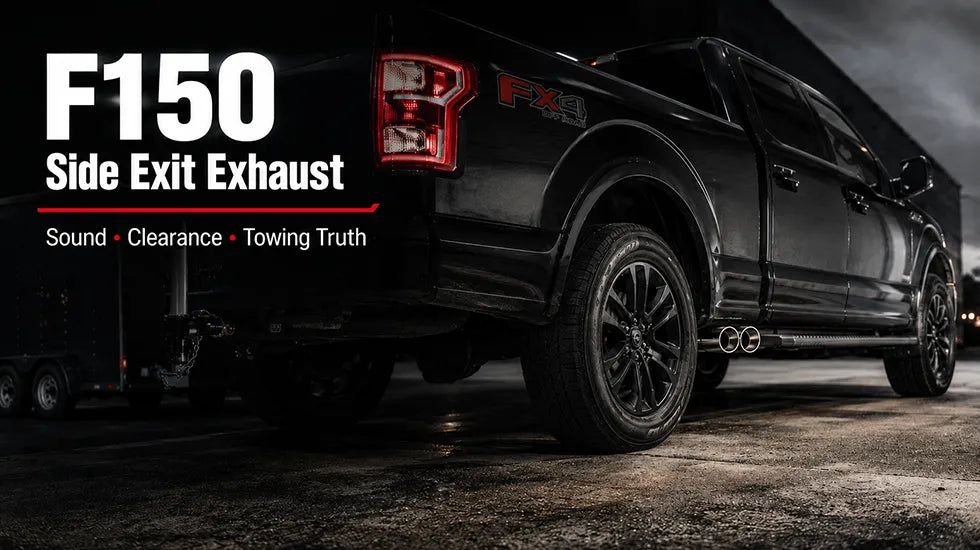
Un escape de salida lateral para F-150 2015-2020 puede hacer que la camioneta se sienta más ágil, limpia y mucho más viva. Ya sea que conduzcas una 2.7L EcoBoost, 3.5L EcoBoost o 5.0L Coyote V8, el escape de fábrica suele estar construido más para la comodidad silenciosa que para la personalidad. Pero la salida lateral no es automáticamente mejor que la salida trasera. Depende de dónde se encuentre la punta, qué silenciador se utilice, cuánta conducción en carretera hagas y si remolcas.
Los camioneros de la vieja escuela ya lo saben: el escape que suena imponente en un estacionamiento puede convertirse en un dolor de cabeza en un remolque de 480 kilómetros. Así que hablemos como si estuviéramos debajo de la camioneta, no en un catálogo.
Respuesta rápida: ¿Vale la pena un escape de salida lateral para F-150 2015-2020?
- Sí, si quieres un tono de camioneta más profundo, una apariencia trasera más limpia y una mayor practicidad para remolques que algunas configuraciones de salida trasera.
- Tal vez, si conduces muchos kilómetros en carretera a diario. Elige un silenciador moderado o un sistema cat-back resonado. No busques primero la opción más ruidosa.
- No, si esperas una gran potencia solo con el escape. Un sistema cat-back suele mejorar el sonido, la sensación del acelerador y el flujo, pero no convertirá una F-150 de serie en una camioneta de carreras.
- Para remolcar, la salida lateral a menudo tiene más sentido porque el escape no dispara directamente contra la pared delantera de un remolque.
- Para la compatibilidad con los modelos 2015-2020, verifica el motor, la cabina, la longitud de la caja, 2WD/4WD, el espacio para la rueda de repuesto, la ubicación de los soportes y el espacio del parachoques/punta antes de realizar el pedido. "Compatible con F-150" no es suficiente.
¿Qué es un escape de salida lateral para F-150?
Un escape de salida lateral dirige el tubo de escape hacia el costado de la camioneta en lugar de salir directamente por el parachoques trasero. Una idea simple. Una gran diferencia en la sensación real.
En una F-150, la salida lateral suele significar una de estas configuraciones:
- Salida lateral simple: Un solo tubo de escape sale por un lado de la camioneta. En muchos kits para F-150, sale detrás del neumático trasero del lado del pasajero, pero algunos sistemas salen delante del neumático trasero cerca de la abertura de la rueda.
- Doble salida lateral: Dos puntas salen por un lado. Dependiendo del kit, las puntas pueden estar detrás del neumático trasero o delante del neumático trasero cerca de la abertura de la rueda trasera.
- Doble salida lateral/trasera dividida: Las puntas se angulan hacia afuera desde ambos lados cerca de la parte trasera.
- Salida lateral antes del neumático: El tubo sale delante de la rueda trasera, generalmente cerca de la abertura de la rueda trasera. Esta es la configuración utilizada por algunos sistemas cat-back de doble punta pulida para F-150. Se ve agresivo, pero puede ser más ruidoso en la cabina que una configuración detrás del neumático.
- Escape con salida hacia abajo: El tubo apunta hacia abajo debajo de la camioneta. Barato y corto, pero a menudo peor para la resonancia.
Nota importante sobre la compatibilidad: no describas cada salida lateral doble como "detrás del neumático trasero". Algunos kits de F-150 colocan las puntas dobles pulidas delante del neumático trasero, cerca de la abertura de la rueda trasera. Eso sigue siendo un escape de salida lateral, pero la posición visual y el comportamiento del sonido en la cabina son diferentes.
Cuando la gente busca un cat-back de salida lateral para F-150 2015-2020, generalmente busca un sistema completo atornillado desde el catalizador hacia atrás. Eso significa que los catalizadores permanecen en su lugar, y la mejora reemplaza el silenciador, el tubo sobre el eje, el tubo de escape y la sección de la punta.
Nota del mecánico: Cat-back no significa "libre de leyes". Generalmente mantiene el hardware de emisiones intacto, pero aún debes respetar los límites de sonido locales. No confundas un escape cat-back con la eliminación del convertidor catalítico.

Por qué los propietarios de F-150 2015-2020 buscan kits cat-back de salida lateral
La F-150 2015-2020 es un punto clave para las mejoras de escape. Estas camionetas son lo suficientemente modernas como para ser cómodas para el uso diario, pero aún lo suficientemente "camioneta" como para que los propietarios quieran un sonido real, una mejor presencia y un estilo de salida más limpio. Un cat-back de salida lateral es una de las formas más fáciles de darle a la camioneta más actitud sin tocar los catalizadores ni convertir la modificación en un trabajo de escape personalizado completo.
El factor sonido de los motores 2.7L, 3.5L EcoBoost y 5.0L Coyote
La línea de motores de la F-150 2015-2020 cambia el sonido del escape. El 5.0L Coyote V8 te da ese tono de camioneta más profundo y tradicional que la mayoría de la gente espera. Los motores 2.7L y 3.5L EcoBoost aún pueden sonar mejor con un cat-back, pero necesitan el equilibrio adecuado de silenciador y resonador. Si te excedes con un EcoBoost, el tono puede volverse hueco, áspero o demasiado agitado bajo carga.
Un buen cat-back debe hacer que la camioneta suene más potente sin que sea molesto. En el 5.0L, eso suele significar un ralentí más profundo y un tirón más fuerte por encima de las 2,500 rpm. En los motores EcoBoost, el objetivo es un tono más limpio, un mejor flujo y menos restricción sin crear un ruido que suene artificial.
Pero escucha con atención: más sonido no siempre es mejor sonido. Un silenciador descargado debajo de la cabina puede sonar rudo durante diez minutos y luego castigarte durante tres horas en la autopista.
Limitaciones del escape de fábrica y necesidades de mejora
En muchas camionetas F-150 2015-2020, el escape de fábrica aún puede ser utilizable, pero generalmente es silencioso, conservador y no está diseñado para un carácter de sonido. Algunas camionetas también comienzan a mostrar corrosión en las abrazaderas, silenciadores desgastados, puntas rayadas o un tono de escape débil después de años de conducción diaria, remolque, carreteras invernales o uso en el lugar de trabajo.
Ahí es donde un cat-back de salida lateral tiene sentido. No solo estás reemplazando un tubo. Estás cambiando la forma en que la camioneta suena, se ve y se siente desde el volante.
La compatibilidad importa más que el marketing
Aquí es donde los nuevos compradores se equivocan. Ven "escape cat-back para F-150" y hacen clic en comprar. Luego, el kit llega y el tubo sobre el eje no se alinea. O el tubo de escape golpea la rueda de repuesto. O la punta queda demasiado cerca de un guardabarros.
Para las camionetas F-150 2015-2020, verifica esto antes de ordenar:
- Año: 2015, 2016, 2017, 2018, 2019 o 2020
- Motor: 2.7L EcoBoost, 3.5L EcoBoost o 5.0L V8
- Cabina: Regular Cab, SuperCab o SuperCrew
- Longitud de la caja: 5.5 pies, 6.5 pies u 8 pies
- Tren motriz: 2WD o 4WD
- Ubicación de salida: antes del neumático, detrás del neumático, trasera o salida dividida
- Espacio libre para la rueda de repuesto
- Espacio libre para estribos y guardabarros
- Espacio libre para el parachoques y la punta
Si deseas explorar opciones más amplias primero, comienza con sistemas de escape cat-back y luego filtra por plataforma de camioneta, motor y estilo de salida. No compres solo por el clip de sonido.
Ventajas de un escape de salida lateral para F-150

Mejor presencia de sonido junto a la camioneta
Un escape de salida trasera empuja el sonido hacia atrás. Una salida lateral emite más tono hacia el costado de la camioneta. Eso cambia lo que escuchas desde el asiento del conductor, lo que la gente escucha en ralentí y cómo suena la camioneta cuando pasa una pared, la puerta de un garaje o un divisor de concreto.
En una F-150 5.0L, una configuración de salida lateral moderada generalmente te brinda ese tono bajo y grueso que la gente espera de una camioneta V8 de tamaño completo. En los motores EcoBoost, el objetivo suele ser una nota de escape más limpia y profunda sin que la camioneta suene hueca o áspera. Sin embargo, con el silenciador incorrecto, cualquiera de las dos configuraciones puede volverse resonante. Hay una línea. Si la cruzas, la camioneta deja de sonar "tuneada" y empieza a sonar barata.
Mejor experiencia de remolque que algunas configuraciones de salida trasera
Aquí está el problema de remolque que a nadie le importa hasta que engancha un remolque: el escape de salida trasera puede lanzar el sonido directamente al remolque. El remolque refleja parte de ese ruido hacia adelante. Lo sientes como un zumbido de baja frecuencia en la cabina.
Una salida lateral apunta el escape lejos de la cara del remolque en lugar de directamente hacia él. Eso no elimina mágicamente el zumbido, y una salida lateral antes del neumático aún puede ser más ruidosa cerca de la cabina, pero a menudo reduce ese molesto eco de la pared trasera en comparación con una configuración de salida trasera agresiva al remolcar remolques cerrados, caravanas o remolques utilitarios altos.
Para una camioneta de trabajo o un equipo de remolque de fin de semana, eso importa más que un clip de sonido de arranque en frío.
Aspecto trasero más limpio
A algunos propietarios de F-150 les gustan las puntas traseras pulidas debajo del parachoques. No hay nada de malo en eso. Pero la salida lateral le da a la parte trasera un aspecto más limpio, especialmente si usas un enganche, un parachoques escalonado, cableado para remolque o accesorios traseros.
También le da a la camioneta una postura más clásica de camioneta de alto rendimiento. Piensa menos en "camioneta de flota de serie" y más en "a esta cosa la ha tocado alguien a quien le importa".
Puede mejorar el espacio práctico alrededor del enganche
La salida lateral puede liberar espacio cerca del área del enganche trasero. Eso ayuda cuando utilizas:
- escalones de enganche
- enganches de caída
- accesorios de remolque
- protectores de parachoques traseros
- herramientas para la rueda de repuesto
De nuevo, no todos los kits son perfectos. Una punta lateral mal colocada puede crear sus propios problemas. Pero cuando la disposición es la correcta, la salida lateral es práctica.
Contras de un escape de salida lateral para F-150
La salida lateral puede ser más ruidosa dentro de la cabina
No nos andemos con rodeos. Un escape de salida lateral para F150 puede ser más ruidoso dentro de la cabina que un sistema de salida trasera suave. La fuente de sonido está más cerca del habitáculo, especialmente con salidas antes del neumático o enrutamiento corto del tubo de escape.
Si tu camioneta es un juguete de fin de semana, quizás quieras eso. Si tu camioneta transporta niños, herramientas y remolques todas las semanas, quizás no.
Zumbido en carretera alrededor de 60-70 MPH
Este es el grande. El zumbido no es solo "ruido". El zumbido es esa presión constante de baja frecuencia que se siente en los oídos a ciertas RPM. Generalmente, alrededor de 1,700-2,200 RPM en muchas camionetas, dependiendo de la transmisión, el tamaño de los neumáticos, la carga del motor y el diseño del silenciador.
Para muchos propietarios de F-150, eso significa un crucero de 60-70 mph. Agrega un remolque o una ligera pendiente y el motor se carga. La nota del escape cae en esa zona fea. De repente, el sistema que sonaba increíble en el camino de entrada se convierte en un problema.
Consejo de experto: Cuando leas reseñas, busca "zumbido", "autopista", "65 mph", "remolque" y "aprobado por la esposa". Una reseña que solo dice "suena genial" no te dice casi nada sobre el uso diario.
La ubicación de la punta puede afectar el calor, el polvo y las salpicaduras
Las puntas laterales se encuentran cerca de los neumáticos, los paneles de balancines, los guardabarros y las salpicaduras de la carretera. En estados secos, eso puede no molestarte mucho. En estados con nieve, la sal y el aguanieve golpearán esa punta todo el invierno.
Cuidado con:
- tubo de escape demasiado cerca del embellecedor de plástico
- punta que sobresale demasiado del lateral de la caja
- escape que sopla hacia un neumático trasero
- contacto con el guardabarros
- picaduras de rocas en las puntas pulidas
- calor cerca de las líneas de freno o de combustible
Una instalación de escape lateral limpia se ve nítida. Una perezosa se ve torcida y cocina las piezas cercanas.
No siempre es una gran mejora de la potencia
Un cat-back puede ayudar al flujo de aire. Puede agudizar la respuesta del acelerador. Puede eliminar un silenciador gastado o restrictivo. Pero en una F-150 2015-2020 mayormente de serie, no esperes números milagrosos solo del escape.
En el Coyote 5.0L, la diferencia de sonido suele ser el cambio más obvio. En los motores EcoBoost 2.7L y 3.5L, el cat-back adecuado puede mejorar el flujo y la respuesta, pero el sonido del motor turbo depende en gran medida del diseño del silenciador, el control del resonador y la carga. En muchos casos, se esperan ganancias de potencia modestas a menos que la camioneta tenga mejoras de apoyo y una sintonización adecuada.
Para comparar, Flashark enumera su sistema cat-back de 3 pulgadas para F-150 2015-2020 con ganancias probadas de +16.28 HP y +13.04 lb-ft a 4,200 RPM. Usa números como esos como punto de referencia, no como una garantía para cada camioneta. El motor, la condición, el combustible, la sintonización, el tamaño de los neumáticos, la configuración del dinamómetro y la calidad de la instalación son importantes.
Escape OEM vs. Cat-back de salida lateral del mercado de accesorios
El sistema original no es chatarra. Ford lo diseñó para ser silencioso, asequible, compatible con las emisiones y aceptable para el grupo de compradores más amplio posible. Es exactamente por eso que muchos camioneros lo reemplazan.
| Categoría | Escape de F-150 de serie | Cat-back de salida lateral del mercado de accesorios |
|---|---|---|
| Sonido | Silencioso, controlado, poca personalidad | Ralentí más profundo, tono de aceleración más fuerte, mayor presencia lateral |
| Flujo | Diseñado para el control del ruido y una amplia facilidad de conducción | Generalmente, tubería más grande y curvas mandriladas más suaves |
| Tubos típicos | El diámetro de fábrica varía según el motor y la configuración | Muchos kits de rendimiento usan tubos de 2.5 a 3 pulgadas |
| Comodidad en la cabina | Ideal para un uso diario silencioso | Depende en gran medida del silenciador, el resonador y la posición de salida |
| Sonido al remolcar | Silencioso, bajo riesgo | La salida lateral puede reducir el eco del remolque en comparación con la salida trasera |
| Durabilidad | Puede durar bien, pero las abrazaderas, uniones y puntas pueden envejecer con el tiempo | Las opciones de acero inoxidable 409 o 304 suelen resistir mejor |
Sonido y zumbido: Qué esperar de un escape lateral de F150
Sonido en ralentí
En ralentí, un buen sistema de salida lateral debe sonar profundo, no hueco. En el Coyote 5.0L, un silenciador con cámaras proporciona un tono más clásico de muscle car. Un silenciador de flujo directo suele sonar más suave y menos entrecortado.
En los motores EcoBoost 2.7L y 3.5L, no busques el sonido V8. Así es como la gente termina decepcionada. Un buen cat-back para EcoBoost debe sonar más limpio, completo y controlado, no artificial.
Si el ralentí suena metálico o áspero, algo anda mal: tubos delgados, mal diseño del silenciador, fuga en una abrazadera o una punta barata que suena como una lata de café.
Sonido en aceleración
Aquí es donde el escape lateral brilla. Pisas el acelerador y el sonido sale por el lateral de la camioneta. Al lado de una pared, se vuelve más fuerte. Debajo de un paso elevado, más fuerte aún. Un sistema moderado se siente potente sin convertir cada semáforo en un informe policial.
Para la mayoría de las configuraciones diarias de F-150, me gusta un tono que se vuelve agresivo al acelerar, pero se calma al conducir a velocidad constante. Ese es el punto ideal.
Sonido de crucero en carretera
El sonido en carretera diferencia un buen escape del arrepentimiento. Un arranque en frío ruidoso no importa si la camioneta zumba durante dos horas.
Para camionetas con mucho uso en carretera, evita estas opciones a menos que sepas exactamente a qué te atienes:
- eliminación del silenciador
- escape corto descargado debajo de la cabina
- silenciadores tipo carrera
- salidas antes del neumático con silenciadores agresivos
- tubo de escape sobredimensionado en un motor mayormente de serie
Mejores opciones para uso en carretera:
- silenciador de flujo directo moderado
- cat-back resonado
- salida lateral detrás del neumático trasero
- abrazaderas de calidad y uniones sin fugas
- tubo de escape enrutado más allá del área de la cabina
Sonido al remolcar
Remolcar lo cambia todo. El motor permanece bajo carga por más tiempo. La transmisión puede mantener marchas más bajas. La nota del escape se vuelve más pesada. Ese sistema suave puede volverse ruidoso rápidamente.
Para remolcar, preferiría tener una salida lateral moderada que una salida trasera salvaje. No porque la salida lateral sea mágica, sino porque la trayectoria del sonido suele ser menos molesta con un remolque detrás de la camioneta.
Salida lateral vs. salida trasera: ¿Cuál es mejor para remolcar?

| Estilo de salida | Ideal para | Principal riesgo | Veredicto para remolcar |
|---|---|---|---|
| Salida lateral detrás del neumático trasero | Conducción diaria, remolque, aspecto limpio de camioneta | Alineación de la punta y salpicaduras de barro | Mejor equilibrio general |
| Salida lateral delante del neumático trasero | Aspecto callejero agresivo, doble punta pulida | Más ruido en la cabina | Bueno para el estilo y el sonido, pero elige el silenciador cuidadosamente para remolcar |
| Salida trasera | Apariencia tradicional, estilo de punta trasera | Eco del remolque y calor trasero | Bien si es suave, molesto si es agresivo |
| Descendente | Configuraciones personalizadas económicas | Resonancia en los bajos | Normalmente es lo más incómodo para el confort |
Por qué la salida trasera puede hacer eco con un remolque
Piensa en dónde va el sonido. Una salida trasera apunta directamente hacia atrás. Conecta un remolque cerrado y tendrás una gran pared detrás de los tubos de escape. Esa pared refleja el sonido hacia adelante. No es complicado, pero mucha gente lo ignora.
Con una salida lateral, el sonido sale hacia los lados. Todavía puedes oír la camioneta, pero es menos probable que impacte directamente en la parte frontal del remolque.
Por qué la salida lateral puede ser mejor para los propietarios de remolques
Para remolcar, la salida lateral detrás del neumático trasero suele ser la mejor. Mantiene la salida más alejada de la cabina, dirige el sonido lejos del remolque y sigue luciendo limpia. Una salida lateral delante del neumático trasero todavía puede funcionar, especialmente con un silenciador moderado, pero normalmente producirá más sonido al lado de la cabina que una configuración detrás del neumático.
Ese es el objetivo principal. No el más ruidoso. El más habitable.
Espacio libre y uso todoterreno: dónde la salida lateral ayuda y perjudica
Espacio libre del parachoques trasero y del enganche
La salida lateral puede ayudar alrededor del enganche trasero. Si utilizas un enganche de caída, un gancho de remolque, un escalón o un accesorio de parachoques, un tubo de escape de salida trasera a veces puede estorbar. La salida lateral aleja la punta de esa zona concurrida.
Para camiones de trabajo, eso es útil. No solo estás haciendo ruido. Estás manteniendo el camión práctico.

Espacio libre del panel de balancines y la barra de estribo
Antes de apretar las abrazaderas, comprueba el espacio libre de la punta y el tubo cerca de:
- estribos
- barras de protección
- guardabarros
- muelles de ballesta
- soportes de amortiguadores
- líneas de freno
- líneas de combustible
- rueda de repuesto
Deja espacio para el movimiento. El escape se mueve cuando está caliente. La camioneta se mueve bajo carga. Un tubo que tiene 1/8 de pulgada de espacio libre en el garaje puede golpear el chasis en la primera carretera irregular.
Riesgo todoterreno
Si conduces por caminos de tierra, obras, senderos de caza o rutas todoterreno ligeras, la salida lateral sigue siendo adecuada. Pero mantén la punta oculta. No dejes que sobresalga demasiado del lateral de la caja como si fuera un rompe-tobillos cromado.
Una punta pulida que sobresale demasiado puede atrapar rocas, escombros de la carretera, trozos de nieve y bordillos de estacionamiento. Queda bien en las fotos. Mala idea para una camioneta que realmente funciona.
Lista de verificación de montaje para escape Cat Back de salida lateral F150 2015-2020
Esta sección es importante. Guárdala. Envíala al tipo que compra piezas a medianoche después de ver un clip de sonido.
Montaje del motor: 2.7L EcoBoost vs 3.5L EcoBoost vs 5.0L V8
Las configuraciones de escape de la F-150 con motor 2.7L EcoBoost, 3.5L EcoBoost y 5.0L V8 pueden variar según el año, la cabina, la caja, la transmisión y la configuración de fábrica. No asumas que cada kit se adapta a cada motor a menos que la página del producto lo indique claramente.
Si el anuncio no especifica claramente la compatibilidad con el motor, pregunta antes de comprar. Adivinar con piezas de escape puede resultar caro rápidamente.
Longitud de la cabina y la caja
La longitud de la cabina y la caja afecta la longitud del tubo. Una SuperCrew de caja corta no es lo mismo que una cabina regular de caja larga. Algunos kits incluyen tubos de extensión. Otros no.
Comprobar:
- Cabina Regular
- SuperCab
- SuperCrew
- Caja de 5.5 pies
- Caja de 6.5 pies
- Caja de 8 pies
2WD vs 4WD
En muchas camionetas, el recorrido del escape en 2WD y 4WD puede ser similar, pero el espacio libre alrededor de los travesaños, la suspensión y los ángulos del eje de transmisión aún pueden variar. Un listado de calidad lo indicará. Uno vago no lo hará.
Salida lateral única vs. salida lateral doble
La salida lateral única suele ser la opción más segura para remolcar y la conducción diaria. La salida lateral doble tiene un aspecto más robusto y un sonido más presente, pero puede aumentar el tono de la cabina según el diseño del silenciador.
Mi consejo directo:
- Conductor diario: salida lateral única o salida lateral doble suave
- Remolque: la salida lateral detrás del neumático trasero suele ser la mejor; la salida lateral delante del neumático trasero puede funcionar si el silenciador es moderado
- Juguete de fin de semana: salida lateral doble si te gusta más sonido
- Camioneta para viajes largos por carretera: cat-back resonado o moderado
Material: acero aluminizado vs acero inoxidable 409 vs acero inoxidable 304
El material importa más si vives en un lugar donde se echa sal a las carreteras.
- Acero aluminizado: más barato, decente en climas secos, más propenso a la oxidación a largo plazo.
- Acero inoxidable 409: material común para escapes de alto rendimiento, buena durabilidad, puede decolorarse o mostrar óxido superficial.
- Acero inoxidable 304: mejor resistencia a la corrosión y apariencia, suele ser más caro.
Si conservas los camiones durante años, el acero inoxidable 304 merece la pena. Si cambias de camión a menudo, quizás no. Sé sincero sobre cuánto tiempo planeas tenerlo.
Opción de escape Cat-Back de salida lateral recomendada para F-150 2015-2020
Si tienes una Ford F-150 2015-2020 y quieres un cat-back de salida lateral, los detalles más importantes son la compatibilidad con el motor, el diámetro del tubo, el material, el tono del silenciador y la ubicación de la punta. Una salida lateral pulida puede tener un aspecto limpio y agresivo, pero el sistema aún debe dejar espacio libre para la rueda de repuesto, el parachoques trasero, los colgadores y el recorrido de la suspensión.
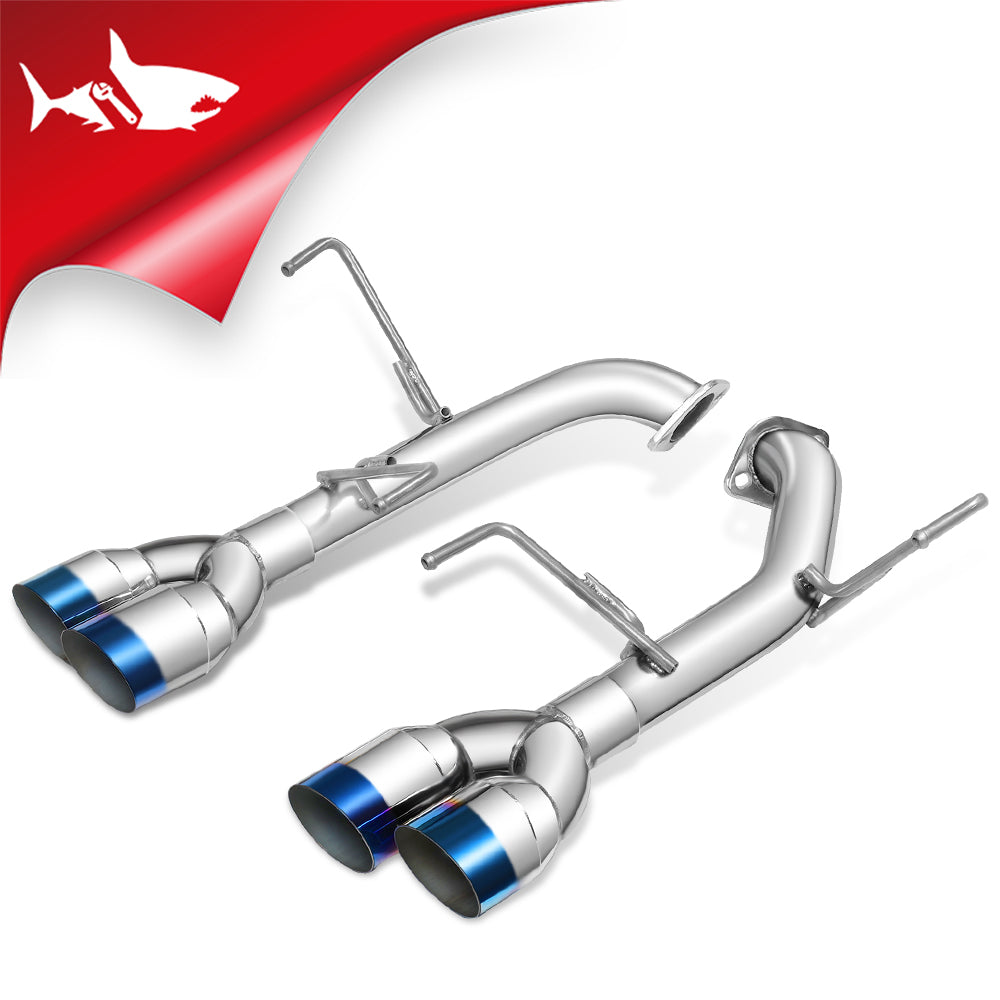
Para los propietarios de Ford F-150 2015-2020 con motores 2.7L, 3.5L o 5.0L, Flashark ofrece una opción de escape catback F150 de salida lateral pulida que utiliza tubería de 3 pulgadas y acero inoxidable T-304. Según las imágenes del producto, esta es una configuración de salida lateral delante del neumático trasero con doble punta pulida que sale por el lado del pasajero cerca de la abertura de la rueda trasera, no una salida recta por el parachoques trasero. La misma lógica de compra sigue aplicándose: el sonido, el flujo, el material, la posición de la punta y el control del zumbido son importantes.

Montaje Destacado: F-150 2015-2020
Escape Catback Flashark F150 - Salida lateral pulida
Diseñado para aplicaciones Ford F-150 2015-2020 de 2.7L, 3.5L y 5.0L, este sistema cat-back de 3 pulgadas es un buen punto de referencia para compradores que desean un aspecto de salida lateral pulida delante del neumático trasero, construcción de acero inoxidable y un tono de camión más profundo sin convertir la cabina en un tambor.
$299.99 $366.00
El mejor estilo de silenciador para un escape de salida lateral F150
Silenciador de cámaras
Los silenciadores de cámaras producen ese rugido clásico de camión, especialmente en el motor Coyote V8 de 5.0L. Suenan potentes. También pueden producir resonancia si el diseño de la cámara coincide mal con las RPM de crucero.
Ideal para: propietarios que quieren un tono clásico y no les importa una mayor presencia en la cabina.
Silenciador de flujo directo
Un silenciador de flujo directo suele tener un buen flujo y un sonido más suave. Menos ladrido que algunos silenciadores de cámara, pero a menudo mejor para la comodidad en carretera.
Ideal para: conductores diarios, propietarios de EcoBoost que desean un tono más limpio y construcciones de F-150 donde un sonido más profundo importa más que el ladrido del estacionamiento.
Cat-Back resonado
Un resonador no es una debilidad. Es control de sonido. Para remolcar y para un uso prolongado en carretera, una configuración resonada puede salvar tu cordura.
Ideal para: viajes largos, camionetas familiares, equipos de remolque y personas que realmente usan la camioneta para trabajar.
Silenciador agresivo o de competición
Aquí es donde la gente se mete en problemas. Los silenciadores agresivos suenan desagradables en el arranque en frío y a pleno acelerador. Divertido, sí. Pero pueden ser ásperos dentro de la cabina.
Si tu camioneta solo va a reuniones y regresa, está bien. Si conduces a 70 mph todos los días, piénsalo dos veces.
Notas de instalación: lo que suele salir mal
Herrajes de fábrica oxidados o difíciles
Incluso en una F-150 2015-2020, asume que el hardware puede resistirse si la camioneta ha visto carreteras invernales, barro, uso en obras o años de ciclos de calor. Rocía las abrazaderas y los herrajes de la brida con aceite penetrante la noche anterior. No cinco minutos antes. La noche anterior.

Herramientas básicas que me gusta tener a mano:
- aceite penetrante
- alicates para quitar colgadores
- pistola de impacto o barra rompedora
- llaves de vaso profundas
- mazo de goma
- compuesto antigripante
- abrazaderas adicionales
- soportes de gato o elevador
Alineación del tubo de escape
No aprietes completamente el sistema pieza por pieza de adelante hacia atrás. Así es como terminas con una punta torcida.
Mejor proceso:
- Cuelga todas las secciones sin apretar.
- Comprueba la orientación del silenciador.
- Ajusta el espacio libre del tubo sobre el eje.
- Ajusta el ángulo de la punta lateral.
- Comprueba el espacio libre de la caja, el parachoques, los neumáticos y los guardabarros.
- Agita el sistema a mano.
- Luego aprieta las abrazaderas de adelante hacia atrás.
- Calienta el motor y vuelve a apretar después del primer viaje.
Posición de la percha y vibración
Una percha ligeramente torcida puede tirar de todo el sistema hacia los lados. El tubo puede parecer bien frío, pero luego golpea cuando está caliente. O puede despejarse en terreno llano y golpear bajo carga.
Si el tubo de escape golpea el chasis, la ballesta o la rueda de repuesto, no lo ignores. El ruido del escape metal con metal empeora, no mejora.
Espacio libre de calor alrededor de líneas y rueda de repuesto
Mantén el calor alejado de las líneas de freno, las líneas de combustible, el cableado y la rueda de repuesto. Me gusta ver al menos un par de pulgadas de espacio libre práctico donde sea posible, más cerca de las piezas de goma o plástico. Si el kit utiliza los soportes de fábrica correctamente, eso suele solucionar la mayor parte. Aún así, compruébalo.
Caso de taller en primera persona:
He visto este problema más de una vez en instalaciones de escape lateral en F-150 más nuevas. La camioneta suena agresiva por fuera, pero dentro de la cabina se vuelve brutal alrededor de las 65 mph. Generalmente, el problema no es solo el volumen. Es el ángulo del tubo de escape, la tensión de la suspensión, la elección del silenciador y dónde sale el sonido en comparación con la cabina. Afloja el sistema, reajusta el ángulo de la punta, verifica la carga de la suspensión y usa un silenciador más moderado si es necesario. Esa es la diferencia entre "ruidoso" y "bueno".
Expectativas de rendimiento: lo que un cat-back puede y no puede hacer
Un buen cat-back ayuda al motor a respirar después de los catalizadores. Puede reducir la restricción, mejorar el tono y, a veces, aumentar la potencia de forma medible. Pero la ganancia depende del motor, la puesta a punto y el sistema anterior.
En una camioneta con motor Coyote de 5.0L, un cat-back de tubería doblada por mandril nuevo puede sentirse más fuerte en la parte superior y sonar mucho más vivo. En una camioneta EcoBoost de 2.7L o 3.5L, la mejora a menudo se trata más del flujo, la respuesta, el control del tono y la reducción de la restricción después de los turbos. De cualquier manera, el escape por sí solo no reescribe la personalidad de la camioneta.
Aquí está la versión honesta:
- Ganancia de sonido: muy notable
- Sensación del acelerador: a menudo notable
- Caballos de fuerza: generalmente modestos a menos que se apoyen en otras mejoras
- MPG: puede mejorar ligeramente si conduces de la misma manera, pero la mayoría de la gente disfruta del sonido y usa más acelerador
- Rendimiento de remolque: mejor sonido y flujo, pero no esperes que el escape por sí solo cambie la capacidad de remolque
Si estás construyendo una camioneta Ford más allá de un solo rango de año de modelo, la colección más amplia de mejoras de escape catback Ford es el mejor lugar para comparar diseños en diferentes plataformas Ford.
Notas legales y de ruido para propietarios de F-150 en EE. UU.
Cat-Back no significa sin reglas
Un escape cat-back generalmente mantiene los convertidores catalíticos en su lugar. Eso es bueno. Pero las leyes sobre el ruido aún existen, y la aplicación local varía. Tu estado, condado y ciudad pueden tratar los escapes ruidosos de manera diferente.
No construyas tu camión solo para un vídeo de arranque en frío. Constrúyelo para donde vives.
Mantener el equipo de emisiones intacto
No retires los convertidores catalíticos de una camioneta de calle. No modifiques los controles de emisiones. La EPA tiene una guía clara sobre la manipulación de emisiones, y la legalidad en la calle importa. Para información general, consulta la guía de la EPA sobre manipulación de emisiones aquí: Información de la EPA sobre manipulación de emisiones.
Observa los límites de ruido locales
Algunos estados utilizan límites de decibelios objetivos. Otros utilizan reglas más subjetivas de "ruido excesivo". California, por ejemplo, a menudo se discute en torno a un estándar de prueba de 95 dB para ciertos contextos de aplicación de escapes. La SEMA mantiene un recurso útil de leyes estatales sobre ruido de escapes aquí: Leyes de ruido de escapes de la SEMA por estado.
La versión corta: mantén los catalizadores, elige un silenciador sensato y no asumas que todas las configuraciones ruidosas son aptas para la calle.
¿Quién debería comprar un escape de salida lateral F150?
Buena opción
Una configuración de salida lateral tiene sentido si:
- quieres un tono de camioneta más profundo
- remolcas remolques y no te gusta el eco de la salida trasera
- quieres un parachoques trasero con un aspecto más limpio
- quieres más sonido sin quitar el hardware de emisiones
- te gusta el estilo clásico de camioneta de rendimiento
- quieres una mejora de sonido práctica sin convertir la camioneta en un proyecto de escape completamente personalizado
No es una buena opción
Evita la idea de una salida lateral agresiva si:
- odias el ruido en la cabina
- conduces por carretera durante largos trayectos todas las semanas
- llevas pasajeros que se quejan del sonido del escape
- quieres una sonoridad casi de serie
- esperas una gran potencia solo con el escape
- haces todoterreno tan duro que podrías romper las puntas laterales
Lista de verificación antes de pedir un Cat-Back de salida lateral para F150 2015-2020
Antes de hacer tu pedido, revisa esta lista. Tardarás cinco minutos. Puede ahorrarte una devolución, una factura de taller y muchas maldiciones.
- Confirma el año exacto: 2015, 2016, 2017, 2018, 2019 o 2020.
- Confirma el motor: 2.7L EcoBoost, 3.5L EcoBoost o 5.0L V8.
- Confirma la cabina y la caja: Cabina Regular, SuperCab, SuperCrew, caja corta, caja estándar o caja larga.
- Confirma la transmisión: 2WD o 4WD.
- Comprueba el nivel de sonido: suave, moderado, agresivo o muy ruidoso.
- Lee las reseñas sobre el zumbido: especialmente las reseñas sobre carretera y remolque.
- Comprueba el material: aluminizado, acero inoxidable 409 o acero inoxidable 304.
- Compruebe la ubicación de la punta: delante del neumático trasero, detrás del neumático trasero, salida trasera recta o salida dividida.
- Compruebe la holgura del neumático de repuesto: especialmente en sistemas sobre el eje.
- Compruebe el hardware: abrazaderas, colgadores, instrucciones y si se requiere corte.
Si busca específicamente un ajuste para F-150 de 2015-2020, compare las opciones a través de kits de escape catback para Ford F150 y filtre por año de modelo antes de considerar el acabado de la punta.
Veredicto final: ¿Es un escape de salida lateral adecuado para su F-150?
Un escape de salida lateral para F150 de 2015-2020 vale la pena cuando la camioneta necesita más sonido, un mejor estilo y una ruta de escape más amigable con el remolque que algunas configuraciones de salida trasera. Solo recuerde: la salida lateral no siempre significa que las puntas se asientan detrás del neumático trasero. Algunos kits salen delante del neumático trasero cerca de la abertura de la rueda trasera, y ese detalle afecta el sonido, la comodidad de la cabina y cómo debe describir el producto.
Pero compre con sus oídos y sus hábitos de conducción, no con su ego. Si la camioneta remolca, elija moderado. Si vive en la carretera, evite el silenciador más ruidoso. Si es un juguete de fin de semana, claro, sea más agresivo. Solo sepa lo que está cambiando.
La mejor configuración no siempre es la más ruidosa. Es la que suena bien, despeja la camioneta, soporta el clima, no le aturde la cabeza y aún se siente bien después del primer mes.
Preguntas frecuentes
P1: ¿Es bueno un escape de salida lateral para una F-150?
R1: Sí, un escape de salida lateral puede ser bueno para una F-150 si desea un tono más profundo, una apariencia trasera más limpia y una mejor dirección del escape al remolcar. Es menos ideal si desea una cabina muy silenciosa.
P2: ¿El escape de salida lateral de una F150 produce zumbido en la carretera?
R2: Puede hacerlo. El zumbido depende del diseño del silenciador, el uso del resonador, el diámetro del tubo, las RPM del motor, la relación de transmisión, el tamaño de los neumáticos y la ubicación de la salida. Una salida lateral moderada detrás de los neumáticos suele ser más segura para la comodidad en carretera que una configuración agresiva antes de los neumáticos o descargada.
P3: ¿Es mejor la salida lateral que la salida trasera para remolcar?
R3: A menudo, sí. Una salida trasera puede reflejar el sonido de la pared frontal de un remolque. Una salida lateral dirige el sonido lejos del remolque, lo que puede reducir el eco. La elección del silenciador sigue siendo importante.
P4: ¿Un escape cat-back de salida lateral añadirá caballos de fuerza a mi F-150?
R4: Puede añadir algunos caballos de fuerza y mejorar la respuesta del acelerador, pero no espere grandes ganancias solo del escape. En una F-150 mayormente de serie, la mayor diferencia suele ser el sonido, la sensación y el flujo de aire.
P5: ¿Cuál es la mejor ubicación de salida de escape para remolcar?
R5: Una salida lateral detrás del neumático trasero suele ser el mejor equilibrio para remolcar porque mantiene la salida más lejos de la cabina y evita disparar directamente al remolque. Una salida lateral delante del neumático trasero aún puede funcionar, pero la elección del silenciador se vuelve más importante para la comodidad de la cabina.
P6: ¿Afecta un escape de salida lateral la distancia al suelo?
R6: Puede ayudar alrededor de la zona del enganche trasero, pero la punta lateral debe estar bien ajustada. Si la punta cuelga demasiado baja o sobresale demasiado, puede dañar la distancia al suelo cerca de bordillos, rocas, barro o escombros del lugar de trabajo.
P7: ¿Un escape de salida lateral hará que mi camioneta huela a gases?
R7: Un cat-back instalado correctamente no debería crear fuertes gases de escape en la cabina. Si huele gases, busque fugas, abrazaderas defectuosas, mala posición del tubo de escape, ventanas traseras abiertas o burletes dañados.
P8: ¿Qué tamaño de tubería es mejor para un escape cat-back de F150 2015-2020?
R8: Muchos sistemas cat-back de F-150 2015-2020 usan tubería de 3 pulgadas, especialmente para configuraciones de salida lateral orientadas al rendimiento. Sin embargo, más grande no siempre es automáticamente mejor. El diseño del silenciador, el control del resonador, el tipo de motor y el enrutamiento son tan importantes como el diámetro de la tubería.
P9: ¿Es un escape de salida lateral doble demasiado ruidoso para la conducción diaria?
R9: No siempre, pero puede serlo. Un escape de salida lateral doble con un silenciador moderado puede funcionar bien. Un escape de salida lateral doble con un silenciador agresivo puede ser demasiado ruidoso para viajes largos por carretera.
P10: ¿Interferirá el escape de salida lateral con los estribos?
R10: Podría. Siempre revise los estribos, las barras laterales, los guardabarros, los embellecedores del balancín y el ángulo del tubo de escape antes de apretarlo definitivamente. La colocación de la punta es fundamental en los sistemas de salida lateral.
P11: ¿Es legal un escape cat-back de salida lateral para F150?
R11: Un sistema cat-back normalmente mantiene los catalizadores en su lugar, lo que ayuda desde el punto de vista de las emisiones. Sin embargo, las leyes de ruido varían según el estado y la ciudad. Mantenga el equipo de emisiones intacto y consulte las regulaciones de sonido locales.
P12: ¿Cuál es la diferencia entre salida lateral simple y salida lateral doble?
R12: La salida lateral simple usa una salida y suele ser más simple, ligera y práctica. La salida lateral doble usa dos puntas del mismo lado para una apariencia más fuerte y, a menudo, más presencia de sonido. Dependiendo del kit, esas puntas pueden estar delante del neumático trasero o detrás del neumático trasero, así que siempre revise las fotos reales del producto y las notas de ajuste.
P13: ¿Cuál es el mejor silenciador para un escape de salida lateral de F150 sin zumbido?
R13: Para un bajo zumbido, elija un silenciador de flujo directo moderado o un cat-back resonado. Evite la eliminación de silenciadores, las descargas cortas y los silenciadores de carrera ultra agresivos si la camioneta se usa en carretera.
P14: ¿Funciona bien el escape de salida lateral en una F-150 con motor 5.0 Coyote?
R14: Sí, un escape de salida lateral puede funcionar muy bien en una F-150 con motor 5.0L Coyote. El motor tiene un fuerte tono V8, y el cat-back adecuado puede hacerlo sonar más profundo y agresivo sin que sea insoportable en la carretera.
P15: ¿Qué debo verificar antes de comprar un kit cat-back de salida lateral para F150 2015-2020?
R15: Verifique el año, el motor, la cabina, la longitud de la caja, 2WD o 4WD, la ubicación de la salida, el nivel de sonido del silenciador, el material de la tubería, la holgura del neumático de repuesto, la holgura de los estribos, la holgura del parachoques y si el kit incluye abrazaderas y herrajes de suspensión.