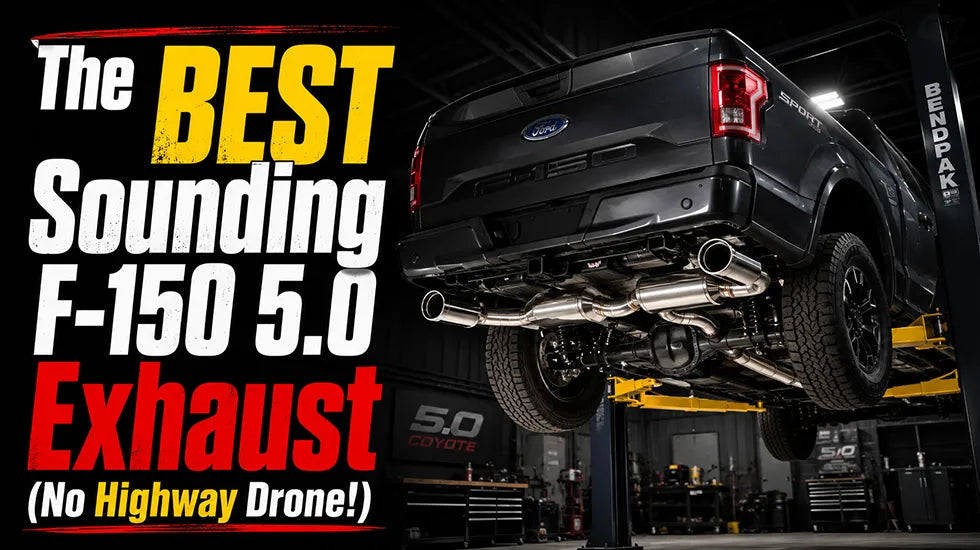
La F-150 Coyote 5.0L es una de esas camionetas que casi suena demasiado recatada de fábrica. Sabes que hay un V8 debajo del capó. Lo sientes. ¿Pero el escape de serie? La mayoría de las veces susurra cuando quieres que hable.
Por eso, tantos propietarios buscan el mejor escape para F150 5.0. No el escape más ruidoso. No el eliminador de silenciador más barato. El que mejor suena. Hay una gran diferencia.
Porque aquí está la fea verdad: muchos escapes suenan genial en un video de arranque en frío de 12 segundos y absolutamente miserables a 110 km/h con las ventanas subidas. Lo he visto demasiadas veces. Un tipo llega al taller orgulloso de su nueva configuración, enciende la camioneta, sonríe y luego dice: "Pero en la carretera zumba tanto que mi esposa odia viajar en ella". Eso no es un buen escape. Eso es solo ruido con un recibo.
Esta guía está escrita para el propietario de una F-150 5.0 que quiere un tono más profundo, un arranque en frío más limpio, más carácter de Coyote V8 y una camioneta que no le zumbé el cráneo en la autopista.
Respuesta rápida: ¿Cuál es el escape para F150 5.0 que mejor suena?
- Para la mayoría de los conductores diarios: un sistema cat-back resonado o un silenciador de mayor tamaño ofrece el mejor equilibrio entre tono profundo y bajo zumbido en la cabina.
- Para el sonido más profundo estilo camioneta: evite los silenciadores pequeños de carreras y los eliminadores de silenciadores. Un silenciador de flujo directo más grande con resonancia controlada suele sonar más maduro.
- Para la comodidad en carretera: mantenga el resonador cuando sea posible, o elija un sistema diseñado para reducir el zumbido alrededor de 1,500–2,000 rpm.
- Para un sonido agresivo: los sistemas cat-back sin resonador pueden sonar potentes al acelerar, pero no siempre son la mejor opción para viajes largos o para remolcar.
- Para mejoras económicas: un cambio de silenciador puede funcionar, pero el ajuste, el tamaño del silenciador y la ruta del tubo de escape importan más que el nombre estampado en la carcasa.
En resumen: el escape para F150 5.0 que mejor suena es el que le da un tono V8 bajo y limpio fuera de la camioneta sin convertir la cabina en una caja de bajos en la carretera.
Cómo definimos el escape para F150 5.0 que mejor suena
Antes de empezar a hablar de cat-backs, silenciadores, resonadores y salidas de escape, tenemos que dejar una cosa clara. "Mejor sonido" no significa "más ruidoso". Sé que suena aburrido. Pero también es cierto.
Un buen escape para una F-150 5.0 debe tener cuatro cosas:
- Ralentí profundo: un suave rugido V8 sin sonar hueco o barato.
- Aceleración limpia: un tono fuerte al pisar el acelerador, sin ruidos metálicos.
- Arranque en frío controlado: suficiente presencia para disfrutar, no suficiente para despertar a todo el vecindario cada mañana.
- Bajo zumbido en carretera: sin un zumbido constante a 100-120 km/h.
Tono profundo no es lo mismo que ruidoso
Un escape ruidoso aún puede sonar mal. Un escape silencioso aún puede sonar rico. El punto óptimo en la F-150 5.0 suele ser un tono más profundo y grueso que permite que el Coyote suene como un V8 de camioneta, no como un coche con escape directo y sonido metálico.
Cuando la gente se queja de un mal sonido de escape, generalmente se refieren a uno de estos:
- Zumbido: un fuerte sonido de baja frecuencia en la cabina que se mantiene en los oídos a un régimen constante.
- Raspeo: un sonido agudo, metálico, casi como un traqueteo al acelerar.
- Chasquido: un chasquido áspero al pisar el acelerador.
- Tono hueco: ruidoso pero delgado, sin profundidad real.
Escucha, el Coyote 5.0 puede sonar excelente. Pero si eliminas demasiado control de sonido del sistema demasiado rápido, también puede volverse áspero rápidamente.
Las 5 pruebas de sonido reales que importan
No juzgues un escape por un solo clip de arranque en frío. Eso es comportamiento de novato. Una prueba de sonido adecuada necesita estas cinco cosas:
- Arranque en frío: ¿qué tan ruidoso es cuando la camioneta arranca por primera vez?
- Ralentí en caliente: ¿se asienta en un rugido limpio?
- Aceleración suave: ¿suena suave en la ciudad?
- Aceleración a fondo: ¿funciona limpiamente o se vuelve áspero?
- Velocidad de crucero en carretera: ¿zumba a 100-120 km/h?
Consejo de experto: Si un clip de sonido no incluye una toma en carretera en cabina a RPM de crucero normales, solo te cuenta la mitad de la historia. El arranque en frío vende escapes. El zumbido en carretera los devuelve.

Escape de serie vs. escape de posventa para F150 5.0: ¿Qué cambia realmente?
El escape de fábrica de una F-150 5.0 está diseñado para la garantía, el cumplimiento de las emisiones, la comodidad general del cliente y pocas quejas de ruido. Eso significa que es silencioso, predecible y, sinceramente, un poco demasiado suave para muchos propietarios de V8.
Un escape de posventa cambia más que el sonido. Puede cambiar cómo se siente la camioneta, cómo se comporta a velocidad de crucero, cuánto se escucha la desactivación de cilindros en los modelos más nuevos y cuánto les agradas a tus vecinos a las 6:30 de la mañana.
| Categoría | Escape de fábrica 5.0 F150 | Sistema Cat-Back de posventa de calidad | Eliminador de silenciador agresivo / Configuración mal combinada |
|---|---|---|---|
| Tono de ralentí | Nota V8 muy suave, silenciosa | Rugido más profundo, más presencia | Ruidoso, a veces hueco o irregular |
| Arranque en frío | Amigable con el vecindario | Notablemente más fuerte pero controlado | Puede ser áspero, especialmente en un garaje |
| Zumbido en carretera | Mínimo | Bajo si está resonado o diseñado correctamente | A menudo notable alrededor de 1,500–2,000 rpm |
| Cambio típico del nivel de sonido | Línea base | A menudo entre 5 y 12 dB más fuerte dependiendo del sistema y la distancia de prueba | El aumento de ruido suele ser mayor que el aumento de potencia |
| Cambio de potencia | Línea base de fábrica | Generalmente pequeño; muchos cat-backs muestran aproximadamente 3–8 CV a la rueda, a veces 8–12 CV a la rueda con modificaciones y ajustes de soporte | El aumento de ruido suele ser mayor que el aumento de potencia |
| Mejor caso de uso | Comodidad de serie | Conducción diaria, camioneta de calle, remolque de fin de semana | Camioneta de exhibición, viajes cortos, propietarios que aceptan el ruido en la cabina |

No compre un cat-back esperando que convierta un 5.0 de serie en una camioneta diferente en el dinamómetro. Cómprelo porque hace que la camioneta suene viva. En una F-150 Coyote de aspiración natural, la diferencia que se siente en el asiento suele ser más sobre la sensación del acelerador y el sonido que un gran salto de caballos de fuerza.
Lo que los propietarios de F-150 5.0 realmente quieren de un escape
La mayoría de los propietarios de 5.0 no buscan una camioneta de carreras. Quieren que la camioneta suene como debería haber sonado de fábrica. Más cuerpo. Más rugido. Más V8. Pero aún así, vivible.
Más carácter Coyote V8 sin ser molesto
El 5.0 tiene una personalidad diferente a la de las camionetas EcoBoost. Acelera de forma más limpia, suena más nítido en la parte superior y tiene ese ritmo V8 de la vieja escuela en ralentí. El truco está en sacar ese carácter sin convertir cada auto-servicio, estacionamiento y arranque matutino en una escena.
Para una F-150 de uso diario, generalmente les digo a las personas que busquen un volumen moderado con control de frecuencia profunda. Ahí es donde la camioneta se siente mejorada pero no infantil.
Bajo zumbido en la cabina en carretera
El zumbido en la carretera es el factor decisivo. No el volumen. El zumbido.
El zumbido suele aparecer como un fuerte zumbido de baja frecuencia al conducir. En muchas configuraciones de F-150 5.0, la zona molesta se encuentra alrededor de 1.500-2.000 rpm, justo donde la camioneta tiende a funcionar en la carretera. Por eso, una configuración puede sonar perfecta en un video de revoluciones, pero volverte loco en un viaje de dos horas.
Un buen diseño de escape controla esa frecuencia. Un mal diseño de escape simplemente lo hace todo más fuerte y espera que no te quejes.
Un tono profundo y limpio en lugar de un sonido metálico
El escape con mejor sonido para los propietarios de F-150 5.0 suele tener un tono más profundo, no un crujido metálico y agudo. El rasgueo a menudo proviene de eliminar demasiada amortiguación o resonancia, usar un silenciador mal combinado o buscar volumen antes que tono.
En una camioneta, el tono profundo gana. Siempre.
Caso de taller en primera persona: la F-150 2018 que sonó genial durante 10 minutos
Recuerdo una F-150 SuperCrew 5.0 de 2018 que llegó al taller hace unos años. El propietario había visto un montón de clips en línea y había elegido la configuración más ruidosa que pudo encontrar. ¿Arranque en frío? Horrible. Ladró con fuerza. Todo el mundo en el estacionamiento miró.
Luego la llevamos a la carretera. Otra historia. A unos 110 km/h, con el acelerador ligeramente pisado, tenía un fuerte zumbido de baja frecuencia que atravesaba la parte trasera de la cabina. No un pequeño zumbido. Una onda de presión. Del tipo que hace que tu pasajero deje de hablar.
Terminamos cambiando la configuración: silenciador más grande, resonador en su lugar, mejor alineación del tubo de escape. Se volvió un poco más silencioso por fuera, pero el tono se hizo más profundo y limpio. Más importante aún, la cabina dejó de zumbar. El propietario regresó dos semanas después y dijo: "Ahora suena como una camioneta en lugar de un dolor de cabeza". Ese es el objetivo.
Tipos de escapes para F150 5.0 con mejor sonido
Hay algunas formas de cambiar el sonido de una F-150 5.0. Algunas son inteligentes. Algunas son baratas. Algunas son baratas primero y caras después porque las rehaces.
Sistemas de escape Cat-Back
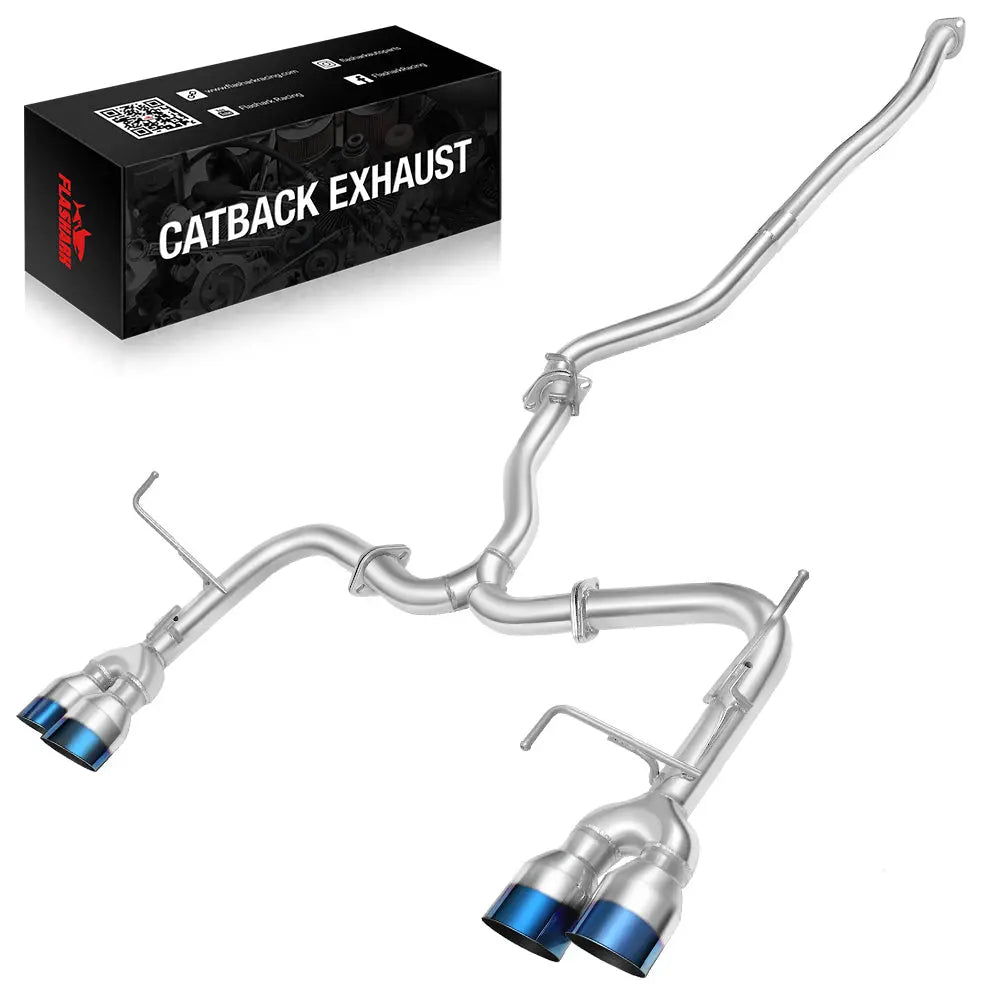
Un sistema cat-back reemplaza la sección de escape después de los convertidores catalíticos. En una F-150, eso generalmente significa una nueva ruta del tubo central, silenciador, sección del tubo de escape, abrazaderas, soportes y puntas, dependiendo del kit.
Esta es la ruta más limpia si desea una actualización de sonido completa con un mejor ajuste y un aspecto acabado. Un cat-back correctamente emparejado puede añadir un tono más profundo sin convertir la cabina en un tambor.
Para las camionetas 2015-2020, una configuración como el escape cat-back con silenciador y puntas para Ford F150 5.0 2015-2020 tiene sentido para los propietarios que desean una actualización completa tipo atornillado en lugar de ensamblar piezas aleatorias de talleres de silenciadores.

Cambio de silenciador
Un cambio de silenciador es más barato. Puede funcionar. Pero no creas que todos los silenciadores suenan igual.
Los factores clave son:
- Tamaño de la carcasa del silenciador
- Diseño interno
- Diámetro de entrada y salida
- Si el resonador de fábrica se mantiene
- Longitud del tubo de escape y ubicación de salida
Un pequeño silenciador agresivo puede sonar divertido por un día. Luego, la carretera te recuerda por qué los ingenieros usan resonadores.
Eliminación del resonador
La eliminación de un resonador puede aumentar el volumen y hacer que la camioneta suene más cruda. A veces, eso es lo que el propietario quiere. Pero si su objetivo es un tono profundo sin zumbido, eliminar el resonador demasiado pronto es arriesgado.
El resonador no solo "lo hace silencioso". Ayuda a controlar ciertas frecuencias. Quítalo, y es posible que obtengas más ladridos, más aspereza y más zumbido en la cabina.
Eliminación del silenciador
La eliminación del silenciador es el martillo contundente. Es barato. Es ruidoso. Llama la atención.
¿Lo recomendaría para la mayoría de los propietarios de F-150 5.0 de uso diario? No. A menos que el propietario ya haya aceptado el compromiso. Los escapes sin silenciador a menudo suenan emocionantes fuera de la camioneta, pero se vuelven tediosos dentro de ella. Especialmente con la familia, al remolcar, en viajes largos o con arranques en frío temprano por la mañana.
Cambios en la sección del eje y la parte trasera
Algunos propietarios solo quieren cambiar la sección trasera o las puntas. Esto puede modificar un poco el sonido, pero en la plataforma F-150, las opciones de silenciador y resonador suelen marcar la mayor diferencia.
Las puntas pueden cambiar la apariencia y afectar ligeramente el tono en la salida. No solucionarán un silenciador que zumba.
Mejores perfiles de sonido: ¿Cuál se adapta a tu estilo de conducción?
Aquí es donde la mayoría de la gente se equivoca. Preguntan: "¿Cuál es el mejor escape?" en lugar de preguntar: "¿Cuál es el mejor escape para mi forma de conducir?"
| Perfil de sonido | Ideal para | Cómo se siente | Nivel de riesgo |
|---|---|---|---|
| Tono suave para el día a día | Trayectos diarios, uso familiar, remolque | Más profundo que el de serie, fácil de vivir con él | Bajo riesgo de zumbido |
| Tono profundo moderado | La mayoría de las camionetas de calle | Sonido V8 fuerte, pero civilizado | Bajo a medio |
| Tono agresivo de calle | Propietarios a los que les gustan los arranques en frío y el sonido del acelerador | Notablemente más ruidoso, más actitud | Riesgo medio de zumbido |
| Tono de rendimiento ruidoso | Camionetas de fin de semana, construcciones de exhibición | Gran volumen, gran arranque en frío | Alto riesgo de zumbido si no se combina bien |
Tono suave para el día a día
Esta es la elección inteligente para la mayoría de los propietarios. La camioneta suena mejor cada vez que la arrancas, pero no te castiga en los viajes largos.
Busca un silenciador más grande, un diseño resonado o un cat-back construido para controlar el tono. Si pasas mucho tiempo a 100-120 km/h, aquí es donde deberías vivir.
Tono de calle profundo y agresivo
Este perfil es más ruidoso que el de serie, más profundo al ralentí y mucho más notorio al acelerar. Es una buena opción si tu camioneta es en parte de uso diario, en parte un juguete de fin de semana.
Solo sé honesto contigo mismo. Si tu viaje al trabajo es de 45 minutos en cada sentido por la autopista, lo agresivo puede volverse molesto rápidamente.
Tono de rendimiento ruidoso
Algunos propietarios quieren ruido. Está bien. No hay nada de malo en ello. Pero las configuraciones ruidosas necesitan más precaución en una camioneta que en un coche de fin de semana porque la cabina de la F-150 es grande, el recorrido del escape es largo y la sección trasera puede enviar un sonido de baja frecuencia directamente a la cabina.
Si optas por un sonido fuerte, busca clips de conducción reales en la cabina antes de comprar.
Arranque en frío respetuoso con los vecinos
El arranque en frío es donde muchos sistemas agresivos muestran sus dientes. En un garaje o entre casas, incluso un sistema moderado puede sonar mucho más fuerte de lo que lo hace en un estacionamiento abierto.
Si te vas temprano, tienes vecinos cercanos o usas el arranque remoto con frecuencia, no ignores esta parte.
Mejores características de escape sin zumbido a buscar
El control del zumbido no es magia. Es diseño. Algunos sistemas lo manejan bien. Otros simplemente añaden volumen y esperan que al propietario le guste lo suficientemente fuerte como para perdonar el ruido de la cabina.
Cuerpo del silenciador más grande
Un cuerpo de silenciador más grande generalmente le da a las ondas sonoras más espacio para ralentizarse y suavizarse. Puede ayudar a crear ese tono más profundo y redondo que muchos propietarios de F-150 desean.
Los silenciadores pequeños pueden sonar agudos y agresivos. A veces eso es divertido. A veces suena simplemente barato. En una camioneta de tamaño completo, preferiría tener un silenciador ligeramente más grande que suene controlado a una lata diminuta que ladra con cada movimiento del acelerador.
Sistemas resonantes vs. no resonantes
Un sistema resonante suele ser más seguro para un conductor diario. Ayuda a controlar las frecuencias duras, especialmente a RPM constantes.
Un sistema no resonante puede sonar más agresivo. También puede traer más aspereza y zumbido. No siempre, pero con la suficiente frecuencia como para que debas prestar atención.
Advertencia: Muchos propietarios nuevos quitan el resonador primero porque parece una mejora de sonido fácil. He visto que eso sale mal muchas veces. Más sonido no siempre es mejor sonido. Si la comodidad en carretera es importante, no elimines las piezas de control de sonido a ciegas.
Cámaras de cancelación de zumbido y control de frecuencia
Algunos sistemas de escape premium utilizan ajuste de cámara, resonadores tipo Helmholtz u otros diseños de control de frecuencia para apuntar al rango de RPM donde ocurre el zumbido. La idea es simple: cancelar o reducir la molesta onda de baja frecuencia antes de que llene la cabina.
No necesitas memorizar la teoría acústica. Solo recuerda esto: un escape sin zumbido no se trata solo del empaque del silenciador. Se trata de la longitud de la tubería, el volumen de la cámara, la frecuencia, la ubicación de salida y la carga del motor.

Ubicación de salida del tubo de escape
La ubicación de salida importa más de lo que la gente piensa.
- Salida trasera única: generalmente limpia y predecible.
- Doble salida trasera: buen aspecto, sonido trasero más completo, a menudo popular en camiones de calle.
- Salida lateral: apariencia agresiva, pero puede reflejar más sonido cerca de la cabina dependiendo del diseño.
- Salida antes del neumático: ruidosa y cruda, pero más propensa a ser molesta en el interior.
Para una camioneta de uso diario, tengo cuidado con las configuraciones de salida lateral. Pueden sonar muy bien. También pueden poner la frecuencia incorrecta justo donde te sientas.
Las mejores configuraciones de escape según el caso de uso
Esta es la parte que debes usar antes de comprar. Primero elige tu caso de uso real. Luego elige el escape.
Lo mejor para la conducción diaria
Para la conducción diaria, elige un cat-back moderado o un cambio de silenciador que mantenga el resonador. Quieres un ralentí más profundo, un mejor sonido del acelerador y poco ruido en la cabina.
La mejor configuración diaria suele tener:
- Volumen de silenciador moderado
- Cuerpo de silenciador lo suficientemente grande
- Ajuste de soporte de estilo de fábrica
- Buena alineación de la punta
- Sin zumbido áspero a 65-75 mph
Si estás buscando opciones en diferentes rangos de años, la colección de sistemas de escape cat-back para Ford F150 para un sonido V8 profundo es el tipo de categoría adecuada para comparar antes de elegir un ajuste específico.
Lo mejor para un tono profundo sin zumbido en carretera
Este es el punto óptimo. Un cat-back profundo y controlado con una sección de silenciador real suele ser la decisión correcta. No demasiado pequeño. No completamente abierto. No una tubería improvisada que suene como un cubo de basura de metal a 1,800 rpm.
Para muchos propietarios de 5.0, la fórmula ganadora es:
- Mantener o reemplazar el resonador con un diseño afinado
- Usar un cuerpo de silenciador más grande
- Evitar rutas de escape ultracortas
- Elegir salida trasera o enrutamiento de salida lateral bien probado
- Verificar el sonido en cabina en carretera antes de comprar
Lo mejor para una mejora de sonido económica
Presupuesto no significa malo. Un cambio de silenciador puede ser una buena opción si eliges el silenciador correcto y el instalador sabe lo que hace.
Pero aquí está el truco: un silenciador barato mal instalado puede costar más a largo plazo. Puntas torcidas, ruidos, contacto con la tubería, fugas de escape y quejas por zumbido se convierten en mano de obra adicional.
Lo mejor para propietarios de F150 5.0 de 2011-2014
Las camionetas 5.0 de 2011-2014 responden bien a un cat-back más profundo porque el sonido de fábrica es muy restringido. Para estos años, el ajuste y la distancia entre ejes importan mucho, especialmente si el sistema está diseñado alrededor de una configuración específica de cabina y cama.
Una configuración de estilo de reemplazo adecuada como el escape cat-back de 3 pulgadas para Ford F150 5.0L 2011-2014 es un mejor punto de partida que intentar forzar un silenciador universal en una camioneta que necesita un enrutamiento limpio y una alineación de los soportes.
Lo mejor para un arranque en frío agresivo
Si el arranque en frío es tu parte favorita, puedes ir más agresivo. Solo comprende la compensación. La configuración que suena enojada en tu entrada puede ser la misma configuración que retumba en la cabina en la carretera.
Mi regla: si la camioneta es un juguete, hazla más ruidosa. Si la camioneta transporta a la familia, herramientas, remolques o a ti al trabajo todos los días, mantente controlado.
Lo mejor para remolcar o viajes largos por carretera
Remolcar somete el motor a una carga constante. La carga constante hace que el zumbido sea más obvio. Si remolcas a menudo, no compres la configuración más ruidosa. Compra la configuración que se mantenga tranquila bajo carga a velocidad de crucero.
Un cat-back resonante suave o moderado suele ser mejor para remolcar que una eliminación del silenciador o una salida lateral agresiva.
Notas de ajuste para compradores de escape F150 5.0 de 2011-2026
No te saltes el ajuste. Sé que es aburrido. También sé que evita dolores de cabeza.
F150 5.0 de 2011-2014
Estas camionetas son populares para construcciones de V8 económicas. La ruta de escape es sencilla, pero la cabina, la caja y la distancia entre ejes aún importan. Siempre haz coincidir el sistema con tu camioneta exacta, no solo con el motor.
F150 5.0 de 2015-2020
Este es uno de los rangos más comunes para mejoras de escape. Las camionetas son más nuevas, más ligeras que la generación anterior con carrocería de acero, y hay muchas opciones de cat-back disponibles.
Para esta generación, un sistema completo con silenciador y puntas suele ser más limpio que una configuración improvisada. También ayuda a reducir las conjeturas de instalación.
F150 5.0 de 2021-2026
Las camionetas 5.0 más nuevas pueden ser más difíciles debido al comportamiento de desactivación de cilindros y la calibración actualizada. Cuando el motor cambia de modo de funcionamiento, algunos escapes del mercado de accesorios hacen que esa transición de sonido sea más notable.
Si tienes una camioneta 2021+, no te fíes solo de los clips de sonido más antiguos de 2015-2020. Busca clips de la misma generación siempre que sea posible.
La cabina, la longitud de la caja y la distancia entre ejes importan
Aquí está la aburrida lista de verificación que te evita pedir el escape incorrecto:
- Año del modelo
- Motor: 5.0L V8
- Estilo de cabina: cabina regular, SuperCab o SuperCrew
- Longitud de la caja
- Distancia entre ejes
- Ubicación de salida de fábrica
- Holgura especial para el ajuste o paquete
Caso de instalación en primera persona: El problema de la distancia entre ejes incorrecta
Tuve una SuperCrew 5.0 que llegó donde el propietario juraba que el escape era "para su año". Técnicamente, sí. Mismo año. Mismo motor. Distancia entre ejes incorrecta.
La sección del silenciador estaba cerca, pero el tubo de escape estaba mal colocado, el ángulo de la punta estaba incorrecto y un soporte estaba bajo tensión. Ese tipo de instalación puede generar ruidos más tarde, romper una soldadura o empujar la tubería demasiado cerca del área de la rueda de repuesto.
Lo hicimos funcionar con corte y ajuste, pero debería haber sido una tarde de atornillar. Así que escucha: el año y el motor no son suficientes. La cabina y la caja importan.
Errores comunes al elegir un escape para F150 5.0
Comprar el escape más ruidoso basándose en clips de arranque en frío
Los clips de arranque en frío son divertidos. También son peligrosos para tu billetera.
Un micrófono de teléfono comprime el sonido. A menudo se pierde el zumbido de baja frecuencia en la cabina. Puede hacer que un escape áspero suene más limpio de lo que es. Y no te dice casi nada sobre la comodidad en carretera.
Si quieres el escape F150 5.0 con mejor sonido para la conducción real, busca clips con ralentí, aceleración, paso y crucero en cabina.
Retirar el resonador demasiado pronto
Muchos propietarios nuevos creen que el resonador es simplemente una restricción. No es tan simple.
El resonador ayuda a dar forma al tono. Si lo quitas sin un plan, puedes ganar volumen pero perder calidad. Si tu configuración actual es demasiado silenciosa, comienza con un plan completo de cat-back o un cambio de silenciador adecuado antes de cortar cada pieza de control de sonido.
Elegir la salida lateral solo por el aspecto
La salida lateral tiene un aspecto rudo. No hay discusión. Pero la trayectoria del sonido es diferente. Dependiendo de la posición de salida, el estilo de la cabina y el ángulo de la tubería, la salida lateral puede hacer que ciertas frecuencias sean más notorias en el interior.
Si te encanta el aspecto, está bien. Solo revisa primero los clips de conducción reales.
Ignorar la desactivación de cilindros en camiones más nuevos
En las camionetas de 2021+, la desactivación de cilindros puede cambiar cómo suena el escape durante un crucero con poca carga. Un sistema de serie oculta mucho de eso. Un escape ruidoso puede que no lo haga.
Si eres sensible a los cambios de sonido, esto importa.
Asumir que un tubo más grande siempre suena mejor
Un escape de 3 pulgadas puede funcionar muy bien en una F-150 5.0. Pero más grande no es automáticamente mejor. El diámetro del tubo cambia la velocidad del gas, el tono y el comportamiento de resonancia. Demasiado grande, demasiado corto o mal silenciado puede hacer que la camioneta suene hueca en las bajas revoluciones.
Combina el escape con el motor y el caso de uso. No con los derechos de fanfarronear.
Notas de instalación antes de comprar
Un buen escape puede seguir siendo molesto si se instala mal. El trabajo de escape no es complicado, pero los pequeños errores se manifiestan como ruidos, fugas, puntas torcidas o problemas de calor.

Lista de verificación antes de ordenar
- Confirma el año de tu camioneta.
- Confirma el ajuste del motor 5.0L V8.
- Confirma la longitud de la cabina y la caja.
- Confirma la distancia entre ejes.
- Verifica si el kit incluye abrazaderas, silenciador, tubo de escape y puntas.
- Observa el estilo de salida y la holgura del parachoques/punta.
- Verifica si se requiere corte.
Atornillado vs. corte y soldadura
Un verdadero cat-back atornillado suele ser más fácil para los propietarios que lo hacen ellos mismos. Los cambios de silenciador a menudo requieren cortar, ajustar y soldar o sujetar. No hay nada de malo en eso si el instalador es bueno.
Pero si lo haces en tu garaje, un cat-back completo suele ser menos doloroso.
Qué inspeccionar durante la instalación
- Posición de la abrazadera: las abrazaderas deben asentarse uniformemente, no aplastar las tuberías de forma torcida.
- Tensión del colgador: los colgadores de goma no deben estirarse con fuerza hacia un lado.
- Espacio libre para la llanta de repuesto: deja suficiente espacio para el movimiento bajo carga.
- Espacio libre para el escudo térmico: mantén los tubos alejados del cableado, las líneas de freno y el plástico.
- Alineación de la punta: verifica después de que el sistema esté caliente y asentado.
- Verificación de fugas: escucha en cada unión después del primer arranque.
Nota del mecánico: Después de los primeros ciclos de calentamiento, vuelve a revisar las abrazaderas. Los sistemas de escape se expanden, se asientan y se mueven. Una pequeña fuga en la abrazadera puede hacer que un buen escape suene áspero o barato.
Cómo probar el zumbido del escape después de la instalación
No solo lo revoluciones en la entrada y des por terminado el trabajo. Conduce correctamente.
Prueba a 45-55 mph en ciudad
Usa un acelerador suave. Deja que la camioneta se mantenga en una marcha normal. Escucha un zumbido o estruendo constante que no desaparece a menos que cambies de velocidad.
Prueba a 65-75 mph en carretera
Esta es la prueba real. Ventanillas subidas. Radio apagada. Modo de conducción normal. Carretera llana si es posible.
Si zumba aquí, lo notarás cada semana. Quizás cada día.
Prueba con las ventanillas subidas y la radio apagada
El sonido con la ventanilla abierta no es lo mismo que la comodidad real en la cabina. Pruébalo como realmente conduces.
Prueba con pasajeros
Puede que toleres más ruido que tu pasajero. Tus hijos, cónyuge o compañero de trabajo puede que no. Si esta es una camioneta familiar, eso importa.
Lista de verificación para comprar el escape F150 5.0 con mejor sonido
Antes de comprar, revisa esta lista. Ahorra dinero. Ahorra tiempo. Te salva de ser el tipo que vende un escape usado dos semanas después.
Primero, elige tu nivel de sonido
- Suave: más profundo que el de fábrica, mínima atención.
- Moderado: sonido V8 claro, buen equilibrio diario.
- Agresivo: fuerte arranque en frío y presencia del acelerador.
- Ruidoso: máxima atención, mayor riesgo de zumbido.
Decide si el zumbido importa más que el volumen
Sé honesto. Si odias el zumbido, no busques la configuración más ruidosa. Punto.
Ajusta el escape a tu caso de uso real
- Conductor diario: cat-back moderado, diseño resonado, silenciador más grande.
- Equipo de remolque: tono suave a moderado, bajo zumbido bajo carga.
- Camioneta de fin de semana: sistema más agresivo es aceptable.
- Camioneta de exhibición: el sonido y la apariencia pueden importar más que la comodidad.
Mira los clips de sonido correctos
Busca clips que muestren:
- Arranque en frío
- Ralentí en caliente
- Aceleración
- Paso
- Crucero en carretera en cabina
- Aceleración ligera alrededor de 1,500–2,000 rpm
Compara las opciones completas de Cat-Back antes de elegir una
Si aún estás comparando estilos de salida, niveles de sonido y opciones de ajuste, navega por una categoría más amplia de sistemas de escape cat-back de alto rendimiento para camiones y muscle cars antes de reducir tu búsqueda a tu año y configuración de cabina exactos de la F-150.
Veredicto final: ¿Cuál es el escape con mejor sonido para la F150 5.0?
El escape con mejor sonido para los propietarios de la F150 5.0 generalmente no es el más ruidoso del estacionamiento. Es la configuración que suena profunda al ralentí, limpia al acelerar y tranquila en la carretera.
Para la mayoría de los propietarios, eso significa un sistema cat-back de calidad o una configuración de silenciador bien combinada con suficiente control de sonido para evitar el zumbido. Mantén el resonador si no estás seguro. Elige un cuerpo de silenciador más grande si quieres profundidad. Ten cuidado con la eliminación del silenciador si la camioneta es de uso diario.
Aquí está mi respuesta clara:
- Mejor elección diaria: cat-back resonante moderado.
- Mejor elección de tono profundo: cuerpo de silenciador más grande con enrutamiento de tubo de escape controlado.
- Mejor elección económica: cambio de silenciador manteniendo el resonador.
- Mejor elección agresiva: cat-back no resonante, solo si aceptas un mayor riesgo de ruido en la cabina.
- Peor elección a ciegas: eliminación del silenciador basada solo en videos de arranque en frío.
Honestamente, un buen escape para la F-150 5.0 debería hacerte sonreír cada vez que arrancas la camioneta, no hacerte arrepentir de un viaje por carretera. Primero, logra el tono correcto. El volumen, en segundo lugar.
Preguntas frecuentes
P1: ¿Cuál es el escape con mejor sonido para una F150 5.0?
R1: Para la mayoría de los propietarios, el escape con mejor sonido para una F150 5.0 es un cat-back moderado con un tono de silenciador profundo y bajo control de zumbido. Un sistema resonante o un diseño de cuerpo de silenciador más grande suele funcionar mejor para la conducción diaria que una eliminación de silenciador.
P2: ¿Cuál es el escape de la F150 5.0 con mejor sonido sin zumbido?
R2: La mejor opción sin zumbido suele ser un cat-back resonante o un sistema diseñado con control de frecuencia. Busca clips de sonido en cabina en carretera antes de comprar. Si el escape suena bien por fuera pero retumba a 1,800 rpm por dentro, no es una buena configuración para el uso diario.
P3: ¿Un escape cat-back de F150 5.0 añade caballos de fuerza?
R3: Un escape cat-back puede reducir ligeramente la restricción, pero es principalmente una mejora de sonido y apariencia. En muchas camionetas F-150 5.0 de aspiración natural, las ganancias de potencia en las ruedas en el mundo real suelen ser modestas, comúnmente alrededor de 3 a 8 CV en las ruedas. Con una entrada y una afinación de apoyo, algunas configuraciones pueden mostrarse más cercanas a 8 a 12 CV en las ruedas, pero los resultados varían.
P4: ¿Es mala la eliminación del silenciador para una F150 5.0?
R4: Una eliminación del silenciador no es automáticamente mala, pero suele ser demasiado ruidosa y cruda para muchos conductores diarios. Puede aumentar el volumen del arranque en frío, la aspereza y el zumbido en carretera. Si remolcas, viajas al trabajo o transportas a la familia con frecuencia, una eliminación del silenciador es arriesgada.
P5: ¿Debo eliminar el resonador de mi F150 5.0?
R5: Si te importa la comodidad en carretera, no quites el resonador primero. El resonador ayuda a controlar las frecuencias ásperas y el zumbido de la cabina. Muchos propietarios obtienen un mejor resultado al actualizar el silenciador o instalar un cat-back adecuado manteniendo alguna forma de control de resonancia.
P6: ¿Qué suena mejor en una F150 5.0, Borla o Corsa?
R6: Ambos pueden sonar bien, pero tienen personalidades diferentes. Los sistemas Borla a menudo se eligen por nivel de sonido, como Touring, S-Type o ATAK. Corsa a menudo es conocido por su tono limpio y su comportamiento sin zumbido. La mejor opción depende de si deseas un sonido suave, moderado o agresivo.
P7: ¿Es Borla ATAK demasiado ruidoso para una F150 5.0?
R7: Para algunos conductores diarios, sí, el Borla ATAK puede ser demasiado agresivo. Tiene un arranque en frío fuerte y un sonido de acelerador ruidoso. Si quieres un tono grave sin demasiado ruido en la cabina, un sistema más suave puede ser más fácil de llevar.
P8: ¿Un escape de salida lateral hace más resonancia que uno de salida trasera?
R8: No siempre, pero un escape de salida lateral puede hacer que ciertas frecuencias sean más notorias dependiendo del estilo de la cabina, la longitud de la caja y la posición de salida. Los sistemas de salida trasera suelen ser más predecibles para la comodidad diaria.
P9: ¿Qué escape da el tono más grave en una F150 5.0?
R9: Un cat-back con silenciador de cuerpo más grande y resonancia controlada suele dar el tono más grave. Los silenciadores pequeños y la eliminación de silenciadores a menudo suenan más fuertes, pero no siempre más graves. El tono grave proviene del diseño del silenciador, el control del resonador, el recorrido de la tubería y la ubicación de la salida.
P10: ¿Por qué mi escape de F150 hace resonancia a velocidades de autopista?
R10: La resonancia en autopista ocurre cuando la frecuencia del escape coincide con la de la cabina y la carga del motor a un régimen constante. Las causas comunes incluyen silenciadores pequeños, eliminación de resonadores, recorrido agresivo de la tubería, mala colocación de la salida o un sistema que es demasiado ruidoso alrededor de 1.500–2.000 rpm.
P11: ¿La desactivación de cilindros de la F150 5.0 2021+ afecta el sonido del escape?
R11: Sí, puede. En las camionetas F-150 5.0 más nuevas, la desactivación de cilindros puede hacer que el sonido del escape cambie durante la conducción a baja carga. Un sistema de posventa más ruidoso puede hacer que esa transición sea más notoria que el original.
P12: ¿Vale la pena un escape cat-back en una F150 5.0?
R12: Sí, si quieres un sonido más grave, una mejor apariencia del escape y una solución más completa atornillable. Un cat-back suele ser más caro que un cambio de silenciador, pero a menudo ofrece un ajuste más limpio y un sonido más predecible.
P13: ¿Cuál es la mejor modificación de escape económica para una F150 5.0?
R13: Un cambio de silenciador suele ser la mejor modificación de escape económica. Mantén el resonador si quieres menos resonancia, y elige un silenciador con suficiente tamaño de cuerpo para mantener el tono grave en lugar de áspero.
P14: ¿Cómo puedo hacer que mi F150 5.0 suene más fuerte sin resonancia?
R14: Elige un cat-back moderado, mantén un resonador o un diseño de control de resonancia, y evita los silenciadores extremadamente pequeños. Puedes hacer que la camioneta suene más fuerte que de fábrica sin que sea molesto en la autopista, pero el sistema debe estar correctamente combinado.
P15: ¿Un escape de 3 pulgadas es bueno para una F150 5.0?
R15: Un escape de 3 pulgadas puede funcionar bien en una F150 5.0 cuando el silenciador, el resonador y el recorrido están correctamente combinados. El diámetro de la tubería por sí solo no garantiza un mejor sonido. Una configuración de 3 pulgadas mal diseñada aún puede hacer resonancia o sonar hueca.

Steven Chen
Especialista en Rendimiento Automotriz | Sistemas de Motor y Escape
Steven se centra en el rendimiento práctico del motor, el ajuste del escape y las rutas de mejora en el mundo real para vehículos clásicos y modernos de entusiastas. Revisa aplicaciones de Ford de bloque pequeño, LS, camiones y de calle/pista con un objetivo en mente: ayudar a los constructores a elegir piezas que realmente funcionen juntas. Su filosofía: "Una buena potencia comienza con la combinación correcta, no con la pieza más grande."