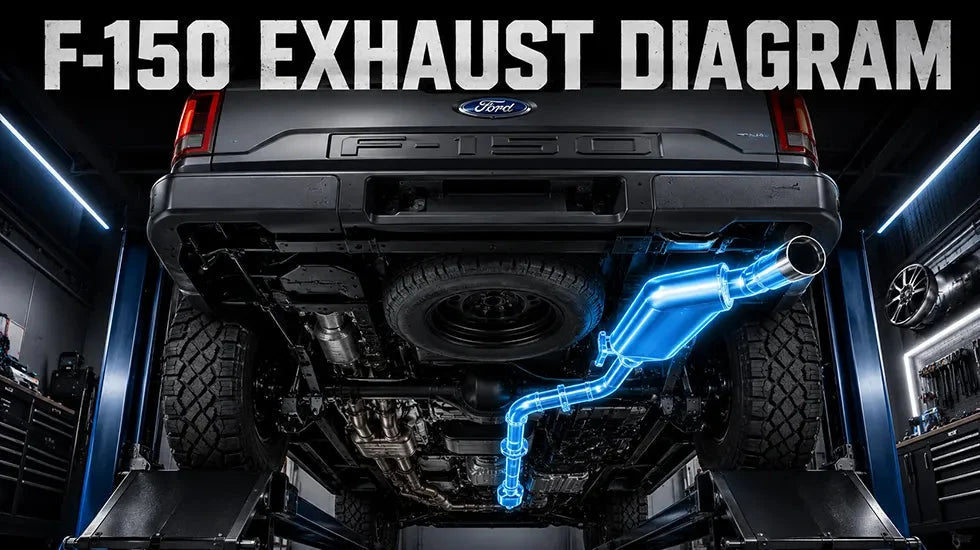
Diagrama de Escape de Ford F150: Qué Reemplaza Realmente un Sistema Catback
Mete una F-150 en el garaje, arrástrate debajo del lado del pasajero con una linterna, y el escape parecerá simple durante unos tres segundos. Luego empiezas a hacer preguntas. ¿Esa pequeña lata antes del silenciador es un resonador? ¿Dónde terminan los convertidores catalíticos? ¿Un escape catback reemplaza el tubo en Y? ¿Y por qué un kit dice que es compatible con un 5.0L, mientras que otro pregunta por la longitud de la cabina y la caja?
Esa es exactamente la razón por la que un diagrama de escape de Ford F150 claro es importante. No el bonito dibujo de la tienda de repuestos que muestra un tubo y un silenciador. Me refiero a una explicación práctica, debajo de la camioneta, de lo que permanece de fábrica, lo que se reemplaza y lo que puede morderte durante la instalación.
Antigua verdad de mecánico: la mayoría de los errores de escape de F-150 no ocurren porque el propietario sea tonto. Ocurren porque la palabra catback suena más completa de lo que realmente es. No significa "escape completo". No significa "desde los colectores hacia atrás". No significa "eliminar los catalizadores". Escucha atentamente aquí: en una camioneta de uso diario, esa distinción importa.

Respuesta Rápida: ¿Qué Reemplaza un Escape Catback en una Ford F150?
- En la mayoría de los casos, un escape catback de Ford F150 reemplaza las partes del escape que están detrás de los convertidores catalíticos, generalmente incluyendo el tubo intermedio, el silenciador, el tubo sobre el eje, el tubo de escape y la punta del escape.
- Por lo general, no reemplaza los colectores de escape, los cabezales, los convertidores catalíticos, el tubo en Y delantero o los sensores de oxígeno. Esas piezas se encuentran más adelante en el sistema de escape.
- Algunos kits también reemplazan o eliminan la sección del resonador, pero eso depende del año, el motor, la longitud de la cabina, la longitud de la caja y el diseño exacto del kit.
- Para las camionetas F-150 de 2015-2020, el ajuste puede cambiar según el 2.7L EcoBoost, 3.5L EcoBoost, 5.0L V8, la configuración de cabina/caja y el nivel de equipamiento. No compre solo por el tamaño del motor.
- Las ganancias de rendimiento suelen ser modestas en una camioneta de serie. Un buen catback se trata más de sonido, soporte de flujo de aire, resistencia a la corrosión y apariencia que de una gran potencia por sí solo.
Diagrama de Escape de Ford F150: Partes Principales de Adelante Hacia Atrás
Antes de hablar de lo que reemplaza un catback, mapeemos el sistema de fábrica. Un diagrama de sistema de escape de Ford F150 básico se ve así cuando se sigue el flujo de escape desde el motor hacia el tubo de escape:
MOTOR → MÚLTIPLES/CABEZALES DE ESCAPE → TUBOS DELANTEROS / TUBO EN Y → CONVERTIDORES CATALÍTICOS → RESONADOR / TUBO CENTRAL → SILENCIADOR → TUBO SOBRE EL EJE → TUBO DE ESCAPE → PUNTA DEL ESCAPE
Esa es la versión limpia. Los camiones reales son más desordenados. Las camionetas EcoBoost tienen tuberías de turbo en la parte delantera. Las camionetas V8 suenan diferente con el mismo diámetro de tubo. Las camionetas más antiguas pueden tener ya soldaduras de taller de silenciadores, abrazaderas oxidadas o un resonador medio eliminado del propietario anterior. He visto F-150 "stock" llegar con tres diámetros de tubo diferentes debajo de la misma camioneta. No es broma.
Colectores o Cabezales de Escape
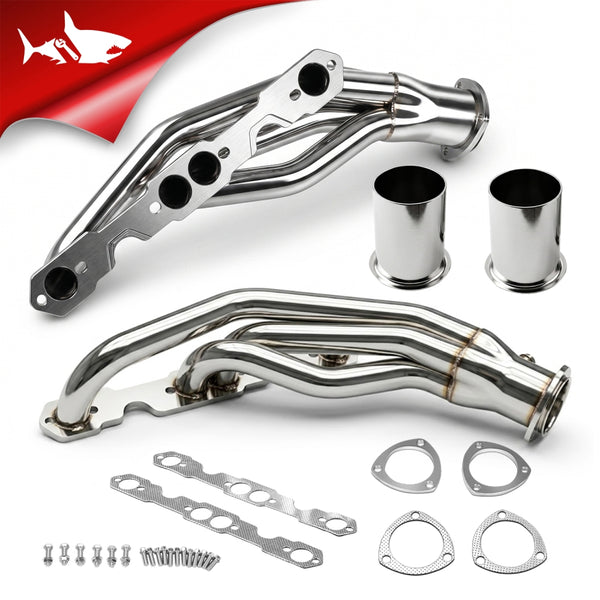
Los colectores de escape se atornillan directamente al motor. En la mayoría de las camionetas F-150 de fábrica, se trata de colectores de fundición, no de cabezales de rendimiento. Su trabajo es simple: recoger los gases de escape de cada cilindro y enviarlos hacia los tubos de escape delanteros.
Un escape catback no reemplaza estas piezas. Si alguien dice que su catback comienza en el motor, está usando la palabra incorrecta. Eso sería más cercano a una configuración de escape desde el cabezal o escape completo. Es otro animal. Más trabajo. Más calor. Más preguntas de ajuste.
Convertidores Catalíticos
Los convertidores catalíticos son componentes de emisiones. Limpian los gases de escape antes de que el escape viaje más hacia atrás a través del silenciador y el tubo de escape. En las camionetas F-150 modernas, los catalizadores suelen estar ubicados mucho más cerca del motor que el silenciador.
Aquí está la parte importante para el mercado estadounidense: un escape catback normal mantiene los convertidores catalíticos en su lugar. Si una pieza elimina o reemplaza los catalizadores, ya no es solo una discusión de catback. Se convierte en una discusión de legalidad de emisiones, y eso no es algo para tratar a la ligera en una camioneta de uso diario.
Tubo Delantero, Tubo en Y o Tubo Central
Aquí es donde los nuevos propietarios se confunden. Algunas configuraciones de F-150 usan un tubo en Y o un tubo conector delantero antes de que el escape pase a la sección que la mayoría de la gente llama catback. Dependiendo del año y el motor, la ubicación exacta de la brida o abrazadera cambia.
Por eso la foto del producto importa. Mucho. Si la foto del kit comienza detrás de los catalizadores de fábrica, probablemente sea un catback. Si incluye tubos delanteros que llegan hacia los colectores o catalizadores, tómate tu tiempo y verifica lo que estás comprando.
Resonador
El resonador no es lo mismo que el convertidor catalítico. Es una parte de control de sonido. Elimina ciertas frecuencias antes de que el escape llegue al silenciador. Puede reducir el sonido metálico, el zumbido y el ruido de la carretera.
Consejo de Experto: Si ves un pequeño recipiente antes del silenciador, no lo llames automáticamente catalizador. En muchas camionetas, esa pieza es un resonador. Los catalizadores suelen estar más adelante y a menudo tienen sensores de oxígeno cerca.
Tubo Flexible
Un tubo flexible absorbe el movimiento del motor y la vibración del chasis. Generalmente tiene una sección exterior tejida o trenzada. Cuando tiene fugas, es posible que escuche un sonido de tictac, soplido o metálico bajo carga.
Algunos propietarios ven la sección trenzada y piensan que todo el escape se está desintegrando. A veces es así. A veces, la sección flexible es la única pieza fallida. Un catback completo puede incluso no tocar esa área, dependiendo de dónde comience el kit.
Silenciador
El silenciador es el gran cambiador de sonido. Cambia solo el silenciador y tu F-150 puede pasar de silenciosa a ruidosa en una tarde. Pero un cambio de silenciador no te da el mismo reemplazo completo de tubería que un catback.
En una camioneta de serie, reemplazar solo el silenciador puede cambiar el tono en un 70-80% de lo que escucha el conductor. Por eso, los proyectos económicos suelen empezar por ahí. Pero si el tubo de escape está oxidado, las curvas están aplastadas, o quieres puntas pulidas/negras y un flujo más limpio, un catback completo tiene más sentido.
Tubo Sobre el Eje, Tubo de Escape y Punta de Escape
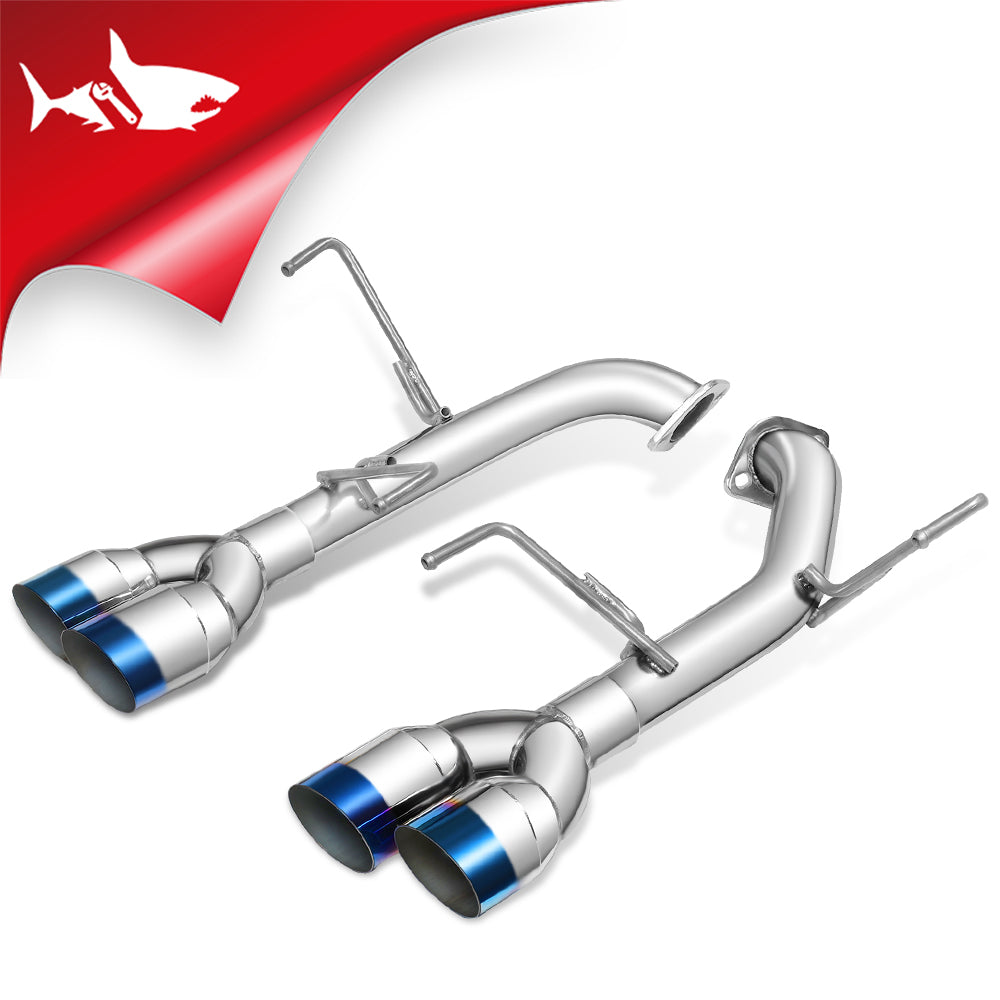
El tubo sobre el eje dirige el escape por encima del eje trasero. El tubo de escape lo saca por el lateral o por la parte trasera. La punta de escape es la parte visible, y sí, cambia el aspecto más que la hoja del dinamómetro.
Salida lateral, salida trasera, doble salida dividida, punta negra, punta pulida, estos no son solo detalles de estilo. Afectan dónde se refleja el sonido. Una salida lateral puede sonar más nítida cerca de las paredes. Una salida trasera puede sonar más suave desde el interior de la cabina. Las puntas divididas dobles a menudo parecen más agresivas, pero no asumas que la salida doble significa el doble de potencia.

Lo que un Escape Catback Reemplaza Realmente en una F150
Ahora llegamos a la parte importante. La palabra "catback" significa literalmente desde el convertidor catalítico hacia atrás. En términos prácticos para la F-150, generalmente significa la sección trasera del escape detrás del hardware de emisiones.
Para una actualización típica de catback de F-150, espera que el kit incluya alguna combinación de:
- Tubo intermedio o tubo de extensión
- Tubo resonador o sección de eliminación del resonador, según el kit
- Silenciador de rendimiento
- Tubo sobre el eje
- Tubo de escape
- Punta o puntas de escape
- Abrazaderas, soportes y herrajes de montaje
Si desea explorar opciones más amplias más allá de una sola camioneta, la colección de sistemas de escape catback de rendimiento de Flashark es una página de categoría limpia para comparar diseños, rutas de tuberías y estilos de puntas sin mezclar la búsqueda con cabezales o bajantes.
Área Típica de Reemplazo del Catback
Un diagrama de escape de Ford F150 práctico debería trazar una línea justo detrás del área del convertidor catalítico. Todo lo que está detrás de esa línea puede ser parte del catback. Todo lo que está delante de ella generalmente permanece de fábrica.
| Parte del Escape | ¿Normalmente Reemplazada por un Catback? | Notas del Taller |
|---|---|---|
| Colectores de escape / cabezales | No | Son piezas del lado del motor, no del catback. |
| Convertidores catalíticos | No | Las camionetas de calle deben mantener el equipo de emisiones intacto. |
| Sensores de oxígeno | No | Un catback normal no debería requerir la reubicación del sensor de O2. |
| Resonador | A veces | Algunos kits lo reemplazan; otros comienzan después de él. |
| Silenciador | Sí | Esta suele ser la parte que más cambia el sonido. |
| Tubo sobre el eje | Normalmente | Verifique el espacio libre de la llanta de repuesto y el amortiguador. |
| Tubo de escape y punta de escape | Normalmente | El estilo de salida cambia tanto el aspecto como la dirección del sonido. |
Lo que un Catback No Reemplaza
Digámoslo claramente. Un catback no son cabezales. No es una eliminación de convertidor catalítico. No es un ajuste. No es un perno mágico de 40 caballos de fuerza.
Lo que normalmente no reemplaza:
- Múltiples de escape de fábrica
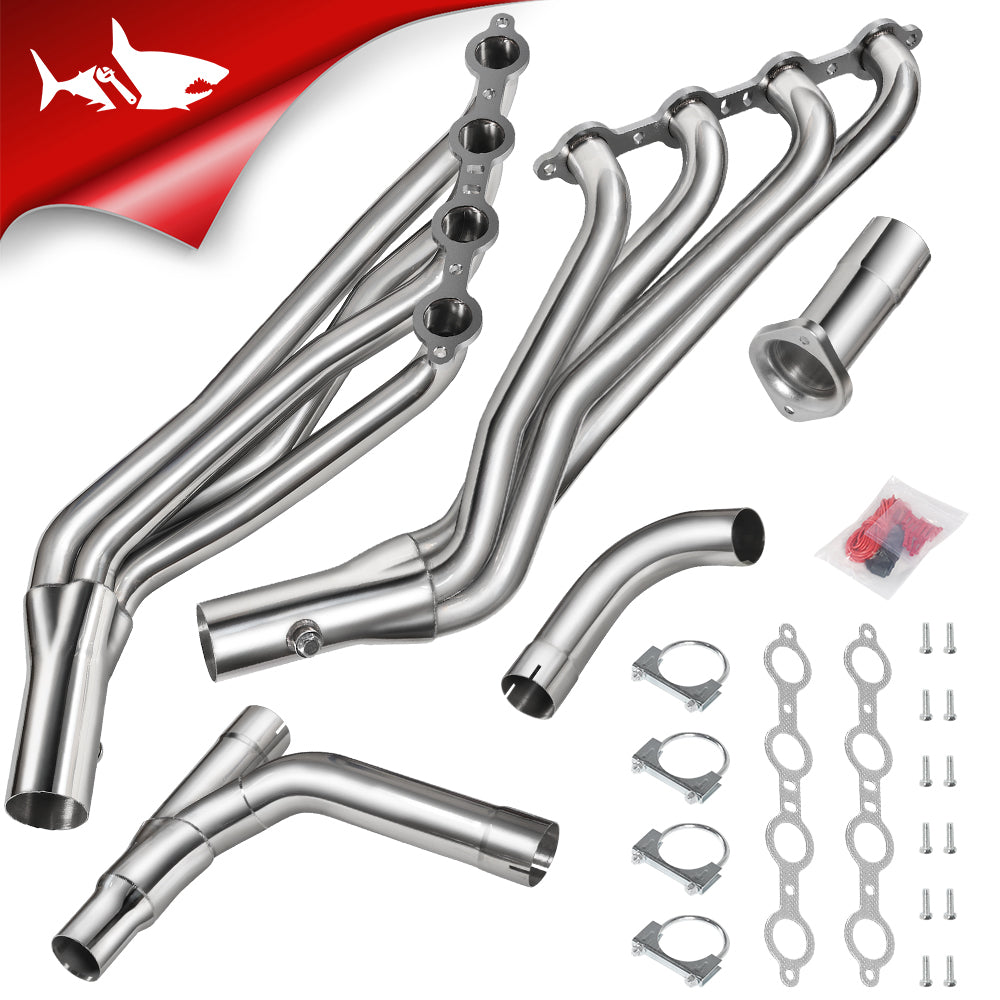
- Cabezales de tubo largo o corto
- Convertidores catalíticos
- Sensores de oxígeno aguas arriba y aguas abajo
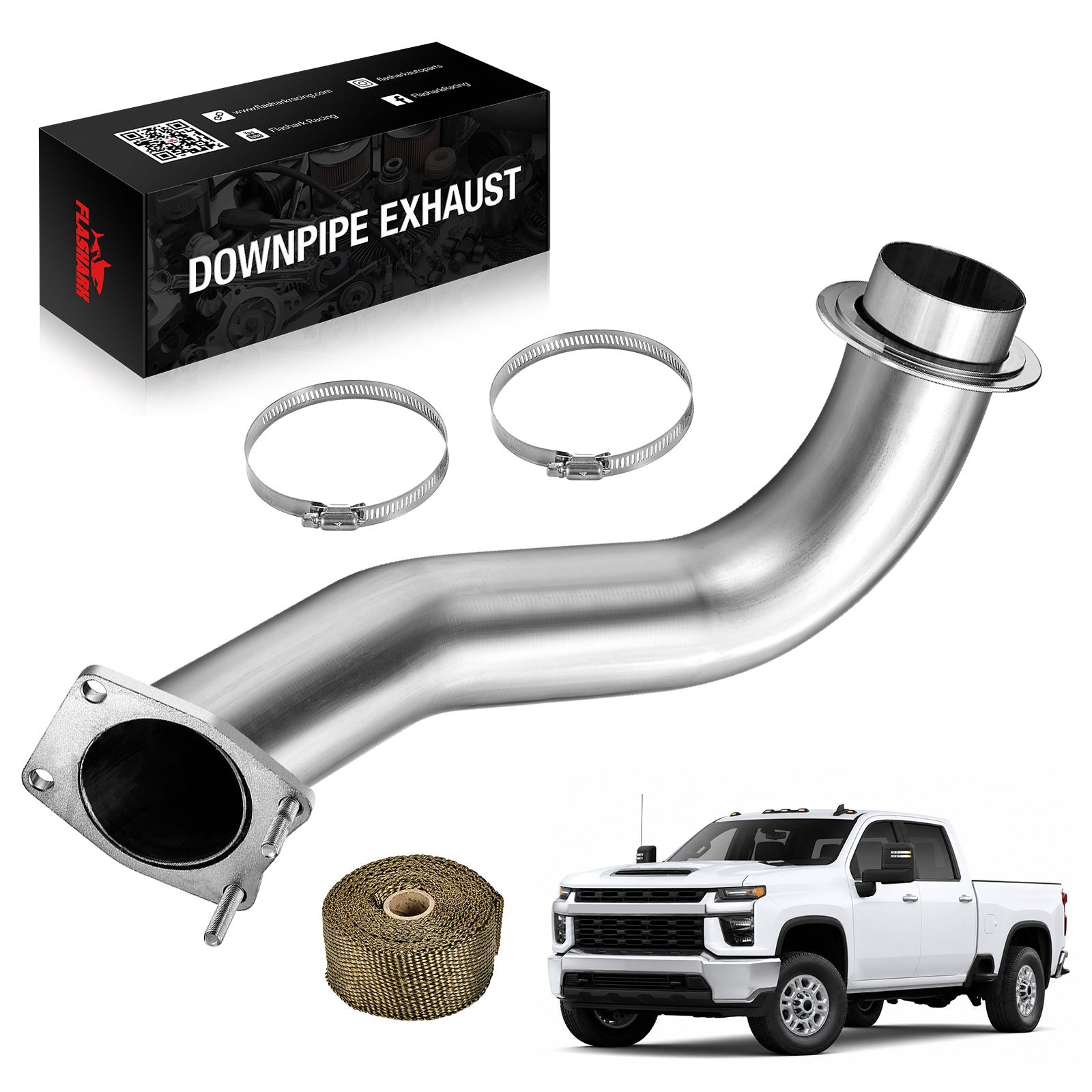
- Bajantes de turbo en camionetas EcoBoost
- Tubo en Y delantero, a menos que el kit específico diga lo contrario
Eso es una buena noticia si quieres una actualización más sencilla. Puedes mejorar el tono y el flujo de la sección trasera sin abrir todo el bote de gusanos de las emisiones y el ajuste.
Por Qué los Límites del Catback Pueden Variar Según la Marca
No todas las marcas definen el punto de partida exactamente de la misma manera. Un kit puede conectarse detrás del resonador de fábrica. Otro puede incluir un tubo de eliminación del resonador. Otro puede requerir recortes porque el mismo tubo básico está diseñado para cubrir varias configuraciones de distancia entre ejes.
Así que, antes de hacer clic en comprar, compara las fotos del producto con tu camioneta. Mejor aún, métete debajo de la camioneta y toma tu propia foto. Coincide la ubicación de los soportes, el ángulo de la brida, el diámetro del tubo y la posición de salida. Un buen diagrama ayuda. Una foto real de la parte inferior del vehículo ayuda aún más.
Escape de Ford F150 de Fábrica vs. Diagrama de Escape Catback
El escape de fábrica no es "malo". Está construido para un funcionamiento silencioso, comodidad de garantía, cumplimiento de emisiones, control de costos y producción en masa. Un catback de postventa está construido para un propietario diferente. Alguien que quiere más tono, un trazado de tuberías más limpio, puntas de mejor aspecto y menos restricción detrás de los catalizadores.
| Categoría | Escape Original de F150 | Escape Catback de Recambio |
|---|---|---|
| Objetivo principal | Conducción silenciosa, bajo costo, confort OEM | Sonido más profundo, mejor flujo, estilo visual más fuerte |
| Diseño de tubería | A menudo curvas conservadoras y enrutamiento más pequeño centrado en la acústica | Generalmente de mayor diámetro y tubería curvada con mandril |
| Sonido | Suave, silencioso, menos agresivo | Tono más profundo, más fuerte, más parecido al de una camioneta |
| Cambio de potencia | Línea base | A menudo modesto en camiones de serie; algunas configuraciones pueden mostrar ganancias de un solo dígito a adolescentes medios, dependiendo del motor y las condiciones de prueba |
| Instalación | Instalado de fábrica | Generalmente con abrazaderas o atornillado, pero el óxido puede hacerlo feo |
| Mejor para | Conductores diarios que quieren comodidad y tranquilidad | Propietarios que buscan sonido, estética y un reemplazo completo de la sección trasera |

Para los lectores que desean una explicación más amplia del sistema de escape en su conjunto, esta guía de Flashark sobre las partes principales de un sistema de escape es una buena lectura complementaria. Ayuda a explicar el papel del convertidor catalítico, el resonador, el silenciador, los sensores de oxígeno y las tuberías sin centrarse solo en la F-150.
Diseño de Escape de Fábrica
El diseño de escape de fábrica de la F-150 suele ser silencioso. A veces demasiado silencioso, especialmente en el V8 5.0L. Ford tiene que satisfacer al tipo que remolca un barco a las 6 a.m., a la familia que viaja por todo el país y al comprador de flotas que no quiere quejas. Eso significa que el silenciador y el resonador de fábrica están ajustados para eliminar el ruido antes de que estén ajustados para hacerte sonreír.
Diseño de Escape Catback
Un catback de postventa generalmente te da un camino más recto y de flujo más libre después de los catalizadores. Mejor diseño de silenciador. Mejor acabado de tuberías. Mejores puntas. Menos de ese sonido estrangulado de fábrica.
En una F-150 5.0L de serie, yo diría que el cambio se "siente y se escucha" más que se "nota en el asiento". En un dinamómetro, dependiendo de la camioneta, el combustible, el clima y la condición de la línea de base, una ganancia realista de catback puede oscilar entre aproximadamente 5-15whp. Algunas configuraciones probadas en productos pueden reclamar un poco más bajo condiciones específicas. Pero no compre un catback esperando resultados de cabezales de tubo largo. Cómprelo porque hace que la camioneta suene como debería haberlo hecho de fábrica, y porque la sección trasera del escape fluye más limpiamente.
Diferencia Visual: Silenciador de Fábrica vs. Silenciador de Rendimiento
Los silenciadores de fábrica a menudo utilizan cámaras, deflectores y volumen de insonorización para silenciar la camioneta. Los silenciadores de rendimiento suelen utilizar un camino interno más directo. Algunos son diseños de paso directo empacados. Otros tienen cámaras para un tono de camioneta musculosa. El silenciador equivocado puede resonar. El correcto suena profundo cuando le pisas y se calla lo suficiente en la carretera.
¿Un Escape Catback Aumenta la Potencia de una F150?
Sí, a veces. Pero mantengamos los pies en la tierra.
Un catback puede reducir la restricción después de los convertidores catalíticos. Eso ayuda a que los gases de escape salgan del sistema con mayor fluidez, especialmente a altas RPM. Pero si el motor es de serie, los catalizadores, colectores, admisión, distribución y ECU de fábrica siguen siendo los que imponen los mayores límites.
Expectativas de Rendimiento Realistas
En una F-150 5.0L de aspiración natural, un buen catback de 3 pulgadas puede mostrar una mejora notable en el sonido y un pequeño aumento en el rendimiento. Si el escape viejo estaba oxidado, abollado o colapsado internamente, la diferencia se siente mayor. Si la camioneta ya estaba sana y de serie, el dinamómetro puede mostrar ganancias modestas.
Para la F-150 2015-2020, Flashark ofrece un sistema de 3 pulgadas diseñado para motores 2.7L, 3.5L y 5.0L, con construcción de acero inoxidable T-304, tubería principal de 3 pulgadas, doble tubería dividida de 2.5 pulgadas en ciertas configuraciones, y ganancias de prueba publicadas de +16.28 HP y +13.04 lb-pie a 4,200 RPM para esa configuración de producto. Es un número útil, pero aún así trate cada camión como su propia prueba. El tamaño de los neumáticos, la afinación, el kilometraje, el combustible y el tipo de dinamómetro son importantes.
Por qué el sonido se siente más rápido de lo que muestra el dinamómetro
Aquí es donde la gente se engaña a sí misma. Una camioneta más ruidosa se siente más rápida. Un arranque en frío más nítido se siente más rápido. Un rugido más profundo de un motor 5.0L a 3,500 RPM engaña completamente a tu pie derecho haciéndote pensar que añadiste más potencia de la que realmente hiciste.
Eso no significa que la mejora sea falsa. Significa que el sonido es parte de la experiencia de conducción. ¿Y honestamente? Para una F-150 de calle, esa es la mitad de la razón por la que la gente compra un escape en primer lugar.
Diferencias de motor: 5.0 V8 vs 3.5 EcoBoost vs 2.7 EcoBoost
El 5.0L V8 te da el clásico rugido. Tiene ese pulso más profundo y responde bien a una sección de escape trasera más grande. El 3.5L EcoBoost es diferente. Puede sonar potente, pero también puede volverse áspero si el sistema está demasiado abierto o mal resonado. El 2.7L EcoBoost es aún más sensible a la calidad del tono. Ruidoso no siempre significa bueno.
Si estás buscando por familia de motores, la categoría de escapes catback Ford de Flashark es el mejor lugar para comparar opciones específicas de Ford en lugar de buscar entre piezas universales.
Catback vs Supresión de Silenciador vs Supresión de Resonador
Este es el argumento que escuchas en los estacionamientos y foros todo el tiempo. "¿Por qué comprar todo el catback cuando la supresión de silenciador es más barata?" Buena pregunta. Pero la respuesta depende de lo que realmente quieras.
Escape Catback
Un catback es la mejora más limpia y completa de la sección trasera. Obtienes el enrutamiento de la tubería, el silenciador, la punta, el hardware y un sistema diseñado para trabajar en conjunto. Cuesta más que un cambio de silenciador, pero la instalación se ve mejor y generalmente envejece mejor.
Para las camionetas 2015-2020, un escape catback de 3 pulgadas para Ford F150 2015-2020 hecho a medida es la opción más limpia cuando quieres que el silenciador, la tubería y las puntas combinen como un solo sistema.

Escape Catback de 3 pulgadas Flashark para Ford F150 2015-2020
Compatible con: Ford F-150 2.7L / 3.5L / 5.0L 2015-2020, con excepciones de ajuste indicadas en la página del producto.
Ideal para: propietarios que desean una mejora completa de la sección trasera del escape con construcción de acero inoxidable, sonido más profundo y opciones de punta negra o pulida.
Precio de oferta: $299.99 $366.00
Los precios pueden cambiar durante las promociones. Confirme siempre el precio final y el ajuste en la página del producto.
Ver productoSupresión de silenciador
Una supresión de silenciador es más barata. Sin duda. Elimina el silenciador de fábrica y lo reemplaza con un tubo recto. Se vuelve ruidoso rápidamente. A veces demasiado rápido.
En un 5.0L, puede sonar agresivo en la ciudad pero molesto en viajes largos. En las camionetas EcoBoost, las supresiones de silenciador pueden volverse ásperas y huecas. Si remolcas o conduces a RPM constantes, el zumbido de la cabina puede hacer que odies tu propia camioneta en la segunda salida de la autopista.
Supresión de resonador
Una eliminación de resonador es más quirúrgica. Elimina una pieza de control de sonido, no todo el sistema trasero. Puede añadir ladrido y volumen, pero también puede introducir frecuencias que el resonador de fábrica estaba allí para eliminar.
Si ya tienes un silenciador de posventa, eliminar el resonador puede llevar a la camioneta al límite. A veces funciona. A veces suena como una lata de café en una escalera.
¿Cuál deberías elegir?
| Tu objetivo | Mejor opción | Por qué |
|---|---|---|
| Solo sonido más profundo | Cambio de silenciador | Más barato y directo, pero menos completo. |
| Actualización completa atornillada | Escape Catback | Reemplaza más partes del sistema trasero con piezas coincidentes. |
| Presupuesto más bajo | Supresión de silenciador | Ruidoso y barato, pero el riesgo de zumbido es real. |
| Menos zumbido en carretera | Catback afinado o mantener resonador | Una mejor combinación de silenciador/resonador controla las frecuencias indeseadas. |
Para una explicación teórica más amplia, también puedes leer la guía de Flashark sobre qué es un sistema de escape catback. Usa eso como explicación general, luego usa este artículo de la F-150 para el ajuste específico de la camioneta y los límites de reemplazo.
Factores de ajuste antes de comprar un sistema Catback para F150
Aquí es donde muchos pedidos en línea salen mal. Un tipo compra un escape porque el título dice F-150 5.0L. Luego la tubería es demasiado corta, demasiado larga, o el colgador se asienta una pulgada fuera de lugar. Ahora está enojado, el camión está sobre caballetes, y el taller de silenciadores cobra por arreglar lo que debería haberse verificado antes de la compra.
Año y generación del modelo
Una F-150 2011-2014 no es lo mismo que una F-150 2015-2020 por debajo. El chasis, los puntos de anclaje, el diseño de la carrocería, las opciones de motor y el enrutamiento de fábrica pueden cambiar. La frase "compatible con F-150" no es suficiente.
Para las camionetas 5.0L 2011-2014, un escape catback de 3 pulgadas para Ford F150 5.0L 2011-2014 dedicado tiene más sentido que intentar adaptar un sistema de última generación.

Escape Catback de 3 pulgadas Flashark para Ford F150 5.0L 2011-2014
Compatible con: Modelos Ford F-150 5.0L 2011-2014.
Ideal para: Propietarios de 5.0L que reemplazan un escape de fábrica desgastado o buscan un tono V8 más audaz y suave con tuberías de 3 pulgadas.
Precio de oferta: $329.99
Los precios y las notas de ajuste pueden cambiar. Confirme los últimos detalles antes de realizar el pedido.
Ver productoTamaño del motor
Los motores 5.0L V8, 3.5L EcoBoost, 2.7L EcoBoost y las opciones de motor más antiguas no siempre comparten los mismos detalles de escape. Incluso cuando la sección trasera se ve similar, el comportamiento del sonido cambia. Una tubería de 3 pulgadas en un Coyote V8 no sonará igual que la misma tubería en un V6 biturbo.
Longitud de la cabina y la caja
La longitud de la cabina y la caja importan porque cambian la distancia entre ejes. SuperCrew con caja de 5.5 pies, SuperCab con caja de 6.5 pies, cabina regular con caja larga, estas no son diferencias insignificantes. La longitud de la tubería cambia. La posición del colgador cambia. La ubicación de la punta cambia.
Si la página de un producto dice "puede ser necesario un recorte mínimo", no ignores esa nota. Por lo general, significa que el kit fue diseñado para cubrir múltiples configuraciones de distancia entre ejes.

2WD vs 4WD
La mayoría de las secciones traseras del catback son menos sensibles a la tracción 2WD vs 4WD que los tubos delanteros o los colectores, pero la holgura sigue siendo importante. Observa alrededor del travesaño, la rueda de repuesto, la ballesta, el amortiguador, el eje trasero y el área del enganche.
Salida simple vs doble salida
La salida lateral simple es sencilla y limpia. La doble salida dividida se ve más resistente. La salida trasera puede ser más suave desde la cabina. La salida lateral puede rebotar el sonido en paredes y remolques. Ninguna de estas opciones significa automáticamente más caballos de fuerza. Elige el estilo de salida que se adapte al aspecto de tu camioneta y a cómo conduces realmente.
Notas de instalación: lo que realmente quitarás debajo de la camioneta
En teoría, una instalación de catback es sencilla. Aflojar abrazaderas. Soltar colgadores. Quitar tubo viejo. Instalar tubo nuevo. Alinear punta. Apretar. Listo.
¿En el mundo real? El óxido se ríe de tu plan.
Extracción de la sección de escape Catback de fábrica
Recuerdo una F-150 5.0L del 18 que llegó al taller con lo que el dueño llamó "solo un traqueteo del silenciador". Ya había comprado un kit de escape trasero y pensó que lo terminaríamos en menos de una hora. Lo subimos al elevador, y la abrazadera del silenciador parecía haber pasado tres inviernos en el fondo de una rampa para botes. La tubería no estaba tan mal, pero la abrazadera era básicamente una sola pieza con la tubería de fábrica.
Lo rociamos con aceite penetrante, calentamos cuidadosamente el área de la abrazadera, soltamos el colgador y aún así tuvimos que cortar la abrazadera vieja. ¿La instalación real del catback? Quizás 45 minutos. ¿El hardware oxidado de fábrica? Esa fue la pelea.
Por eso les digo a los aficionados al bricolaje:
- Rocía las abrazaderas y las varillas de los colgadores la noche anterior.
- Usa soportes de gato reales, no solo un gato de suelo.
- Soporta el silenciador antes de quitar el último colgador.
- No aprietes completamente el nuevo sistema hasta que cada tubo esté suelto.
- Verifica la alineación de la punta antes del torque final.
Instalación con abrazaderas vs. soldadura
La mayoría de los kits catback modernos para F-150 son de abrazadera o de tornillo. Eso es lo que quieres para una instalación en el garaje. Pero si tu camioneta tiene una reparación de taller de silenciadores mal hecha, una tubería aplastada o un colgador de fábrica que falta, es posible que necesites soldadura o fabricación.
Muchos nuevos propietarios ven un video de instalación de 12 minutos y piensan que todo saldrá exactamente así. Luego, rompen un perno de abrazadera, luchan con un colgador de goma durante 30 minutos y se dan cuenta de que el camarógrafo se saltó la parte fea. No te apresures. El trabajo de escape recompensa la paciencia.
Errores comunes de instalación
- Ajustar la abrazadera delantera primero: Esto puede torcer el resto del sistema y descentrar la punta.
- Ignorar el espacio libre de la llanta de repuesto: Una tubería demasiado cerca de la llanta de repuesto puede crear problemas de calor y vibración.
- Dejar los soportes a medio asentar: Eso causa ruidos en los baches.
- No buscar fugas: Arranca la camioneta en frío y siente/escucha alrededor de las uniones antes de que las tuberías se calienten.
- Comprar solo por motor: El año, la cabina, la cama, el acabado y el estilo de salida siguen importando.
Errores comunes en el diagrama de escape de la F150 que debes evitar
Un buen diagrama del sistema de escape de la Ford F150 debería prevenir errores, no crear más confusión. Aquí están los que veo una y otra vez.
Confundir el resonador con un catalizador
El resonador suele estar más atrás que los catalizadores y no tiene la misma función de emisiones. Si la pieza está cerca del silenciador y parece una pequeña lata de sonido, es muy probable que sea un resonador.
Pensar que un catback elimina el convertidor catalítico
No. Un catback normal no elimina los convertidores catalíticos. Si tu objetivo es una mejora del escape apta para la calle, eso es bueno. Obtendrás sonido y flujo en la sección trasera sin alterar los componentes de emisiones.
Si la legalidad es parte de tu decisión de compra, el artículo de Flashark sobre si un escape catback es legal es un buen seguimiento, porque las normas de ruido y las normas de emisiones no son lo mismo.
Comprar solo por motor, no por longitud de cabina y caja
Esto duele porque es evitable. Encuentras el motor correcto. Genial. Luego olvidas la distancia entre ejes. Ahora el tubo no cae donde debería estar el colgador. Siempre verifica el año, el motor, la cabina, la caja, las exclusiones de acabado y la disposición de la salida.
Esperar ganancias de potencia a nivel de colector de un Catback
Un catback cambia la sección trasera. Los colectores cambian la trayectoria del escape directamente en el motor. No son comparables en cuanto a mano de obra, sonido, potencial de potencia o requisitos de ajuste. Si alguien promete grandes ganancias solo con un catback en una F-150 de serie, sé escéptico.
Cómo leer un diagrama del sistema de escape de la Ford F150 antes de pedir piezas
Usa el diagrama como un mapa. No como decoración. No como relleno. Un mapa.
Paso 1: Identifica tu motor y año
Comienza con lo básico: año del modelo, motor, nivel de equipamiento, cabina, cama y transmisión. Usa el VIN, el manual del propietario, la etiqueta de emisiones o un verificador de ajuste confiable. Adivinar es como ocurren las devoluciones.
Paso 2: Localiza la ubicación del convertidor catalítico
Localiza los catalizadores antes de decidir dónde comienza el catback. En la mayoría de las camionetas F-150, los catalizadores están delante del silenciador y el área del resonador. Busca escudos térmicos y el cableado del sensor de O2 cercano.
Paso 3: Localiza el silenciador, el resonador y el tubo de escape
Trabaja hacia atrás. Encuentra el silenciador grande. Identifica cualquier sección de resonador más pequeña. Sigue el tubo por encima del eje y hasta la punta. Si la camioneta ya ha sido modificada, compara lo que ves con las fotos del producto en lugar de confiar en el diseño de fábrica.
Paso 4: Compara el diagrama con las fotos del producto
Este es el paso que ahorra dinero. Comprueba:
- Número de tuberías
- Diámetro de la tubería
- Ubicación de bridas o abrazaderas
- Dirección de las varillas de suspensión
- Orientación del silenciador
- Lado de salida y ángulo de la punta
- Cualquier nota sobre recortes
Paso 5: Comprueba el estilo de salida y la posición de la punta
¿Remolcas? ¿Tienes un enganche? ¿Rueda de repuesto de gran tamaño? ¿Parachoques de posventa? Un sistema de salida trasera puede verse genial hasta que choca con tu configuración. La posición de la punta no es solo estética. Es espacio libre, calor, sonido y usabilidad diaria.
Mejor camino de actualización basado en tu objetivo
No compres piezas de escape por ego. Compra por objetivo. Gran diferencia.
Si quieres un sonido F150 más profundo
Para el 5.0L V8, un catback de 3 pulgadas con un silenciador ajustado suele ser el punto óptimo. Profundo al acelerar, tolerable en crucero. En las camionetas EcoBoost, ten en cuenta el control de resonancia. Un sistema que suena salvaje en un estacionamiento puede ser agotador a 70 mph.
Si quieres un mejor aspecto
Consigue el catback completo. Un cambio de silenciador no te dará las mismas puntas pulidas o negras, el enrutamiento limpio del tubo de escape o el diseño de salida trasera a juego. Si la camioneta está levantada o tiene ruedas y neumáticos, la punta del escape se convierte en parte del paquete visual.
Si quieres una mejora de sonido económica
Un cambio de silenciador es la opción económica. Solo entiende los límites. Puede sonar mejor, pero no renueva el tubo de escape, el tubo sobre el eje o la punta. Si la sección trasera de tu fábrica está oxidada, gastar dinero solo en el silenciador puede sentirse como poner botas nuevas en un eje roto.
Si quieres un reemplazo completo atornillado
Elige un catback. Especialmente si tu silenciador de fábrica está podrido, el tubo de escape está oxidado o quieres una caja con las piezas a juego. Ahí es donde Flashark encaja naturalmente: kits enfocados en el valor, notas de ajuste prácticas y diseños que tienen sentido para camiones reales en lugar de construcciones solo para exhibición.
Preguntas frecuentes: Diagrama de escape Ford F150 y preguntas sobre reemplazo de Catback
P1: ¿Qué incluye un sistema de escape catback para Ford F150?
R1: Un sistema de escape catback para Ford F150 suele incluir la sección de tubería detrás de los convertidores catalíticos, el silenciador, la tubería sobre el eje, el tubo de escape, la punta o puntas de escape, las abrazaderas y los herrajes de suspensión. Algunos kits también incluyen un reemplazo de resonador o un tubo de eliminación de resonador, pero eso depende del producto exacto.
P2: ¿Un escape catback reemplaza el convertidor catalítico en una F150?
R2: No. Un escape catback normal no reemplaza el convertidor catalítico. Comienza después del área del convertidor catalítico y mantiene el equipo de emisiones de fábrica en su lugar.
P3: ¿Dónde se encuentra el silenciador en un diagrama de escape de una Ford F150?
R3: El silenciador suele estar ubicado en la sección media-trasera de la camioneta, antes del tubo sobre el eje y el tubo de escape. En muchas camionetas F-150, se encuentra detrás del resonador y bastante detrás de los convertidores catalíticos.
P4: ¿El pequeño recipiente antes del silenciador es un convertidor catalítico o un resonador?
R4: A menudo es un resonador, no un convertidor catalítico. Los convertidores catalíticos suelen estar más adelante, más cerca del motor, y a menudo tienen sensores de oxígeno cerca. El resonador controla principalmente las frecuencias de sonido antes de que lleguen al silenciador.
P5: ¿Un escape catback de una Ford F150 añade caballos de fuerza?
R5: Sí, puede, pero la ganancia suele ser modesta en una camioneta de serie. Dependiendo del motor, la condición, el diseño del tubo y el método de prueba, algunas camionetas pueden ver pequeñas ganancias de caballos de fuerza de un solo dígito a mediados de la adolescencia. La mayor diferencia diaria suele ser el sonido, la sensación del acelerador, la apariencia y el flujo de la sección trasera.
P6: ¿Es lo mismo eliminar el silenciador que un escape catback?
R6: No. Eliminar el silenciador solo quita o reemplaza el área del silenciador. Un escape catback generalmente reemplaza una sección más grande desde detrás de los convertidores catalíticos hasta la punta del escape.
P7: ¿Un escape catback hará que mi F150 sea demasiado ruidosa?
R7: Depende del diseño del silenciador, la configuración del resonador, el motor y el estilo de salida. Un V8 de 5.0L con un silenciador ajustado puede sonar profundo sin ser insoportable. Una eliminación de silenciador o resonador mal emparejada puede crear zumbido y dureza, especialmente en viajes por carretera.
P8: ¿Cuál es la diferencia entre la eliminación del resonador y el escape catback?
R8: La eliminación de un resonador elimina un componente de control de sonido. Un escape catback reemplaza una sección de escape trasera mucho más grande, a menudo incluyendo el silenciador, los tubos, el tubo de escape y la punta. La eliminación de un resonador es más barata, pero puede aumentar el zumbido o el sonido áspero.
P9: ¿Necesito soldar para instalar un escape catback en una F150?
R9: La mayoría de los kits catback modernos para F150 son de abrazadera o atornillados y no requieren soldadura en una camioneta limpia y sin modificaciones. Es posible que se necesite soldadura si el escape de fábrica está oxidado, previamente modificado, cortado incorrectamente o le faltan puntos de montaje de fábrica.
P10: ¿Por qué la longitud de la cabina y la caja importan para el ajuste del escape de la F150?
R10: La longitud de la cabina y la caja afectan la distancia entre ejes, la longitud de la tubería, la ubicación de la percha y la posición de salida del tubo de escape. Un kit que se ajusta a una SuperCrew de caja corta puede no ajustarse a una cabina regular de caja larga sin recortar o sin diferentes secciones de tubería.
P11: ¿Puedo instalar un escape catback en casa?
R11: Sí, si tiene soportes de gato seguros, herramientas manuales básicas, aceite penetrante y paciencia. Lo difícil suele ser las abrazaderas oxidadas y los colgadores rebeldes, no el escape nuevo en sí. Si la camioneta está muy oxidada, un taller de silenciadores puede ahorrarle mucha frustración.
P12: ¿Qué parte del escape de la F150 suele oxidarse primero?
R12: Las abrazaderas, las soldaduras, las carcasas del silenciador, las secciones del tubo de escape, las varillas de suspensión y las áreas flexibles a menudo se oxidan primero, especialmente en los estados que usan sal de carretera. Las camionetas que remolcan botes o viven en climas húmedos pueden mostrar corrosión antes.
P13: ¿Un escape catback afectará las emisiones o la inspección?
R13: Un escape catback normal mantiene los convertidores catalíticos y los sensores de oxígeno en su lugar, por lo que generalmente no cambia el hardware de emisiones. Sin embargo, las normas de ruido son separadas y varían según el estado y los estándares de inspección locales.
P14: ¿Es un catback de doble salida mejor que uno de una sola salida?
R14: No automáticamente. Los sistemas de doble salida a menudo se ven más agresivos y pueden cambiar la dirección del sonido, pero no garantizan más potencia. Elija según el ajuste, la apariencia, el objetivo de sonido y el espacio libre.
P15: ¿Cómo sé si mi F150 ya tiene un escape de posventa?
R15: Busque soldaduras no originales, un diámetro de tubería más grande, silenciadores de marca, puntas pulidas o negras de posventa, secciones de resonador faltantes, ubicaciones de abrazaderas inusuales o un sonido mucho más fuerte que el de serie. Una comparación de fotos con un diagrama de estilo OEM puede ayudar.
Reflexiones finales: Utilice el diagrama antes de comprar
Un diagrama de escape de Ford F150 no es solo para principiantes. Todavía uso verificaciones de diseño antes de pedir piezas para camiones porque Ford cambia suficientes cosas pequeñas como para que las suposiciones resulten caras.
La regla simple es esta: un catback reemplaza el escape detrás de los convertidores catalíticos, no todo el sistema de escape. Generalmente cambia el silenciador, las tuberías, el tubo de escape y las puntas. Generalmente deja los catalizadores, los sensores de O2, los múltiples y las tuberías delanteras intactos. Por eso es una de las mejoras más prácticas para una F-150 de uso diario.
Asegúrese de tener el año, el motor, la cabina, la caja y el estilo de salida correctos. Compare las fotos del producto con el diseño de la parte inferior de su vehículo. Luego, elija el sistema que se ajuste a su objetivo real: sonido más profundo, mejor apariencia, flujo más limpio o reemplazo de una sección trasera de fábrica oxidada. Así es como evita comprar el kit equivocado y cómo logra que el camión suene bien sin que le cause dolores de cabeza.

Steven Chen
Especialista en rendimiento automotriz | Sistemas de motor y escape
Steven se centra en el rendimiento práctico del motor, el ajuste del escape y las rutas de actualización reales para vehículos entusiastas clásicos y modernos. Revisa aplicaciones de Ford de bloque pequeño, LS, camiones y de calle/pista con un objetivo en mente: ayudar a los constructores a elegir piezas que realmente funcionen juntas. Su filosofía: "Una buena potencia comienza con la combinación correcta, no con la pieza más grande."