
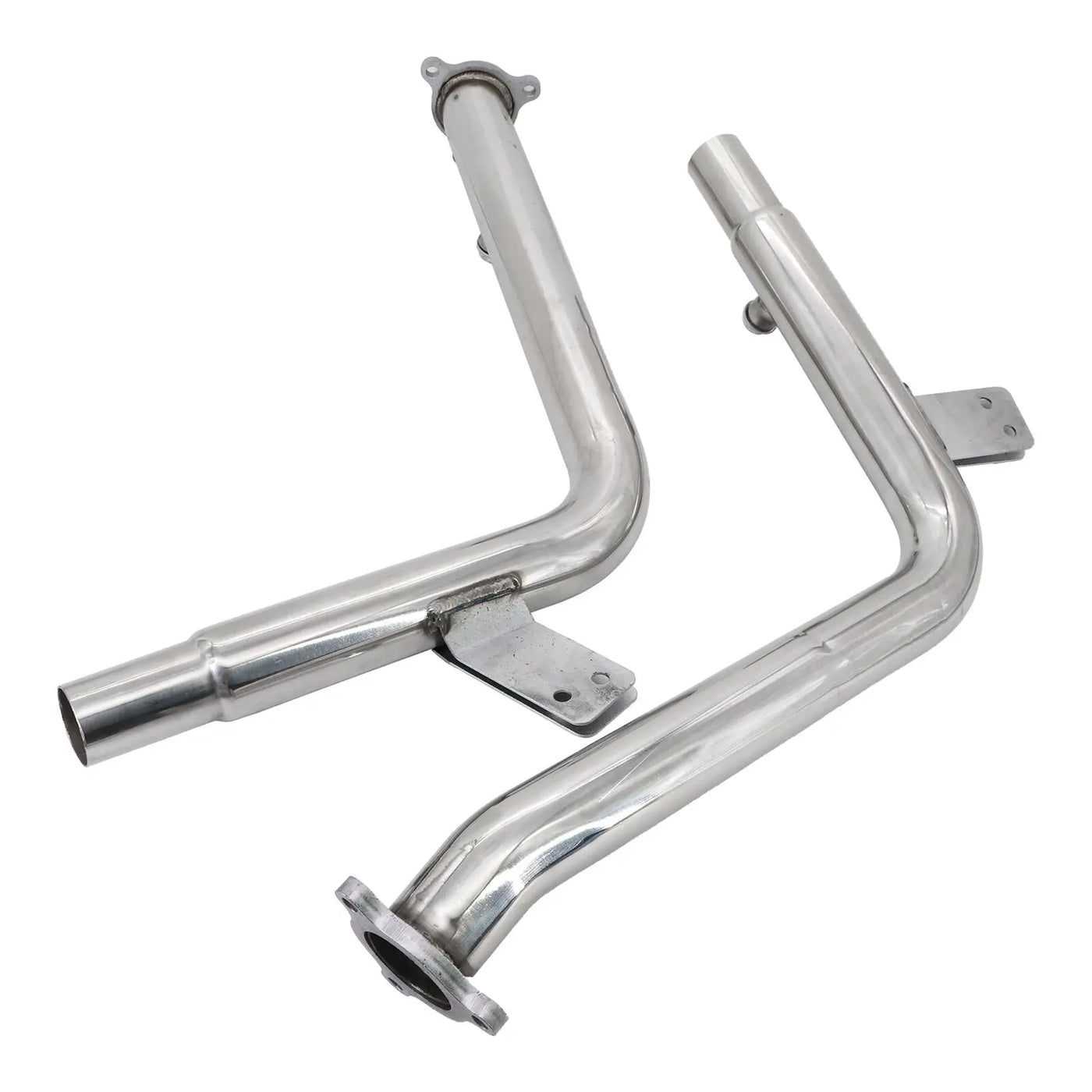
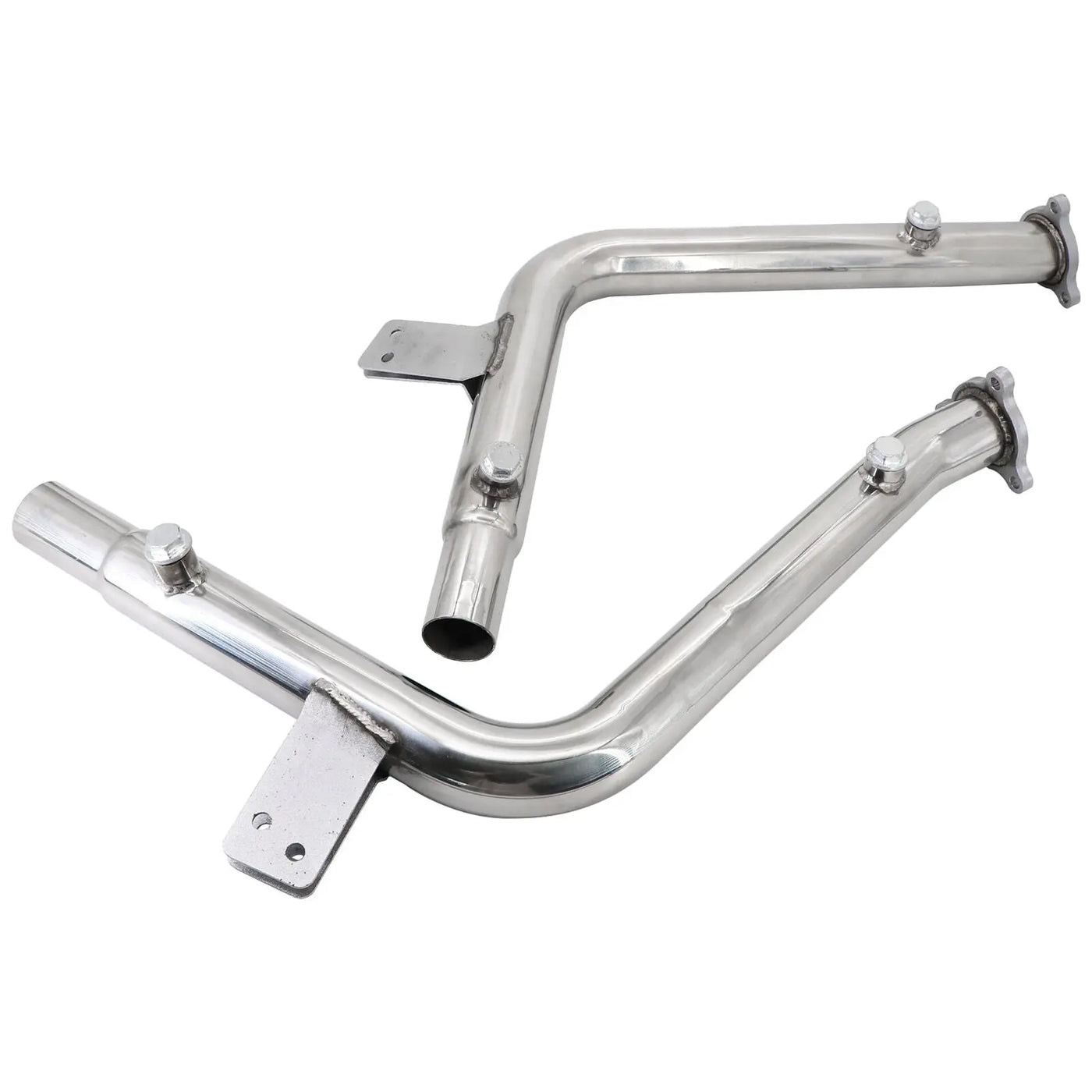
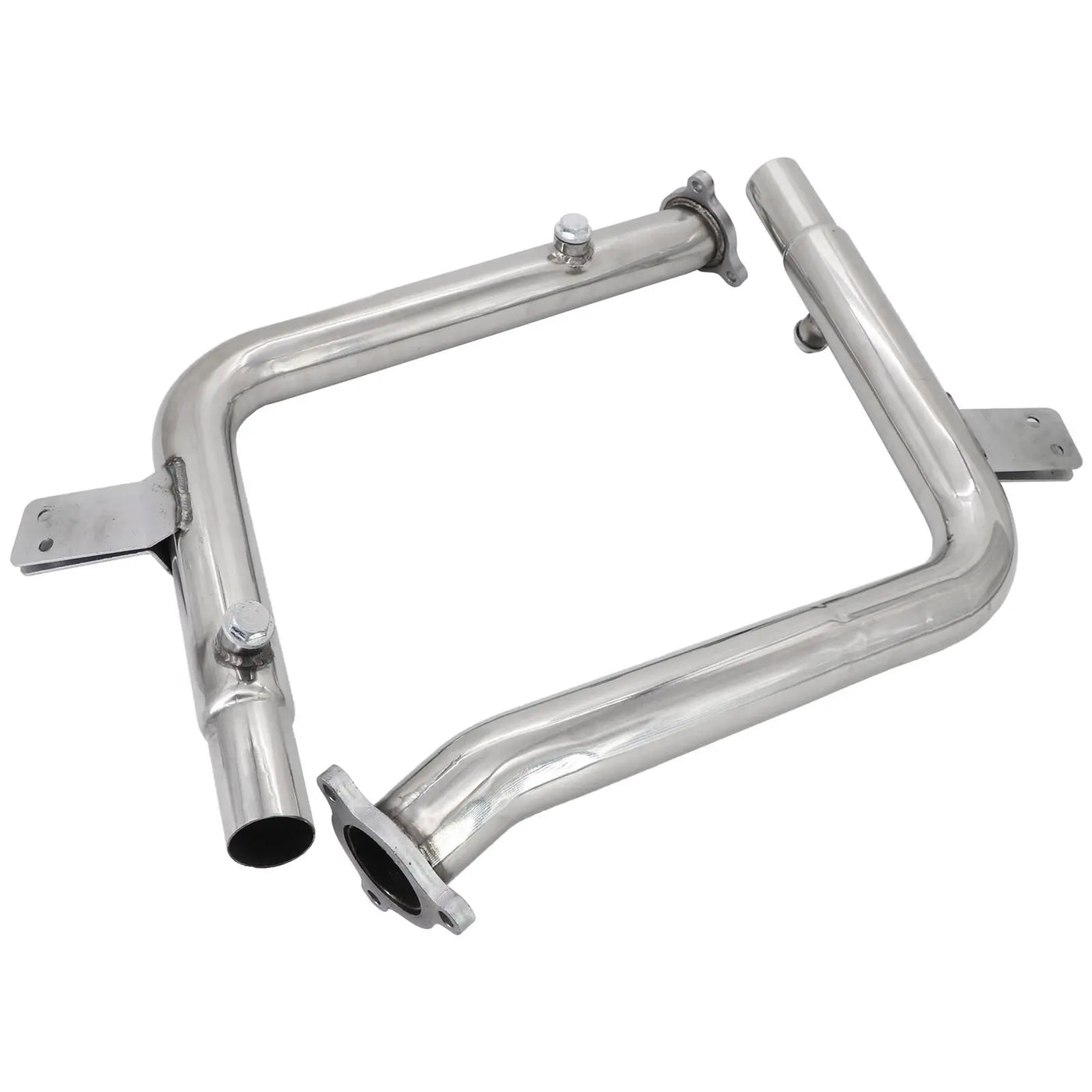
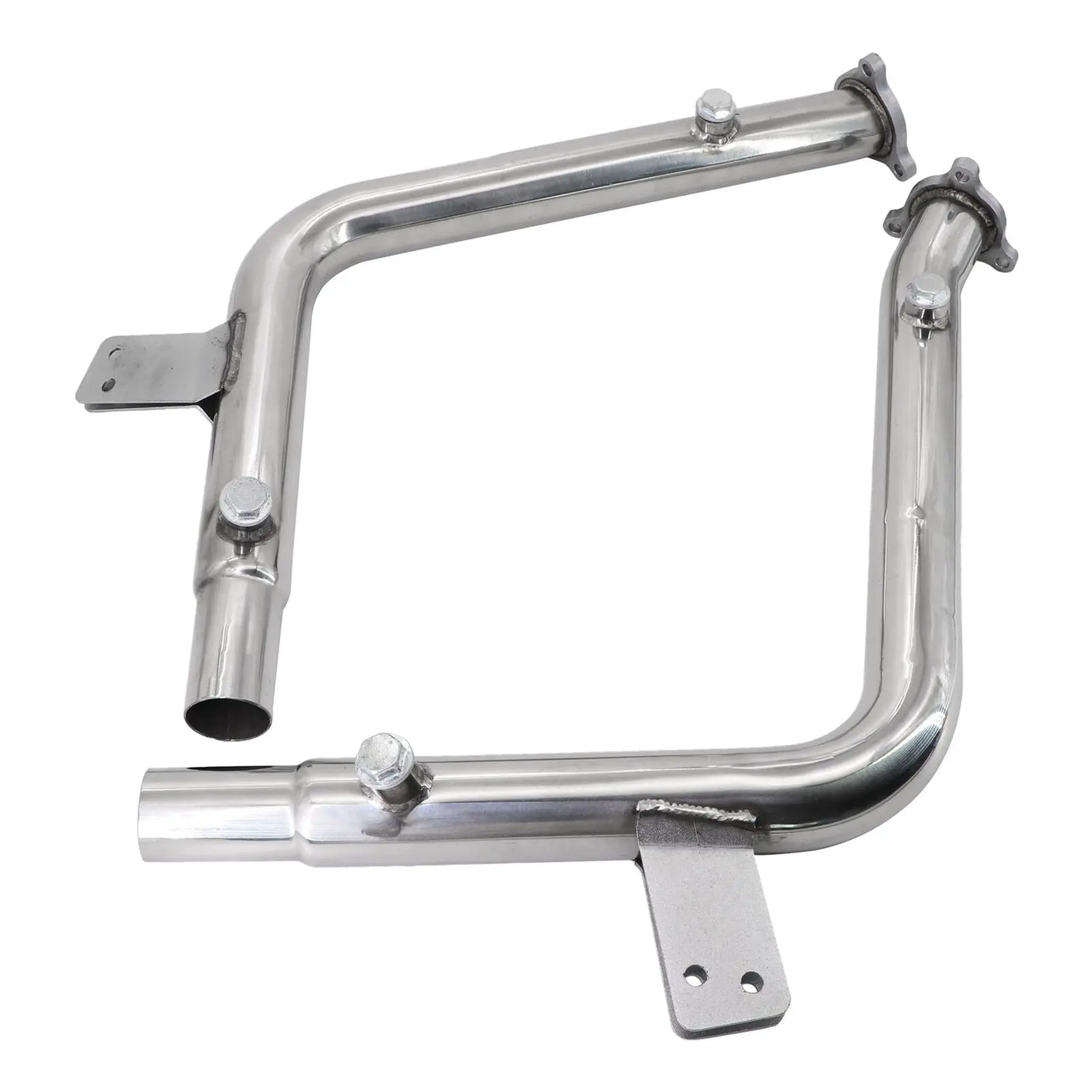

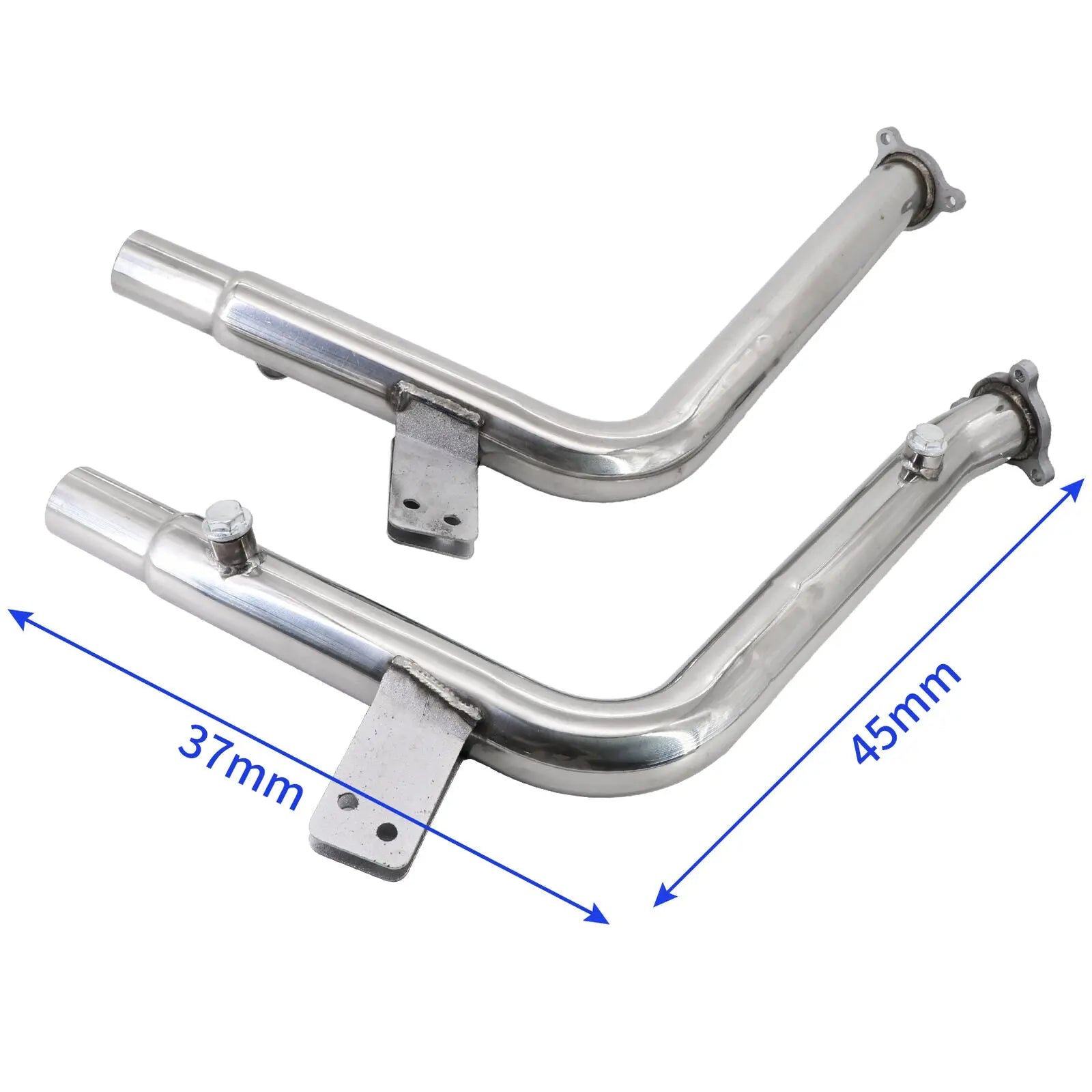
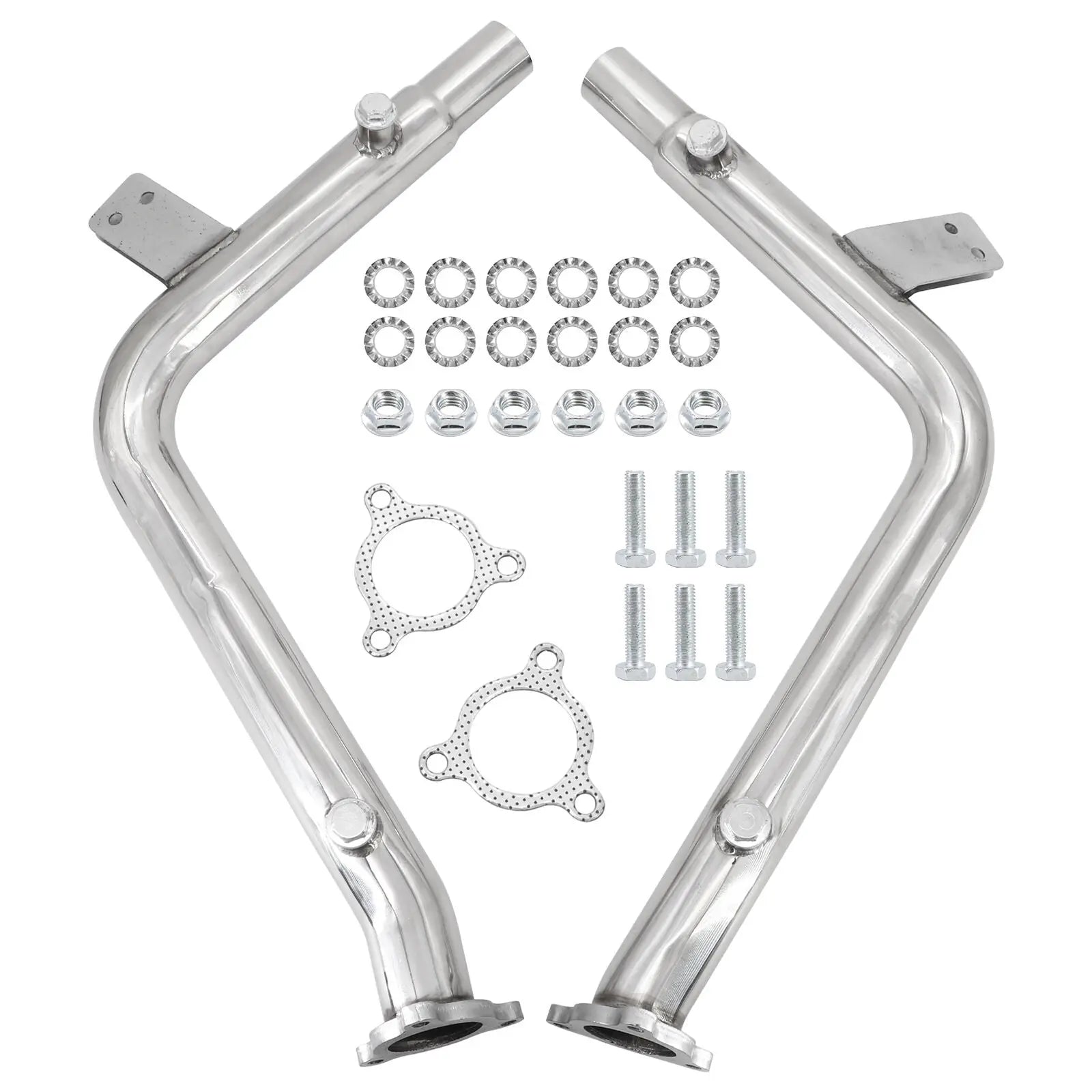
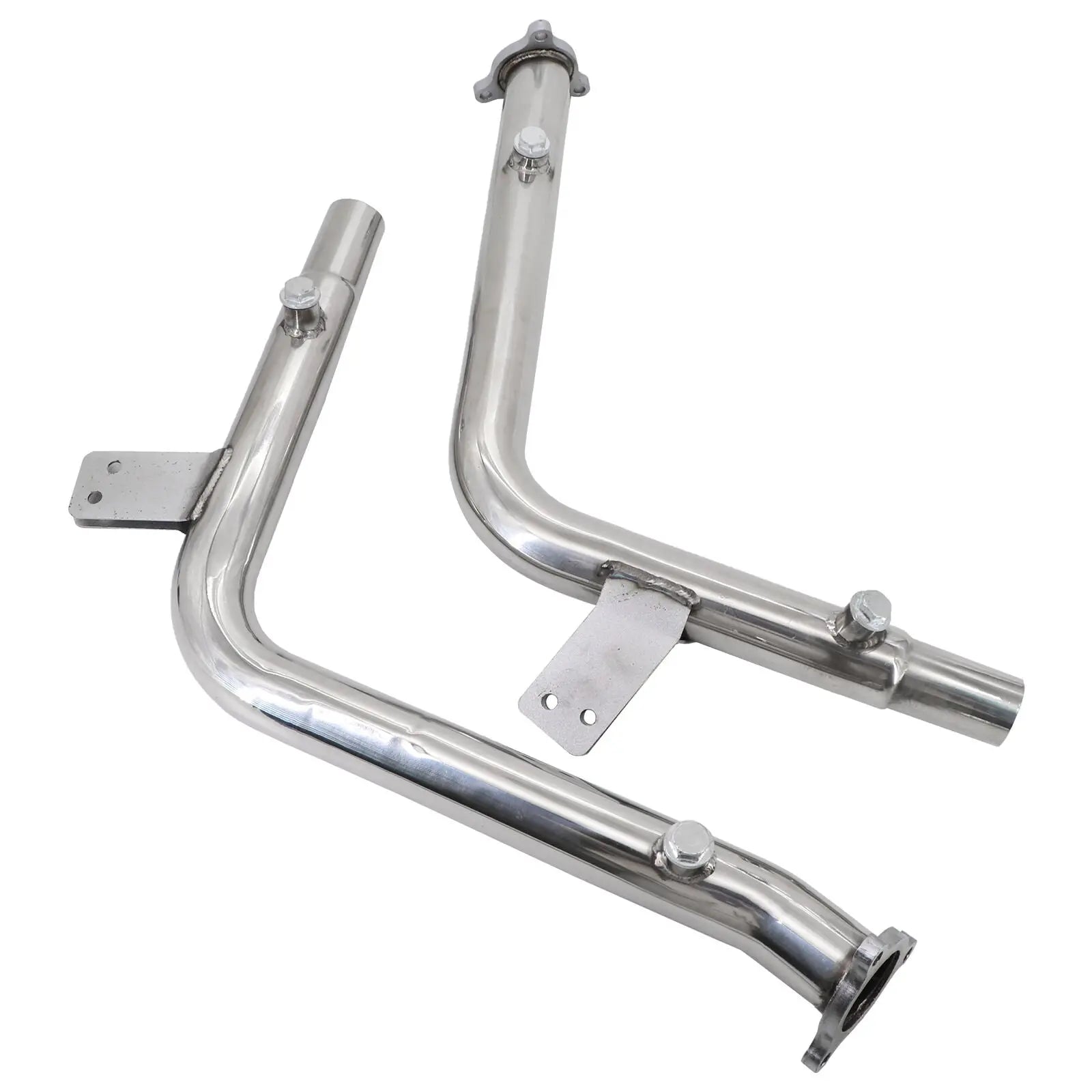
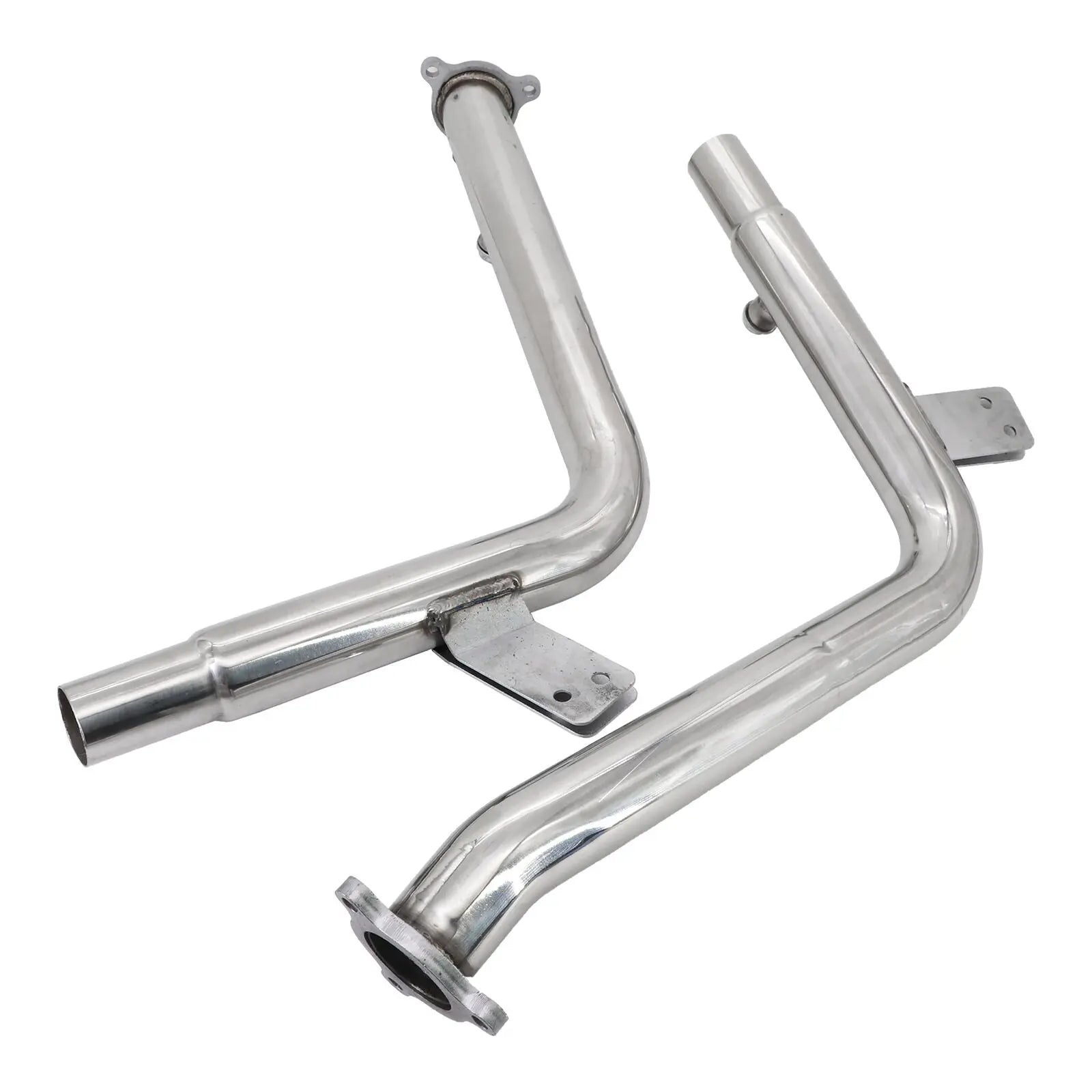
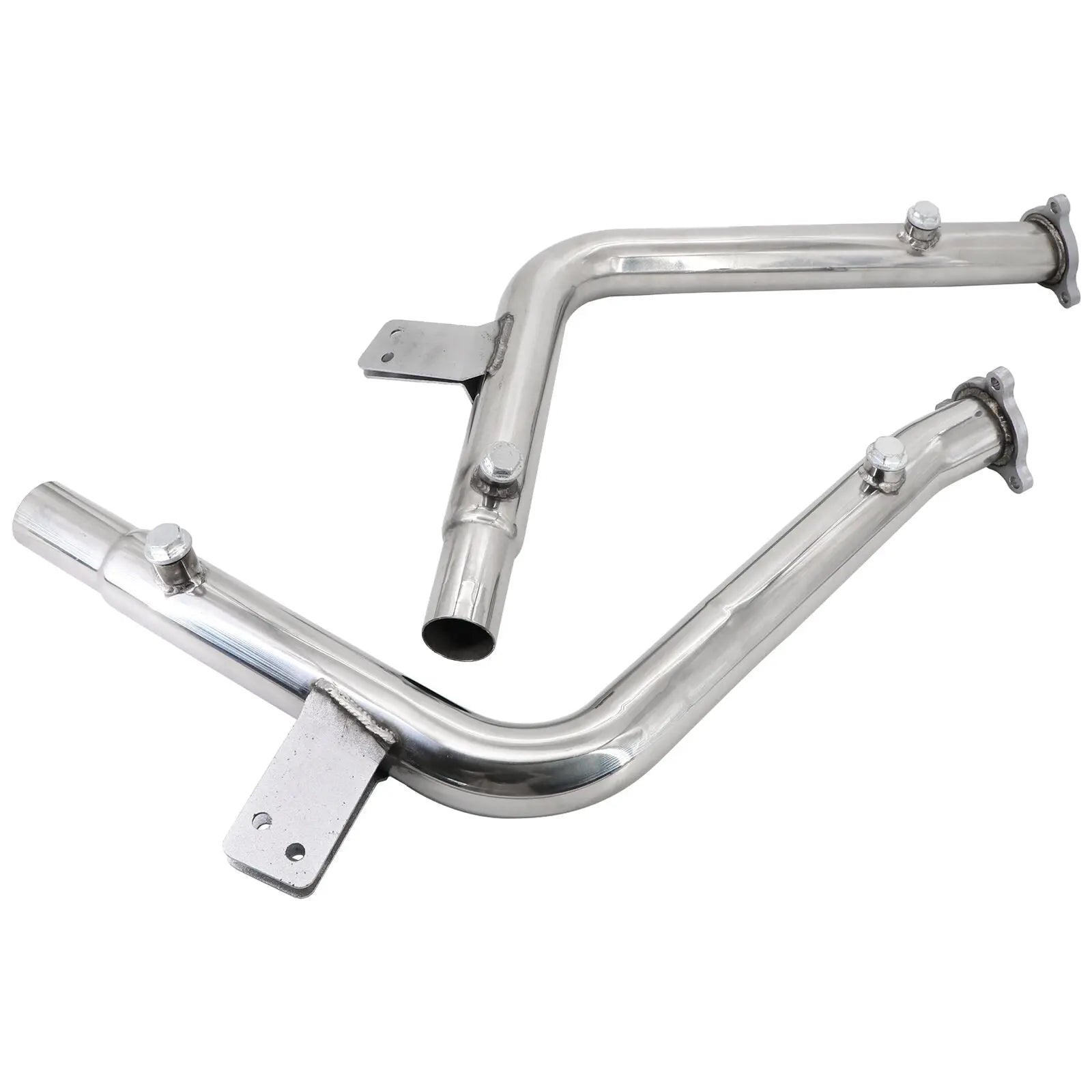
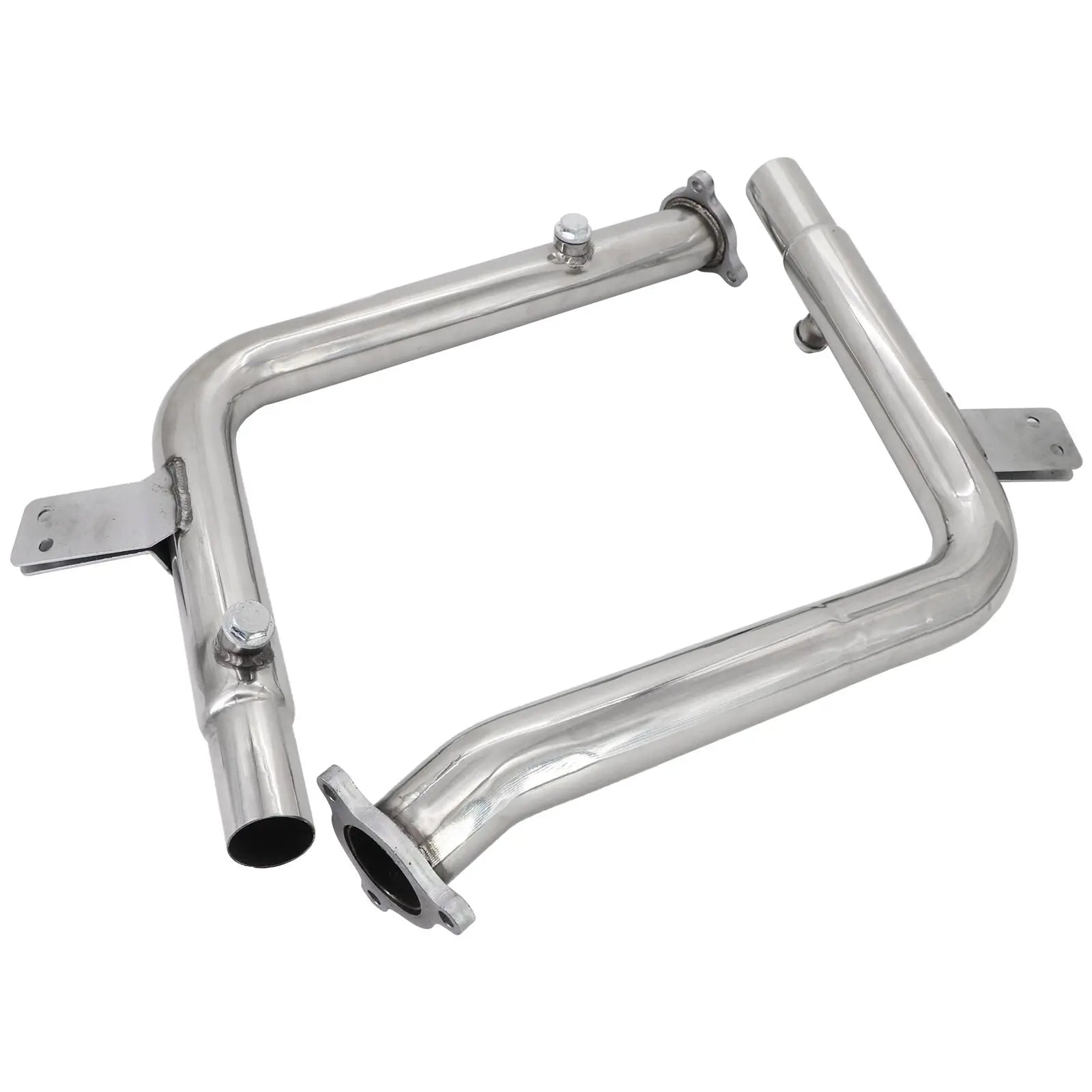
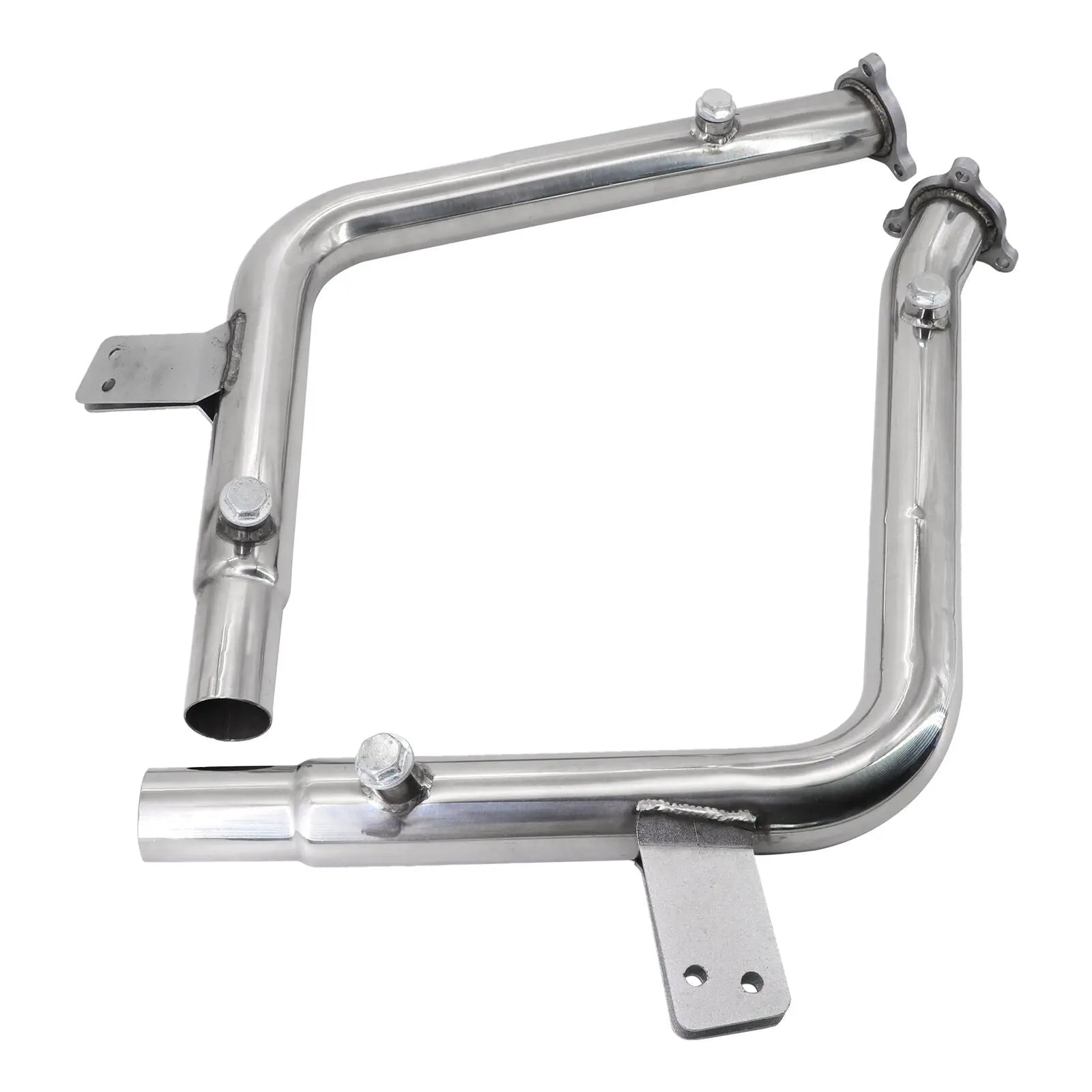
FLASHARK Exhaust Downpipe for 2000-2004 Porsche Boxster 986 2.7L / 3.2L
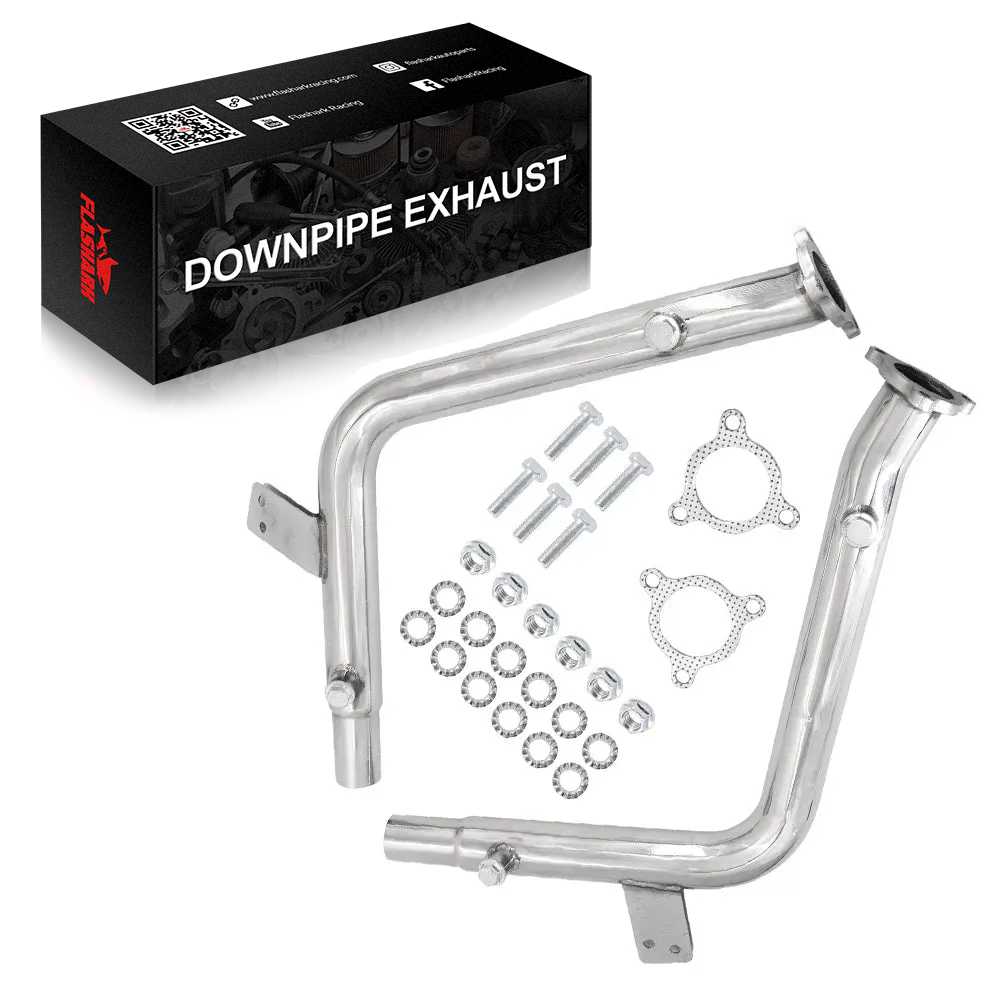
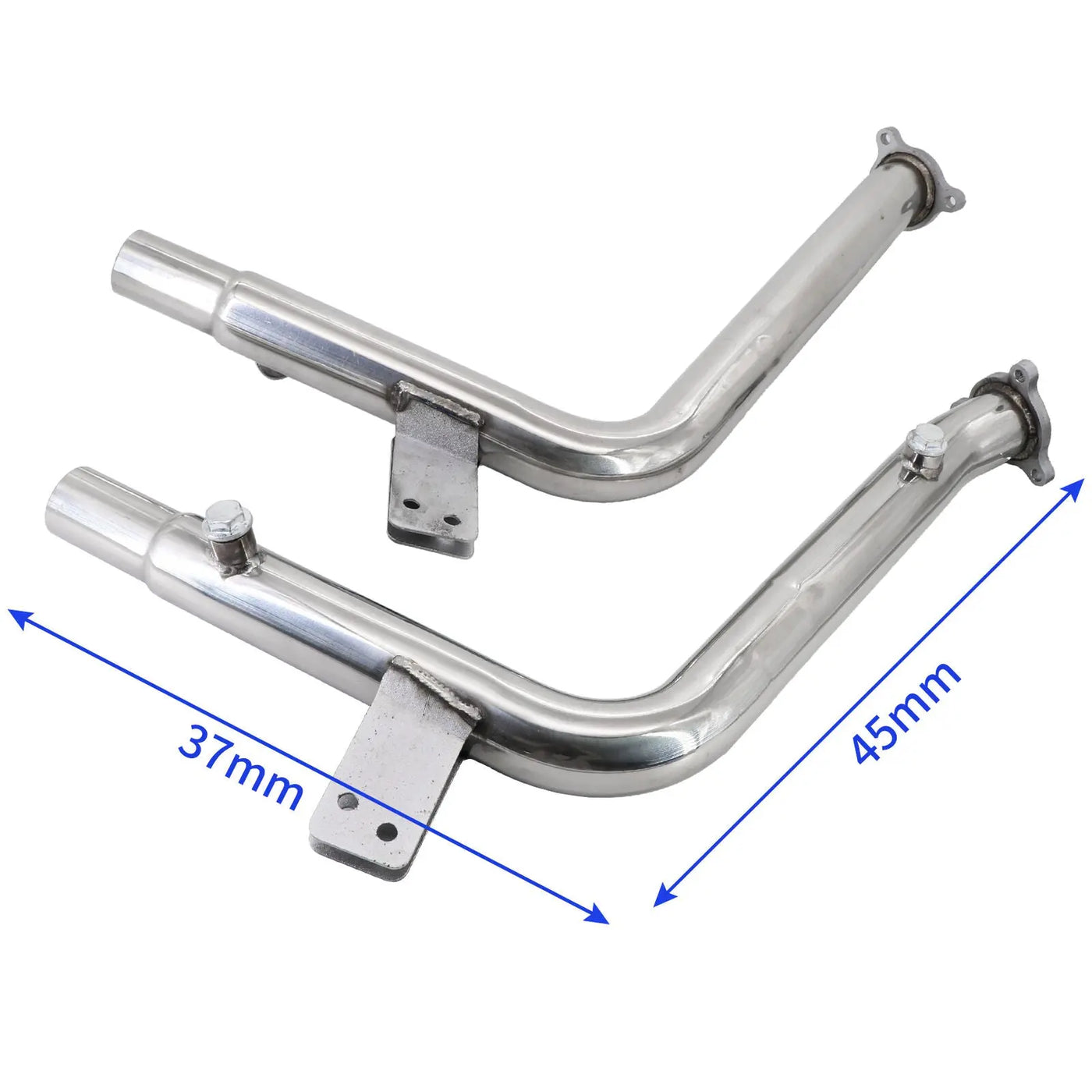
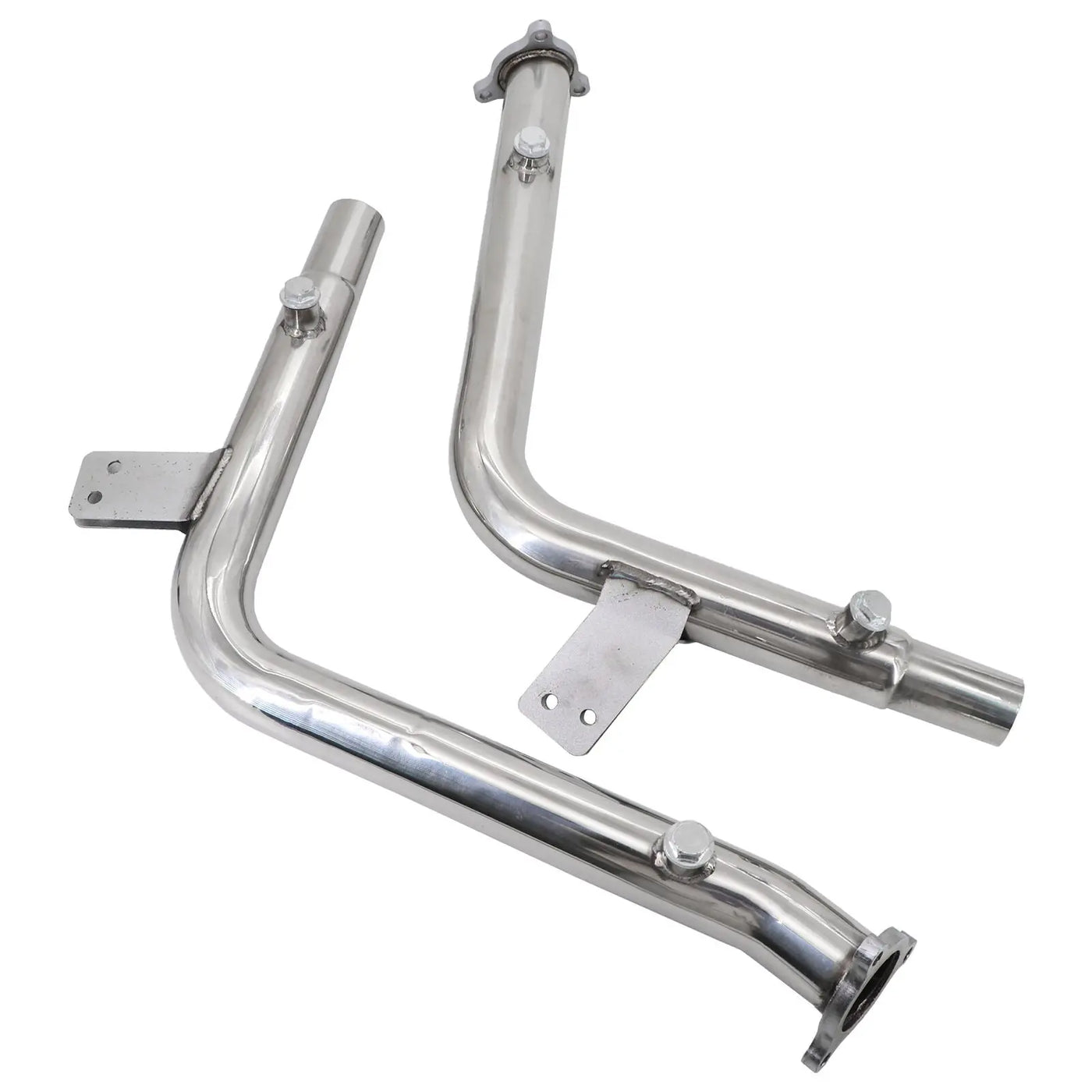
Flashark downpipes are designed to seamlessly replace the restrictive stock downpipes on the 2000-2004 Porsche Boxster 986 models. By improving exhaust flow right after the catalytic converters, these high-performance downpipes enhance horsepower and torque, especially when paired with 986 Boxster headers. The upgraded design allows exhaust gases to exit more efficiently, boosting turbocharged engine performance and ensuring a smoother, more powerful driving experience.
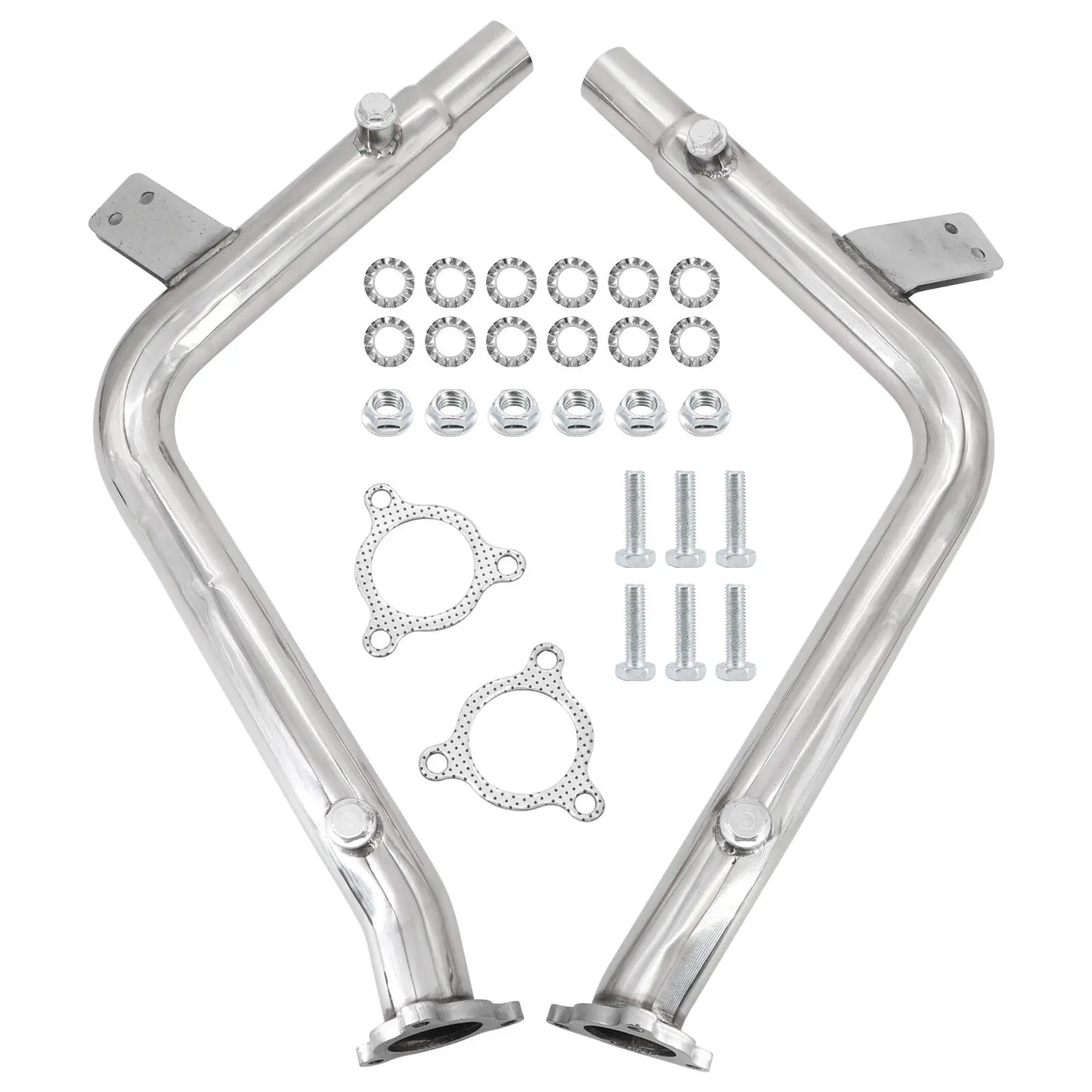
Tri-Bolt flange bolts directly to your OEM or any aftermarket headers with our supplied hardware and gaskets.
Specifications:
Brand Name: FLASHARK
Certificate: ISO9001:2000
Application: Exhaust Down Pipe
Material: Stainless Steel
Surface: Mirror Polish
Model: DP29783
Package Included:
2 x Pipes
2 x Clamps
6 x Bolts
6 x Nuts
Features:
1. Improve Engine Output and Efficiency, Give you an extra HPs, and increases torque
2. Large diameter and free flow tubing for unrestricted flow, Making the exhaust air flow smooth, Designed for high-performance racing
3. Made of High-Quality 16-gauge T-304 Stainless Steel with Computerized Mandrel-Bends
4. All joints are TIG welded to prevent cracking and wear
5. CNC Machine Flange for MAX Strength and Durability
6. Flanges chrome plated for corrosion resistance
Fitment:
- 2000 Porsche Boxster 986 Base & Boxster S 2.7L/3.2L
- 2001 Porsche Boxster 986 Base & Boxster S 2.7L/3.2L
- 2002 Porsche Boxster 986 Base & Boxster S 2.7L/3.2L
- 2003 Porsche Boxster 986 Base & Boxster S 2.7L/3.2L
- 2004 Porsche Boxster 986 Base & Boxster S 2.7L/3.2L
Q1: What do headers do for the Boxster 986 engine?
A1: Headers replace the factory log-style exhaust manifolds with tubular equal-length runners. The 986's flat-six is a boxer—the exhaust gases from cylinders 1 and 6, 2 and 5, 3 and 4 need to exit efficiently. Factory manifolds are crumpled and restrictive. Aftermarket headers let each cylinder breathe independently, which improves scavenging and unleashes some of the potential the stock manifolds strangle.
Q2: How much horsepower do headers add to the 986 Boxster?
A2: Headers alone typically add 5-10 wheel horsepower on a properly tuned 986. The real gains come from improved throttle response and a broader torque curve. On a modified car with intake and exhaust work, the numbers climb higher. The 986's engine responds well to header upgrades because the stock manifolds are genuinely terrible— Porsche built them for cost and packaging, not performance.
Q3: Are these headers a direct fit for my 2000-2004 Boxster 986?
A3: Yes, if your car has the 2.7L or 3.2L M96 engine (which all 986 Boxsters from 2000-2004 do). The 986 uses a specific engine cradle design that requires mid-length or long-tube headers designed for the Boxster application. These aren't 996 headers with different bolt patterns—they're made for the 986's unique engine orientation and subframe layout.
Q4: Do headers change the exhaust sound on the Boxster 986?
A4: Significantly. The flat-six has a distinctive character that the stock manifolds partly mask. Headers open up the note, adding resonance and making the engine sound more alive. The exhaust note becomes more metallic and exciting at high RPM. At idle, it sounds more purposeful. Some purists prefer the stock sound—aftermarket headers are definitely louder and more present.
Q5: Will installing headers trigger a check engine light on my 986?
A5: It depends. If you're replacing catalytic converters at the same time (headers often flow better than aging cats), the O2 sensors might see different readings and throw codes. Headers alone usually don't trigger CELs because they don't affect fuel mixture feedback—the pre-cat O2 sensors still see the same air/fuel ratio. The post-cat sensors might register slight differences. If CELs appear, they can usually be cleared with a tune or OBD-II tool.
Q6: Are these Boxster 986 headers street legal?
A6: If you're keeping the catalytic converters (many header setups include high-flow cats or connect to your existing cats), legality depends on your local emissions laws. Headers that replace factory manifolds but keep functional cats usually pass emissions. If you're going catless, expect to fail OBD-II testing in states with emissions inspection. Some states don't inspect older cars at all—the 986 is now over 20 years old in many places.
Q7: How difficult is the 986 header installation?
A7: Removing and replacing the 986's exhaust headers is a significant job. You need to access the engine compartment from below and above, remove the IMS bearing housing in some cases, and deal with rusted hardware. Plan for a full day in a shop with a lift, or two days at home with ramps and patience. The passenger side (cylinders 4-6) is particularly tight. Budget for new gaskets and anti-seize compound.
Q8: Do headers help with the 986's known IMS bearing problem?
A8: No. The IMS bearing issue is a separate problem unrelated to exhaust flow. Headers don't affect the intermediate shaft bearing, which is prone to failure from inadequate lubrication, especially in early M96 engines. If you're doing header work, it's smart to inspect the IMS bearing while you're in there—but headers themselves won't fix or worsen the IMS situation.
Q9: Should I get ceramic-coated headers for my 986?
A9: Ceramic coating reduces under-hood temperatures and looks cleaner longer, but it's not essential. The 986's engine bay runs hot anyway, and headers positioned near the intake can add intake air temperature. A ceramic coating helps, but it's a quality-of-life upgrade rather than a performance one. If you're building a show car or tracking extensively, it's worth the extra cost. For a driver, raw stainless holds up fine.
Q10: What's the difference between T304 stainless and mild steel headers for the 986?
A10: T304 stainless is the standard for performance headers—it resists corrosion better and holds up to heat cycles without cracking. Mild steel headers are cheaper but rust faster, especially in winter climates or coastal areas. If you drive your 986 year-round in harsh conditions, stainless is worth the investment. For a garage queen or weekend toy, mild steel might last fine but will require more maintenance.
Q11: Can headers help the 986 run cooler?
A11: Surprisingly, yes. Restrictive stock manifolds trap heat in the engine bay because exhaust gases can't exit efficiently. Better-flowing headers reduce backpressure, which means cooler operating temperatures in the exhaust path. The engine itself might run slightly cooler too because it's working less hard to push exhaust out. It's not a cooling system upgrade, but the 986's thermal management improves as a side effect.
Q12: What other mods should I pair with 986 headers?
A12: A cold air intake is the natural complement—headers improve exhaust flow, and an intake improves inflow. An aftermarket exhaust system (cat-back or axle-back) ties everything together and unlocks the full sound potential. If you're chasing maximum power, a tune helps the ECU optimize fueling for the improved airflow. The flat-six responds well to bolt-on modifications when done in the right order.