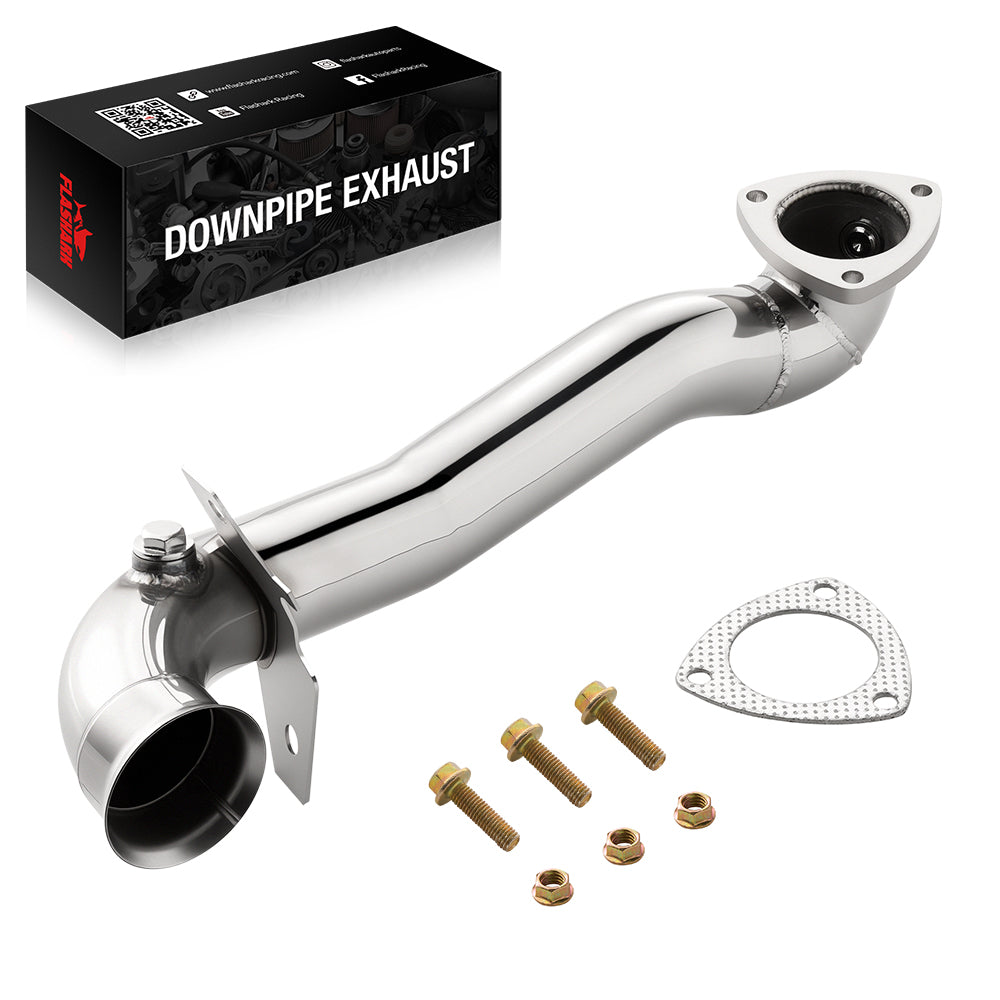
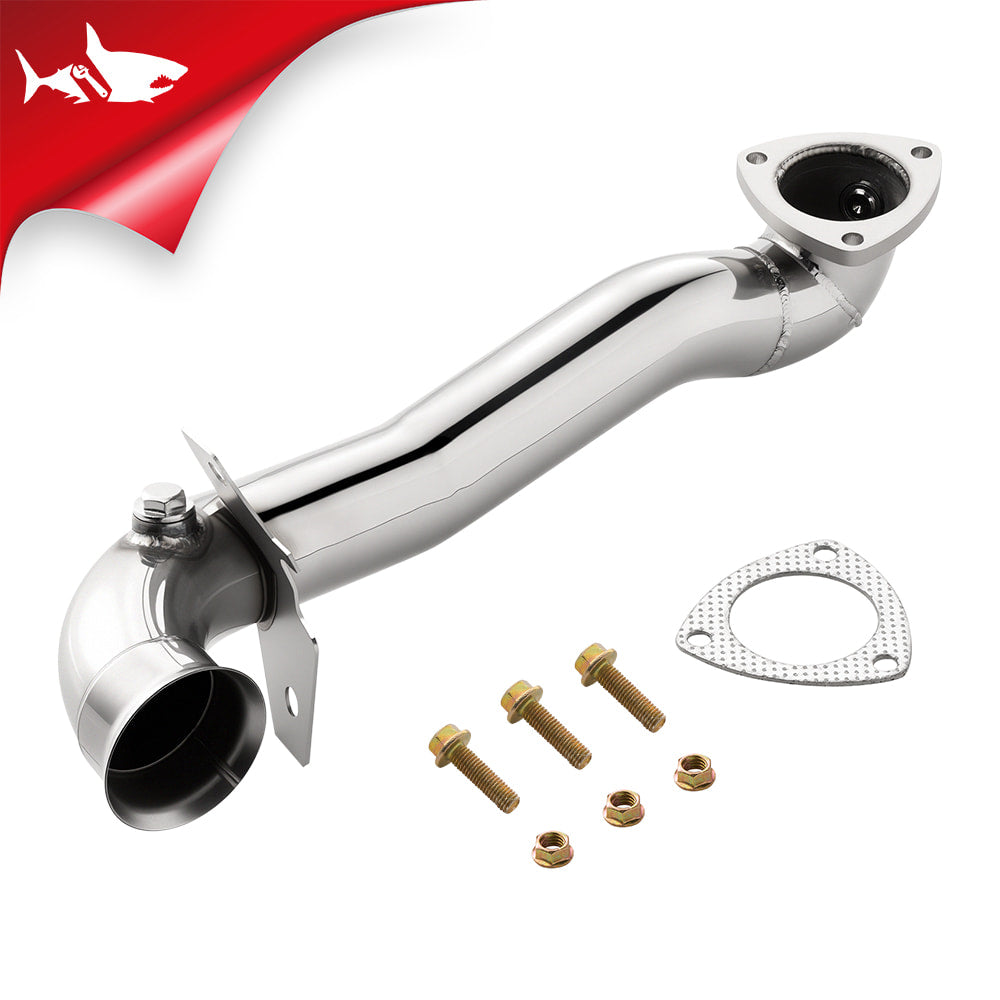
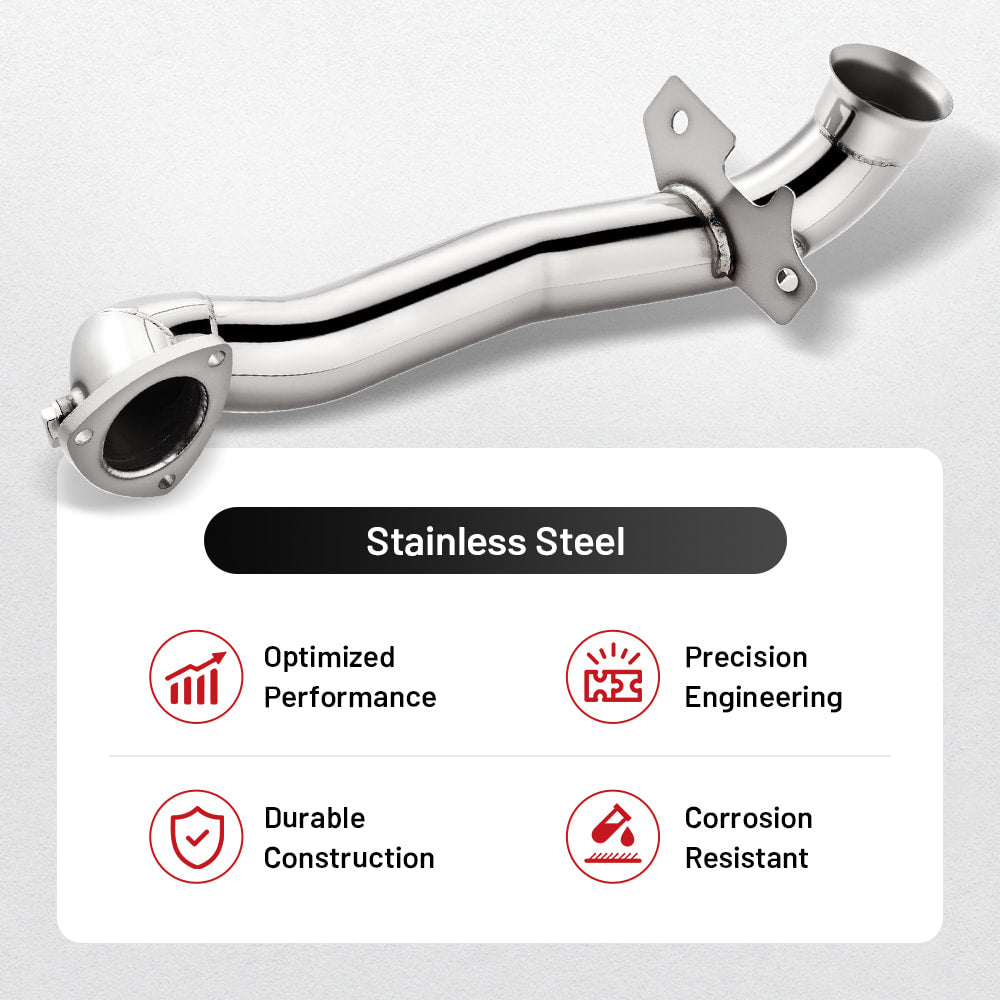
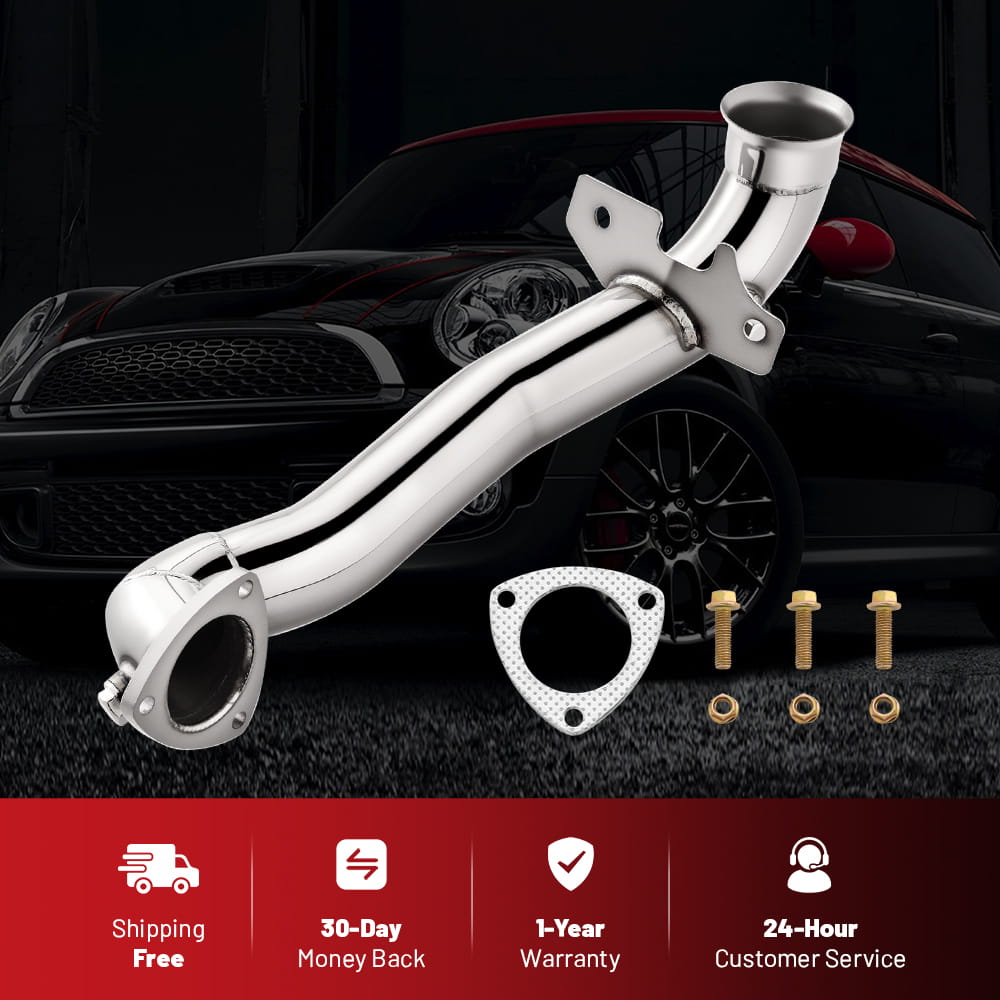
Downpipe Exhaust for 2007-2016 Mini Cooper R55-R61 1.6L Turbo 2.5 inch with 2 O2 sensor bungs

SKU: FLES08317

💥PRIME DAY ENCORE

Save $33.00
Sale price$113.00Limited Time Deal Regular price$146.00

🔥 Performance Builds started with this kit in the last 24 hours

Description

Fitment

FAQ

Shipping & Returns

REVIEWS

Flashark Downpipe Exhaust for 2007-2016 Mini Cooper R55-R61 1.6L Turbo 2.5 inch

The factory downpipe on your turbo Mini Cooper is the biggest single bottleneck in the exhaust path — a narrow 2.0" tube with a restrictive primary catalytic converter right after the turbo outlet kills spool response and chokes mid-range power. Flashark's 2.5" catless downpipe eliminates that restriction with a straight-through, oversized tube that lets exhaust gases exit the turbo faster, reducing backpressure and improving wastegate efficiency across the entire RPM band.

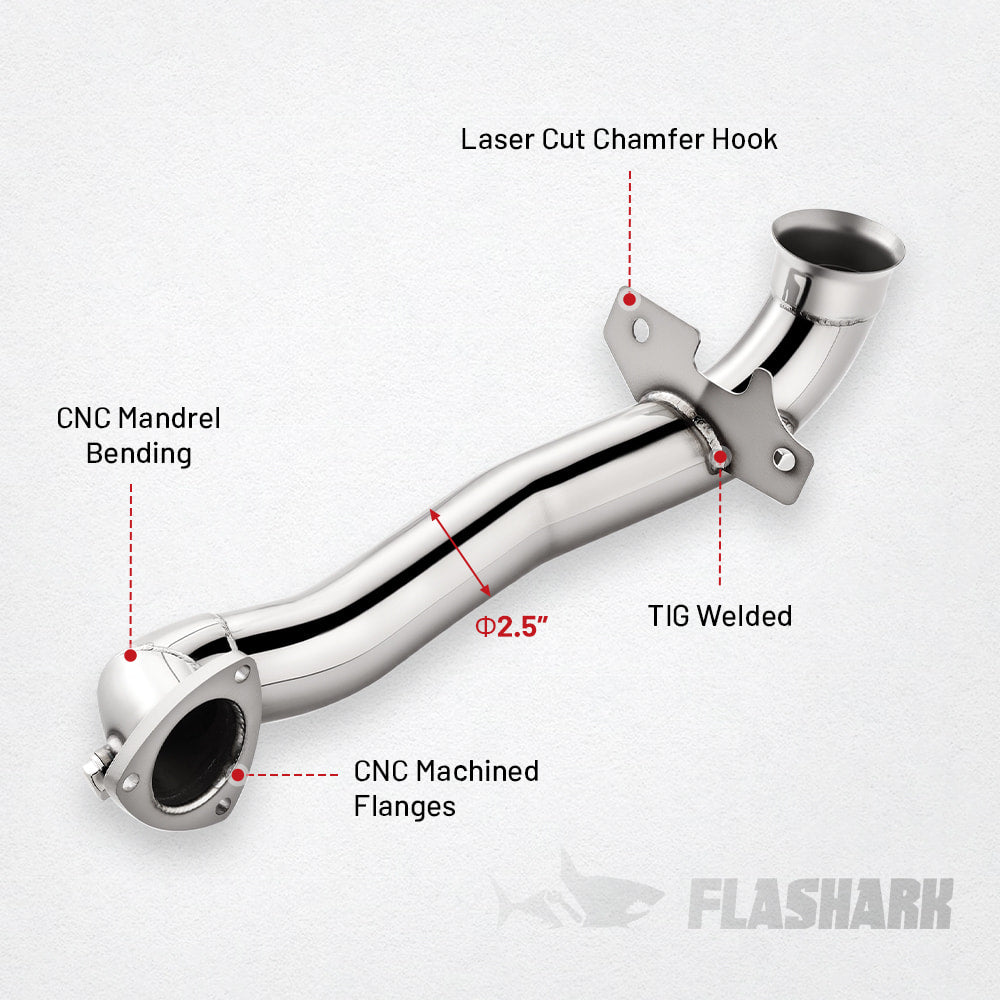
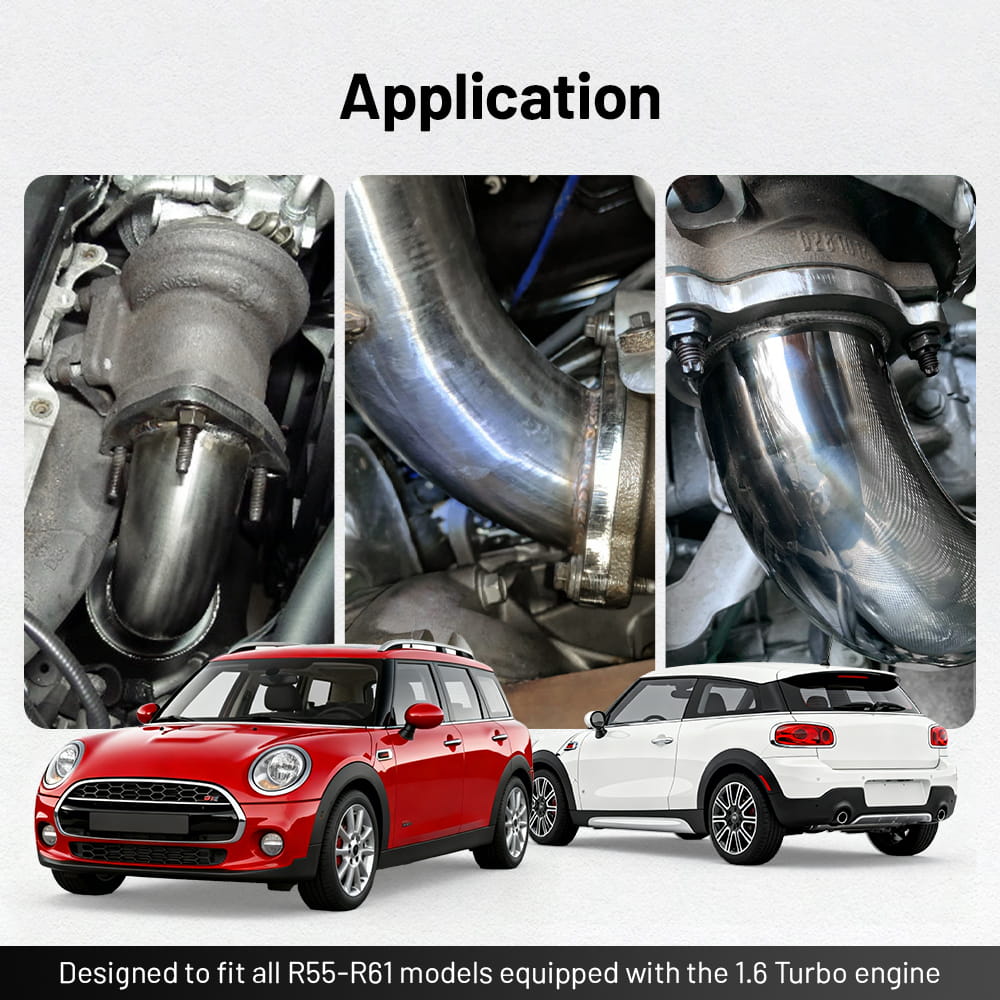
Two O2 sensor bungs with plug screws are included so you can retain both factory sensors (pre-cat for fuel trim, post-cat for monitoring) or install an extension/spacer on the downstream sensor to avoid a catalyst-efficiency CEL. The 9mm turbo flange is CNC-machined from billet material to prevent warping under extreme heat cycling, and all joints are TIG-welded for crack resistance. Direct bolt-on fit for all R55-R61 Cooper S and JCW models with the N14/N18 Prince turbo engine — no cutting, no welding required.

Expected gains: 10-15 HP with an ECU tune that recalibrates boost targets and fuel mapping for the increased flow. Without a tune, gains are modest (3-5 HP from reduced backpressure alone), and the rear O2 sensor will likely trigger a P0420 CEL. Pair with a cat-back exhaust for the full free-flow path and maximum power potential.

OFF-ROAD USE ONLY
This product removes the primary catalytic converter and is intended for OFF-ROAD and track use ONLY. Installing a catless downpipe on a vehicle registered for public road use violates the Clean Air Act (42 U.S.C. § 7401 et seq.) and may result in failed emissions inspections, fines, and registration denial. By purchasing, you acknowledge sole responsibility for compliance with local, state, and federal regulations. Flashark Racing is not liable for illegal installation.

Specifications:

Brand Name: FLASHARK
Certificate: ISO9001:2000
Application: Exhaust Down Pipe
Material: Stainless Steel
Surface: Mirror Polish
Model: DP29753
Deion:1.5 mm thick
2.5'' diameter
9 mm thick turbo flange to prevent warping

Delivery:

Free Shipping
Shipping Time: Estimated in 3-5 Working Days

Feature:

  • This Mini Cooper downpipe increases exhaust gas flow from this reduced restriction and allows for more power in the low to mid-range RPM. More responsive throttle response.
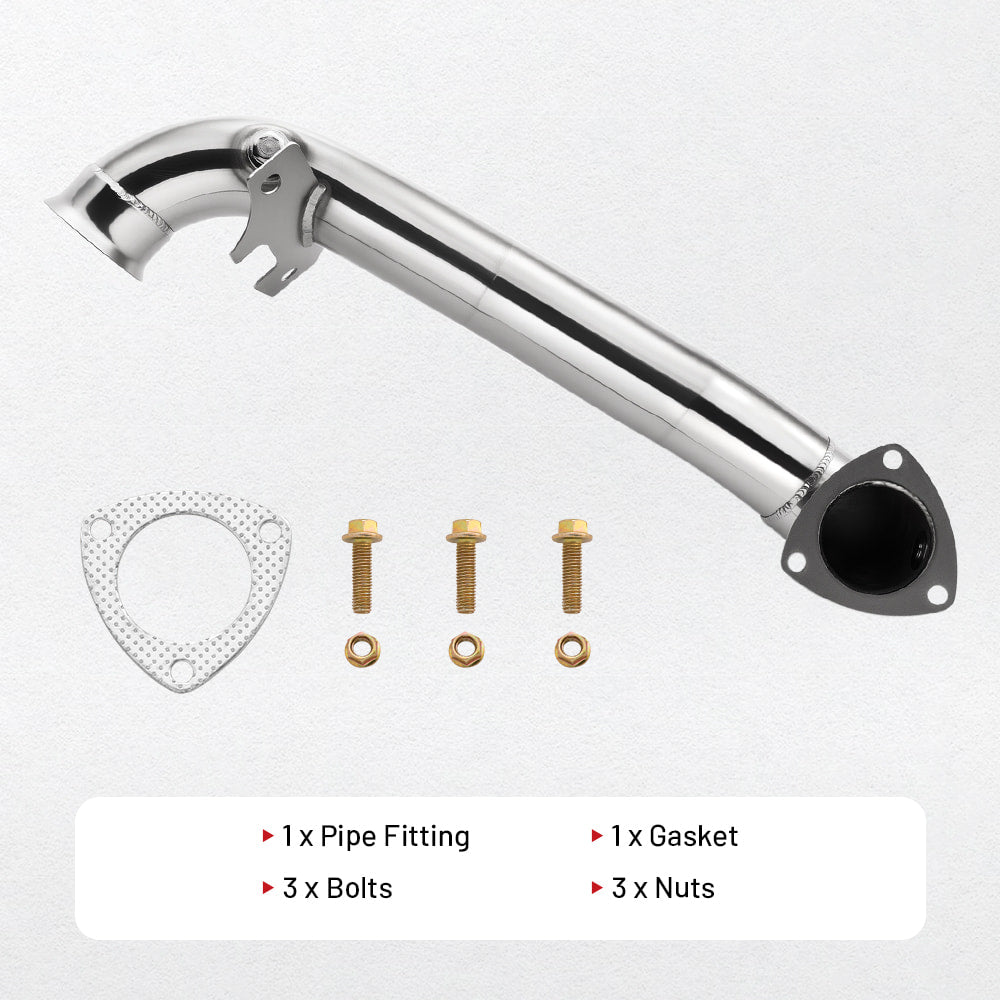
  • Downpipe includes 2 O2 sensor bungs complete with screw-in plugs
  • Downpipe comes with factory-style flanges for a leak-free install
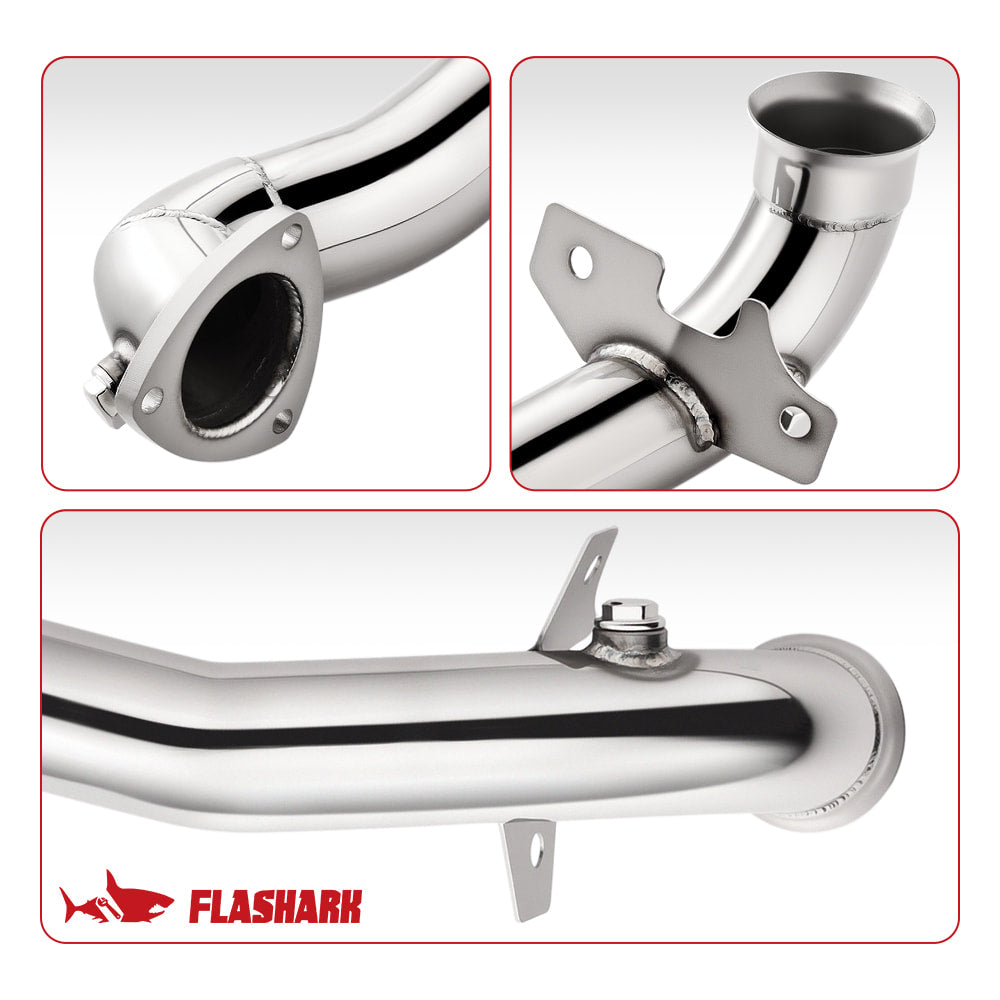
  • TIG-welded joints prevent cracking and wear, ensuring long-lasting performance.
  • CNC Machined Flange, maximize strength and durability to meet the demands of rigorous driving.
  • Each downpipe comes with a standard factory OEM-type mounting flange to support the downpipe and reduce stress on mounting points
  • Easily to install. Mounts in factory mounting locations. Comes complete with gaskets and bolts. No modifications are needed.
  • Installing this downpipe may trigger a check engine light because of changes in the exhaust emissions system. ECU tuning is recommended to ensure optimal performance and to prevent warning lights

Downpipe Exhaust for 2007-2016 Mini Cooper R55-R61 1.6 Turbo 2.5 inch

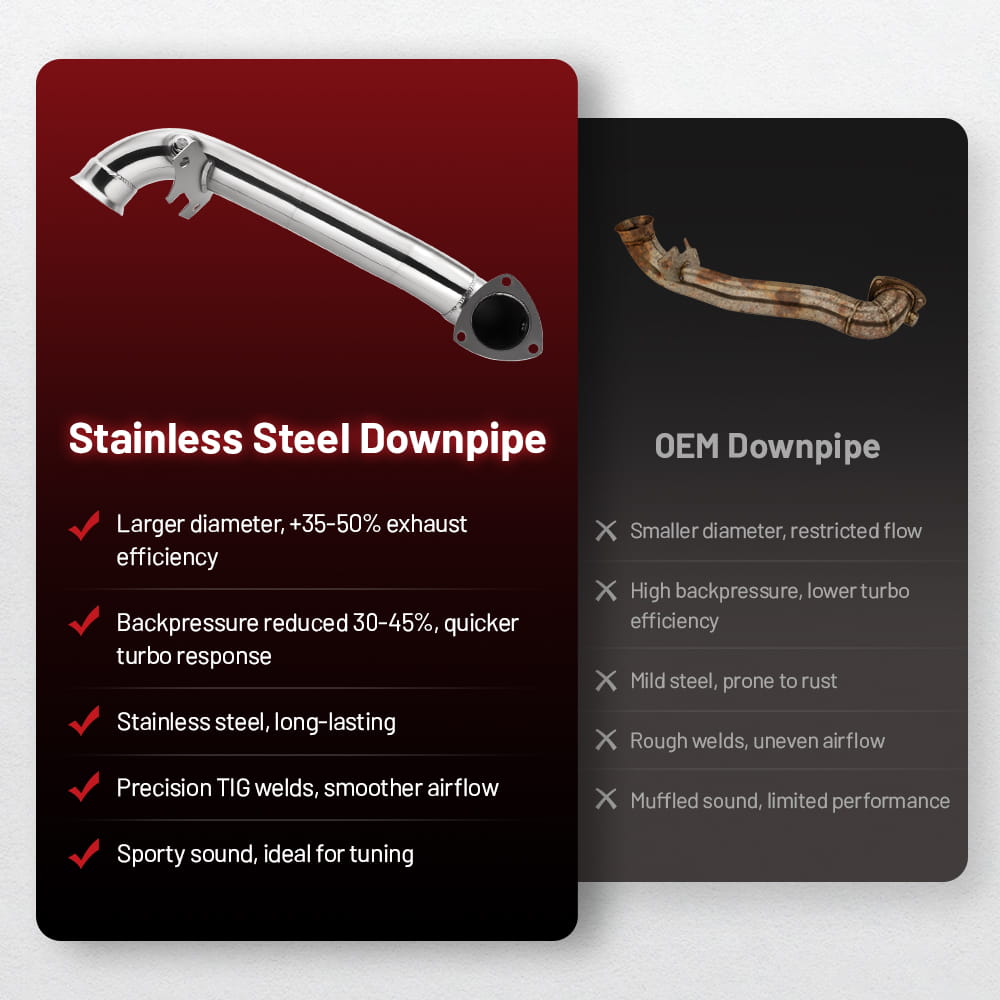
Stock Downpipe vs Aftermarket Downpipe: Mini Cooper

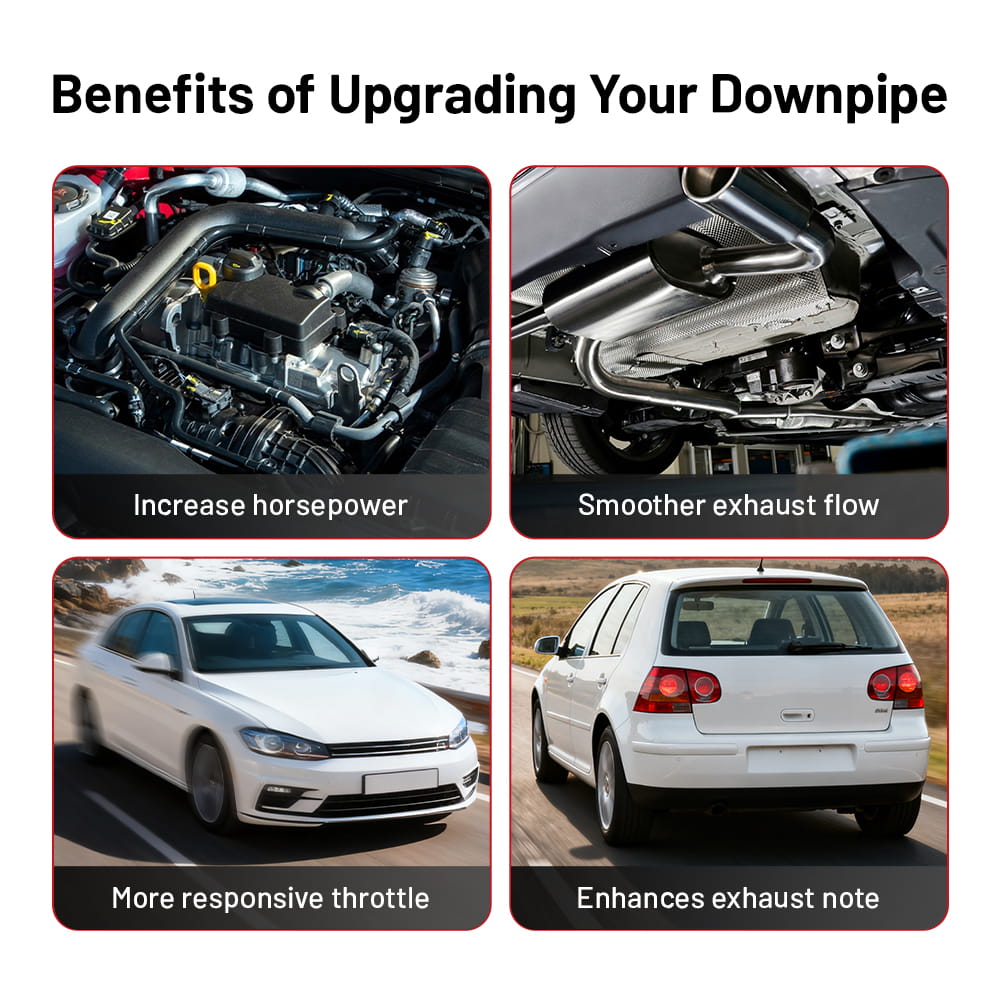
Upgrading the downpipe on your 2007-2016 Mini Cooper can unlock significant performance benefits. While the factory downpipe is designed primarily to meet emissions and noise regulations, an aftermarket downpipe like Flashark’s allows your turbocharged engine to breathe more efficiently. This results in improved throttle response, stronger mid-range torque, and a more engaging driving experience.

  • Reduced Exhaust Backpressure: Smooths the flow of exhaust gases, enhancing turbo efficiency and throttle response.
  • Improved Performance: Increases low-to-mid RPM power for better acceleration and more dynamic driving.
  • Sportier Exhaust Sound: Produces a deeper, more aggressive note while keeping idle noise comfortable.
  • Long-Lasting Durability: TIG-welded stainless steel and CNC-machined flanges prevent warping and cracking, ensuring reliable performance over time.

Why ECU Tuning is Recommended

Installing an aftermarket downpipe on your 2007-2016 Mini Cooper may trigger a check engine light due to changes in exhaust flow and oxygen sensor readings. ECU tuning ensures your engine management system adjusts for these modifications.

  • Optimizes air/fuel ratio for the upgraded downpipe.
  • Prevents warning lights and avoids potential limp modes.
  • Maximizes power and efficiency gains from the new downpipe.
  • Maintains engine reliability and longevity under higher exhaust flow conditions.

Why Choose Flashark’s Mini Cooper Downpipe?

Flashark’s Mini Cooper downpipe delivers performance, durability, and ease of installation all in one package. Crafted from high-quality stainless steel with precision TIG welding and CNC-machined flanges, it offers leak-free, long-lasting reliability. Engineered for a perfect fit on 2007-2016 Mini Cooper R55-R61 models, it requires no modifications and comes complete with gaskets and hardware. Flashark is committed to providing enthusiasts with a solution that enhances throttle response, improves exhaust flow, and delivers a noticeable driving experience. Upgrade your Mini Cooper with Flashark and feel the difference.

2007-2016 Mini Cooper Model Overview

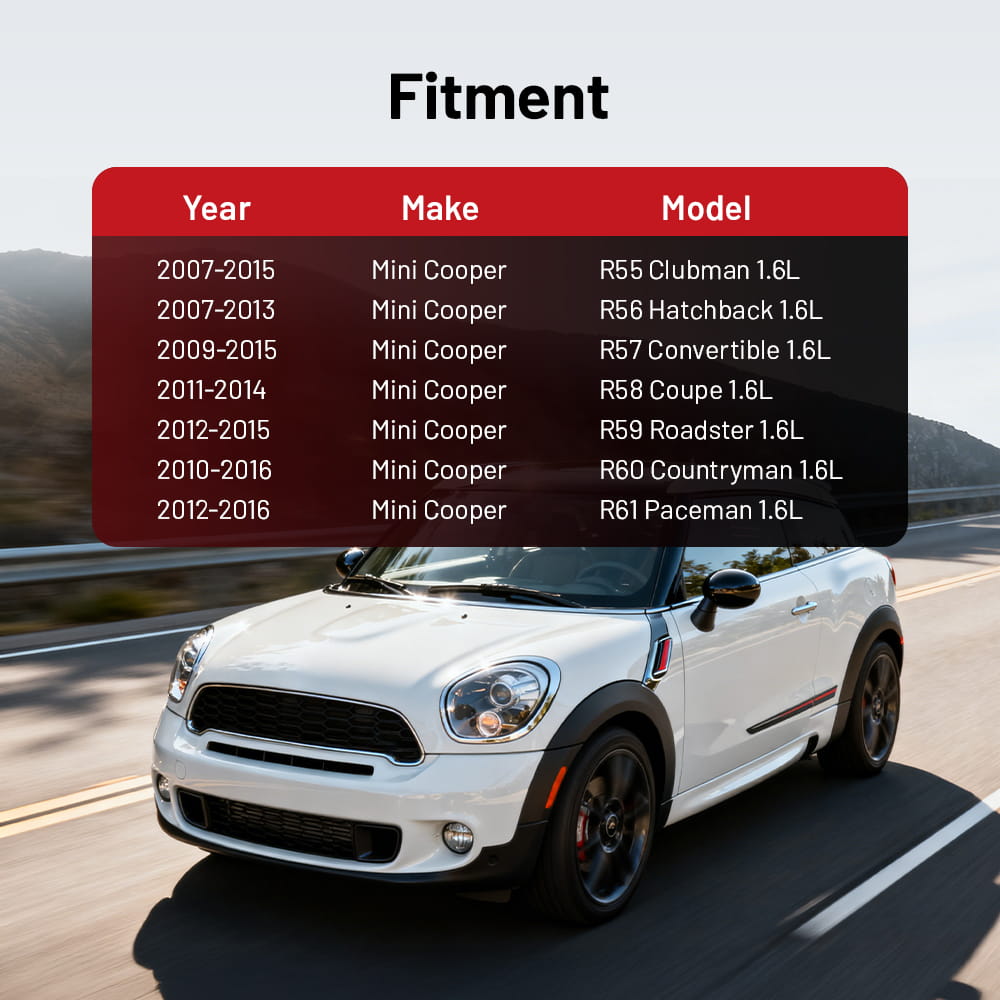
The 2007-2016 Mini Cooper lineup includes a range of body styles and turbocharged 1.6L engines, including: the R55 Clubman (2007-2015), R56 Hatchback (2007-2013), R57 Convertible (2009-2015), R58 Coupe (2011-2014), R59 Roadster (2012-2015), R60 Countryman (2010-2016), and R61 Paceman (2012-2016). These models share the same turbocharged 1.6L engine architecture, making them compatible with high-performance downpipe upgrades like Flashark’s. Properly designed aftermarket components improve exhaust efficiency while maintaining a direct fit for these vehicles, ensuring performance gains without the need for extensive modifications.

Years Make Model Platform Code Engine
2008-2015 Mini Cooper S Clubman R55 1.6L Turbo N14 / N18
2007-2013 Mini Cooper S Hatchback R56 1.6L Turbo N14 / N18
2009-2015 Mini Cooper S Convertible R57 1.6L Turbo N14 / N18
2012-2015 Mini Cooper S Coupe R58 1.6L Turbo N18
2012-2015 Mini Cooper S Roadster R59 1.6L Turbo N18
2011-2016 Mini Cooper S Countryman R60 1.6L Turbo N18
2013-2016 Mini Cooper S Paceman R61 1.6L Turbo N18

Q: What does a catless downpipe do for my turbo Mini Cooper?

A: A catless downpipe replaces the factory primary catalytic converter between the turbocharger outlet and the rest of the exhaust system. On the Mini's N14/N18 Prince turbo engine, the factory cat sits directly after the turbo — creating backpressure that slows turbo spool and limits wastegate efficiency. Removing it with a 2.5" free-flow pipe lets exhaust gases exit the turbine faster, reducing backpressure, improving boost response, and unlocking mid-range torque that the factory cat restricts. The 25% diameter increase (from 2.0" to 2.5") further reduces flow restriction throughout the entire pipe length.

Q: How much horsepower will this downpipe add to my Mini Cooper S?

A: Without a tune: 3-5 HP from reduced backpressure alone. With an ECU tune that adjusts boost targets, fuel mapping, and timing for the increased flow: 10-15 HP on Cooper S (181-192 HP stock) and 12-18 HP on JCW models (211-218 HP stock). The torque improvement is often more noticeable than the peak HP gain — the N14/N18 turbo responds dramatically to reduced backpressure in the 2,500-4,500 RPM range where factory exhaust restriction is most severe. Combine with a cat-back exhaust for maximum gains.

Q: Will installing this downpipe trigger a Check Engine Light (CEL)?

A: Most likely yes. Removing the primary catalytic converter changes the downstream (rear) O2 sensor readings, which the ECU monitors for catalyst efficiency. This typically triggers a P0420 code. The 2 included O2 bungs allow you to keep both factory sensors in place. Solutions to avoid CEL: (1) an ECU tune that disables rear O2 monitoring (most common and reliable approach), (2) O2 sensor spacers/extensions that push the rear sensor partially out of the direct exhaust stream, or (3) keep the factory catted downpipe if you need to pass emissions. The front (pre-turbo/primary) O2 sensor that controls fuel mixture is unaffected by the catless change.

Q: Are catless downpipes legal for street use on a Mini Cooper?

A: No. Removing or bypassing factory catalytic converters violates the Clean Air Act and is illegal for use on public roads in all 50 states. Catless downpipes are designed for off-road, track, and competition use only. Many states with emissions testing will fail your vehicle immediately if the primary cat is missing. Even in states without periodic testing, federal law still applies. If you need a street-legal option, consider high-flow catted downpipes (200-cell metallic cat) — they flow significantly better than OEM while remaining emissions-compliant in most jurisdictions.

Q: Do I need an ECU tune with this catless downpipe?

A: Not strictly required for installation, but strongly recommended — especially on N14-engine Minis (2007-early 2010). Without a tune, the turbo wastegate may not properly regulate boost with the reduced backpressure, potentially causing over-boost on aggressive throttle. A tune recalibrates boost targets, fuel trims, and ignition timing for the increased exhaust flow, unlocks the full 10-15 HP potential, and clears the rear O2 CEL. Popular tuning platforms for the N14/N18 include COBB AccessPORT, BootMod3, and Manic Tuning. The tune is what transforms this downpipe from a mild improvement into a significant power upgrade.

Q: What's the difference between the N14 and N18 engine — does this downpipe fit both?

A: Yes, it fits both. The N14 (2007-early 2010) is the first-generation Prince turbo — single-scroll turbocharger, more boost-threshold lag, and a more sensitive wastegate that benefits even more from reduced downpipe backpressure. The N18 (late 2010-2016) is the revised Prince turbo with Valvetronic and a twin-scroll turbo — better stock response but still heavily restricted by the factory catted downpipe. Both share the same turbo outlet flange pattern and downstream exhaust routing, so this downpipe bolts directly to either engine. JCW factory tunes on both engines use the same physical exhaust layout.

Q: How difficult is the downpipe installation on a Mini Cooper?

A: Moderate — doable at home with jack stands, but much easier on a lift. The Mini's compact engine bay means tight clearance around the turbo outlet flange. You'll need to disconnect the turbo-to-downpipe flange (top connection, often the hardest to reach), and bolt in the Flashark unit using the included hardware. The OEM mounting bracket position is retained for easy reattachment. Plan 1.5-2 hours with a lift, or 3-4 hours on jack stands. Apply anti-seize on all flange bolts during reassembly — the turbo flange runs extremely hot and bolts can seize without it.

Q: Will this downpipe change the exhaust sound on my Mini?

A: Yes — significantly. Removing the primary catalytic converter eliminates the largest sound-damping element in the exhaust path. On the turbo Mini, you'll notice a deeper, more aggressive tone under acceleration, with a sharper turbo whistle and wastegate chatter becoming audible at part-throttle. Idle and light cruise remain relatively civilized, but anything above 2,500 RPM gets noticeably louder. If you already have a cat-back exhaust, the combined catless + cat-back will be quite loud — ideal for track cars but potentially intrusive for daily commuting. Consider your driving environment before committing.

Q: Why does this downpipe have 2 O2 sensor bungs?

A: The Mini N14/N18 turbo engine uses two O2 sensors in the downpipe section: the front (upstream) sensor provides real-time air-fuel ratio data to the ECU for fuel trim adjustments — this is critical for engine safety and must always remain installed. The rear (downstream) sensor monitors catalytic converter efficiency for emissions compliance — on a catless pipe it will flag a P0420 code because there's no cat to monitor. Both bungs are included so you can retain both sensors in their factory positions. Plug screws are included so you can cap unused bungs if your tune deletes the rear sensor entirely.

Q: What's the difference between this 2.5" catless downpipe and a high-flow catted downpipe?

A: Catless (like this product) = maximum flow, maximum sound, maximum power potential, but illegal for street use and will trigger CEL. A high-flow catted downpipe retains a 200-cell metallic catalytic converter — it flows ~70-80% as well as catless, adds moderate HP (7-10 with tune), stays emissions-compliant in most states, and typically doesn't trigger CEL. If you drive your Mini on public roads and need to pass emissions, high-flow catted is the legal choice. If your Mini is a track-only toy or you live in a state without emissions testing, catless delivers the performance-maximum. The price difference is usually $40-60 more for catted.

Q: Can I pair this downpipe with a cat-back exhaust for more power?

A: Absolutely — and that's the recommended path for maximum gains. The Mini exhaust has three main restriction points: (1) the factory catted downpipe (biggest bottleneck, right after turbo), (2) the mid-pipe resonator, and (3) the muffler. A catless downpipe removes restriction #1. A cat-back removes restrictions #2 and #3. Together, you've created a nearly complete free-flow path from turbo to tailpipe. With an ECU tune optimizing the whole system, a full catless + cat-back + tune setup on a Cooper S typically yields 20-30 HP over stock — transforming a 181 HP car into a 200+ HP machine.

Q: What other upgrades should I consider alongside this downpipe?

A: The optimal upgrade sequence for a turbo Mini is: downpipe → ECU tune → cat-back exhaust. Start with the downpipe (it's the biggest single bottleneck), then get the tune (it unlocks the downpipe's full potential and clears CEL), then add the cat-back for the complete flow path. Other complementary mods: intake upgrade (improves turbo inlet flow), intercooler upgrade (keeps charge temps down when running more boost with the tune), and upgraded diverter valve (holds boost more reliably at higher pressure). The N14/N18 platform responds extremely well to bolt-on mods when done in the right order — each step builds on the previous one's gains.

Fast Shipping Policy

Your order will be dispatched within 1-2 business days, and the package will arrive within your order's estimated date. Click for Shipping Policy

Easy Return Policy

Every order comes with a 14-day free return, provided the item is brand new, uninstalled, and in its original packaging. We cover return shipping for quality issues. Refunds are processed within 3-5 business days. Click for Return Policy

Worry-Free Delivery Protection

Add Worry-Free Delivery at checkout — if it's lost, stolen, or damaged, you're 100% covered. Click for Worry-Free Delivery Protection

You may also like