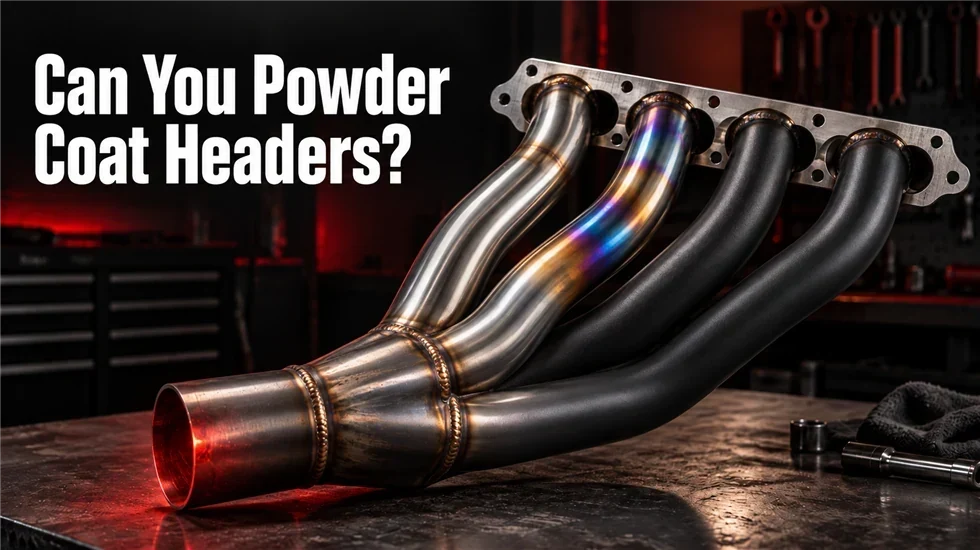
Everybody wants a fresh-looking set of headers. Black, silver, bronze, whatever fits the build. Then somebody at a local coating shop says, “Sure, we can powder coat those.” Sounds easy. The headers are off the car, the engine bay is apart, and the quote is tempting.
Hold up for a second.
Can you powder coat headers? You can physically apply powder to them. The better question is whether that coating will survive where your headers actually live: inches from the exhaust ports, repeatedly heated, cooled, shaken, splashed, and sometimes cooked far beyond what ordinary powder chemistry likes. On a mild street build, the wrong finish may look fine for a few drives. On a long-tube LS car, a tow rig, or anything that sees sustained load, it can turn ugly fast.
Quick Answer
- Standard epoxy or polyester powder coat is usually a poor choice for primary header tubes. Its long-term heat tolerance is far below the heat seen close to the cylinder head and collector.
- “High-temp” powder is not automatically header-safe. Read the continuous-temperature rating, not only the short-term peak number or curing temperature.
- Professional ceramic exhaust coating is normally the safer route when the goal is heat resistance, corrosion protection, and a finish that has a fighting chance through repeated heat cycles.
- Street cruising, towing, boost, track time, ignition timing, air-fuel ratio, and header layout all matter. A finish suitable for a cooler rear exhaust section may fail on a primary tube.
Can You Powder Coat Exhaust Headers? The Short Answer
Here is the garage-floor answer: ordinary powder coat belongs on brackets, valve covers, wheels, suspension parts, and plenty of other metal pieces. It does not belong on the hottest part of most exhaust header systems.
Powder coating works by electrostatically applying dry material, then baking it until it flows and cures into a hard film. That film is often polymer-based. It is tough against chips and normal underhood grime, but headers are not a normal underhood environment. Near the exhaust flange, metal temperature can move through a brutal range every time the engine goes from cold start to hard throttle.
Cure Temperature Is Not Service Temperature
This is where people get tripped up. A powder product may cure around 375–450°F, but that does not mean it can sit at 450°F all afternoon, let alone endure repeated spikes above that point. Curing is a controlled oven event. Header use is a vibration-heavy, oxygen-rich, rapidly changing heat cycle.
Some owners see a coating survive an easy drive and call it a win. That is not a useful test. Take the same car through traffic on a hot day, a long uphill pull, or a few wide-open-throttle runs, and the finish gets a very different exam.
Where Powder Coating Can Still Make Sense
Powder coat can still be a smart finish on cooler nearby parts: heat-shield outer surfaces, accessory brackets, hanger brackets, and certain exhaust sections well downstream from the engine. The rule is simple: match the coating’s continuous temperature rating to the real temperature at that location, with room to spare.
Shop tip: Never choose a coating by color chip alone. Ask for the product’s technical temperature rating and identify the exact part being coated. “Exhaust” is not one temperature zone.
Why Exhaust Header Heat Eats Coatings
Headers are not heated evenly. The primary tube near the cylinder head is one animal. The collector is another. A mid-pipe farther back can be much cooler. Add a turbocharger, a lean condition, retarded timing, a heavy trailer, or repeated track laps, and the heat picture changes again.
Exhaust gas temperature, tube-wall temperature, and outside surface temperature are three separate readings. A handheld infrared thermometer can be useful, but shiny metal, angle, distance, and emissivity can make a cheap reading misleading. Don’t build your whole coating decision around one quick number in the driveway.

Typical Header Heat by Use Case
| Use case | What happens to header heat | Finish decision |
|---|---|---|
| Easy street cruising | Heat rises and falls often, but sustained load is limited. | Still avoid ordinary powder on primary tubes; cosmetic survival is not the same as durability. |
| Street/strip LS or Coyote build | Wide-open throttle creates sharp temperature spikes and hard collector heat. | Use a header-specific ceramic system if appearance and heat control matter. |
| Towing or off-road crawling | Long-duration load and low vehicle speed can keep underhood heat trapped. | Prioritize thermal durability and protect adjacent wiring, boots, and lines. |
| Boosted or track car | High EGT and repeated heat cycles punish weak coatings quickly. | Choose a coating designed for severe exhaust heat; inspect engine tune first. |
Heat Cycling Is the Silent Killer
Even if a coating does not melt into a puddle, it can still lose the fight slowly. Steel expands when hot. The coating expands differently. Do that hundreds of times, add road vibration, and the weak point starts at a bend, weld, flange edge, or collector.
I remember a 2018 C5 that came through with black-coated long tubes. The owner said they looked perfect for the first couple of weeks. We pulled them later while chasing an exhaust leak, and the collector area had gone dull and rough. Under the discoloration, the coating had started lifting at the edge of a weld. The headers were not “bad.” The finish was simply asked to live in the wrong neighborhood.
Long-Tube, Turbo, and Track Cars Raise the Stakes
Long-tube headers put more hot surface area under the hood. Turbo engines and sustained track use can add another level of thermal punishment. That does not mean every high-performance build needs the same coating, but it does mean you should stop treating a generic “high-temp” label as a guarantee.
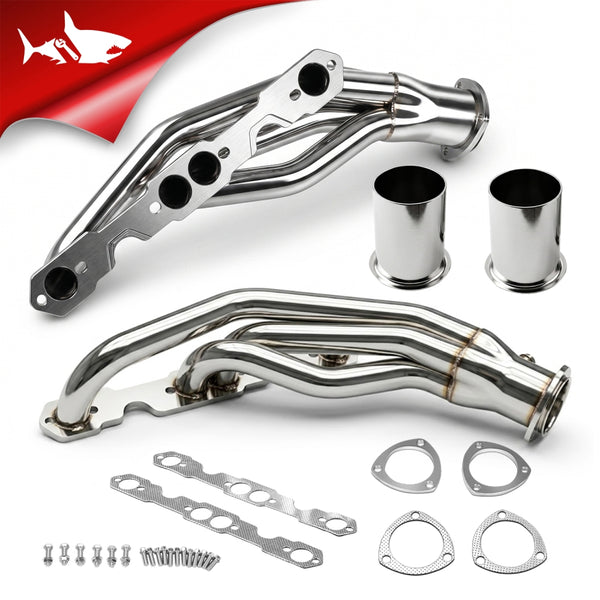
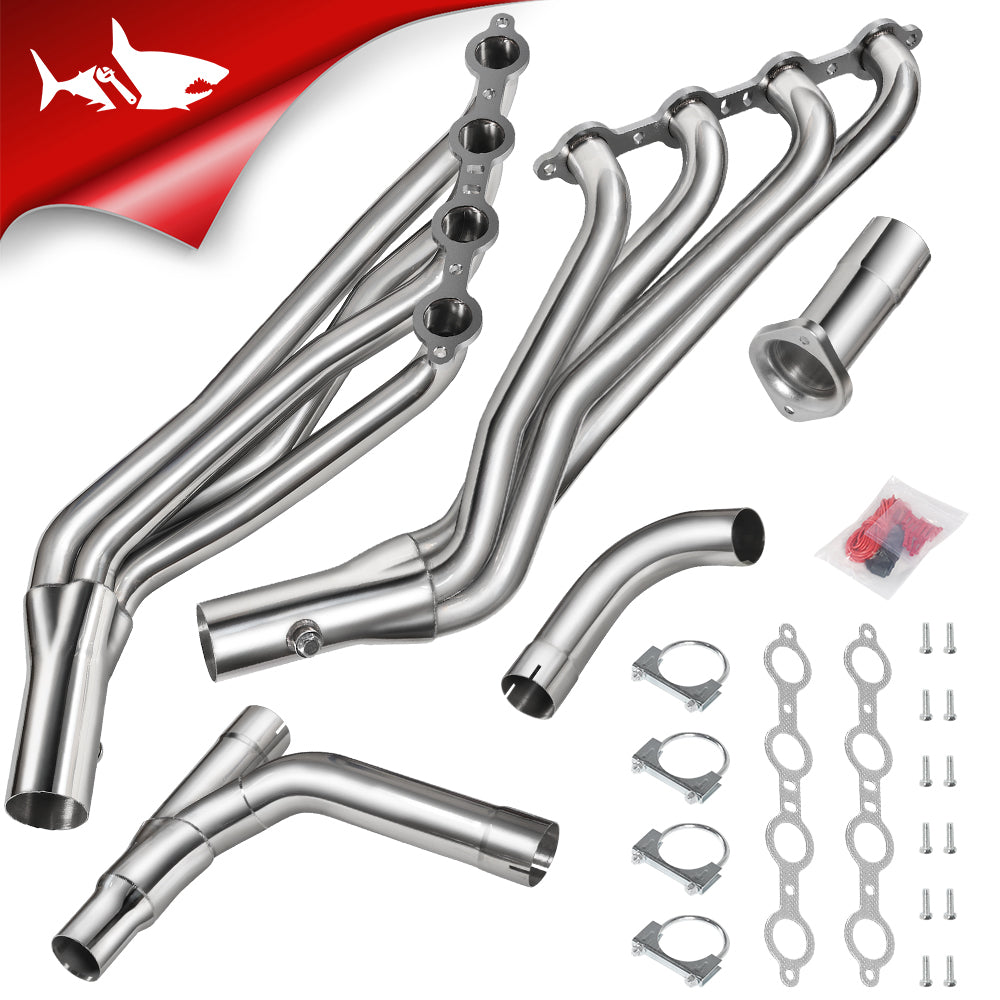
If you are choosing a replacement system, compare tube size, collector layout, chassis clearance, and the rest of the exhaust—not just finish color. Flashark’s performance automotive headers collection is a useful starting point when you are matching header design to a specific engine and build direction.
Header Selection Starts Before the Coating
A header is a heat-management and fitment part before it is a cosmetic part. Match the system to the vehicle year, engine, drivetrain, emissions equipment, and exhaust connection before ordering.
Powder Coating Headers: What Actually Fails First?
When people ask about powder coating headers, they usually picture one outcome: “Will it burn off?” Sometimes it does. More often, failure begins less dramatically. The finish loses gloss. It browns or yellows. Small bubbles appear. Then moisture gets beneath an edge, and rust starts doing its own ugly work under the coating.
Common Powder-Coat Temperature Classes
Most everyday powder coatings are formulated for parts that see modest service temperatures. Specialty silicone-based or high-temperature powders exist, but their numbers vary sharply by formula, film thickness, cure schedule, and exposure time. A claimed peak temperature is not the same thing as a continuous-duty rating.
For headers, ask these questions before spending a dollar:
- What is the exact coating product and continuous temperature rating?
- Is that rating for exhaust primaries, collectors, or cooler exhaust sections?
- Has the shop coated the same engine family and header layout?
- Does the price include media blasting, proper masking, and post-coat inspection?
- What happens if the finish blisters or flakes after normal use?
Blistering, Flaking, and Rust Under the Finish
Blisters can form when trapped contamination, poor surface prep, or heat-driven degradation breaks the bond. Flaking often follows at sharp edges and weld zones. Once bare steel is exposed, moisture can creep underneath. At that point, the coating that was supposed to make the header easier to maintain can hide corrosion until it becomes a bigger repair.
A lot of newcomers watch a quick YouTube build, spray or coat over a used header, bolt it back on, and call it finished. Don’t do it. Old oil residue, silicone, rust scale, and exhaust deposits have a way of coming back to embarrass the job after the first serious heat cycle.

The Fine Print on High Temp Powder Coat for Headers
A shop may have good results on a motorcycle muffler, a heat shield, or a low-load cruiser. That does not prove the same material is right for a long-tube V8 header. The words high temp powder coat for headers should make you ask for details, not relax.
I have watched a customer choose a low quote because the shop promised “header powder.” Once the box was open, the product sheet told a different story: it was intended for temperatures far below a hard-working collector. The money saved at the counter disappeared when the headers had to come back off and be stripped again. Cheap twice is expensive once.
Ceramic Coating vs. Powder Coating Exhaust Headers
Professional ceramic exhaust coatings are not just fancy black paint. Their job is different. They are built to tolerate far more heat than ordinary polymer powders, while also helping reduce radiant heat and protect the substrate from corrosion.
That last point matters. A ceramic-coated header is not magic, and it cannot fix a lean cylinder, a header leak, or a bad ignition map. But when the engine is healthy and the coating is applied correctly, it is generally the better material choice for a part that lives beside exhaust ports.
Different Chemistry, Different Job
Powder coat is prized for coverage and chip resistance on cooler metal parts. Ceramic exhaust coating is selected for severe-temperature service. Prep still matters: headers need to be clean, blasted properly, dry, and free of old contamination. Masking matters too. You do not want coating on sealing faces, sensor threads, or places where it can interfere with hardware.
Some ceramic systems can be applied inside and outside the header. Internal coverage depends on tube length, bends, collector design, and the coating process. Don’t assume every long-tube header receives identical internal coverage from flange to collector.

Can Ceramic Coating Add Horsepower?
Here is the honest answer: coating alone is not a bolt-on dyno miracle. It can help manage underhood heat and preserve exhaust energy, which may support the rest of a well-matched combination. But primary diameter, collector design, camshaft, intake, downstream exhaust, engine condition, and calibration do far more to shape the result.
On a typical LS street build, a proper header and exhaust combination can change power substantially, but there is no single wheel-horsepower number that belongs to every car. If somebody promises a fixed gain from coating alone, take a step back.
For a practical comparison of finish choices in a truck-oriented setting, see ceramic-coated vs. stainless steel headers for Tacoma builds. It is useful reading if your real concern is heat, corrosion, and off-road durability rather than showroom shine.
Ceramic Coating, Header Wrap, or High-Temp Paint?
- Ceramic coating: Best suited to owners who want a durable header-specific finish and better radiant-heat control.
- Header wrap: Can reduce radiant heat but may trap moisture and keep tube material hotter. Use it with clear eyes, especially on mild-steel headers.
- High-temp paint: Lower entry cost and easy touch-up, but usually a maintenance choice rather than a long-life finish.
- Bare stainless: Simple, serviceable, and honest. It will discolor, but discoloration is not failure.
C5 Corvette Header Upgrade Path
For 1997–2000 LS1/LS6 C5 applications, start by checking collector clearance, oxygen-sensor routing, and the connection to the rest of the exhaust. Choose the finish after the hardware is matched to the car.
Inspect These Things Before Coating or Installing Headers
Do the dirty work first. A fresh finish should be the last step before final assembly, not the thing that forces you to ignore a crack, bent flange, or bad sensor location.

Check Flanges, Welds, and Sensor Bungs
Look closely at flange flatness, weld quality, collector sealing surfaces, oxygen-sensor bungs, and tube clearance. Trial-fit the header before coating if possible. This is especially important with long tubes, where one tight spot near the steering shaft, starter, frame, or transmission can turn a clean install into a bad afternoon.
I once helped tear down a small-block street car after its freshly coated headers started leaking. The owner had coated first, then discovered one flange needed correction. Grinding and welding after the finish was applied ruined the surrounding area and turned a simple pre-fit job into a strip-and-recoat bill. Trial-fit first. Always.
Check Tune, Fueling, and Heat-Sensitive Parts
A header coating is not a bandage for unhealthy combustion. If the car has a lean condition, detonation, exhaust leak, or questionable timing, correct that before judging any finish. Tune requirements vary by vehicle and installed hardware.
Also inspect what sits near the headers: starter wiring, plug wires, brake lines, clutch lines, boots, hoses, and floor insulation. Use proper heat shields and routing. Coating helps in the right role, but it cannot save a wire lying against a primary tube.
Choose a Coater by Their Work, Not Their Color Chart
Ask to see headers that have been used, not just parts hanging fresh in a showroom. Ask about prep, masking, heat rating, turnaround, and warranty terms. A quality coater will be comfortable talking through the ugly stuff: oil contamination, pinholes, old rust, repair work, and the limits of each finish.
If you are still learning the basics, this guide on what exhaust headers do and how they work is worth reading before deciding between shorty, long-tube, coated, stainless, or wrapped systems.
The Smart Finish Matches the Hottest Zone
So, can you powder coat headers? For the hottest primary tubes on most performance and working vehicles, ordinary powder coat is usually the wrong bet. A specialized exhaust ceramic coating is the more sensible choice when you want heat tolerance and a finish that does not become another job on the punch list.
For a mild show car that rarely gets hot, the risk profile is different. For a turbo car, tow vehicle, track car, or long-tube V8 build, give yourself more thermal margin. That is the whole story.
Choose the header first. Confirm fitment. Inspect the engine and surrounding parts. Then choose the finish that fits the actual heat, not the finish that only looks good under fluorescent lights.
Frequently Asked Questions
Q1: Can you powder coat headers?
A1: Standard powder coating is generally not the right finish for hot header primary tubes. It may be suitable for cooler brackets or shields, but header-specific ceramic coating is usually the safer choice for severe exhaust heat.
Q2: What temperature do exhaust headers reach?
A2: Temperature depends on engine load, tune, boost, tube location, and vehicle use. The cylinder-head side and collector normally see far more heat than exhaust sections farther downstream.
Q3: Is high-temp powder coat safe for headers?
A3: Only if the exact product is rated for the header’s real continuous service temperature and heat-cycle demands. A generic “high-temp” label is not enough.
Q4: Is ceramic coating better than powder coating for headers?
A4: For hot header tubes, ceramic coating is usually the better material because it is intended for higher exhaust temperatures and radiant-heat control.
Q5: Will ceramic-coated headers make more power?
A5: Coating can support heat management, but it does not guarantee a fixed horsepower gain. Header design, intake, exhaust, engine condition, and calibration have a much larger effect.
Q6: Should I ceramic coat new headers before installation?
A6: Trial-fit them first when possible. Check flange alignment, collector clearance, sensor location, and access to fasteners before the final coating step.
Q7: Do headers need to be sandblasted before coating?
A7: Proper blasting and cleaning are important because oil, rust, old paint, and scale can cause adhesion problems after the headers heat up.
Q8: Can I coat headers while they are still on the vehicle?
A8: Professional coating work normally requires removing the headers. Proper prep, masking, curing, and access are difficult to achieve with headers installed.
Q9: Do coated headers require a tune?
A9: Coating alone does not automatically require a tune. Installing headers or changing exhaust hardware can affect calibration needs, depending on the vehicle and the complete setup.
Q10: Are coated aftermarket headers street legal?
A10: Coating does not decide road legality. Match the system to local emissions rules, catalytic-converter requirements, sensor placement, and the vehicle’s emissions equipment.
Q11: How much does ceramic coating headers cost?
A11: Cost changes with header size, condition, prep work, coating coverage, color, shipping, and warranty terms. Compare the full process, not only the lowest quote.
Q12: Is header wrap better than ceramic coating?
A12: Header wrap and ceramic coating solve heat differently. Wrap can reduce radiant heat but can also hold moisture and raise tube temperature; ceramic coating is usually the cleaner long-term choice for many street and performance builds.
quick 1-hour job for any competent welder.
Steven Chen
Automotive Performance Specialist | Engine & Exhaust Systems
Steven focuses on practical engine performance, exhaust fitment, and real-world upgrade paths for classic and modern enthusiast vehicles. He reviews small-block Ford, LS, truck, and street/strip applications with one goal in mind: helping builders choose parts that actually work together. His philosophy: "Good power starts with the right combination, not the biggest part."