Your vehicle’s suspension plays a crucial role in ride comfort, handling, and overall safety. It not only absorbs bumps and road irregularities but also keeps your tires in contact with the road for better stability.
When considering suspension upgrades, understanding the differences between struts and coilovers is essential. The right choice can transform your driving experience, improving cornering precision, vehicle control, and long-term durability. According to SAE International studies, properly tuned suspension can enhance handling response by up to 20% without sacrificing comfort.
What Are Struts?
Struts are a type of suspension component that combine a shock absorber with structural support. They are commonly used in MacPherson strut front suspensions and carry part of the vehicle’s weight while controlling vertical motion.

Key Technical Details:
-
Struts often integrate a coil spring around a shock absorber or work with a separate spring.
-
Damping is typically fixed, with minimal adjustability.
-
Front struts usually support 30–50% of the axle load, depending on vehicle design.
Advantages:
-
Compact design saves space in modern front-wheel-drive layouts.
-
Reliable, low-maintenance performance.
-
More affordable compared to coilovers.
Limitations:
-
Limited height or damping adjustments.
-
Moderate improvements in cornering and overall handling.
For most daily drivers, struts provide a dependable balance of comfort and control.
What Are Coilovers?
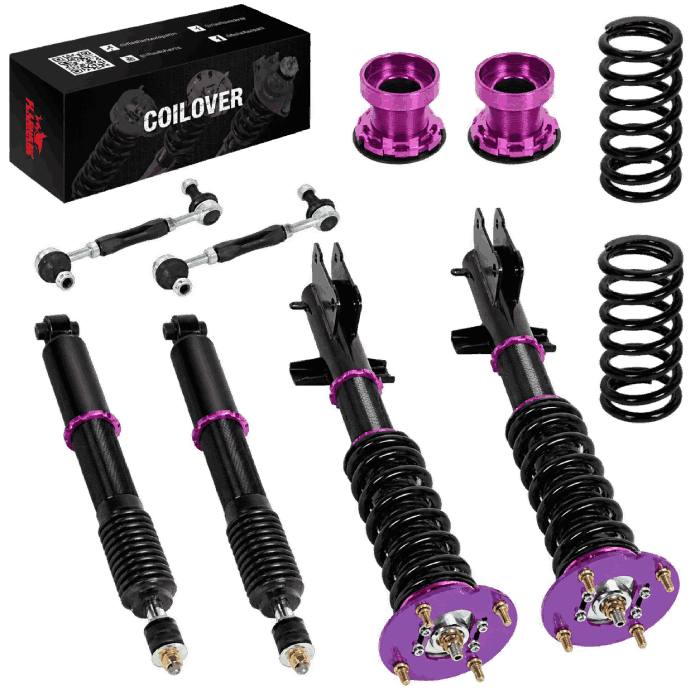
Coilovers, short for “coil spring over shock,” combine a shock absorber with an adjustable spring. They are designed for precise suspension tuning and improved handling performance.

Key Technical Details:
-
Ride height adjustment: typically 1–3 inches.
-
Damping adjustability: from soft (comfortable) to stiff (track-oriented).
-
Preload adjustment allows fine-tuning of spring compression for cornering balance.
-
Usually made from high-strength steel or aluminum with corrosion-resistant coatings.
Advantages:
-
Significant improvement in handling and stability, especially during cornering.
-
Adjustable ride height and damping provide custom tuning for street or track use.
-
Allows optimization for both performance and aesthetics.
Limitations:
-
Higher cost compared to standard struts.
-
Installation is more complex, often requiring alignment and height calibration.
-
Requires periodic maintenance, such as checking collars, seals, and damping settings.
Coilovers are ideal for drivers who prioritize performance, adjustability, and precision handling.
Key Differences Between Struts and Coilovers
When comparing struts vs coilovers, several factors stand out:
| Feature | Struts | Coilovers |
|---|---|---|
| Structure | Shock + structural support | Shock + adjustable spring |
| Adjustability | Minimal | Ride height, preload, damping adjustable |
| Handling Performance | Moderate improvement | Significant cornering and stability benefits |
| Installation Complexity | Simple | Moderate to high; alignment required |
| Maintenance | Low | Regular inspection needed |
| Cost | Lower | Higher |
Driving Perspective:
While struts are sufficient for everyday driving and comfort, coilovers provide extra control for high-performance or track-oriented driving. Their adjustability allows drivers to fine-tune vehicle behavior for different road conditions and driving styles.
How Suspension Choice Affects Your Driving
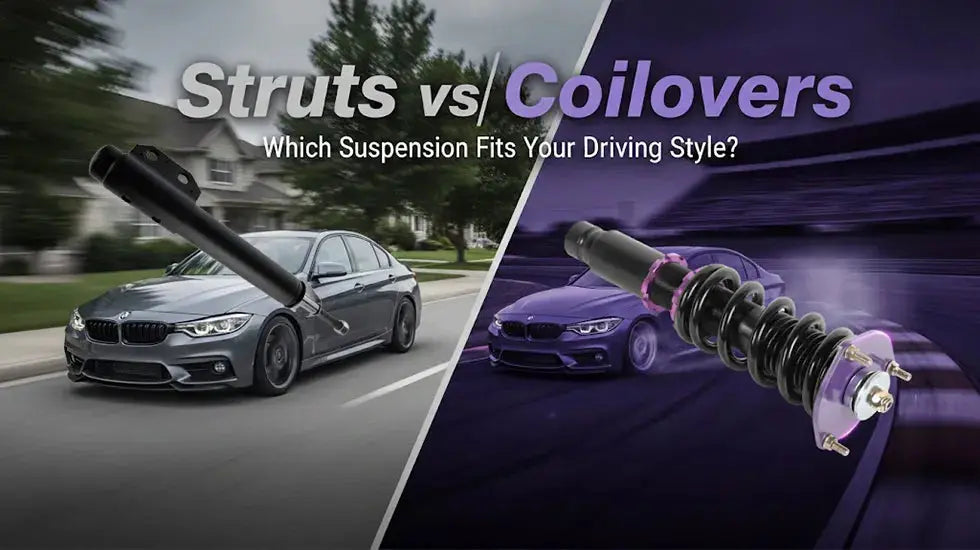
How your car feels on the road depends largely on your suspension choice. Struts offer a comfortable, balanced ride, making them perfect for everyday driving. Coilovers, on the other hand, give you precise tuning options to reduce body roll and enhance stability during spirited or track driving.
If you mainly drive on streets and value comfort, struts are usually enough. But if you crave performance and sharper handling, coilovers are the better choice. Understanding your driving goals before upgrading is key to getting the results you want.
Installing and Caring for Your Suspension
Installing struts is generally straightforward and requires minimal tools. After installation, a proper wheel alignment helps maintain tire wear and handling.
Coilovers require more attention during installation. Ride height and damping settings must be calibrated carefully to ensure the best performance. Regular maintenance, such as checking locking collars and seals, keeps your suspension working smoothly over time.
Picking the Right Suspension for Your Driving Needs

Your suspension choice depends on your driving goals and conditions:
-
Daily driving and comfort: Struts are reliable, easy to maintain, and cost-effective.
-
Performance-focused driving: Coilovers provide adjustable ride height, damping control, and superior handling.
-
Mixed-use: Some drivers prefer coilovers with softer damping for street use and stiffer settings for occasional track days.
Consider your vehicle type, intended use, and maintenance capabilities. Choosing the right suspension ensures safety, performance, and driving enjoyment.
Conclusion
Struts and coilovers serve distinct roles in a vehicle’s suspension system. Struts offer reliable, low-maintenance support with moderate performance benefits. Coilovers provide adjustable ride height, enhanced handling, and fine-tuning capabilities for performance enthusiasts.
Understanding structural differences, performance impacts, installation requirements, and maintenance needs is essential for making an informed decision. Selecting the right suspension component enhances vehicle stability, improves handling, and delivers a safer, more enjoyable driving experience.