


 Need car parts? Shop by vehicle
(Select the exact fit for your vehicle)
Need car parts? Shop by vehicle
(Select the exact fit for your vehicle)
Shorty Headers
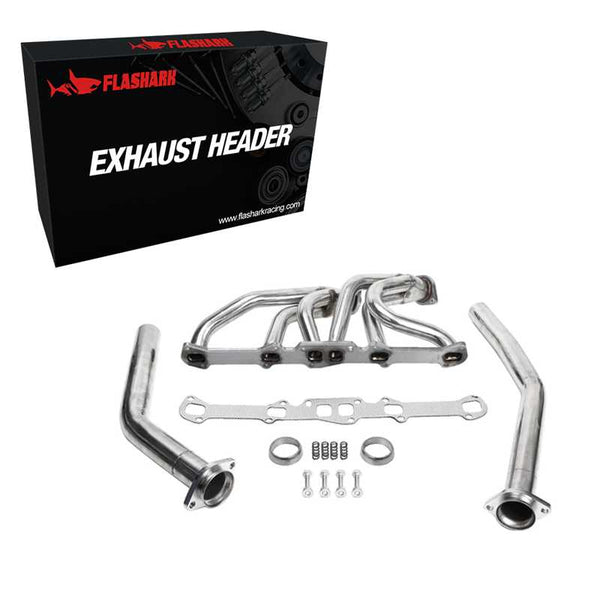
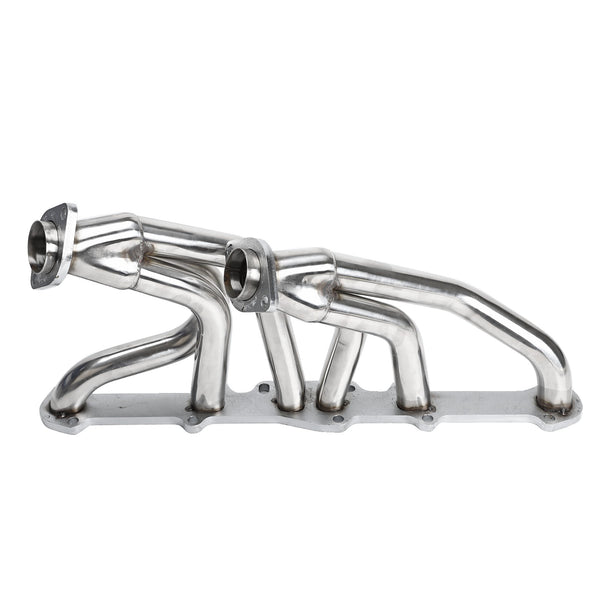
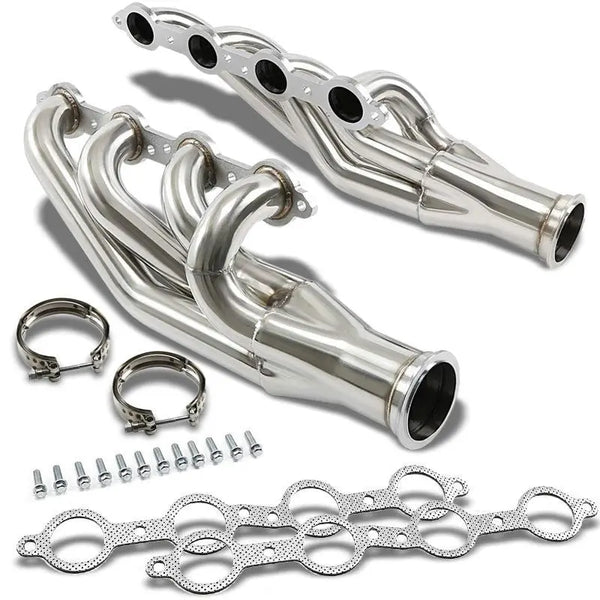
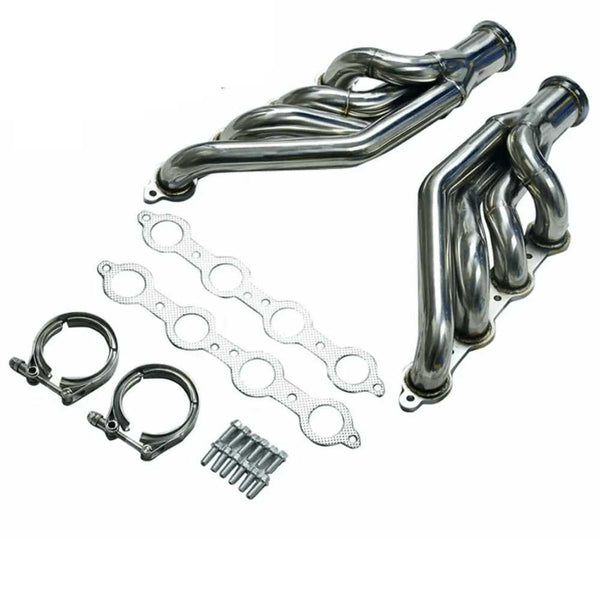
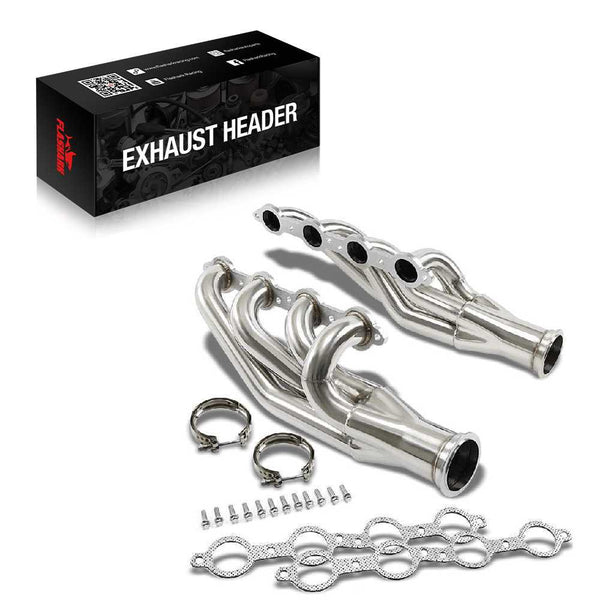
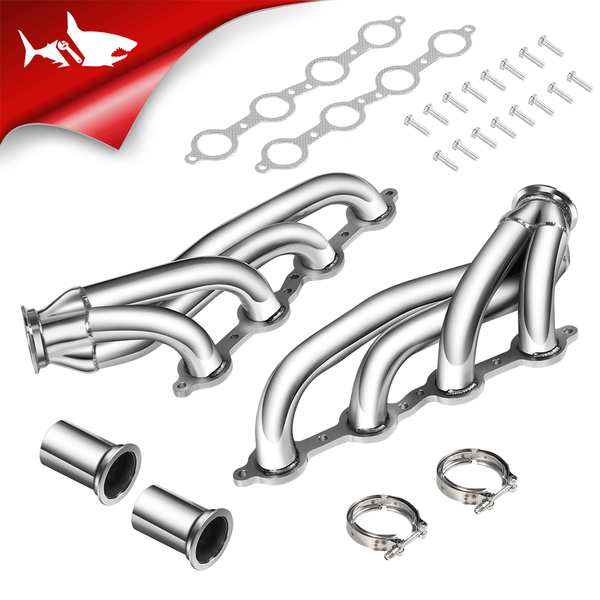
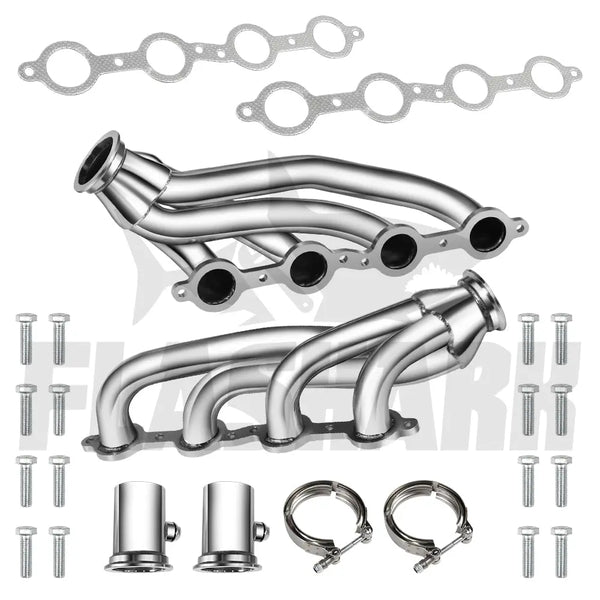
Shorty Headers Buying Guide
Choosing shorty headers requires checking more than the engine family. The correct product must fit the vehicle, clear nearby components and meet the intended downstream exhaust at the right location. Use this guide to review vehicle fitment, outlet and mid-pipe compatibility, included parts, O2-sensor provisions, installation considerations, tuning questions and emissions documentation before selecting a product.
What Should You Check Before Buying Shorty Headers?
Quick answer: Before ordering shorty headers, verify the full vehicle configuration and the exact downstream connection. A compact design may reduce packaging changes in some applications, but it does not guarantee direct fit, factory mid-pipe compatibility, emissions compliance or freedom from diagnostic codes. Confirm the year, model, engine, drivetrain, outlet location, included hardware and legal-use status on the individual product page.
- Match the complete vehicle—not only the engine family. Confirm year, make, model, submodel, engine displacement or code, drivetrain, transmission restrictions and any chassis notes. Steering, starter, crossmember, accessory and exhaust layouts can differ between otherwise similar vehicles.
- Confirm that the selected option is Shorty. Some product pages contain both short and long tube variants. Check the option name, selected SKU, product images and package details before adding the item to the cart.
- Verify the outlet and factory exhaust connection. Compare the collector or outlet location, flange style, pipe diameter and bolt pattern with the applicable downstream exhaust. Only rely on “connects to the factory mid-pipe” when the exact product page states that condition for your vehicle.
- Check catalytic-converter and O2-sensor relationships. Confirm whether the product retains the original converter locations, how the sensors are accommodated, and whether any extensions, adapters or exhaust work are required. Compact design alone does not establish these facts.
- Review the package contents. Verify whether gaskets, bolts, reducers, flanges, collector hardware and other required parts are included for the selected SKU. Do not assume every Flashark shorty kit has the same bill of materials.
- Inspect clearance and surrounding components. Check proximity to the steering shaft, starter, spark-plug wires or coils, wiring, hoses, brake lines and engine mounts. Swaps, aftermarket mounts and prior exhaust work may change the available space.
- Determine whether tuning or diagnostics are needed. Many installations are intended to make fewer system changes than long tube conversions, but no universal “no tune” or “no CEL” promise applies. Follow the exact application guidance and diagnose any stored code after installation.
- Verify emissions and street-use eligibility. A shorty header is not automatically emissions legal. Look for application-specific CARB Executive Order, SEMA Certified-Emissions documentation or other applicable approval, and verify current local requirements.
- Plan the installation and leak check. Use vehicle-specific instructions where available, support the vehicle safely and inspect all sealing surfaces and joints. After installation, check for leaks, rattles, hot-part contact, wiring clearance and loose fasteners according to the instructions.
Technician’s note: “Shorty” describes the general header layout, not a universal connection standard. Compare the outlet position, flange, diameter and bolt pattern with the exact downstream exhaust before purchase.
Next step: Select your vehicle above, then open the matching product page to verify the outlet, included parts and every fitment restriction.
Are Shorty Headers the Right Choice for Your Vehicle?
Quick answer: Shorty headers are generally worth considering when compact packaging and retaining application-specific factory-style connection points are more important than building a full long tube exhaust system. They may suit daily-driven, restoration, replacement or space-constrained applications—but only when the exact SKU matches the vehicle and downstream exhaust. For a more extensive performance build, compare long tube headers.
| Decision | Shorty May Be the Better Fit When… | Consider Long Tube Headers When… |
|---|---|---|
| Packaging priority | You need a compact layout and have confirmed clearance around the steering, starter, mounts and accessories. | You are planning a more extensive performance exhaust and have room for longer primaries and relocated collectors. |
| Downstream exhaust | The exact product is documented to meet the factory or existing mid-pipe at the correct location. | You have planned the matching Y-pipe, X-pipe, connection pipes or fabrication needed after the collectors. |
| Installation scope | You want to limit changes to the rest of the exhaust, while still accepting vehicle-specific installation work. | You are prepared for additional disassembly, clearance work, sensor planning and possible exhaust modification. |
| Performance objective | You want a header upgrade that works within tighter packaging and existing-system constraints. | Your project prioritizes a complete performance system and you will evaluate results for the specific engine combination. |
| Emissions | You have verified that the exact shorty part/application has the documentation required in your jurisdiction. | You have separately confirmed the legal-use status of the long tube configuration and any downstream changes. |
Shorty Headers May Not Be the Right Choice If…
- The collector or outlet does not align with your existing mid-pipe or converter assembly.
- Your engine swap, mounts, steering system or accessory layout differs from the documented fitment.
- You want the configuration used by a specific long tube build but have not compared the complete exhaust systems.
- You are assuming “shorty” automatically means bolt-on, tune-free, CEL-free or street legal.
- The product page does not confirm the required fitment, package contents or emissions documentation for your application.
Need a broader comparison? Read Are Headers Worth the Upgrade? and the detailed Shorty vs. Long Tube Headers guide.
Shorty Header Fitment and Related Guides
The most important shorty-header question is not simply “Will it bolt to my engine?” The outlet must also meet the intended exhaust, and the tubes must clear the steering, starter, mounts, wiring and nearby heat-sensitive components. Start with the vehicle selector, use the product page for SKU-specific facts, and use these related Flashark resources for the broader decision.
Emissions, Competition-Use and Legal Notice
Shorty does not automatically mean street legal. Emissions and street-use requirements vary by part number, vehicle, engine, model year and jurisdiction. Retaining a factory-style outlet or catalytic-converter location may reduce system changes in some applications, but it does not by itself establish compliance.
Do not install or use a product in a way that bypasses, removes or renders inoperative required emissions controls. For California-registered emissions-controlled vehicles, verify that the exact part and application are covered by a valid CARB Executive Order when required. For federal use, review any manufacturer-provided compliance documentation, including applicable SEMA Certified-Emissions documentation where specifically listed. Products identified for competition or off-road use must be used only as stated and where legally permitted.
Rules and inspection procedures can change. Confirm current requirements with the appropriate federal, state and local authorities before installation. See the California Air Resources Board aftermarket-parts resource and the U.S. EPA vehicle and engine enforcement resource. .
Shorty Headers FAQs
Q1: What are shorty headers?
A1: Shorty headers use compact primary tubes and place the collector closer to the cylinder head than a typical long tube design. They are often selected when packaging and downstream connection location matter. Exact fitment, performance and installation depend on the vehicle, engine, outlet design and the rest of the exhaust system.
Q2: Are shorty headers and short tube headers the same thing?
A2: The terms are commonly used for the same general compact header category, but product geometry is not standardized by the wording alone. Always compare the actual product images, primary layout, outlet position, dimensions and fitment notes instead of relying only on “shorty” or “short tube” in the title.
Q3: How do I know which shorty headers fit my vehicle?
A3: Use the year, make, model and engine filters, then confirm drivetrain, transmission, submodel and chassis restrictions on the selected product page. Review the outlet or collector connection and the exact SKU. Matching the engine family alone does not confirm that the header will clear the chassis or connect to the exhaust.
Q4: Do shorty headers connect to the factory mid-pipe?
A4: Some application-specific shorty headers are designed around factory-style connection points, but this is not universal. Confirm outlet location, flange type, diameter and any reducers or adapters on the product page. Previous exhaust modifications can also prevent an otherwise correct product from connecting as documented.
Q5: Do shorty headers require a tune?
A5: Requirements vary by vehicle and configuration. A compact header that retains the documented sensor and converter arrangement may require fewer calibration changes than a more extensive exhaust conversion, but no general “no tune required” statement applies to every SKU. Follow the product guidance and consult a qualified tuner when needed.
Q6: Can shorty headers cause a check engine light?
A6: A check engine light can result from an exhaust leak, sensor or wiring problem, converter-efficiency issue, installation error or calibration mismatch. Shorty design does not guarantee a CEL-free result. Scan the stored code and inspect the installation before replacing parts or changing the calibration.
Q7: How much horsepower or torque do shorty headers add?
A7: There is no universal gain for all shorty headers. Results vary with the engine, primary and collector design, baseline manifold, downstream exhaust, catalytic converters, tune and test method. Use dyno data only when it identifies the relevant vehicle, part number, supporting modifications and test conditions.
Q8: Are shorty headers easier to install than long tube headers?
A8: They may reduce the amount of downstream exhaust work in a compatible application, but difficulty still varies. Access to manifold bolts, seized hardware, steering clearance, spark-plug components and outlet alignment can make installation demanding. Review the exact instructions and use a professional installer if the job exceeds your tools or experience.
Q9: Are shorty headers street legal?
A9: Not automatically. Retaining original converter locations may be relevant, but legal status depends on the exact part, vehicle, engine, model year and jurisdiction. Verify a valid application-specific CARB Executive Order, SEMA Certified-Emissions documentation or other required approval before street use.
Q10: What comes with Flashark shorty headers?
A10: Contents vary by product and option. Check the selected SKU for the headers, gaskets, bolts, collector reducers or flanges, connection hardware and any separately required components. The package list on the product page—not a category-wide statement—should control your purchase decision.