
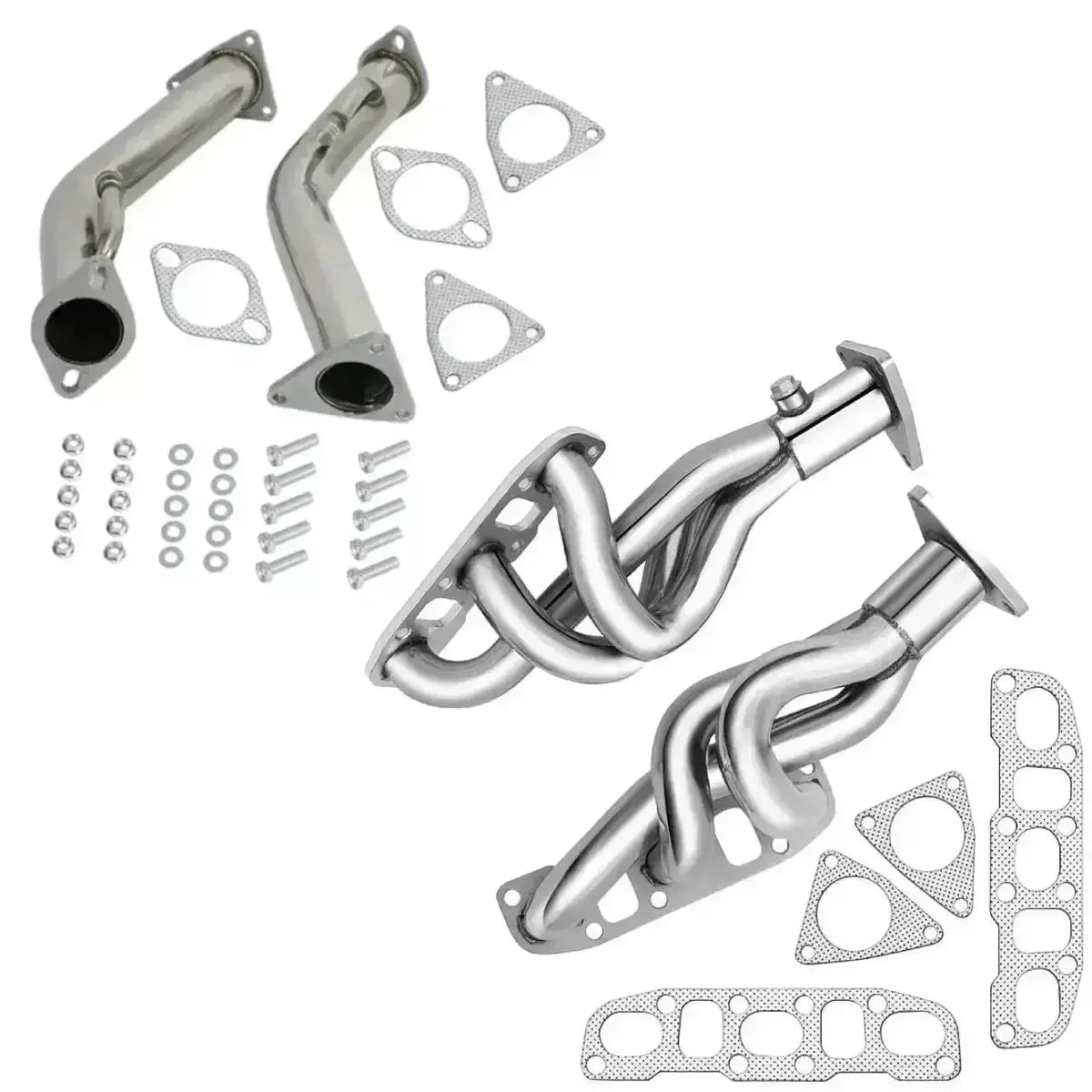
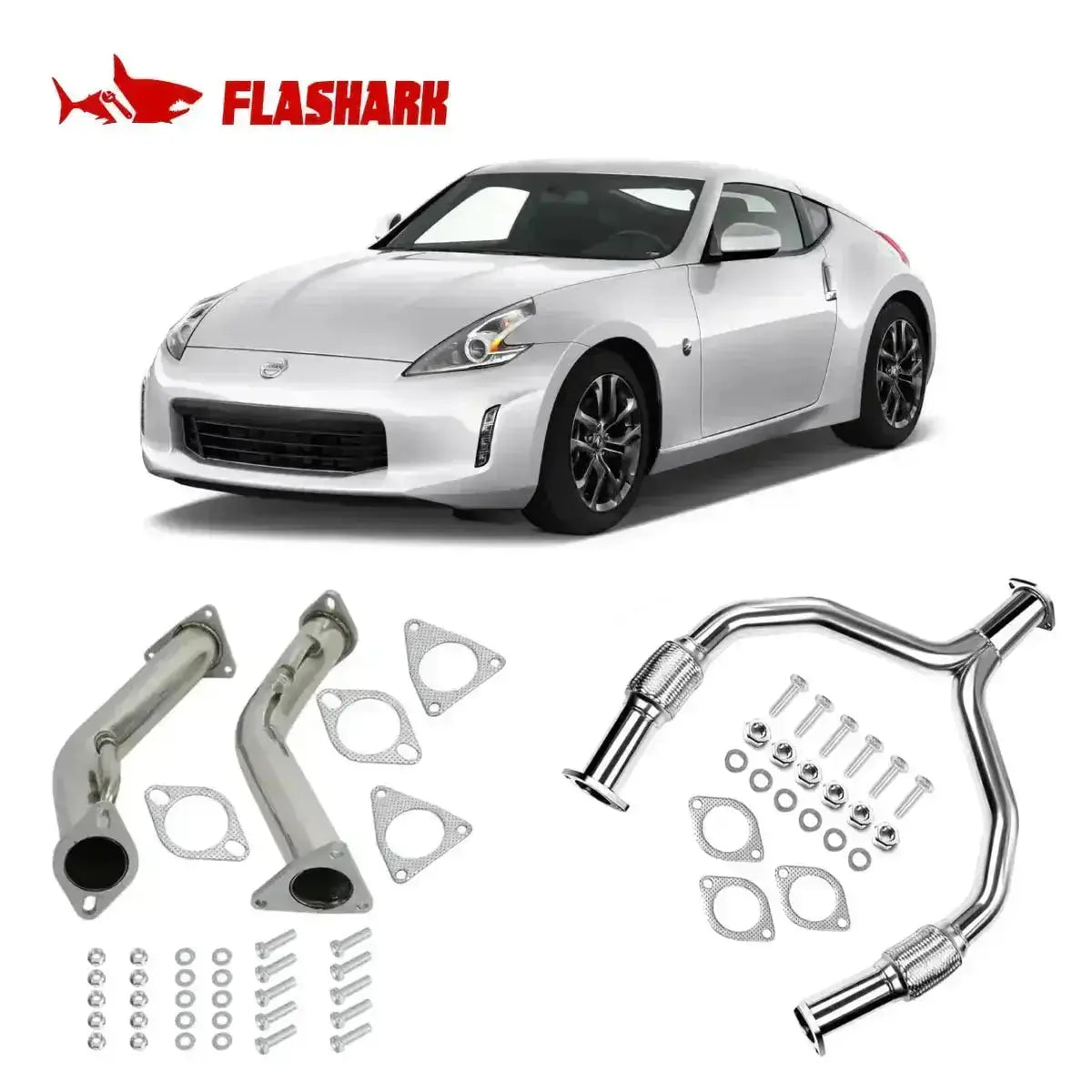
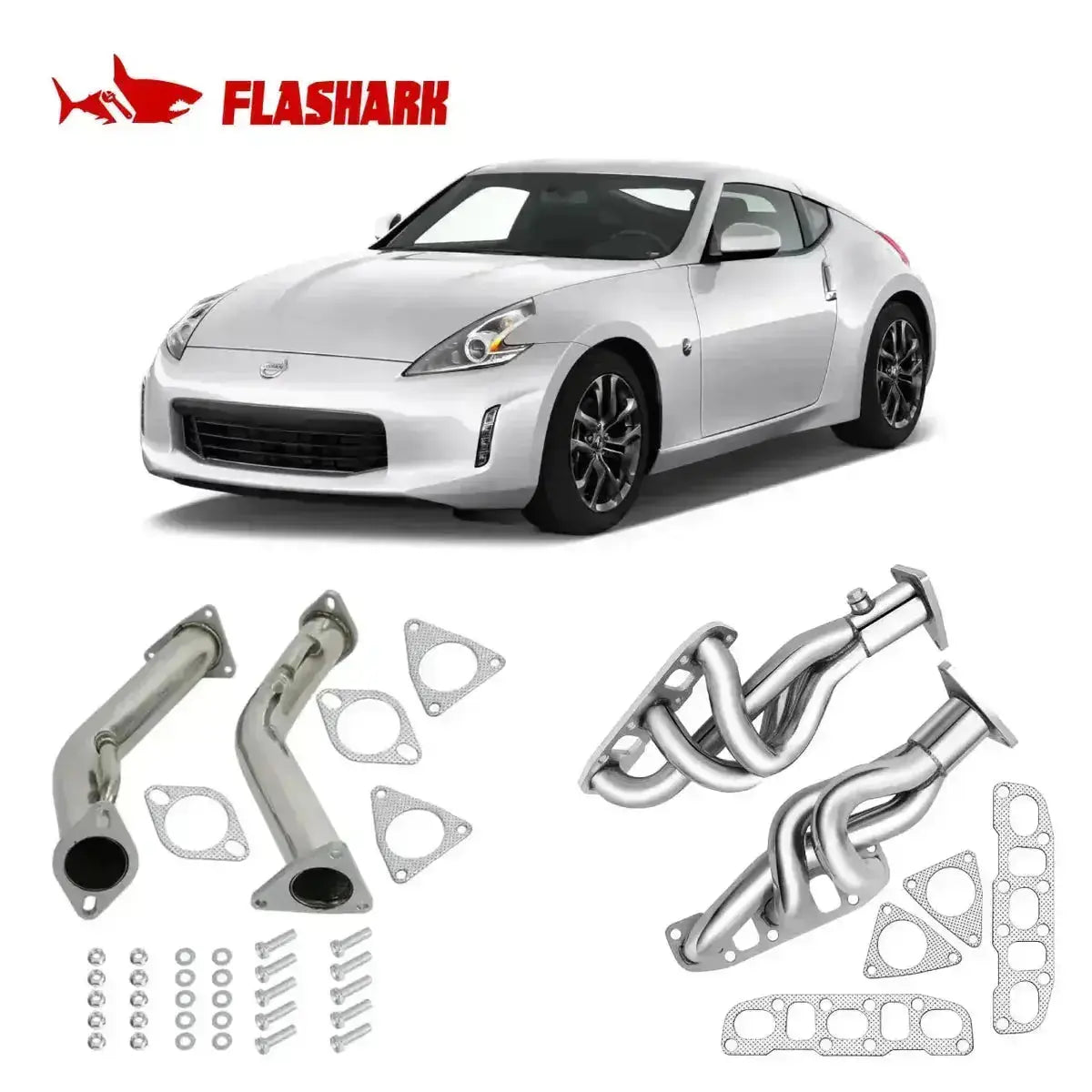
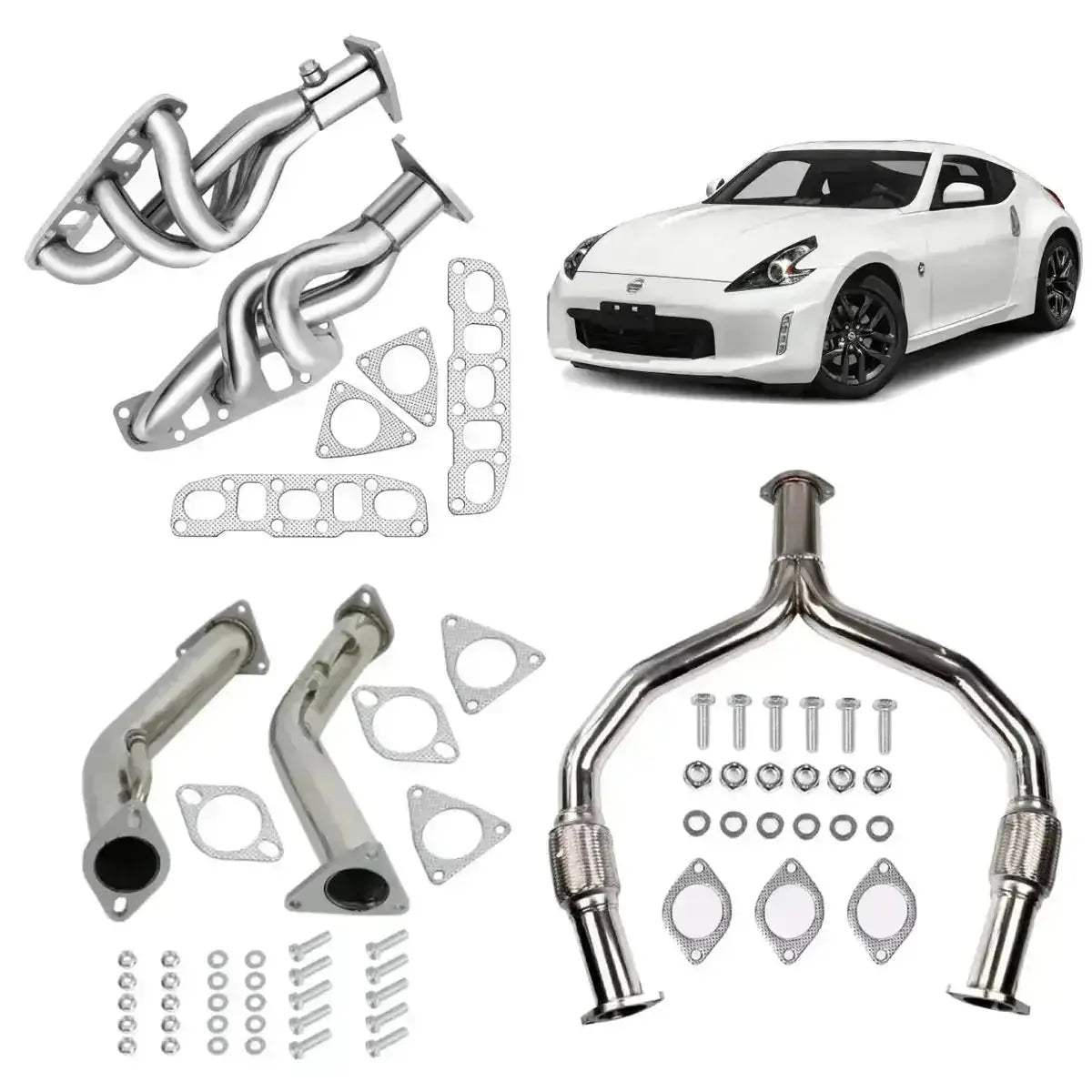
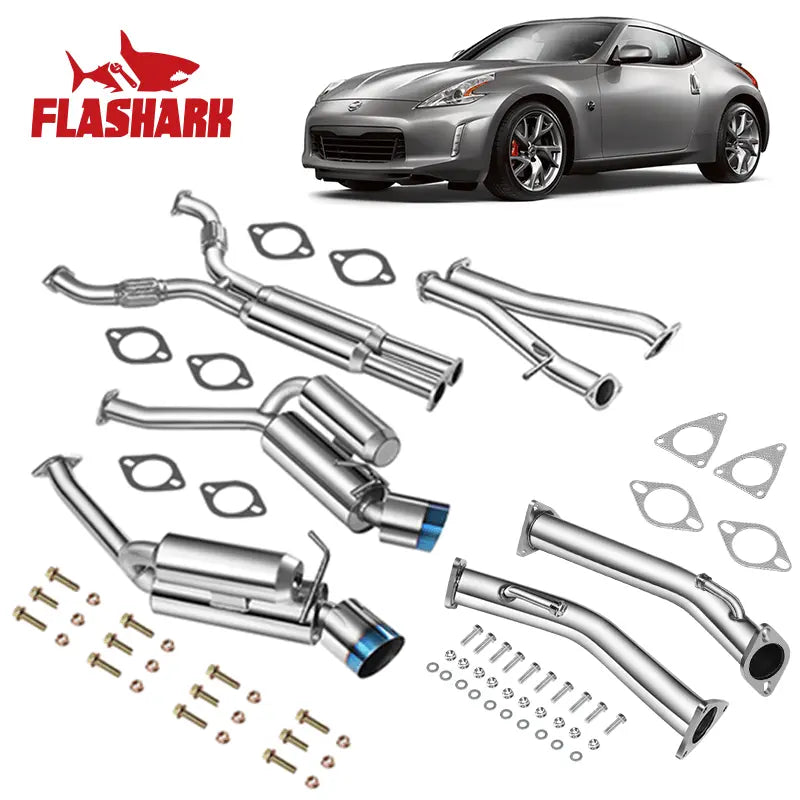




Frequently Bought Together


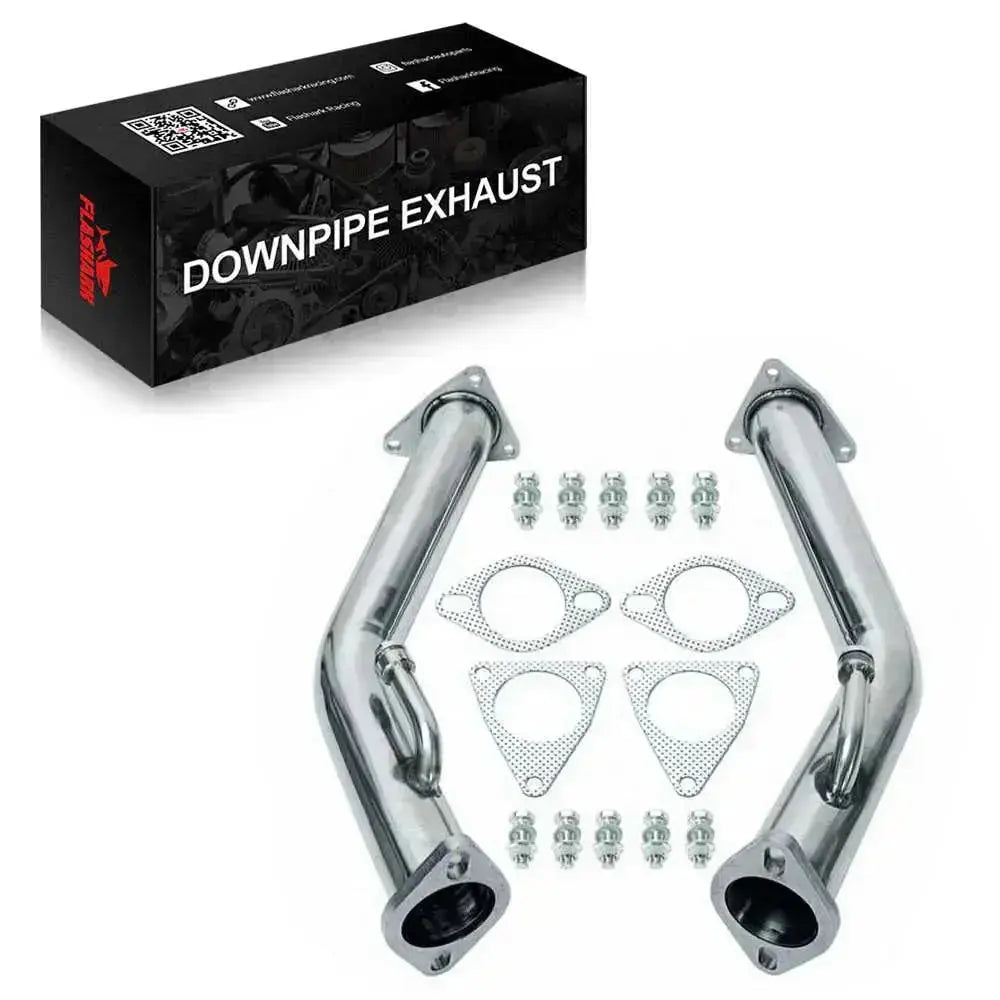
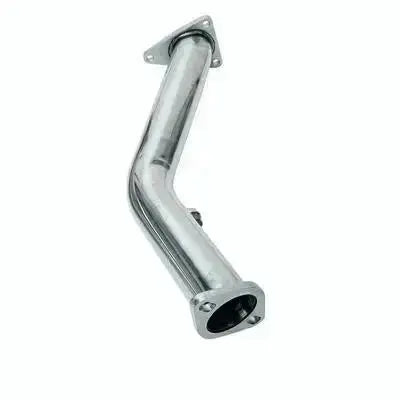
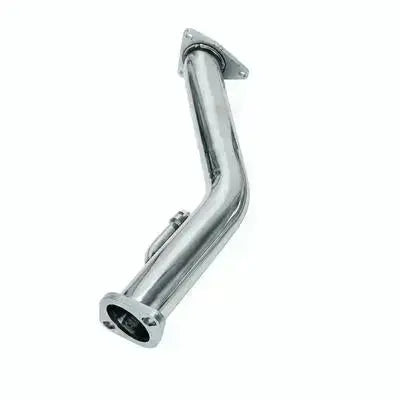
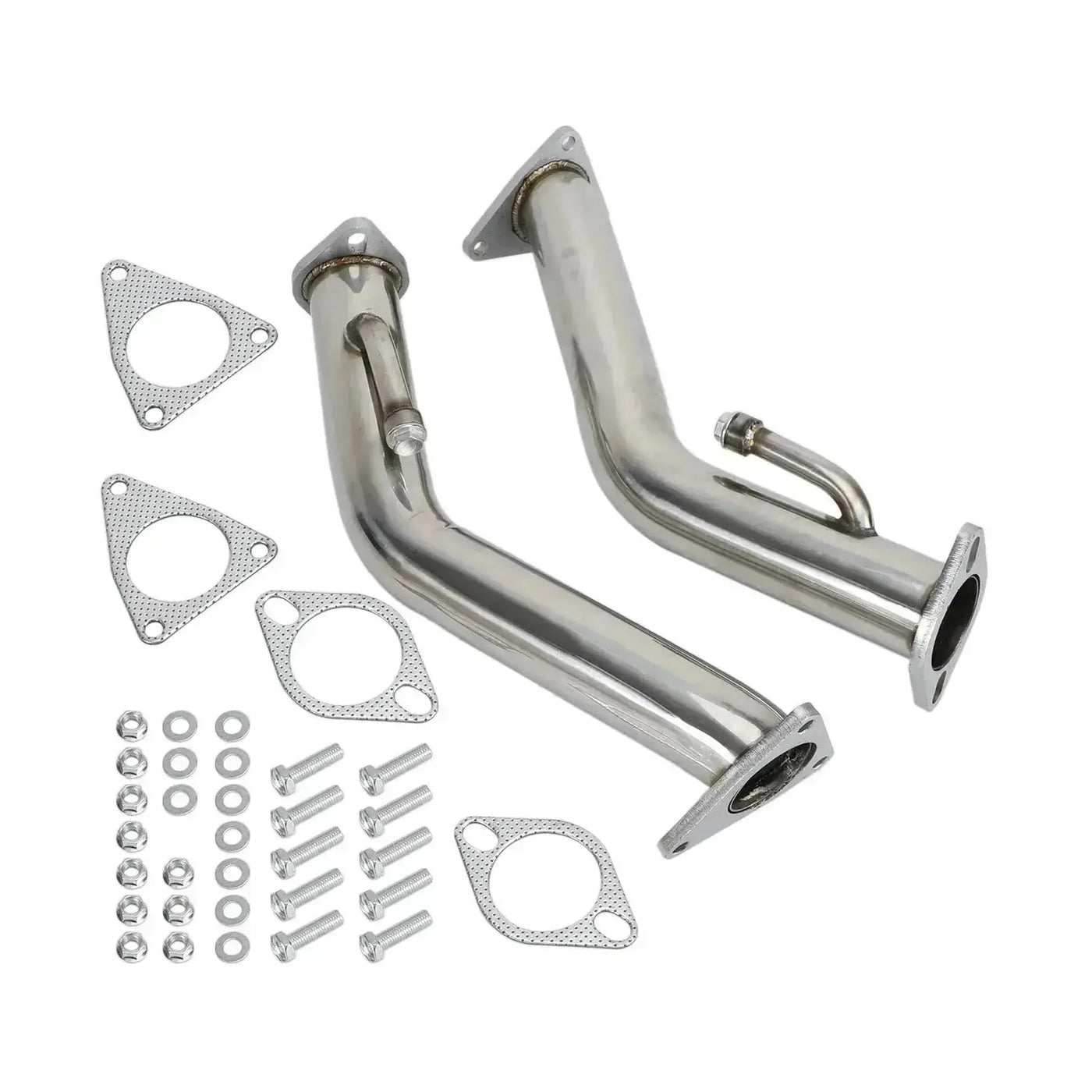
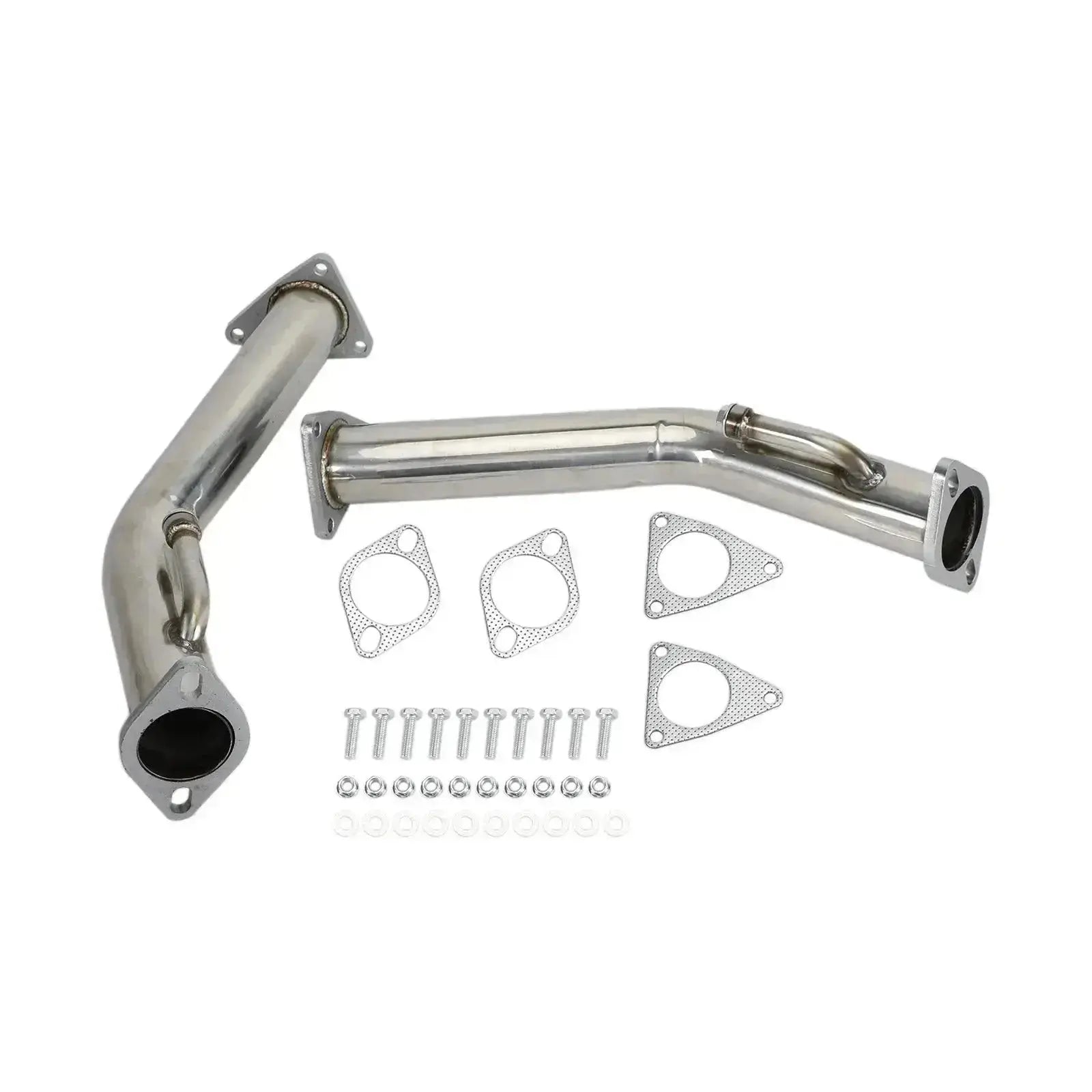
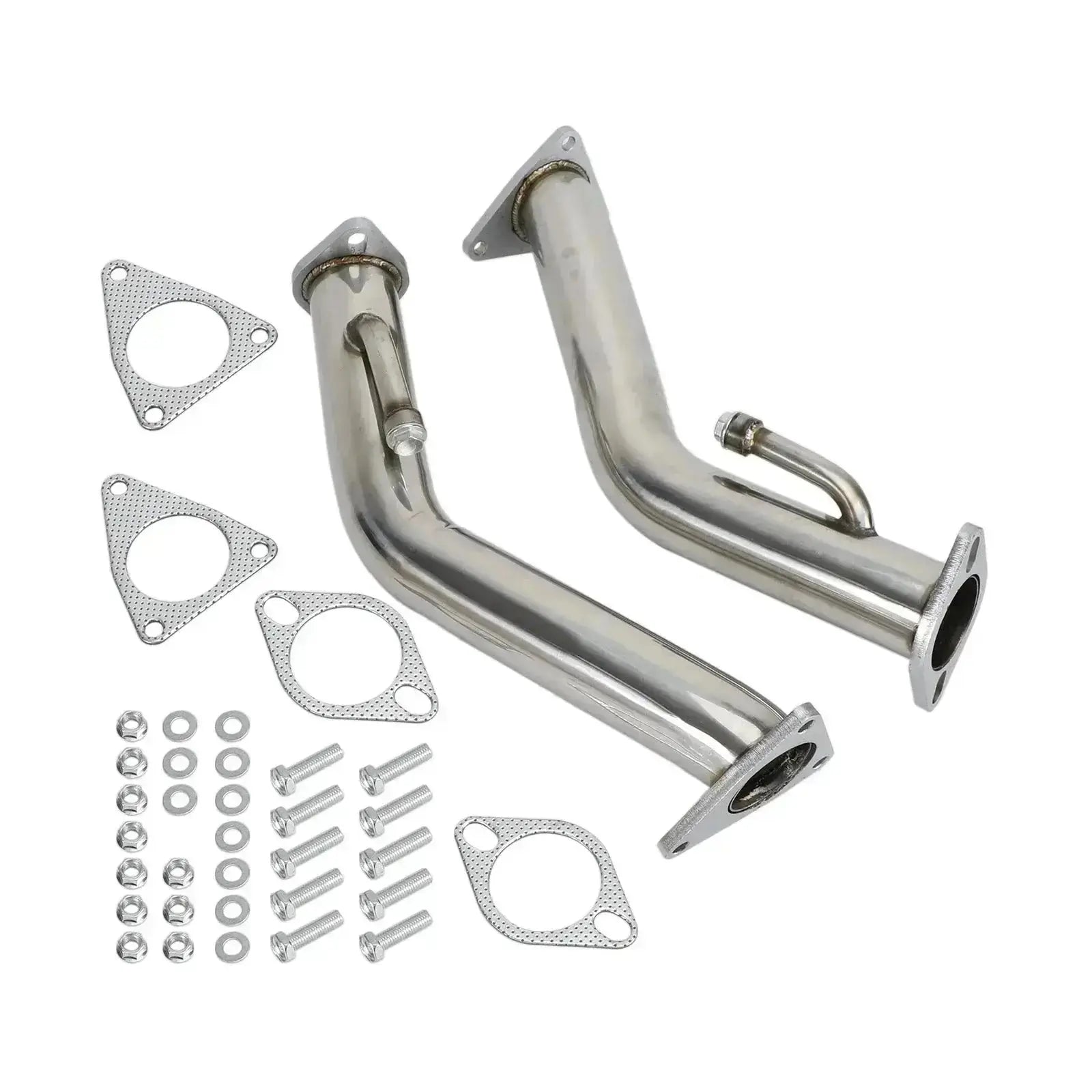
The FLASHARK Test Pipes/Downpipe is a versatile performance upgrade designed for the Infiniti G37 (2008-2013). Combining the functionality of test pipes and downpipes, this product enhances exhaust flow, boosts horsepower, and delivers a powerful exhaust note. Perfectly tailored for high-performance enthusiasts, it ensures compatibility with both models while providing exceptional durability and performance gains.
Specifications:
Brand Name: FLASHARK
Certificate: ISO9001:2000
Application: Exhaust Down Pipe/Test Pipes
Material: Stainless Steel
Surface: Mirror Polish
Model: DP29773
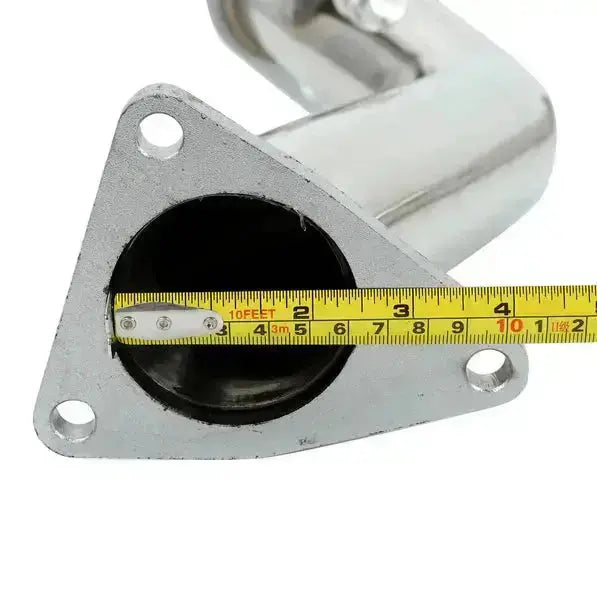
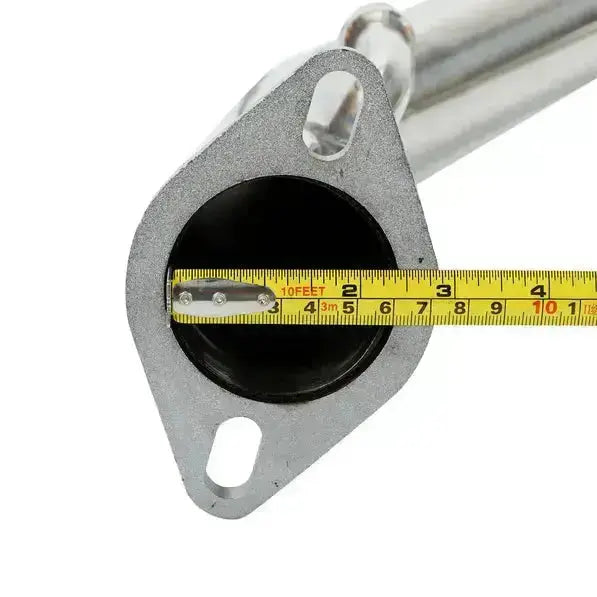
Inlet Diameter: 2.50"
Outlet Diameter: 2.50"

Features:
1. Improve Engine Output and Efficiency, Give you extra HPs, and increases torque
2. Large diameter and free flow tubing for unrestricted flow, Making the exhaust air flow smooth, Designed for high-performance racing
3. Made of High-Quality 16-gauge T-304 Stainless Steel with Computerized Mandrel-Bends
4. All joints are TIG welded to prevent cracking and wear
5. CNC Machine Flange for MAX Strength and Durability
6. Flanges chrome plated for corrosion resistance
Test Pipes are primarily used in place of catalytic converters and are designed to completely eliminate catalytic converters to reduce exhaust drag and increase power output, typically used in track and high performance applications.
For the nfiniti G37, test pipes eliminate the restrictive catalytic converters, allowing for a more free-flowing exhaust. This modification can lead to significant gains in horsepower and torque, enhancing the overall performance of these engines. Without catalytic converters, there's less concern about clogging or failure of these components, leading to potentially lower maintenance costs over time.
Delivery:
Free Shipping
Shipping Time: Estimated in 3-5 Working Days
Warranty:
Duration of Warranty: Permanent Warranty
Package Included:
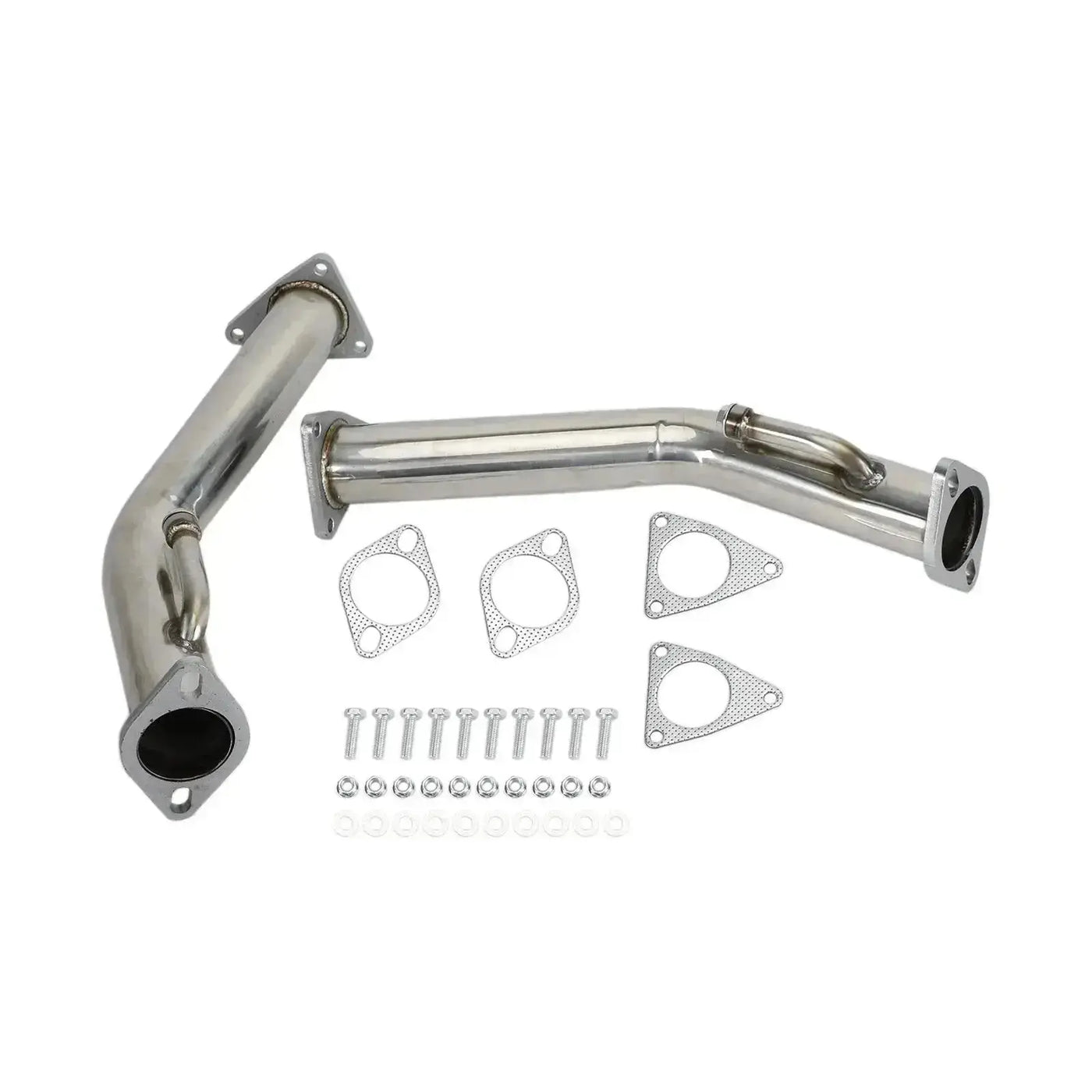
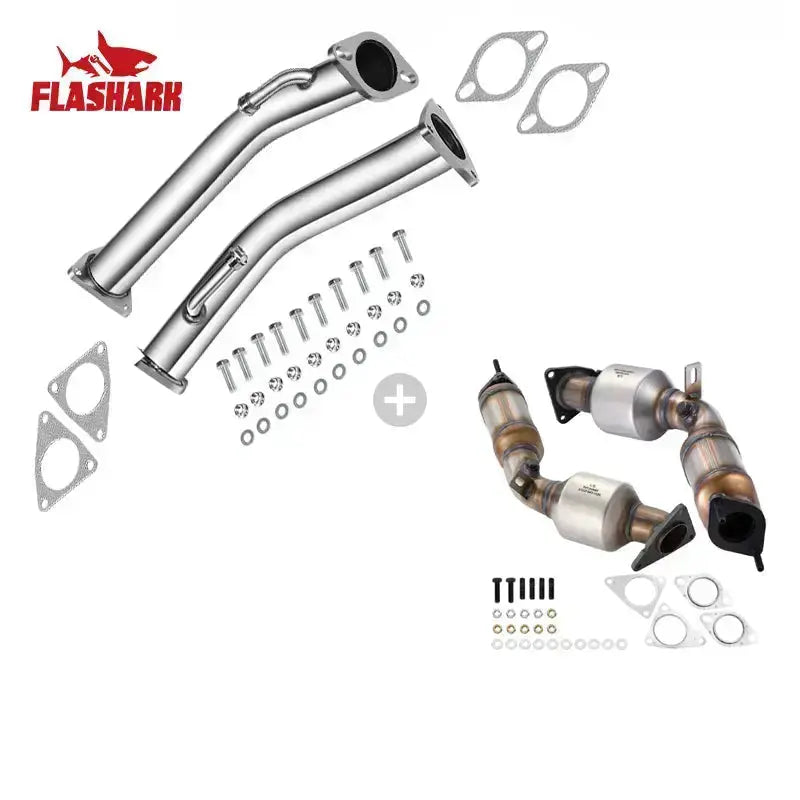
We provide everything you need for a 100% bolt-on experience. No extra trips to the hardware store required.
-
2x Performance Downpipes: High-flow stainless steel with pre-welded O2 sensor bungs.
-
4x High-Temp Flange Gaskets:
- 2x Heavy-duty 3-bolt gaskets.
-
2x Precision-fit 2-bolt gaskets.
-
10x Pieces of Professional Hardware:
(You will get exactly as shown in the picture above)Often, after purchasing the Infiniti G37 Z34 Downpipe Exhaust, customers will also purchase other items. Come on, check out Flashark's all-in-one kits and modify your car to your heart's content!

Fitment:
- 2008-2013 Infiniti G37 3.7L V6 (Coupe and Sedan)
- For All Infiniti Q50/Q60 Models with 3.7L Engine (does not fit 2.0 or 3.0t models)
- Note: Also fits Nissan 370z. See full compatibility here.
Q1: Will test pipes trigger a check engine light on my G37?
A1: Almost certainly yes. The G37's O2 sensors watch the post-catalyst oxygen levels, and test pipes leave nothing to read. That throws a P0420 or P0430 code immediately. You can either deal with the CEL and use a tuner to disable it, or grab resonated test pipes with a CEL fix — those have a small chamber that tricks the O2 sensor just enough to keep the light off. Straight catless pipes on a VQ37VHR will always trigger it without some kind of fix.
Q2: What's the difference between test pipes and a downpipe on the G37?
A2: Test pipes bolt up in place of the catalytic converters, essentially a straight pipe from the headers back. A downpipe on the G37 replaces the section between the turbo and the rest of the exhaust — the part that actually feeds into your catback. If you're chasing the most aggressive exhaust note and minimal restriction on a naturally aspirated VQ37VHR, test pipes hit the sweet spot. Downpipes matter more on turbo cars.
Q3: Do test pipes actually add measurable power to a G37?
A3: On a stock G37, the gains are real but modest — somewhere in the 8-15 whp range depending on the setup. The VQ37VHR breathes better with less backpressure, and the exhaust note gets noticeably meaner. Once you start adding bolt-ons like long tube headers or a larger intake, test pipes help those mods unlock more of their potential. Don't expect miracles from just test pipes alone, but paired with supporting mods they do add up.
Q4: Are G37 test pipes street legal?
A4: No. Removing the catalytic converters on any vehicle makes it illegal for street use in the US. In California, this is a direct violation of California Vehicle Code Section 27156 — the state explicitly prohibits selling or installing parts that remove emissions equipment on smog-controlled vehicles. These are for off-road and track use only. If you get pulled over in a smog state and the CARB status isn't on file, you're looking at a fix-it ticket at minimum.
Q5: Do I need a tune for G37 test pipes?
A5: You don't strictly need a tune just to run test pipes — the VQ37VHR will still run fine. But the O2 sensor codes are basically unavoidable without either a CEL fix / O2 spacer or a tune that disables rear O2 monitoring. A tune paired with test pipes also lets you adjust fuel trims and get rid of that annoying CEL for good. Most tuners that support the VQ37 will include options for pre- and post-cat O2 delete.
Q6: What gaskets come with quality G37 test pipes?
A6: Good test pipe kits include new factory-style exhaust gaskets at both the header flange and the mid-pipe connection. The VQ37VHR uses a multi-layer steel (MLS) gasket at the header-to-turbo flange — reusing the old one is asking for an exhaust leak. Quality kits also include new hardware (bolts and springs) since the factory hardware gets heat-cycled to death. Always double-check the gasket count before you start; some cheaper kits skimp on this.
Q7: Can I install G37 test pipes myself, or do I need a shop?
A7: A competent DIYer can do it. The installation is mostly bolt-on — unbolt the stock cats, swap in the test pipes, reuse the same flange hardware. The O2 sensors are the tricky part since they're in tight spots around the headers. You'll need an O2 socket and some patience. Budget 2-4 hours. If your G37 has the secondary air injection system, you might need to plug or delete those lines too, which adds a bit of time.
Q8: What makes resonated vs. non-resonated test pipes different on a G37?
A8: Non-resonated (straight catless) test pipes give you maximum flow and the loudest, most aggressive exhaust note. Resonated test pipes have a small Helmholtz chamber built in that kills some of the higher-frequency drone and rasp without meaningfully restricting flow. For a daily-driven G37, resonated is the better call — the sound is still much louder than stock, but you won't hate it on long highway drives. Non-resonated is better for a dedicated track car or weekend toy.
Q9: Will test pipes affect my G37's emissions test?
A9: Obviously yes — it will fail every single time. OBD-II readiness monitors won't set for the catalytic converter efficiency tests, and in states with tailpipe emissions testing (like California's smog check), you're done. If you need to pass smog, keep the cats. Test pipes are strictly a track/off-road proposition. Some people run a test pipe for the street and swap back for testing, but that's a hassle.
Q10: How do G37 test pipes compare to 370Z test pipes?
A10: The G37 (2008-2013) and 370Z (2009-2018) share the same VQ37VHR engine, so the test pipe fitment is essentially identical. The bolt patterns, flange sizes, and piping diameter are the same. Some 370Z-specific kits might have slightly different hanger positioning for the Z's chassis, but for the most part a kit that fits one fits the other. Worth confirming with the manufacturer, but the overlap is real.
Q11: What other mods pair well with G37 test pipes?
A11: Long tube headers are the natural companion — they replace the cramped stock headers and work with the test pipes for a complete unrestricted exhaust path from the head to the tailpipe. After that, a larger diameter catback exhaust system (2.5" or 3") ties it all together. On the intake side, a cold air intake helps the VQ37VHR breathe better on the inlet side to match the freer-flowing exhaust. That combination is the classic N/A build for the VQ37.
Q12: What's the loudness like with G37 test pipes and no cats?
A12: Louder than most people expect. The VQ37VHR already sounds good from the factory, but removing the cats opens it up significantly. You get more mid-range volume and a raspier tone at higher RPMs. Drone inside the cabin at idle can be noticeable — the VQ has a bit of a lope at idle that gets amplified. With resonated pipes it's tolerable; without resonators, expect to hear it clearly at stoplights. Highway cruising is actually not bad since you're in lower RPMs at speed.