Can You Get Pulled Over for a Catback Straight Pipe?
A lot of guys roll into the shop asking the exact same question: "If I slap a catback straight pipe on my daily, am I going to put a massive target on my back for the local PD?" The short answer isn't a simple yes or no. It boils down to the difference between federal emissions regulations and your local state's noise ordinances. When you swap out factory mufflers and resonators for 304 stainless steel tubing, you are dramatically changing the vehicle's acoustic profile, and that's usually where the red and blue lights start flashing.
⚡ TL;DR: The Garage Summary
- Emissions Risk (Low): A true catback setup retains the factory catalytic converter, meaning it won't mess with your primary O2 sensors or trigger an OBD2 emissions failure.
- Noise Violation Risk (High): Most straight pipe rear sections easily exceed the legal 95 dB limit enforced by many states, making you a magnet for noise citations.
- Visual Inspection (Variable): States like California will actively flag you during a smog check if the inspector notices a missing factory muffler, even if the tailpipe emissions are clean.
What Is a Catback Straight Pipe?
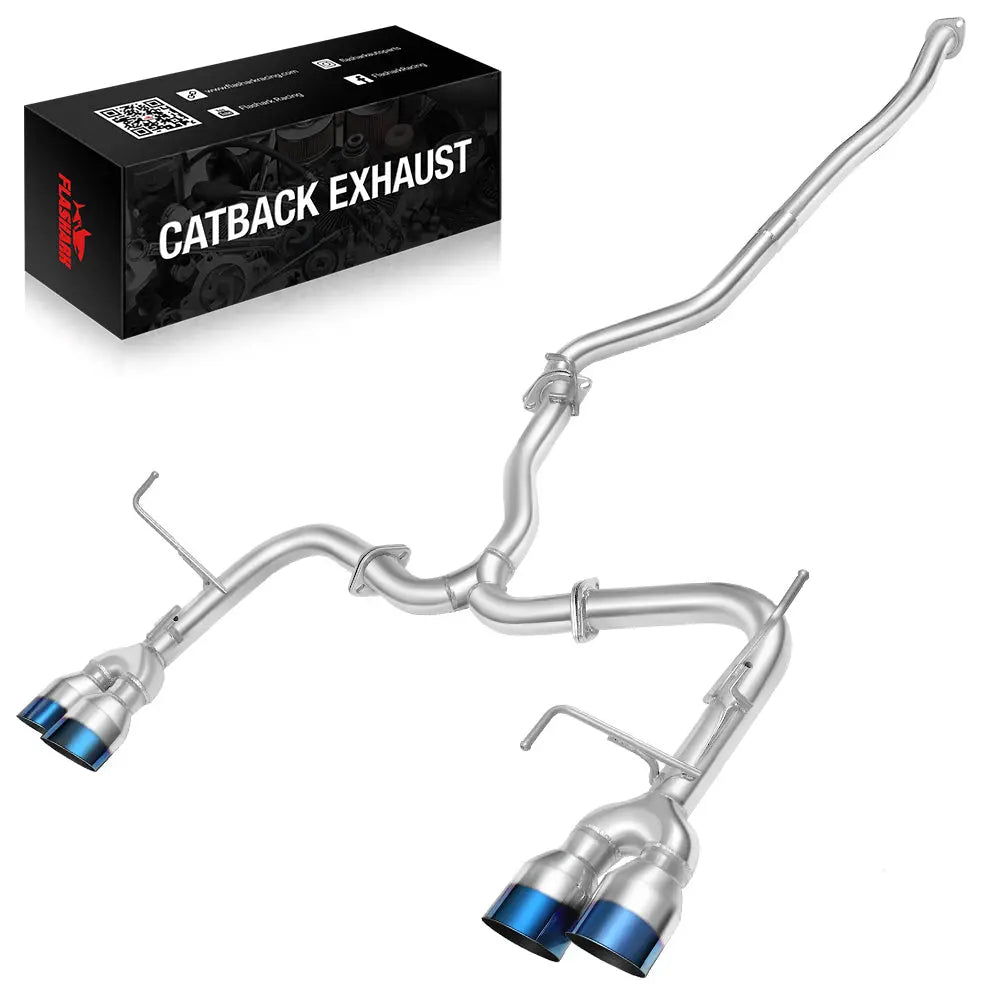
In the exhaust world, terms get thrown around loosely. A catback straight pipe is an aftermarket exhaust system that replaces everything from the catalytic converter flange back to the exhaust tips. Unlike a "true" straight pipe (which is essentially a full header-back system that illegally removes the cats), a catback setup keeps your vehicle's emissions control devices intact.
From an engineering standpoint, installing a catback straight pipe is effectively a muffler and resonator delete. You are relying entirely on the catalytic converter to muffle the combustion pulses. While this drastically reduces exhaust backpressure and gives you that raw, aggressive V8 or turbocharged roar, it eliminates the acoustic baffling designed to cancel out high-frequency rasp and cabin drone.

I remember back in 2019, a kid brought his Nissan 350Z VQ35DE into the shop. He had watched some online tutorials, grabbed a Sawzall, and chopped everything off right behind the headers, thinking he was building a 'custom catback straight pipe.' He accidentally clipped the post-cat O2 sensors. Not only did it sound like a broken tractor, but it immediately threw a P0420 Check Engine Light (CEL) and sent the ECU into limp mode. Many newbies watch tutorials and directly chop their exhaust without understanding flange placements, resulting in massive exhaust leaks and O2 sensor failures. I highly recommend you don't do this. Buy a properly mandrel-bent, bolt-on kit.
Legalities of Catback Straight Pipe Exhaust Systems
To understand if you'll get pulled over, you have to separate the law into two categories: the EPA (Emissions) and the Local Police (Noise).
Because a catback system leaves the catalytic converter untouched, you are technically complying with the Federal Clean Air Act. Your car is still scrubbing nitrogen oxides (NOx) and carbon monoxide (CO). However, local municipalities don't pull you over for smog; they pull you over for ruptured eardrums. Modifying an exhaust to bypass noise-canceling devices (mufflers) violates the vehicle code in almost every major city.
| State | Decibel Limit | Muffler Law Status |
|---|---|---|
| California | 95 dB (Tested via SAE J1492) | Strict. Muffler deletes are illegal. Will trigger BAR referee inspections. |
| Texas | No specific state dB limit | Vehicles must have a muffler preventing "excessive or unusual noise." |
| Florida | County-dependent | Illegal to modify exhaust to be louder than the factory setup. |
Why Catback Straight Pipes Can Lead to Being Pulled Over
Police officers don't use magic to know your exhaust is modified; they use their ears. During heavy acceleration or high-RPM downshifts, a catback straight pipe produces aggressive popping, banging, and a raspy tone.
If you get pulled over, officers in strict jurisdictions will use a decibel meter. They utilize the SAE J1169 or J1492 testing standard—placing a microphone at a 45-degree angle, exactly 20 inches from the exhaust tip, while revving the engine to a specific RPM (usually around 3,000 to 4,000 RPM depending on the engine's stroke). If you clock in over 95 dB, you're getting a fix-it ticket or a heavy fine.

A lot of drivers assume that just because they bought a system from a reputable brand, it's 100% street-legal. Last summer, a guy with a Mustang 5.0 came into our shop furious. He had installed a completely straight, non-resonated catback and kept getting pulled over in downtown LA. I hooked up our shop dB meter and ran a standard J1492 test—he was hitting 108 dB at 3,500 RPM. That's louder than a jackhammer. I ended up cutting the mid-pipe and TIG welding in a pair of high-flow bullet resonators. It eliminated the highway drone, kept the deep V8 rumble, brought him down to 93 dB, and he hasn't been harassed by the cops since.
Noise Regulations and Catback Straight Pipes
As highlighted in the table above, noise regulations vary widely across the U.S. Most states strictly enforce limits ranging from 80 to 95 dB. Catback straight pipes almost always exceed these limits because the OEM mufflers, which do the heavy lifting for sound suppression, are completely removed. States like California and New York have zero tolerance for muffler deletes, making it extremely risky to run a raw straight pipe setup without getting cited.
Emissions Compliance and Catback Straight Pipes
If you're asking, "will a catback exhaust pass emissions?", the answer relies heavily on the type of test your state runs. Most modern smog checks simply plug a scanner into your OBD2 port. Since your catback straight pipe doesn't remove the catalytic converter, the ECU reads the emissions as "Ready" and you'll pass the digital test.
In states like California or New York, passing the OBD2 test isn't enough. The technician must perform a visual inspection. If they look under the chassis and see straight pipes where the OEM muffler should be, they will fail your inspection regardless of what the computer says.
How to Reduce the Risk of Being Pulled Over
If you want the performance airflow but can't deal with the constant anxiety of seeing a cruiser in your rearview mirror, you have options:
- Short-shift in town: Keep your RPMs below 2,500 when driving through residential or highly patrolled areas.
- Keep the factory resonators: If you do a muffler delete, leave the OEM resonators on the mid-pipe. It helps kill the rasp and keeps the volume somewhat manageable.
- Invest in Valved Exhausts: This is the ultimate cheat code. Valvetronic systems use a vacuum or electronic butterfly valve. Close it for a quiet, stock-like sound when passing cops; open it for straight-pipe volume on the track or backroads.
Alternatives to Catback Straight Pipes
If you're concerned about the legality of a raw straight pipe, there are engineered alternative modifications that provide incredible sound benefits without completely violating noise regulations:
- High-flow Performance Mufflers: These replace restrictive OEM chambers with straight-through perforated cores, providing a deep tone without exceeding the 95 dB limit.
- Resonated Catback Systems: Engineered to balance exhaust flow and acoustics, offering a refined note that eliminates cabin drone while keeping you street-legal.

Conclusion
A catback straight pipe is an incredible way to wake up your engine and shed significant weight from the chassis. However, you absolutely can get pulled over for it if your state aggressively polices noise limits. While your emissions footprint remains legal because the catalytic converter is untouched, the raw decibel output from a muffler delete is a gamble on public roads. Check your local dB limits, respect your neighbors, and build your exhaust system smartly.
Frequently Asked Questions (FAQs)
Q1: Is a catback straight pipe completely illegal?
A1: Not federally. It complies with federal emissions laws because it retains the factory catalytic converter. However, it is often illegal at the state or city level due to strict noise ordinances and laws prohibiting the removal of a vehicle's muffler.
Q2: Will a catback exhaust pass emissions testing?
A2: Yes, in most cases. Because the catalytic converter and O2 sensors remain functional, your car will not throw a Check Engine Light (CEL) and will pass an OBD2 diagnostic plug-in test. However, it may fail a visual inspection if the technician notices the missing muffler.
Q3: How much louder is a catback straight pipe?
A3: It is significantly louder. Depending on the engine (V6 vs V8), a catback straight pipe can increase the exhaust volume by 15 to 30 decibels compared to stock, often pushing the car past the 100 dB mark under heavy throttle.
Q4: Does a catback straight pipe add horsepower?
A4: It can add a minor amount of horsepower (typically 5 to 10 WHP) by reducing exhaust backpressure and improving scavenging. However, without an ECU tune, the power gains are minimal compared to upgrading the headers or downpipe.
Q5: What is the legal decibel limit for exhaust noise?
A5: It varies by state. In California, the limit is strictly set at 95 decibels for passenger vehicles. Other states, like Texas, do not have a specific number but give officers discretion to ticket "excessive or unusual" noise.
Q6: Can police visually inspect my exhaust system?
A6: Yes. If an officer pulls you over for a suspected noise violation, they have the authority to look under your rear bumper. If they see straight piping where a muffler should be, they can issue a citation.
Q7: What is the difference between a catback and a full straight pipe?
A7: A catback system replaces only the piping after the catalytic converter. A full straight pipe replaces the entire exhaust system from the engine block backward, completely removing the catalytic converters, making it a federal crime for street use.
Q8: Will installing a catback void my car's warranty?
A8: Under the Magnuson-Moss Warranty Act, a dealership cannot void your entire vehicle warranty just because you installed an aftermarket exhaust. However, they can deny warranty coverage on specific exhaust-related components if the aftermarket pipe caused the failure.
Q9: How can I make my straight-piped car quieter for the street?
A9: If your catback is too loud, you can have an exhaust shop weld in inline bullet resonators or high-flow performance mufflers. Alternatively, you can swap to a valved exhaust system to control the volume with a remote.
Q10: Is drone normal with a catback straight pipe?
A10: Yes, exhaust drone (a loud, vibrating hum inside the cabin) is extremely common when you remove the factory resonators and mufflers. It typically peaks when cruising at highway speeds between 2,000 and 3,000 RPM.