


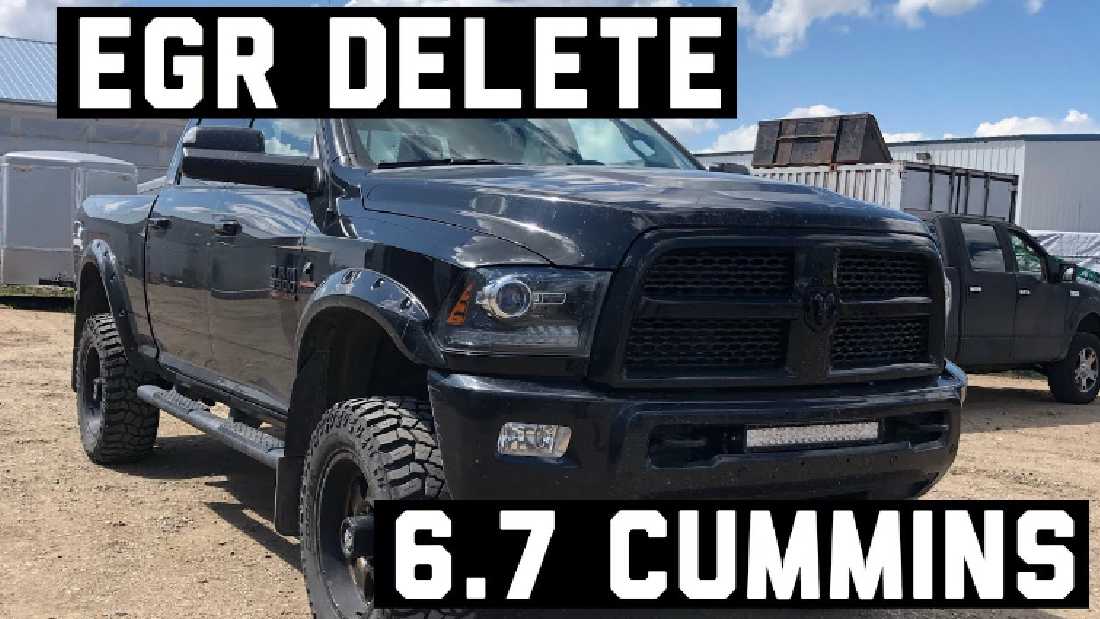
If you are asking about the cost to delete a 6.7 Cummins, start by separating the search term from the repair decision. On a road-going diesel, EGR, DPF, DEF/SCR, sensors, wiring, and calibration work as one emissions-control system. A useful cost estimate comes from identifying the fault, the truck's model year and configuration, and the repair path—not from a single universal kit price.
- The cost can vary widely because a 6.7 Cummins concern may involve the EGR system, DPF, DEF/SCR system, sensors, wiring, exhaust leaks, or calibration-related diagnostics.
- Do not treat an emissions-related modification as a simple bolt-on purchase. Review local emissions and road-use requirements before modifying emissions-related equipment.
- For a truck showing a warning light, reduced-power condition, unusual regeneration behavior, or driveability changes, diagnosis should come before parts selection.
- Match any service decision to the vehicle year, engine, emissions equipment, and complete exhaust configuration.

Why there is no one fixed 6.7 Cummins cost
The phrase 6.7 Cummins delete is used for several different things. Some owners mean an EGR-related concern. Others are referring to DPF, DEF/SCR, exhaust hardware, or an electronic calibration issue. Those systems have different functions, different failure paths, and different consequences when they are treated as interchangeable.
Here is the part that matters: a price for a part is not the same as the cost of solving the problem. The total can be affected by diagnostic time, the fault found, replacement parts, access around the engine or exhaust, wiring condition, leaks, and any work needed to return the truck to a properly operating configuration.
| What the owner is describing | What should be separated first | Cost drivers to discuss |
|---|---|---|
| EGR problem | EGR valve or cooler concerns, related sensors, plumbing, leaks, and the diagnostic result | Fault diagnosis, access, replacement components, seals, coolant handling, and post-repair checks |
| DPF or regeneration concern | Filter condition, pressure or temperature inputs, exhaust leaks, and the cause of abnormal regeneration | Diagnostic work, cleaning or replacement options where appropriate, related sensors, and labor access |
| DEF/SCR warning | DEF quality and level, heater and pump operation, NOx sensor inputs, wiring, and stored faults | Testing time, component diagnosis, harness condition, and the repair required by the fault |
| General "delete and tune" question | The exact hardware involved, warning-light condition, emissions equipment, and local road-use requirements | A complete diagnostic and compliance review rather than a universal parts list |
What "EGR delete," DPF, DEF, and tuning refer to
EGR recirculates a measured amount of exhaust into the intake stream to control combustion emissions. A DPF captures particulate matter in the exhaust. The DEF/SCR system uses diesel exhaust fluid and related hardware to reduce NOx. Sensors, exhaust temperature, pressure readings, wiring, and calibration all influence how these systems are monitored.
That is why two trucks with similar symptoms can require different repairs. A warning light may be connected to a sensor circuit, an exhaust leak, a fluid-quality issue, a component fault, or a condition elsewhere in the system. Replacing or changing one item without identifying the cause can leave the original issue unresolved.
How much does it cost to delete a 6.7 Cummins?
A responsible answer is that there is no reliable single number. The cost depends on what the truck actually needs. A straightforward diagnostic finding and a complex issue involving multiple components, wiring, exhaust condition, or calibration-related faults are not the same job.
Before approving work, ask for the problem to be described in plain language: what fault was found, what test supports it, which system is involved, which parts are being replaced, and what condition will be checked after the repair. This makes it easier to compare estimates without assuming that every 6.7 Cummins has the same configuration or failure.
A practical estimate checklist
- Confirm the truck's year, engine, and emissions-system configuration.
- Document the warning lights, stored faults, reduced-power behavior, regeneration concerns, leaks, or driveability symptoms.
- Identify whether the diagnosis points to EGR, DPF, DEF/SCR, sensors, wiring, exhaust plumbing, or more than one area.
- Compare estimates by diagnostic scope, parts, labor, seals or fluids, and the follow-up checks included.
- Review road-use and emissions requirements before making changes to emissions-related equipment.
Why model year and configuration matter
Owners often search for the cost to delete a 2017, 2018, or 2022 6.7 Cummins. Those year-specific searches are understandable, but a year alone is not enough to determine the work. Changes in emissions equipment, sensor strategy, calibration, drivetrain, and service history can alter both diagnosis and repair access.
Confirm the vehicle year, engine, drivetrain, emissions equipment, and exhaust connection before ordering parts or booking installation. Two similar-looking configurations are not automatically interchangeable.
What affects warning lights and driveability
Tune requirements vary by vehicle and installed hardware. Sensor location, exhaust leaks, wiring condition, emissions equipment, and calibration can affect warning-light behavior. The complete intake, exhaust, emissions, and calibration combination should be considered as one system.
Do not assume a warning light has one universal cause, and do not assume that changing hardware will guarantee a particular result. A careful diagnostic process is usually less expensive than replacing unrelated parts.
Questions to ask before choosing a repair path
- What symptom or stored fault is being addressed?
- What test identifies the affected system?
- Are there exhaust leaks, wiring issues, fluid-quality concerns, or sensor readings that need attention first?
- What parts and labor are included in the estimate?
- What checks will be performed after the work is completed?
- Does the plan match the truck's year, engine, drivetrain, and emissions equipment?
FAQ
Q1. What does it cost to delete a 6.7 Cummins?
A1. There is no dependable universal price. The cost depends on whether the concern involves EGR, DPF, DEF/SCR, sensors, wiring, exhaust condition, calibration-related diagnostics, or multiple systems. Start with a diagnosis and review local emissions and road-use requirements before modifying emissions-related equipment.
Q2. Is an EGR issue the same as a DPF or DEF issue?
A2. No. EGR, DPF, and DEF/SCR systems have different functions and monitoring inputs. Similar symptoms do not prove the same cause, so the affected system should be identified before parts are selected.
Q3. Why can two 6.7 Cummins repair estimates be different?
A3. Estimates can differ because the fault, model year, equipment configuration, parts required, access, wiring condition, exhaust condition, and follow-up testing are different.
Q4. Can a warning light be caused by an exhaust leak?
A4. An exhaust leak can affect readings used by the vehicle's monitoring system. The complete exhaust path, sensors, wiring, and stored faults should be evaluated together.
Q5. Does a tune guarantee that a warning light will stay off?
A5. No. Warning-light behavior can be affected by vehicle hardware, sensor location, wiring condition, exhaust leaks, emissions equipment, and calibration. Do not rely on a guaranteed outcome.
Q6. Should I order parts before a 6.7 Cummins diagnosis?
A6. It is better to identify the affected system first. Confirm the vehicle year, engine, drivetrain, emissions equipment, and the fault being addressed before ordering.
Q7. Why do 2017, 2018, and 2022 6.7 Cummins searches need different checks?
A7. Model year can affect the truck's equipment and diagnostic path. Use the year as a starting point, then match the service decision to the actual vehicle configuration and symptoms.
Q8. What should be included in a repair estimate?
A8. A useful estimate should explain the diagnostic finding, the system involved, parts, labor, seals or fluids where relevant, and the follow-up checks planned after the repair.
Q9. Can I use a single online price as my complete cost estimate?
A9. No. A single price often does not account for diagnosis, vehicle configuration, labor access, related components, or the cause of the original fault.
Q10. What should I do if my truck has reduced power or repeated regeneration concerns?
A10. Record the symptoms and warning lights, avoid guessing at the failed component, and have the relevant emissions, intake, exhaust, sensor, and wiring systems assessed as a complete combination.

Steven Chen
Automotive Performance Specialist | Engine & Exhaust Systems
Steven focuses on practical engine performance, exhaust fitment, and real-world upgrade paths for classic and modern enthusiast vehicles. He reviews small-block Ford, LS, truck, and street/strip applications with one goal in mind: helping builders choose parts that actually work together. His philosophy: "Good power starts with the right combination, not the biggest part."





2 comments
morg
will a drlete system void warrantie
GeorgeBateman
Isnt it illegal to delete EGR?
Has there been change in law?
Educate please, as I have 2020 Ram 3500, my retirement truck and need longevity