Upgrading an exhaust system is not just about making the car louder. It is about airflow, exhaust velocity, turbo response, sound control, emissions equipment, and how the vehicle feels in real driving. That is why the downpipe vs straight pipe comparison can be confusing: both reduce restriction, but they solve different problems.
A downpipe is usually the better upgrade for a turbocharged street car because it targets the restriction immediately after the turbocharger. A straight pipe removes mufflers, resonators, and sometimes catalytic converters to create maximum sound and flow, but it can bring drone, legal issues, check engine lights, and drivability problems.
Quick Answer: Downpipe vs Straight Pipe
- Choose a downpipe if you have a turbocharged car and want faster spool, better throttle response, and more usable mid-range power.
- Choose a straight pipe only if the car is mainly for off-road, track, or sound-focused use and you can tolerate major noise and drone.
- For most street builds, a high-flow catted downpipe or a properly designed cat-back exhaust is usually more practical than a full straight pipe.
- Do not oversize the exhaust. Too large a pipe can reduce exhaust velocity and hurt low-end torque, especially on naturally aspirated engines.
Straight Pipe vs Downpipe: Which Is the Real Power Adder?
When people search for straight pipe vs downpipe, they usually want to know which one adds more horsepower. The honest answer depends on the engine.
On a turbocharged engine, the downpipe is often the more effective performance part because it sits directly after the turbine housing. Reducing restriction in this area helps the turbocharger move exhaust gas out faster, which can improve spool, throttle response, and mid-range torque.
A straight pipe, on the other hand, is more about removing sound-control and restriction points throughout the exhaust system. It can increase flow and volume, but on a street car it may not always create a better power curve. If the system is too large or poorly matched, it can reduce exhaust gas velocity and make the car feel weaker at lower RPM.
Mechanic's Note
For a turbo car, I usually look at the downpipe first because it affects the turbo's ability to breathe. For a naturally aspirated V8, I look at the full exhaust combination: headers, collector size, mid-pipe, mufflers, and pipe diameter. Bigger and louder is not always faster.
What Is a Downpipe?
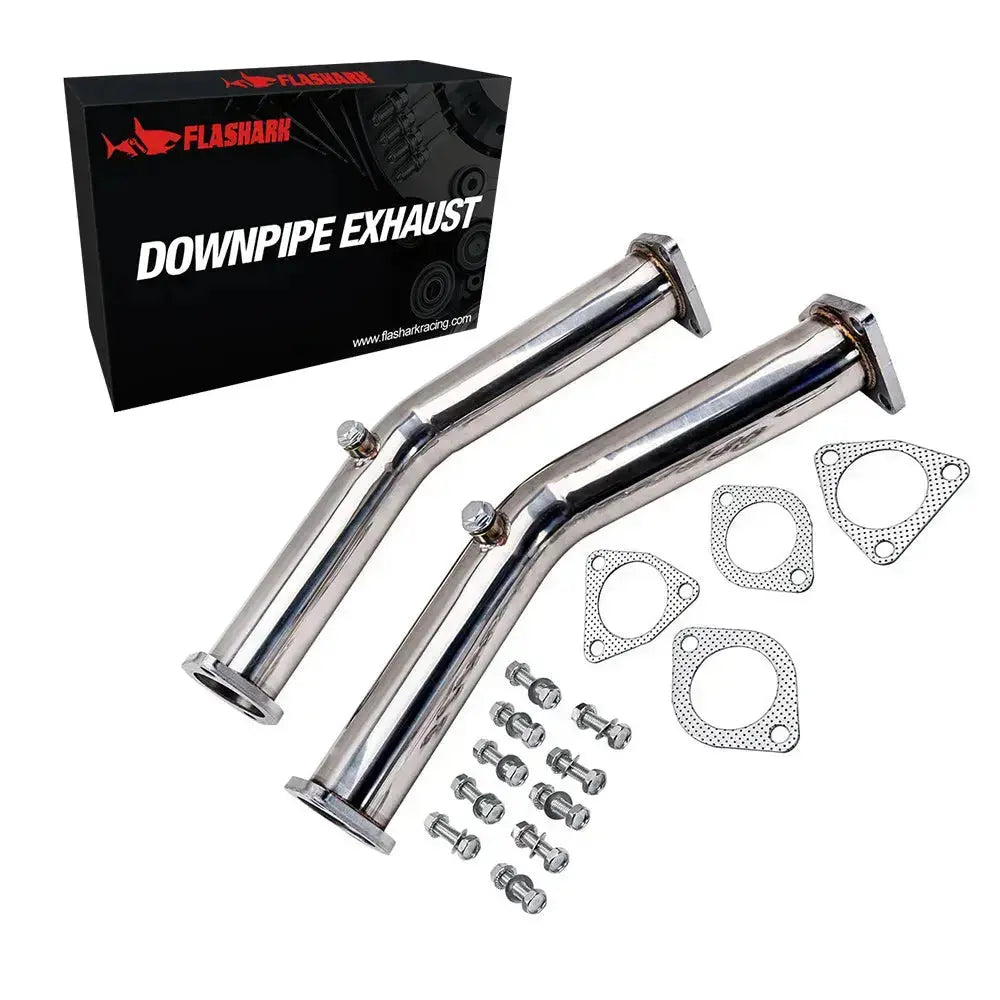
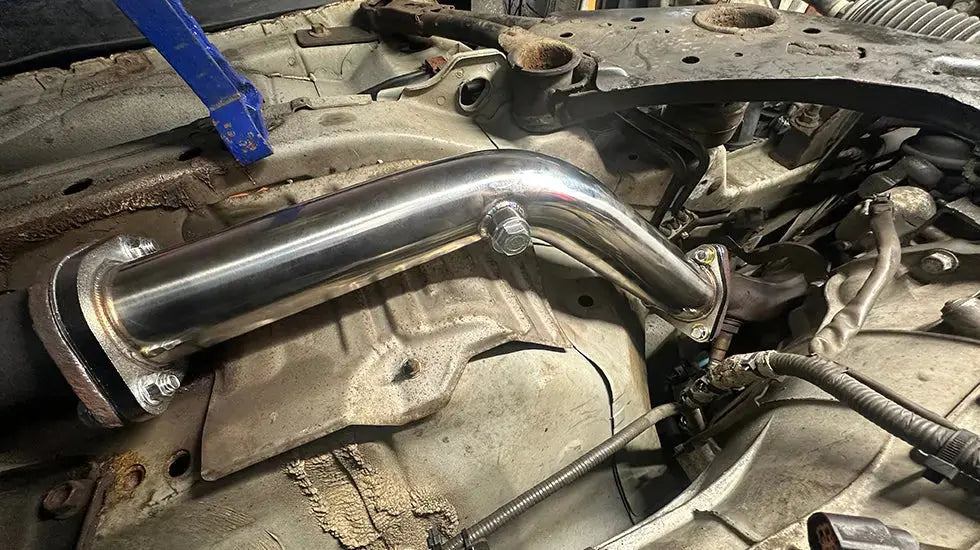
A downpipe exhaust is the section of exhaust that connects the turbocharger outlet to the rest of the exhaust system. On many turbocharged vehicles, the factory downpipe contains a catalytic converter and tight bends that can restrict flow.

An upgraded downpipe usually uses a larger diameter, smoother bends, and either a high-flow catalytic converter or a catless design for off-road use. The goal is to reduce backpressure immediately after the turbo so exhaust gas can leave the turbine housing more efficiently.
What Does a Downpipe Do?
A downpipe helps the turbocharger work with less restriction. In real driving, that can mean quicker spool, sharper throttle response, stronger mid-range pull, and better power potential after tuning. It does not simply make the car louder; it changes how the turbo system breathes.
Advantages and Disadvantages of a Downpipe
Advantages
- Improved turbo response: Less restriction after the turbine can help reduce turbo lag.
- Better horsepower potential: A downpipe can support higher boost and stronger gains when paired with proper tuning.
- More controlled sound: A catted downpipe can add a deeper tone without the extreme volume of a full straight pipe.
- Better street manners: If the factory mufflers and resonators remain, drone is usually easier to control.
- Good upgrade path: A downpipe pairs well with a tune, intercooler, intake, and cat-back exhaust.
Disadvantages
- Installation can be tight: Turbo flange bolts, heat shields, and O2 sensors can make the job difficult.
- CEL risk: Changing catalyst efficiency can trigger a check engine light, especially with catless parts.
- Legal limitations: Catless downpipes are generally intended for off-road or track use only.
- Tuning may be required: Many turbo cars need ECU calibration to run safely and make full use of the added flow.
- Higher cost: A quality stainless downpipe with a high-flow catalytic converter costs more than simple straight tubing.
What Is a Straight Pipe?
A straight pipe exhaust system removes major exhaust restrictions and sound-control parts. Depending on the setup, this can include mufflers, resonators, and catalytic converters. The result is a mostly open exhaust path from the engine or turbo area to the tailpipe.
People often choose straight pipes for aggressive sound, reduced weight, and maximum exhaust volume. However, a straight pipe is not automatically the best performance setup. On street cars, it can create loud cold starts, cabin drone, rasp, emissions problems, and unwanted attention.
Advantages and Disadvantages of a Straight Pipe
Advantages
- Maximum exhaust flow: Removing mufflers and resonators reduces restriction.
- Aggressive sound: A straight pipe produces the loudest and rawest exhaust note.
- Lower cost: Simple tubing is usually cheaper than a catted downpipe or full engineered exhaust system.
- Weight reduction: Removing heavy mufflers and resonators can reduce exhaust system weight.
- Track-focused simplicity: For dedicated race builds, fewer components can mean easier fabrication.
Disadvantages
- Very loud volume: Daily driving can become uncomfortable, especially at highway RPM.
- Cabin drone: Removing resonators and mufflers often creates low-frequency vibration inside the car.
- Legal problems: Removing catalytic converters or required emissions equipment can make the vehicle illegal for street use.
- Possible torque loss: Oversized piping can slow exhaust velocity and hurt low-end response.
- Tuning issues: Major exhaust changes can affect air-fuel ratio, O2 sensor readings, and ECU behavior.
Important Legal Warning
A straight pipe that removes catalytic converters or other required emissions equipment is generally not legal for street use. Rules vary by location, so always check local emissions and noise laws before modifying your exhaust. Catless setups should be treated as off-road or track-use parts only.
Key Differences Between Downpipe and Straight Pipe
| Feature | Downpipe | Straight Pipe |
|---|---|---|
| Main purpose | Reduce restriction after the turbocharger | Remove exhaust restrictions and sound-control parts |
| Best for | Turbocharged street and performance builds | Track, off-road, or sound-focused builds |
| Power impact | Strong gains on turbo cars, especially with tuning | Possible top-end gain, but not always better low-end torque |
| Sound | Deeper tone, more turbo whistle, moderate volume | Very loud, raw, often raspy |
| Daily drivability | Good with a catted setup and retained mufflers | Poor if drone and noise are not controlled |
| CEL risk | Low to moderate with catted parts; high with catless parts | High if emissions sensors or catalytic converters are affected |
| Street legality | Depends on catalyst type and local rules | Often not street legal if catalytic converters are removed |
Performance Differences: Horsepower, Torque, and Spool
For turbocharged vehicles, the downpipe usually provides the more noticeable performance improvement. Because it is located directly after the turbo, a less restrictive downpipe allows exhaust gas to leave the turbine housing more efficiently. That can help the turbo spool faster and support more boost when the ECU is properly calibrated.
A straight pipe can reduce exhaust restriction across the system, but its effect depends heavily on engine type and pipe sizing. On a naturally aspirated engine, a full straight pipe may add a small amount of peak horsepower, but it can also reduce low-end torque if the pipe diameter is too large or the system loses scavenging efficiency.
Does a Straight Pipe Add Horsepower?
Yes, a straight pipe can add horsepower in some setups, but the gain is often modest on a stock naturally aspirated engine. The bigger change is usually sound. On turbocharged or heavily modified engines, removing restrictions can support more power, but the car still needs the right pipe size, fueling, and tuning.
Does a Downpipe Add Horsepower?
Yes. A downpipe can add meaningful horsepower on a turbocharged car, especially when combined with an ECU tune. Without a tune, the driver may still notice faster spool and sharper response, but the full power potential usually comes after calibration.
Real-World Setup Tip
If you are building a street turbo car, start with a quality catted downpipe, then match it with a tune and a properly sized cat-back exhaust. If you are building a naturally aspirated car, do not choose pipe diameter based on sound alone. Match it to displacement, RPM range, and power target.
Sound Comparison: Downpipe vs Straight Pipe
A straight pipe is much louder than a downpipe in most cases. Since it removes mufflers and resonators, it allows more raw engine noise to exit the tailpipe. This can sound aggressive at wide-open throttle, but it can also create rasp, highway drone, and uncomfortable cabin noise.
A downpipe changes the sound differently. On a turbocharged car, it can make the exhaust deeper and bring out more turbo whistle. If you keep the factory cat-back or use a resonated system, the car can remain manageable for daily driving while still sounding more performance-oriented.
Legal and Emissions Considerations
This is where the difference between a downpipe and a straight pipe becomes very important. A high-flow catted downpipe may retain emissions equipment, but legality still depends on the specific part, vehicle, and local regulations. A catless downpipe is generally for off-road or track use.
A straight pipe that removes catalytic converters is usually not appropriate for street use. Even if the car sounds better to the owner, it may fail emissions inspection, trigger warning lights, and violate noise or emissions laws.
Downpipe vs Straight Pipe for Daily Driving
For a daily driver, a downpipe is usually easier to live with than a straight pipe. A catted downpipe can improve turbo response while keeping the rest of the exhaust system functional. This helps control drone, cold-start volume, and overall noise.
A straight pipe can become tiring on long drives. The constant drone at cruising speed is one of the most common complaints after removing mufflers and resonators. If the vehicle is used for commuting, road trips, or early-morning starts, a full straight pipe may become annoying quickly.
Which One Should You Choose?
Choose a Downpipe If:
- You drive a turbocharged vehicle.
- You want better spool, throttle response, and mid-range torque.
- You plan to tune the car.
- You want a deeper sound without extreme drone.
- You still care about daily drivability.
Choose a Straight Pipe If:
- The car is mainly used for off-road, track, or competition purposes.
- You want the loudest possible exhaust sound.
- You understand the legal and emissions risks.
- You are willing to tune the car if required.
- You can tolerate cabin drone and cold-start noise.
Recommended Upgrade Path
If you are not sure where to start, use the vehicle type as your guide:
- Turbo street car: High-flow catted downpipe + ECU tune + resonated cat-back.
- Turbo track car: Performance downpipe + full turbo-back exhaust + proper tuning.
- Naturally aspirated street car: Headers + properly sized cat-back exhaust instead of a full straight pipe.
- Sound-focused build: Consider a muffler delete or resonator change before committing to a full straight pipe.
You can explore related exhaust upgrades here:
- Downpipe Exhaust & Test Pipes
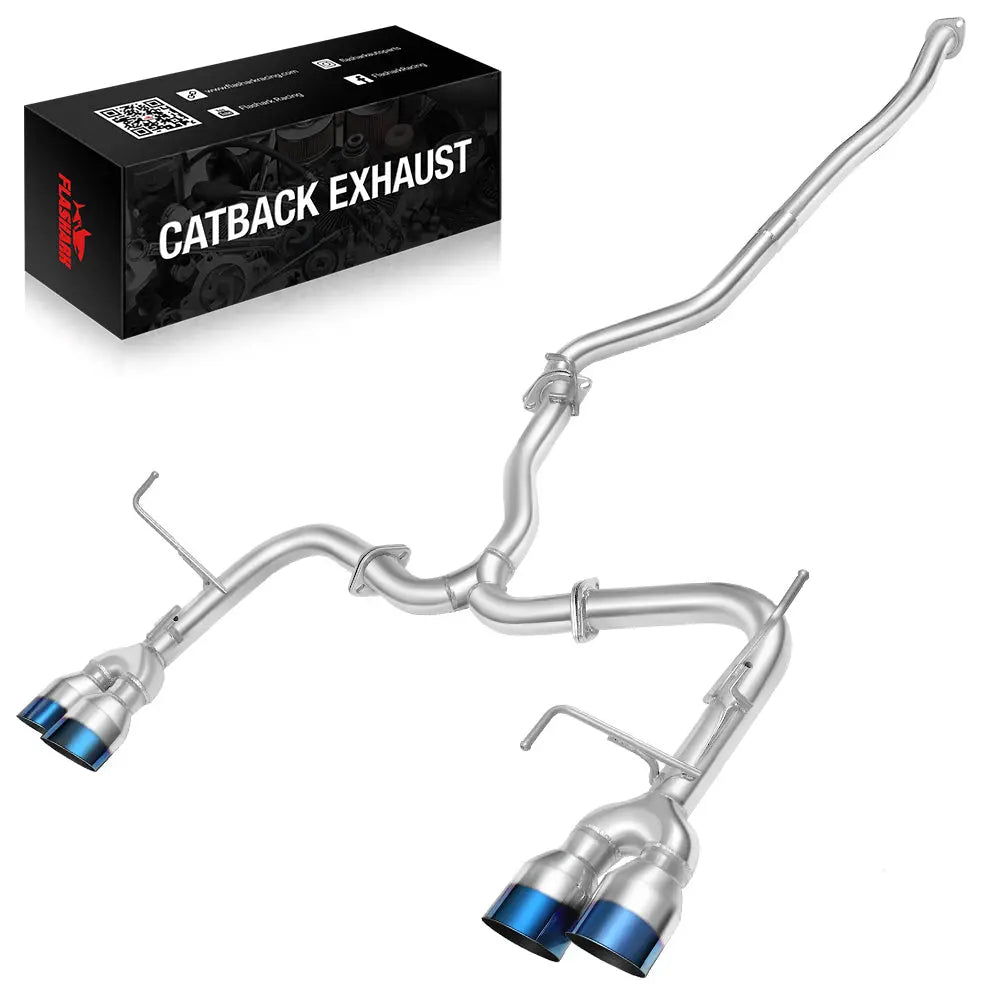
- Catback Exhaust Systems
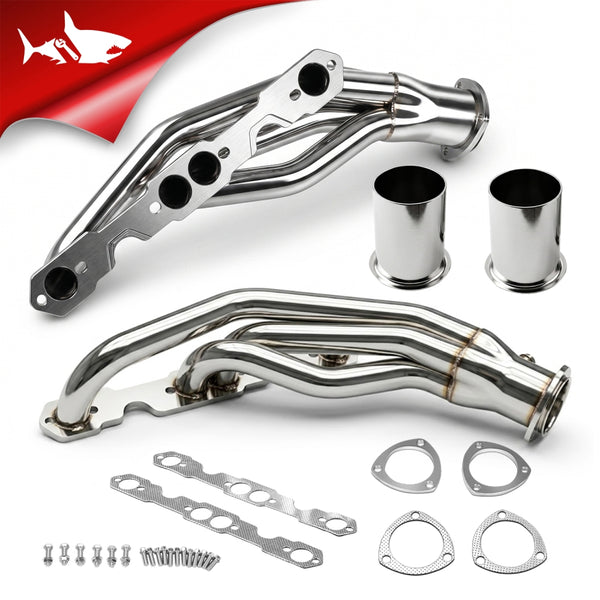
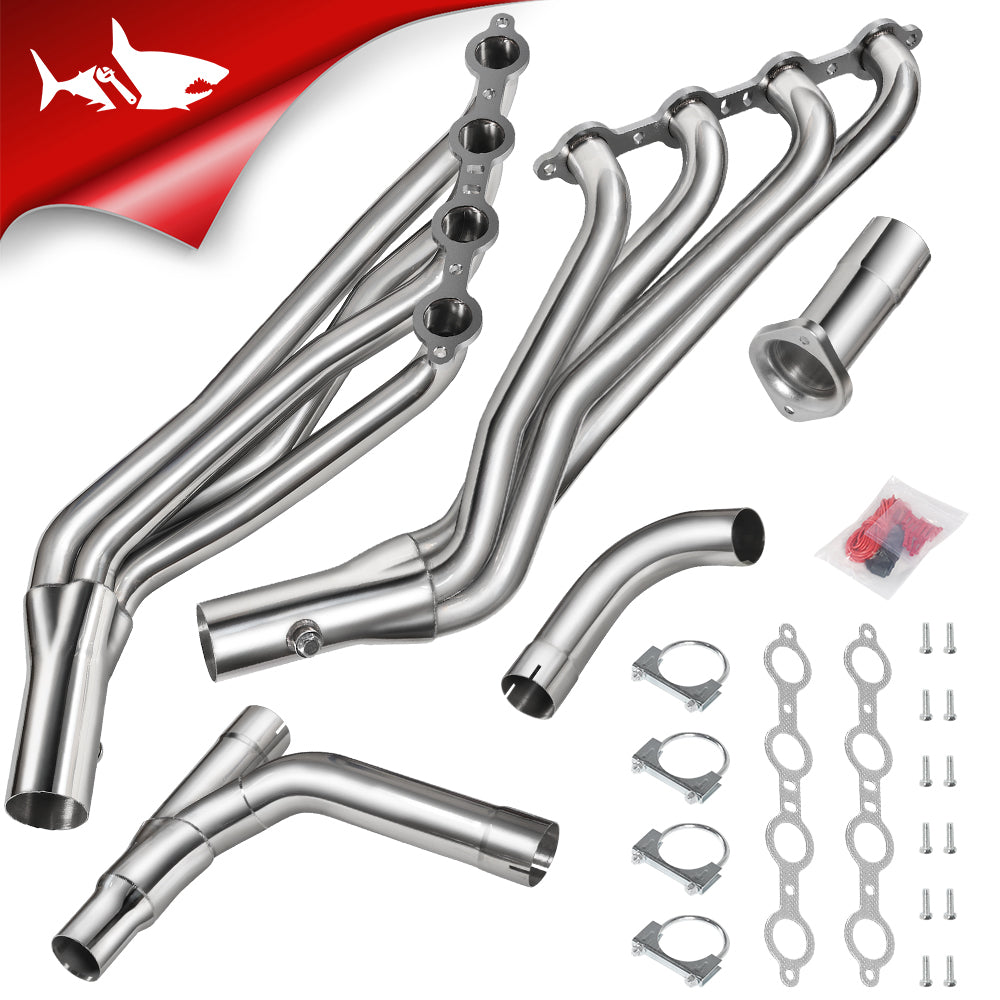
- Long Tube, Shorty & More Exhaust Headers
- Catalytic Converters
Final Verdict
For most turbocharged street cars, a downpipe is the smarter performance upgrade. It targets the biggest restriction near the turbo, supports real horsepower gains, and can still be daily-driver friendly when paired with a catted setup and proper tuning.
A straight pipe is best for drivers who prioritize maximum sound and simplicity over comfort, legality, and refinement. It can work on dedicated track or off-road builds, but it is rarely the most balanced choice for a street car.
Frequently Asked Questions
Is a downpipe the same as a straight pipe?
No. A downpipe is a specific exhaust section that connects the turbocharger to the rest of the exhaust system. A straight pipe is a broader exhaust modification that removes mufflers, resonators, and sometimes catalytic converters.
What is the difference between downpipe and straight pipe?
The main difference is location and purpose. A downpipe improves exhaust flow immediately after the turbocharger, while a straight pipe removes restrictions across the exhaust system to increase volume and flow. A downpipe is usually performance-focused for turbo cars; a straight pipe is usually sound- and flow-focused.
What is straight pipe?
A straight pipe is an exhaust setup that replaces sound-control and restriction components with open piping. Depending on the vehicle, this may involve removing mufflers, resonators, and catalytic converters. It is very loud and may not be legal for street use if emissions equipment is removed.
Does a downpipe make your car louder?
Yes, a downpipe can make a car louder, but usually not as loud as a straight pipe. A catted downpipe typically adds a deeper tone and more turbo sound, while a catless downpipe is louder and more aggressive.
Does a straight pipe add horsepower?
A straight pipe can add some horsepower by reducing restriction, but the gain depends on the engine, pipe diameter, and tune. On many stock naturally aspirated cars, the sound increase is more noticeable than the power gain.
Does a downpipe add horsepower?
Yes. A downpipe can add horsepower on turbocharged vehicles by reducing backpressure after the turbo. The best results usually come when the downpipe is paired with a proper ECU tune.
Do I need a tune after installing a downpipe?
A tune is strongly recommended, especially on turbocharged vehicles. A downpipe changes exhaust flow and boost behavior, so ECU calibration helps improve power, control air-fuel ratio, and reduce the risk of drivability problems.
Will a downpipe cause a check engine light?
It can. A high-flow catted downpipe may still trigger a check engine light on some vehicles, and a catless downpipe is more likely to do so. The exact result depends on the vehicle, sensors, catalyst design, and ECU calibration.
Is straight pipe illegal?
A straight pipe can be illegal for street use if it removes catalytic converters or other required emissions equipment. Noise laws may also apply, even if the catalytic converter remains installed. Always check local regulations before modifying your exhaust.
Can you straight pipe a turbo car?
Yes, but it is usually called a turbo-back exhaust when the system runs from the turbo outlet to the rear of the vehicle. It can be very loud and may require tuning, especially if catalytic converters or sensors are changed.
Why does my car feel slower after a straight pipe?
If the pipe diameter is too large, exhaust gases can lose velocity. On naturally aspirated engines, this can weaken scavenging and reduce low-RPM torque, making the car feel slower off the line even if it sounds louder.
What size downpipe should I choose?
The correct size depends on the turbo outlet, engine setup, and horsepower goal. For many street turbo builds, a properly designed 3-inch downpipe is a common choice, but fitment and tuning requirements should always be checked for your exact vehicle.
Is a catted downpipe better than a catless downpipe?
For street use, a high-flow catted downpipe is usually the better choice because it balances performance, sound, and emissions control. A catless downpipe may flow more, but it is generally intended for off-road or track use only.
Is a downpipe better than a cat-back exhaust?
On a turbocharged car, a downpipe usually has a bigger effect on turbo response and power potential. A cat-back exhaust mainly changes sound, flow after the catalytic converter, and appearance. Many builds use both for a complete upgrade.

Steven Chen
Automotive Performance Specialist | Engine & Exhaust Systems
Steven focuses on practical engine performance, exhaust fitment, and real-world upgrade paths for classic and modern enthusiast vehicles. He reviews small-block Ford, LS, truck, and street/strip applications with one goal in mind: helping builders choose parts that actually work together. His philosophy: "Good power starts with the right combination, not the biggest part."