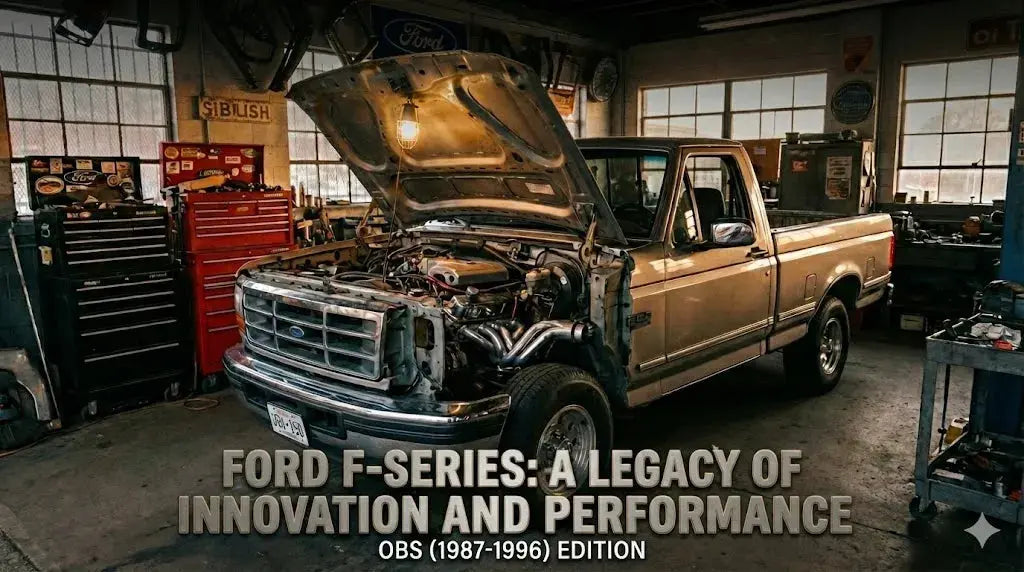
If you walk into any reputable speed shop in America, you will likely see an F-Series on the lift. Since 1948, Ford hasn't just built a pickup; they've built a platform. I've spent the last 15 years wrenching on everything from rusted-out farm trucks to 900hp desert runners, and the reality is simple: The F-Series is the Lego set of the automotive world.
While marketing brochures talk about "luxury" and "styling," we are here to talk about the bones: the chassis, the powertrain, and the modifications that actually make a difference. Whether you are restoring a classic "Dentside" or tuning a modern Coyote V8, understanding the mechanical lineage of this truck is critical before you turn a single bolt.
🔧 Technical Summary
For over 75 years, the Ford F-Series has evolved from the rudimentary flathead V8s to aluminum-bodied EcoBoost powerhouses. However, for enthusiasts, the "Golden Era" remains the OBS (Old Body Style, 1987-1996). This guide breaks down the engineering evolution of the F-Series, explains why the Twin I-Beam suspension is a nightmare to align but impossible to break, and provides a dyno-proven guide to unlocking horsepower in the 5.0L and 5.8L Windsor V8s.
The Engineering Backbone: More Than Just Body Panels
The "Innovation" in the title isn't just a buzzword; it refers to specific engineering choices that separated Ford from Chevy and Dodge. The most controversial and iconic of these is the front suspension.
The Twin I-Beam Suspension (1965–2016)
You can't talk about Ford trucks without addressing the "Twin I-Beam." Unlike a standard A-arm setup found on competitors, Ford used two massive steel beams that crossed over each other. This design allows each wheel to react independently to bumps without the fragility of CV joints.

"I remember a customer brought in a '94 F-150 back in 2018 complaining about eating through tires every 5,000 miles. He had installed a generic 2-inch lift kit in his driveway without installing drop brackets. Here’s what rookies miss: The Twin I-Beam geometry changes camber drastically as the suspension cycles. If you lift these trucks without correcting the pivot points, the wheels tilt out like a 'V'. We had to install adjustable camber bushings and proper drop brackets to fix it. Don't cheap out on I-Beam suspension lifts."
The "OBS" Era: Why The 1987-1996 Generation Matters
While modern EcoBoost engines are technical marvels, the 8th and 9th Generation F-Series (known commonly as the OBS or Old Body Style) are currently skyrocketing in value. Why? Because they combined the reliability of electronic fuel injection (EFI) with the mechanical simplicity of the past.
These trucks were predominantly powered by the legendary Windsor V8s (5.0L and 5.8L) and the virtually indestructible 300 Inline-6. However, from a performance standpoint, these trucks left the factory severely choked.
The Bottleneck: Factory Exhaust Manifolds
The 5.8L (351W) engine is a beast of a motor, but in stock form, it attempts to breathe through a straw. The factory cast-iron exhaust manifolds are notorious for two major failures:
- Restrictive Flow: The ports are small and dump into a shared "log," creating massive backpressure that kills torque.
- Cracking: After 30 years of heat cycles, the cast iron becomes brittle. I’d say 60% of the OBS Fords that come into my shop have a ticking exhaust leak due to a cracked manifold.

Performance Upgrades: Fixing the Flow
If you own an OBS Ford (1987-1996), the single best "bang-for-buck" modification isn't a cold air intake—it's Headers. You need to get that hot air out of the cylinder head faster to allow a fresh charge in (a process called scavenging).
| Feature | Stock Cast Iron Manifolds | Aftermarket Headers |
|---|---|---|
| Material Durability | Brittle, prone to cracking after 100k miles | Stainless Steel (Resistant to thermal shock) |
| Airflow Dynamics | Turbulent "Log" style design | Mandrel-bent, individual runners |
| Power Gains | Baseline | +15-25 HP / +20-30 ft-lbs Torque |
For the 5.8L V8 specifically, swapping to stainless steel exhaust headers solves the cracking issue permanently and wakes up the engine sound. You don't need to rebuild the engine to feel the difference; you just need to let it exhale.
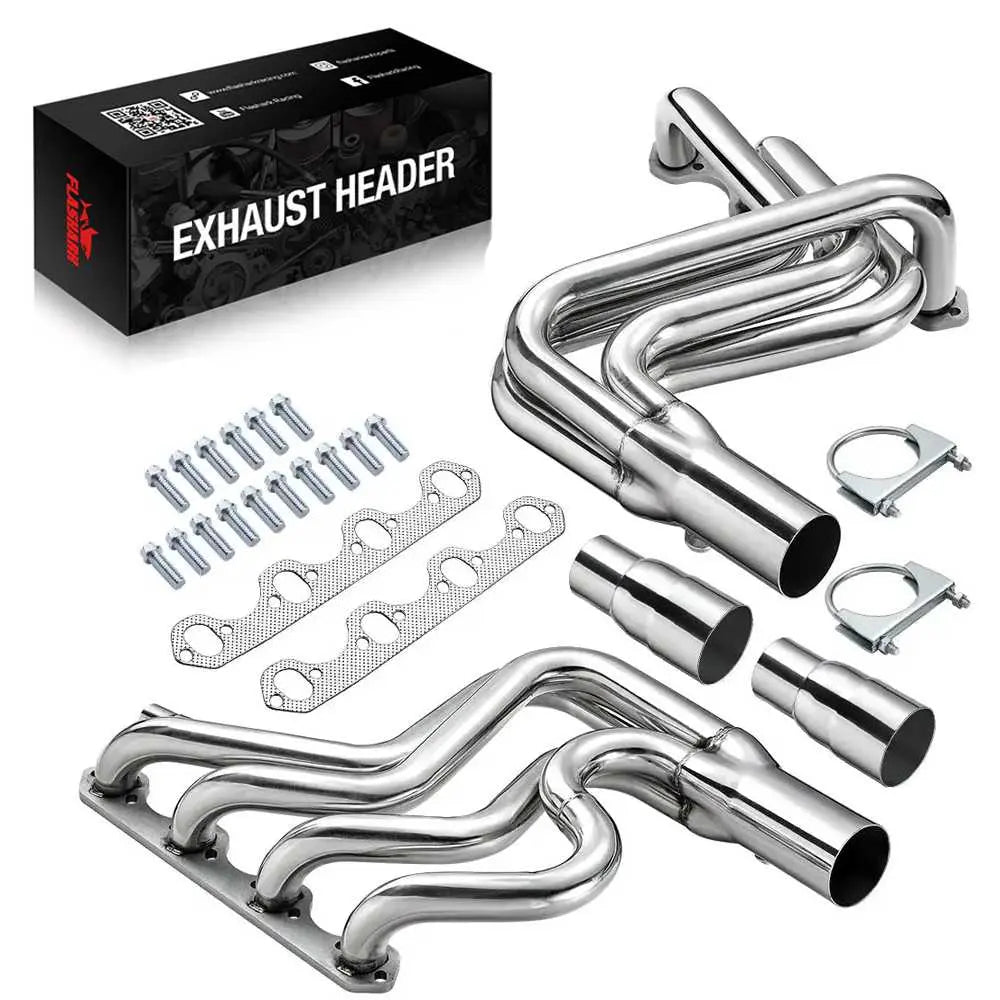
The OBS Solution: 1987-1995 Ford 5.8L V8 Headers
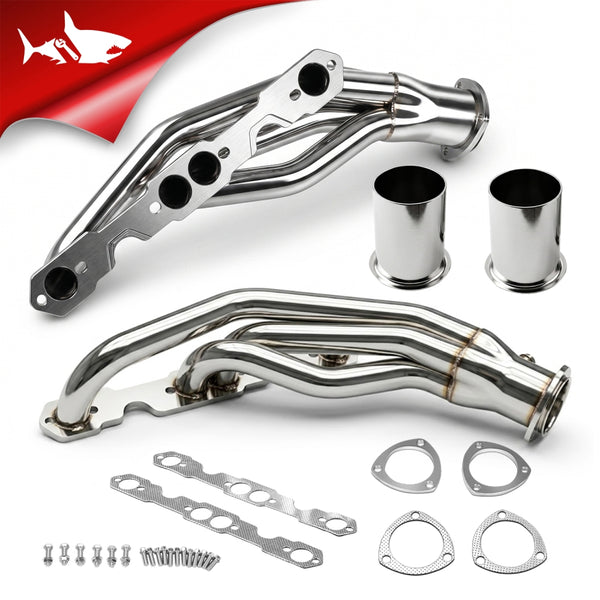
This is the direct replacement for those cracked manifolds. Made from polished stainless steel to resist corrosion, these headers feature mandrel-bent tubing to maximize exhaust velocity. This is a bolt-on upgrade for the F-150, F-250, and Bronco.
- Gasket matching for optimal port flow
- Includes all necessary hardware (gaskets, bolts)
- Direct fit for 5.8L Windsor V8s
Before you attempt to install headers on a 5.8L Ford engine, soak the original manifold bolts in penetrating oil (like PB Blaster or Kroil) for at least 24 hours. These bolts are notorious for snapping off in the cylinder head. Many DIYers watch a quick tutorial and attack it with an impact gun—I suggest you never do that. If a stud breaks flush with the head, you are looking at extracting the entire engine to drill it out.

F-Series vs. Silverado: A Mechanic's Perspective
I get asked this question daily: "Ford or Chevy?" The answer depends on what you are doing with the truck.
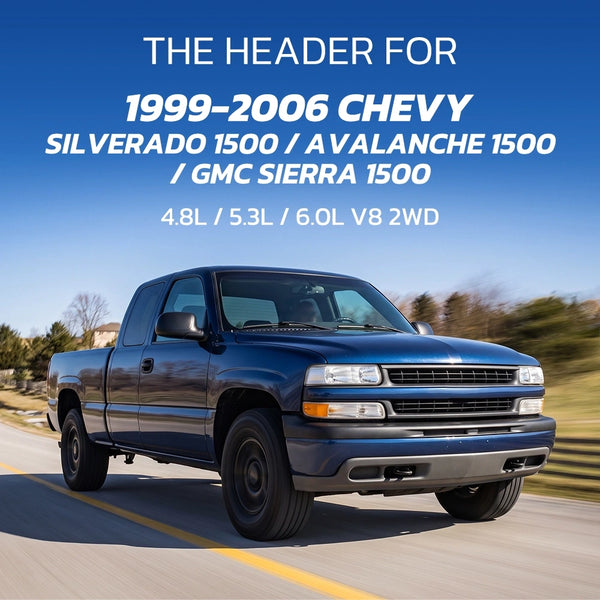
The Chevrolet Silverado (specifically the GMT800 and GMT900 platforms) uses the LS-based V8 engine. The LS is fantastic, but Chevy uses an Independent Front Suspension (IFS) across the board on 1500s. While smooth on the highway, the tie-rods are notoriously thin and prone to snapping under heavy off-road stress.
Ford, on the other hand, maintained a more robust chassis design. The F-Series generally offers higher payload capacities and a stiffer frame. For towing heavy loads or serious off-road builds, the solid axle (on F-250+) or the Twin I-Beam (on older F-150s) offers superior structural integrity compared to the Chevy's CV-axle setup. For a deeper dive into the competition's history, check out the 1998-2006 Chevrolet Silverado analysis.
Conclusion: Built, Not Bought
The Ford F-Series didn't earn its reputation because of a TV commercial; it earned it on job sites, ranches, and in mud pits. Whether you are driving a 2024 Platinum or restoring a 1992 Flare Side, the potential of the F-Series is unlocked through proper modification.
Don't let aging components like rusted suspension or cracked manifolds hold the truck back. With the right parts—specifically ensuring your engine can breathe through high-flow headers—you restore the performance that Ford engineers intended.
Frequently Asked Questions (FAQ)
Q1: Why are the 1987-1996 "OBS" Ford trucks becoming so expensive?
A1: The "Old Body Style" (OBS) trucks are hitting the sweet spot of collector interest because they are the last generation of Fords that feel "mechanical" while still having modern reliability features like Electronic Fuel Injection (EFI). They have a classic square-body look, simple electronics that are easy to fix, and robust iron-block engines (Windsor V8s and the 300 Inline-6) that outlast many modern plastic-heavy engines.
Q2: My lifted F-150 is wearing out the outside edges of the front tires. What is wrong?
A2: This is the classic Twin I-Beam curse. When you lift these trucks, the beams swing down, creating positive camber (wheels tilting out like a "V"). Unlike modern trucks with A-arms, you cannot just adjust a cam bolt. You must install pivot drop brackets to lower the mounting point of the beams and bring the geometry back to factory specs. If you skipped the drop brackets, no alignment shop can save your tires.
Q3: How much horsepower will long-tube headers add to my 5.8L Windsor?
A3: On a stock or mild 5.8L, you can expect a realistic gain of 15 to 25 horsepower and, more importantly, 20 to 30 ft-lbs of torque. The factory manifolds are incredibly restrictive log-style castings. By switching to mandrel-bent headers, you improve scavenging, which helps the engine pull harder in the mid-range—exactly where you need it for towing or passing.
Q4: Do I need to re-tune my computer (ECU) after installing headers?
A4: For most OBS Fords (1987-1995), the answer is generally no. These trucks mostly use Speed Density systems that can compensate for the improved airflow of headers without a custom tune. However, if you have a 1996 (OBD-II/MAF) model or if you are also changing camshafts and cylinder heads, a custom tune is highly recommended to prevent the engine from running lean.
Q5: Why do stock Ford exhaust manifolds crack so often?
A5: It comes down to thermal expansion properties. The cylinder head is iron, and the manifold is iron, but they heat up and cool down at different rates. Over 20+ years, these heat cycles fatigue the cast iron, causing it to become brittle and crack, usually between the rear cylinders. Stainless steel headers are more flexible and handle these thermal stresses much better.
Q6: Is the 300 Inline-6 better than the 5.0L V8?
A6: In terms of pure durability and low-end grunt for farm work, many mechanics (myself included) believe the 4.9L (300ci) Inline-6 is the best engine Ford ever built. It has seven main bearings and gear-driven timing. However, for highway driving and passing power, the V8s (5.0L and especially the 5.8L) are superior because they can rev higher and produce more peak horsepower.
Q7: Can I install headers on my F-150 myself?
A7: You can, but be warned: it is not a 30-minute job. The passenger side is usually tight against the frame rail and starter. The biggest risk is breaking the old, rusty manifold bolts in the cylinder head. If you don't have an oxy-acetylene torch, high-quality penetrating oil, and patience, you might want to pay a shop. If a bolt snaps flush with the head, the job just got 10x harder.
Q8: What is the difference between Shorty and Long-Tube headers?
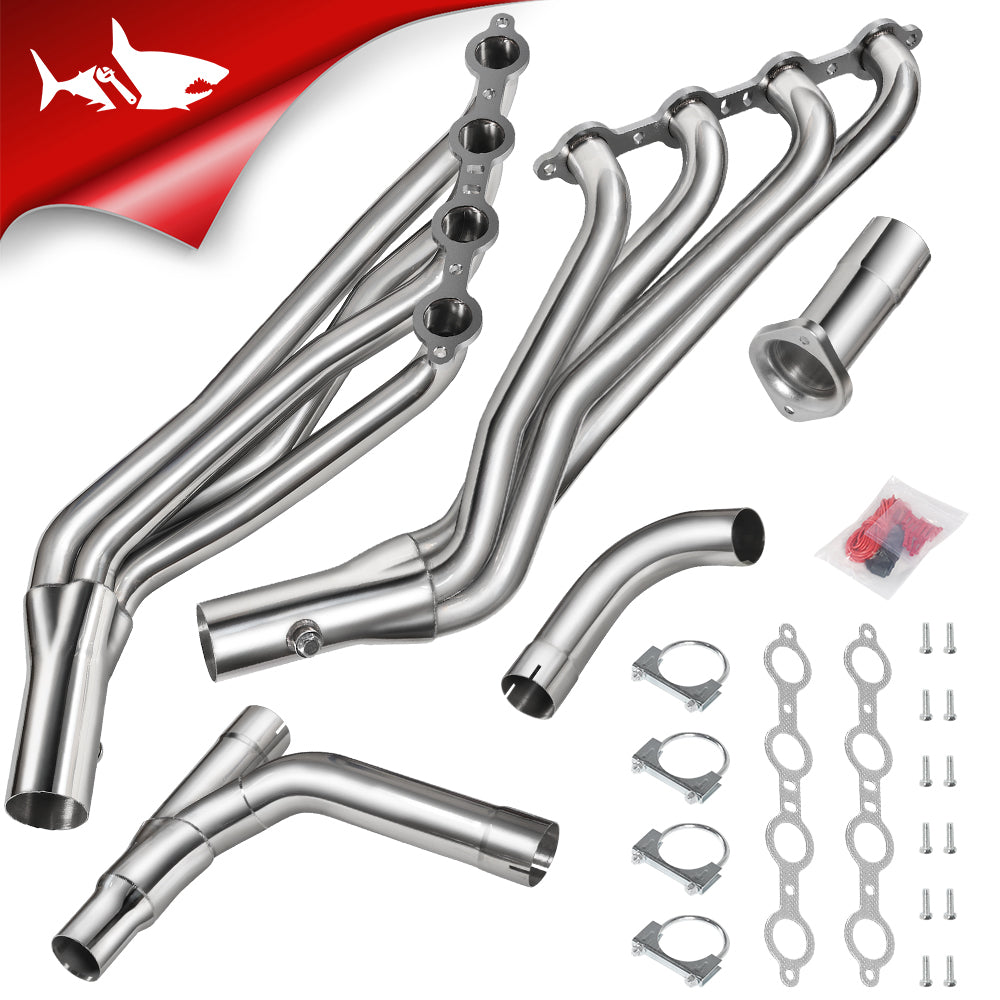
A8: Shorty headers are designed to replace the stock manifold directly and connect to the factory Y-pipe; they are easier to install and emissions-friendly but offer smaller gains. Long-tube headers offer the maximum horsepower and torque gains because they separate exhaust pulses longer, but they usually require a custom Y-pipe or exhaust modifications and may not be street-legal in strict states like California.
Q9: Ford F-150 vs. Chevy Silverado 1500: Which suspension is tougher?
A9: For pure abuse and structural rigidity, the Ford Twin I-Beam (2WD) or Solid Axle (F-250/350 4WD) is tougher. You can jump a Twin I-Beam truck, and it will likely survive. The Chevy Silverado uses Independent Front Suspension (IFS) with CV axles, which rides smoother on the highway but is more prone to breaking tie-rods and ball joints under heavy off-road stress.
Q10: What kind of gasket should I use with new headers?
A10: Throw away the paper gaskets that come with cheap kits. I always recommend using a multi-layer steel (MLS) gasket or a high-quality dead-soft copper gasket. Also, use locking header bolts or re-torque your bolts after the first 100 miles of driving, as heat cycles will cause them to loosen up.
Q11: Will headers make my truck too loud?
A11: Headers themselves don't dictate the volume; the mufflers do. Headers will change the tone of the exhaust, making it sound crisper and more aggressive. If you keep your stock muffler or a mild aftermarket muffler, it won't be obnoxious. If you run straight pipes with headers, your neighbors will hate you.