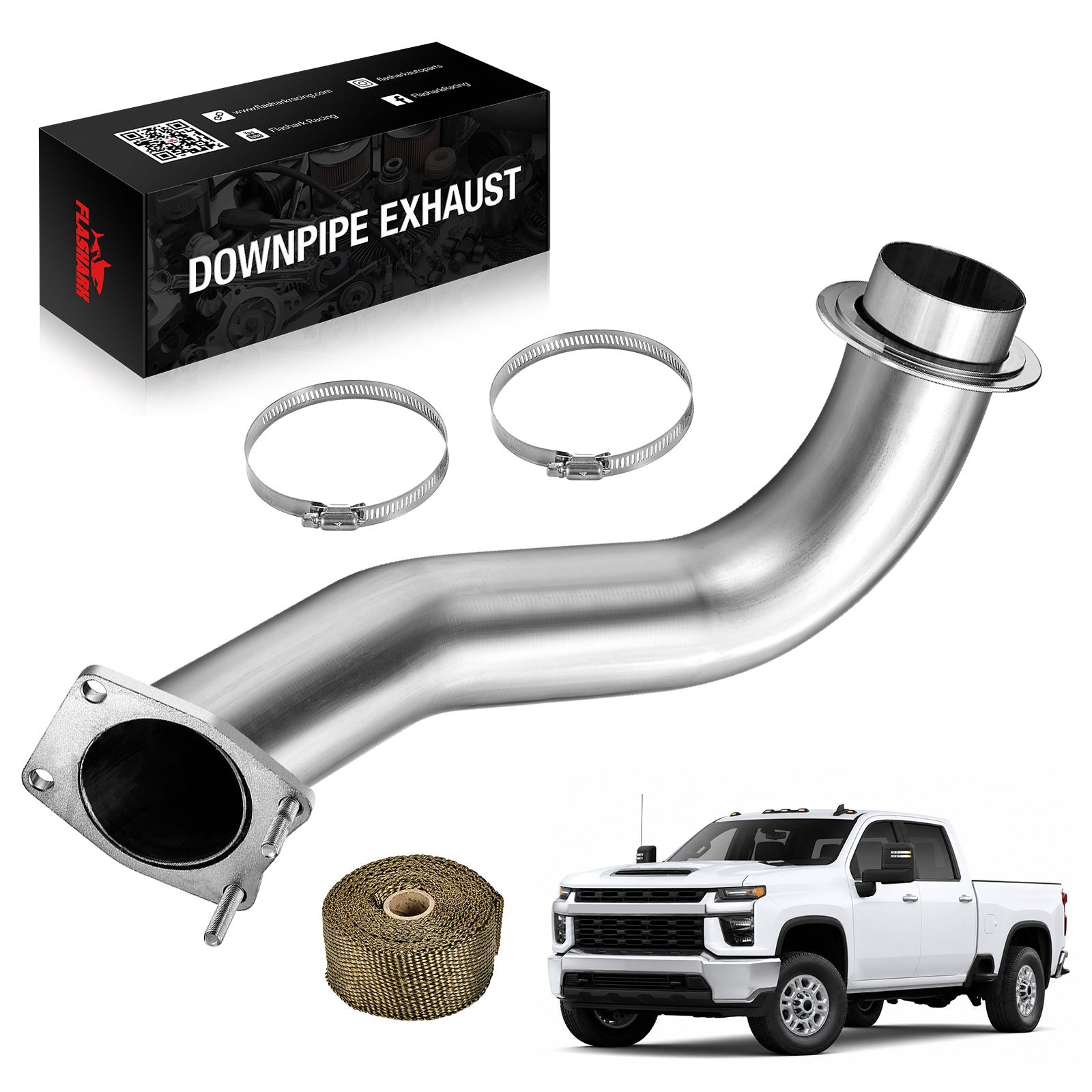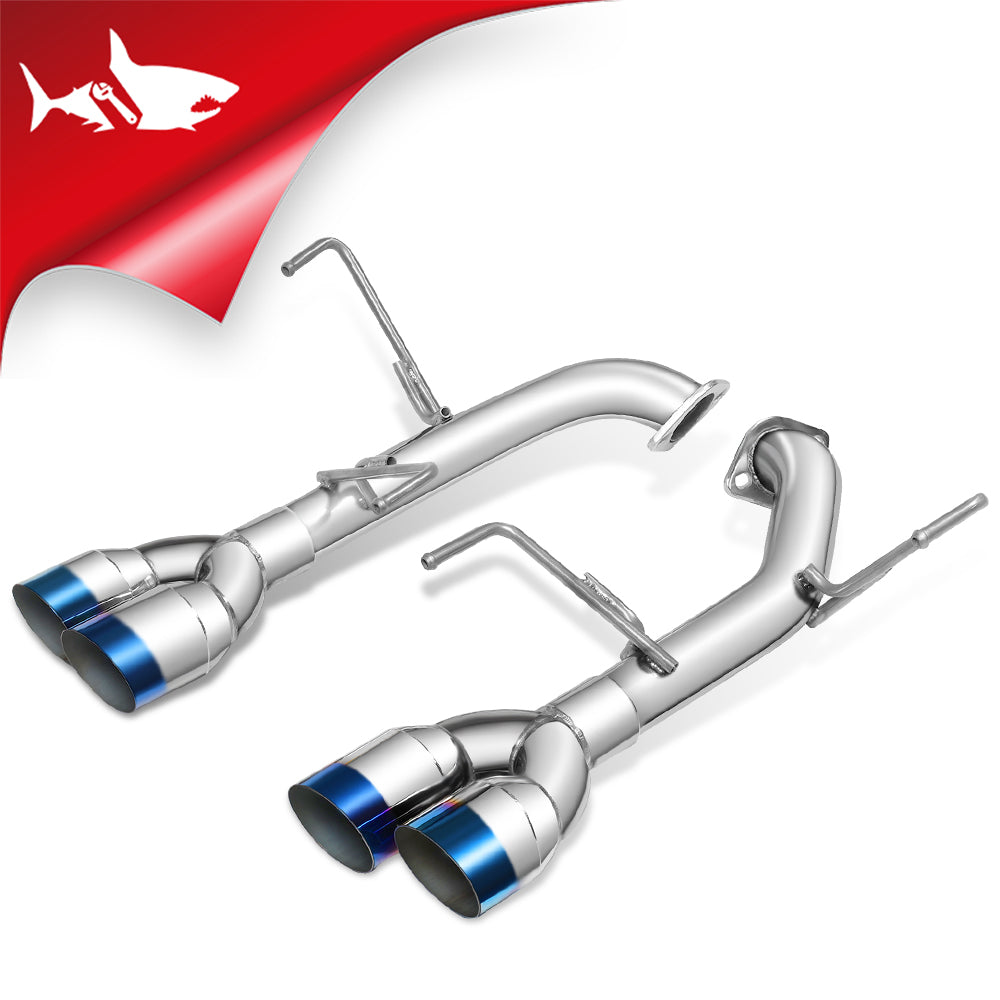
If your vehicle was originally equipped with a catalytic converter, a catless downpipe is generally not a legal choice for public-road use in California. The key issue is not the word “downpipe” by itself. It is whether the modification changes the emissions-control configuration certified for that specific vehicle.
Quick answer
- A catless downpipe removes a catalytic converter from the exhaust path. For an emissions-controlled street vehicle, that can create an anti-tampering and Smog Check problem in California.
- A catted downpipe is not automatically legal. The part and its installation must match the vehicle application and applicable California requirements.
- Before ordering, match the part to the vehicle year, engine, drivetrain, emissions equipment, and exhaust connection. Review local emissions and road-use requirements before modifying emissions-related equipment.
California emissions rules are detailed, and the correct answer depends on the vehicle and the exact component being installed. This guide explains the practical distinction between catless and catted downpipes, why a visual inspection matters, and what to check before changing an exhaust system.

Why California Treats Catless Downpipes Differently
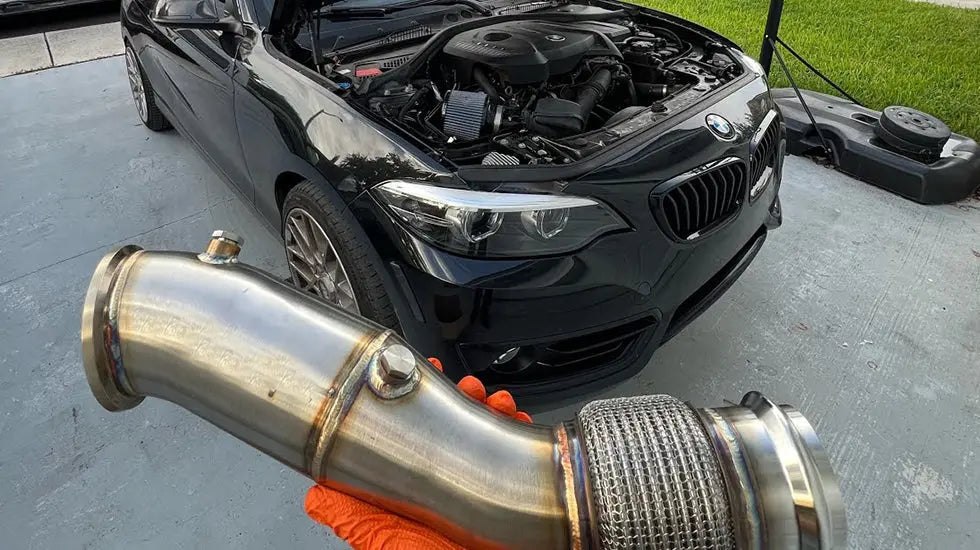
A downpipe is the exhaust section that carries exhaust flow away from the turbocharger on many turbocharged engines. On a factory-equipped street vehicle, that section may include a catalytic converter and oxygen-sensor locations that are part of the certified emissions system.
A catless downpipe replaces that converter-equipped section with a pipe that does not contain a catalytic converter. That can change emissions-control hardware, sensor behavior, and the vehicle configuration inspected during a Smog Check. It may also change exhaust sound and the way the rest of the exhaust system fits together.
Important: Mechanical installation and road-use legality are separate questions. A part can bolt to the vehicle and still be unsuitable for public-road use in California.
Is a Catless Downpipe Illegal in California?
For a street-driven, emissions-controlled vehicle that originally used a catalytic converter in that location, a catless downpipe is generally not appropriate for legal public-road use in California. California Vehicle Code Section 27156 addresses modifications to emissions-control systems, while California Air Resources Board rules govern when aftermarket emissions-related parts receive an Executive Order exemption.
The practical takeaway is simple: do not treat “catless,” “race,” or “performance” as a substitute for an application-specific compliance determination. California Air Resources Board Executive Orders apply to particular vehicle applications; an EO number or a catalytic converter on a different configuration does not make every installation acceptable.
For the underlying rule, see California Vehicle Code Section 27156. CARB also explains that aftermarket catalytic converters must be approved for the specific vehicle application to be legally sold and installed in California.
Catless vs. Catted Downpipes: What Changes?
| Configuration | What it means | What to check |
|---|---|---|
| Catless downpipe | No catalytic converter in the replacement downpipe section. | Original emissions equipment, road-use rules, sensor locations, exhaust leaks, and Smog Check consequences. |
| Catted downpipe | A replacement downpipe containing a catalytic converter. | Whether the exact part, vehicle year, engine, and application are covered by the required approval or exemption. |
| Original equipment | The manufacturer-certified emissions configuration for that vehicle. | Condition of the converter, sensor wiring, exhaust connections, and readiness of the complete system. |
A catted downpipe and a catless downpipe should not be treated as interchangeable. The catalytic converter is only one part of the decision. Application coverage, installation details, emissions equipment, and calibration all matter.
Can You Pass a Smog Check With a Catless Downpipe?
A vehicle can fail a Smog Check when required emissions equipment is missing, modified, damaged, or accompanied by an illuminated malfunction indicator light. California Smog Check inspections may include a visual inspection of the emissions-control system and checks related to onboard diagnostics.
Warning-light behavior is not something a downpipe alone can predict. Sensor location, exhaust leaks, wiring condition, emissions equipment, engine condition, and calibration can all affect the result. Treat the intake, exhaust, emissions system, and calibration as one complete system rather than isolated parts.
BAR’s Smog Check guidance explains that a check-engine light prevents a vehicle from passing, and that modified or non-approved software can also cause a failure.
How to Choose a Legal Exhaust Modification Path
If you are planning an exhaust change for a California street vehicle, start with the vehicle rather than the marketing label on a part. Confirm the vehicle year, engine, drivetrain, factory emissions configuration, and the exact exhaust connection before selecting hardware.
- Identify the original converter location and the emissions equipment connected to that section of exhaust.
- Match the selected part to the vehicle application, including model year and engine configuration.
- Review any applicable CARB Executive Order and read the application details, not only the EO number.
- Check sensor ports, wiring clearance, flange style, downstream exhaust connection, and heat clearance before final tightening.
- Keep the vehicle’s emissions and calibration configuration in mind before changing components.
When comparing replacement options, a downpipe collection can help you identify product types and vehicle-specific configurations. Select the required SKU only after matching it to the vehicle and intended use.
Installation Considerations That Matter
Downpipe installation is not only a matter of removing one pipe and fitting another. Heat, sensor wiring, clamp alignment, turbo outlet geometry, and the downstream exhaust can all affect the finished installation. Take a minute before tightening each clamp: align the complete exhaust path first, then check clearance through the expected range of movement.
- Allow the exhaust system to cool before working near the turbocharger or catalytic converter.
- Support the vehicle correctly and keep fasteners, heat shields, and sensor wiring organized during removal.
- Inspect oxygen-sensor wiring and connector routing so it stays clear of hot exhaust components.
- Check flanges, gaskets, clamps, and the downstream joint for leaks after installation.
- Do not force a system into place under tension. A system that is misaligned cold can shift as it heats and cools.
What About Track-Only Vehicles?
Track use and public-road use are not the same situation. A vehicle described as track-only should not be assumed to be exempt from every California requirement simply because it is used at a circuit. Review the applicable rules for the vehicle, part, event, transport, and intended use before making an emissions-related modification.
CARB provides an overview of California racing vehicles, aftermarket parts, and Executive Orders for owners who need to understand that distinction.
Conclusion
A catless downpipe may be a familiar term in turbocharged-car discussions, but it is not a simple street-use upgrade for California vehicles. For an emissions-controlled vehicle that originally used a catalytic converter, removing that converter can create a legal and Smog Check issue. Start with the exact vehicle configuration, use application-specific information, and check the complete emissions and exhaust system before ordering or installing parts.
FAQ
Q1. What is a catless downpipe?
A1. A catless downpipe is a replacement exhaust section without a catalytic converter. It is commonly discussed on turbocharged vehicles because the downpipe often connects directly to the turbocharger outlet.
Q2. Are catless downpipes illegal in California?
A2. For an emissions-controlled street vehicle that originally used a catalytic converter in that location, a catless downpipe is generally not suitable for legal public-road use in California. The exact vehicle and use still matter.
Q3. Is a downpipe itself illegal?
A3. No. A downpipe is an exhaust component. The legal question depends on whether the selected part changes the original emissions-control configuration and whether it is appropriate for the specific vehicle application.
Q4. Are catted downpipes legal in California?
A4. A catalytic converter alone does not make a downpipe legal for every vehicle. Review the part’s approval or exemption details and match the application to the vehicle year, engine, and emissions configuration.
Q5. Can a high-flow catalytic converter be used in California?
A5. A high-flow label is not a legal determination. The replacement converter and installation must meet the requirements that apply to the specific vehicle.
Q6. Will a catless downpipe cause a check-engine light?
A6. Warning-light behavior varies by vehicle and installed hardware. Sensor location, exhaust leaks, wiring condition, emissions equipment, and calibration can all affect the result.
Q7. Does a downpipe always require a tune?
A7. Tune requirements vary by vehicle and installed hardware. Do not assume that a tune is either always required or never required; consider the complete intake, exhaust, emissions, and calibration combination.
Q8. Can a catless downpipe pass a Smog Check?
A8. A vehicle can fail when required emissions equipment is missing or modified. A visual inspection, onboard diagnostics, and the condition of the complete emissions system can all matter.
Q9. What should I check before ordering a downpipe?
A9. Confirm the vehicle year, engine, drivetrain, emissions equipment, turbo outlet, sensor provisions, downstream exhaust connection, and intended use before ordering.
Q10. Can a track-only label make a catless downpipe street legal?
A10. No. A track-only label does not make a part street legal. Road-use requirements and racing-vehicle rules should be reviewed separately for the vehicle and the intended use.

Steven Chen
Automotive Performance Specialist | Engine & Exhaust Systems
Steven focuses on practical engine performance, exhaust fitment, and real-world upgrade paths for classic and modern enthusiast vehicles. He reviews small-block Ford, LS, truck, and street/strip applications with one goal in mind: helping builders choose parts that actually work together. His philosophy: "Good power starts with the right combination, not the biggest part."