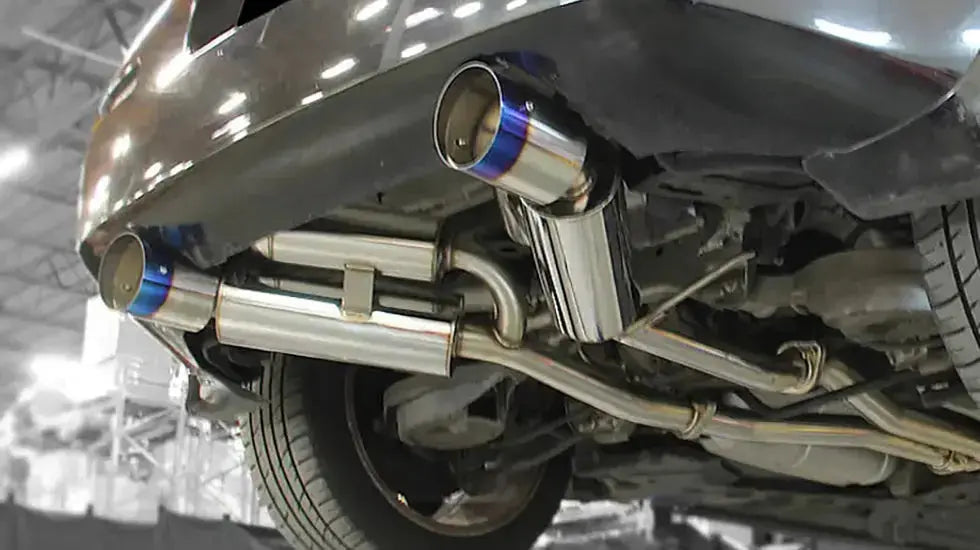
When people compare a catback vs straight pipe exhaust, they are usually chasing the same thing: better sound, better flow, and a car that feels more exciting to drive. But these two exhaust upgrades are built for very different use cases.
A catback exhaust keeps the catalytic converter in place and replaces the exhaust section behind it. A straight pipe exhaust system removes most of the sound-control and emissions-related restrictions, often including the catalytic converter. That difference affects sound, horsepower, legality, resale value, daily comfort, and how likely you are to pass an emissions inspection.
This guide breaks down straight pipe vs catback exhaust from a practical builder’s point of view, so you can choose the setup that actually fits your car, your budget, and how you drive.
Quick Answer: Catback vs Straight Pipe
- Daily driver on public roads? Choose a catback exhaust. It keeps the catalytic converter, is easier to live with, and is legal in most street-use situations when properly selected.
- Track-only or off-road build? A straight pipe can make sense if your car is not driven on public roads and you understand the noise, tuning, and legal trade-offs.
- Want aggressive sound without constant drone? Choose a resonated catback or a catback with a quality muffler.
- Want the cheapest possible setup? A straight pipe is cheaper up front, but the legal risk, emissions failure, and resale hit can cost more later.
- Expecting big horsepower? Neither system will transform a stock car by itself. A catback typically gives modest gains, while a straight pipe may flow more but usually needs tuning and supporting mods to work properly.
What Is a Catback Exhaust System?
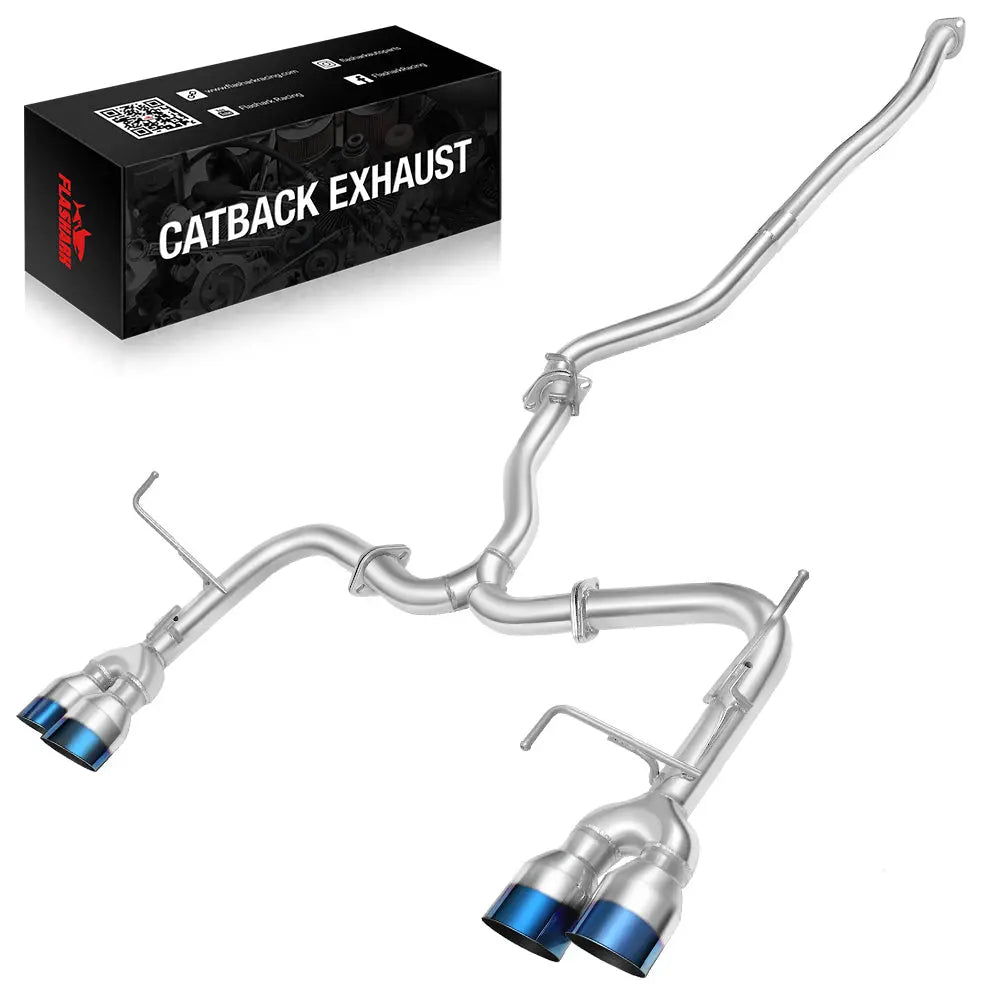
A catback exhaust system replaces the exhaust components located after the catalytic converter. That usually includes the mid-pipe, resonator, muffler, and exhaust tips. The catalytic converter stays in place.

This is the key reason catback systems are popular for street cars. They improve sound and reduce some exhaust restriction without removing the emissions equipment that keeps the vehicle legal for road use in most areas.
On a typical street build, a catback is the cleanest first exhaust upgrade. It gives the car a deeper tone, slightly freer flow, better-looking tips, and often better materials than the stock system. It also avoids many of the problems that come with a full straight pipe exhaust system.
What Is a Straight Pipe Exhaust System?
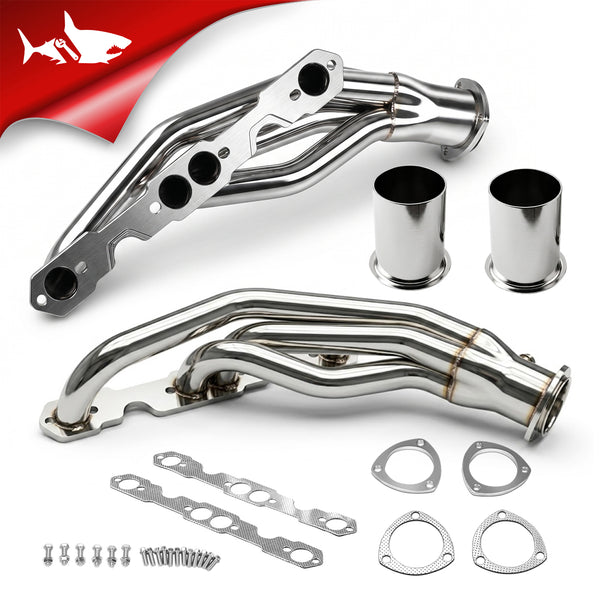
A straight pipe exhaust system is an exhaust setup that removes major restrictions and sound-control components. In the traditional sense, this means removing the muffler, resonator, and often the catalytic converter, then replacing them with a mostly open pipe from the engine side toward the exhaust tip.

Some drivers use the term “straight pipe” loosely. They may call a muffler delete, resonator delete, or high-flow cat setup a straight pipe even when the catalytic converter is still installed. Technically, those are not always the same thing.
For this guide, a straight pipe means a highly unrestricted exhaust setup with little or no sound dampening. If the catalytic converter is removed from a street-driven vehicle, that creates a serious legal issue in the United States and in many other markets.
Important Legal Note
In the U.S., removing or disabling a catalytic converter on a street-driven vehicle can violate federal emissions law. State and local rules may add stricter requirements. Before installing any exhaust system, check your local emissions laws, inspection rules, and noise ordinances. For emissions guidance, see the EPA transportation air pollution FAQ.
Catback vs Straight Pipe: Main Difference
The biggest difference between a catback and a straight pipe is not just sound. It is where the modification starts and what parts are removed.
A catback starts after the catalytic converter. A straight pipe setup may remove the catalytic converter, muffler, and resonator. That changes the legal status, the sound level, the exhaust smell, the likelihood of a check engine light, and the way the car behaves on the street.
| Feature | Catback Exhaust | Straight Pipe Exhaust |
|---|---|---|
| Starts From | After the catalytic converter | Often from the manifold, downpipe, or cat location |
| Catalytic Converter | Retained | Often removed in a true straight pipe setup |
| Sound Level | Deeper and louder than stock, usually controlled | Very loud, raw, and often raspy |
| Street Use | Best choice for most daily drivers | Best reserved for track or off-road vehicles |
| Emissions Inspection | Usually easier to pass when properly installed | Likely to fail if emissions equipment is removed |
| Typical Cost | Higher parts cost, usually better fitment and materials | Lower up-front cost, higher legal and resale risk |
| Best For | Street cars, daily drivers, mild performance builds | Race cars, off-road builds, dedicated project cars |
Advantages of a Catback Exhaust System
Better Sound Without Going Too Far
Most people install a catback because they want the car to sound like it should have sounded from the factory. A good catback gives the exhaust a deeper, fuller tone without making the car painful to drive every day.
The muffler and resonator still matter. They shape the tone, reduce rasp, and help control highway drone. This is why a well-designed catback often sounds better than a cheap straight pipe, even if it is not as loud.
Street-Friendly Performance Gains
A catback can reduce backpressure behind the catalytic converter. On many naturally aspirated cars, the horsepower gain is modest, but real. The difference is usually more noticeable in throttle response, sound, and high-rpm breathing than in a dramatic seat-of-the-pants power jump.
On turbocharged cars, a freer-flowing catback can help the exhaust move out more efficiently after the turbo, but results depend heavily on the platform, pipe diameter, tune, and existing restrictions.
Better Materials and Fitment
Many aftermarket catback systems use stainless steel tubing, mandrel bends, stronger hangers, and better-looking tips than the factory exhaust. If your stock exhaust is rusty, thin, or restrictive, a catback can be both a performance upgrade and a durability upgrade.
Lower Legal Risk Than a Straight Pipe
Because a catback exhaust keeps the catalytic converter in place, it avoids the biggest emissions problem associated with straight pipe setups. You still need to check local noise rules and emissions requirements, especially in California or other strict inspection states, but a catback is generally the safer route for a street car.
Mechanic’s Note
If the car is driven to work, used for road trips, or has to pass inspection, I usually recommend a resonated catback before anything more aggressive. It gives most drivers the sound they want without creating the problems they did not plan for: drone, smell, tickets, check engine lights, and failed emissions tests.
Disadvantages of a Catback Exhaust System
It Costs More Up Front
A quality catback costs more than having a local shop weld in a basic straight pipe. You are paying for engineered sound control, bolt-on fitment, better materials, and a system that is designed for the vehicle.
For a budget build, that higher price can be frustrating. But if you plan to keep the car streetable, the extra cost often makes sense.
Power Gains Are Limited on a Stock Car
A catback is not a magic horsepower part. The catalytic converter, headers, downpipe, intake, camshaft profile, turbo size, and ECU calibration all affect how much power the car can actually make.
If your factory exhaust is already fairly efficient, the gain from a catback alone may be small. For bigger gains, the exhaust needs to be part of a complete setup.
Some Systems Still Drone
Not every catback is comfortable. Some are too loud for daily driving, especially on four-cylinder cars, V6 platforms with rasp issues, or trucks that spend a lot of time cruising at steady rpm.
If you care about comfort, look for sound clips, owner feedback, resonator design, muffler style, and whether the system is known for drone at highway speed.
Advantages of a Straight Pipe Exhaust System
Maximum Exhaust Flow
The main argument for a straight pipe is flow. With fewer restrictions, exhaust gas has a more direct path out of the engine. On the right build, especially a track car with supporting modifications and proper tuning, this can help performance.
That said, more flow is not always better in every rpm range. Exhaust velocity, scavenging, pipe diameter, cam timing, turbo behavior, and ECU tuning all matter. A badly matched straight pipe can make the car louder without making it meaningfully faster.
Raw, Aggressive Sound
A straight pipe is loud, sharp, and unfiltered. Some drivers love that. On a track car, drift car, or off-road toy, the raw sound can be part of the experience.
On a daily driver, the same sound can become tiring quickly. Cold starts, neighborhood driving, long highway trips, and police attention are where many owners start regretting a full straight pipe.
Low Initial Cost
A straight pipe can be cheap to build. A simple pipe, hangers, clamps, and labor are often less expensive than a complete catback kit. That is why many budget builds consider it first.
But the invoice does not show the full cost. If you need to reinstall a catalytic converter, fix a check engine light, pass inspection, or sell the car later, the cheap option can become expensive.
Disadvantages of a Straight Pipe Exhaust System
Legal and Emissions Problems
This is the biggest issue. A true straight pipe exhaust system often removes the catalytic converter. On a street-driven vehicle, that can make the car illegal for road use and cause it to fail emissions inspection.
Even if your area does not test emissions every year, removing emissions equipment can still create legal exposure. It can also make the car smell like raw exhaust, trigger catalyst-efficiency codes, and make resale harder.
Excessive Noise and Drone
Straight pipes are not just louder outside the car. They are louder inside the cabin. The drone at certain rpm ranges can make highway driving uncomfortable, especially in trucks, muscle cars, and smaller cabins with minimal sound insulation.
Many drivers eventually add a resonator or muffler back into the system. That tells you something: maximum volume is fun for a few pulls, but not always fun for real life.
Possible Torque and Tuning Issues
Removing too much restriction can change how the engine behaves. On some naturally aspirated engines, a poorly sized straight pipe can reduce low-end torque. On turbocharged cars, changes in exhaust flow can affect spool, boost control, and fueling behavior.
The pipe itself does not automatically destroy the engine. The risk comes from running a setup the ECU was not calibrated for, especially if oxygen sensors, catalytic converter monitoring, or fuel trims are affected.
Resale Value Can Drop
A straight pipe narrows your buyer pool. Some enthusiasts may like it, but many buyers see it as a problem they will need to fix. If the catalytic converter is missing, that repair can be expensive.
If you do install a straight pipe on a project car, keep the factory parts. Being able to return the car to a legal, quieter setup can protect resale value.
Real-World Example
A customer with a V8 street truck wanted a straight pipe because the stock exhaust felt too quiet. After one week, the truck sounded great at wide-open throttle but droned badly around highway cruising speed. The better fix was not a full straight pipe. It was a larger-diameter catback with a straight-through muffler and a resonator. The truck still sounded aggressive, but it became livable again.
Catback vs Straight Pipe for Daily Driving
For a daily driver, the catback wins almost every time. It gives you the sound and appearance upgrade most owners want while keeping the vehicle practical.
A daily-driven car has to do more than sound good during a short video clip. It needs to start quietly enough in the morning, cruise without drone, pass inspection, avoid constant exhaust smell, and not attract attention every time you touch the throttle.
That is where the catback is the smarter choice. It is not the loudest setup, but it is the better balanced setup.
Catback vs Straight Pipe for Horsepower
If you only look at maximum flow, the straight pipe has the advantage. But horsepower is not decided by flow alone.
A catback can add modest power by reducing restriction after the catalytic converter. A straight pipe may offer more flow, but it often requires tuning, proper pipe sizing, and supporting modifications to turn that flow into useful power.
For a stock or lightly modified car, the difference may be smaller than expected. For a serious track build, the straight pipe may make more sense. For most street builds, a catback delivers a better mix of sound, performance, and reliability.
Catback vs Straight Pipe Sound
The sound difference is dramatic.
- Catback exhaust: deeper, cleaner, more refined, usually less drone.
- Straight pipe exhaust: louder, rawer, sharper, often more rasp and drone.
If your goal is a sporty exhaust note, choose a catback. If your goal is maximum volume and the car is not street-driven, a straight pipe may fit the build.
For many cars, the best sound is not the loudest exhaust. It is the system that has the right pipe diameter, the right muffler, the right resonator, and the right tone for the engine.
Is a Straight Pipe the Same as a Catback?
No. A straight pipe is not the same as a catback.
A catback exhaust replaces the section behind the catalytic converter. A straight pipe usually removes more components and may eliminate the catalytic converter, muffler, and resonator. This is why the phrase straight pipe cat back exhaust can be confusing.
Some people use that phrase when they mean a very loud catback with a straight-through muffler. Others use it when they mean a straight pipe installed behind the catalytic converter. Those are different setups.
Simple Rule
If the catalytic converter stays and the system starts after it, you are usually talking about a catback. If the catalytic converter, muffler, and resonator are removed, you are talking about a true straight pipe setup.
Which Exhaust Should You Choose?
Choose a Catback Exhaust If:
- You drive the car on public roads.
- You want a deeper tone without extreme volume.
- You need to pass emissions or inspection.
- You care about resale value.
- You want a bolt-on system with better fitment.
- You want a smart first exhaust upgrade.
Choose a Straight Pipe If:
- The vehicle is for track or off-road use only.
- You understand the legal and emissions risks.
- You are prepared for extreme noise.
- You plan to tune the vehicle properly.
- You are not worried about resale or inspection.
- You want the most direct exhaust path possible.
Best Practical Setup for Most Enthusiasts
For most enthusiasts, the best setup is not a full straight pipe. It is a well-designed catback exhaust with the right muffler and resonator combination.
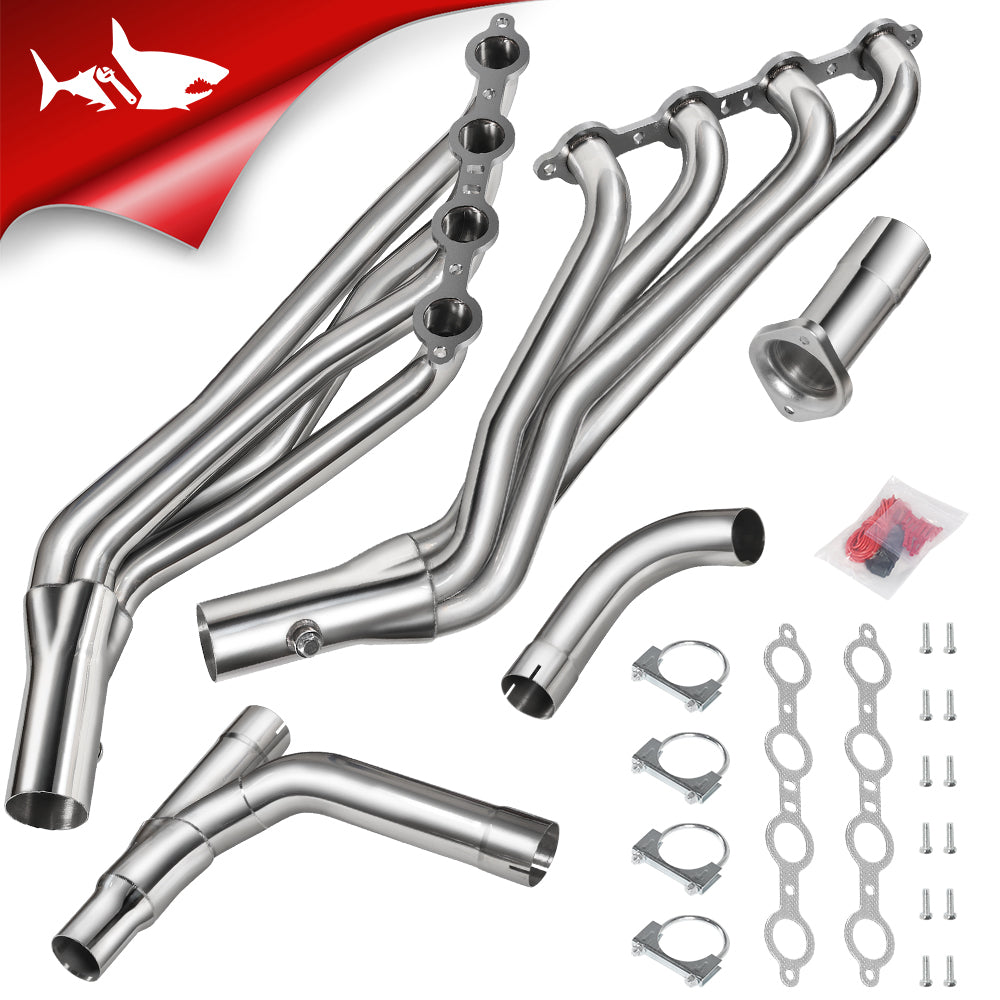
If you want more sound, choose a more aggressive catback. If you want less drone, choose a resonated system. If you want more performance later, pair the catback with headers, a high-flow catalytic converter where legal, intake upgrades, and a proper tune.
This approach keeps the car useful. It also leaves room to upgrade without creating unnecessary legal or drivability problems.
If you are shopping for a street-friendly upgrade, you can browse Flashark’s catback exhaust systems and compare fitment, pipe layout, material, and sound goals for your vehicle.
Final Verdict: Catback vs Straight Pipe
If your car is driven on public roads, choose a catback exhaust. It offers the best balance of sound, performance, legality, comfort, and long-term value.
A straight pipe is a specialized setup. It belongs on track cars, off-road builds, and vehicles that do not need to meet street-use emissions and noise requirements. It can sound wild and flow well, but it brings trade-offs that many daily drivers regret.
The smart answer is simple: match the exhaust to the car’s real job. If the car has to live on the street, a catback is usually the right call. If the car is built only for competition or off-road use, a straight pipe can make sense when the rest of the build supports it.
Frequently Asked Questions
Q1: What does straight pipe mean on a car?
A1: Straight pipe means the exhaust has been modified to remove major restrictions and sound-control parts, usually the muffler and resonator, and sometimes the catalytic converter. In a true straight pipe exhaust system, exhaust gases travel through a mostly open pipe with little or no sound dampening.
Q2: Is straight pipe illegal?
A2: A straight pipe can be illegal for street use if it removes or disables the catalytic converter or other required emissions equipment. In the United States, removing a catalytic converter from a street-driven vehicle can violate federal emissions law. Noise laws may also apply, even if the catalytic converter remains installed.
Q3: Does a catback exhaust add horsepower?
A3: Yes, but the gains are usually modest on a stock engine. A catback exhaust can reduce restriction behind the catalytic converter and improve exhaust flow. The exact horsepower gain depends on the vehicle, engine setup, pipe diameter, muffler design, and whether the ECU is tuned.
Q4: Which is louder, catback or straight pipe?
A4: A straight pipe is usually much louder than a catback. A catback gives a deeper and more aggressive sound while still using a muffler or resonator to control tone. A straight pipe removes most sound control, so it is louder, rawer, and more likely to drone.
Q5: Will a straight pipe damage my engine?
A5: A straight pipe does not automatically damage an engine, but it can create tuning and drivability issues. Removing too much restriction can affect torque, fuel trims, oxygen sensor readings, and turbo behavior on some vehicles. If emissions equipment is removed, the car may also trigger a check engine light.
Q6: What is the difference between axle-back and catback exhaust?
A6: An axle-back exhaust replaces the parts behind the rear axle, usually the muffler and tips. A catback exhaust replaces everything behind the catalytic converter, usually including the mid-pipe, resonator, muffler, and tips. A catback is a more complete upgrade than an axle-back.
Q7: Can a catback exhaust cause a check engine light?
A7: A properly installed catback exhaust usually should not cause a check engine light because it does not remove the catalytic converter or upstream oxygen sensors. However, poor installation, exhaust leaks, or disturbed sensor wiring can sometimes cause problems.
Q8: Does straight pipe improve fuel economy?
A8: Not in a meaningful way for most drivers. A straight pipe may reduce restriction, but real-world fuel economy depends more on tuning, driving style, engine load, gearing, and throttle use. Many drivers use more throttle after making the car louder, which can cancel out any small efficiency gain.
Q9: Is a catback exhaust worth it for a daily driver?
A9: Yes, for most enthusiast daily drivers, a catback exhaust is worth it. It improves sound, appearance, and exhaust flow while keeping the car more comfortable and street-friendly than a straight pipe.
Q10: What is a catback exhaust vs a full exhaust system?
A10: A catback exhaust starts after the catalytic converter. A full exhaust system may include headers, downpipe, catalytic converter or test pipe, mid-pipe, muffler, and tips. Full exhaust systems can offer more performance potential, but they cost more and may require tuning or emissions compliance checks.
Q11: How much does it cost to straight pipe a car?
A11: The cost to straight pipe a car depends on the vehicle, pipe layout, labor rate, and materials. It is often cheaper than a complete catback system up front, but legal issues, inspection failure, check engine lights, and resale problems can make it more expensive over time.
Q12: Can you straight pipe a turbocharged car?
A12: Yes, but it should be done carefully. Turbocharged cars can respond well to freer exhaust flow, but the turbo, downpipe, wastegate control, oxygen sensors, tune, and emissions equipment all matter. A proper turbo-back setup with tuning is very different from simply removing parts to make the car louder.
Q13: What is the best exhaust setup for a street car?
A13: For most street cars, the best exhaust setup is a quality catback system that keeps the catalytic converter, uses good materials, fits correctly, and controls drone. It gives a better driving experience without the biggest problems of a straight pipe.

Steven Chen
Automotive Performance Specialist | Engine & Exhaust Systems
Steven focuses on practical engine performance, exhaust fitment, and real-world upgrade paths for classic and modern enthusiast vehicles. He reviews small-block Ford, LS, truck, and street/strip applications with one goal in mind: helping builders choose parts that actually work together. His philosophy: "Good power starts with the right combination, not the biggest part."