When it comes to upgrading your car's exhaust system, two options keep coming up: catback exhausts and straight pipe setups. They look similar on paper—both replace stock components, both change how your car sounds—but they're built around completely different priorities. This article breaks down what each system actually does, where the real-world differences show up, and which one makes sense depending on how you use your car.
Quick Answer: Catback vs Straight Pipe
- Daily driver on public roads? Catback exhaust. It keeps the catalytic converter, passes emissions tests in most states, and gives you a noticeable sound upgrade without getting you ticketed.
- Track-only or off-road build? Straight pipe is worth considering—max flow, maximum sound, no restrictions. But confirm your local laws first.
- Budget under $300? Straight pipe setups are generally cheaper upfront, though the legal and resale trade-offs are real.
- Want the sound upgrade without neighbor complaints? Catback with a resonated mid-pipe. You get 5–10 dB over stock without crossing into "anti-social" territory.
- Expecting a big power number? Honest answer: neither will transform a stock engine. Catback gains are typically 5–15 hp; straight pipe can push 15–30 hp on a naturally aspirated motor, but real gains depend heavily on tuning and the rest of the build.
What Is a Catback Exhaust System?
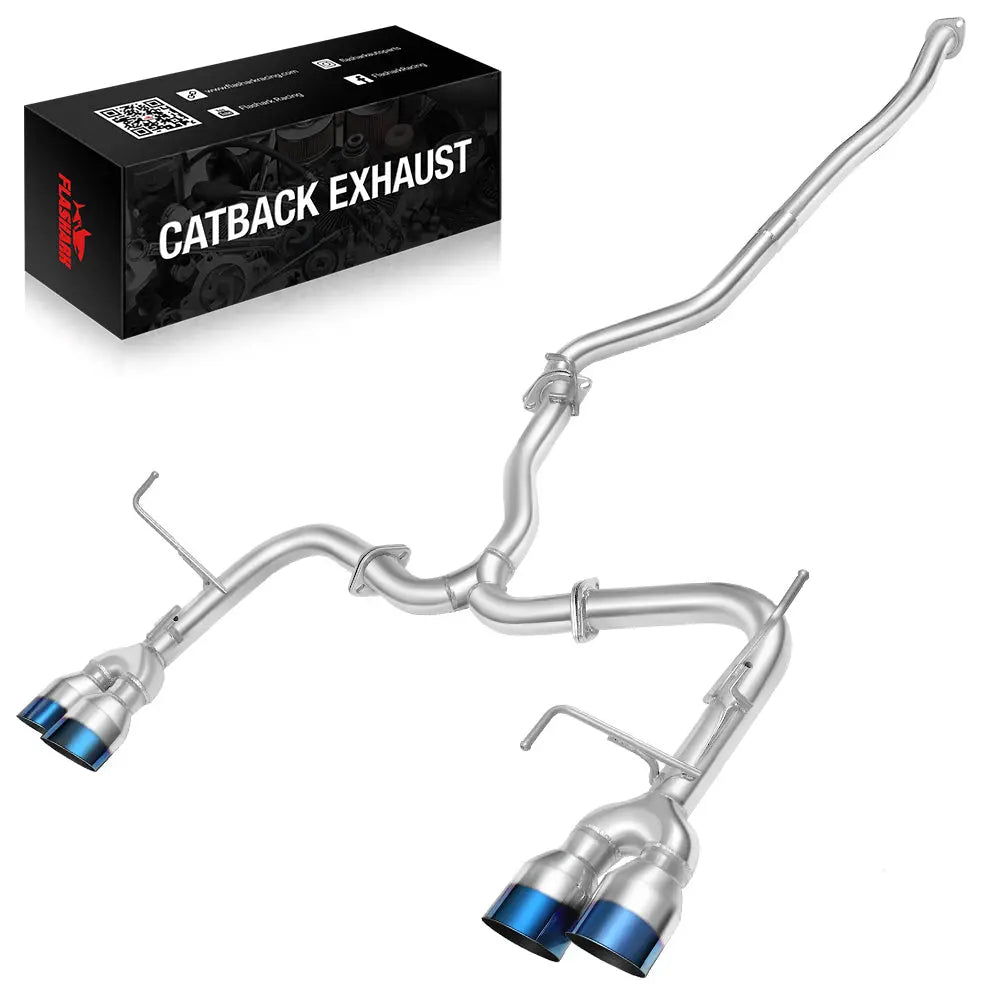
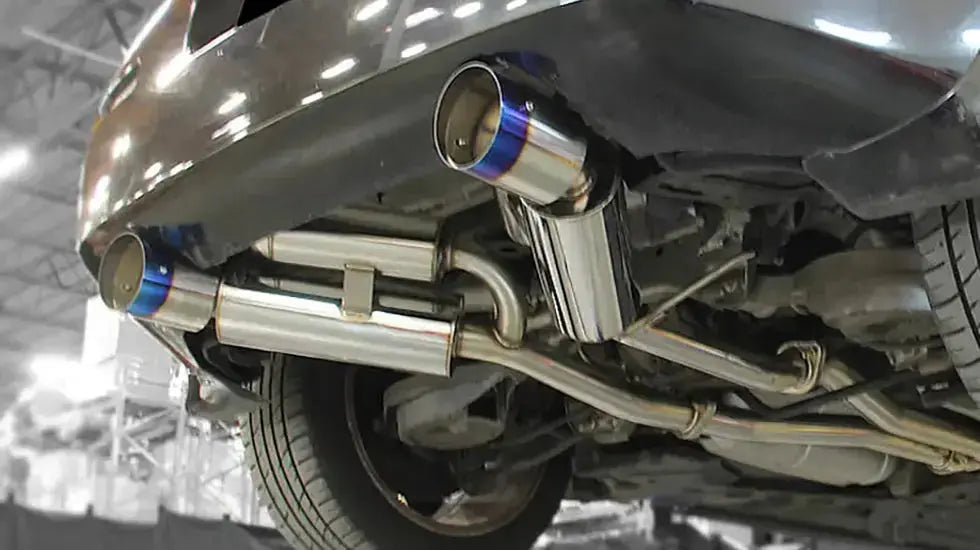
A catback exhaust replaces everything from the outlet of the catalytic converter back to the exhaust tips—mid-pipe, resonator (if equipped), muffler, and tips. The catalytic converter stays in place. That one detail is what keeps catback systems street-legal in most jurisdictions and why they're the default recommendation for anyone building a car they actually drive on public roads.

By replacing the restrictive stock piping and muffler with larger-diameter tubing and a free-flowing muffler, a catback reduces backpressure. Less backpressure means the engine expels exhaust gases more efficiently—which frees up a modest amount of power and changes the exhaust note in a way that most people find genuinely satisfying without being obnoxious.
Advantages of a Catback Exhaust System
Upgrading to a catback exhaust system is one of the more practical bolt-on modifications available. Here's what you actually get.
Improved Performance
Reducing backpressure lets the engine breathe more efficiently on the exhaust stroke. On most naturally aspirated street cars, expect somewhere in the 5–15 hp range depending on the engine, the specific system, and whether the ECU is retuned afterward. Turbocharged applications can see slightly different results since exhaust backpressure interacts with boost pressure in more complex ways. The gains are real—just don't expect them to feel dramatic without supporting mods.
Better Sound Quality
This is where most people actually feel the difference day-to-day. A well-designed catback produces a deeper, fuller tone compared to the flat, muted note of a stock system. Sound levels typically run 5–10 dB above stock—noticeable at idle, satisfying under hard acceleration, but not the kind of thing that rattles windows at a stoplight. The muffler and resonator work together to tune out the annoying mid-range drone that straight pipes often produce on highway cruising.
Legal Compliance
Because the catalytic converter stays, a catback system remains compliant with EPA and CARB emissions standards in most states. You can still pass smog checks, register the car without issues, and drive it anywhere without worrying about a fix-it ticket. For California residents specifically, look for CARB-exempt (EO number) catback systems—these are legally street-usable even under California's strict standards.
Durability
Most aftermarket catback systems use 304 or 409 stainless steel—significantly more corrosion-resistant than the mild steel in factory exhaust systems. Many come with lifetime warranties on the welds and tubing. If you're in a rust belt state, the upgrade in material quality alone is worth considering.
Disadvantages of a Catback Exhaust System
Higher Cost
A quality catback from a reputable brand runs $300–$1,500 depending on the application and materials. That's more upfront than a straight pipe setup. You're paying for engineered sound tuning, proper fitment, and materials that last—but the price is a real consideration if the budget is tight.
Noise Level
Louder than stock—that's the point. But some systems push sound levels higher than others, and resonance characteristics vary a lot by brand and car. If you share a driveway at 6 AM or live somewhere with strict noise ordinances, it's worth researching the specific decibel ratings for the system you're considering before buying.
Limited Performance Gains
A catback alone won't unlock dramatic power numbers. The catalytic converter and stock headers remain as restrictions upstream. If maximum performance is the goal, a catback is a starting point—not an endpoint. Pair it with a high-flow cat, headers, and a tune to actually move the needle.
What Is a Straight Pipe Exhaust System?
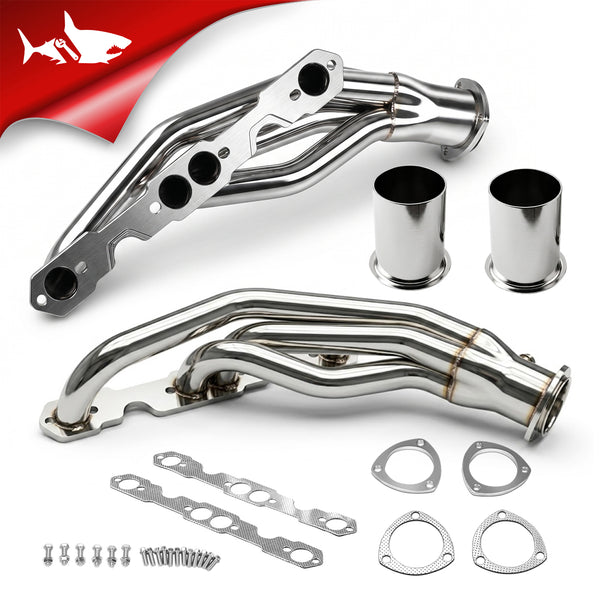
A straight pipe setup removes the muffler, resonator, and—in most configurations—the catalytic converter, replacing them with a single unobstructed pipe running from the manifold or downpipe to the exhaust tip. There's nothing dampening, filtering, or redirecting the flow. Exhaust gases go from the engine to the outside air as directly as physics allows.

It's the most common setup on purpose-built race cars and off-road vehicles where emissions compliance isn't a factor and weight savings matter. On the street, the trade-offs are significant—and in most U.S. states, removing the catalytic converter from a street-driven vehicle is a federal violation under the Clean Air Act.
Advantages of a Straight Pipe Exhaust System
Maximum Performance Gains
With every restriction removed, exhaust flow is as unrestricted as it can get. On naturally aspirated engines, straight pipe setups can yield 15–30 hp gains—more on high-revving engines where exhaust scavenging plays a larger role. On turbocharged cars, the results vary: some benefit significantly, others see minimal gains because the turbo itself acts as a flow restrictor regardless of what's downstream. A proper tune after the install matters more than the pipe alone.
Unique Sound Profile
Straight pipes are loud—typically 95–110 dB depending on the engine and pipe diameter, compared to 75–80 dB for a stock system. The sound is raw and unfiltered: you hear every combustion event without any dampening. For track days and dedicated builds, that's part of the experience. For daily use, it's exhausting in the literal sense—prolonged exposure to sounds above 85 dB causes hearing fatigue, and anything above 100 dB risks long-term hearing damage.
Affordability
Straight pipe parts are cheap. A mandrel-bent pipe, a few hangers, and some hardware can be put together for under $200 at most exhaust shops. The simplicity of the system keeps labor costs low too. If you're building a track car on a tight budget, this is where the value proposition is clearest.
Disadvantages of a Straight Pipe Exhaust System
Legal Issues
Removing a catalytic converter from a street-driven vehicle is a federal violation under the Clean Air Act—regardless of what state you're in. Fines start at $2,500 for individuals and go significantly higher. Many states layer additional emissions penalties on top of the federal baseline. If you're caught during a smog check, the car fails and you're required to restore the converter before the vehicle can be registered. This isn't a technicality—it's enforced, and the fines have increased substantially in recent years.
Mechanic's Note
A "straight pipe" that retains a high-flow catalytic converter occupies a gray area worth knowing about. It's not technically a straight pipe in the traditional sense, but this configuration—large-diameter tubing with a high-flow cat and no muffler—captures most of the sound and some of the performance gains while staying on the right side of emissions law. Worth considering if you want the aggressive tone without the legal exposure.
Excessive Noise
Sound levels above 95 dB sustained over a daily commute aren't just antisocial—they're hard on you physically. Highway drone from an unsilenced exhaust is a real issue that most people underestimate until they've lived with it for a week. Many straight-pipe owners eventually add a resonator back in just to make highway driving tolerable.
Possible Engine and Drivetrain Stress
Technical Clarification
Mufflers don't regulate exhaust flow—they dampen sound. The actual flow restriction comes from the catalytic converter and pipe diameter. On a straight pipe setup, the primary concern isn't heat from the muffler being removed; it's the change in exhaust backpressure affecting the engine's tuned power band. Most factory ECUs are calibrated around a specific backpressure range. Remove too much restriction without a corresponding tune, and you can actually move peak torque higher in the RPM range—sometimes resulting in a noticeable loss of low-end response. On forced-induction cars, drastically reducing backpressure can also affect turbo spool characteristics. The long-term risk isn't catastrophic failure from the pipe itself—it's running the engine in a state it wasn't calibrated for.
Impact on Resale Value
A straight pipe is a polarizing modification. Buyers who want a street car will usually require the cat to be restored before purchase—and they'll price that work into their offer. Track-focused buyers may not mind, but that's a narrower market. If you're planning to sell the car eventually, document everything and keep the factory components so you can restore it.
Catback vs Straight Pipe Exhaust: Key Differences
Here's how the two systems compare across the dimensions that matter most for the average enthusiast:
| Feature | Catback Exhaust | Straight Pipe |
|---|---|---|
| Estimated HP Gain | 5–15 hp (varies by engine) | 15–30 hp (NA motors, tuned) |
| Sound Level | ~85–92 dB (5–10 dB over stock) | ~95–110 dB (aggressive/raw) |
| Catalytic Converter | Retained ✅ | Removed ❌ |
| Street Legal (US) | Yes (most states) | No (federal CAA violation) |
| Emissions Compliant | Yes (CARB-exempt versions available) | No |
| Typical Price Range | $300–$1,500 | $100–$500 |
| Highway Drone | Minimal (resonator tuned) | Significant |
| Passes Smog Check | Yes | No |
| Resale Impact | Neutral to slight negative | Notably negative |
| Best Use Case | Street / daily driver | Track / off-road only |
Conclusion
If you drive the car on public roads, the catback is the right call. It gives you genuine performance gains, a sound upgrade that won't get you pulled over, and it keeps the car legal to register and smog-check. The higher upfront cost reflects what you're actually getting: a properly engineered system with real materials.
Straight pipe is a different tool for a different situation. Track builds, dedicated off-road rigs, and cars that never see a public road—that's the right context for it. Slapping a straight pipe on your daily driver for the sound is the kind of decision that makes sense for about two weeks until the highway drone starts getting old and you find out what a catalytic converter replacement costs when the inspector shows up.
Know what your car is for, and pick accordingly.
Frequently Asked Questions
Q1: What does straight pipe mean on a car?
A1: Straight pipe refers to an exhaust configuration where the stock muffler, resonator, and usually the catalytic converter are removed and replaced with a single straight pipe running from the engine's exhaust manifold (or turbo downpipe) to the tailpipe exit. There are no sound-dampening components and no emissions devices—exhaust gases exit the engine as directly as possible. The term is sometimes used loosely to describe any exhaust with the muffler removed, even if a cat is retained.
Q2: Is straight pipe illegal?
A2: In the United States, removing the catalytic converter from a street-driven vehicle violates the federal Clean Air Act. This applies in all 50 states—state emissions laws are on top of this baseline, not instead of it. Fines for individuals start at $2,500 per violation. On a track-only or off-road vehicle that's never titled for street use, the legal picture is different—but for any car you drive on public roads, removing the cat is a federal offense. Straight pipe setups that retain a high-flow catalytic converter occupy a more nuanced legal space and may be compliant depending on state law.
Q3: Does a catback exhaust add horsepower?
A3: Yes, but the numbers are modest on a stock engine. Most naturally aspirated cars see 5–15 hp from a catback alone—the actual figure depends on the engine displacement, how restrictive the factory system was, and whether the ECU is retuned after the install. Turbocharged applications vary. A catback becomes more effective as part of a broader build (headers, high-flow cat, tune) rather than as a standalone power mod.
Q4: Which is louder—catback or straight pipe?
A4: Straight pipe is significantly louder. A catback typically runs 5–10 dB above a stock system—roughly 85–92 dB at the tailpipe depending on the system. A straight pipe setup without a muffler or resonator commonly measures 95–110 dB. For reference, 85 dB is about the level of heavy city traffic; 100 dB is comparable to a chainsaw running at close range. The difference in perceived loudness is substantial—every 10 dB increase is roughly double the perceived volume.
Q5: Will a straight pipe damage my engine?
A5: Not directly, but running an untuned straight pipe on a street car creates real risks. Factory ECUs are calibrated around a specific exhaust backpressure range. Dramatically reducing backpressure without a corresponding tune can shift the torque curve, reduce low-end response, and in some forced-induction applications affect turbo spool. The engine won't blow up from the pipe itself, but running it in a state significantly outside its calibrated parameters over an extended period isn't ideal. A proper tune after the install mitigates most of these concerns.
Q6: What is the difference between axle-back and catback exhaust?
A6: An axle-back system replaces only the components rearward of the rear axle—typically just the muffler and tips. A catback replaces everything from the catalytic converter back, which includes the mid-pipe, resonator, muffler, and tips. Axle-back systems are cheaper and easier to install but produce less sound and performance change. Catback systems are the more comprehensive upgrade. Neither removes the catalytic converter.
Q7: Can a catback exhaust cause a check engine light?
A7: A catback exhaust by itself should not trigger a check engine light since it doesn't affect the catalytic converter or upstream oxygen sensors. However, if the installation disturbs any sensor wiring, or if the system uses a design that changes the exhaust velocity past the O2 sensors, some vehicles can throw codes. This is uncommon with properly designed catback systems but not unheard of. Straight pipe setups that remove the catalytic converter will almost always trigger a P0420 or similar code related to catalyst efficiency.
Q8: Does straight pipe improve fuel economy?
A8: Marginally, in some circumstances. Less backpressure means the engine expends slightly less energy pushing exhaust gases out—which can theoretically translate to a small efficiency gain at certain RPM ranges. In practice, most owners don't see measurable fuel economy improvements from a straight pipe, and aggressive driving behavior triggered by the louder exhaust note often negates any gain. Fuel economy is not a strong argument for either exhaust modification.
Q9: Is catback exhaust worth it for a daily driver?
A9: For most daily drivers, yes—with reasonable expectations. You get a genuine sound upgrade, modest performance improvement, and a system built from better materials than the factory unit. Where it makes less sense is on a high-mileage commuter car with a tight budget, or in cities with strict noise ordinances where even a mild catback might attract attention. The sweet spot is an enthusiast-owned car that gets driven hard occasionally but also needs to pass smog and stay registration-legal.
Q10: What is a catback exhaust vs a full exhaust system?
A10: A catback system starts at the catalytic converter outlet and goes back. A full exhaust system (sometimes called a "turbo-back" on forced-induction cars, or a "header-back" on naturally aspirated builds) replaces the entire exhaust path from the exhaust manifold or turbo outlet all the way to the tips—including the headers/downpipe and the catalytic converter (or a test pipe in race applications). Full systems offer larger performance gains but also cost significantly more and usually require professional installation and an ECU tune to work properly.
Q11: How much does it cost to straight pipe a car?
A11: Parts and labor for a straight pipe setup typically run $200–$600 at an independent exhaust shop, depending on the vehicle and your geographic area. The pipe itself is inexpensive; the cost variable is labor time. This is considerably cheaper than a quality catback system—but the legal exposure, potential smog check failure, and resale impact are costs that don't show up on the invoice.
Q12: Can you straight pipe a turbocharged car?
A12: Yes, and it's actually more common on turbocharged builds than on naturally aspirated cars—particularly in track and time-attack applications where the car runs a turbo-back exhaust with a downpipe, high-flow or test pipe, and no muffler. The performance math on turbocharged cars is more complicated because the turbo itself is a significant flow restrictor regardless of what's downstream. On a high-boost, high-compression build with aggressive cams, removing backpressure entirely can actually cause some turbos to spool inconsistently. The right answer depends on the specific turbo, boost levels, and supporting mods—generalizing is difficult.