
Welcome to Flashark, your go-to source for automotive performance upgrades and enhancements! In this blog post, we'll delve into the exciting world of 5.3 Silverado long tube headers and their benefits for your 5.3 Silverado. If you're looking to optimize your truck's performance and unleash its true potential, upgrading to long tube headers is a great choice. We'll explore what long tube headers are, their advantages, and provide a comprehensive list of the best headers available for your 5.3 Silverado. Let's dive in and discover how these headers can transform your driving experience!
Executive Summary: What Are the Best Long Tube Headers for 5.3 Silverado?
For truck owners looking to upgrade, the "best" choice depends heavily on your vehicle's generation and your specific performance goals:
- For 1999–2006 (GMT800) Models: 1-5/8" to 1-3/4" primary tubes are generally ideal, yielding an estimated 15 to 20 WHP gain when paired with a free-flowing exhaust and proper tune.
- For 2007–2014 (GMT900) Models: Systems optimized for Active Fuel Management (AFM) engines can deliver enhanced low-end torque, typically showing peak gains of 18 to 25 WHP under load.
- Material Matters: Regardless of the year, TIG-welded 304 or high-grade stainless steel is strongly recommended over mild steel to withstand extreme exhaust gas temperatures (EGTs) without cracking or rusting.
What are Long Tube Headers?
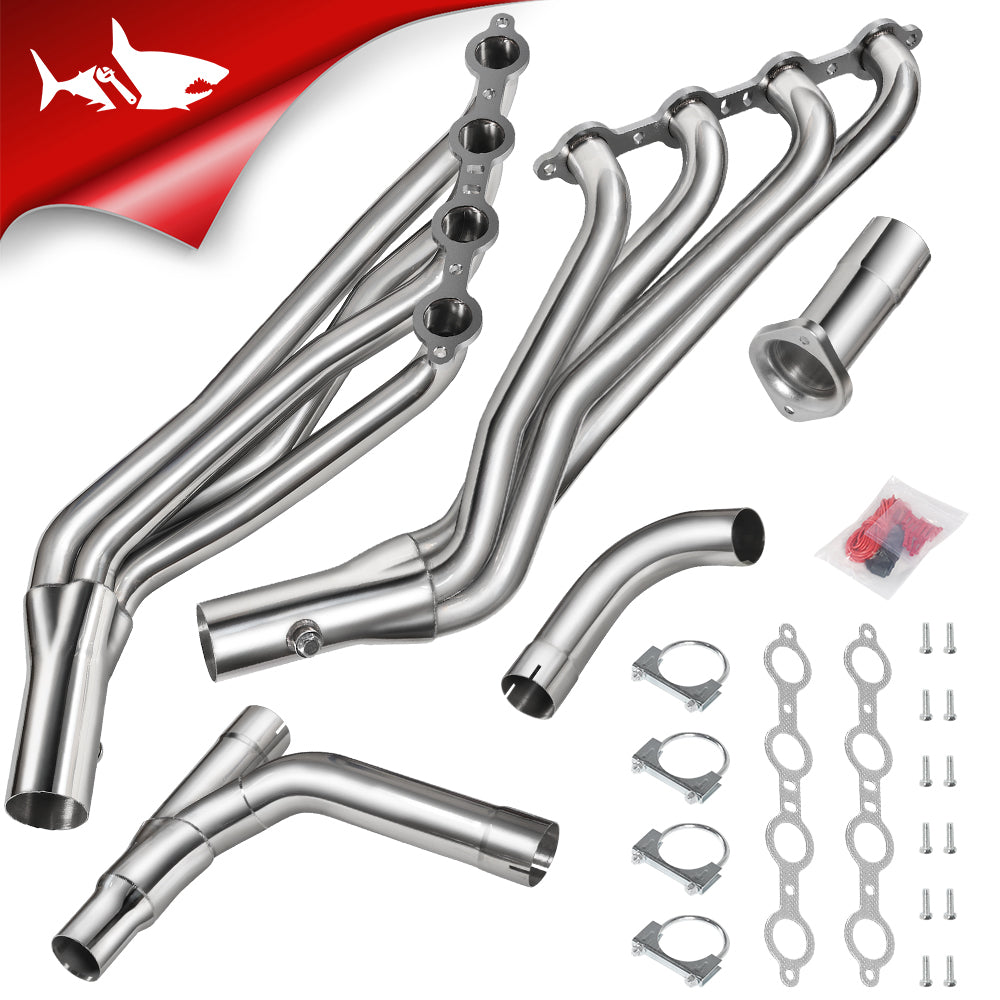
Long tube headers are aftermarket performance components designed to replace the factory exhaust manifolds in your vehicle's engine. They are made of individual primary tubes that merge into a collector, creating a smoother and more efficient path for exhaust gases to exit the engine. Unlike factory manifolds, which often prioritize cost and ease of installation over performance, long tube headers are engineered to optimize exhaust flow and enhance engine performance.
Anatomy of Long Tube Headers
Long tube headers consist of individual primary tubes that are longer in length compared to stock exhaust manifolds. These tubes are precisely engineered to be equal in length, allowing the exhaust pulses from each cylinder to merge at the collector in a timed manner. The collector then funnels the exhaust gases into a single exhaust pipe, leading to improved flow and reduced backpressure.
How Long Tube Headers Work
Long tube headers work by improving the scavenging effect in your engine's exhaust system. The equal-length primary tubes help maintain exhaust gas velocity, which enhances the extraction of spent gases from the combustion chambers. This scavenging effect creates a more efficient combustion process, resulting in increased horsepower, torque, and overall engine performance.

Benefits and Disadvantages of Long Tube Headers
Before making any modifications to your vehicle, it's essential to consider the Benefits and Disadvantages. Let's explore both sides of the coin when it comes to Silverado long tube headers:
Benefits of Long Tube Headers
Upgrading to long tube headers offers a range of benefits for your 5.3 Silverado. Let's explore some of the key advantages:
Increased Horsepower and Torque - Long tube headers improve exhaust flow, allowing the engine to expel spent gases more efficiently. This reduction in backpressure leads to increased horsepower and torque, providing a noticeable boost in performance. Your 5.3 Silverado will experience improved acceleration and towing capabilities, making it more capable on and off the road.
👨🔧 15-Year Mechanic Insight: The "Broken Bolt" Silver Lining
Over the past 15 years in the performance shop, I can't tell you how many 5.3L Vortecs I've seen on the lift with snapped factory exhaust manifold bolts—especially on the rear cylinders. It causes that annoying ticking sound on startup. Instead of paying heavy shop labor just to drill out broken studs and slap a restrictive cast iron manifold back on, many of my customers use this exact failure as the perfect excuse to upgrade. Bolting on a set of Flashark long tube headers not only fixes the dreaded exhaust leak but gives the truck the deep, raspy LS rumble it deserves.
Improved Exhaust Flow - By optimizing exhaust flow, long tube headers reduce restrictions in the exhaust system. This enhanced flow allows the engine to breathe easier, resulting in improved overall efficiency. Additionally, better exhaust flow can lead to a more responsive throttle and smoother power delivery.
Enhanced Engine Efficiency - With improved scavenging and reduced backpressure, long tube headers can enhance engine efficiency. By effectively evacuating exhaust gases, the headers help minimize the mixing of spent and fresh air/fuel mixture, resulting in improved fuel combustion. This increased efficiency can potentially lead to better fuel economy, though individual results may vary.
Aggressive Sound and Exhilarating Exhaust Note - Long tube headers can give your 5.3 Silverado a more aggressive and deep exhaust tone. The improved flow and reduced restrictions result in a more pronounced exhaust note, giving your truck a commanding presence on the road.
Potential Fuel Economy Improvements - While the primary goal of long tube headers is to improve performance, some users have reported modest fuel economy gains after installation. The improved engine efficiency and reduced backpressure can contribute to better fuel combustion, potentially resulting in improved mileage.
Disadvantages of Long Tube Headers
While long tube headers offer notable performance benefits, there are some drawbacks to consider before upgrading. Here's a closer look at the potential downsides:
Increased Cost - Long tube headers are generally more expensive than stock exhaust manifolds or shorty headers. This higher cost includes the parts themselves and, often, the need for additional components like gaskets, clamps, or custom exhaust fittings. For budget-conscious enthusiasts, this can be a significant factor.
⚠️ Shop Warning: Installation Reality Check
Don't expect a quick 30-minute driveway job. Just last month, we had a 2010 5.3L Silverado in the bay for a header swap. Because long tubes push the collector much further down the chassis, the factory oxygen sensors won't reach. We had to use O2 sensor extensions (make sure you order these!). We also had to unbolt the steering shaft to get enough clearance to slide the driver-side header in from the bottom. It's a tight squeeze, so give yourself a full weekend or budget for professional installation.
Complex Installation - Installing long tube headers is not a simple bolt-on process. The installation often requires professional expertise due to the need for precise fitting, cutting, or welding. In some cases, engine bay components must be adjusted or relocated, adding to the complexity and labor costs.
Warranty Concerns - Modifications involving long tube headers can potentially void the factory warranty on your vehicle. Many manufacturers and dealerships may view this upgrade as a significant alteration to the exhaust system, so it’s essential to confirm warranty policies before proceeding.
Increased Noise Levels - While the aggressive exhaust note is a selling point for some, it might not appeal to all drivers. Long tube headers can make your vehicle noticeably louder, which could be an issue in residential areas or for those who prefer a quieter ride.
Potential Legal and Emission Issues - In some regions, the installation of long tube headers may violate local emissions regulations, especially if they eliminate or bypass catalytic converters. Always check the legal requirements in your area to avoid fines or failed inspections.

What Are the Best Long Tube Headers for 5.3 Silverado?
Looking to upgrade your 1999–2006 5.3 Silverado or 2007–2014 5.3 Silverado? Flashark long tube headers are a top choice for boosting horsepower, improving exhaust flow, and delivering that aggressive, race-inspired sound. Built from high-quality stainless steel and engineered for performance, they’re a perfect fit for 2WD models in both generations.
Material Matters: Why 304 Stainless Steel is Non-Negotiable
When you're pushing exhaust gases out of a 5.3L Vortec at wide-open throttle, the exhaust gas temperatures (EGTs) can easily exceed 1,200°F. The extreme thermal cycling is brutal on exhaust components. Here is a mechanic's cheat sheet on why your material choice is the absolute biggest factor in header longevity:
| Header Material | Heat & Stress Handling | Corrosion Resistance | Mechanic's Verdict |
|---|---|---|---|
| ❌ Mild Steel (Budget Trap) | Poor. Expands/contracts unpredictably; welds crack easily under V8 heat. | Terrible. Will rot through quickly with road moisture or salt. | Avoid. You'll end up paying for the grueling installation labor twice. |
| ⚠️ 409 Stainless Steel | Adequate for daily driving, but prone to warping under extreme EGTs. | Decent structurally, but high iron content causes ugly surface rust. | Functional, but turns rusty brown. Not for clean engine bays. |
| ✅ 304 Stainless + TIG Welded (The Flashark Standard) |
Exceptional. Deep TIG welds handle brutal thermal cycling without cracking. | Superior. Resists rust and maintains a raw, aggressive metallic finish. | The Winner. Buy it once, install it once. Zero exhaust leaks. |
Flashark Core Features at a Glance:
- MATERIAL DURABILITY: The exhaust header is made of high-quality stainless steel, which provides excellent durability and corrosion resistance for long time use in various road conditions.
- DESIGN OPTIMIZED: The exhaust header is precisely designed to maximize exhaust flow and performance. Optimized pipe diameters and lengths help improve exhaust emissions and provide higher horsepower and torque output.
- PERFECT FIT: Designed for specific models, this exhaust header is compatible with the stock exhaust system and provides a perfect fit. The installation process is simple and straightforward, with no modifications or cutouts required.
- COMPATIBLE: Fits Chevy/GMC GMT800 Silverado/Sierra/Avalanche 1500 2WD models and is compatible with vehicles with 4.8L, 5.3L and 6.0L engines.
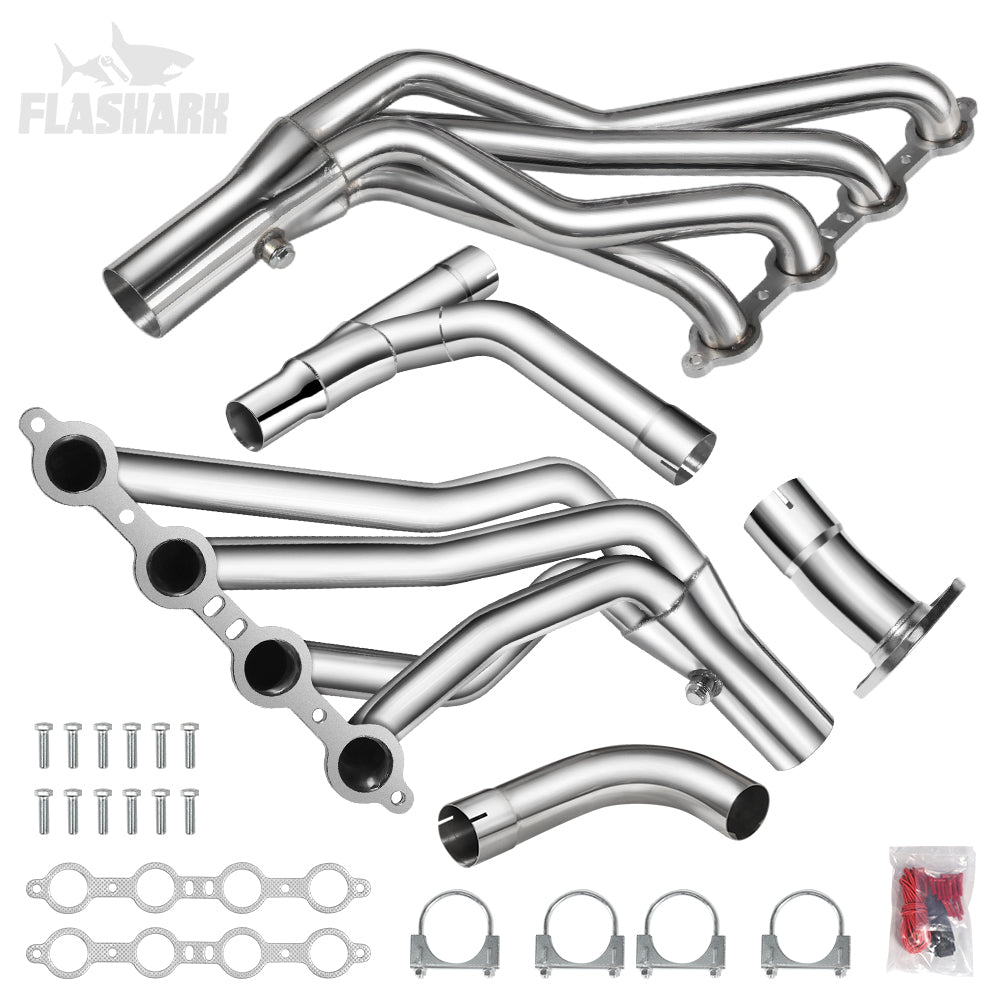
Long Tube Headers 4.8L 5.3L 6.0L for 1999-2006 Chevy/GMC GMT800 Silverado/Sierra/Avalanche 1500 Y-Pipe 2WD
Boost horsepower and sound on your 1999–2006 5.3L Silverado with FLASHARK long tube headers. Built from stainless steel, TIG-welded, and designed for max exhaust flow in 2WD models.
Price: $269.99
Buy Now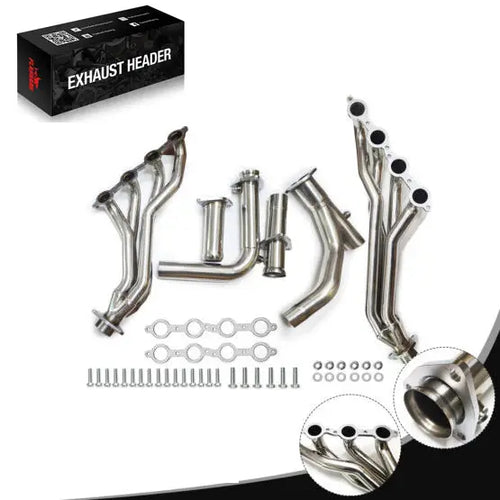
Exhaust Header for 2007-2014 Silverado Suburban Sierra 4.8L 5.3L 6.0L 6.2L 2WD
FLASHARK exhaust headers enhance power, torque, and sound for 2007-2014 Chevy Silverado, GMC Sierra, and SUVs with 4.8L-6.2L engines.
Price: $319
Buy NowReady to Wake Up Your 5.3L LS Engine?
Upgrading to long tube exhaust headers is a fantastic way to unlock the true potential of your 5.3 Silverado. With increased horsepower, torque, improved engine efficiency, and an aggressive exhaust note, these headers can transform your driving experience. Consider the pros and cons, select the best headers for your needs, and consult with professionals for installation and tuning. Flashark is here to provide you with expert advice and recommendations for all your automotive performance upgrades. Upgrade your 5.3 Silverado with confidence and enjoy the exhilaration of enhanced performance!
Frequently Asked Questions: Upgrading Your 5.3L Silverado Exhaust
Q1: What are the benefits of long tube headers for a 5.3 Silverado?
A1: Long tube headers improve exhaust flow on a 5.3 Silverado, which helps increase horsepower and torque, reduce backpressure, improve throttle response, and deliver a more aggressive exhaust sound compared to stock exhaust manifolds.
Q2: Are long tube headers compatible with all 5.3 Silverado models?
A2: Not all models are compatible. Most long tube headers, including Flashark headers, are designed specifically for certain year ranges and drivetrain setups, such as 1999–2006 and 2007–2014 2WD 5.3 Silverado models. Always verify year, engine, and drivetrain fitment before purchase.
Q3: Will long tube headers improve towing performance?
A3: Yes. By increasing torque and improving exhaust scavenging, long tube headers can enhance low- and mid-range power, which is beneficial for towing and hauling with a 5.3 Silverado.
Q4: Do I need a tune after installing long tube headers on a 5.3 Silverado?
A4: A tune is strongly recommended. While the truck may run without one, proper tuning maximizes performance gains, improves drivability, and helps prevent issues such as check engine lights or incorrect air-fuel ratios.
Q5: Are Flashark long tube headers made from stainless steel?
A5: Yes. Flashark long tube headers are constructed from high-quality stainless steel, offering excellent corrosion resistance, durability, and long-term performance under high exhaust temperatures.
Q6: Will long tube headers make my 5.3 Silverado louder?
A6: Yes. Long tube headers significantly increase exhaust volume and create a deeper, more aggressive sound. The final noise level will also depend on your exhaust system, muffler choice, and catalytic converter setup.
Q7: Is installation of long tube headers difficult?
A7: Installation can be complex and is more involved than replacing stock manifolds. It often requires professional installation due to tight engine bay clearances and the need for proper alignment and sealing.
Q8: Do long tube headers affect emissions compliance?
A8: They can. In some regions, long tube headers may not be emissions-legal, especially if catalytic converters are removed or relocated. Always check local emissions laws before installing long tube headers on your Silverado.
Q9: Can long tube headers improve fuel economy?
A9: In some cases, slight fuel economy improvements are possible due to better exhaust flow and engine efficiency. However, gains vary depending on driving habits and supporting modifications.
Q10: What engines are compatible with Flashark long tube headers for Silverado?
A10: Flashark long tube headers are compatible with Chevy and GMC trucks equipped with 4.8L, 5.3L, 6.0L, and select 6.2L engines, depending on the model year and specific header design.
Q11: Will I need O2 sensor extensions to install long tube headers on my 5.3 Silverado?
A11: Almost always, yes. Because long tube headers move the collector flange further downstream toward the rear of the vehicle, your factory oxygen sensor wiring harnesses will likely be too short to reach the new sensor bungs. Using plug-and-play O2 sensor extensions is the safest and easiest way to solve this during installation.