
Search By Year,Make and Model

The Mechanic's Hook: Why You're Actually Here
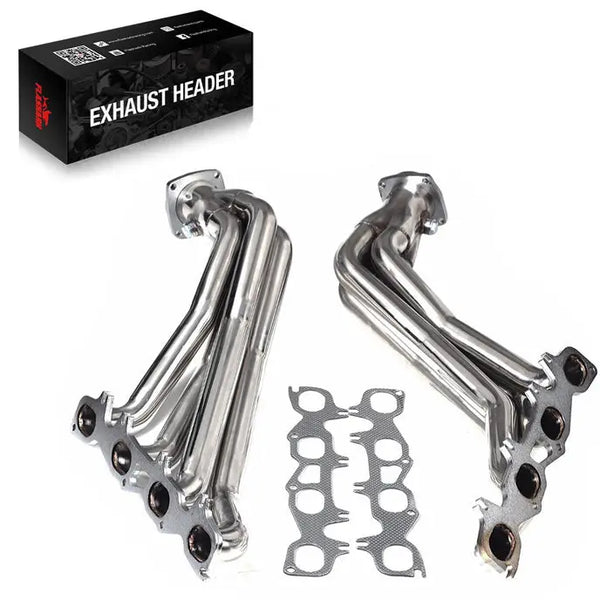
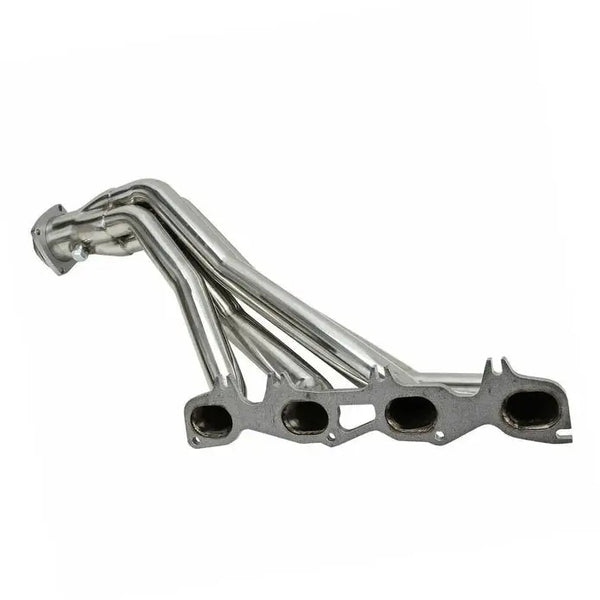
Let's talk about the elephant in the engine bay. Dodge builds killer V8s. Period. But those factory cast-iron exhaust manifolds? Absolute garbage. They are restrictive, heavy, and if you own a 5.7L or 6.4L Hemi, you are probably already intimately familiar with the dreaded "Hemi tick". It's not a matter of if they will fail, but when. You aren't just looking for parts to make your rig loud. You are looking for a permanent fix to a massive factory engineering flaw. Listen, ditching those logs for a proper set of Dodge headers is the single most effective way to let that Mopar block breathe, scavenge exhaust gases properly, and stop snapping bolts.
Bottom Line Up Front (BLUF)
- The Permanent Fix: Upgrading to aftermarket stainless headers with thick CNC flanges is the only proven way to cure the warped manifold "Hemi Tick" permanently.
- If you daily drive/tow: Shorty headers are your best bet. They retain factory cats, bolt right up, and optimize low-end torque without throwing a CEL.
- If you chase high-RPM horsepower: Long tube headers are mandatory. Expect 15-25whp gains on a dyno, but only if paired with a custom tune and matching mid-pipes.
- Material matters: Don't buy cheap mild steel. Stick to Flashark's T304 or 409 stainless steel to survive exhaust gas temperatures without warping.
Curing the "Hemi Tick": Why Your Dodge Deserves Stainless Headers
This isn't about slapping shiny pipes on your truck. It is about physics. The factory manifolds endure brutal heat cycles. They heat up, expand, cool down, and contract. Over time, that cheap cast iron warps. When it warps, it pulls away from the cylinder head. The resulting stress shears the rear manifold bolts right off. Suddenly, your truck sounds like a tractor on cold starts.
The Flashark Craftsmanship Code
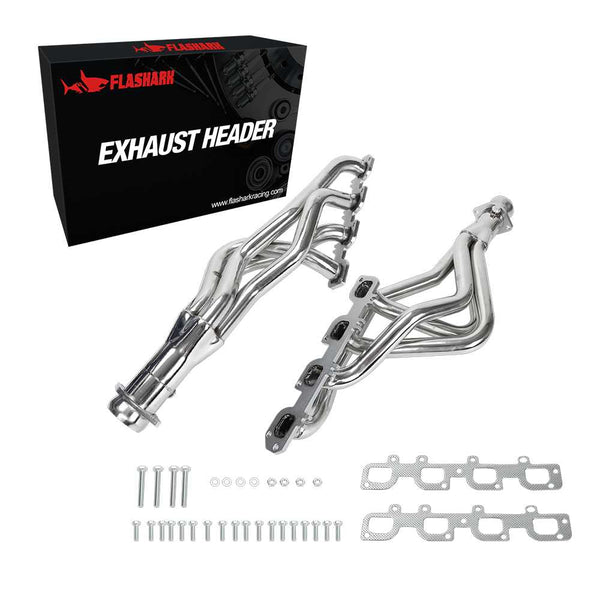
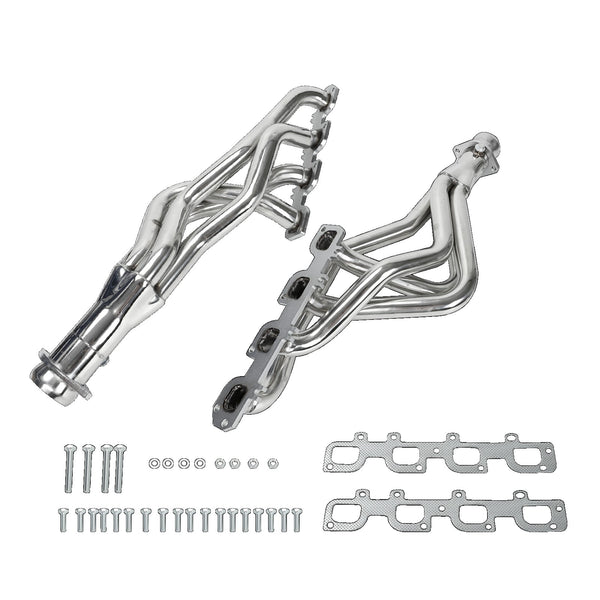
You fix this by over-engineering the replacement. Flashark doesn't mess around with thin tubing or mild steel that rusts out after one salty winter. We use heavy-duty T304 and 409 stainless steel. Why? Because it resists thermal distortion. More importantly, we use thick, CNC-machined flanges. A thick flange physically resists the warping forces that snap bolts. Add in precision TIG-welded seams, and you get an exhaust header that survives the abuse of a towing up a grade in the middle of July.
The Showdown: Shorty vs. Long Tube Headers
Don't buy parts based on forum hype. Buy based on how you actually drive.
| Spec / Feature | Shorty Headers | Long Tube Headers |
|---|---|---|
| Primary Focus | Low to mid-range torque. | Peak high-RPM horsepower. |
| Installation | Direct bolt-on replacement. | Requires custom mid-pipes/welding. |
| Emissions/Cats | Retains factory catalytic converters. | Usually deletes or relocates cats. |
| Dyno Gains (Avg) | 5-10 whp (big torque bump). | 15-25 whp (needs tune). |
Shorty Headers: The Low-End Torque & Compliance Kings
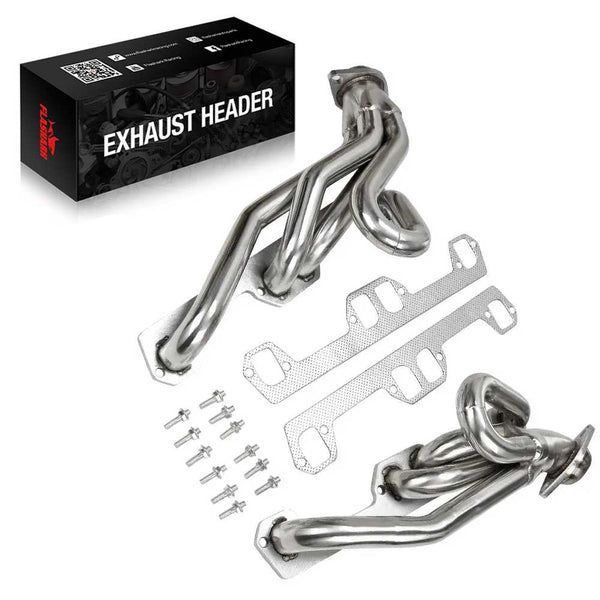
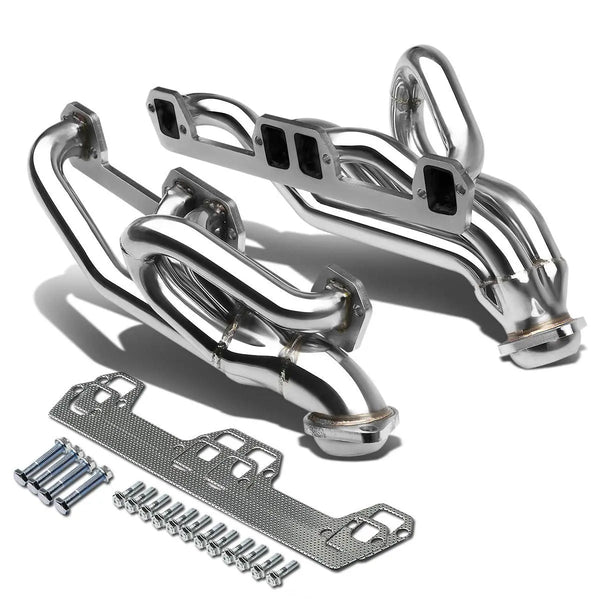
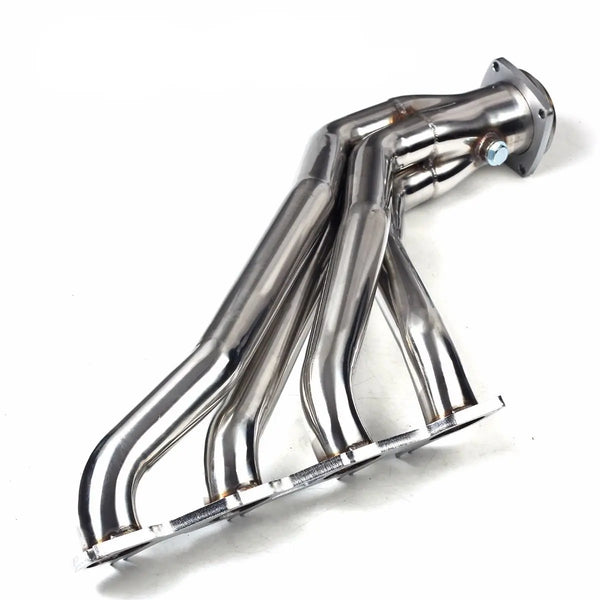
If you use your Ram to haul lumber, or your Charger is a daily driver in stop-and-go traffic, get shorties. They are a direct bolt-on affair. You keep your factory catalytic converters right where they belong. The shorter primary tubes are engineered to scavenge exhaust pulses at lower RPMs, giving you a noticeable shove in the back right off the line. It's the headache-free upgrade.
Long Tube Headers: Chasing the High-RPM Limit
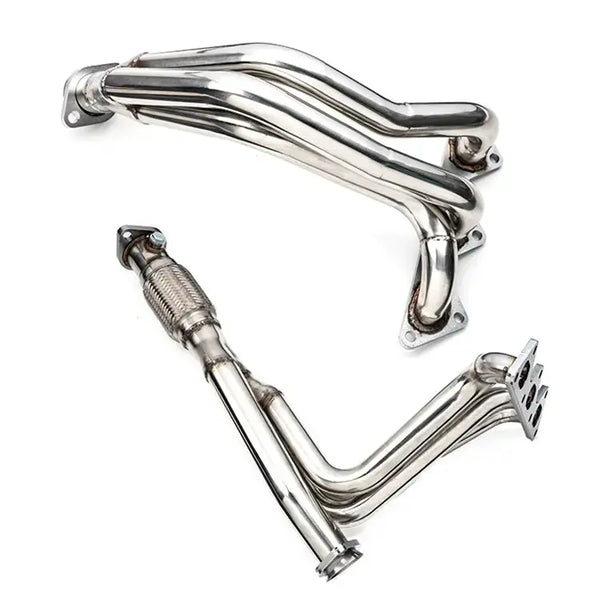
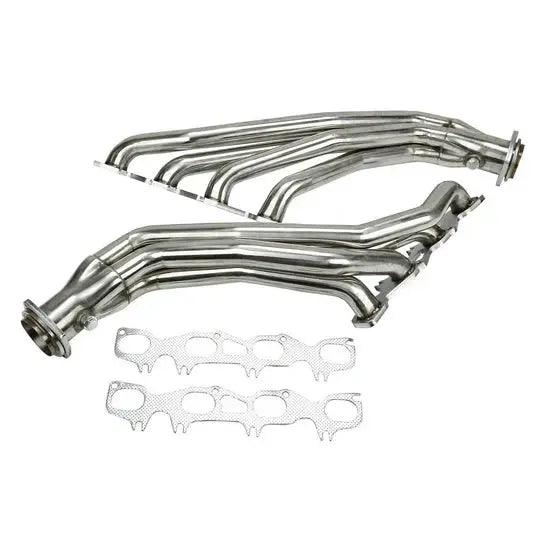
Building a track weapon? Long tube headers are the only answer. By extending the primary tubes, you optimize exhaust scavenging at the top of the rev range. When you ring out that Hemi past 4,500 RPM, long tubes pull exhaust out of the cylinders faster than the engine can push it. On a dyno, a 5.7L Hemi with long tubes, an intake, and a proper tune will easily put down an extra 15-25whp. But remember, this isn't a weekend driveway job for a beginner.
Beyond the Dyno: The Hidden Upgrades of Tubular Headers
Listen, everyone fixates on the peak horsepower numbers. But honestly? The real magic of ditching those factory cast-iron logs happens before you ever hit the redline. It’s about engine efficiency and survival under load.
- Killing Heat Soak (Thermal Management): Cast iron manifolds act like a pizza oven bolted to your engine block. They hold onto heat, baking your engine bay. Tubular stainless steel dissipates that heat significantly faster. Lower under-hood temperatures mean cooler Intake Air Temps (IATs). When your IATs stay low, your ECU doesn't pull timing to save the engine, meaning you keep your power on long, grueling drives.
- Snappier Throttle Response: Imagine trying to sprint while breathing through a straw. That’s your Hemi on stock manifolds. Flashark headers dramatically improve volumetric efficiency by letting the engine exhale without fighting backpressure. The result? The second you roll onto the throttle, the engine revs cleaner and responds noticeably faster.
- Shedding Dead Weight: Factory cast iron is ridiculously heavy. Unbolting those thick, clunky chunks of metal and replacing them with our mandrel-bent stainless headers actually shaves dead weight off the front axle. It’s a subtle difference, but every pound counts when you are optimizing a build.
Unlocking Potential: Fitment for Mainstream Dodge / Ram Platforms
Not all Hemis react the same way to exhaust mods. Let's break down the reality for the blocks you are actually running.
5.7L Hemi (Ram 1500 / Charger / Challenger)
This is the bread and butter. The 5.7 responds incredibly well to better airflow. Because the factory manifolds are so restrictive, a set of Flashark shorty headers provides the absolute best bang-for-the-buck here. You fix the ticking flaw, you get a deeper, throatier growl on cold starts, and you gain usable street torque without touching the ECU.
6.4L 392 & 6.1L SRT8
These big displacement blocks are severely choked from the factory. If you own a 392, you already have decent factory tubular manifolds, but they are still pinched for packaging reasons. To actually wake up a 6.4L, you need to step up to long tube headers. You are moving a massive volume of air; don't bottleneck it right at the exhaust port.
The Pitfalls: Emissions, Catalytic Converters, and the Check Engine Light
This is where guys get themselves into trouble. Exhaust gas oxygen (O2) sensors are notoriously sensitive on modern Mopars.
From the Bay: Dodge Headers FAQ
Q1: Do Dodge Ram 1500 headers really add horsepower?
A1: Yes, but the style dictates where you feel it. Long tubes paired with a custom tune can yield 15-25 rwhp at the top end, while shorty headers primarily bulk up your mid-range torque curve for better towing.
Q2: Will aftermarket headers fix the Hemi tick permanently?
A2: Absolutely. Upgrading to Flashark stainless steel with thicker CNC flanges physically prevents the heat-warping that snaps your factory manifold bolts in the first place.
Q3: Do I need a tune after installing headers on my 5.7 Hemi?
A3: Not for direct-replacement shorties. However, if you bolt on long tubes, a tune is absolutely mandatory to correct the air/fuel ratio and prevent engine damage running lean.
Q4: Will installing Flashark headers trigger a Check Engine Light (CEL)?
A4: Our shorty headers that utilize your factory catalytic converters and stock O2 sensor locations will not trigger a CEL. Going catless with long tubes definitely will.
Q5: Are shorty headers or long tube headers better for a daily driver?
A5: Shorty headers, hands down. You get better low-end grunt for stop-and-go traffic, a much easier install, and zero emissions or inspection headaches.
Q6: How much does a shop usually charge to install Dodge headers?
A6: Depending on how many factory bolts are already snapped and need drilling/extracting, expect to pay for anywhere from 4 to 8 hours of labor at your local shop rate.
Q7: Do your Dodge headers come with new gaskets and bolts?
A7: Yes. All Flashark header kits include upgraded high-temp gaskets and the necessary mounting hardware to get the job done right.
Q8: Are these headers CARB legal in California?
A8: It varies by the specific part number and design. Aggressive long tube setups that remove factory cats are strictly for off-road or track use only.
Q9: What does the "size" spec mean when choosing headers?
A9: This is a common mix-up. In our spec tables, size refers exclusively to the primary pipe diameter (like 1-5/8" or 1-3/4"), not your engine's displacement.
Q10: Do headers make the Dodge exhaust sound louder?
A10: Definitely. The exhaust note becomes significantly sharper, deeper, and noticeably more aggressive, especially on cold starts under load.