





Product Details
Fitment
FAQ
Shipping & Returns
2015–2018 Ford Mustang EcoBoost 2.3L Cold Air Intake Kit
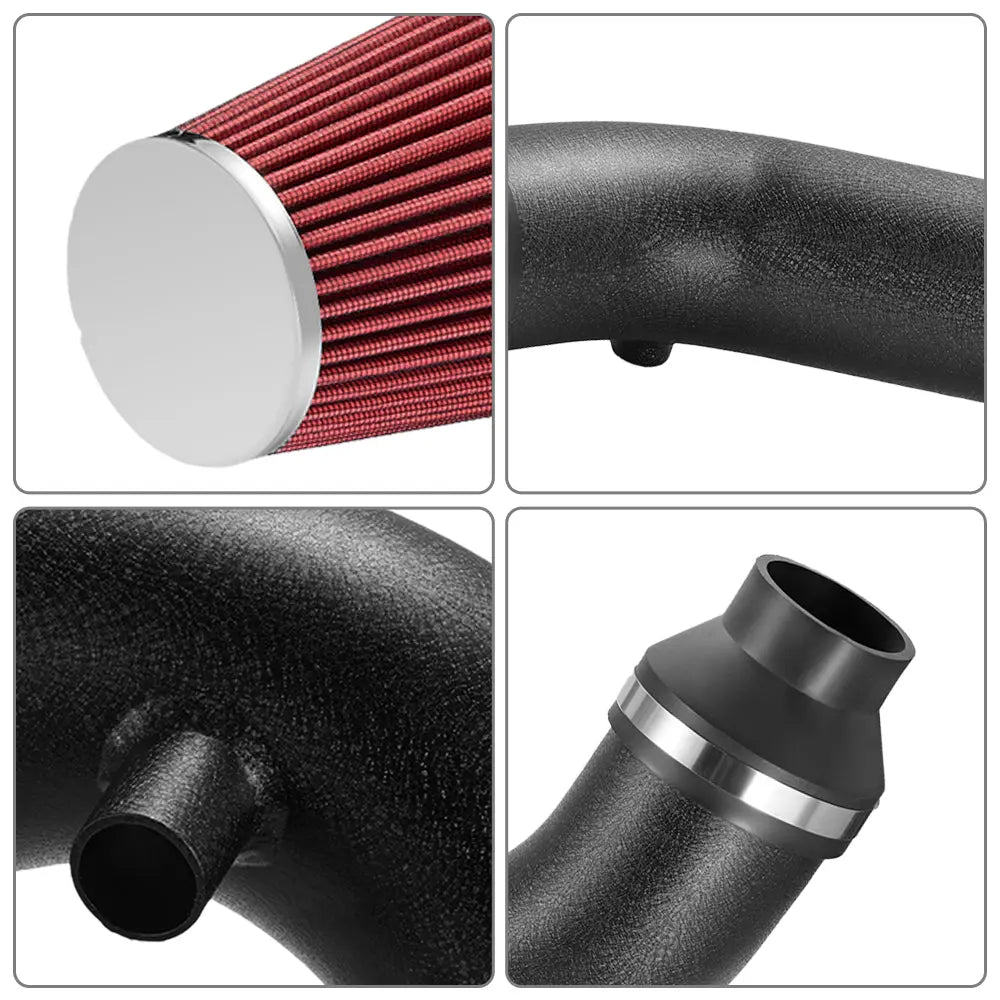
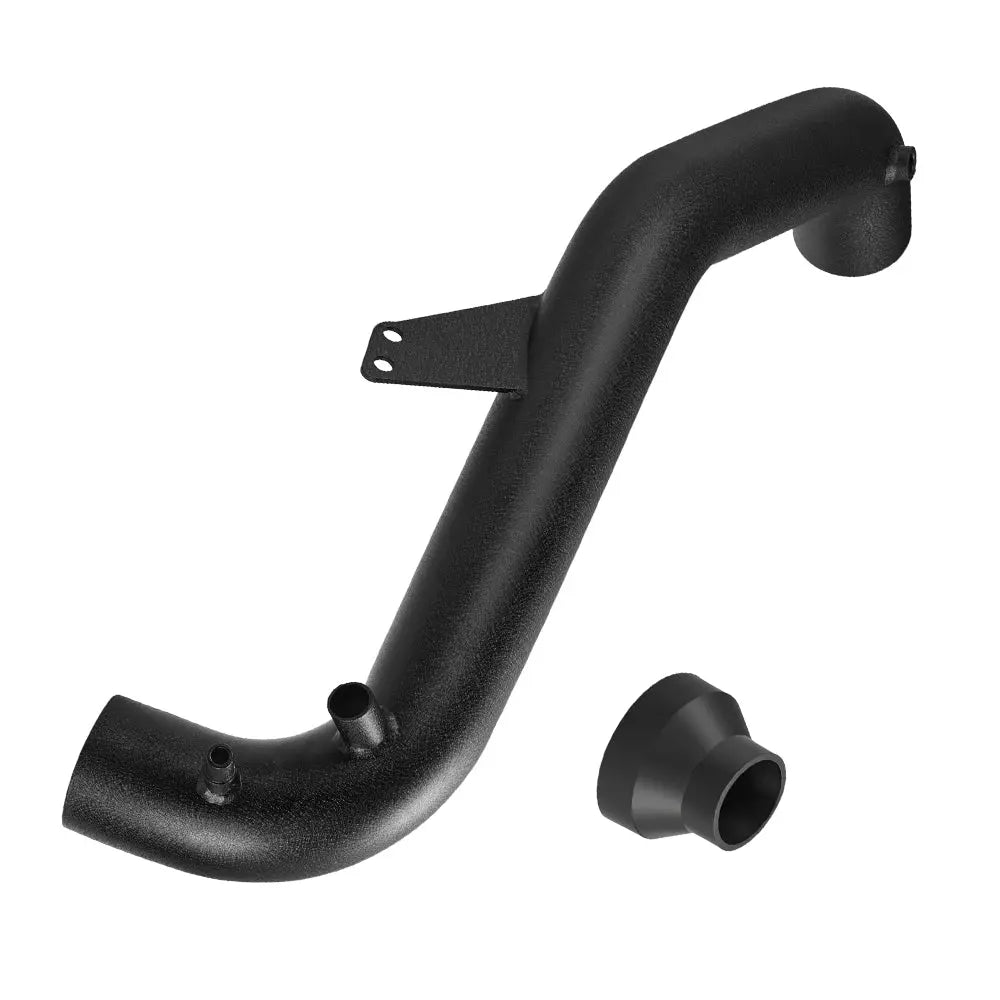
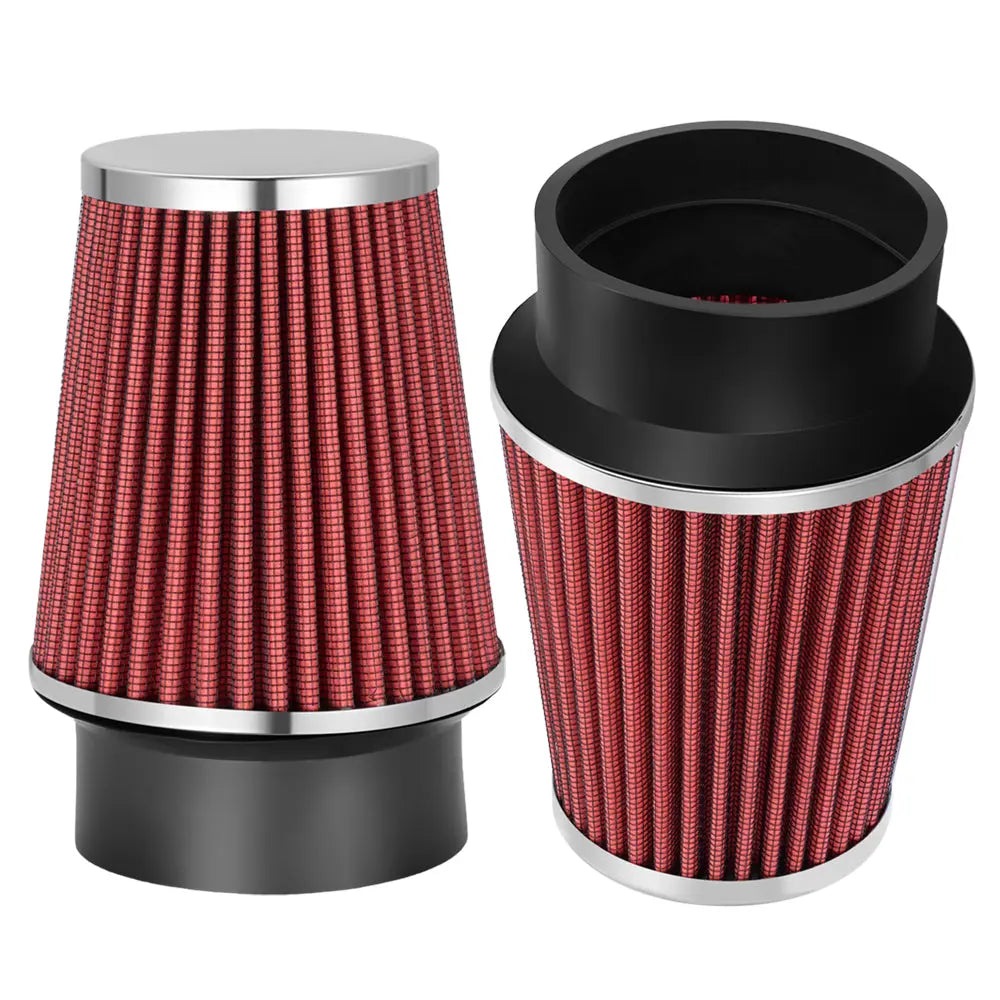
A direct bolt-on for the 2015–2018 Ford Mustang EcoBoost 2.3L, this Flashark cold air intake replaces the factory airbox and inlet tube with a black powder-coated aluminum tube and an open-element dry cone filter. That swap removes restriction ahead of the compressor, the part of the intake system a turbocharged engine is most sensitive to, so the turbo has less pressure drop to work against on throttle. Everything mounts to the factory airbox, sensor, and bracket locations with hand tools, and a stock EcoBoost needs no ECU calibration.
Specifications
| Specification | Detail |
|---|---|
| Fitment | 2015–2018 Ford Mustang EcoBoost 2.3L I4 DOHC Turbocharged |
| Engine | 2.3L EcoBoost I4 DOHC turbocharged (S550, 310 hp / 320 lb-ft from the factory) |
| Intake Type | Cold Air Intake |
| Tube Material | Aluminum, mandrel-bent |
| Tube Finish | Black powder-coated |
| Filter Type | Dry element, no oil required |
| Filter Shape | Open-element cone |
| Heat Shield | Not included |
| Hardware | Mounting hardware, couplers, and clamps included |
| Tune Required | No on a stock vehicle |
| Installation Time | About 45–75 minutes with hand tools |
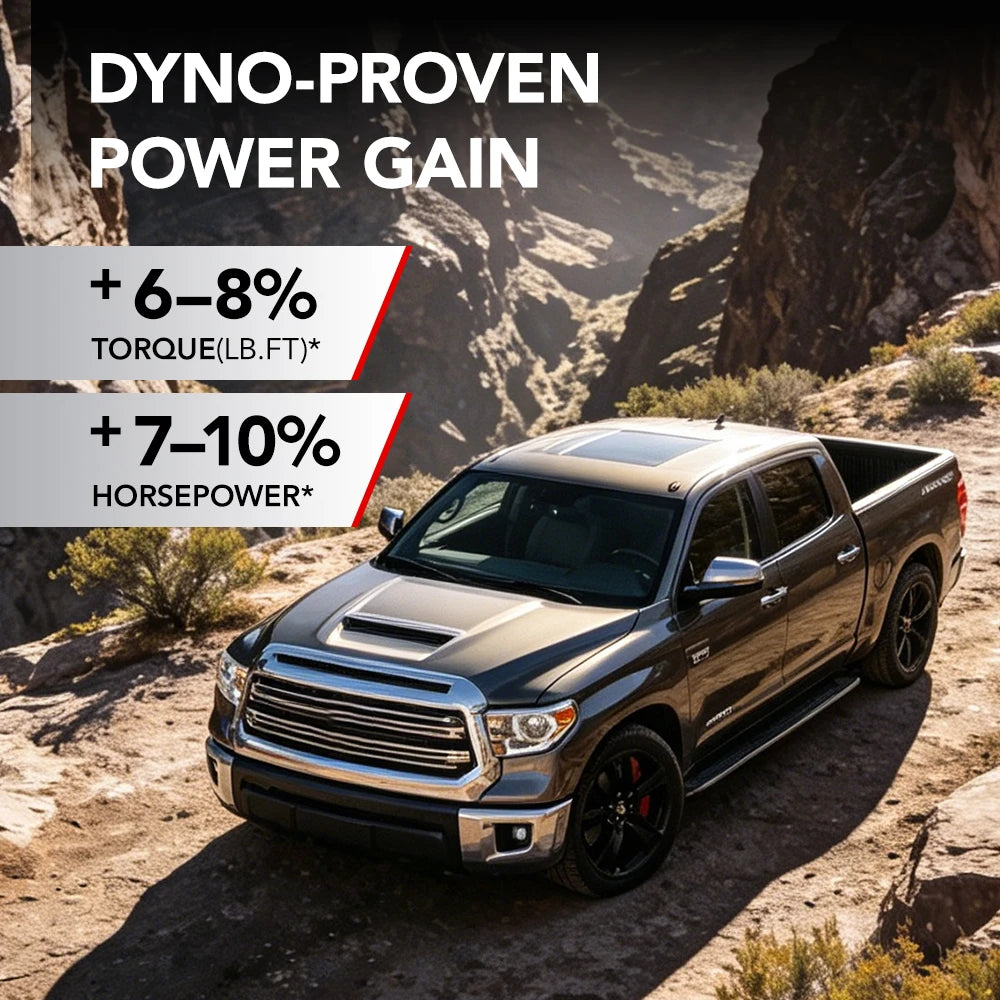
| Expected Output Range | Approximately 8–15 hp and 5–10 lb-ft over stock on a comparably equipped car; results vary with vehicle condition, calibration, installation, and supporting modifications |
Key Features
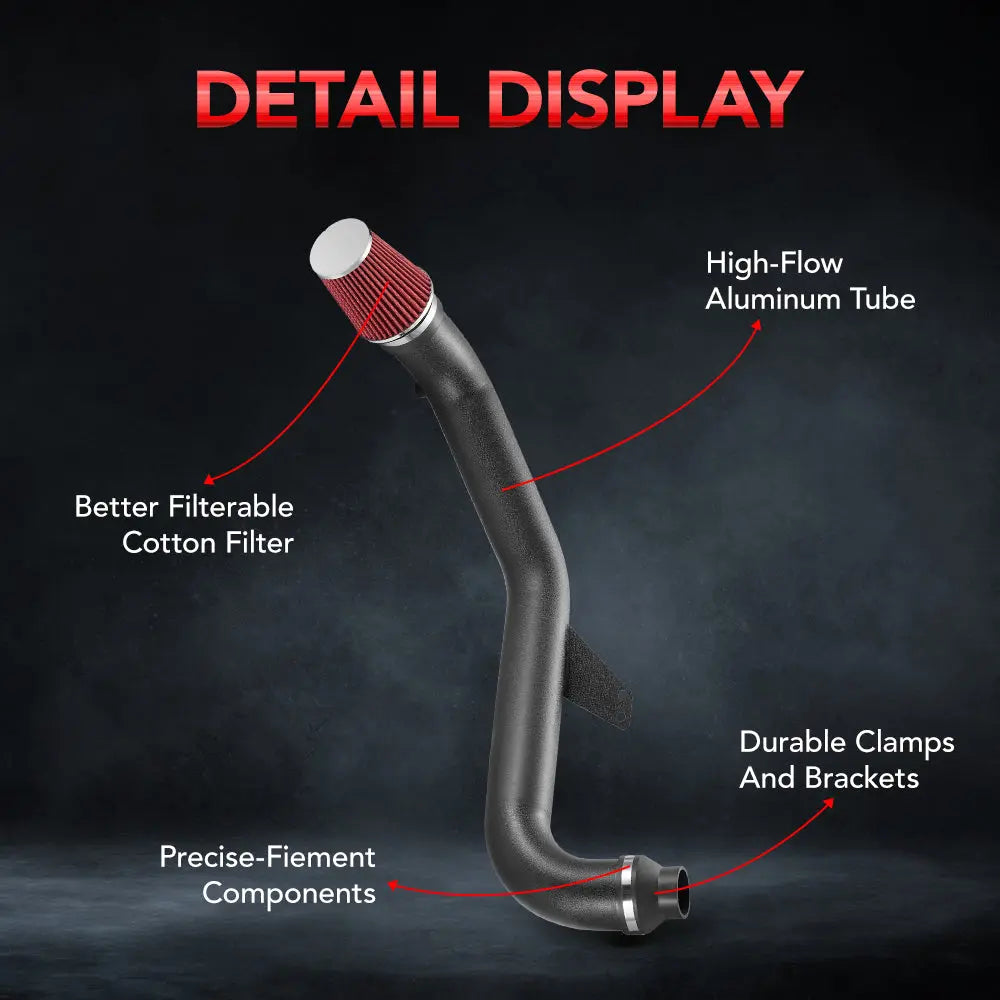
- Mandrel-bent aluminum intake tube: black powder-coated finish that stands up to underhood heat and corrosion, with a smooth internal bore in place of the factory airbox and inlet tube.
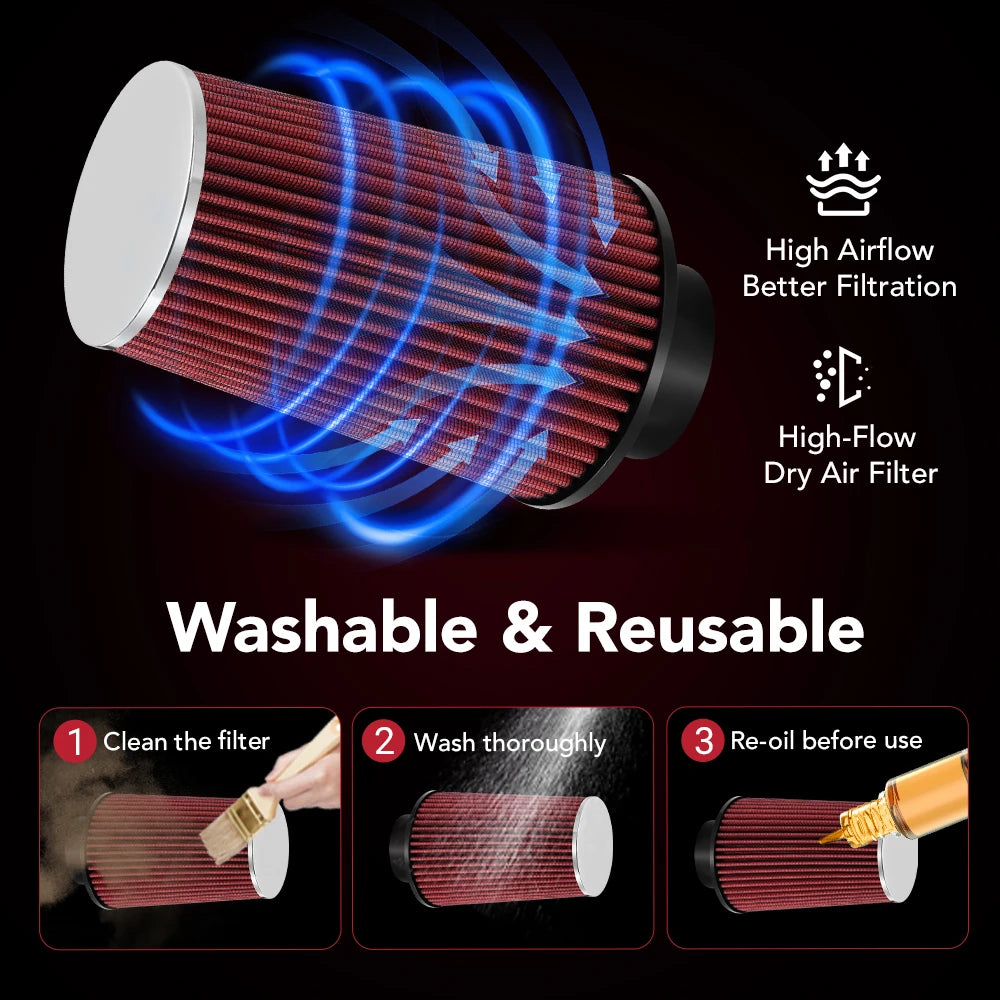
- High-flow dry-element cone filter: no re-oiling required, so there is no filter oil to migrate onto the MAF sensor element.
- Keeps the factory MAF sensor: the OEM sensor mounts in its original location and the kit reuses the factory electrical connections, so a stock EcoBoost needs no recalibration.
- Turbo character you can hear: the open-element layout is designed to let compressor spool and bypass-valve flutter through under acceleration, while light-throttle and cruise driving stay quiet.
- Expected output range: approximately 8–15 hp and 5–10 lb-ft over stock on a comparably equipped 2.3L EcoBoost Mustang; results vary with vehicle condition, calibration, installation, and supporting modifications.
- Factory mounting points: direct fit with no drilling or cutting, bolted to the factory airbox and bracket locations — a job that runs about 45–75 minutes with hand tools.
- Complete hardware kit: couplers, clamps, brackets, and vacuum hose fittings are included with the kit, and the full box list is below.
Who This Kit Is For
This Flashark cold air intake replaces the factory airbox and intake tube on the 2015–2018 Ford Mustang EcoBoost 2.3L turbocharged four-cylinder (S550). It suits owners who want a first bolt-on upgrade, a filter that never needs oiling, and the turbo sound the factory airbox was built to mute — all on the stock calibration.
✓ For you if…
- you drive a 2015–2018 Mustang with the 2.3L EcoBoost and want a bolt-on intake that keeps the factory sensor and tune.
- you prefer a dry cone filter over an oiled one you have to clean and re-oil.
- you want the compressor spool and bypass-valve sound to come through under acceleration.
- you are keeping your car mostly stock and want an install you can do in the driveway.
- you have checked your state emissions rules in the Compliance Notice below.
✗ Not for you if…
- your Mustang runs the 5.0L Coyote V8, the 3.7L V6, or a Shelby engine — those use a different intake, throttle body, and MAF housing.
- you drive a 2019 or newer EcoBoost, which uses a revised intake housing and sensor routing.
- you expect a guaranteed MPG gain from an intake alone.
- you plan regular deep water crossings without a high-mounted or relocation setup.
- you run an aftermarket turbo inlet or oversized throttle body and have not confirmed coupler sizing with us.
Driving a Mustang with a different engine? The 2015–2017 Mustang 3.7L V6 Cold Air Intake is the kit built for that engine. You can also browse the full Ford Mustang Cold Air Intake Kits and Ford Cold Air Intake Kits ranges.
Check Before Ordering
- Vehicle: exact fit for the 2015, 2016, 2017, and 2018 Ford Mustang with the 2.3L EcoBoost four-cylinder. If your car runs the 5.0L V8, the 3.7L V6, or a Shelby engine, this is not the right part — message us and we will point you to the correct intake.
- Intake layout: this kit uses an open-element cone filter on a mandrel-bent aluminum tube and mounts in the factory airbox area, using the factory sensor location and bracket points.
- Filter and maintenance: the dry-element cone filter never needs oil. Clean it every 15,000–20,000 miles in normal driving, and more often in dusty conditions.
- Sensors and connections: the factory MAF sensor and OEM electrical connectors transfer to the new tube. Re-check every clamp and coupler after 50–100 miles — an air leak between the MAF and the throttle body is the usual cause of a rough idle or a lean code.
- Legality: this kit does not carry a CARB Executive Order number, so it is not legal for sale or use in California (and other CARB-adopting states). Confirm the rules that apply in your state before ordering.
- Install and conditions: bolt-on installation with hand tools takes about 45–75 minutes. The cone filter sits in the engine bay — avoid deep water crossings, since water ingestion can hydrolock the engine.
What's in the Box
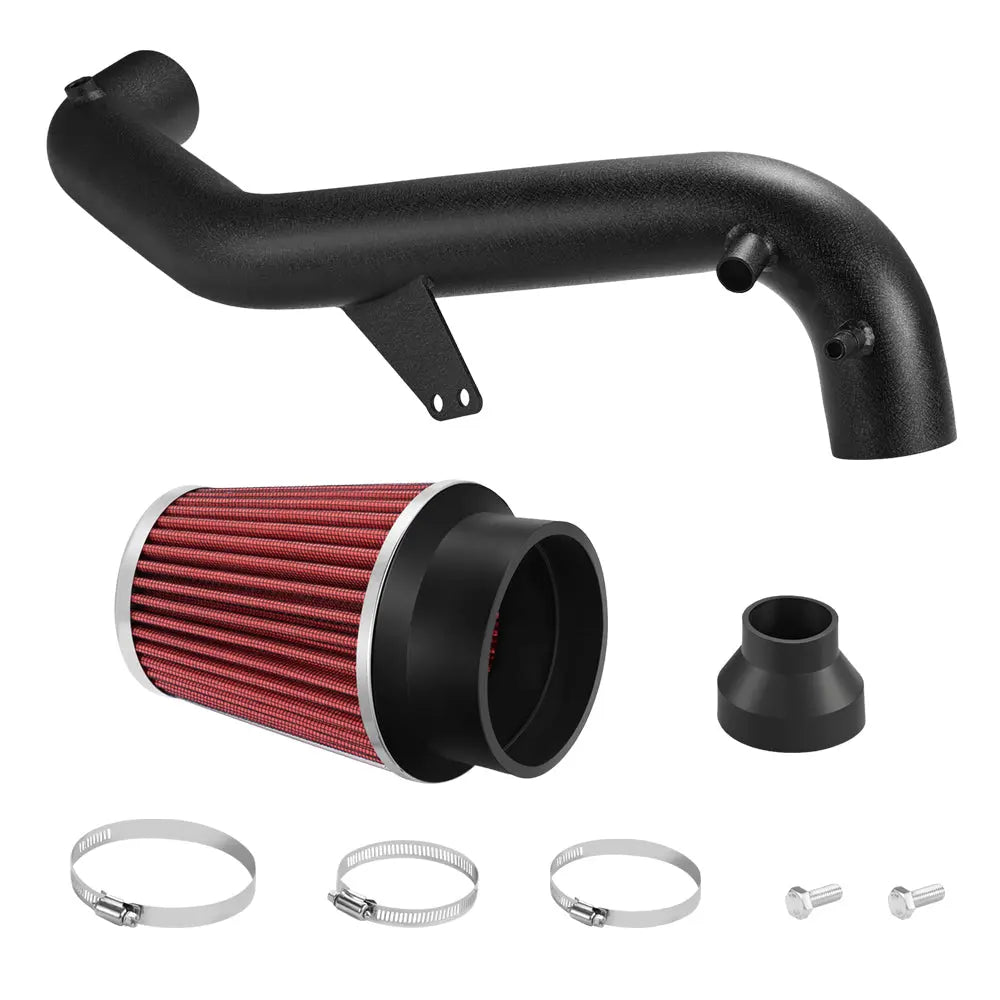
- 1× black powder-coated mandrel-bent aluminum intake tube
- 1× high-flow dry-element cone air filter
- 1× silicone coupler set
- 3× stainless steel hose clamps
- 1× hardware bag (bolts, nuts, washers)
Shipping & Returns
Free U.S. Shipping: Orders are typically processed within 1–2 business days and delivered within 7–9 business days. Additional charges may apply to remote areas.
30-Day Returns: Unopened and unused items in their original packaging may be returned within 30 days of receipt. Return shipping is covered for verified quality issues.
Worry-Free Delivery: Optional protection against eligible loss, theft, delay, or transit damage is available at checkout.
| Year | Model | Engine | Chassis Platform |
|---|---|---|---|
| 2015 | Ford Mustang EcoBoost | 2.3L I4 EcoBoost Turbocharged | S550 |
| 2016 | Ford Mustang EcoBoost | 2.3L I4 EcoBoost Turbocharged | S550 |
| 2017 | Ford Mustang EcoBoost | 2.3L I4 EcoBoost Turbocharged | S550 |
| 2018 | Ford Mustang EcoBoost | 2.3L I4 EcoBoost Turbocharged | S550 |
2015–2018 Ford Mustang EcoBoost Cold Air Intake FAQs
Q1: Is this cold air intake legal in my state?
A1: This kit does not carry a CARB Executive Order (EO) number. It is not legal for sale or use in California (and other CARB-adopting states). Outside those states it installs as a standard replacement intake on the 2.3L EcoBoost. If you are unsure how your state classifies aftermarket intake parts, contact us before ordering.
Q2: Will this fit my 2015–2018 Ford Mustang EcoBoost?
A2: Yes — this is an exact fit for the 2015, 2016, 2017, and 2018 Ford Mustang with the 2.3L EcoBoost turbocharged four-cylinder on the S550 platform. It uses the factory airbox area, sensor location, and bracket points. Two exceptions matter: the 5.0L Coyote V8, 3.7L Cyclone V6, Shelby GT350 5.2L, and GT500 use a completely different intake, throttle-body, and MAF housing, and the 2019 and newer refresh changed the intake housing, intercooler piping, and sensor routing. If your car already has an aftermarket intake or an engine swap, confirm your engine code with us first.
Q3: How much horsepower will this add?
A3: Typical intake-only gains for this application are approximately 8–15 hp and 5–10 lb-ft over stock on a comparably equipped 2.3L EcoBoost Mustang. Actual results depend on the vehicle, calibration, installation, and supporting hardware. On a turbocharged engine the intake's real job sits upstream of the compressor, where lower pressure drop lets the turbo reach target boost sooner rather than raising peak power dramatically. If you want a larger jump, pair the intake with an upgraded intercooler, downpipe, exhaust, and a tune.
Q4: Will a cold air intake improve my MPG?
A4: MPG is dominated by driving habits; an intake alone can't guarantee a measurable gain. Expect the main benefit as throttle response and intake tone rather than fuel economy.
Q5: Will this void my warranty?
A5: Under the Magnuson-Moss Warranty Act, an aftermarket part cannot void your factory warranty unless it is proven to have caused the failure. This kit is designed as a direct bolt-on replacement that keeps factory sensors and connections.
Q6: Will it throw a check engine light (CEL)?
A6: A correctly installed kit on a stock vehicle should not set a code — it keeps the factory MAF sensor location and bore, so the ECU reads airflow through the sensor it was calibrated for. When a code does appear it is usually an air leak (a loose clamp or leaking coupler), a disconnected PCV or vacuum hose, or a MAF sensor that was disturbed during the install; allow 10–15 minutes of warm-up driving before judging, then read the code (P0171 = lean or air leak, P0101/P0102 = MAF signal) and inspect every connection before replacing parts. Our rough idle after cold air intake install checklist walks through the seven checks in order.
Q7: Do I need a tune after installing?
A7: No tune is required on a stock 2.3L EcoBoost, because the factory MAF sensor stays in its original location and the ECU keeps reading airflow accurately. If you also add a high-flow intercooler, performance downpipe, catback exhaust, or a boost controller, a tune will help the ECU take advantage of the combined changes — Cobb Accessport, SCT X4, and HP Tuners are common choices for this engine. Do you need a tune for a cold air intake? covers when it is optional and when it is not.
Q8: Is this safe in rain or deep water?
A8: Normal rain driving is fine. Avoid deep water crossings, since water ingestion can cause hydrolock and severe engine damage. If you ford water regularly, a high-mounted or relocation setup is the safer route.
Q9: How do I clean and maintain the filter?
A9: The filter is a dry element, so no oil is ever required. Clean it every 15,000–20,000 miles in normal driving and more often in dusty or off-road conditions: remove the filter, tap out loose dirt, blow low-pressure air from the inside out, inspect for tears or collapsed pleats, and reinstall only when it is completely clean and dry. Never apply filter oil — oil contamination of the MAF element on the 2.3L EcoBoost causes P0101/P0171 codes and usually means sensor cleaning or replacement.
Q10: What does it sound like?
A10: Under acceleration the open-element intake lets compressor spool and bypass-valve flutter through, most pronounced between about 2,000–5,000 rpm, with a stronger induction note at wide-open throttle. Light-throttle and highway cruising stay close to stock. Sound is subjective, and the change is more audible on cars that already run a tune or exhaust work.
Q11: What's included, and what do I still need?
A11: The kit ships with the intake tube, a dry-element cone filter, silicone couplers, three stainless steel hose clamps, and a hardware bag — the full contents are in What's in the Box above. Your factory MAF sensor transfers to the new tube and is not part of the kit. The install itself needs only basic hand tools.
Q12: Will the factory MAF sensor work correctly with this kit?
A12: Yes, when it is installed correctly — the factory MAF sensor transfers to the new tube and mounts in the same orientation as stock. Before refitting it, check that the sensor element is clean and undamaged, then seat every silicone coupler fully and tighten all clamps, because unmetered air entering between the MAF and the throttle body is what causes a rough idle or a P0171 lean code. Inspect every joint after the install and again after 50–100 miles.
Q13: How does an intake help a turbocharged engine differently than a naturally aspirated one?
A13: On a naturally aspirated engine the intake sets how much air the engine can breathe, so the gain shows up at the throttle body. On the 2.3L EcoBoost the benefit sits upstream of the compressor, where lower pre-turbo pressure drop lets the turbo reach its target boost sooner and hold boost efficiently at sustained rpm. Charge-air temperature is handled by the intercooler downstream of the compressor, which is why intake-only gains on a turbo car are smaller than gains from an intercooler, downpipe, or tune.
Q14: How difficult is the install, and what tools do I need?
A14: This is a straightforward bolt-on: difficulty runs about 2 out of 5, and the job takes roughly 45–75 minutes with hand tools. You need flat-head and Phillips screwdrivers, 8 mm and 10 mm sockets, a ratchet, and an optional extension. The order is: disconnect the battery negative, remove the factory airbox lid and filter, unclip the MAF connector, loosen the clamps and pull the factory inlet tube and lower airbox, fit the new tube while transferring the MAF sensor and all hose ports, connect the couplers and tighten every clamp, reconnect the MAF and the vacuum and PCV hoses, then check clearance from the hood, wiring, and coolant hoses before starting. Re-check all clamps after 50–100 miles.
Fast Shipping Policy
Your order will be dispatched within 1-2 business days, and the package will arrive within your order's estimated date. Click for Shipping Policy
Easy Return Policy
Every order comes with a 30-day free return, provided the item is brand new, uninstalled, and in its original packaging. We cover return shipping for quality issues. Refunds are processed within 3-5 business days. Click for Return Policy
Worry-Free Delivery Protection
Add Worry-Free Delivery at checkout — if it's lost, stolen, or damaged, you're 100% covered. Click for Worry-Free Delivery Protection