Q1: What Jeep Grand Cherokee models does this cold air intake fit?
A: This intake is designed for 1999, 2000, 2001, 2002, 2003, and 2004 Jeep Grand Cherokee WJ models equipped with the 4.7L PowerTech V8 engine. It fits all trims — Laredo, Limited, Overland, and Special Edition — in both 2WD and 4WD configurations. The key verification points are: (1) your Grand Cherokee is a WJ generation (1999–2004), (2) it has the 4.7L V8 (not the 4.0L inline-six), and (3) the factory intake system and throttle body are unmodified. If you're unsure which engine you have, check the 8th character of your VIN: "N" = 4.7L V8.
Q2: Does this fit the 4.0L inline-six Grand Cherokee WJ?
A: No. The 4.0L I6 uses a completely different intake routing, throttle body position, breather hose layout, and mounting configuration. The intake tube in this kit will not connect to the 4.0L throttle body, and the heat shield mounting points don't align. If you have a 4.0L WJ, you need a 4.0L-specific cold air intake kit — this V8 kit will not work on your vehicle. The 4.0L is the most common WJ engine, so double-check your engine before ordering.
Q3: Will this fit a ZJ (1993–1998) or WK (2005–2010) Grand Cherokee?
A: No. This kit is specifically designed for the WJ platform (1999–2004). The ZJ (1993–1998) has a different engine bay structure, intake routing, and mounting layout — even if your ZJ has a 5.2L or 5.9L V8, this kit will not fit. The WK (2005–2010) is a completely different platform with a revised body structure, brackets, and sensor positions — a WK-specific intake kit is required even if it also has the 4.7L engine. Similarly, Commander XK models with the 4.7L engine will not accept this kit due to different engine-bay packaging.
Q4: How much horsepower does this intake add?
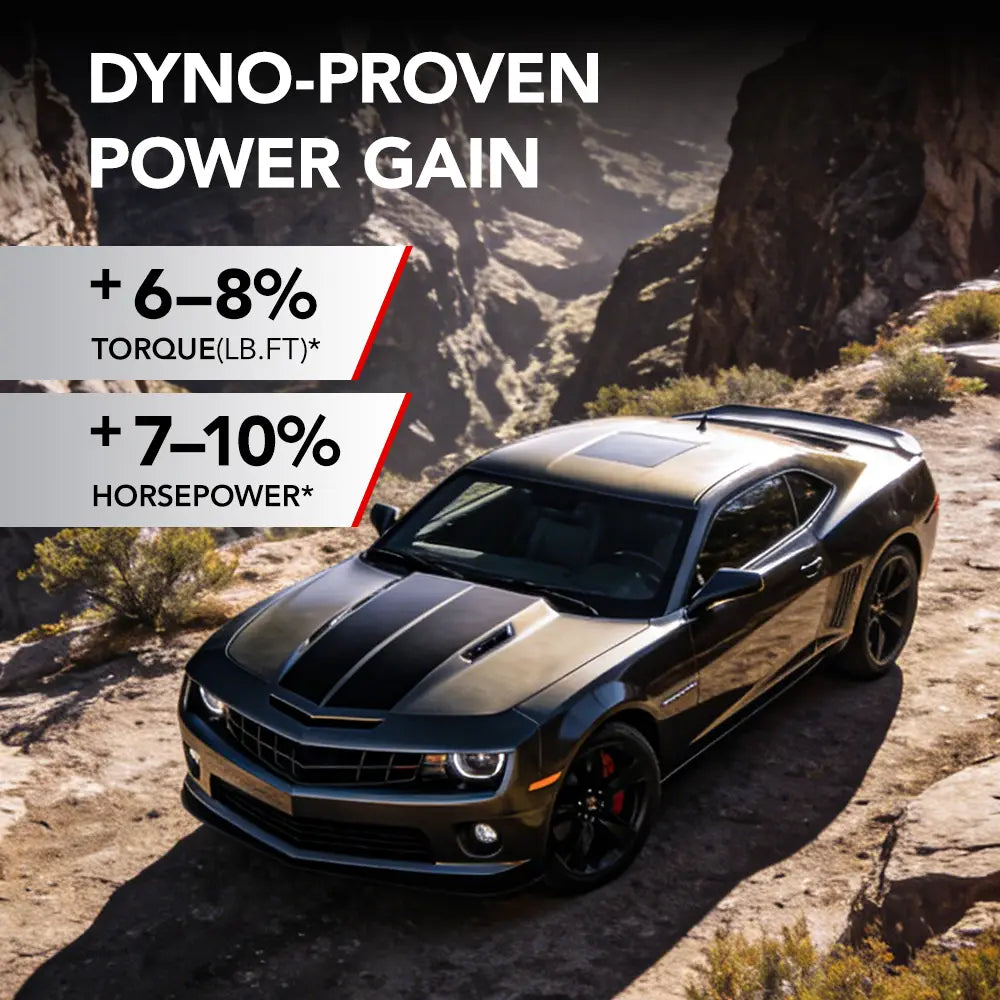
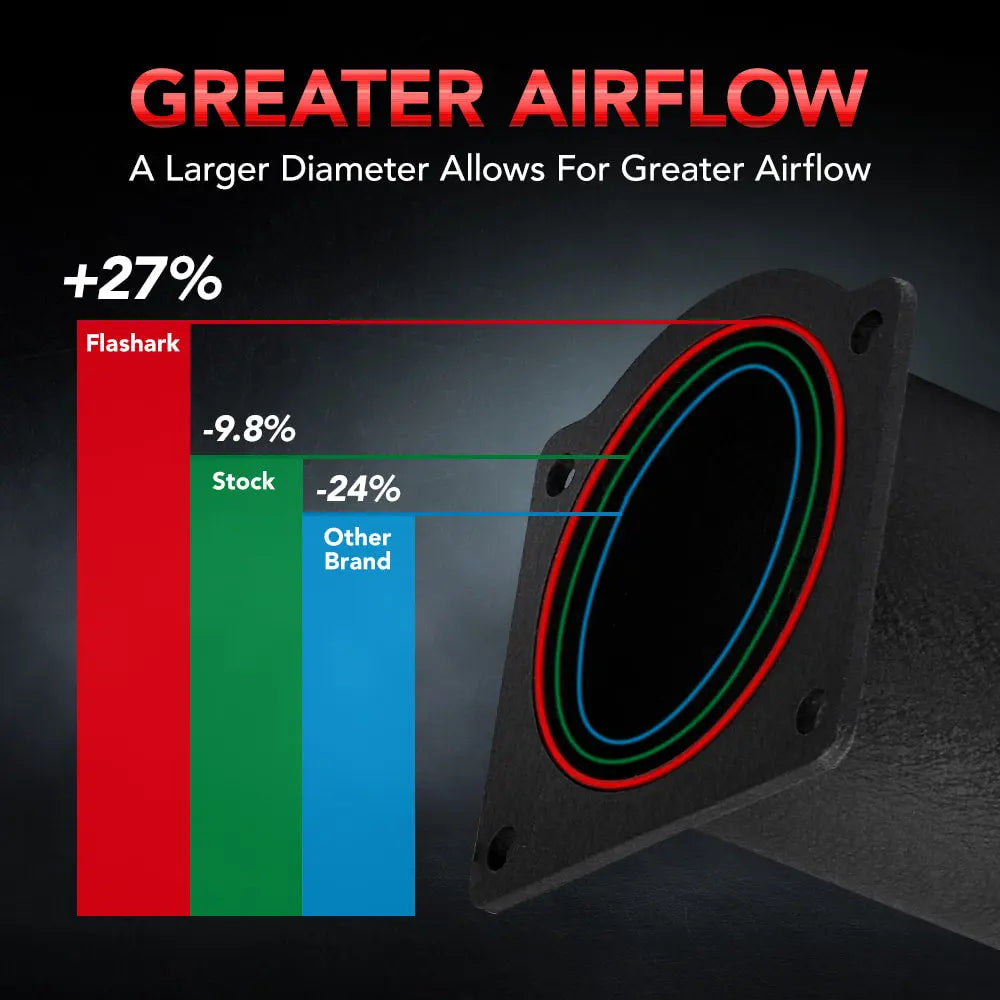
A: On a stock 4.7L WJ, expect 5–10 WHP. The PowerTech 4.7L's factory intake is decently designed for flow — the main restriction comes from the silencing chambers and baffles, not the pipe diameter itself. The real-world gain from reducing that restriction is modest in peak horsepower but noticeable in throttle response and mid-range torque feel. If you pair this intake with headers, a free-flowing exhaust, and a tune, you can achieve 10–15 WHP. Regardless of the numbers, most owners report that the improved throttle response and induction sound are more satisfying than the dyno sheet suggests.
Q5: Does this cold air intake require an ECU tune?
A: No, a tune is not required. The factory ECU will adapt fuel trims within its normal operating range as long as the intake is correctly installed with no leaks and all sensors and breather connections are secure. A tune becomes beneficial when this intake is combined with headers, a performance exhaust, larger injectors, or internal engine modifications — at that point, a custom tune (via SCT, HP Tuners, or similar) can optimize fueling and timing to take full advantage of the increased airflow.
Q6: Will this intake make my 4.7L Grand Cherokee louder?
A: Yes — and most WJ owners consider this the #1 reason to buy it. The factory airbox is filled with resonator chambers and baffles designed by Jeep's NVH engineers to eliminate every trace of induction sound. With the open-element filter, you'll hear a deep, throaty induction growl when you open the throttle, especially above 3,000 RPM. At idle and light cruising, the sound is subtle and won't drone on the highway. This is induction noise — air being pulled into the engine — not exhaust noise. It won't sound like a Flowmaster muffler, but it will finally let your V8 announce its presence.
Q7: Does the included heat shield actually work?
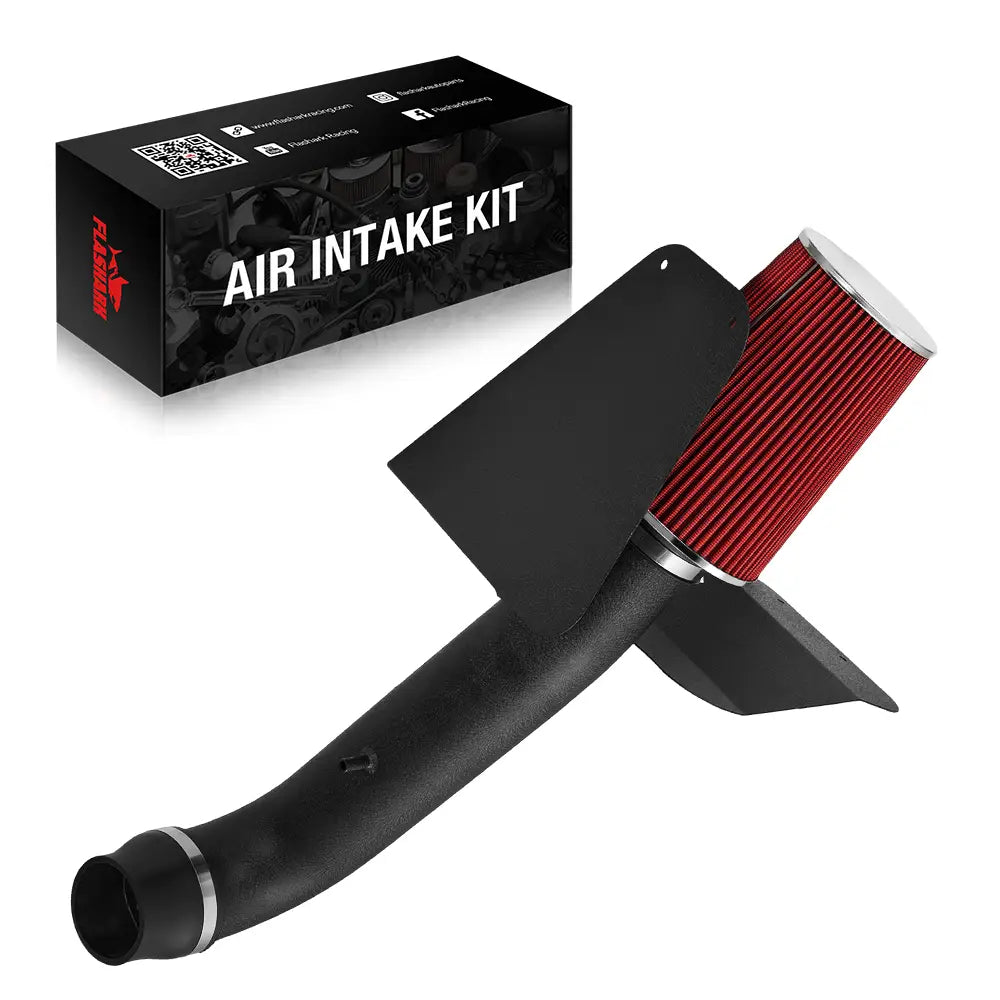
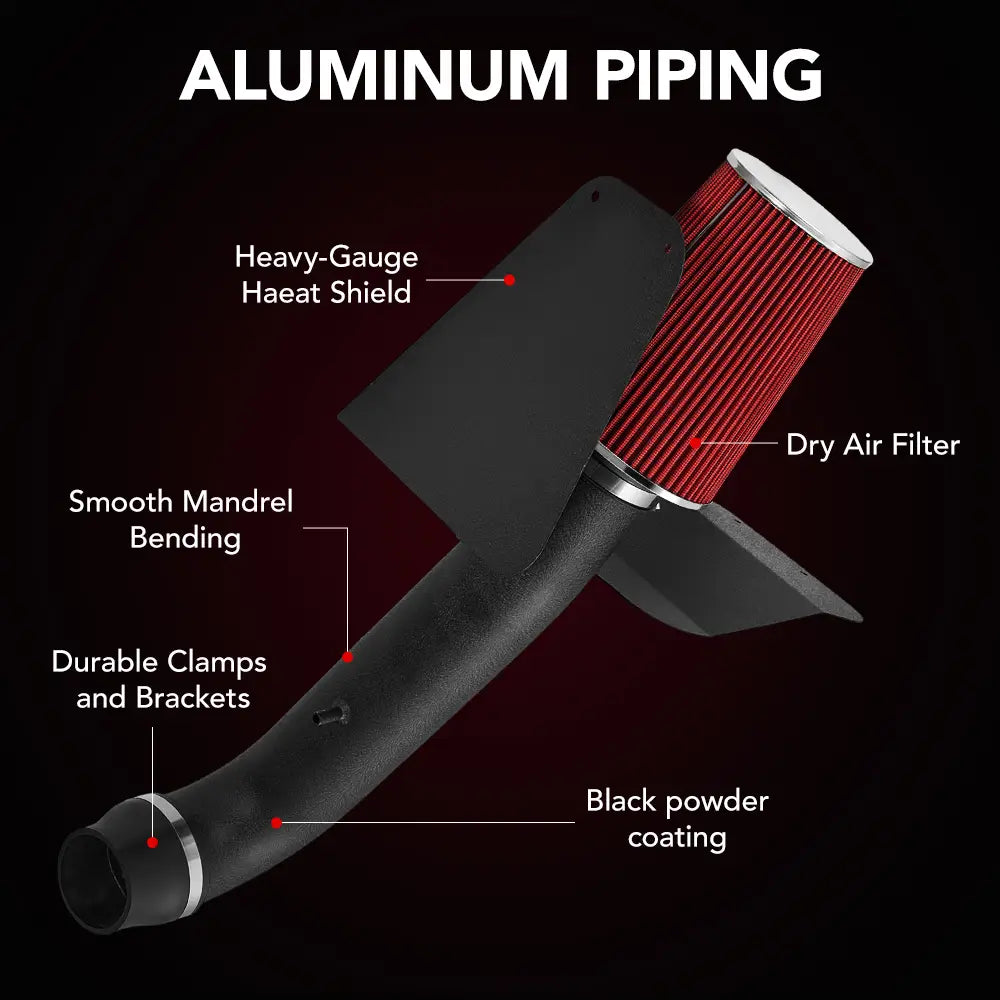
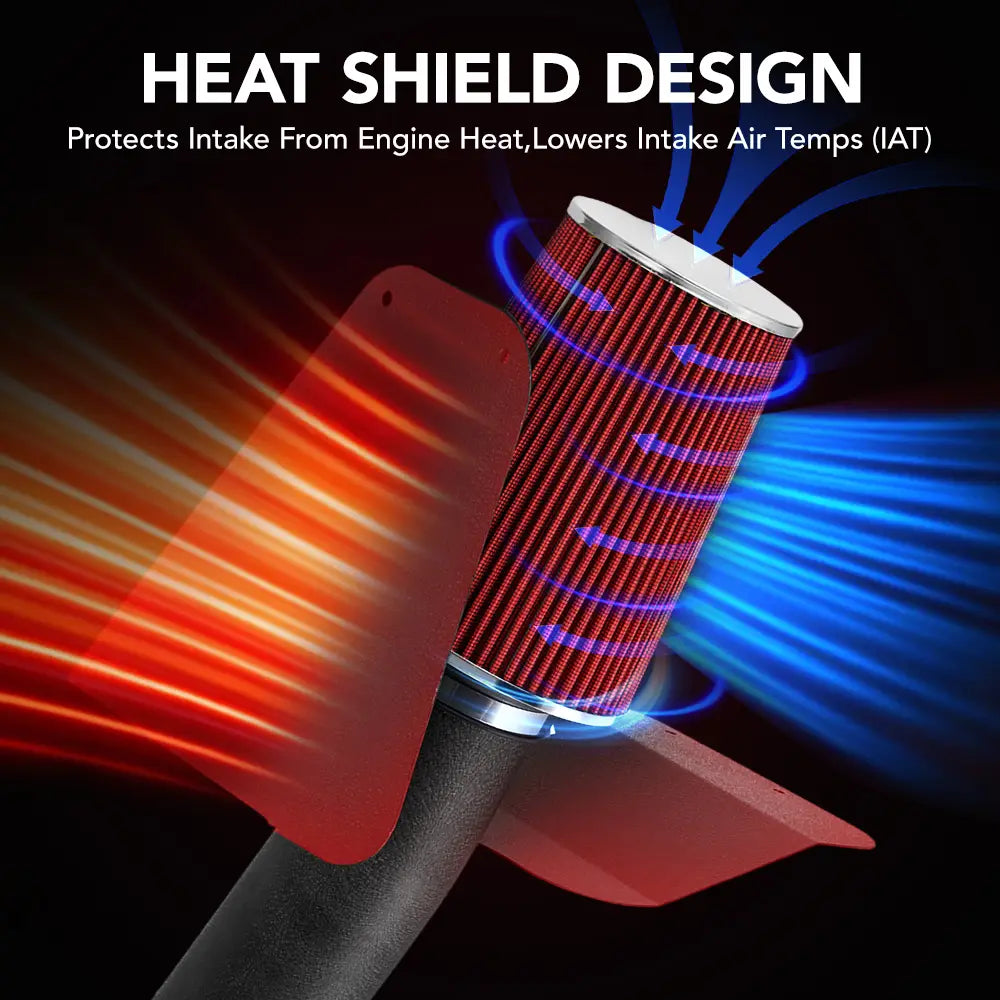
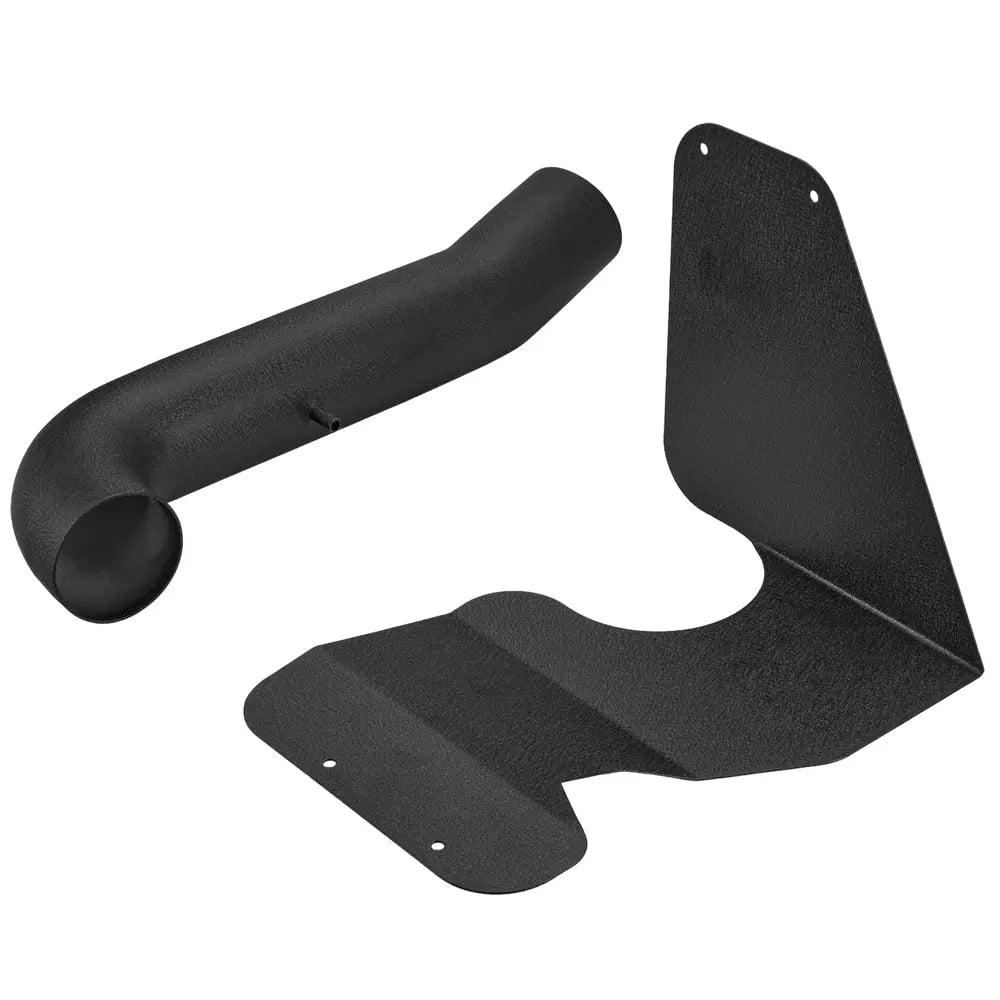
A: The heat shield helps — but it's not magic. It's a powder-coated steel barrier that sits between the air filter and the exhaust manifold/radiator, reflecting radiant heat and creating a partial thermal barrier. The system also retains the factory lower cold-air inlet in the fender well, which draws cooler outside air rather than just sucking hot engine-bay air. At highway speeds with airflow moving through the engine bay, intake air temperatures are close to ambient. At idle or in slow off-road crawling, intake temperatures will rise — no heat shield can fully isolate a filter from a hot engine bay. For the best results in stop-and-go or trail conditions, keep the factory fender well inlet clear and avoid removing the plastic splash guards.
Q8: Will this improve throttle response on my WJ?
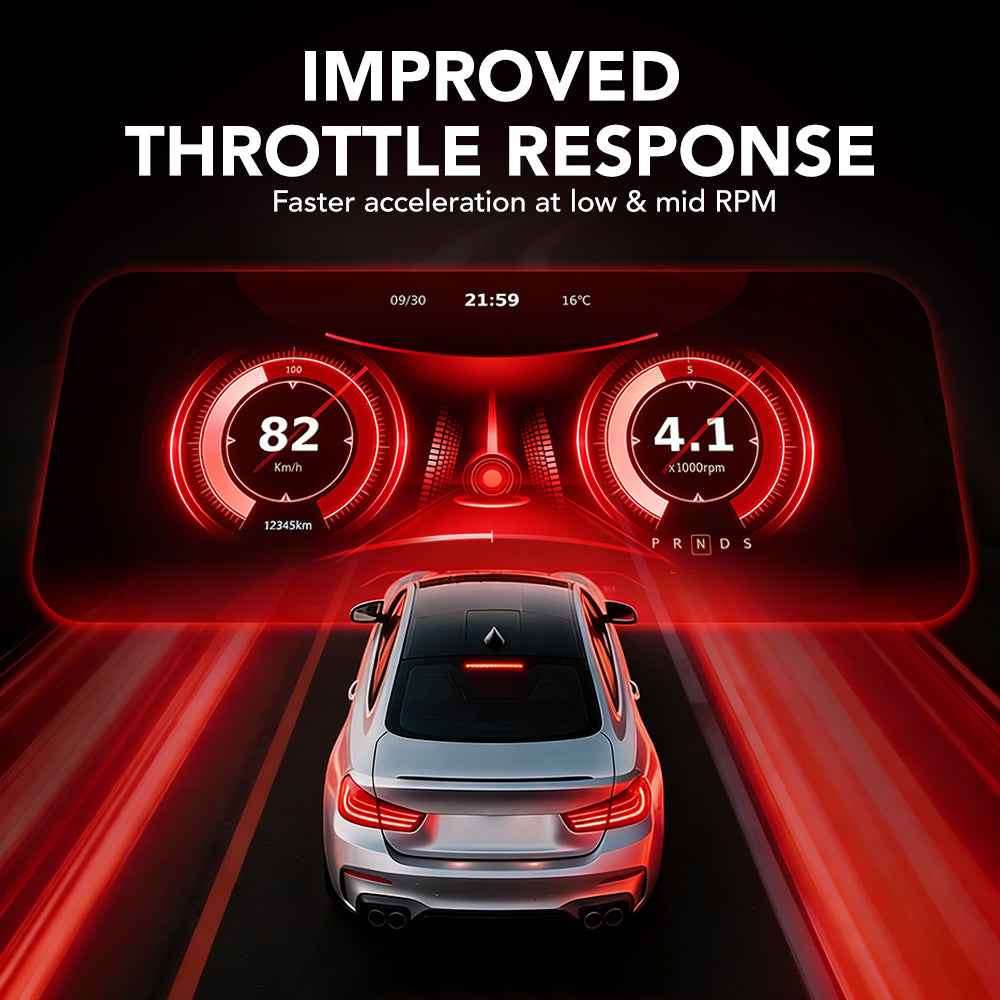
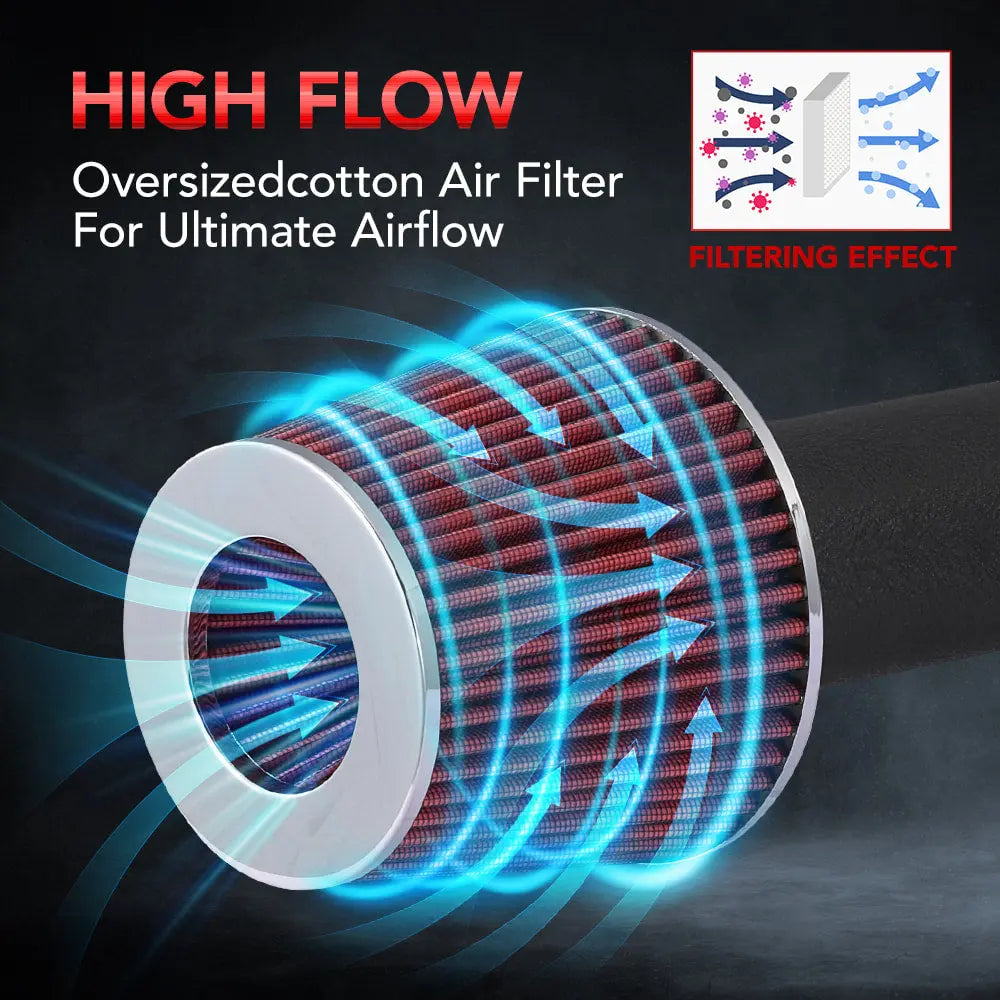
A: Yes — this is one of the most noticeable improvements. The factory intake path on the WJ 4.7L includes a restrictive resonator box in the fender well and multiple silencing chambers. Removing these restrictions reduces the distance air has to travel and the turbulence it encounters, which means the engine responds faster when you step on the throttle. The effect is most noticeable during part-throttle acceleration and when merging onto highways. This improvement is independent of peak horsepower — your engine responds quicker, even if the maximum power number doesn't change dramatically. Keep in mind that a dirty throttle body, worn spark plugs, or vacuum leaks can mask throttle response gains, so make sure those basics are sorted first.
Q9: Is this intake safe for off-roading, rain, and water crossings?
A: Normal rain, light trail splashes, and standard off-road driving are fine — the filter and heat shield provide reasonable protection when correctly installed. However, this is an open-element intake, not a sealed snorkel. It should NOT be treated as waterproof. Key safety rules for WJ owners who go off-road: (1) NEVER attempt water crossings where water could reach the filter height — hydrolock (water entering the cylinders) can destroy your engine instantly and is not covered by warranty. (2) Avoid blasting the filter directly with a pressure washer when cleaning the engine bay. (3) After dusty trail days, inspect the filter — dry filters can be cleaned with compressed air (blow from inside out) without removing the intake. (4) If you regularly cross water deeper than the bumper, keep the factory airbox or invest in a snorkel — an open-element intake is the wrong tool for that job.
Q10: How do I clean and maintain the performance air filter?
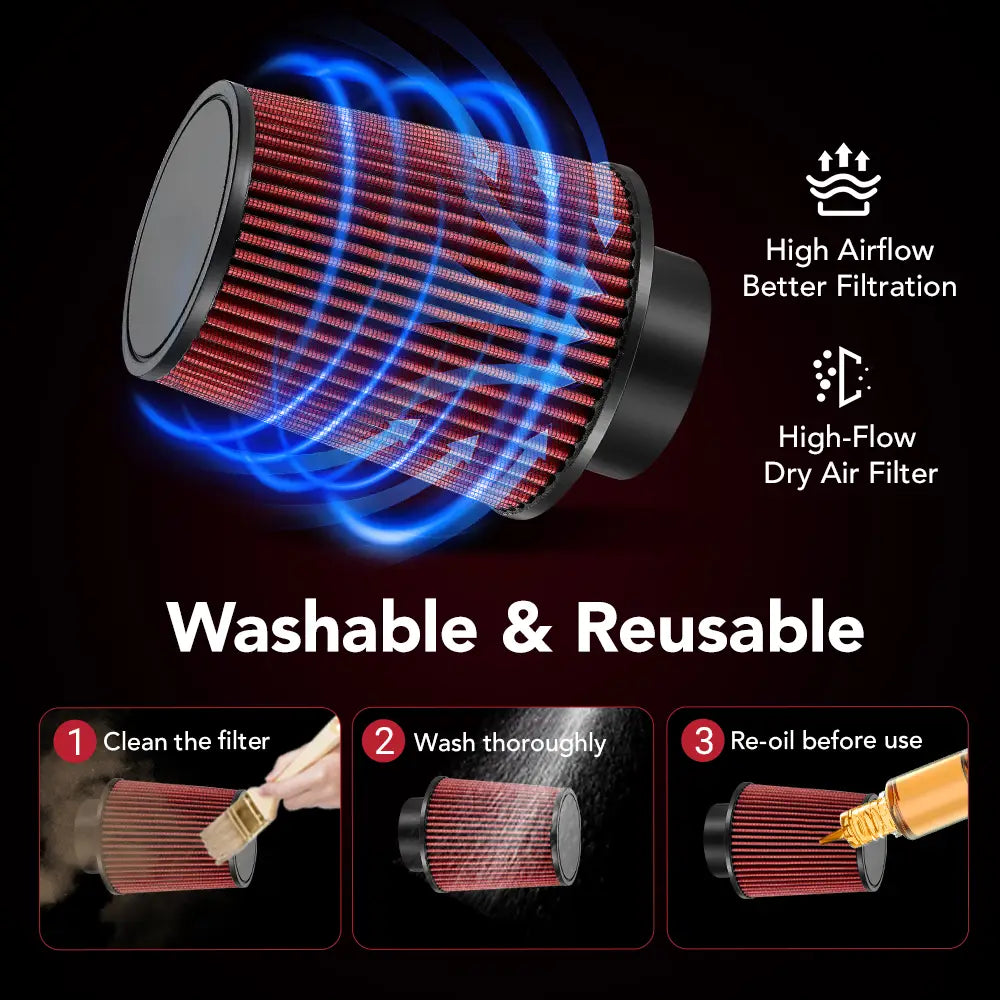
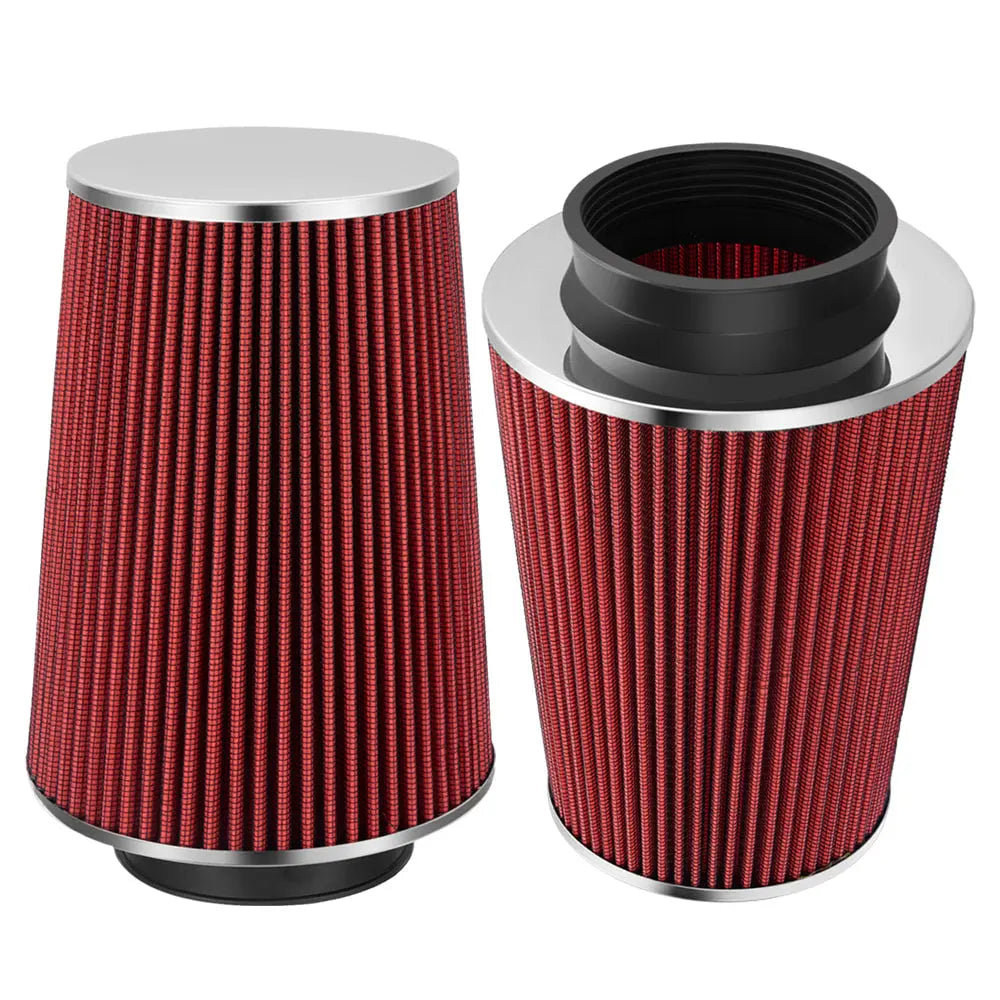
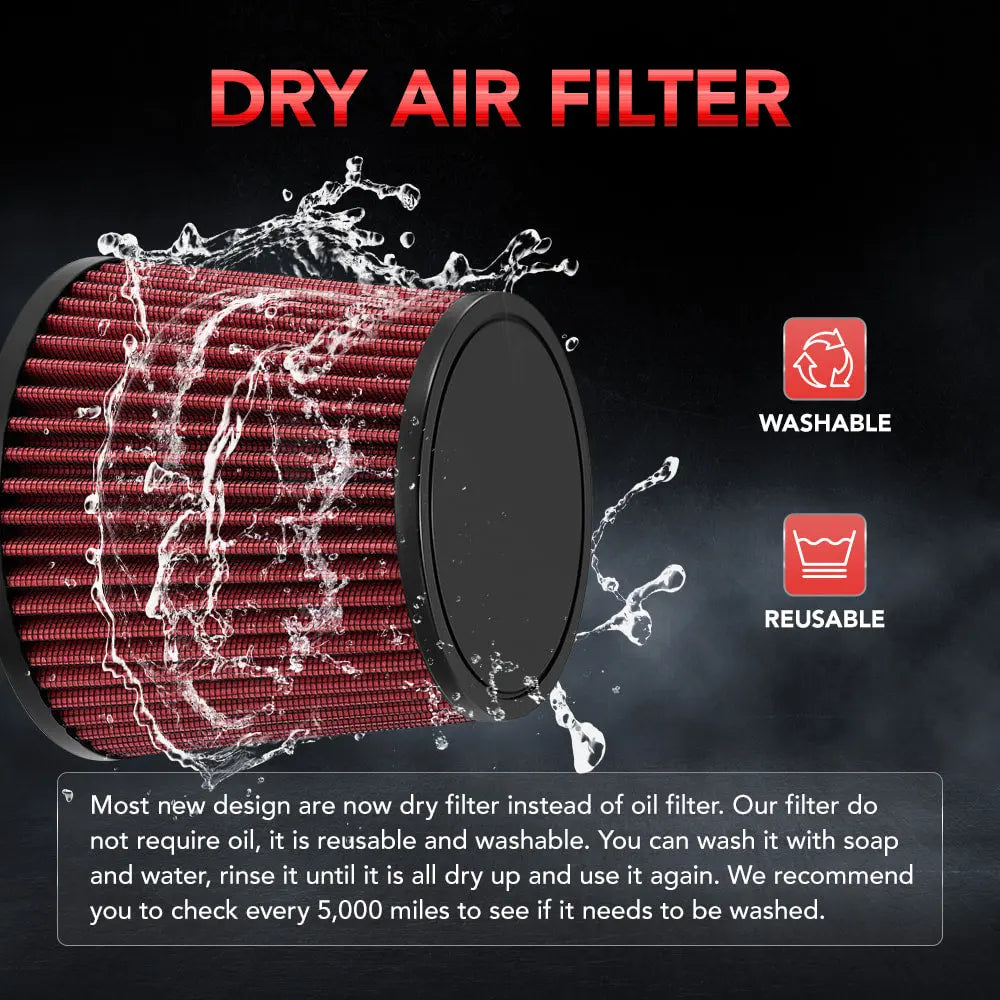
A: This kit uses a dry performance filter — no oil required. Maintenance is simpler than oiled cotton filters and there's zero risk of over-oiling and contaminating the MAF sensor. Cleaning procedure (every 15,000–20,000 miles, or more often if you off-road): (1) Remove the filter from the intake pipe. (2) Tap it gently against a hard surface to dislodge loose dirt and debris. (3) Use compressed air (max 40-50 PSI) from the inside blowing outward to remove embedded particles — never blast from the outside in. (4) If heavily soiled, rinse with low-pressure water from the inside out and let air-dry completely (8–12 hours) before reinstalling. (5) NEVER apply oil to this filter. Oil will migrate downstream, contaminate the MAF sensor, and trigger P0171/P0174 lean codes. After severe off-road use — sand dunes, heavy dust, mud — clean the filter sooner regardless of mileage.
Q11: Can this intake cause a check engine light (CEL)?
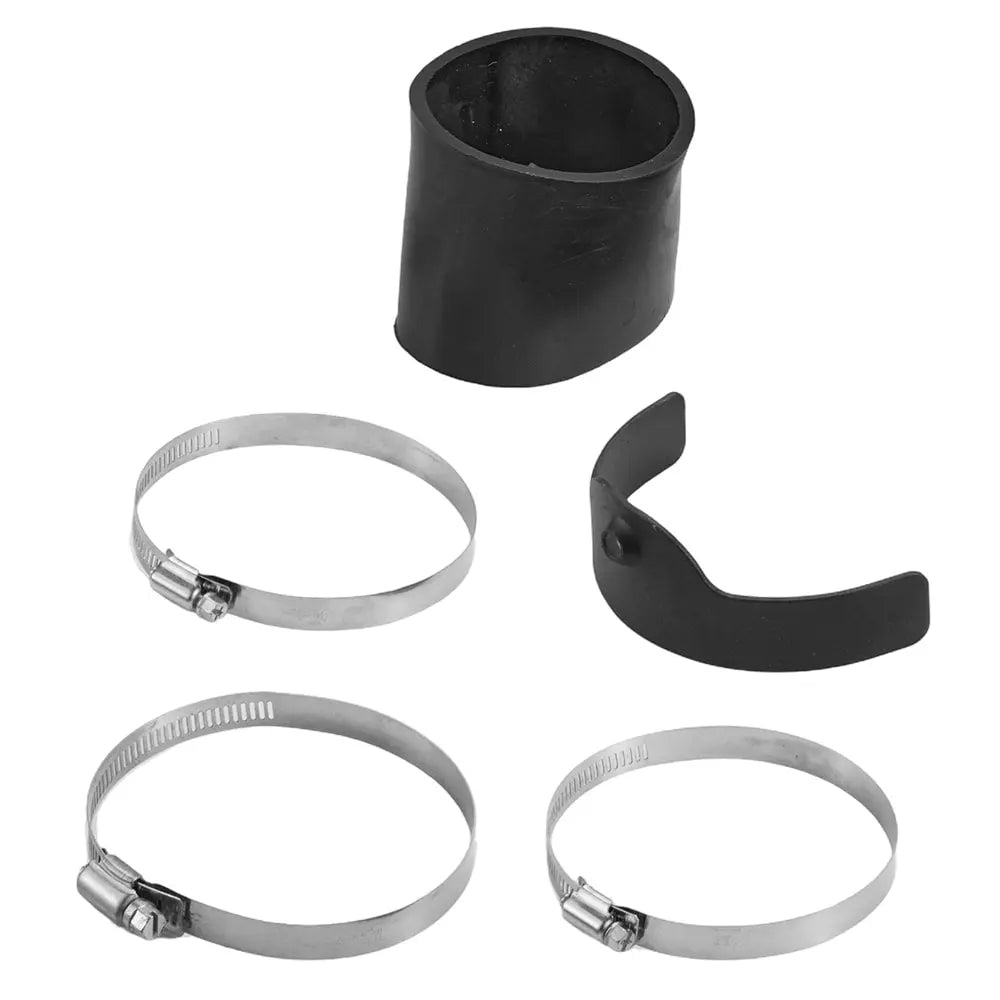
A: A correctly installed intake should not cause a CEL. If you get a check engine light after installation, the most common causes are: (1) A vacuum or PCV breather hose left disconnected or not fully seated. (2) A loose coupler or clamp creating an unmetered air leak after the MAF sensor — this is the most common cause of P0171/P0174 lean codes. (3) The MAF sensor connector was accidentally disturbed or not fully clicked back into place. (4) The MAF sensor was touched or contaminated during installation (oil from fingers on the MAF element will cause incorrect readings). If a CEL appears, start by double-checking every clamp, coupler, hose, and electrical connector. If everything is tight, clear the code and see if it returns — a one-time learned-adaptation code may self-clear.
Q12: What's the hardest part of installation on a WJ?
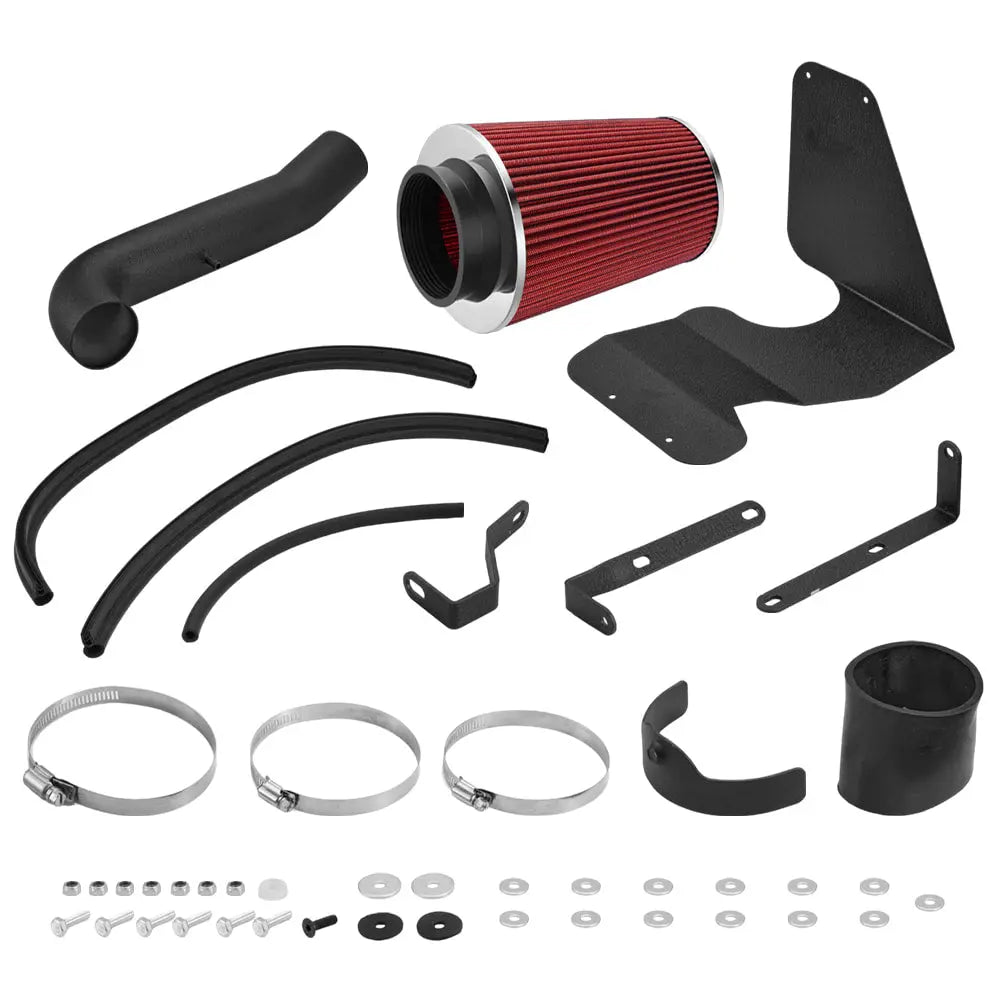
A: Removing the factory resonator box from inside the driver-side fender well. Jeep tucked a large plastic silencer chamber between the inner fender and the outer body panel, and accessing it requires either removing the inner fender liner (recommended) or fishing it out through a tight opening. Installation steps: (1) Disconnect battery negative terminal. (2) Remove factory airbox lid, filter, and intake tubing. (3) Remove the inner fender liner on the driver's side to access the resonator box. (4) Unbolt and remove the factory resonator/silencer assembly. (5) Install the Flashark intake tube, connecting to the throttle body and MAF sensor housing. (6) Position the heat shield and mount using the provided brackets. (7) Attach dry filter, secure all clamps, reconnect sensors and breather hoses. (8) Reconnect battery, start engine, check for leaks and smooth idle. Budget 45–75 minutes. Basic hand tools only — sockets, screwdrivers, and maybe a trim clip tool for the fender liner.




 Product Specifications


