Q1: Which engines and vehicles does this intake actually fit?
A: This intake fits the 2009-2014 GMT900 platform vehicles listed in the Fitment section — Yukon, Silverado 1500/2500, and Suburban 1500/2500 — with the 4.8L, 5.3L, or 6.2L gasoline V8. These three engines share the same throttle body flange diameter, MAF sensor housing design, and intake plumbing routing, so one kit covers all three. It does NOT fit the 4.3L V6, 6.0L V8 (LY6), Duramax diesel, GMC Sierra, Tahoe, or the next-generation K2XX trucks (2014+ EcoTec3 engines).
Q2: Why doesn't this fit the GMC Sierra if it fits the Silverado?
A: While the Silverado and Sierra share the GMT900 platform and LS-based V8 engines, they do not share every under-hood dimension. Hood clearance, fender bracket alignment, and the routing of certain vacuum lines differ between the two. We have validated fitment on the Silverado but not the Sierra. Installing a Silverado-validated intake on a Sierra without confirmation risks interference with the hood, rubbing on lines, or misalignment at mounting points. If you need an intake for a GMC Sierra, contact service@flasharkracing.com with your VIN, and we can direct you to the correct kit.
Q3: My truck is a 2014 model. Will this fit?
A: It depends on which 2014 truck you have. 2014 was a transition year: some trucks are the outgoing GMT900 platform (this kit fits), while others are the all-new K2XX platform (this kit does NOT fit). The quick check: look at your engine. If you have a 4.8L, 5.3L (iron block LMG or aluminum LC9), or 6.2L with a traditional intake manifold — you're a GMT900, and this fits. If your 5.3L or 6.2L says "EcoTec3" on the engine cover and uses direct injection, you're K2XX, and this won't fit. When in doubt, send your VIN to service@flasharkracing.com.
Q4: Will this affect my truck's AFM / cylinder deactivation?
A: No. This intake is fully compatible with Active Fuel Management (AFM, also called Displacement on Demand or DoD) on 5.3L and 6.2L engines. The AFM system is controlled by the ECU based on manifold pressure, throttle position, and load — none of which are altered in a way that would affect AFM operation. The engine will continue to switch between V8 and V4 modes exactly as it did stock. No AFM disable is required, and no check engine lights will result from the intake alone.
Q5: Why do 4.8L, 5.3L, and 6.2L engines all use the same kit?
A: All three displacements in the GMT900 generation use the same throttle body flange diameter (87mm), the same MAF sensor housing design, and the same intake plumbing routing from the airbox to the throttle body. The differences between the engines — bore, stroke, cam profile, compression — are all internal and don't affect the intake connection points. This is true across Silverado 1500, Silverado 2500 (gas), Suburban, and Yukon applications.
Q6: How much horsepower will I actually gain?
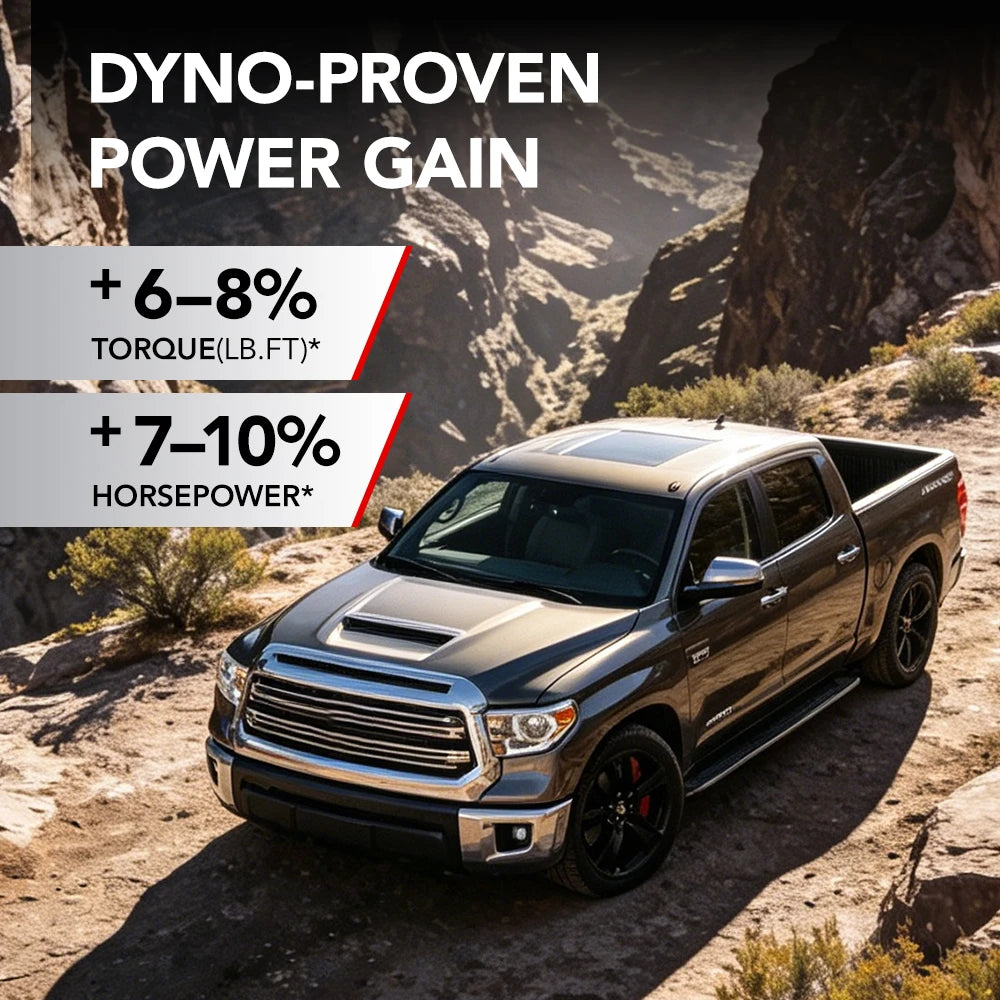
A: On a stock truck with no other modifications, expect 5-10 WHP — the exact number depends on your specific engine, mileage, elevation, fuel quality, and ambient conditions. The 6.2L typically sees the largest gains because it breathes the hardest at high RPM. The 4.8L sees the smallest absolute gain but the largest percentage improvement because its factory intake is the most restrictive relative to displacement. Gains are additive: trucks with cat-back exhausts and custom tunes see more. Claims of 15+ HP from an intake alone on these engines are not realistic without supporting modifications. The improvement you'll feel most is not peak horsepower — it's sharper part-throttle response and reduced hesitation when accelerating from a roll.
Q7: Is this a true cold air intake or a short ram?
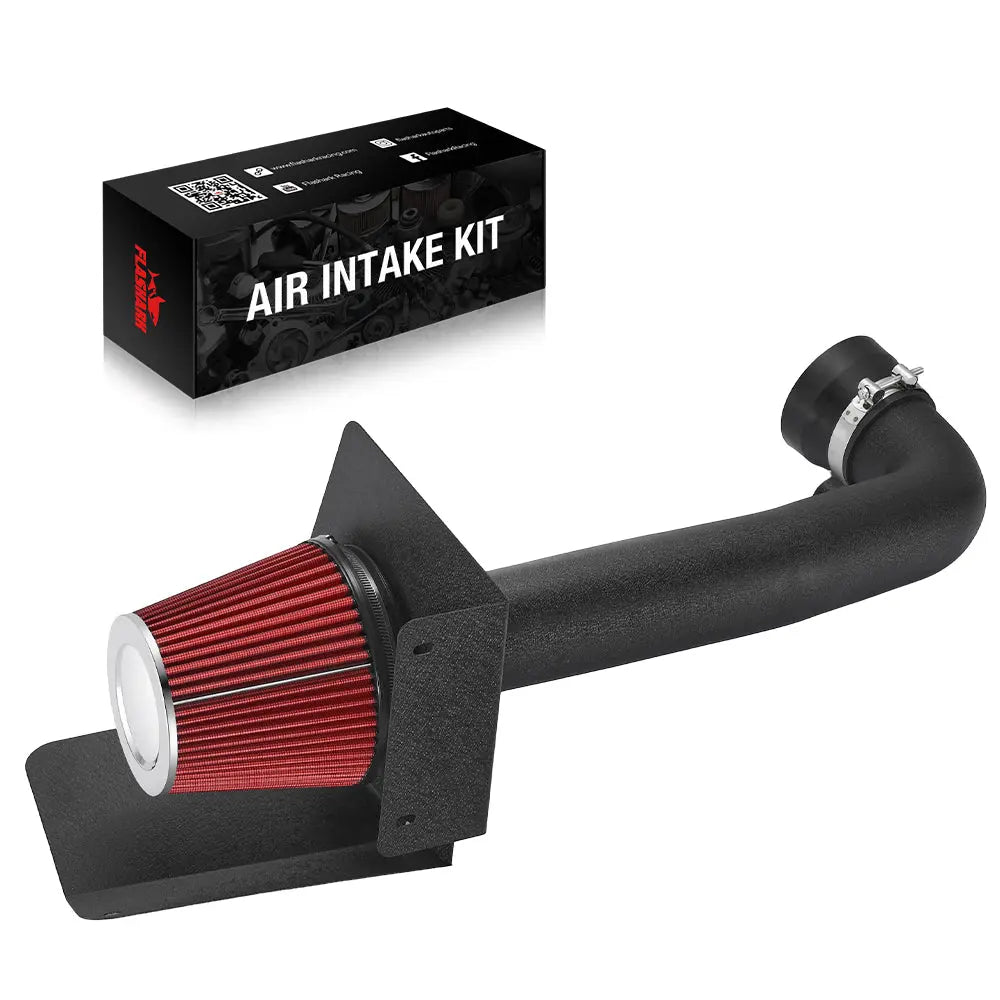
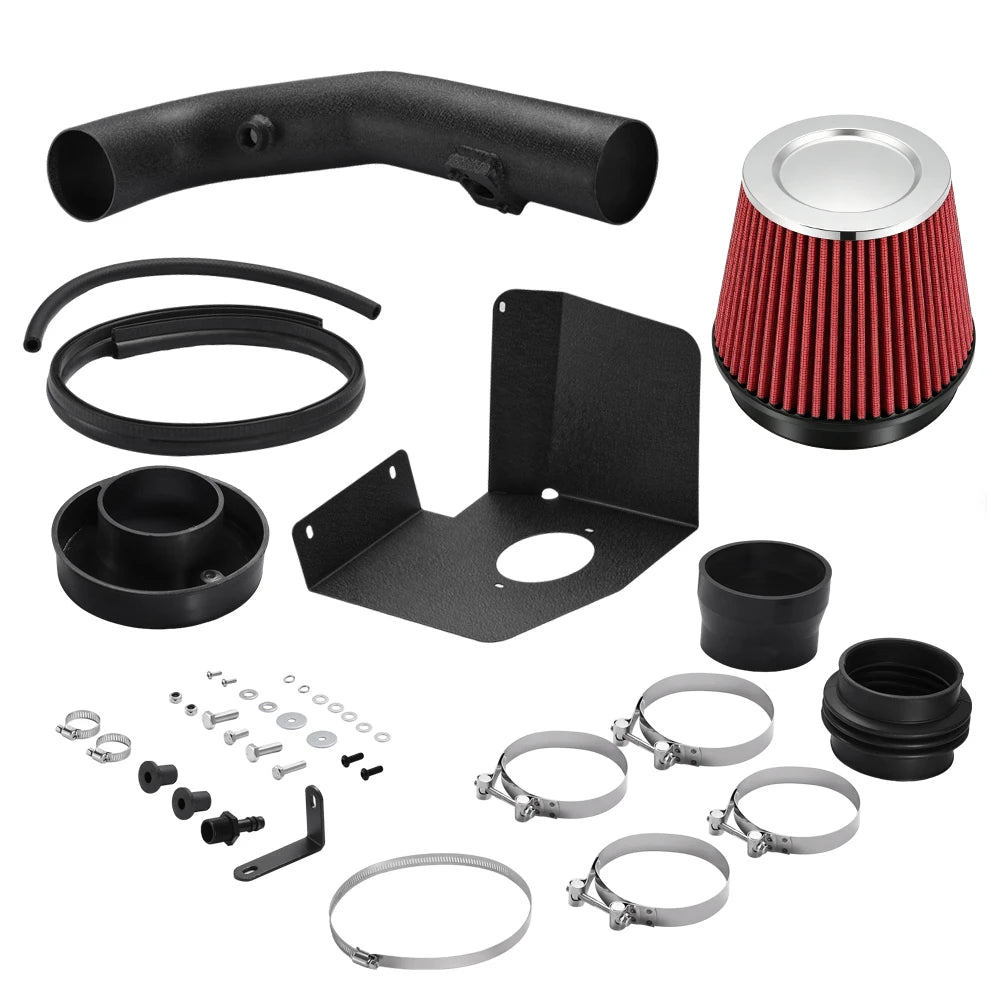
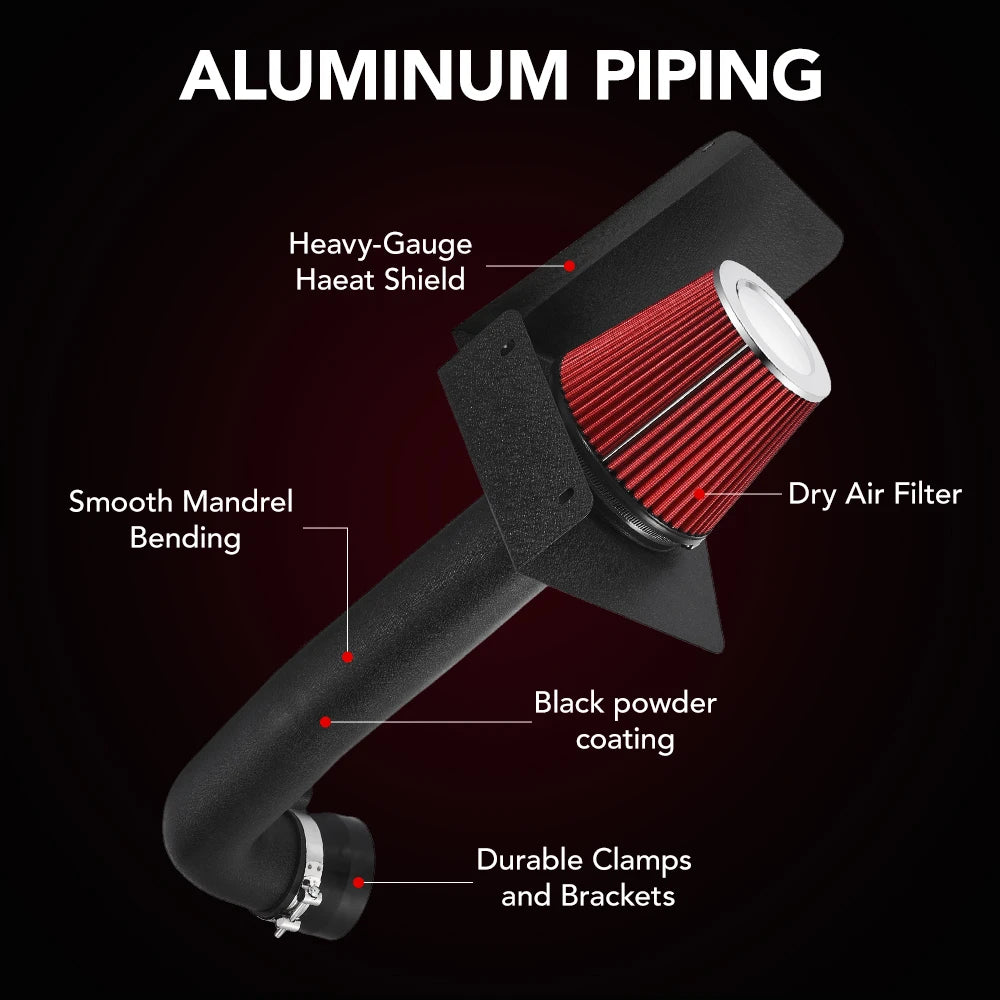
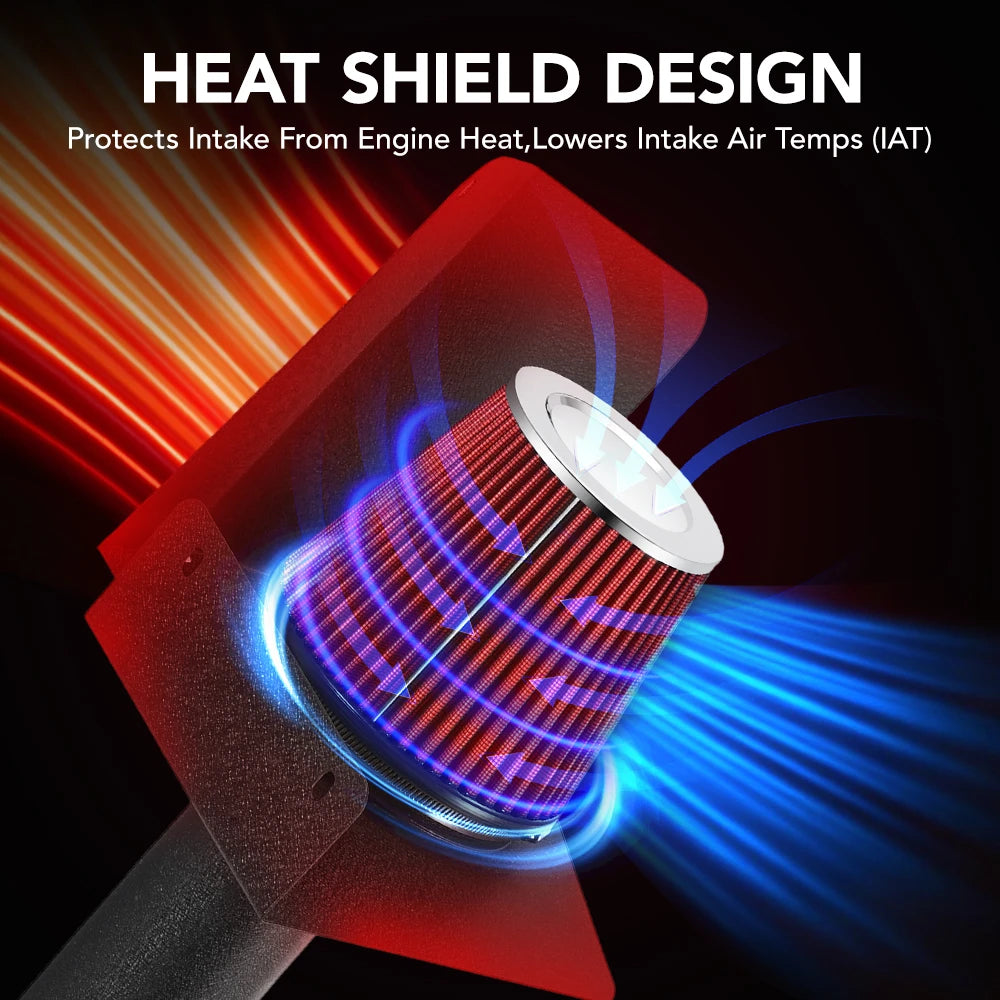
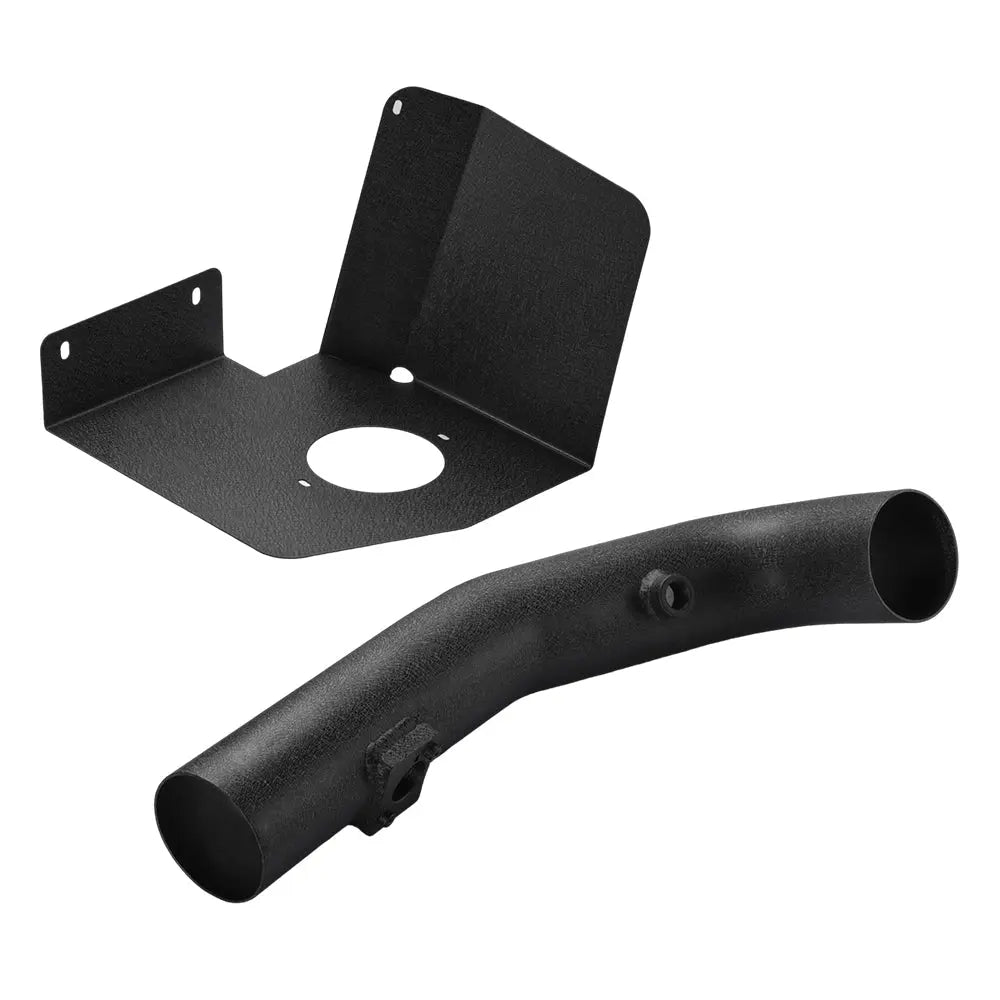
A: This is a short ram intake with a formed steel heat shield — not a true fender-well cold air intake. The filter sits in the factory airbox location, behind the headlight, sealed from the engine bay's radiant heat by the heat shield. A true cold air intake that routes the filter into the fender well would provide marginally lower intake temperatures at speed, but on a truck platform, the downsides outweigh the benefit: water ingestion risk during water crossings or deep puddles, dramatically increased filter contamination from road debris and tire spray, and more complex installation. The heat shield design is a practical compromise for a vehicle that works for a living.
Q8: Will this improve my towing performance?
A: An intake alone is not a towing upgrade. While you may notice slightly sharper throttle response when merging or passing with a trailer, the intake does not increase your truck's cooling capacity, transmission temperature threshold, or payload rating — and those are the real limits of towing performance. If you tow heavily, prioritize transmission cooling, proper weight distribution, and correct trailer brake setup. The intake's benefit during towing is incremental: cooler intake air during sustained highway loads (the heat shield helps here) and less intake restriction at wide-open throttle on grades. It will not transform your truck into a different class of tow vehicle.
Q9: Does the heat shield actually work?
A: Yes — with realistic expectations. The formed steel heat shield creates a physical barrier between the filter and the engine block, exhaust manifolds, and radiator. At idle, after the truck has been sitting, everything under the hood heats up, and the shield cannot prevent that — no intake can. Once the truck is moving and fresh air enters the engine bay through the grille and headlight gap, the shield directs cooler ambient air toward the filter while blocking direct radiant heat from the engine. Under sustained highway driving and towing, intake air temperatures with the shield are measurably lower than without it. It is not a magical fix, but it is a functional part of the design.
Q10: Will this cause a check engine light?
A: When installed correctly, no. The most common causes of a CEL after intake installation on these trucks are: (1) the MAF sensor installed backwards — the arrow on the sensor housing points toward the throttle body, (2) a loose or disconnected vacuum line — the PCV breather hose is the usual suspect, (3) a coupler leak between the MAF and the throttle body allowing unmetered air, (4) the MAF sensor connector not fully seated. Double-check these four items if you get a light. Codes are typically P0171/P0174 (lean banks) due to an intake leak, or P0101/P0102 (MAF range/performance) due to a reversed or disconnected sensor.
Q11: Do I need a tune after installing this intake?
A: Not on a stock truck. The factory ECU's closed-loop fuel trim range is wide enough to compensate for the revised intake flow. When you add headers, a camshaft, an aftermarket throttle body, or forced induction, a custom tune becomes necessary — not because of the intake alone, but because those modifications push the fueling and timing maps outside the ECU's adaptation range. If you're planning significant engine work, budget for a tune and install the intake as part of that process rather than separately.
Q12: Will this intake improve my fuel economy?
A: Do not expect a measurable MPG improvement. The aerodynamic drag of a full-size truck or SUV, its curb weight (5,000–6,000+ lbs), your driving habits, tire size, and load have a dramatically more significant impact on fuel consumption than a marginal reduction in intake restriction. Additionally, the more aggressive induction sound tends to encourage heavier throttle use, which reduces fuel economy. Any theoretical efficiency gain from reduced pumping losses is typically consumed by the driver's right foot as it enjoys the new sound. If fuel economy is your primary concern, this product is not the solution.
Q13: How loud is it? Will my truck sound different?
A: Yes — that's the point. At idle and light-throttle cruise, the sound is close to stock with a slightly deeper undertone. Under moderate acceleration (merging, passing, climbing grades), you'll hear a pronounced deep V8 induction growl that the factory multi-chamber silencer box was designed to eliminate. At wide-open throttle, the intake note is loud and aggressive — this is where the difference is most dramatic. It sounds like the engine it actually is, not the one GM's NVH department wanted you to hear. If you prefer a silent cabin, keep the factory intake.
Q14: How do I clean and maintain the dry filter?
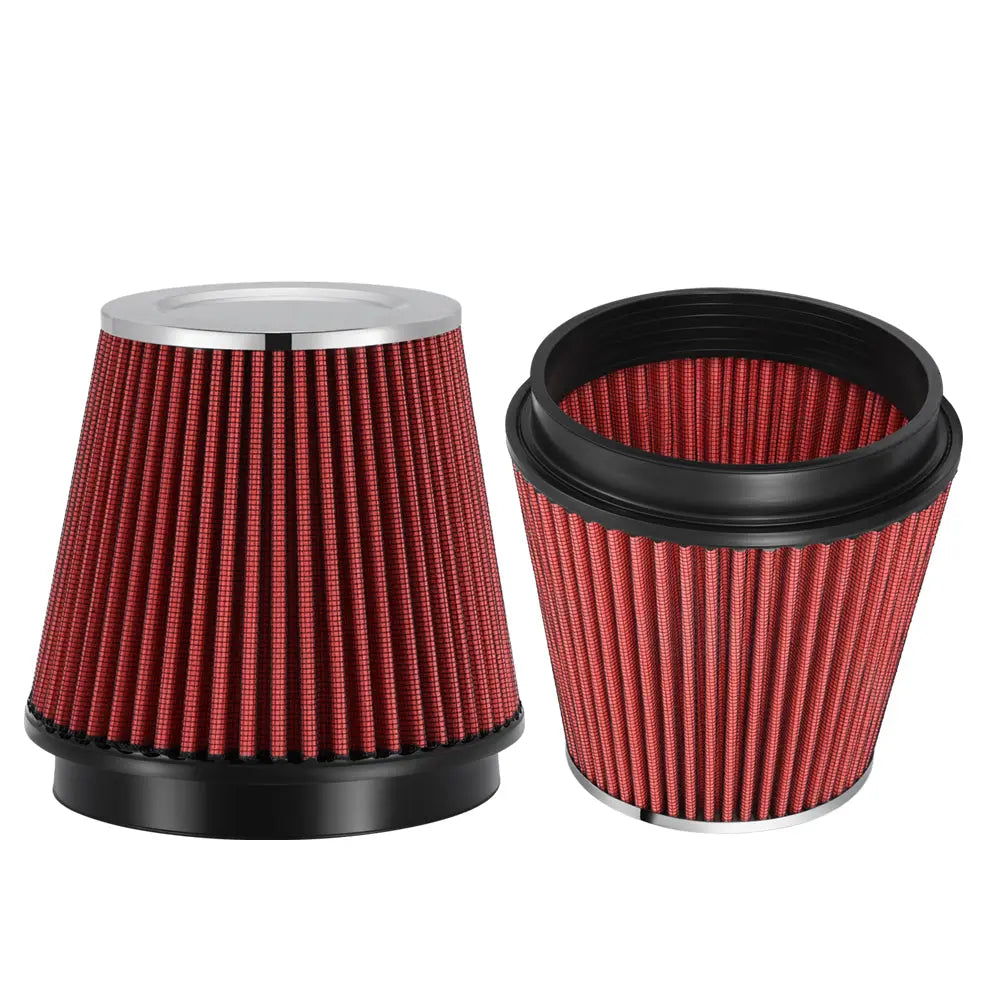
A: Clean the dry filter every 15,000-20,000 miles under normal street conditions. If you drive on dirt roads, off-road, or in dusty environments, shorten that to 5,000-10,000 miles. Procedure: (1) Remove the filter from the intake tube. (2) Tap it gently on a hard surface to dislodge loose debris. (3) Rinse with low-pressure water from the inside out — never from the outside in. (4) Do NOT use compressed air, solvents, or oil of any kind. (5) Let the filter air-dry completely before reinstallation — this can take several hours in humid conditions. (6) Never install a wet or damp filter. (7) Inspect the filter media for tears or damage before reinstalling. Replace if the media is compromised.
Q15: Does this fit 2WD and 4WD trucks?
A: Yes. The intake mounts in the engine bay, not on or near the drivetrain. 2WD and 4WD models of the listed vehicles use identical engine bay layouts, airbox mounting points, and intake routing. Drive configuration has no impact on intake fitment.




 Product Specifications


