



Decat 3” Downpipe for Jetta 2006-2010 2.0T

SKU: FLES08309

🏷️PRIME DAY SALE

Save $34.00
Sale price$142.00Limited Time Deal Regular price$176.00

🔥 Builders claimed this Prime Day deal in the last 24 hours

FLASHARK Catless Downpipe Exhaust for Jetta 2006-2010 2.0T

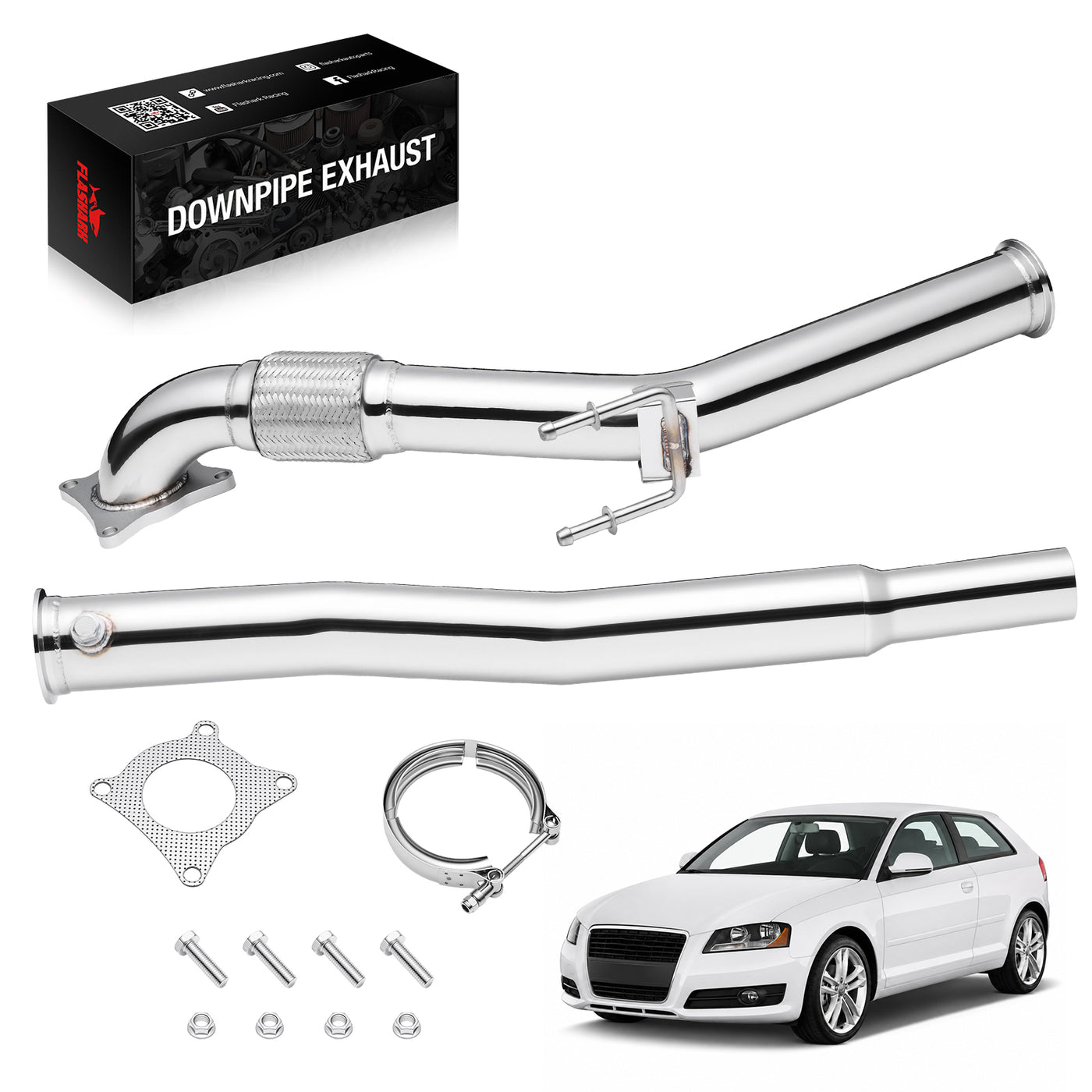
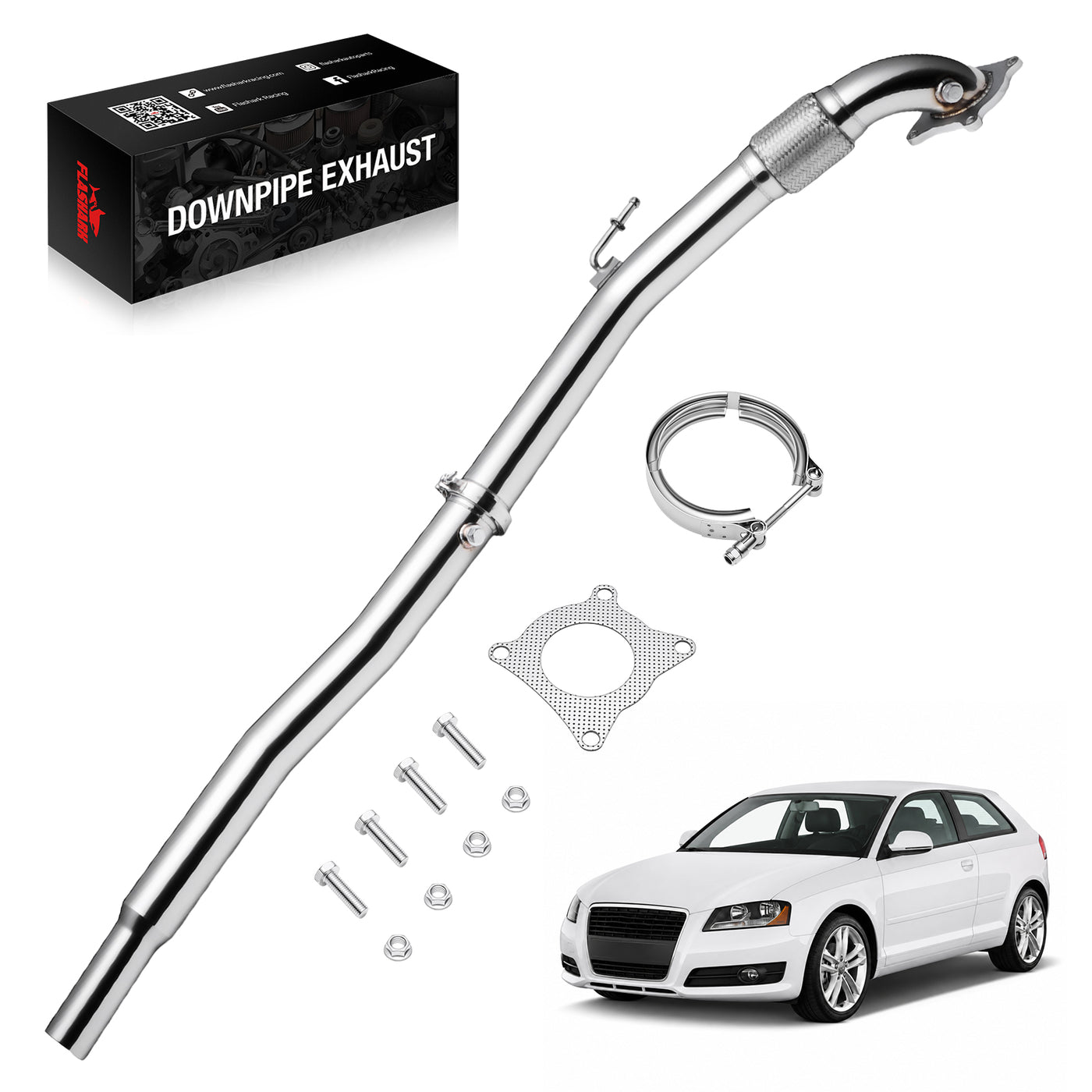
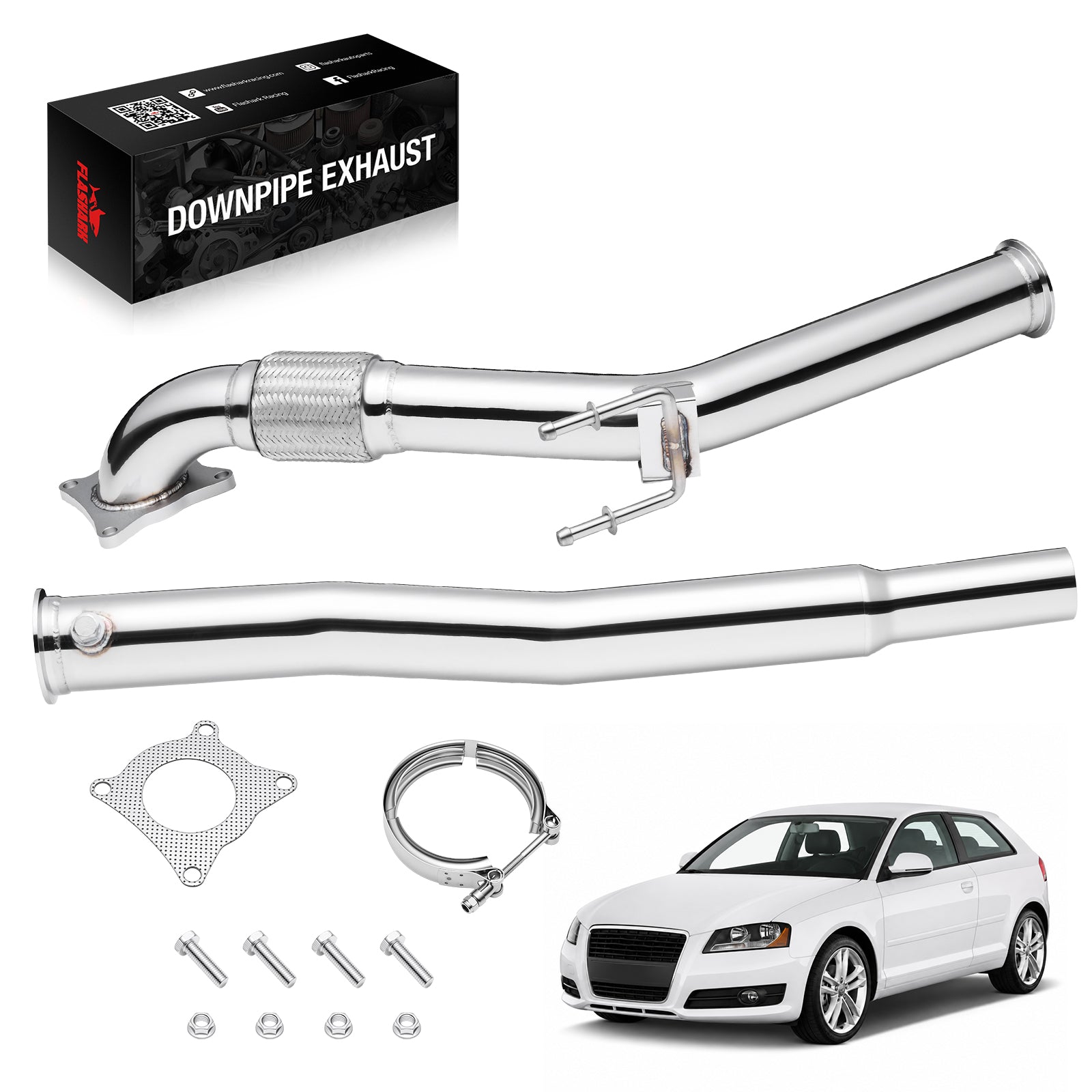
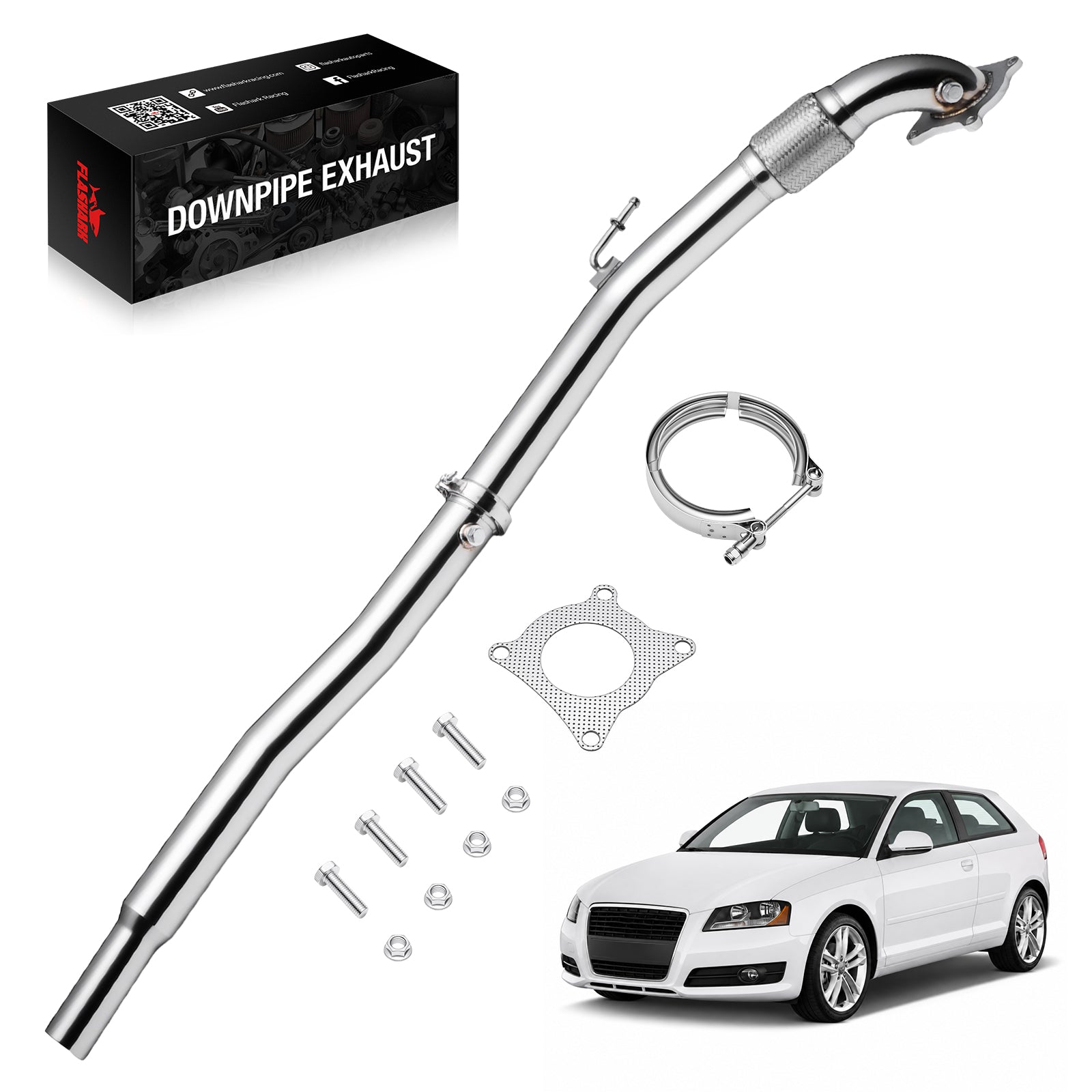
The FLASHARK Catless Downpipe Exhaust is designed for the Jetta 2006-2010 2.0T. This 3-inch decat downpipe improves exhaust flow, boosting horsepower and torque for turbocharged engines. Made from durable T-304 stainless steel, it offers easy bolt-on installation and enhanced engine performance with a deeper exhaust sound.

Specifications:

Brand Name: FLASHARK
Certificate: ISO9001:2000
Application: Exhaust Down Pipe
Material: T-304 Stainless Steel
Surface: Mirror Polish
Model: DP17516-SL
Inlet/ Outlet Sizes: 3.25"/ 2.25
Piping Diameter (with welded flex pipe): 3.0"

Shipping Information:
Delivery Time: 3-5 business days.

Warranty:
Duration of Warranty: 1 Year
Return Policy: Items can be returned within 14 days of receipt

Catless Downpipe Exhaust for 2006-2011 VW Golf/GTI MK5 & Jetta MK5 & Audi A3 2.0T Decat 3 inch

Features:
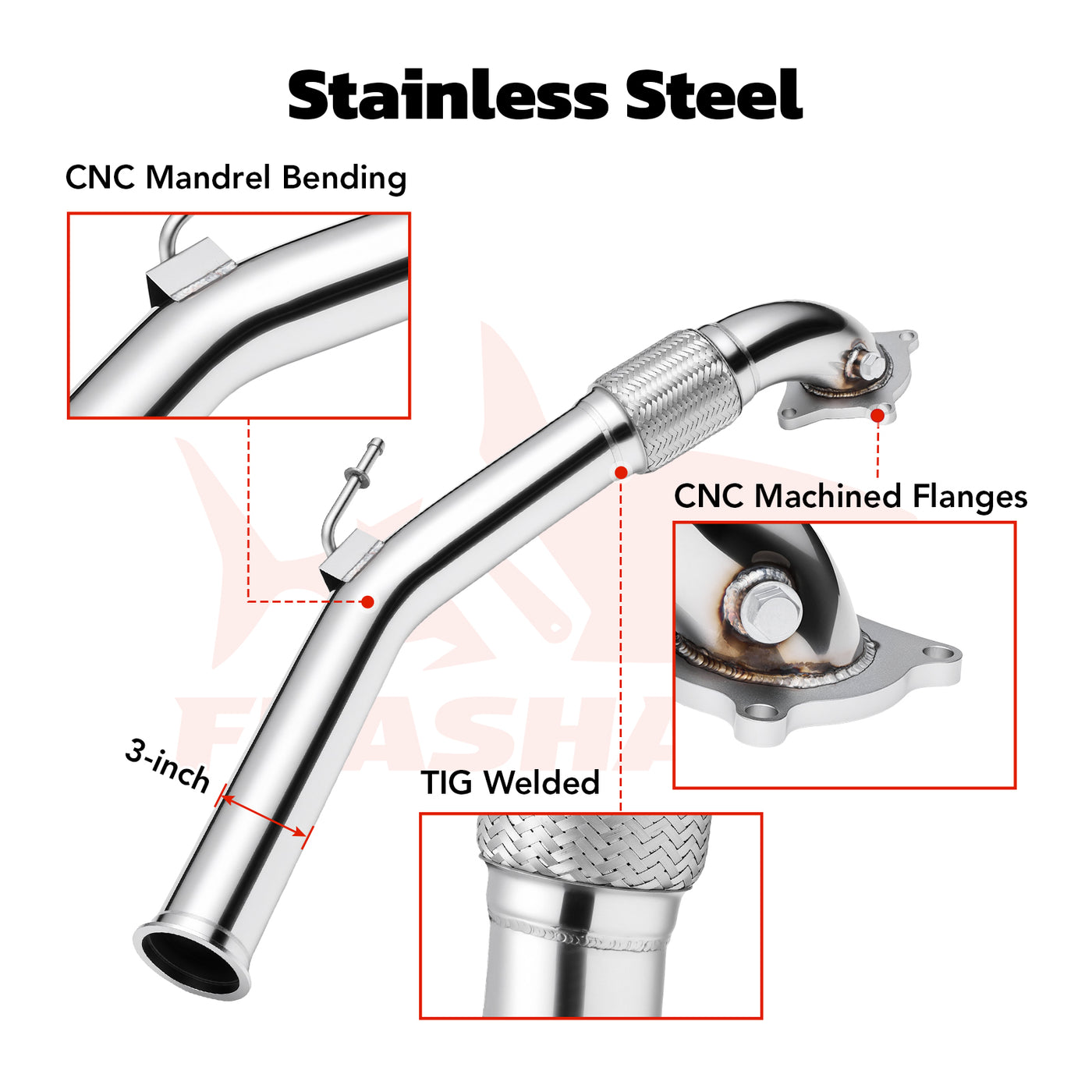
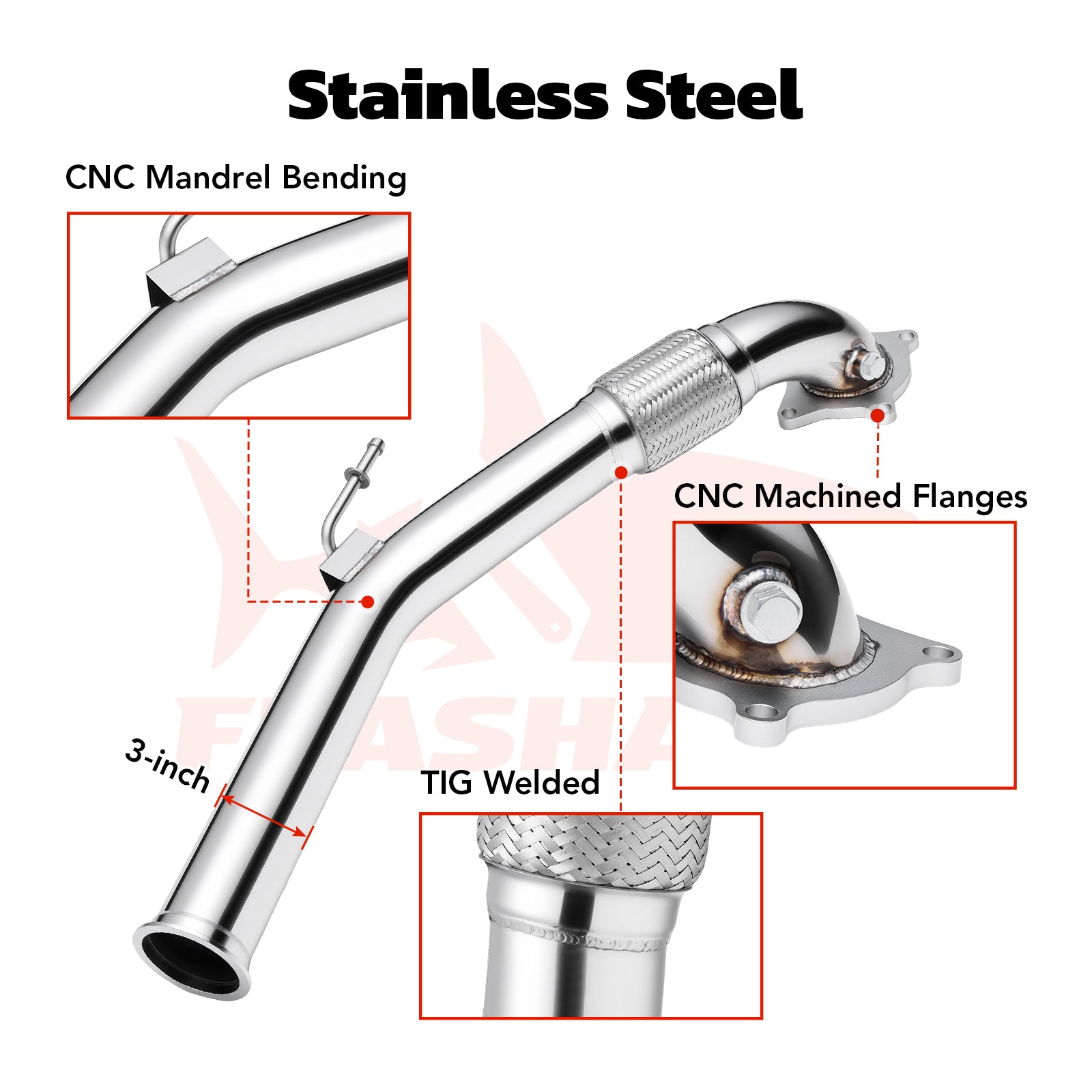
TIG Welded CNC Machine Flange
O2 Sensor Bungs Insertion
Enlarged Flex Pipe for enhanced performance.
Enhanced Welding Quality for increased durability.
Upgraded Turbo Flange for improved efficiency.
Thicker T-304 Piping for added strength and longevity.
Direct Bolt-On Installation, Requires NO Modification

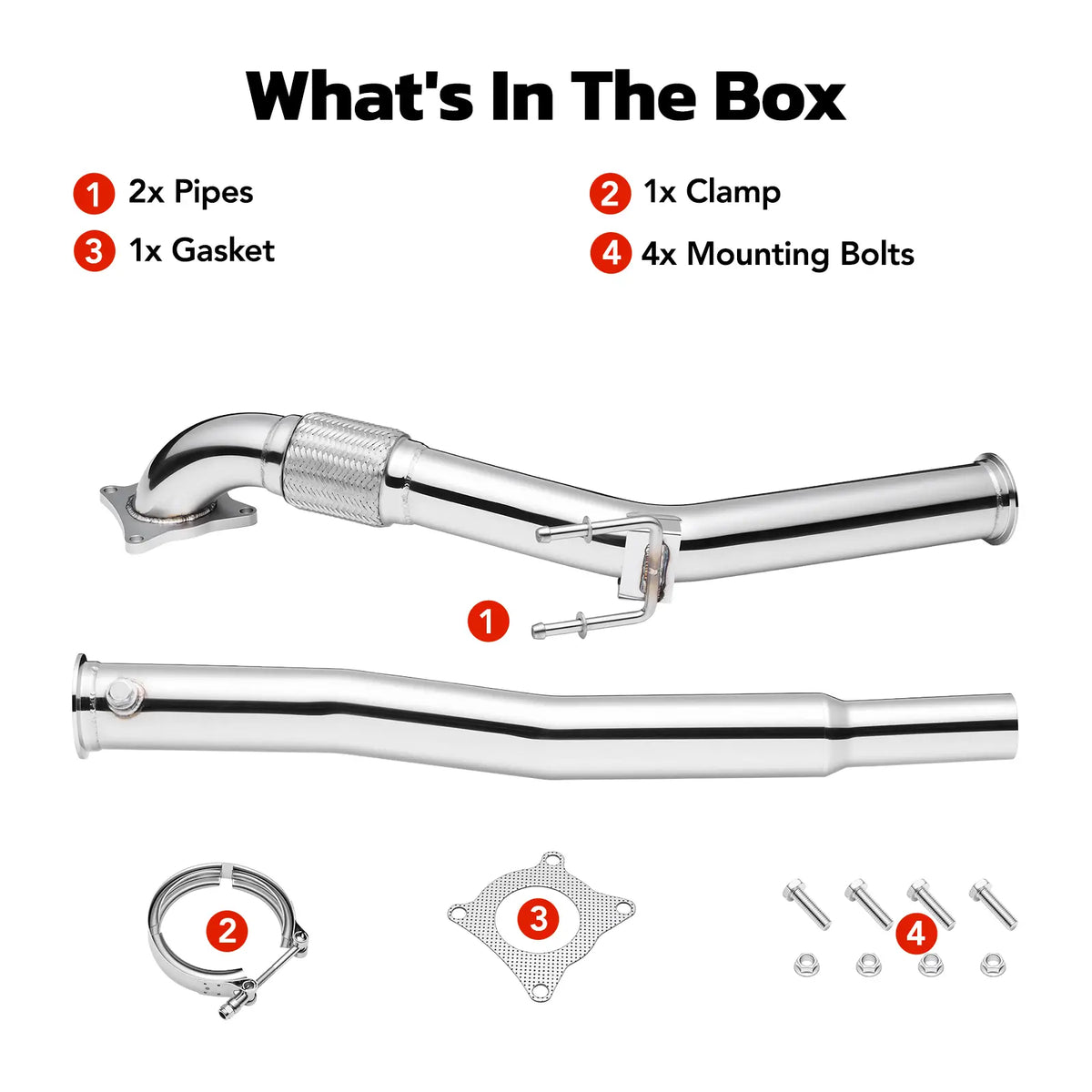
NOTE: The clamps are for 76mm-wide tubes and are retractable. 

FLASHARK Downpipe is specifically designed to replace the restrictive stock downpipe in your 2006-2011 Golf/GTI MK5, Jetta MK5, and Audi A3 2.0T models, located right after the catalytic converter. Upgraded downpipes deliver significant gains in horsepower and torque on turbocharged vehicles by allowing exhaust gases to flow more freely as they exit the turbocharger. The high-quality exhaust manifold can improve exhaust airflow and enhance the driving experience. 

Fitment:

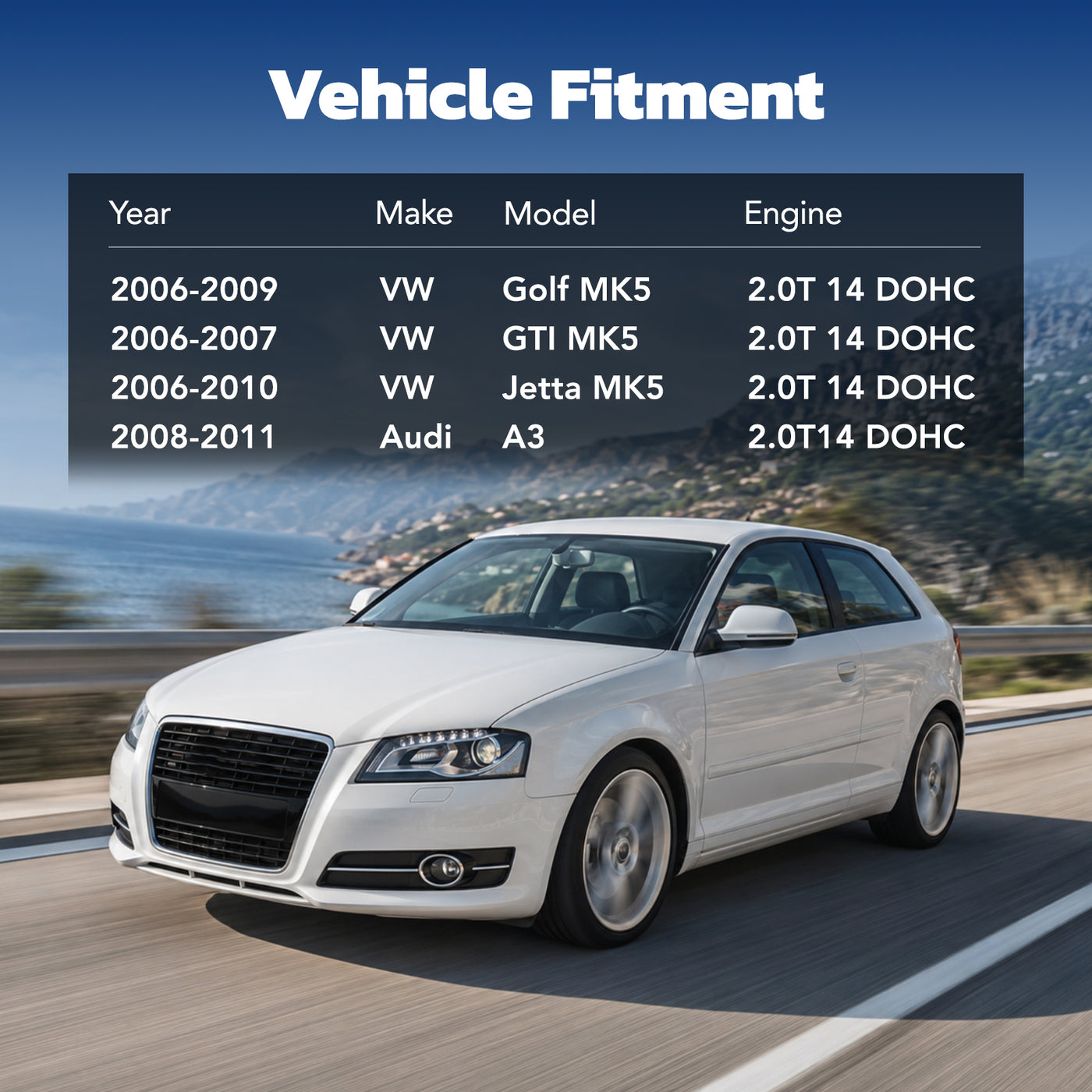
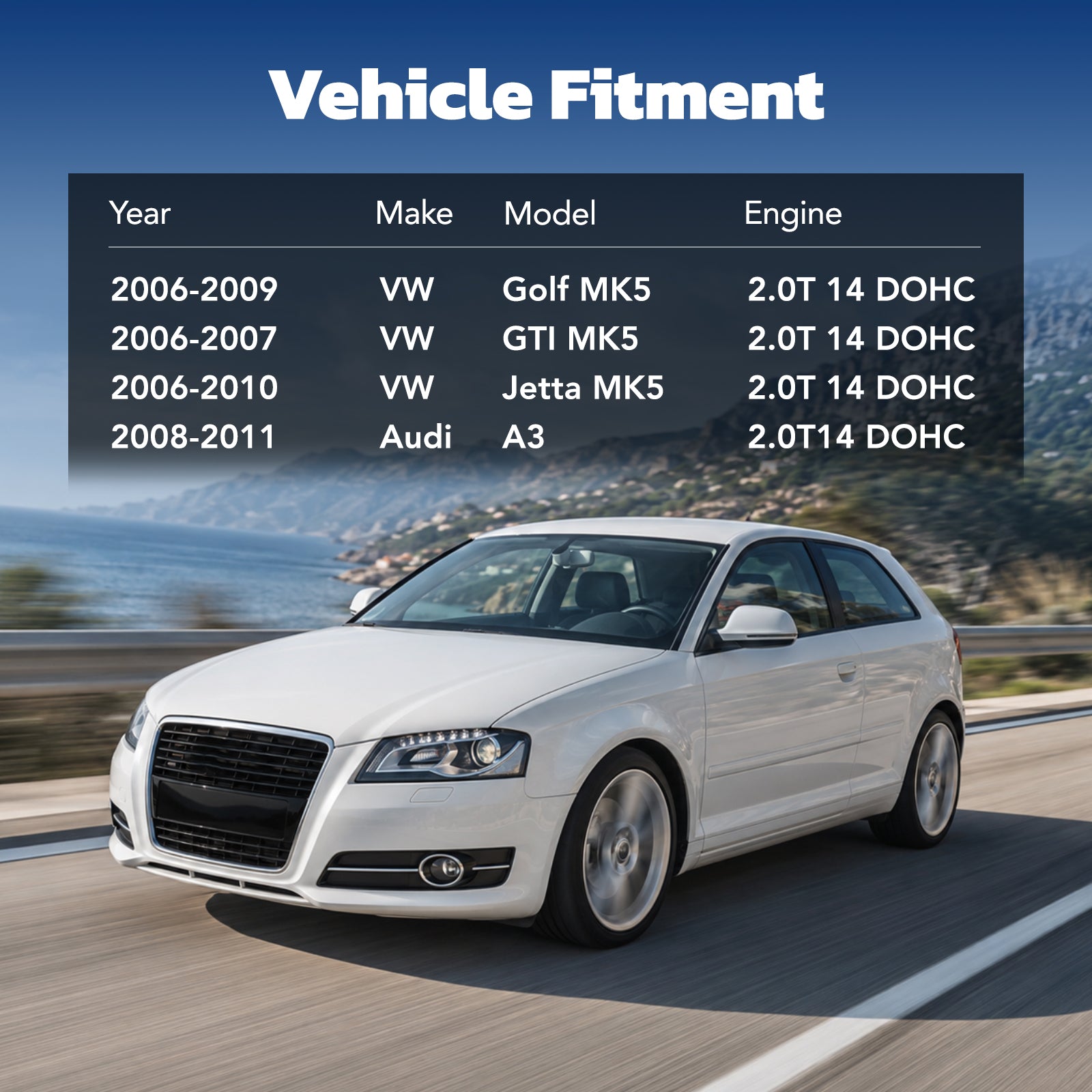
  • 2006 VW Golf MK5 2.0L/2.0T 14 DOHC 
    2007 VW Golf MK5 2.0L/2.0T 14 DOHC 
    2008 VW Golf MK5 2.0L/2.0T 14 DOHC 
    2009 VW Golf MK5 2.0L/2.0T 14 DOHC 
  • 2006 VW GTI MK5 2.0L/2.0T 14 DOHC
    2007 VW GTI MK5 2.0L/2.0T 14 DOHC
    (Except 2008 Volkswagen GTI, 2009 Volkswagen GTI) 
  • 2006 VW Jetta MK5 2.0L/2.0T 14 DOHC
    2007 VW Jetta MK5 2.0L/2.0T 14 DOHC
    2008 VW Jetta MK5 2.0L/2.0T 14 DOHC
    2010 VW Jetta MK5 2.0L/2.0T 14 DOHC
    (Except 2009 Jetta) 
  • 2008 Audi A3 2.0V/2.0T14 DOHC
    2009 Audi A3 2.0V/2.0T14 DOHC
    2010 Audi A3 2.0V/2.0T14 DOHC
    2011 Audi A3 2.0V/2.0T14 DOHC
    (Except2006 Audi A3,2007 Audi A3Ambiente Hatchback ) 
  • NOT FOR TSI / CBT Models

Q1: Will a 3" decat downpipe fix my Jetta's turbo lag?

A1: It won't fix lag directly, but it reduces backpressure and lets the turbo spin up faster once it's already spooling. The lag you feel is mostly a function of the turbo's size and the engine's displacement — the 2.0L EA113 is inherently laggy compared to smaller turbos. A decat downpipe helps the turbo breathe and reach peak boost more consistently, which translates to quicker throttle response in the mid-range. Lag itself won't disappear, but the car will feel more responsive once boost builds.

Q2: Do I need a tune for the VW Jetta 2.0T after installing a decat?

A2: Absolutely. The EA113 2.0L TFSI is highly tune-dependent, and running a decat without a tune risks running too rich or too lean in open-loop conditions. The stock ECU expects backpressure from the catalytic converter and adjusts fueling accordingly. A stage 1 or stage 2 tune recalibrates the fuel and timing maps to work with the increased flow. Without it, you'll get a check engine light at minimum, and potentially worse driveability. Pair the decat with a tune — that's the whole point of doing the swap.

Q3: What does a decat downpipe do for horsepower on the MK5 Jetta 2.0T?

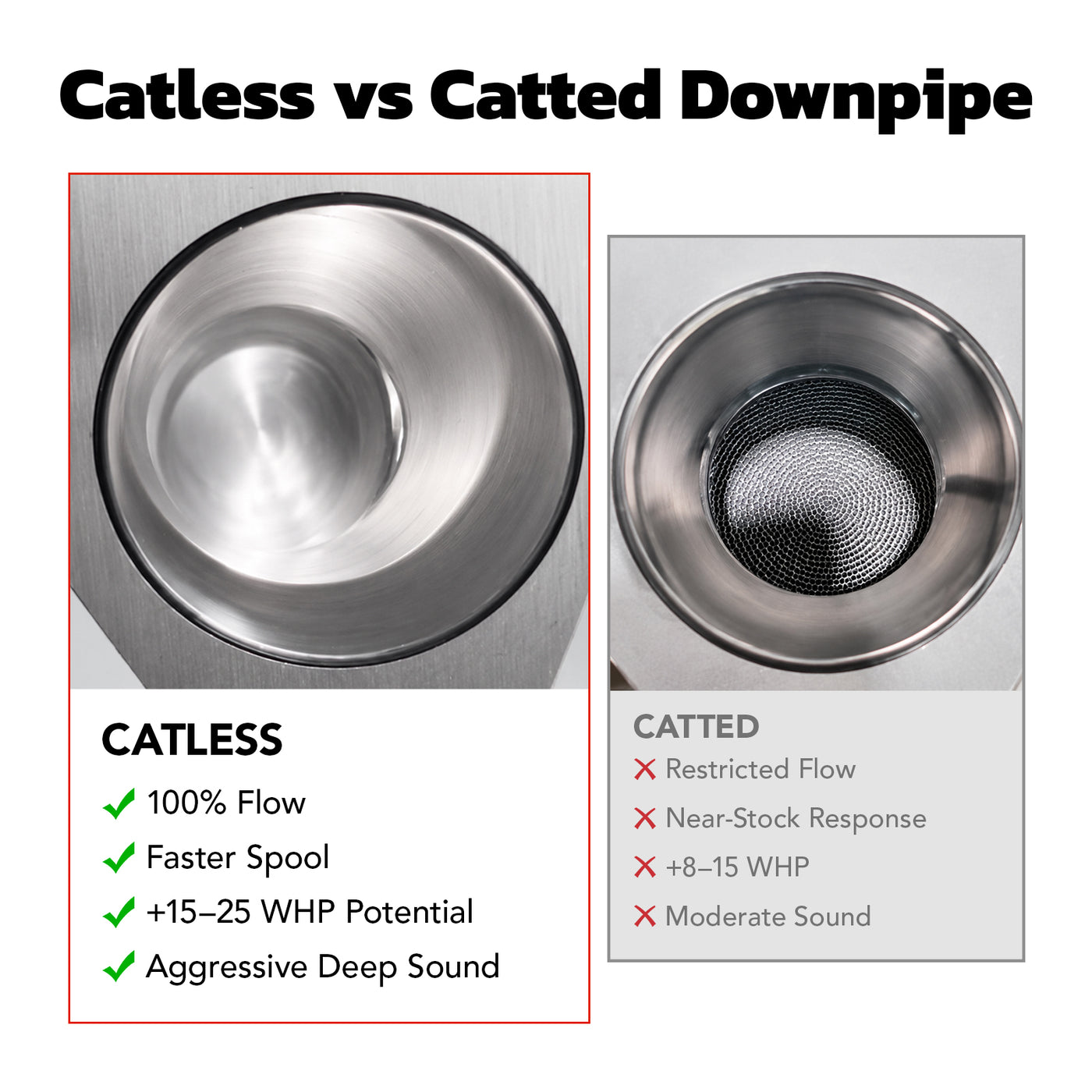
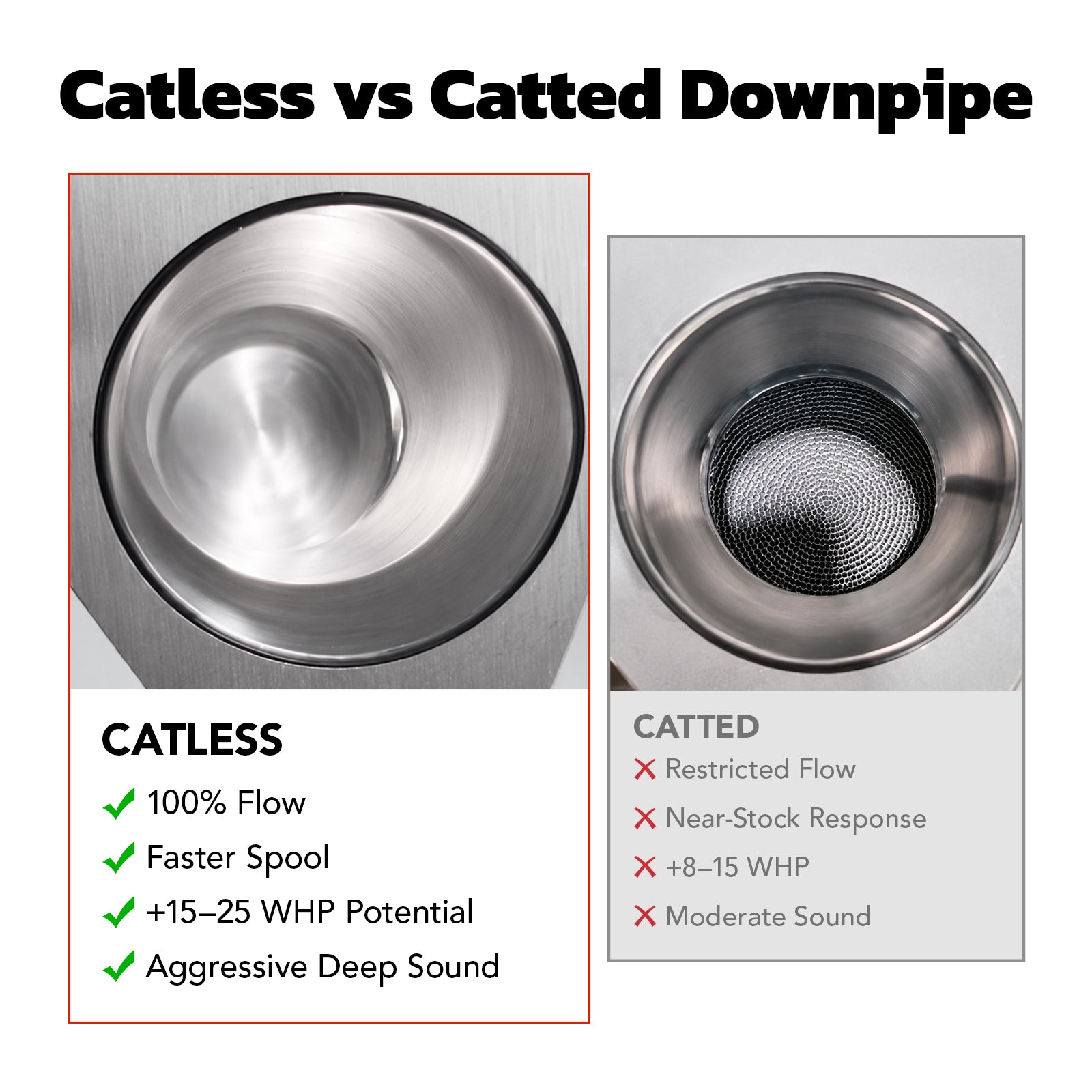
A3: The numbers depend heavily on what stage you're running. On a stock turbo with a stage 1 tune, expect roughly 15-25 whp over a stock downpipe. The real gains come with supporting mods — a larger intercooler, a free-flowing intake, and eventually a bigger turbo. The decat removes one of the biggest flow restrictions on the EA113 platform. Dyno results from the MK5/MK6 GTI and Jetta community show consistent torque gains across the mid-range as well, not just peak power.

Q4: Is the VW Jetta 2.0T decat downpipe legal in California?

A4: No. California Vehicle Code Section 27156 prohibits any device designed to bypass, delete, or render inoperative any component of a vehicle's emissions control system. A decat downpipe falls squarely in that category. Installing it on a street-driven vehicle in California is illegal. The only exception is for vehicles exclusively used in competition, and even then, it must be properly documented. For track-only cars, the decat is fine — for anything that sees public roads, keep a high-flow catted downpipe or a proper CARB-compliant unit.

Q5: What's the difference between the Jetta 2.0T and the GTI/A3 downpipe?

A5: Functionally, the same — all three (Jetta, GTI, Audi A3) use the EA113 2.0L TFSI engine with the same turbo and exhaust routing. The downpipe bolt pattern and flange size are identical. The main differences are aesthetic and fitment around the chassis — the Jetta's floorplan is slightly different from the GTI's, so the mid-pipe section might angle differently. A well-designed universal-fit or model-specific 3" decat downpipe will clear the subframe and steering components on all three with minor adjustments.

Q6: Will a decat downpipe cause a check engine light on the Jetta?

A6: Yes, almost every time. The front O2 sensor reads the exhaust gas composition before the cat, and without a catalytic converter there, the readings go out of expected range — that throws a P0420 code immediately. You'll also get codes related to the rear O2 sensor being out of range during closed-loop operation. The fix is either a tune that disables O2 monitoring for the post-cat sensor, or O2 spacers to fake readings. Most quality tunes for the EA113 platform handle this automatically.

Q7: How hard is the downpipe installation on a 2006-2010 Jetta 2.0T?

A7: Moderate difficulty. The hardest part is getting to the old downpipe — it's夹在turbo and mid-pipe with limited clearance. You'll need to support the engine from above (through the hood) when loosening the turbo outlet flange, otherwise the engine tilts and stresses the motor mount. Plan for 3-5 hours if you're doing it yourself. The VAG diagnostic system (VCDS) is also helpful to have for monitoring boost and O2 sensor data post-install. A good jack and jack stands are non-negotiable — this is not a crawl-under-with-a-flashlight job.

Q8: What size piping does the Jetta 2.0T decat downpipe use?

A8: 3 inches (76mm). That's the standard for the EA113 platform when you're going decat. The stock downpipe is 2.5" and has a cat built in, so the diameter increase alone helps flow. A 3" decat with a smooth mandrel-bent tube and proper merging collector at the turbo outlet gives the best results. Avoid crushed or restrictive bends — the fewer and smoother the bends, the better the exhaust flows.

Q9: Can I run a decat downpipe with the stock turbo on my Jetta?

A9: Yes, and many people do. The stock K03 turbo on the EA113 is the main limiting factor for power, not the downpipe. A decat helps the turbo work more efficiently but won't hurt it. Just make sure you have a tune — the stock ECU doesn't know how to handle the changed exhaust dynamics. A decat with a stage 1 tune is the most common setup for daily-driven Jettas. If you're planning to upgrade the turbo later, the decat is already in place and you'll only need the tune upgraded.

Q10: Does a decat affect fuel economy on the Jetta 2.0T?

A10: You'll probably see a small drop in fuel economy, especially under light throttle cruising, because the engine runs slightly richer without the catalytic converter's feedback. On a properly tuned car, the difference is minimal — maybe 1-2 MPG. Heavy-footed driving will negate any gains anyway. The trade-off is worth it for most enthusiasts, but if you're chasing economy, the decat isn't helping that cause.

Q11: What's the sound difference with a decat downpipe on the EA113?

A11: The turbo flutter sound becomes more pronounced — that chirping, snapping noise on throttle lifts is amplified noticeably. The exhaust note in general is deeper and less muffled, with more presence on acceleration. At idle, the car sounds a bit more rough and aggressive. It's not crazy loud without a catback, but you definitely notice it. With a catback added on top, it gets much louder. Most people with the EA113 decat setup describe the sound as "more alive" rather than outright obnoxious.

Q12: What should I look for in a quality VW Jetta decat downpipe?

A12: T-304 stainless steel construction is standard for a reason — it resists corrosion and handles the heat. Look for a proper bellmouth or smooth transition at the turbo outlet, not a cheap weld-over. The flanges should be thick and flat, with correct port matching for the EA113 turbo outlet. CNC-machined flanges are a step up. A flex section near the turbo outlet absorbs engine movement and prevents stress cracks — that flex section is worth paying extra for. Avoid anything that requires cutting the stock exhaust, unless you plan to replace the whole system.

You may also like