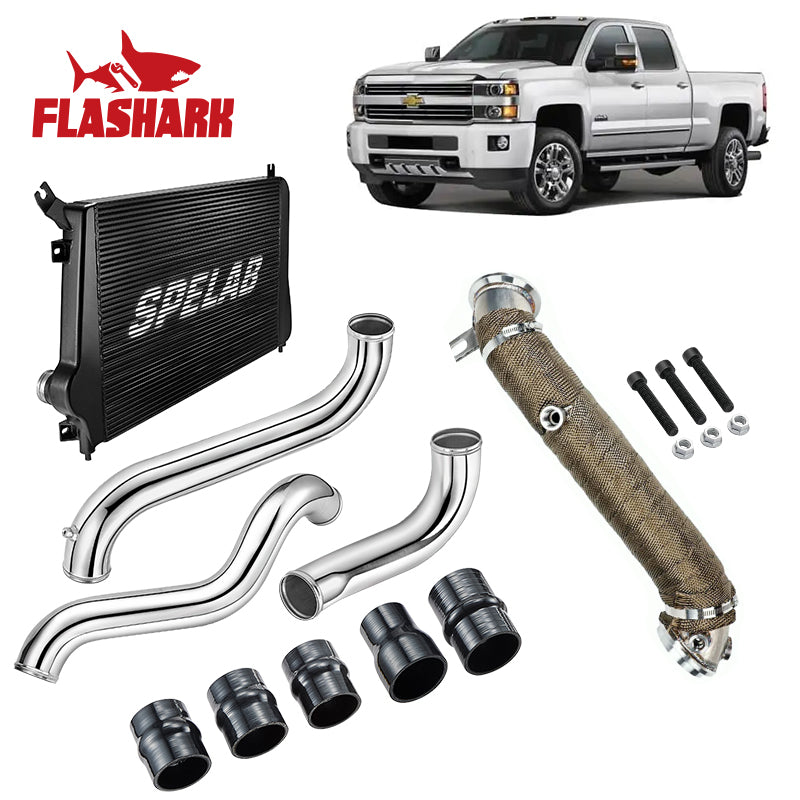
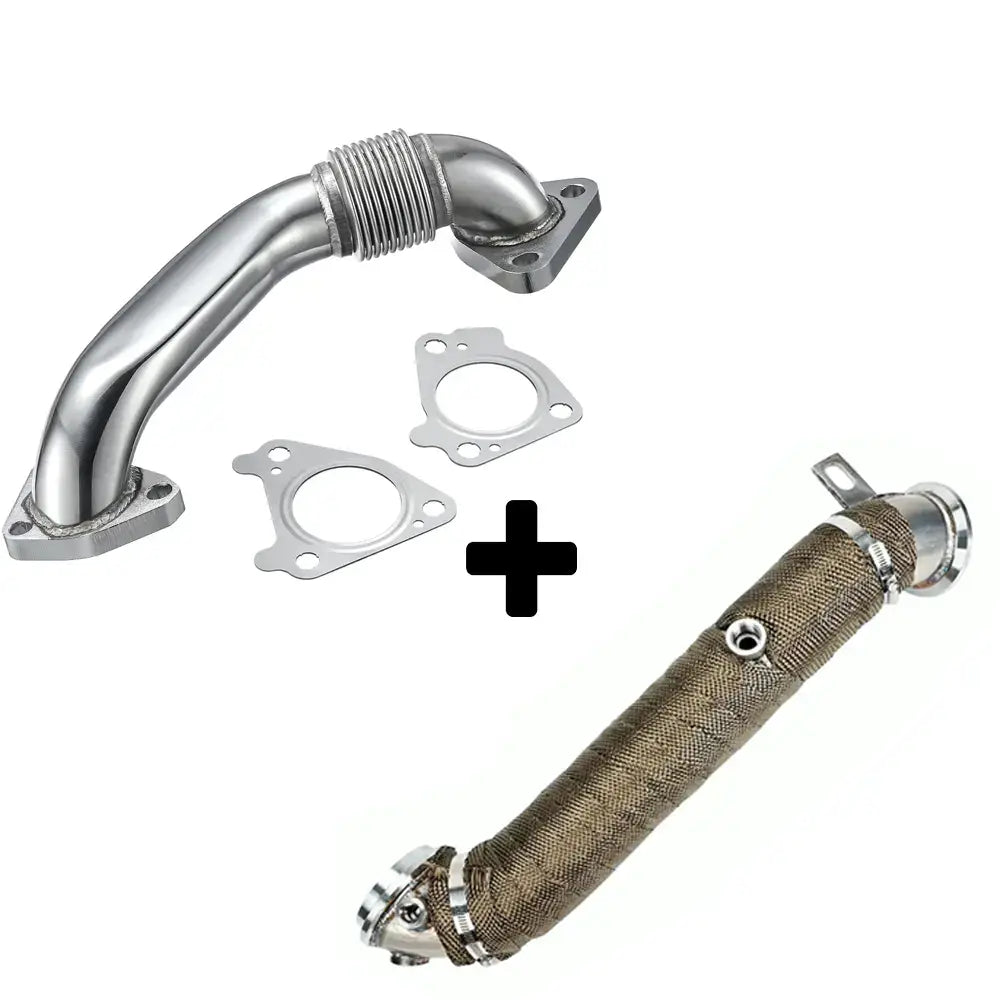
Frequently Bought Together
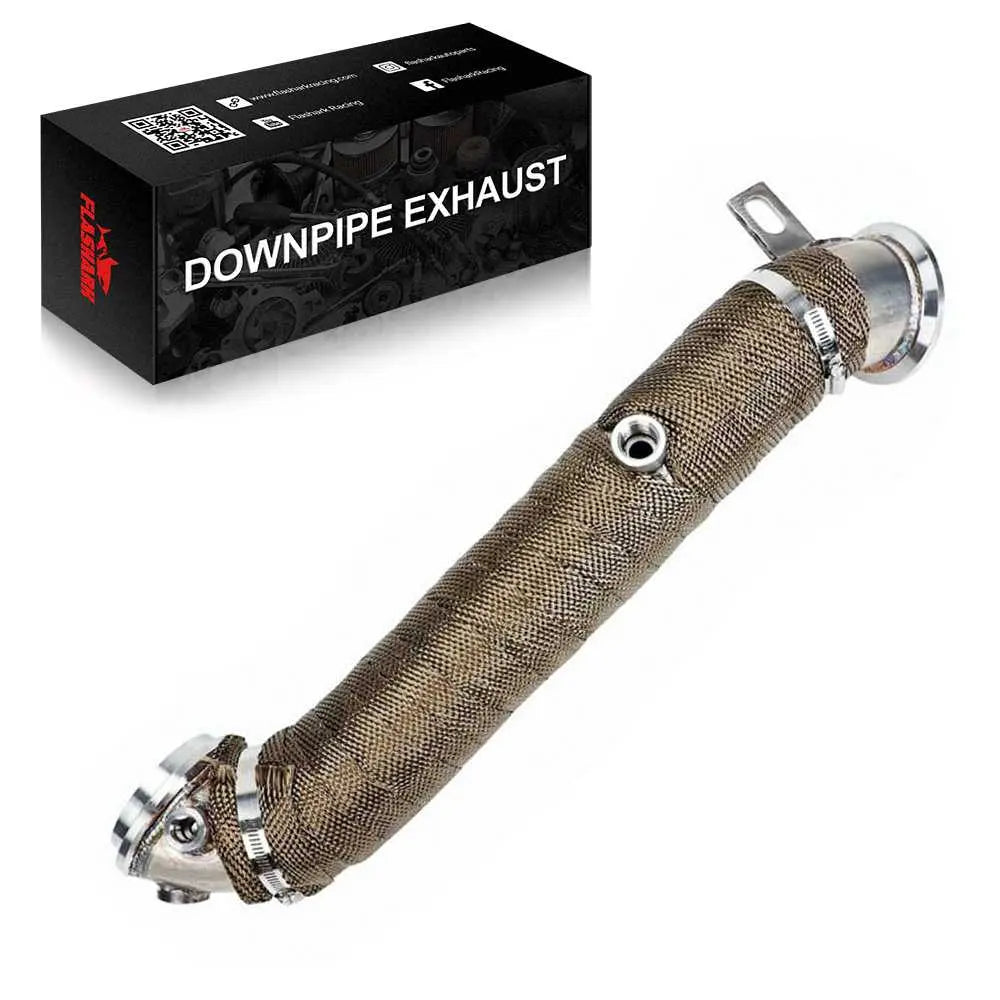
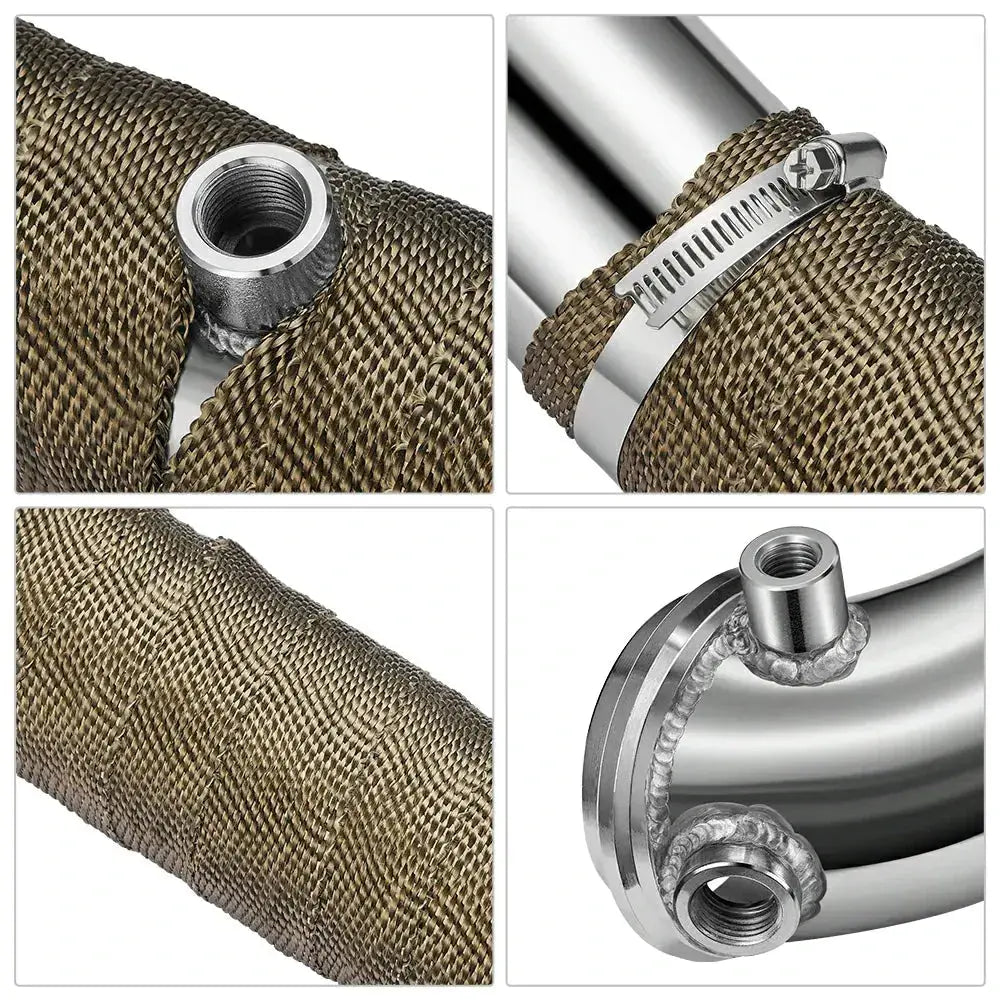
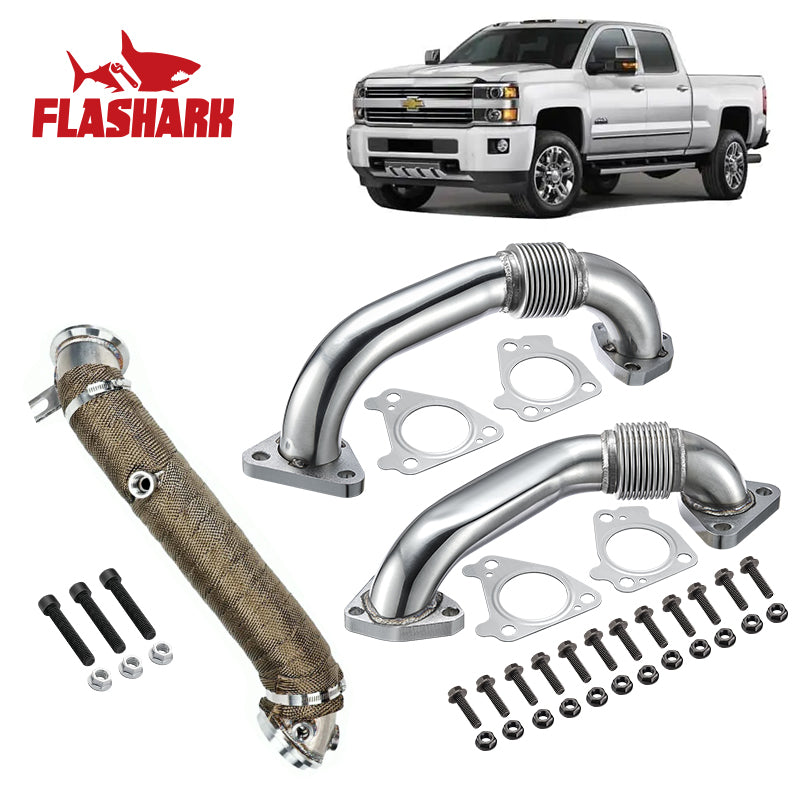
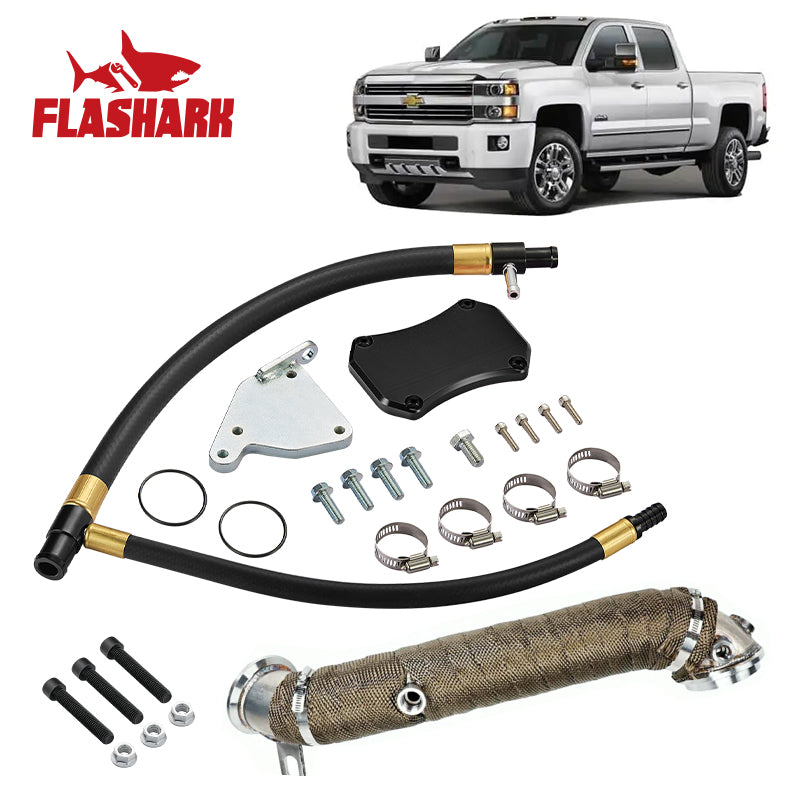
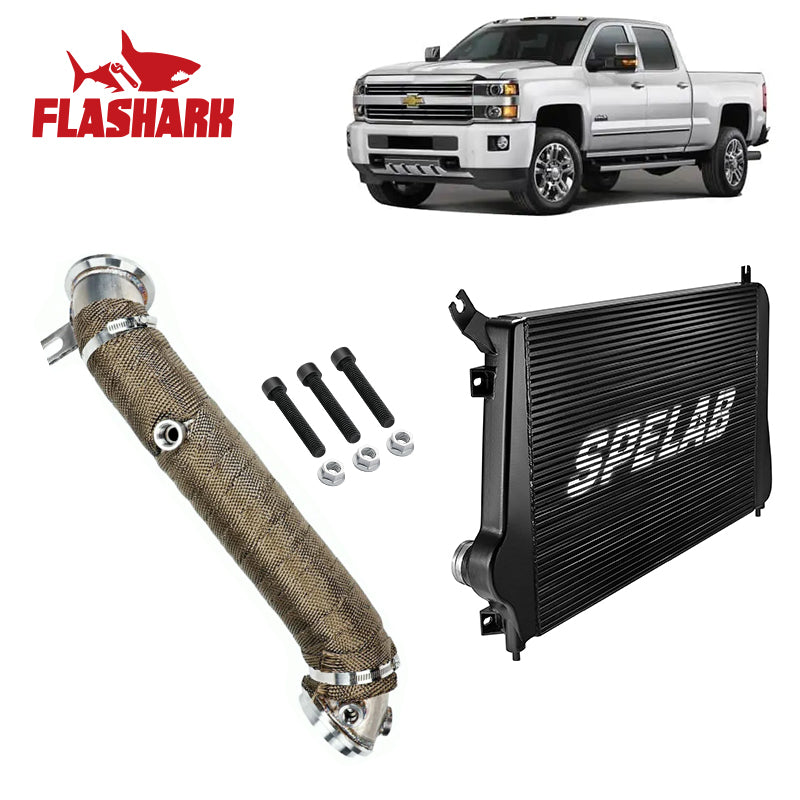
Flashark LML Duramax downpipes are designed to seamlessly replace your restrictive stock downpipes, which are located right after your catalytic converters. These upgraded 6.6L LML Duramax downpipes significantly enhance horsepower and torque on turbocharged vehicles by allowing exhaust gases to flow more freely as they exit the turbocharger. The high-quality, precision-engineered downpipe improves exhaust airflow, leading to a smoother and more efficient engine performance, ensuring a better driving experience.
Specifications:
Brand Name: FLASHARK
Certificate: ISO9001:2000
Application: Exhaust Down Pipe
Material: Stainless Steel
Surface: Mirror Polish
Model: DP29758 (ES08319)
Made of High-Quality T-304 Stainless Steel
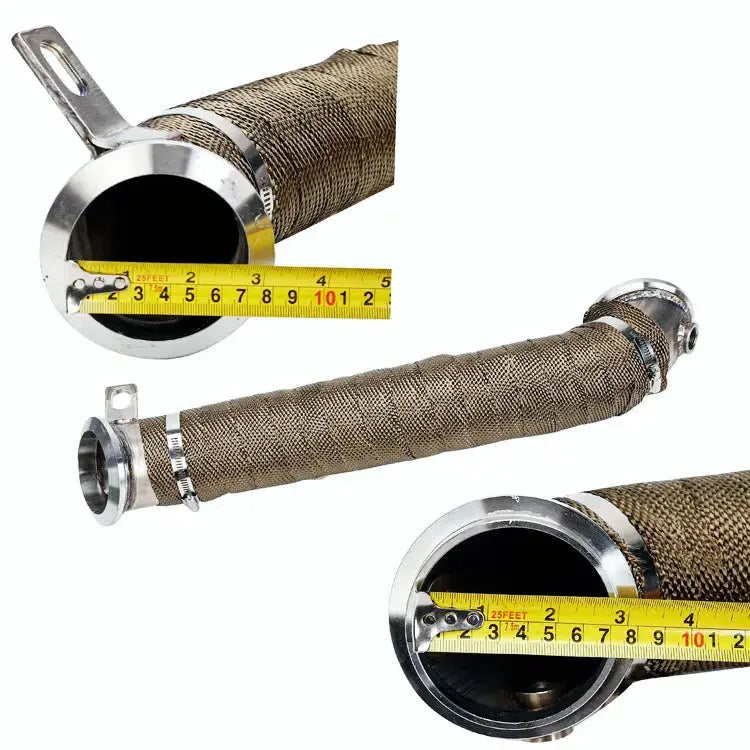
Inlet/ Outlet Sizes: 3 ''OD / 3 ''OD
Pipe Diameter: 3.0''
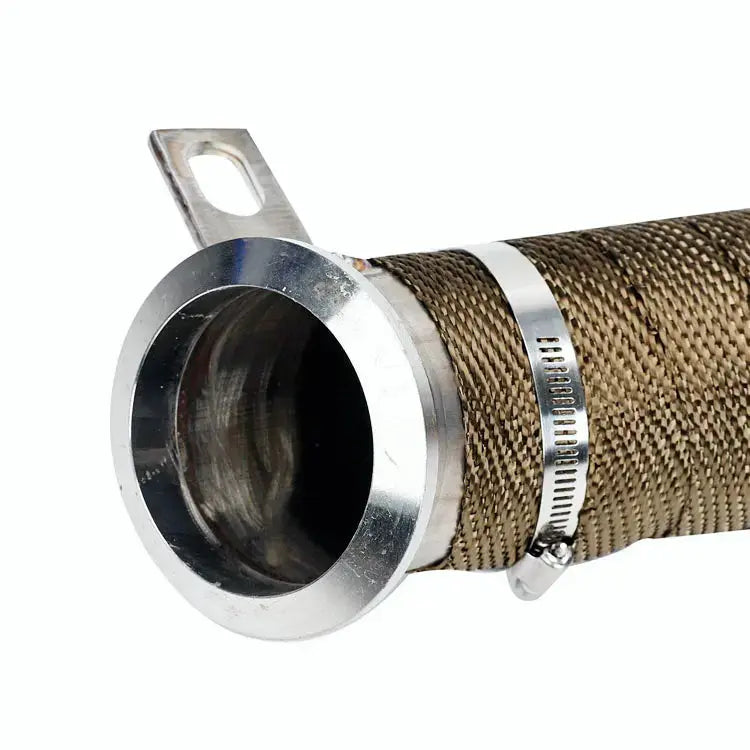
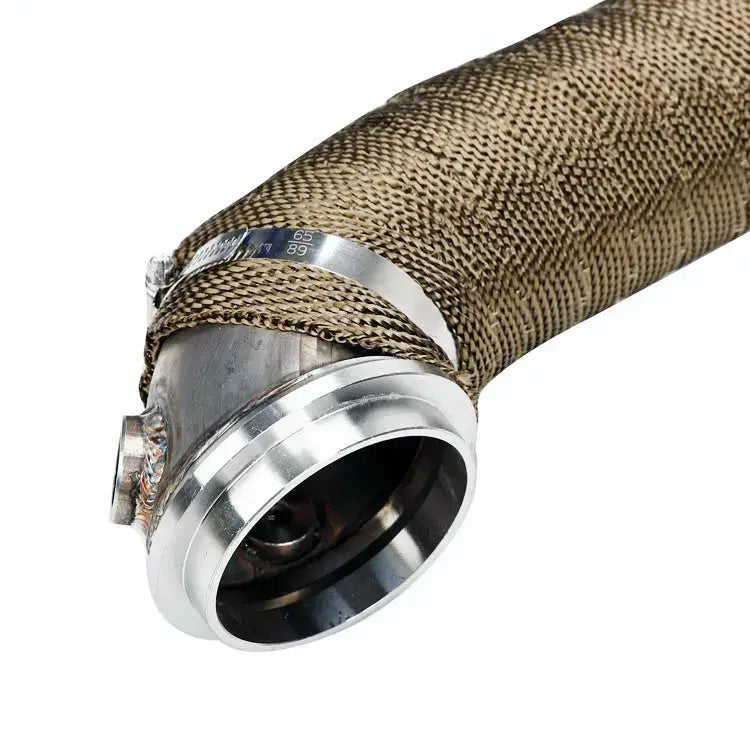
Flange Type: V-band
Increases Horsepower 10-15 HPS (approximately)
Package Contents:
2 x Stainless Steel Hose Clamps
1 x Roll of Titanium Heat Wrap
Features:
1. Improve Engine Output and Efficiency, Give you an extra HPs, and increases torque
2. Large diameter and free flow tubing for unrestricted flow, Making the exhaust air flow smooth, Designed for high-performance racing
3. Made of High-Quality 16-gauge T-304 Stainless Steel with Computerized Mandrel-Bends
4. All joints are TIG welded to prevent cracking and wear
5. CNC Machine Flange for MAX Strength and Durability
6. Flanges chrome plated for corrosion resistance
Fitment:
- Chevy/GMC 2500HD & 3500HD Trucks with 6.6L LML Duramax Engine (V-Band Style)
- 2011-2016 Chevrolet Silverado 2500 – 6.6L LML Turbo Diesel
- 2011-2016 Chevrolet Silverado 3500 – 6.6L LML Turbo Diesel
- 2011-2016 GMC Sierra 2500 – 6.6L LML Turbo Diesel
- 2011-2016 GMC Sierra 3500 – 6.6L LML Turbo Diesel
Does Not Fit 2015.5+ Model With Flange Outlet
Q1: What does a DPF delete downpipe do on the LML Duramax?
A1: The LML's Diesel Particulate Filter catches soot from the exhaust and periodically burns it off through regeneration cycles. Over time, the DPF clogs, which kills performance and fuel economy — and can leave you stranded if it goes into limp mode. A DPF delete downpipe removes the filter entirely, replacing it with a straight pipe. The result: no more regen cycles, no more DPF-related limp mode, and significantly better exhaust flow. Power and torque go up, fuel economy often improves, and you stop worrying about the DPF costing you money at every service interval.
Q2: Is deleting the DPF on an LML Duramax legal?
A2: No. The Clean Air Act makes it illegal to defeat, remove, or render inoperative any emission control device on a motor vehicle. The DPF is a federally mandated emissions device. Removing it violates federal law regardless of which state you live in — California goes further with its own stringent diesel emissions standards, but the federal prohibition applies everywhere. This applies to the manufacture, sale, and installation of DPF delete parts. Driving a DPF-deleted vehicle on public roads is a federal offense that can result in fines, and in some cases, the vehicle can be ordered out of service.
Q3: Will a DPF delete downpipe trigger codes on my LML?
A3: Immediately and constantly. Without the DPF in the exhaust path, the truck's engine control module (ECM) will throw multiple fault codes related to missing emissions hardware — things like the DPF differential pressure sensor reading out of range and downstream exhaust temperature sensors seeing impossible values. You'll need a tuner programmed for DPF delete to tell the ECM the DPF is still there. Without the tune, the truck will derate power, go into limp mode, or fail to start in cold weather.
Q4: Do I need a tuner with the LML Duramax DPF delete downpipe?
A4: Yes, and it's non-negotiable. The tuner is what makes everything work together — it disables the DPF-related monitoring systems, adjusts fuel delivery to account for the changed exhaust backpressure, and unlocks the power the engine can now make without the DPF choking it. Popular options for the LML include EFILive, H&S Mini Maxx, Bully Dog GT, and SCT. Most come with pre-loaded delete tunes, and you can usually dial in custom fuel tuning. Budget $500-1,500 for a quality tuner, not counting the downpipe itself.
Q5: What power gains can I expect from an LML DPF delete downpipe?
A5: On a stock truck, you're looking at roughly 50-100 rear-wheel horsepower and 100-200 lb-ft of torque with a tune and the delete downpipe. The numbers vary based on the turbo, injectors, and supporting mods. The real advantage shows up under load — when you're towing, the truck feels noticeably stronger and doesn't have to work as hard. The DPF was costing the LML a significant amount of efficiency; removing it lets the engine breathe properly again.
Q6: How much does the LML DPF cost to replace if I keep it?
A6: A new OEM DPF for the LML runs $1,500-$2,500 depending on whether you go GM OEM or aftermarket. Some owners report needing a replacement around 80,000-120,000 miles if they're doing mostly short trips that prevent proper regen cycles. Add in the cost of multiple DEF tank fills (the LML burns DEF aggressively when the DPF is struggling), and the DPF-delete math starts making sense for high-mileage trucks. But it's still a federal violation to drive it on public roads after the delete.
Q7: What's the difference between a DPF delete pipe and a full delete kit for the LML?
A7: The DPF delete downpipe removes just the particulate filter itself — the 3" pipe goes in place of the DPF canister. A full delete kit typically also removes the EGR (Exhaust Gas Recirculation) system, the DEF (Diesel Exhaust Fluid) system, and sometimes the EGR cooler. Removing all four systems — DPF, DOC, SCR, and DEF — gives you the cleanest exhaust path and eliminates the most potential failure points. Most serious performance builds go full delete. A downpipe-only delete is the entry point.
Q8: Can I still pass inspection with a DPF delete on the LML?
A8: Not legally in any state with emissions testing. Most diesel-heavy states (California, New York, Texas for diesel vehicles) use OBD-II and tailpipe testing that will catch a DPF delete immediately. Some states without diesel emissions testing (there are fewer every year) might not catch it visually, but the federal legal risk remains regardless. If inspection compliance matters for your registration, keep the DPF. The DPF delete is strictly for off-road use, racing competition vehicles, or vehicles registered in states with no diesel emissions requirements.
Q9: How hard is the LML DPF delete downpipe installation?
A9: It's a straightforward exhaust swap — unbolt the old DPF, bolt in the new delete pipe. The challenge is working with the heavy components and getting the hangers aligned properly. Plan for 2-3 hours on a lift, or 4-5 hours on jack stands. You'll need to support the exhaust section when you drop the DPF to avoid straining the upstream and downstream exhaust flanges. A lift makes this job much more manageable. Once installed, the tuner work is what takes the real time — properly configuring the delete tune for your specific truck takes some bench time.
Q10: Does the LML DPF delete affect towing performance?
A10: Significantly for the better. The stock LML with a clogged or regenerating DPF loses a ton of towing ability — the engine has to work harder to push exhaust through the filter, which raises exhaust gas temperatures and forces the turbo to work less efficiently. With a delete downpipe and tune, you get a much more consistent torque curve under load. Hauling trailers with the LML becomes genuinely easier, and you won't notice the power loss that happens during DPF regen cycles.
Q11: What are the downsides of DPF delete on the LML besides legality?
A11: Beyond the federal legal exposure, there are a few practical issues: NOx emissions increase without the SCR (Selective Catalytic Reduction) system, so the truck is dirtier in terms of nitrogen oxides. Cold starts are noisier without the DOC (Diesel Oxidation Catalyst). The DEF system will still throw codes even if you haven't deleted it — the tuner needs to handle that interaction. And if you ever sell the truck, a DPF delete can complicate the sale, especially in emissions-testing states.
Q12: Why do diesel owners delete the DPF instead of just replacing it?
A12: It's a mix of cost, performance, and frustration. A new DPF is expensive, and on the LML in particular, the regeneration cycles burn extra fuel and can cause thermal damage over time. Owners who do heavy towing or mostly short-trip driving see DPF problems sooner and more often. The delete is expensive upfront (downpipe plus tuner), but it eliminates a recurring cost and failure point permanently. For trucks that are working vehicles or dedicated tow rigs — not daily drivers in emissions-heavy traffic — the DPF is more of a liability than an asset.


