
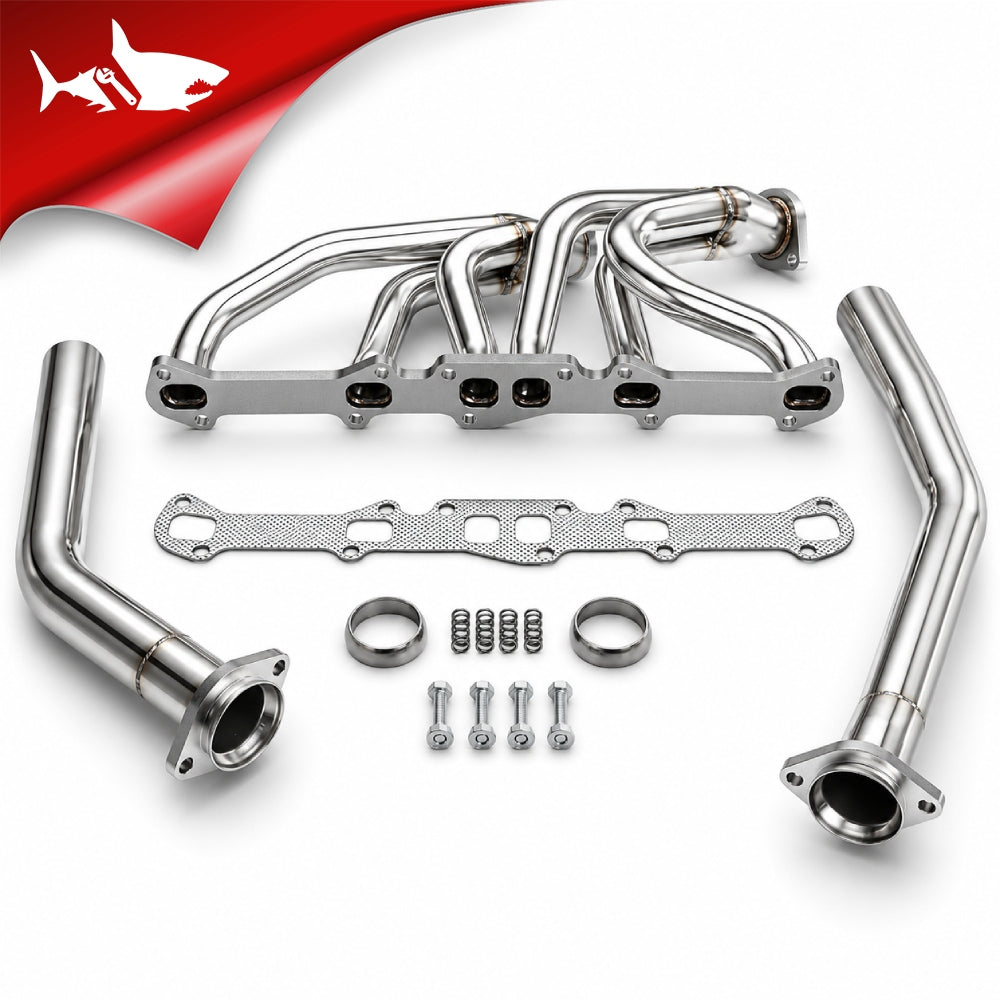
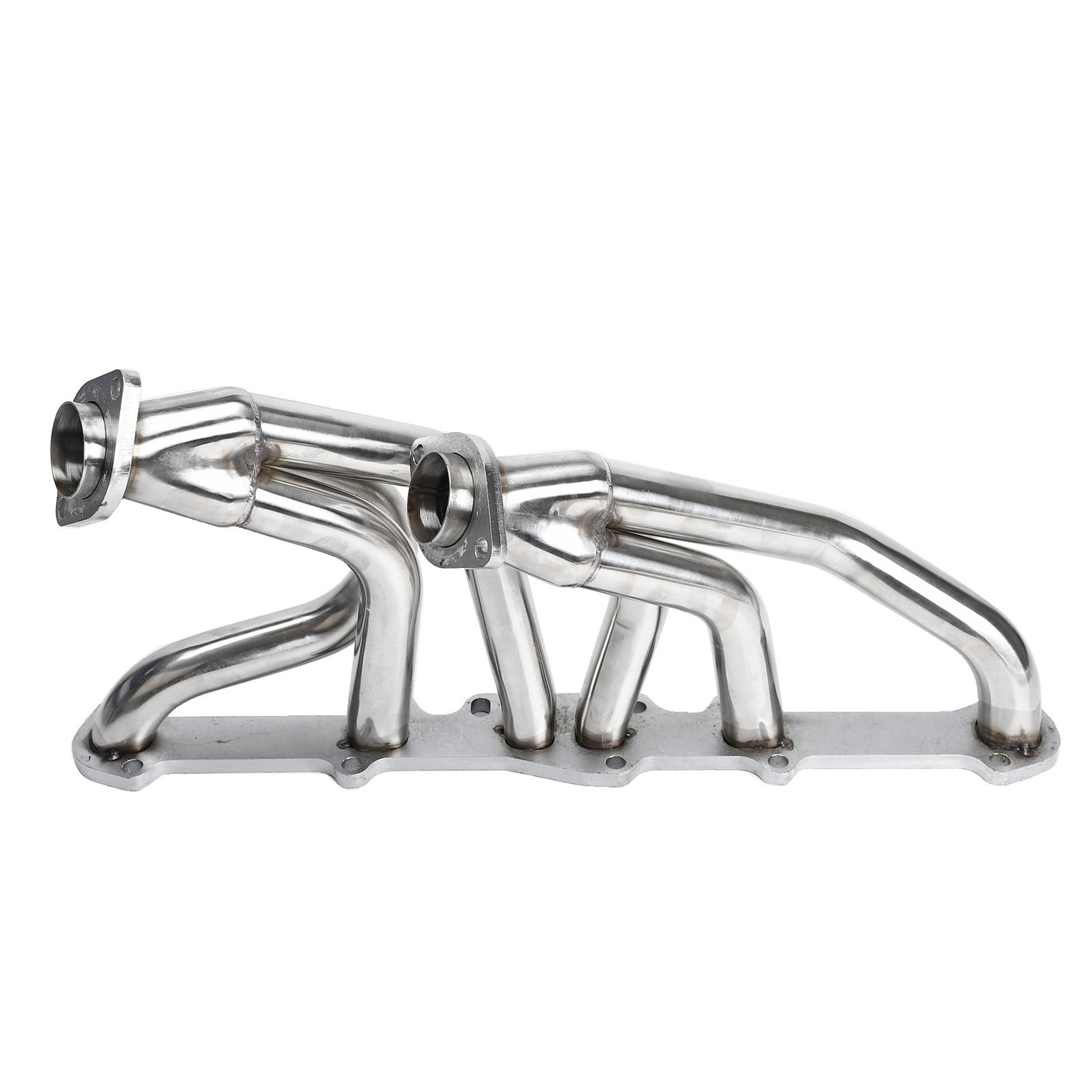
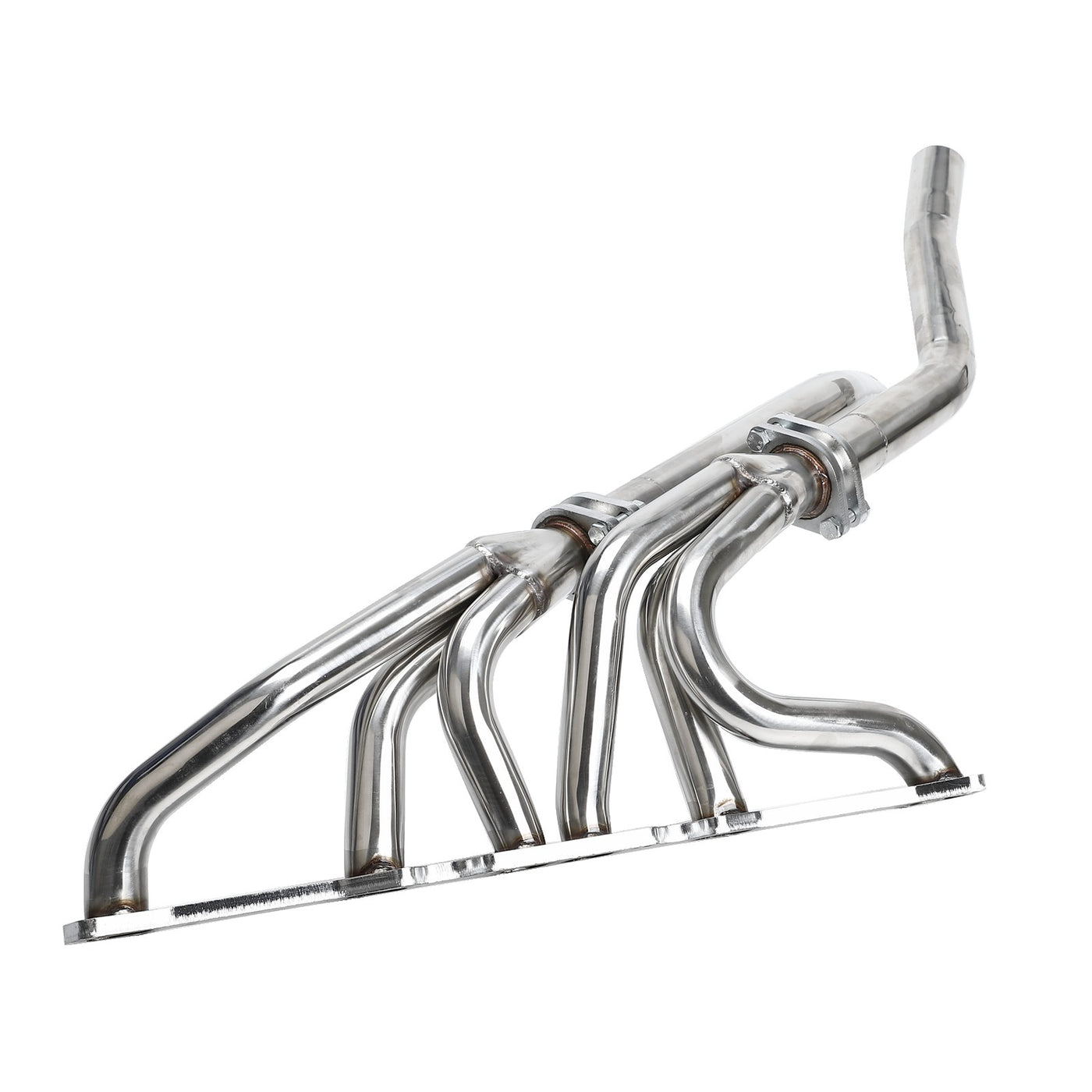
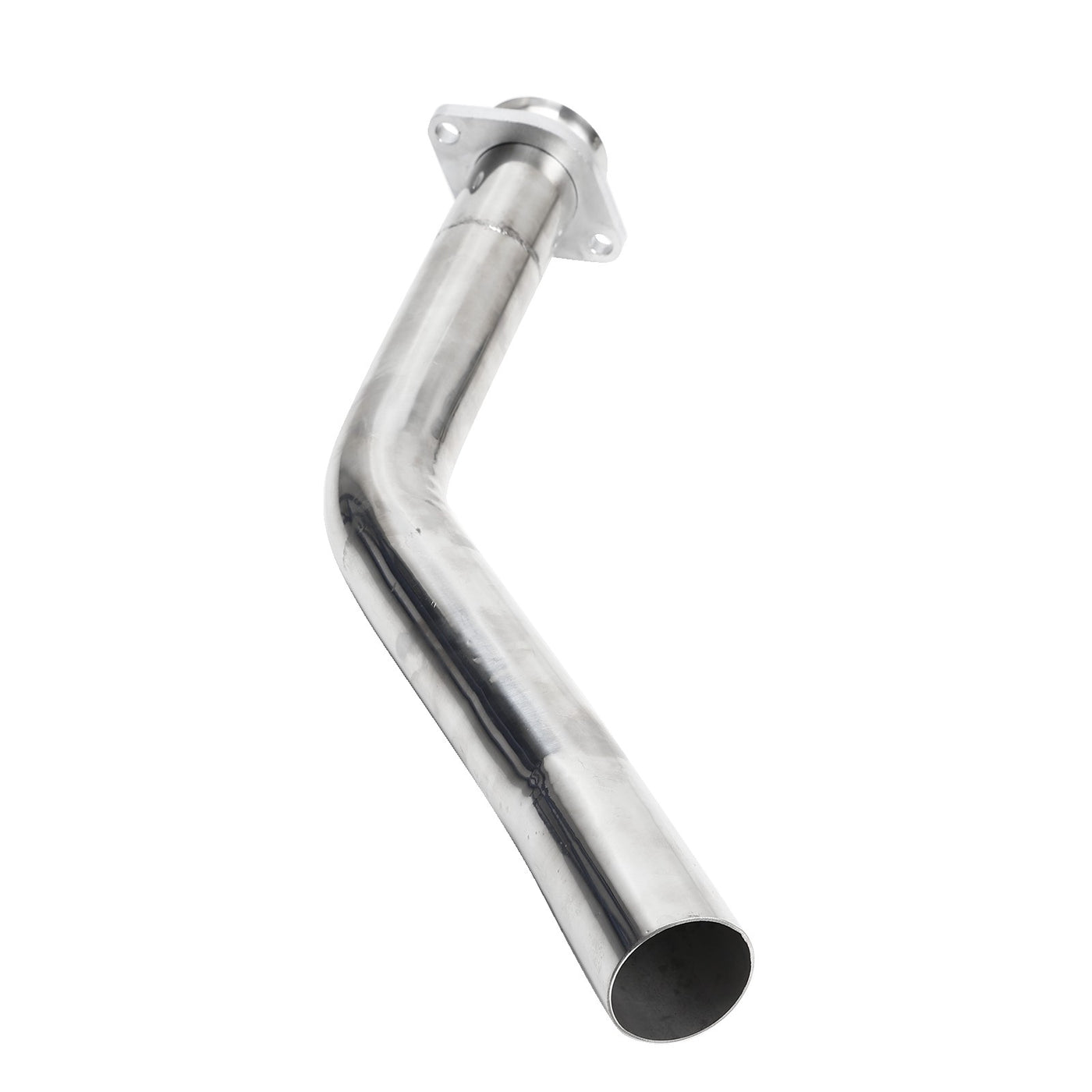
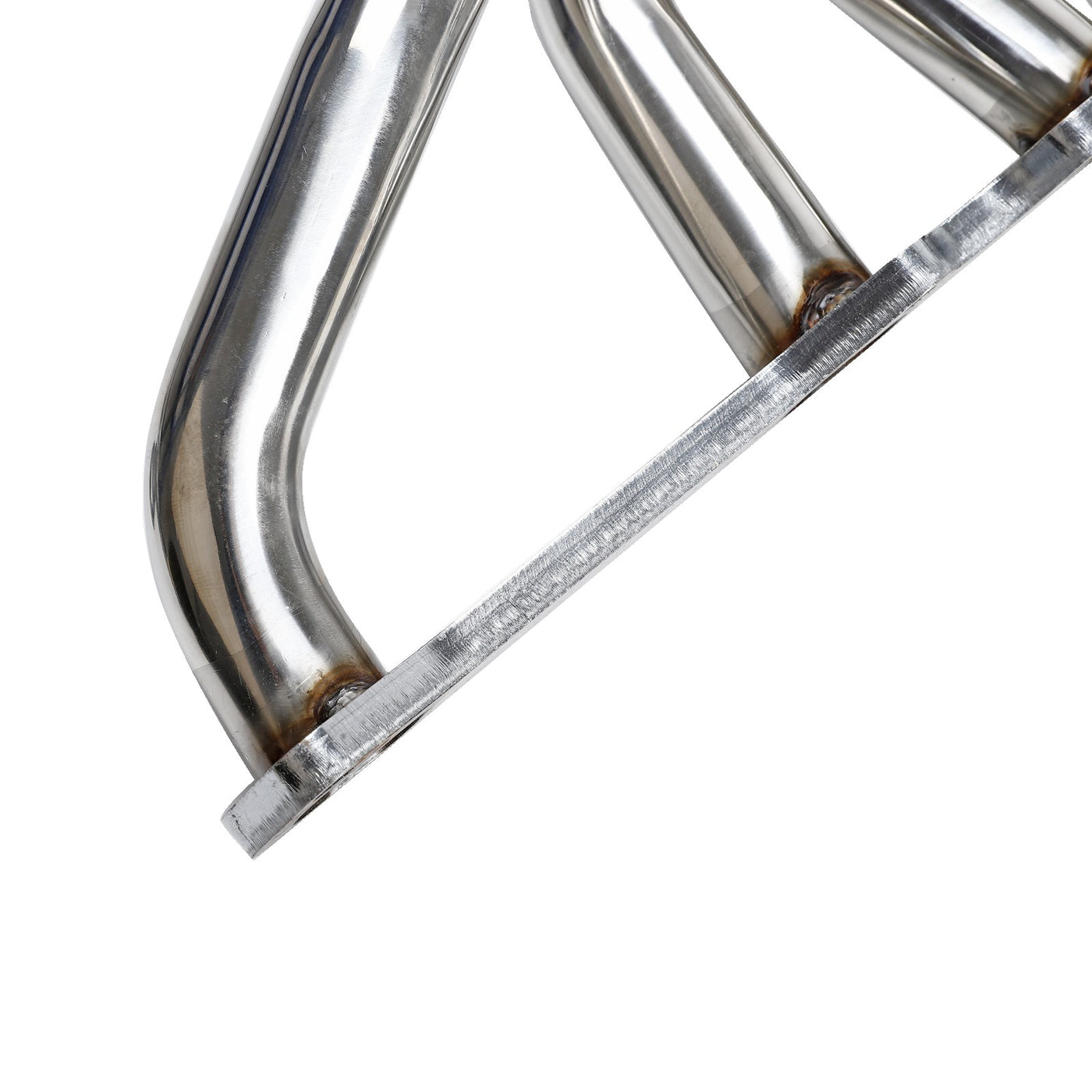
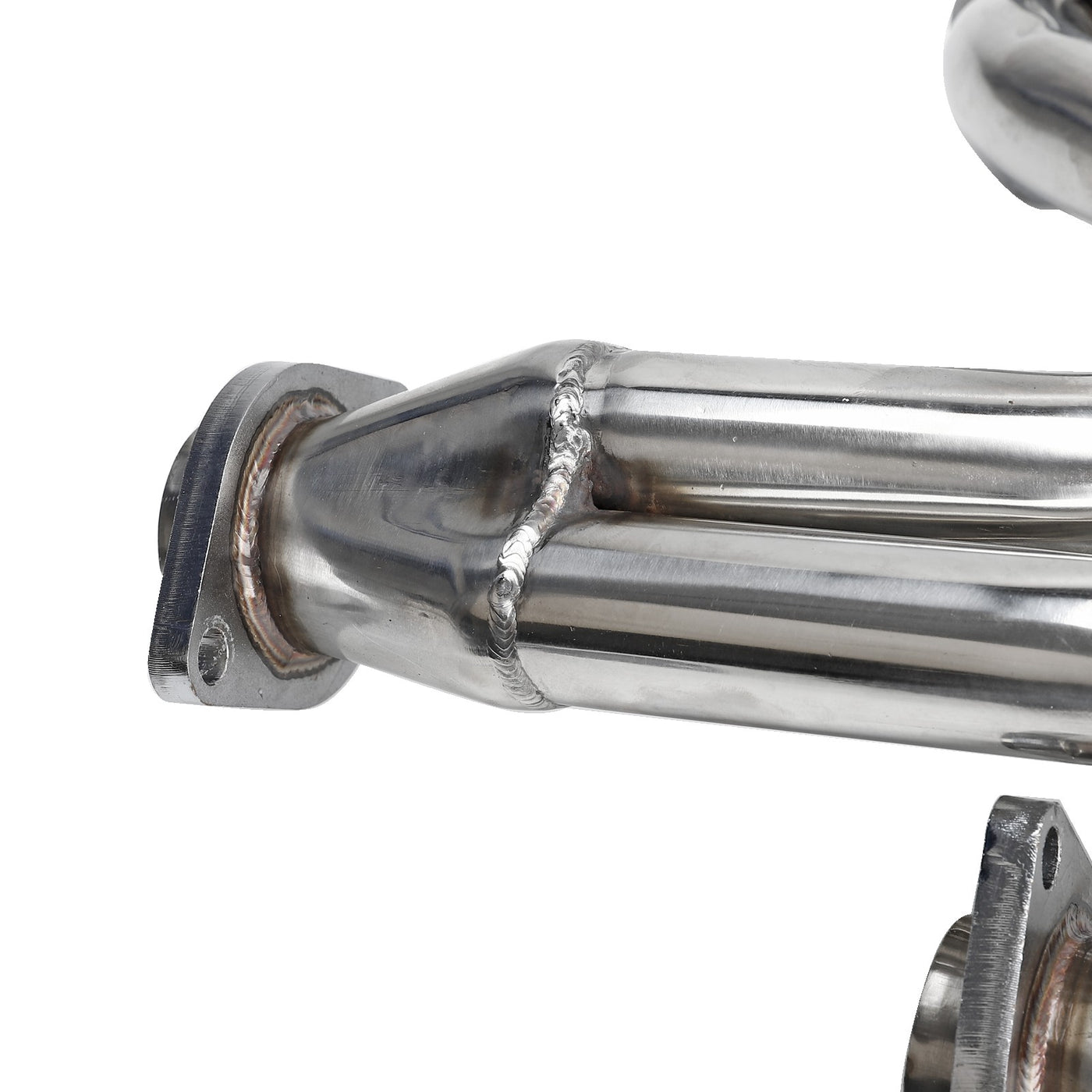
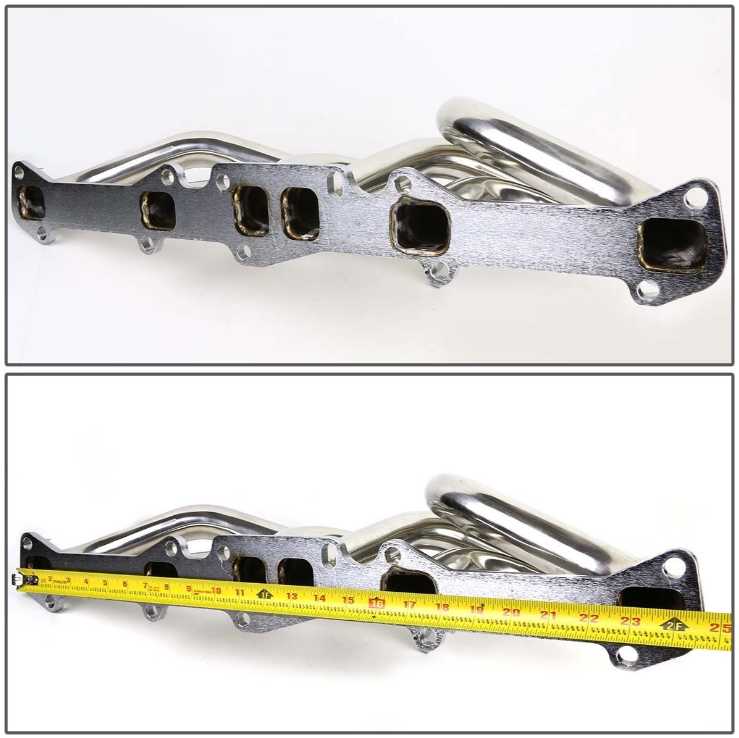

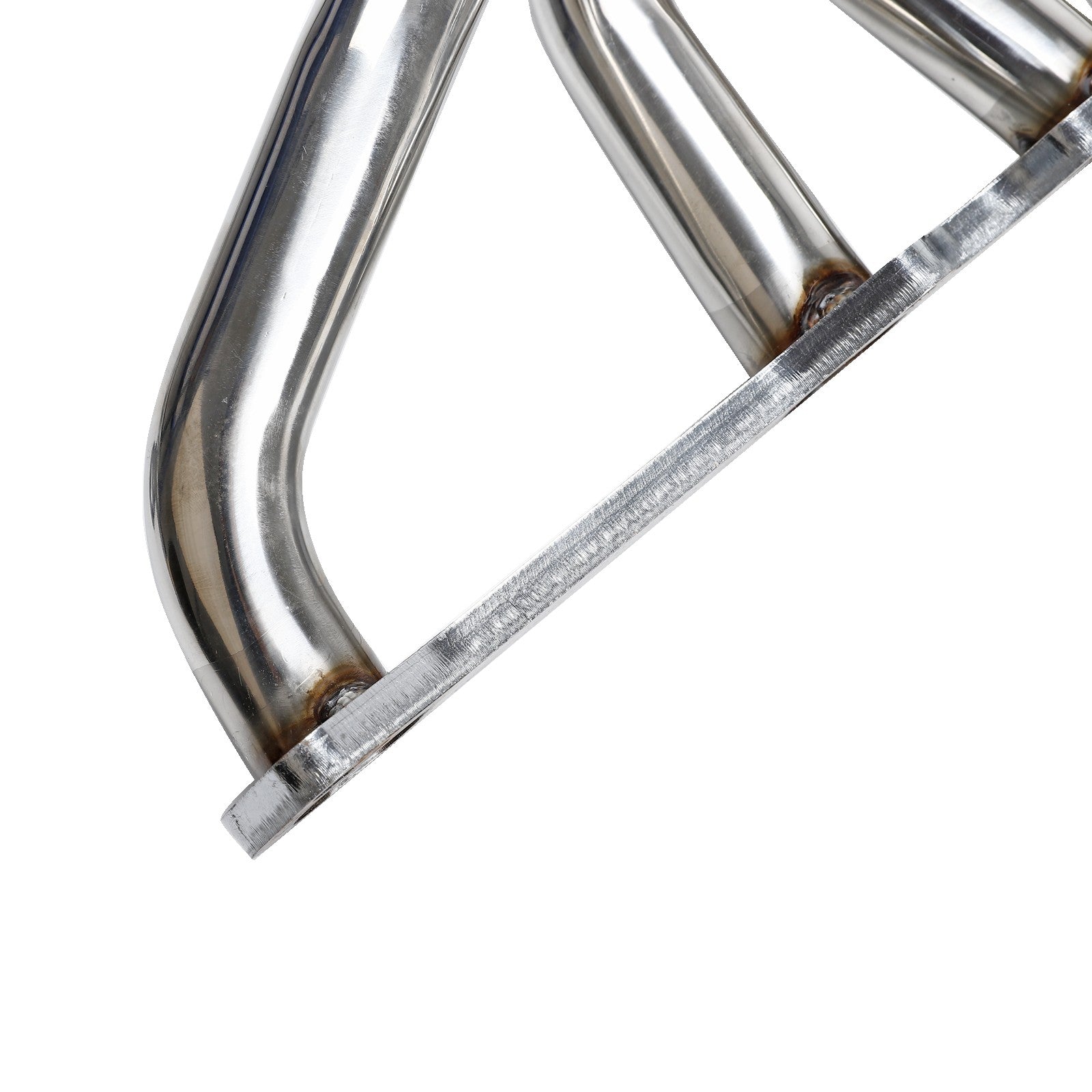
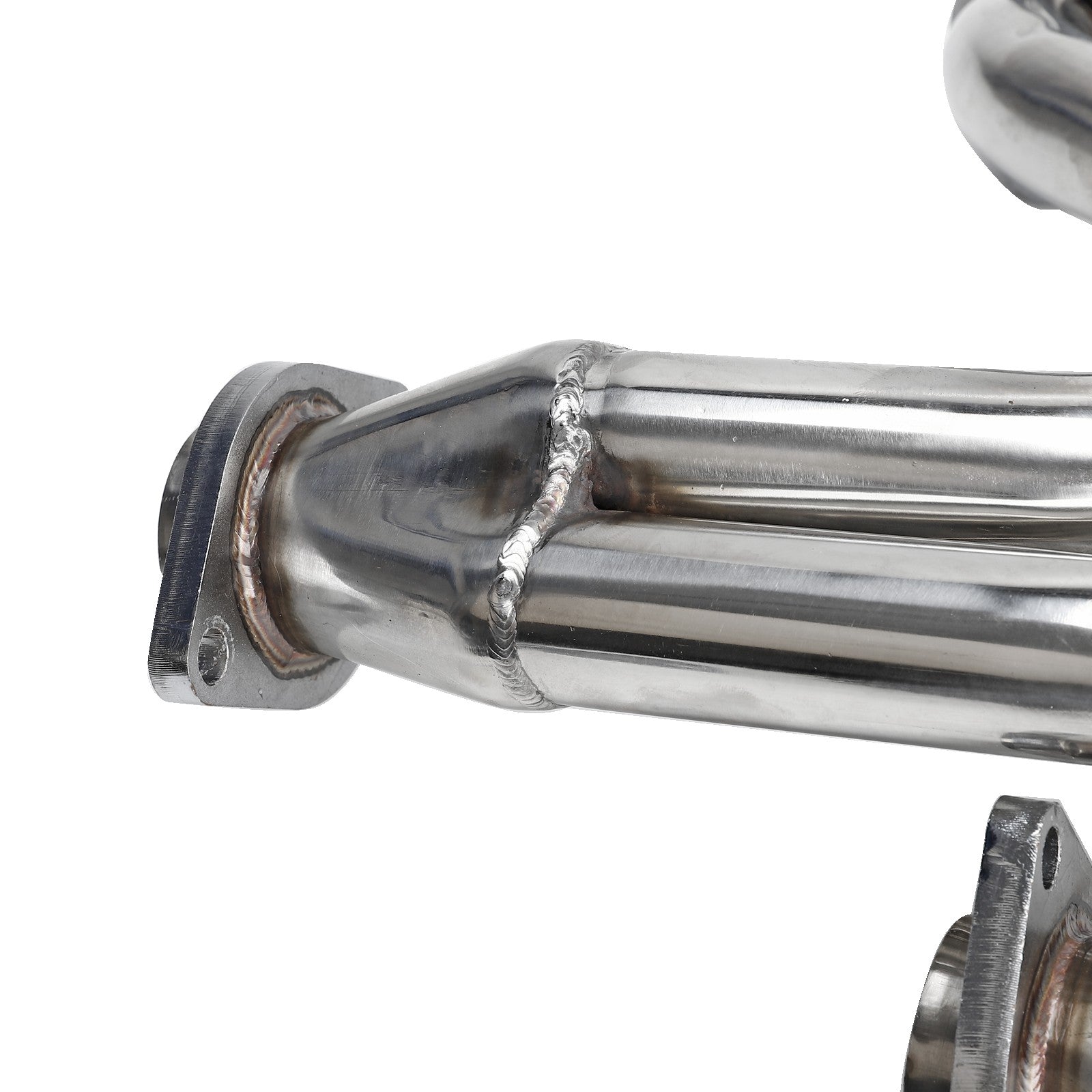


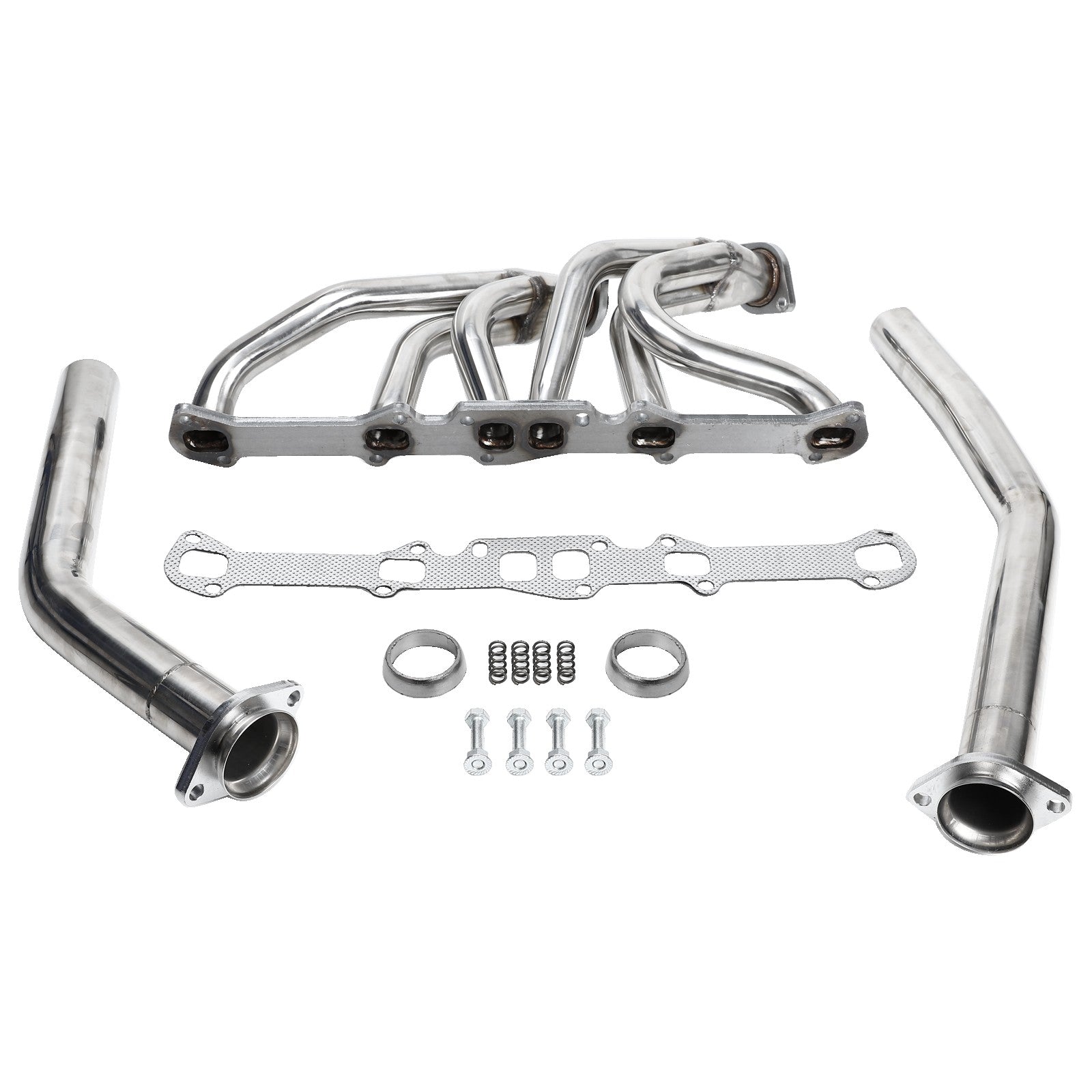
1960–1983 Ford Inline-Six Exhaust Header
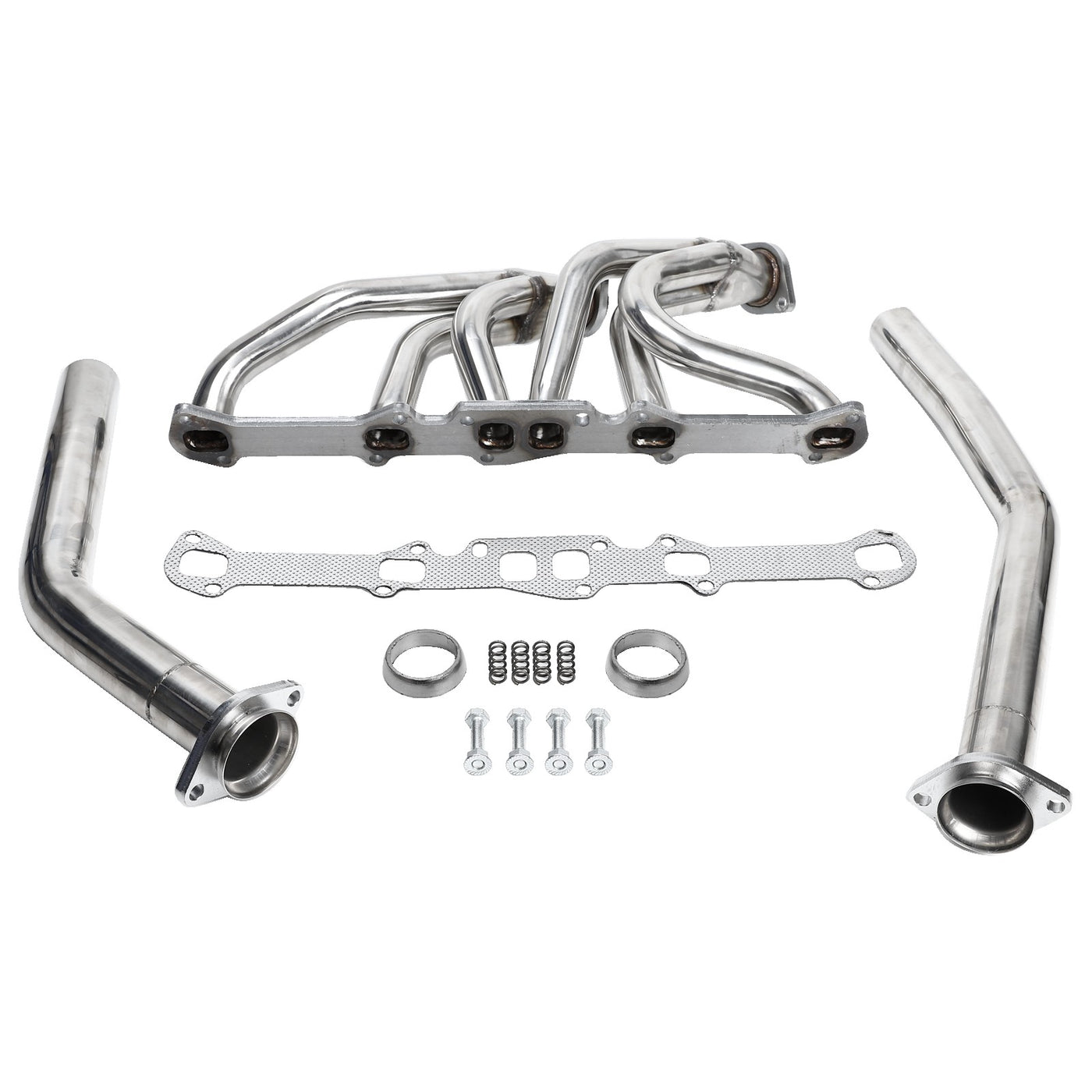
A freer-flowing exhaust path can give a classic Ford inline-six a deeper tone and a more responsive feel while replacing the heavy factory-style exhaust manifold. This stainless steel header is designed for the listed 1960–1983 Ford applications equipped with 144, 170, 200, or 250 CID inline-six engines. Review the vehicle and engine table before ordering, especially if the car has non-original engine mounts, steering parts, air-conditioning equipment, or a modified exhaust system.
Specifications
| Brand | FLASHARK |
|---|---|
| Product Type | Exhaust header |
| SKU | FLES08216 |
| Model | EH28046X |
| Material | Stainless steel |
| Surface Finish | Mirror polish |
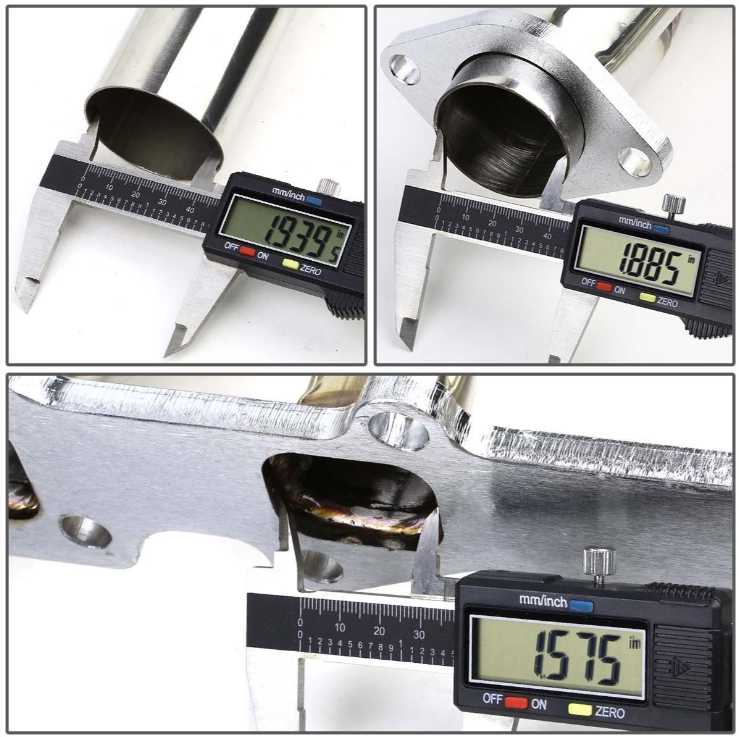
| Inlet Size | 1 1/8 in. × 1 1/4 in. |
| Outlet Size | 2.00 in. |
| Cylinder-Head Flange Thickness | 7/16 in. |
| Outlet Flange Thickness | 3/8 in. |
Key Features
- Designed for listed Ford applications using 144, 170, 200, or 250 CID inline-six engines.
- Stainless steel construction with a mirror-polished finish.
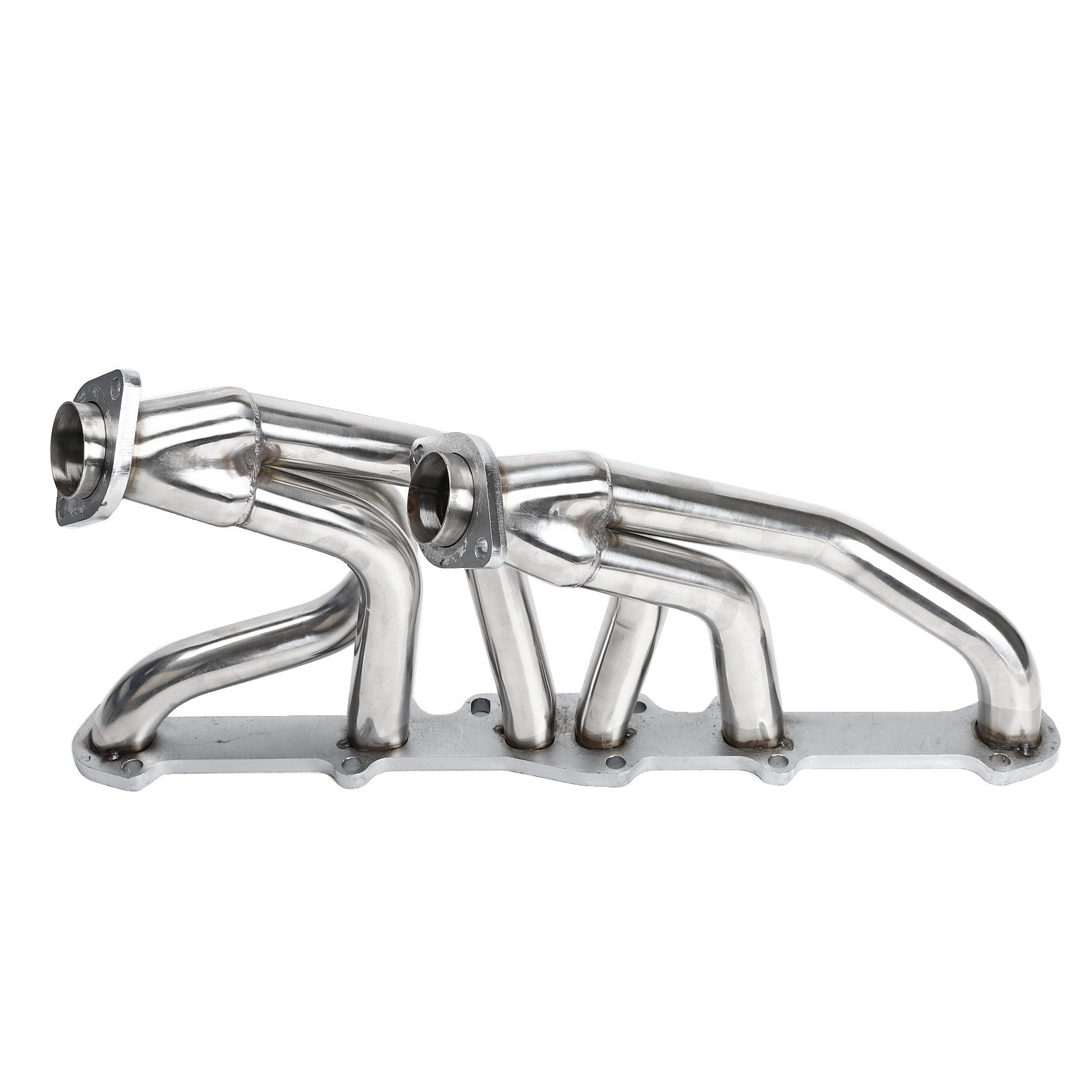
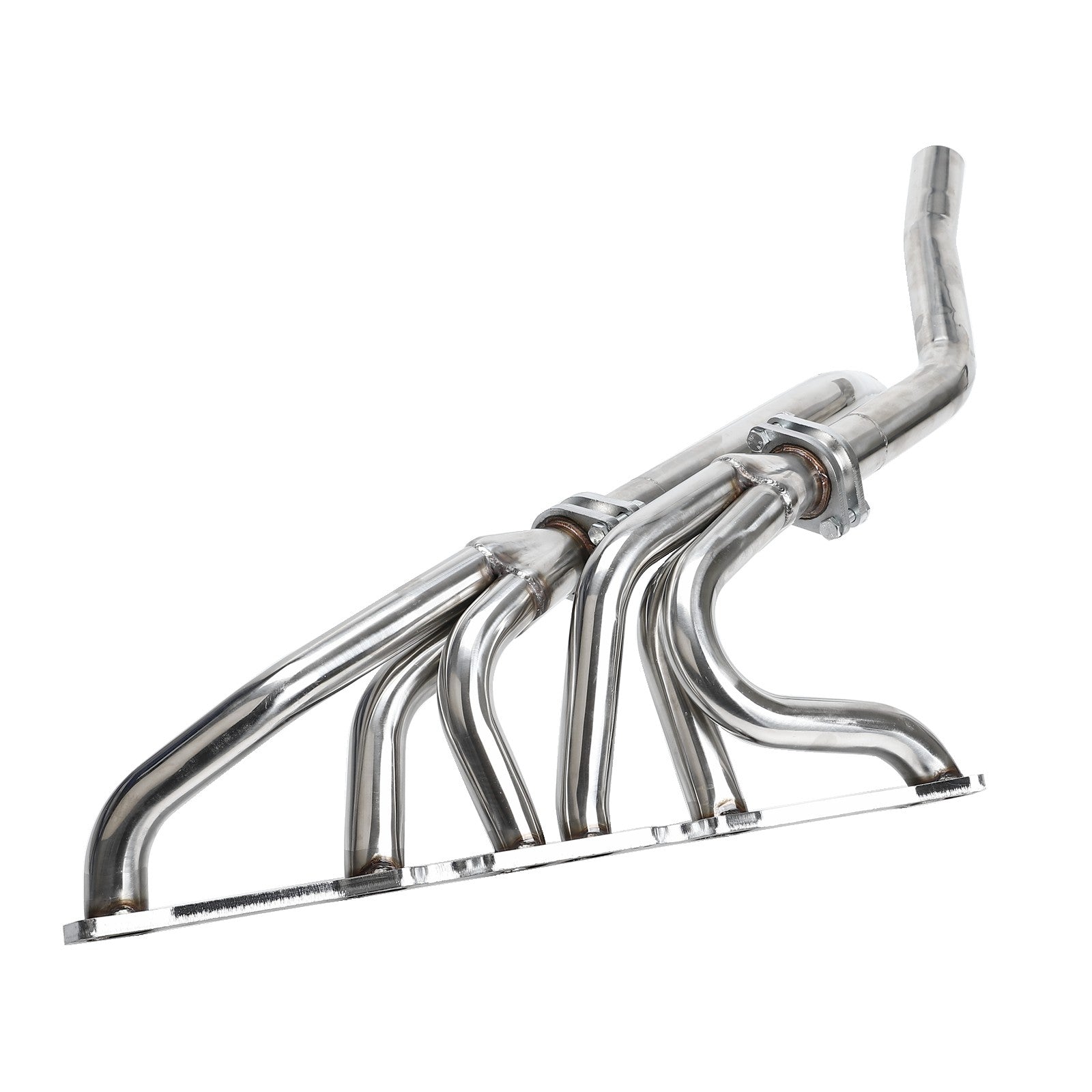
- Individual header runners provide a less restrictive exhaust path than the factory-style cast manifold.
- 2.00-inch outlet provides a defined connection point for the downstream exhaust system.
- 7/16-inch cylinder-head flange and 3/8-inch outlet flange.
- Suitable for owners replacing a damaged factory manifold or building a sound- and flow-focused exhaust system.
Built for Better Flow and Sound
The factory cast exhaust manifold collects the cylinders in a compact, heavy assembly. A tubular header separates the exhaust paths before they merge, helping exhaust gases move through the system with less restriction.
On a naturally aspirated Ford inline-six, the most noticeable changes can include a sharper exhaust note, a deeper tone, and a more responsive feel as engine speed rises. The final result depends on engine condition, carburetor and ignition setup, muffler choice, pipe layout, and the quality of the installation.
A header alone should not be treated as a guaranteed horsepower upgrade. It works best as part of a properly matched exhaust system with sound engine, fuel, and ignition settings.
Factory Manifold vs. Stainless Steel Header
| Area | Factory-Style Manifold | FLASHARK Header |
|---|---|---|
| Construction | Compact cast design | Tubular stainless steel design |
| Exhaust Path | Cylinders merge close to the head | Individual runners merge farther downstream |
| Sound | Quieter, factory-style tone | Deeper and more pronounced inline-six tone |
| Installation | Matches the original exhaust layout | Requires clearance and downstream connection checks |
How This Header Fits the Exhaust Path
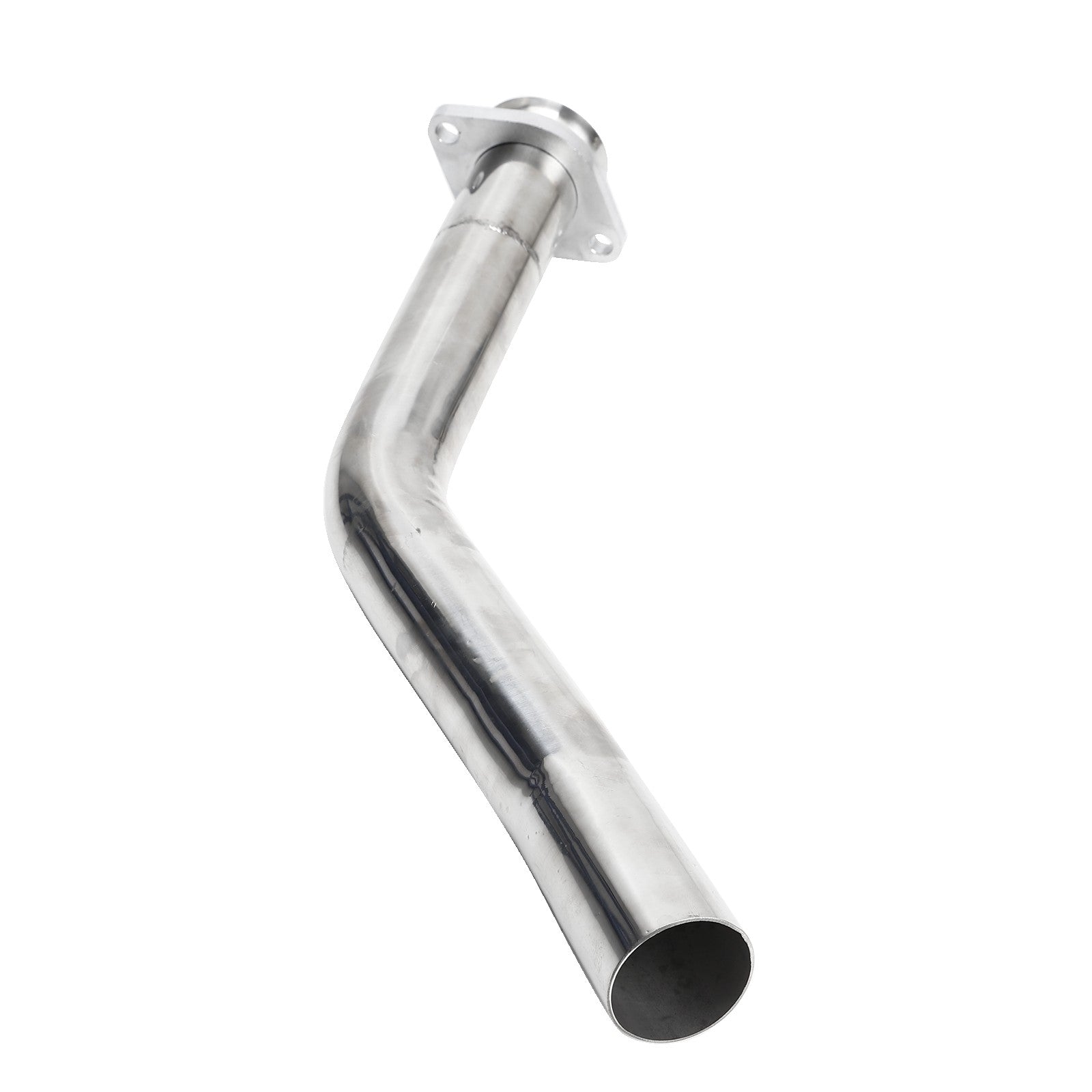
This component replaces the engine-side exhaust manifold and ends at a 2.00-inch outlet. Compare that outlet with the existing headpipe, muffler system, and any previous exhaust modifications before beginning the installation. A downstream adapter or exhaust-shop work may be needed when the existing system does not match the header outlet.
This is an exhaust header, not a complete catback system. Muffler choice and the remainder of the exhaust determine much of the final volume, drone level, and overall tone.
Installation and Exhaust-Leak Prevention
- Work only when the engine and exhaust system are fully cool.
- Inspect the cylinder-head sealing surface and remove old gasket material before fitting the header.
- Position the header without forcing it against the starter, steering, transmission linkage, body, or other components.
- Align the downstream exhaust before final tightening so the system does not place side load on the header.
- Check all joints for leaks after the first heat cycles and inspect the fasteners again after the system has cooled.
- Professional installation is recommended when fabrication, clearance adjustment, or downstream exhaust work is required.
Who This Header Is Best For
- Owners of a listed classic Ford with a 144, 170, 200, or 250 CID inline-six engine.
- Drivers replacing a damaged or restrictive factory-style exhaust manifold.
- Builders who want a deeper inline-six exhaust tone and a less restrictive exhaust path.
- Owners prepared to inspect header clearance and match the downstream exhaust connection.
Who Should Choose a Different Header
- Ford 300 CID or 4.9L inline-six owners.
- Vehicles outside the listed year, model, and engine combinations.
- Vehicles that must retain an original-style exhaust manifold.
- Owners who require guaranteed no-adjustment installation.
- Vehicles that require product-specific emissions certification for road use.
Emissions and Street-Use Notice
Exhaust modification requirements vary by vehicle configuration and location. Do not assume that an aftermarket header is approved for every road-use or emissions-controlled application. Check the requirements that apply to the vehicle before installation, and retain any required emissions equipment.
Installation Video
Related Exhaust Parts
Browse more Ford exhaust headers or compare other products in the exhaust header collection. Match every part to the vehicle year, engine, and existing exhaust layout before ordering.
Shipping & Returns
Free U.S. Shipping: Orders are typically processed within 1–2 business days and delivered within 7–9 business days. Additional charges may apply to remote areas.
30-Day Returns: Unopened and unused items in their original packaging may be returned within 30 days of receipt. Return shipping is covered for verified quality issues.
Worry-Free Delivery: Optional protection against eligible loss, theft, delay, or transit damage is available at checkout.
Fitment & Compatibility
| Brand | Model | Year Range | Full Compatible Specs |
|---|---|---|---|
| Ford | Bronco | 1966-1974 | 2.8L / 3.3L Engine |
| Ford | Econoline | 1961-1966 | 2.4L / 2.8L Engine |
| Ford | Fairmont | 1978-1982 | 3.3L Engine |
| Ford | Falcon | 1960-1970 | 2.4L / 2.8L / 3.3L Engine |
| Ford | Granada | 1975-1982 | 3.3L / 4.1L Engine |
| Ford | LTD | 1983 | 3.3L Engine |
| Ford | Mustang | 1965-1970 | 3.3L Engine |
| Ford | Ranchero | 1960-1965 | 2.4L / 2.8L / 3.3L Engine |
| Ford | Thunderbird | 1980-1982 | 3.3L Engine |
Ford 144/170/200/250 Inline-Six Header FAQs
Q1: Which engines does this header fit?
A1: It is designed for listed Ford applications using the 144, 170, 200, or 250 CID inline-six engine. Match the vehicle year, model, and engine displacement with the fitment table before ordering.
Q2: Does it fit a Ford 300 or 4.9L inline-six?
A2: No. The Ford 300 CID/4.9L belongs to a larger inline-six engine family with a different exhaust-port layout. It requires a different header application.
Q3: Can it replace a Ford 200 inline-six exhaust manifold?
A3: It is intended as a tubular header upgrade for listed 200 CID applications. Check the vehicle configuration, available engine-bay clearance, and downstream exhaust connection before removing the factory manifold.
Q4: Will the header add horsepower?
A4: Results depend on the engine’s condition, carburetor and ignition settings, cylinder-head flow, muffler, pipe layout, and installation quality. The header should be considered part of a complete exhaust combination rather than a guaranteed standalone horsepower increase.
Q5: How will it change the exhaust sound?
A5: A tubular header can give the inline-six a deeper and more defined exhaust note. Muffler design, pipe diameter, single- or dual-outlet layout, and the rest of the exhaust system determine the final volume, rasp, and drone.
Q6: Is an engine tune required?
A6: These classic naturally aspirated engines do not use the same tuning process as a modern turbocharged vehicle. After changing the exhaust, check carburetor operation, ignition timing, idle quality, and fuel mixture as part of the final installation inspection.
Q7: Will it cause a check-engine light?
A7: Check-engine-light behavior depends on the vehicle’s original engine-management and emissions equipment. Most listed applications predate modern OBD-II systems, but later or modified vehicles must be evaluated according to their installed controls.
Q8: Will it connect to the stock exhaust?
A8: The header has a 2.00-inch outlet. Compare this with the existing headpipe and flange arrangement. Previous exhaust modifications or a different pipe size can require an adapter or exhaust-shop work.
Q9: Will it clear the starter and transmission?
A9: Clearance varies with the vehicle, engine mounts, starter, transmission, linkage, steering equipment, air-conditioning hardware, and previous modifications. Some installations can require the starter to be loosened or repositioned temporarily while the header is fitted.
Q10: Can I install it at home?
A10: An experienced DIY owner with safe lifting equipment and exhaust-system tools may be able to perform the work. Professional installation is recommended when clearance adjustment, fabrication, or downstream exhaust modification is required.
Q11: How can I reduce the chance of an exhaust leak?
A11: Start with clean sealing surfaces, align the header and downstream exhaust without forcing either part, tighten the fasteners evenly, and inspect the joints again after the first heat cycles.
Q12: What comes with SKU FLES08216?
A12: Check the selected SKU’s order details before installation. Contact customer support if the exact hardware or sealing components affect your installation plan.
Q13: Is the header street legal?
A13: Road-use and emissions requirements vary by location and vehicle configuration. Check the rules that apply to the vehicle and do not remove required emissions equipment.
Q14: Who should not buy this header?
A14: It is not suitable for Ford 300/4.9L engines, unlisted vehicle combinations, or buyers who require a guaranteed no-adjustment installation or product-specific road-use certification.