Q1: Are these LS swap headers or do they work with the original SBC engine?
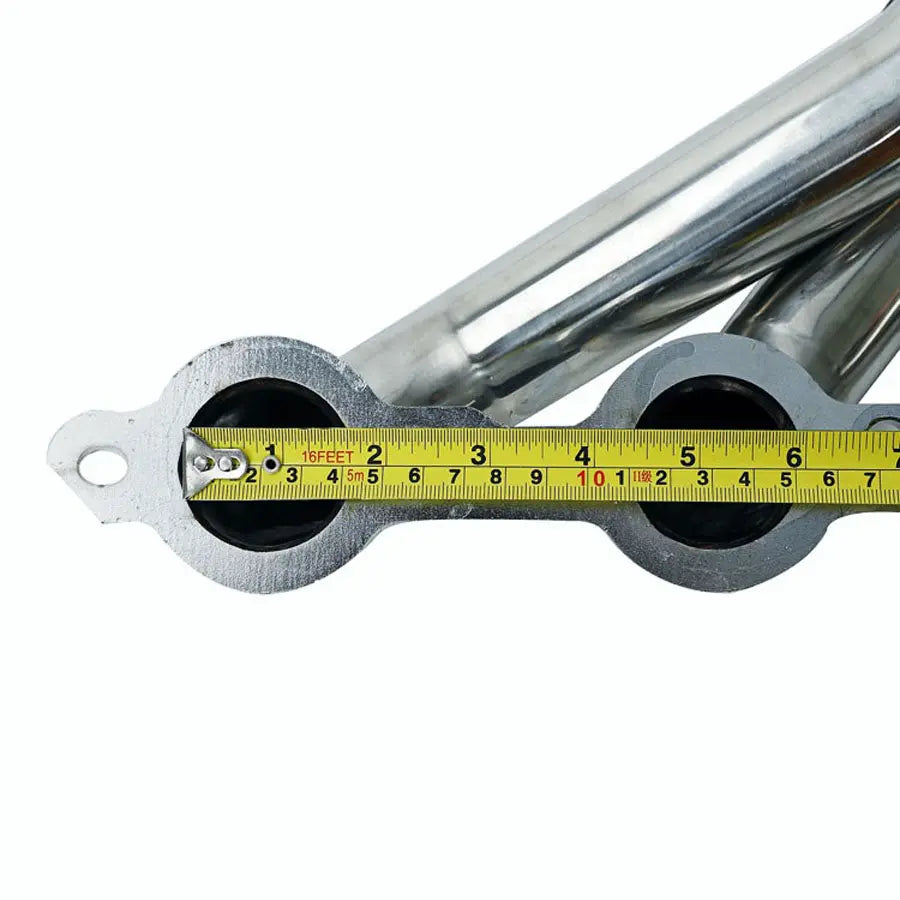
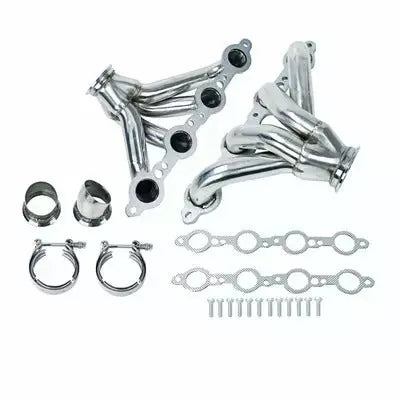
A1: LS swap only, no exceptions. These headers are designed exclusively for GM LS-series V8 engines—LS1, LS2, LS3, LS6, and the truck variants like LQ4, LQ9, and the 4.8L/5.3L/6.0L/6.2L iron block LS engines. They will NOT fit a Gen I small block Chevy (283, 305, 327, 350, 400) or any big block Chevy (396, 427, 454). The LS has completely different exhaust port spacing and bolt patterns. The manufacturer is explicit about this—no SBC, no BBC, no workarounds.
Q2: What vintage Chevrolet models do these LS swap headers fit?
A2: This is a universal conversion kit, so it covers a wide range. Verified fitment includes: 1923-1954 Chevrolet and Cadillac all models, 1950-1964 Chevrolet Bel Air, 1953-1967 Corvette, 1955-1961 Nomad, and 1958-1964 Impala/Biscayne. The key word is "universal"—these headers are designed for early chassis that have generous engine bay room. Because the vintage chassis didn't have tight factory engine bays designed around a specific V8, there's usually plenty of clearance for routing the primary tubes.
Q3: What size are the primary tubes and collector on these headers?
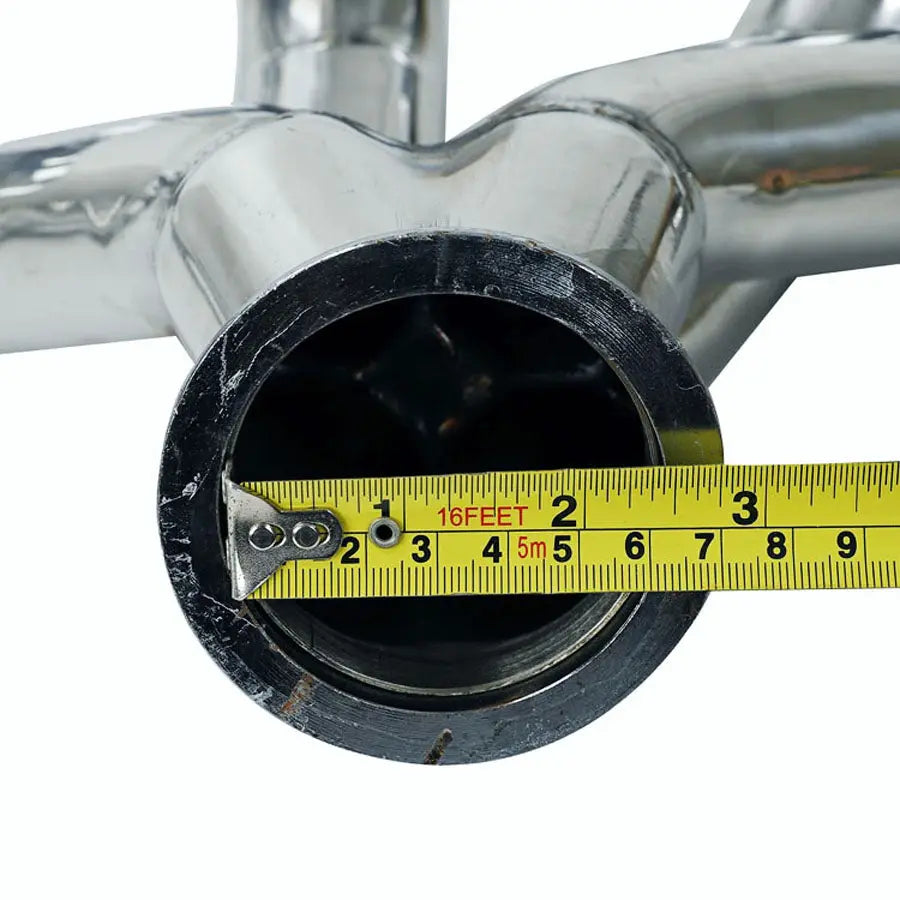
A3: 1-5/8" primary tubes with a 2-1/2" collector. That's a good all-around size for mild to moderate LS swaps. If you're dropping a stock or mildly built LS1 making 300-400 hp into a vintage Chevy, these are sized right for torque and driveability. If you're building a 600+ hp fire-breathing LS with a big cam and ported heads, you might want to step up to 1-3/4" or 1-7/8" primaries. But for most street-driven resto-mods, 1-5/8" hits the sweet spot.
Q4: Do these LS swap headers require any frame or chassis modification?
A4: The listing says "direct bolt-on, no modification needed," but let's be real about what that means. The headers bolt directly to the LS engine without modification. Whether they clear your specific chassis without modification is a different question. Vintage Chevys have more room than modern cars, but every swap is a little different depending on your motor mount choice, engine placement, steering column routing, and whether you're running power brakes or a manual setup. Most guys find that these fit without major cutting, but you should plan for minor adjustments—dimpling a tube here, tweaking a steering linkage there.
Q5: Can I use these headers with a stock 4L60E or T56 transmission?
A5: These headers are engine-side components—they connect the LS cylinder heads to the exhaust system. Transmission choice doesn't directly affect header fitment. What does matter is the transmission crossmember and bellhousing size, which can affect how you route the exhaust past the trans tunnel. A 4L60E or T56 is compact enough that clearance shouldn't be an issue. If you're running a larger 4L80E or a Powerglide, the bellhousing might crowd the collector area on the passenger side. Plan your exhaust routing accordingly.
Q6: What other parts do I need for an LS swap into a vintage Chevy?
A6: Headers are one piece of a much bigger puzzle. An LS swap into a 1923-1967 Chevrolet also needs: LS-specific motor mounts for your chassis, a fuel system capable of feeding the LS (these engines need 58 psi fuel pressure, your old carb-era mechanical pump won't cut it), a wiring harness conversion, a transmission crossmember or adapter, an exhaust system connecting the headers to the rear of the car, and a cooling system upgrade. The vintage chassis makes some things easier (more room) and some things harder (no factory provisions for EFI fuel lines or electric fuel pump wiring).
Q7: Will these headers clear the steering box on a 1950s Bel Air or Impala?
A7: On most 1950-1964 B-body Chevys with a stock steering box, the driver side header clears without major issues—vintage cars have generous engine bay dimensions by modern standards. Problems can arise if you've installed aftermarket power steering (like a CPP 500-series box) that's physically larger than the original manual box, or if your engine placement is further back than typical. The universal design means these headers were built to accommodate a range of configurations, but there's no substitute for test-fitting on your specific setup.
Q8: Are these LS swap headers street legal in California?
A8: No. These headers do not carry a CARB Executive Order number, so they're not legal for street use in California or any CARB-adopting state. California Vehicle Code Section 27156 prohibits exhaust modifications that alter emissions controls. An LS swap into a pre-1976 vehicle is technically exempt from smog testing in California (pre-1976 vehicles are currently exempt), but the headers themselves still don't have an EO number. If the law changes to reduce or eliminate the pre-1976 exemption, these would fail a visual inspection. They're sold for off-road and competition use.
Q9: What exhaust system should I run after these headers?
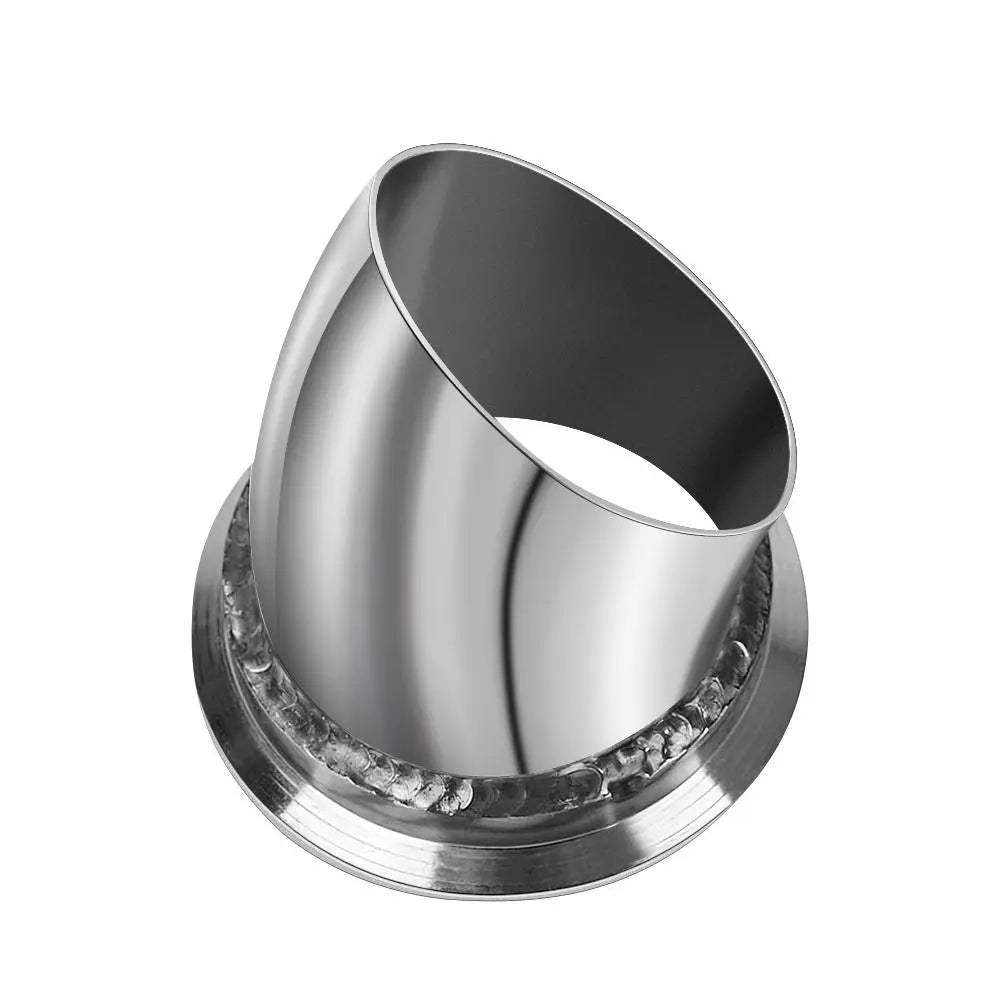
A9: The 2-1/2" collector feeds into a 2-1/2" or 3" exhaust system depending on your power goals. For a mild LS1 making 300-350 hp, 2-1/2" dual exhaust is plenty. For something making 450+ hp, step up to 3" duals. On a vintage Chevy, you've got room under the car to run true dual exhaust with an H-pipe or X-pipe, which sounds great and makes more power than a single exhaust. The collector flange is a standard 2-1/2" 3-bolt pattern, so any muffler shop can build the rest of the system.
Q10: Are these headers made from stainless steel?
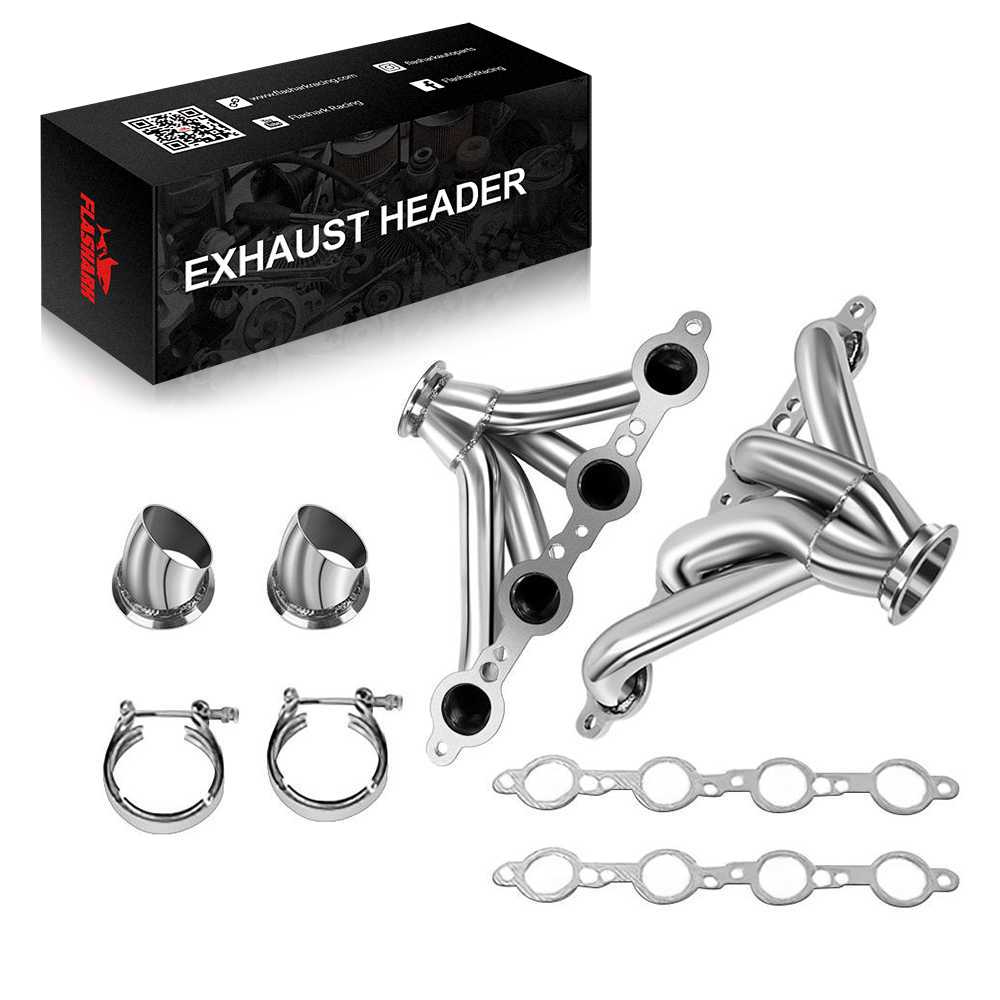
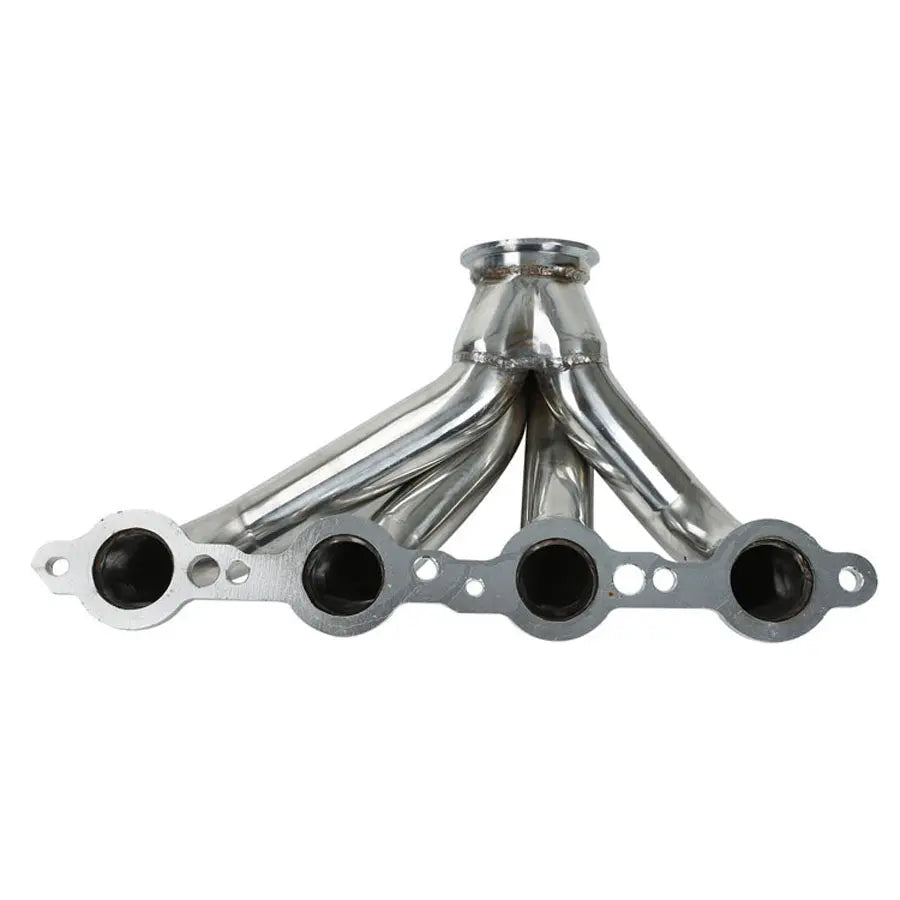
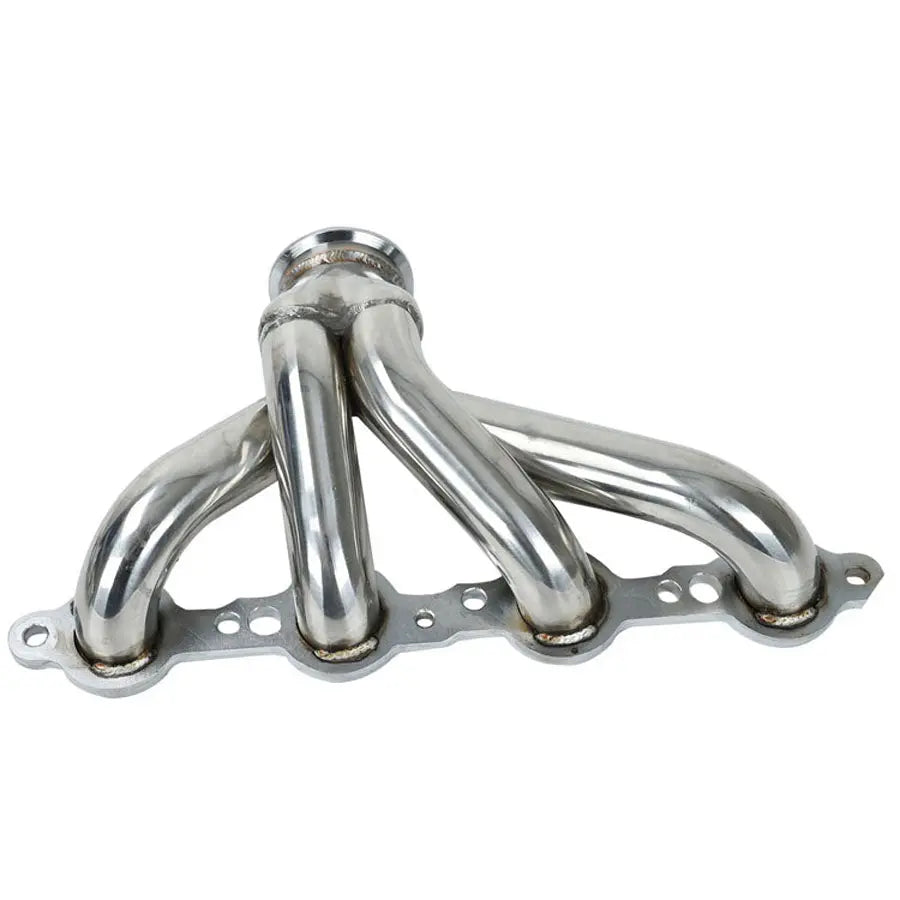
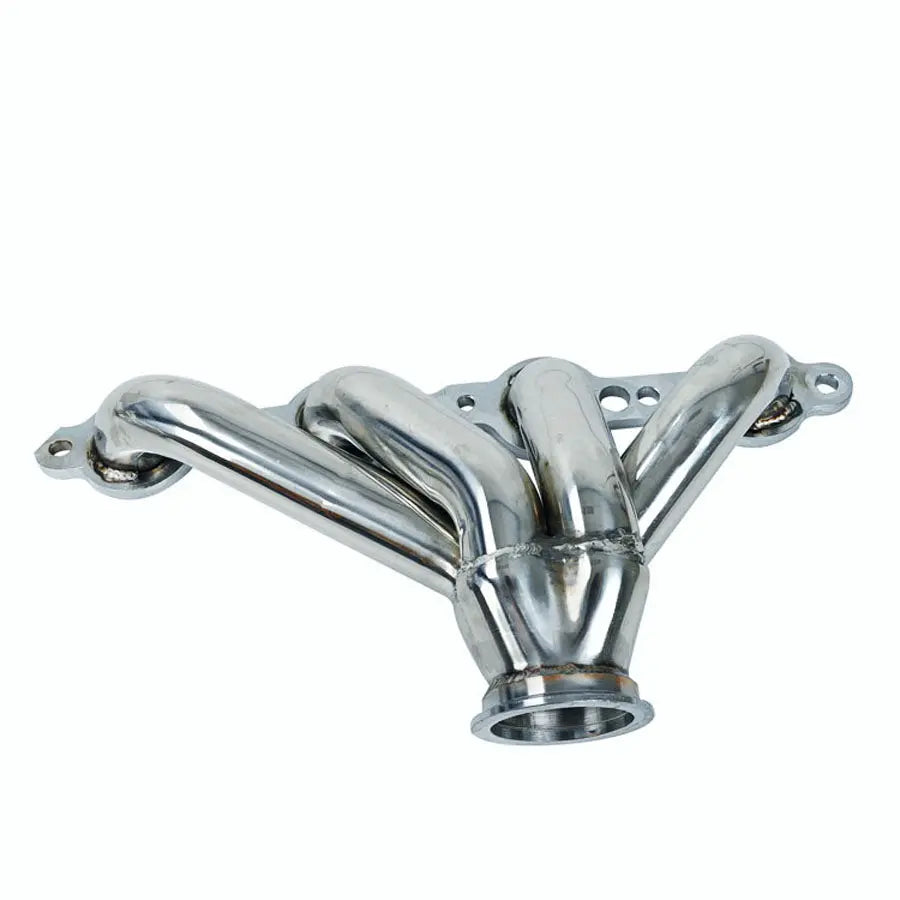
A10: Yes, stainless steel with a mirror-polished finish. That's a good thing for a vintage car that might see varying storage conditions—304 stainless won't rust like mild steel or ceramic-coated headers that chip and corrode. The polished finish looks right at home in a vintage engine bay. After a few heat cycles, the tubes near the collector will discolor to a gold/bronze tone. That's normal for stainless headers and doesn't hurt anything. If you want to keep them shiny, you can polish them back, but most guys just let them age naturally.
Q11: Can I use these headers on a C1 or C2 Corvette LS swap?
A11: Yes. The fitment chart lists 1953-1967 Corvette, which covers the entire C1 and C2 generation. The C1/C2 chassis has a fairly wide engine bay for its era, and LS swaps are well-documented in the Corvette community. The steering column on early Corvettes runs through a different path than the passenger cars, but these universal headers were designed with enough flexibility in the tube routing to accommodate both. As with any vintage swap, test-fit before you weld up the rest of your exhaust.
Q12: What's the difference between these LS swap headers and the stock exhaust manifolds that came on a vintage Chevy?
A12: The stock exhaust manifolds on a 1923-1967 Chevy were designed for the original stovebolt six-cylinder or early small block V8—engines making 100-250 hp. They're restrictive cast iron logs that create back pressure and kill performance. These LS swap headers give each cylinder its own tube, eliminating that back pressure. More importantly, you can't reuse stock manifolds on an LS swap anyway—the LS has completely different exhaust port geometry. You need LS-specific headers, and that's exactly what these are.




 Product Specifications


