


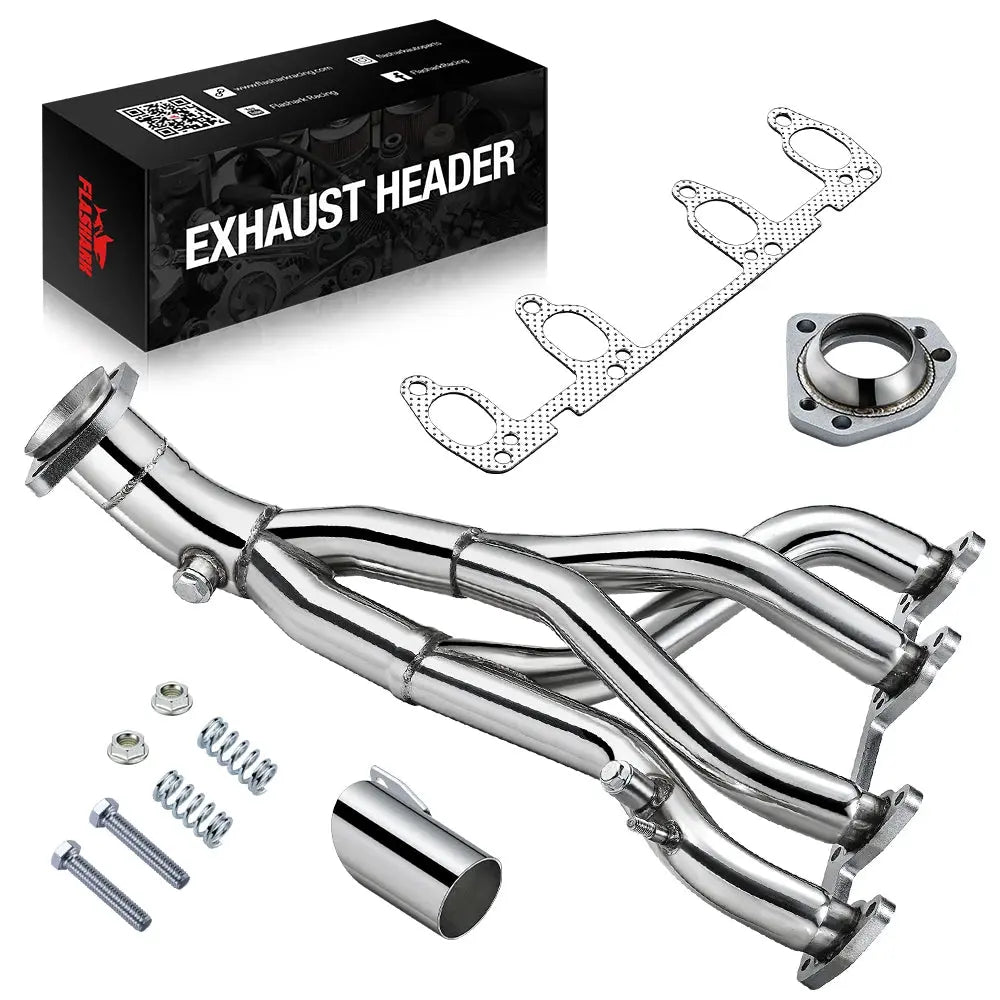
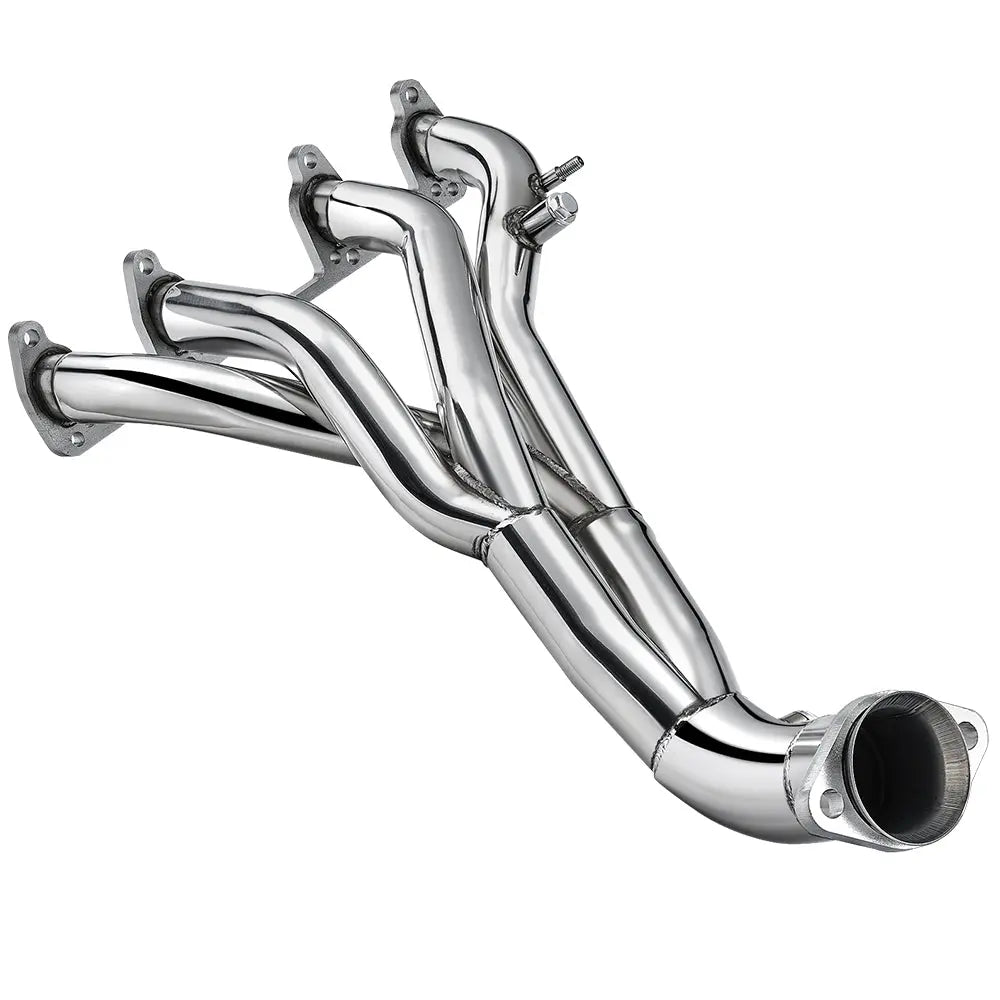
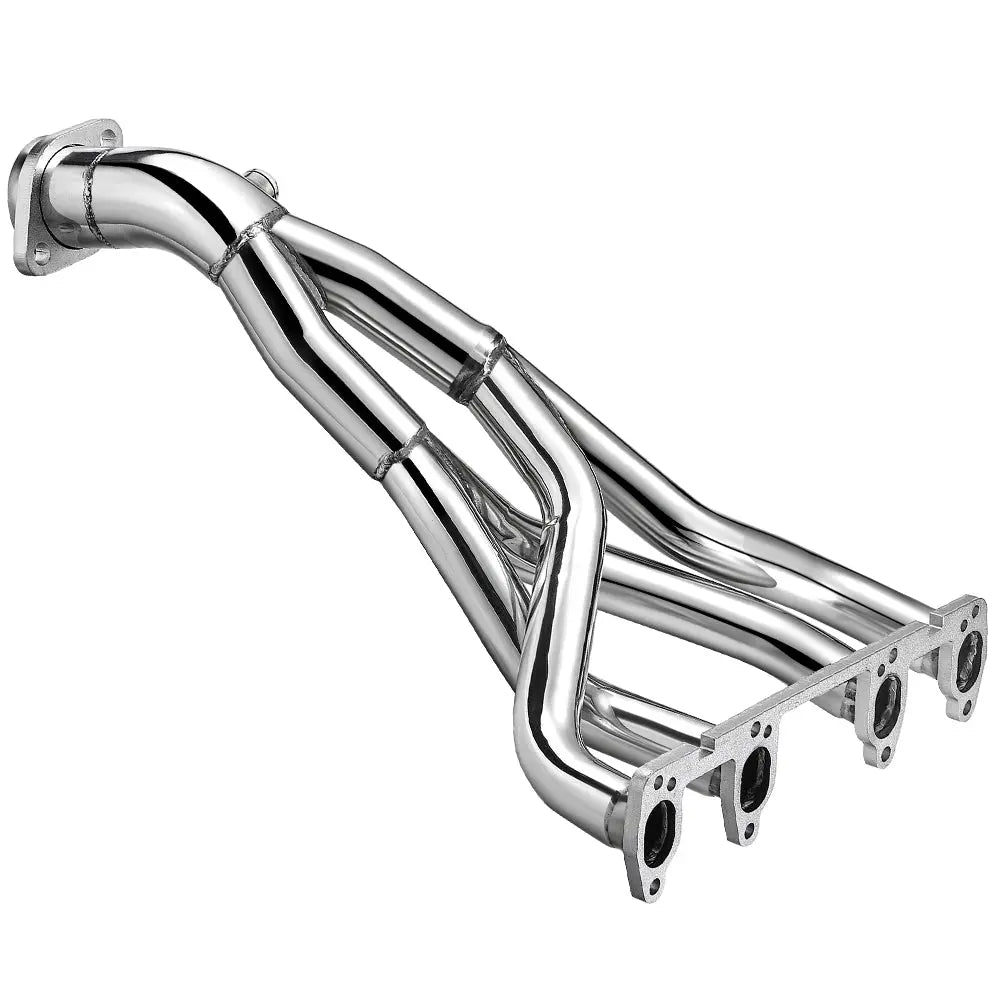


Exhaust Header for 1985-1998 VW Golf/Jetta II III Mk2 Mk3 GTI 8V 1.8L 2.0L
Replacing or upgrading your exhaust header is necessary for both engine performance and sound. It'll increase high-flow air, and instantly gain 10 -15 Hp. / Tq. Whether on or off the track, exhaust headers provide more horsepower and improved exhaust sound. FLASHARK offers many products to help you create your own custom engine headers. It's really easy and convenient to use: direct bolt-on, no modification needed.
Specifications:
Brand Name: FLASHARK
Certificate: ISO9001:2000
Application: Automobile Exhaust Header
Material: Stainless Steel
Surface: Mirror Polish
1.50" primary tubes and 2.5" outlet.
Exhaust Header VS Manifold, which is the better choice?
The structural differences between exhaust headers and manifolds are the material and size. From the material, exhaust headers are made of lighter, thinner steel, while exhaust manifolds are made of thick iron. Exhaust headers are also longer than exhaust manifolds. When in use, exhaust manifolds create back pressure, which lowers performance. Because each cylinder of the engine is given its own tube, however, headers eliminate this problem; thus, allowing the gases to exit without the creation of back pressure. Therefore, exhaust headers are a BETTER choice than an exhaust manifold.
Fitment & Compatibility
| Brand | Model | Year Range | Full Compatible Specs |
|---|---|---|---|
| VW | Golf (Mk2) | 1985-1992 | Mk2 Models; 8V SOHC 1.8L Inline-4 (L4) Engine; Incl. GTI Trim |
| VW | Golf (Mk3) | 1993-1998 | Mk3 Models; 8V SOHC 2.0L Inline-4 (L4) Engine; Incl. GTI Trim |
| VW | Jetta (Mk2) | 1985-1992 | Mk2 Models; 8V SOHC 1.8L Inline-4 (L4) Engine |
| VW | Jetta (Mk3) | 1993-1998 | Mk3 Models; 8V SOHC 2.0L Inline-4 (L4) Engine |
Q1: Will this header fit my VW Golf MK2 with an 8V engine swap?
A1: Yes, this Flashark exhaust header is specifically designed for the Volkswagen Golf MK2 and MK3 equipped with 1.8L and 2.0L 8V (8-valve) engines. It is an ideal performance upgrade for both original engines and LS-style or displacement swaps within the 8V family, providing precise flange alignment for a secure fit.
Q2: What are the performance benefits of the 4-2-1 design for the VW Golf 8V?
A2: The 4-2-1 high-performance racing spec design is optimized for the VW 8V powerband. Unlike a 4-1 design which focuses only on high-RPM power, our 4-2-1 header increases mid-range torque and airflow efficiency, resulting in a gain of approximately 10-15 HP and improved throttle response across the rev range.
Q3: Is this exhaust manifold compatible with the VW Jetta and Seat models?
A3: Absolutely. Beyond the Golf MK2 and MK3, this header fits the VW Jetta II (1984-1992), Seat Toledo (1L), Seat Ibiza, and Seat Cordoba, provided they are equipped with the 1.8L or 2.0L 8V engine. It is a versatile solution for the VAG A2 and A3 platform enthusiasts.
Q4: Does the package include the necessary gaskets and hardware for installation?
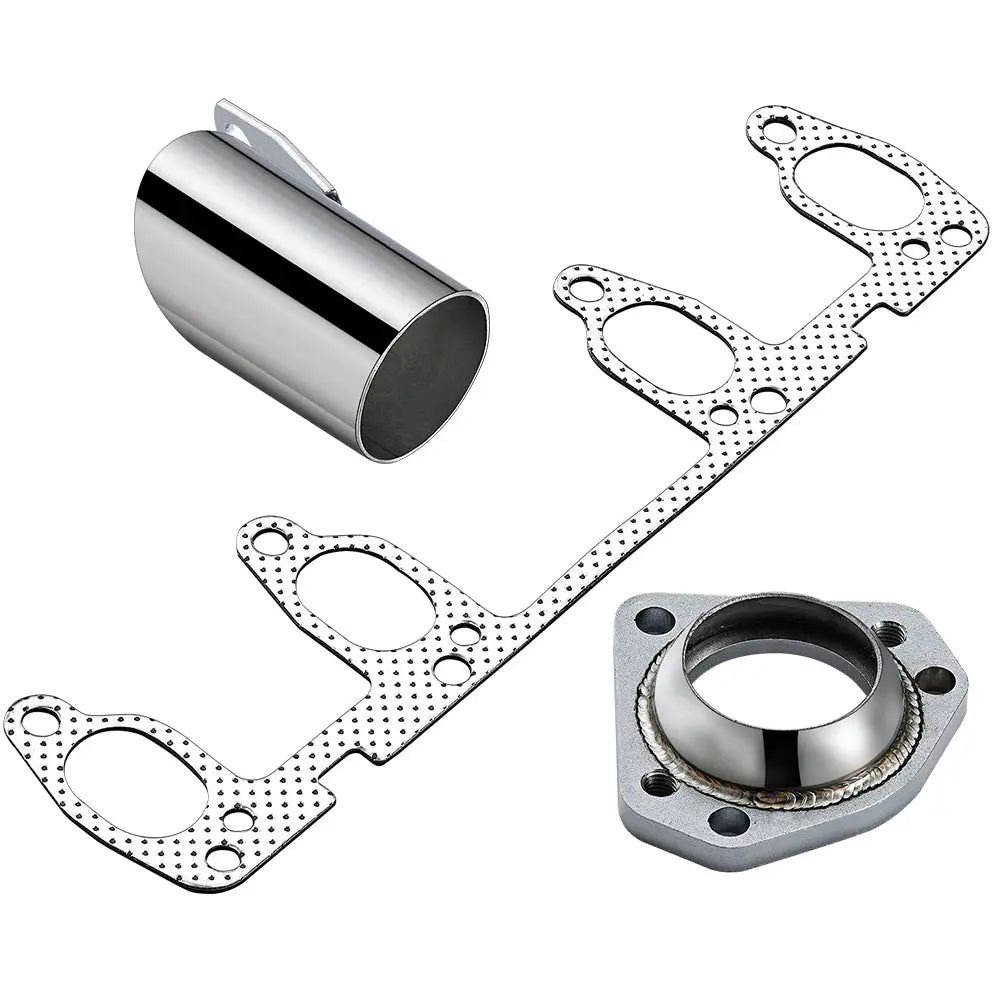
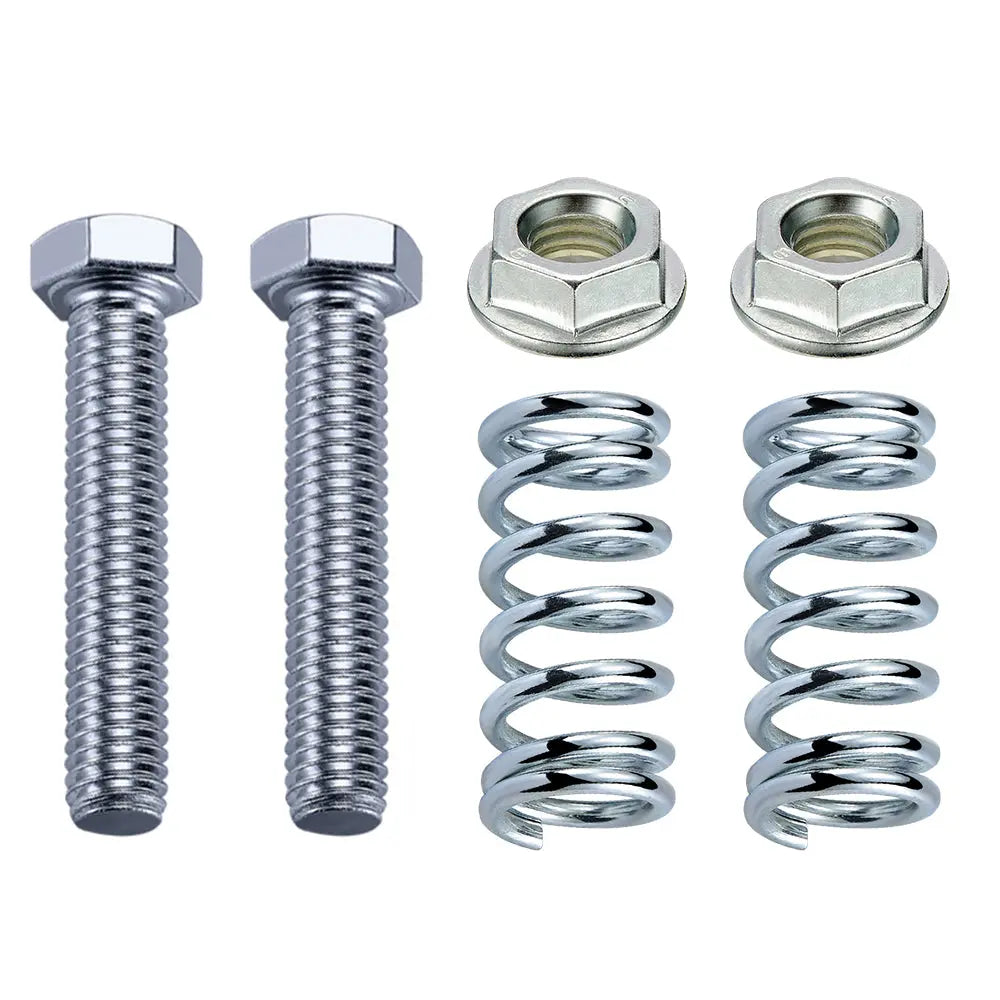
A4: Yes, every Flashark VW Golf MK2/MK3 8V header kit comes complete with a high-quality manifold gasket and the required mounting hardware. This ensures you have everything needed for a professional-grade installation right out of the box.
Q5: Is this header a direct bolt-on replacement for the stock cast iron manifold?
A5: This header is designed as a direct bolt-on for the engine head flange. However, as with most aftermarket performance headers, depending on your existing exhaust setup (stock vs. aftermarket cat-back), some minor pipe adjustment or welding might be required at the downpipe connection to ensure a perfect seal with your specific exhaust system.
Q6: How does T304 Stainless Steel compare to the factory exhaust manifold?
A6: Our headers are constructed from high-quality T304 Stainless Steel, which is significantly lighter and more durable than the heavy factory cast iron manifolds. T304 provides excellent corrosion resistance and can withstand higher exhaust temperatures without cracking, making it perfect for both daily driving and track use.
Q7: Will this header change the exhaust sound of my MK3 Golf 2.0L 8V?
A7: Yes, replacing the restrictive stock manifold with this high-flow stainless steel header will give your VW 8V a deeper, more aggressive racing tone. The smoother internal walls of the TIG-welded tubing reduce turbulence, resulting in a cleaner and more resonant exhaust note.
Q8: Does the header feature a mirror-polished finish?
A8: Yes, the Flashark VW Golf 8V header features a mirror-polished surface. This not only provides a premium "show car" look under the hood but also adds an extra layer of protection against environmental elements and heat-induced oxidation.
Q9: Can I use this header on a 16V engine?
A9: No, this specific model is engineered exclusively for the 8-valve (8V) cylinder heads. The exhaust port spacing and flange bolt pattern for the 1.8L/2.0L 16V engines are different. If you have a 16V GTI or GLI, please check our specific 16V header listings.
Q10: Is there a location for the Oxygen (O2) sensor?
A10: Yes, this racing header includes a pre-drilled O2 sensor insertion point. This allows for the proper installation of your factory oxygen sensor, ensuring your ECU can still monitor air-fuel ratios and maintain optimal engine performance without throwing a Check Engine Light (CEL) in most configurations.
Q11: How does this header improve engine cooling and efficiency?
A11: By reducing backpressure and moving exhaust gases away from the cylinder head more quickly, our headers help lower engine operating temperatures. This improved "scavenging effect" means the engine doesn't have to work as hard to push out exhaust, increasing overall thermal efficiency and longevity.
Q12: What is the primary tube size of this VW 8V header?
A12: The header features precision-sized primary tubes designed to maximize exhaust gas velocity for the 1.8L-2.0L displacement. The CNC machined flanges ensure that the transition from the exhaust port to the header is seamless, preventing turbulence at the most critical point of the exhaust path.