

The 351 Windsor is one of Ford's most useful small-block V8 platforms because it combines simple pushrod architecture, a taller deck than the 302, strong low-end torque, and huge aftermarket support. It has powered classic Mustangs, Cougars, Broncos, F-Series trucks, vans, and countless engine swaps.
For most builders, the big questions are simple: how much horsepower does a 351 Windsor make, what is the correct firing order, which years are best, and what parts actually matter when building one? This guide answers those questions with practical specs, builder notes, and upgrade advice for street cars, classic trucks, Foxbody swaps, and 393/408 stroker builds.
Quick Answer: 351 Windsor Specs, Horsepower & Firing Order
- Displacement: 351 cubic inches, commonly referred to as 5.8L.
- Bore x stroke: 4.000 in x 3.500 in.
- Firing order: 1-3-7-2-6-5-4-8.
- Factory horsepower: Early 1969 351W engines were commonly rated at 250 hp with a 2-barrel carburetor and 290 hp with a 4-barrel carburetor. Later smog-era and truck versions were rated much lower.
- Best factory blocks: Early 1969-1974 castings are popular for stroker builds, but sonic checking matters more than casting-code myths. The 1994+ F4TE-style roller-ready blocks are strong choices for modern street builds.
- Realistic street build power: A healthy heads/cam/intake/header 351W can land around 350-425 hp depending on compression, cylinder heads, camshaft, fuel system, and tune. A 393 or 408 stroker can go beyond that with the right parts.
351 Windsor Technical Specifications
Before ordering pistons, heads, camshafts, headers, or a rotating assembly, start with the hard dimensions. The 351 Windsor shares small-block Ford DNA with the 289 and 302, but the taller deck, longer stroke, and larger main journals make it a different engine from a fitment and parts-matching standpoint.
| Specification | 351 Windsor Details | Builder Note |
|---|---|---|
| Displacement | 351 cu in / 5.8L | Factory displacement before overbore or stroker kits. |
| Bore x Stroke | 4.000 in x 3.500 in | Same bore family as 302, but with a longer stroke. |
| Deck Height | Commonly listed around 9.480 in | Always measure your actual block before machining. |
| Main Journal Diameter | 3.000 in | Larger than a 302, one reason the 351W is favored for torque builds. |
| Connecting Rod Length | 5.956 in | Changes when using common 393/408 stroker kits. |
| Factory Firing Order | 1-3-7-2-6-5-4-8 | Different from early 289/302 firing order. |
| Balance | 28 oz-in external balance | Match the flywheel or flexplate to the crank and damper. |
| Block Material | Cast iron | Factory block strength varies by casting, condition, and machining history. |

How Much Horsepower Does a 351 Windsor Make?
A stock 351 Windsor can make anywhere from roughly 140 hp to nearly 300 hp depending on year, compression ratio, carburetor or EFI setup, emissions equipment, and whether the rating is gross or net horsepower.
The important point is this: early muscle-era ratings and later truck ratings cannot be compared directly without context. A 1969 4-barrel Mustang 351W rating looks much stronger on paper than a late smog-era truck engine, but the later engine may still be a better starting point for a practical street build if the block condition is good.
| Era | Typical Factory Power | What It Means for Builders |
|---|---|---|
| 1969 early performance era | About 250 hp 2V / 290 hp 4V gross ratings | Strong classic restoration and performance baseline. |
| 1970s emissions era | Lower published ratings after compression and emissions changes | Good torque, but factory heads, cam, and exhaust are restrictive. |
| 1980s truck and Bronco era | Often around 140-180 hp depending on application | Not exciting stock, but useful for budget rebuilds and swaps. |
| Late EFI truck era | Often around 190-210 hp depending on application | Better street manners and a good foundation for mild upgrades. |
| Heads/cam/intake/headers street build | Roughly 350-425 hp is realistic | Requires matched cylinder heads, cam, intake, fuel, ignition, and exhaust. |
| 393/408 stroker build | 400+ hp is common with the right combination | Block prep, compression, cam selection, and airflow become critical. |
What Year Is the Best 351 Windsor?
The best 351 Windsor year depends on what you are trying to build. A concours restoration, a budget truck rebuild, a Foxbody street swap, and a 408 stroker do not need the same block.
Best for High-Horsepower Stroker Builds: Early 1969-1974 Blocks
Early D0AE, D1AE, and related castings are popular among Windsor builders because many of them have a reputation for strong material and good cylinder wall thickness. That said, casting code alone does not guarantee a safe 500 hp foundation.
Best for Modern Street Builds: 1994+ F4TE-Style Roller-Ready Blocks
For a street build where drivability matters, many builders like the later F4TE-style 351W blocks because they can accept factory-style hydraulic roller lifter hardware. This can save money compared with retro-fit link-bar lifters and makes camshaft selection easier for a daily-driven or weekend street car.
Best for Budget Swaps: Clean Truck and Van Cores
A clean, standard-bore truck or van 351W can be a better choice than a rough early block with unknown history. For a mild street build, condition is often more important than the casting number. Check bore wear, crank condition, deck surface, oil pressure history, freeze damage, and whether the block has already been overbored.
Transmission Compatibility: Can a T5 Handle a 351 Windsor?
A T5 can physically bolt behind a 351 Windsor with the correct small-block Ford bellhousing and clutch setup. The bigger issue is torque capacity.
A healthy 351W makes strong low-rpm torque, and a mild heads/cam/intake build can exceed what a stock Mustang T5 was designed to handle, especially with sticky tires, hard launches, or aggressive clutch engagement. For a casual cruiser, a careful driver might make one live. For a real street/strip Windsor, plan for something stronger.
| Transmission Choice | Best Use | 351W Recommendation |
|---|---|---|
| Stock T5 | Light street use, mild 302 builds | Marginal behind a torquey 351W. |
| Built T5 / T5Z-style upgrade | Lightweight street cars with moderate torque | Better, but still not ideal for hard-launch 408 builds. |
| Tremec TKX | Street/strip manual builds | Strong modern choice for many Windsor swaps. |
| T56 / Magnum-style 6-speed | Highway cruising and higher power builds | Excellent but more expensive and packaging-heavy. |
| C4 / C6 / AOD / 4R70W-style automatic | Street, drag, and truck applications | Can work very well when built for the torque level. |
351 Windsor vs. 351 Cleveland: Key Differences
The 351 Windsor and 351 Cleveland share displacement, but they are not the same engine. Many new builders assume 351 parts interchange across both platforms. That is where expensive mistakes happen.
- Architecture: The Windsor is part of the small-block Ford Windsor family. The Cleveland uses different cylinder heads, intake design, water routing, and block architecture.
- Power curve: A 351W usually favors low-to-midrange torque and broad street drivability. A 351C, especially with 4V heads, is known for big airflow and higher-rpm personality.
- Parts cost: The Windsor generally has broader and cheaper aftermarket support for street builds, stroker kits, EFI conversions, and swap parts.
- Headers and intake: Do not buy Cleveland headers or intake parts for a Windsor build unless you are intentionally building a hybrid Clevor setup.
351 Windsor Firing Order & Camshaft Selection
The correct factory 351 Windsor firing order is 1-3-7-2-6-5-4-8. This is one of the most important details to verify during a rebuild, cam swap, distributor install, or no-start diagnosis.
The early 289/302 firing order is different: 1-5-4-2-6-3-7-8. Some later 5.0L HO engines use the 351W-style firing order, which adds to the confusion. Always match your spark plug wire routing to the camshaft firing order, not just the valve cover sticker or what the previous owner told you.

Customizing and Upgrading the 351 Windsor Engine
Getting real performance from a 351 Windsor comes down to airflow, compression, cam timing, fuel delivery, ignition, and exhaust sizing. The best build is not the one with the biggest parts. It is the one where every part works together.
Air Intake and Exhaust Upgrades
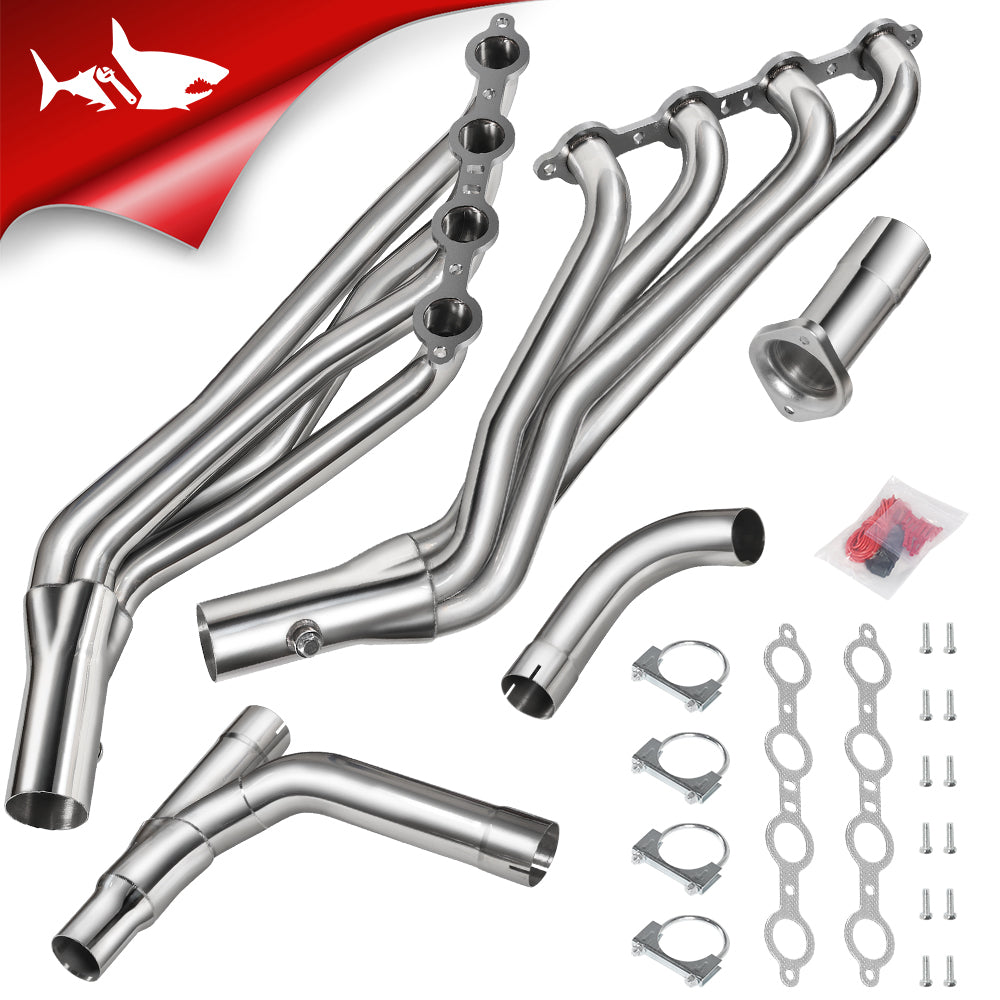
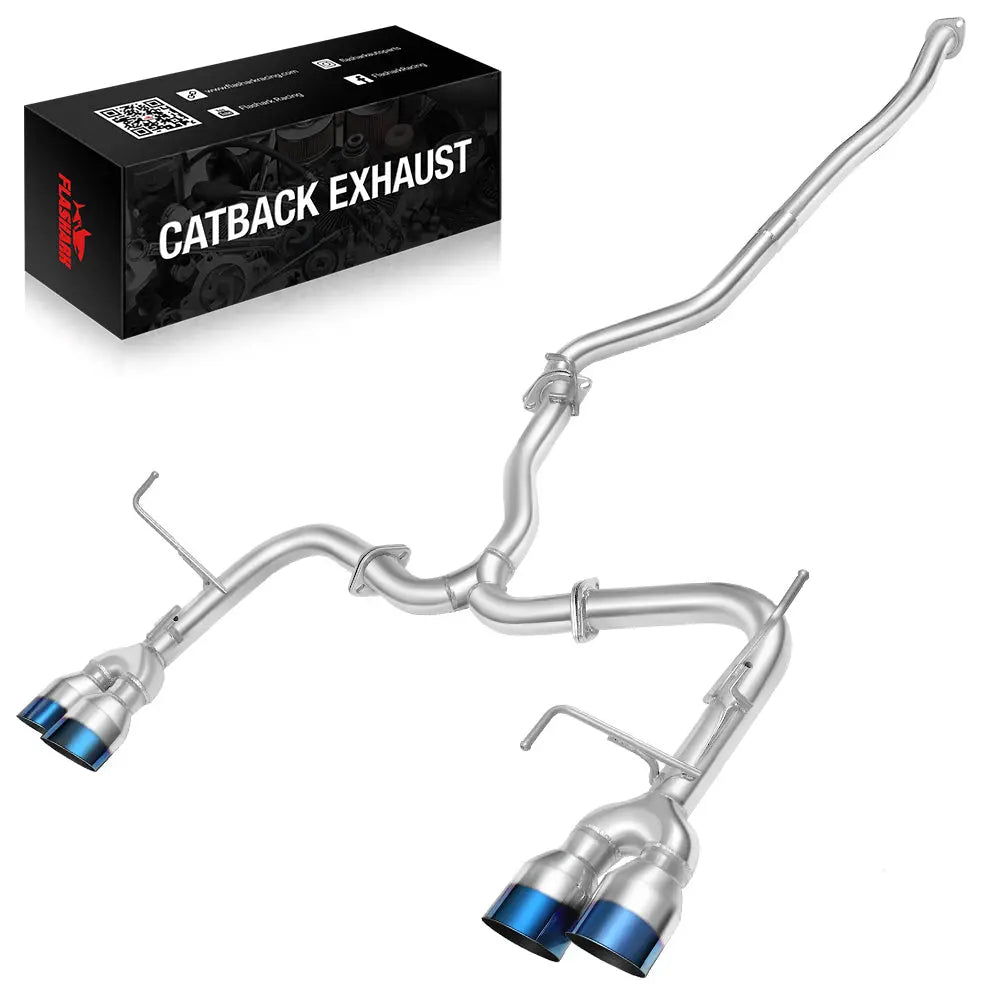
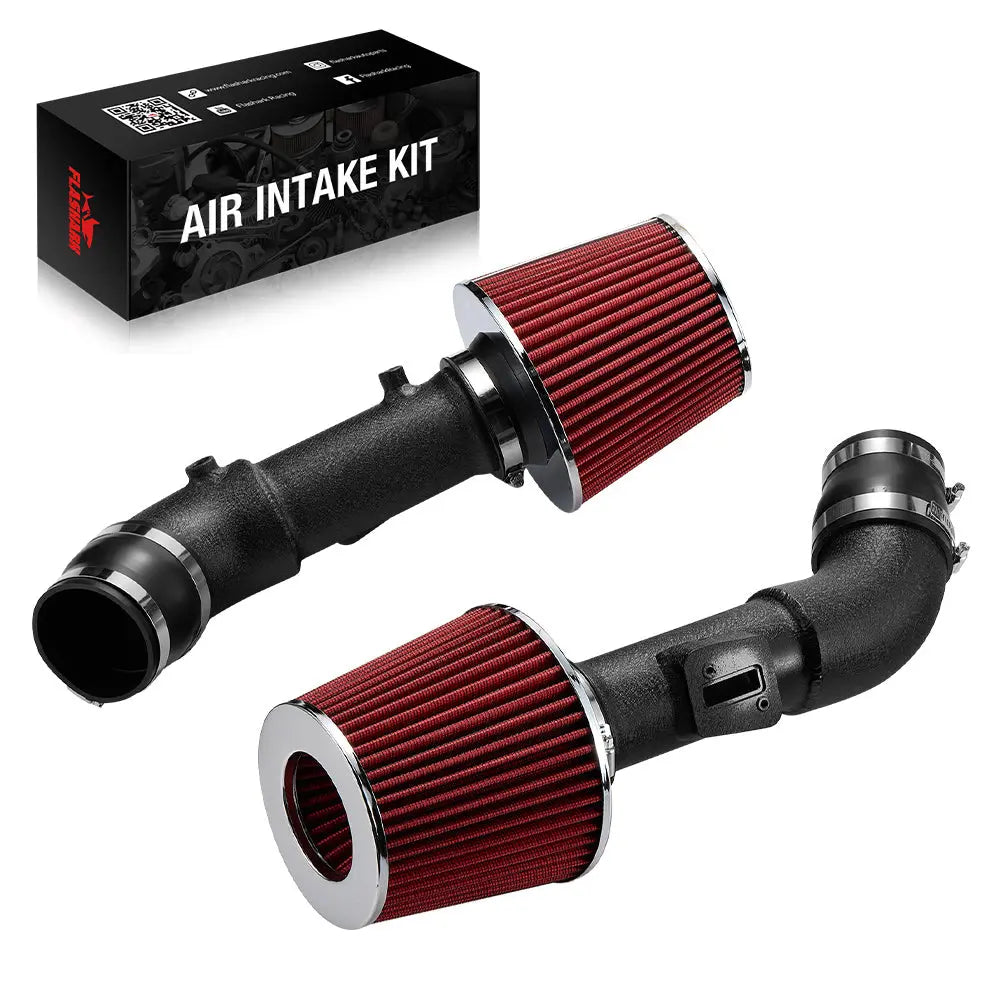
The factory cast iron exhaust manifolds and small factory heads are major restrictions on many 351W combinations. A basic cold air intake or high-flow air filter can help the inlet side, but the exhaust side is where many Windsor builds leave power on the table.
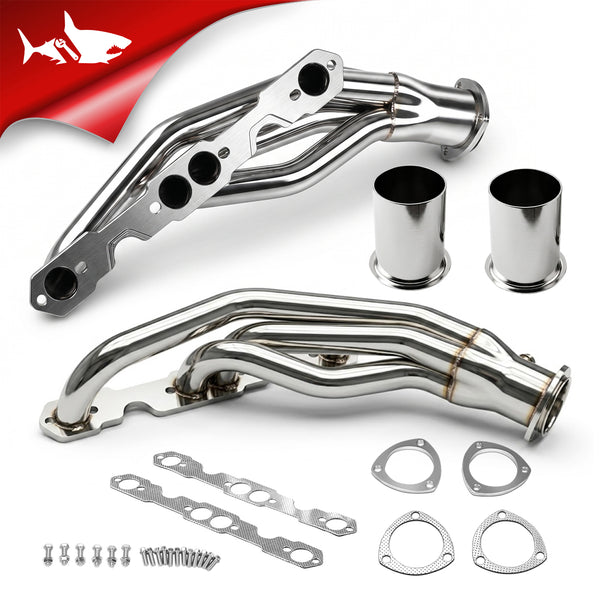
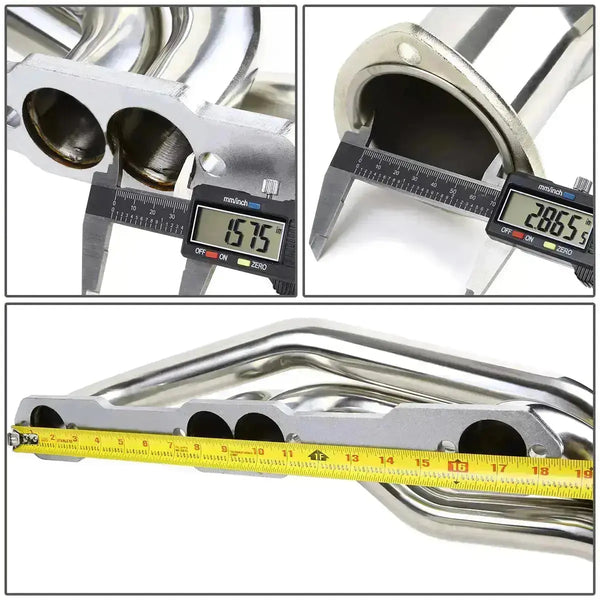
For classic Ford and Mercury small-block applications, correctly matched Ford exhaust headers are usually a better performance choice than restrictive factory manifolds. A stock or mild 351W often works well with 1-5/8-inch primary tubes. A stronger 393/408 stroker may need 1-3/4-inch primaries and a larger collector, depending on horsepower target and rpm range.
Not sure whether headers are worth it compared with factory manifolds? Read the Flashark guide on exhaust manifolds vs headers before choosing parts.
Increasing Displacement with a 393 or 408 Stroker Kit
The 351W is popular for stroker builds because the taller deck gives builders room to increase displacement. Common street combinations include 393 and 408 cubic inches. A 408 Windsor with the right heads, cam, intake, compression, fuel system, and headers can make serious torque without needing extreme rpm.
However, a stroker kit is not just a crankshaft swap. You may need block clearancing, piston-to-valve checking, correct compression height, proper balancing, upgraded fasteners, and careful oiling-system inspection.
Fuel, Cooling, and Ignition Support
A 400 hp Windsor needs more than a cam and headers. It also needs the supporting systems to keep up.
- Cooling: Use a healthy radiator, correct shroud, proper fan setup, good water pump, and a thermostat matched to the vehicle use. Overheating often comes from airflow and shroud problems, not just radiator size.
- Fuel: Carbureted street builds often work well with a properly sized 650-750 CFM carburetor, but the exact choice depends on cubic inches, camshaft, gearing, vehicle weight, and rpm range.
- Ignition: A weak distributor, poor plug wires, or incorrect timing curve can make a strong Windsor feel lazy. Verify total timing and mechanical advance instead of guessing.
- Exhaust: Match header size, collector size, mid-pipe, mufflers, and tailpipe diameter to the actual horsepower target.
Common 351 Windsor Issues, Diagnostics, and Maintenance
The 351 Windsor is durable, but age, poor maintenance, and mismatched parts can create predictable problems.
- Rear main seal leaks: Early engines use a two-piece rear main seal, while later blocks use a one-piece design. During a rebuild, seal installation and crank surface condition matter.
- Flat-tappet cam wear: Older flat-tappet cam engines need proper break-in procedure and oil with adequate anti-wear additives. Do not treat a flat-tappet Windsor like a modern roller-cam engine.
- Overheating after swaps: Check fan direction, shroud depth, pulley ratio, thermostat orientation, trapped air, and ignition timing before blaming the block.
- Vacuum leaks: Intake gasket leaks, carb spacer leaks, cracked hoses, and PCV issues can create rough idle and lean surging.
- Header leaks: Thin flanges, poor gasket surfaces, loose bolts, or chassis contact can create ticking noises that sound like valvetrain problems.
351 Windsor Block Identification and Casting Numbers
351W casting numbers are commonly found on the passenger side of the block near the starter area. Clean the area with a wire brush and light solvent before trying to read the casting code.
| Casting / Era | Why Builders Care | Caution |
|---|---|---|
| D0AE / D1AE / D2AE-style early blocks | Popular for stroker and higher-horsepower builds. | Still needs sonic check and crack inspection. |
| 1980s truck blocks | Common, affordable, and useful for street builds. | Often low-compression and may need head/cam/exhaust upgrades. |
| F4TE-style roller-ready blocks | Desirable for hydraulic roller street builds. | Verify lifter valley provisions and hardware before buying parts. |
Applications and Swap Compatibility
The 351W fits many Ford and Mercury platforms, but it is not always a drop-in replacement for a 302. The taller deck affects intake width, header clearance, air cleaner height, hood clearance, accessory brackets, and sometimes oil pan fitment.
| Vehicle / Chassis | Common 351W Considerations |
|---|---|
| 1969-1973 Mustang / Cougar | Factory-style fitment exists, but shock tower and header clearance still matter. |
| Foxbody Mustang 1979-1993 | Requires swap oil pan, correct headers, hood clearance planning, and drivetrain upgrades. |
| Ford F-Series / Bronco | Good torque platform for trucks; verify manual transmission, EFI, emissions, and accessory details by year. |
| Fairlane / Torino / Ranchero / Montego / Cyclone-family cars | Excellent swap candidates, but verify factory engine options, VIN/data plate, and prior modifications. |
| Classic street rods and custom swaps | Plan engine mounts, oil pan, steering clearance, headers, cooling, and driveshaft angle together. |
Technical Reference Notes
For horsepower and factory-spec verification, cross-check your exact year, vehicle, carburetor, and emissions package. Period-style Mustang references commonly list the 1969 351W at 250 hp with a 2-barrel carburetor and 290 hp with a 4-barrel carburetor, while small-block Ford technical references confirm the Windsor's 4.000-inch bore, 3.500-inch stroke, and different firing order from early 289/302 engines. For T5 planning, remember that many Mustang T5 references place stock torque capacity around the 265-300 lb-ft range, depending on year and version.
Reference checks: 1969 Mustang 351W specs, Ford small-block technical data, and Mustang T5 transmission overview.
Conclusion
The 351 Windsor is not just a bigger 302. It is a torque-friendly, tall-deck small-block Ford platform with enough strength and aftermarket support to work in classic restorations, truck builds, Foxbody swaps, and serious 393/408 stroker combinations.
For the best result, do not build by rumor. Verify the block, measure everything, match the cam to the compression and gear ratio, choose headers for the chassis, and upgrade the transmission before the torque finds the weak link. A carefully planned 351W build can be reliable, streetable, and seriously quick.
FAQ: 351 Windsor Engine Expert Answers
Q1: What is the exact deck height of a 351 Windsor?
A: The 351 Windsor is commonly listed with a deck height around 9.480 inches. Because blocks vary by year, machining history, and production tolerance, a machine shop should measure your actual block before ordering pistons or setting compression height.
Q2: What is the correct firing order for a 351 Windsor?
A: The factory 351 Windsor firing order is 1-3-7-2-6-5-4-8. This differs from the early 289/302 firing order, so always wire the distributor to match the camshaft.
Q3: How much horsepower does a stock 351 Windsor make?
A: It depends heavily on the year. Early 1969 351W engines were commonly rated at 250 hp with a 2-barrel carburetor and 290 hp with a 4-barrel carburetor. Later emissions-era and truck engines were rated lower, often around 140-210 hp depending on application.
Q4: Is the 351 Windsor a good engine?
A: Yes. The 351W is a good engine because it has strong torque, simple pushrod design, broad parts availability, and excellent stroker potential. Its biggest weakness is not the block itself, but poor airflow from factory heads, cam, intake, and exhaust on many stock versions.
Q5: What year 351 Windsor block is the strongest?
A: Many builders prefer early 1969-1974 blocks for high-power stroker builds, while later F4TE-style roller-ready blocks are popular for modern street engines. Do not buy based on casting code alone. Sonic check and crack inspection are more important.
Q6: Can a T5 transmission handle a modified 351 Windsor?
A: A stock T5 is risky behind a modified 351W because the engine makes strong low-rpm torque. It may survive mild street use with careful driving, but a Tremec TKX, T56-style transmission, or properly built automatic is a safer choice for hard launches or stroker builds.
Q7: Are 351 Windsor and 351 Cleveland parts interchangeable?
A: Most major parts are not interchangeable. The Windsor and Cleveland use different heads, intake manifolds, water routing, and exhaust fitment. Hybrid Clevor builds exist, but they require specific parts and planning.
Q8: What are the best affordable upgrades for a 351 Windsor?
A: The best upgrades are usually aluminum cylinder heads, a matched camshaft, better intake, properly sized carburetor or EFI, ignition tuning, and chassis-correct headers. Random big parts do not help if the combination is mismatched.
Q9: How big can you stroke a 351 Windsor?
A: Common factory-block stroker combinations include 393 and 408 cubic inches. Bigger combinations exist, but 408 is one of the most popular street/strip choices because it makes strong torque without pushing every part to the limit.
Q10: What oil should I use in an older 351 Windsor?
A: If your 351W uses a flat-tappet camshaft, use oil with the proper anti-wear additive package or a compatible zinc additive, especially during break-in. Roller-cam engines have different oil requirements, so match the oil to the valvetrain.
Q11: Will 302 headers fit a 351 Windsor?
A: Sometimes they bolt up, but that does not mean they fit correctly in the chassis. Because the 351W is taller and wider than a 302, header tubes may hit the steering, shock towers, firewall, or floor. Use chassis-specific 351W headers whenever possible.
Q12: Is a 351 Windsor better than a 302?
A: For torque and stroker potential, the 351W is usually better. For packaging, weight, cost, and simple swaps, the 302 can be easier. The right choice depends on the vehicle, budget, and horsepower goal.

Steven Chen
Automotive Performance Specialist | Engine & Exhaust Systems
Steven focuses on practical engine performance, exhaust fitment, and real-world upgrade paths for classic and modern enthusiast vehicles. He reviews small-block Ford, LS, truck, and street/strip applications with one goal in mind: helping builders choose parts that actually work together. His philosophy: "Good power starts with the right combination, not the biggest part."




4 comments
Landon
Looking at a 1997 F250 with 351W and 5spd. I doubt the transmission is a T5 so maybe update the transmission selections and dates.
Aaron
I had a ‘76 granada that happened to have a Windsor. I rebuilt 60 over with 512 lift and 284 duration. Headers of course, with flexible piping out either side under the doors capped unless at the track. I made a small mistake in an edelbrok single plane tunnel ram intake which kinda makes for not such good line launching. I put it in a ’79 mustang fox body with a stock tranny (c4) but a 67 falcon Detroit locker rear end. No stall converter but I did make a few runs in the quarter of low to mid 13’s. Ahhh the memories.
Mark Sylvester
Loved my Windsor in my 1973 mach 1 it was not the stock engine. Back in 86 it was swapped out with the 1969 factory 4 barrel the modified 292- 512 lift cam headers valve job, hi comp pistons never lost a street race
Brian Powers
You forgot to list the 69, 70 and 71 Cyclone Cyclone Spoiler, and Cyclone, spoiler 2 and the Torino Talladega