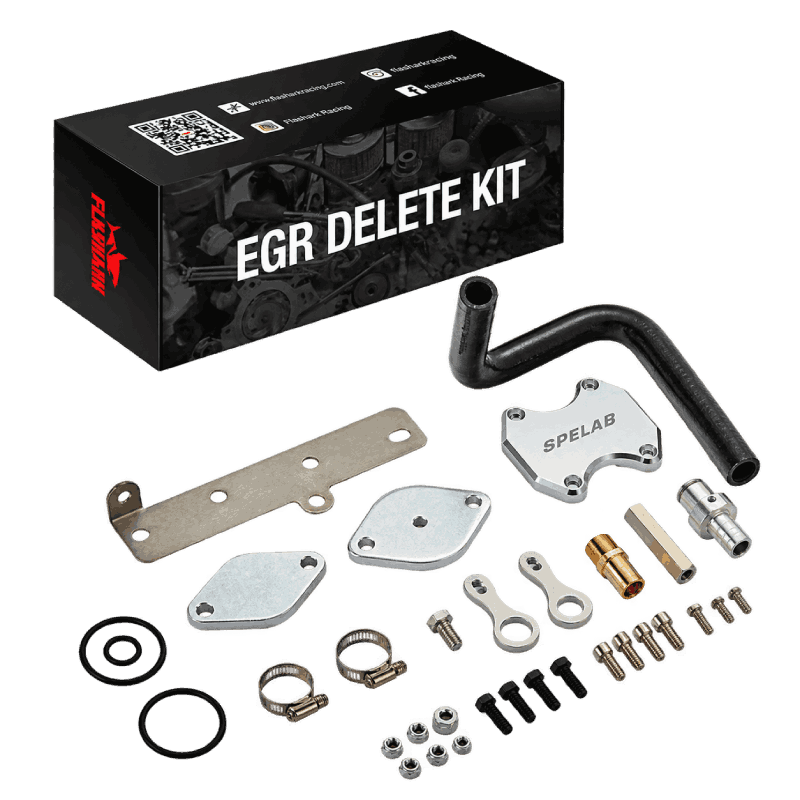
What changes before and after an EGR delete on a Ford 6.0L Power Stroke? The answer depends on the truck's condition before the work. A restricted EGR valve, a leaking cooler, a cooling-system problem, or an unrelated engine fault can produce different symptoms. Removing or disabling EGR does not, by itself, establish a horsepower gain, better fuel economy, or longer engine life. Diagnose the fault first, compare results under similar conditions, and review emissions and road-use requirements before choosing a modification.
- What to compare: symptoms, diagnostic findings, coolant behavior, operating conditions, and measured fuel use.
- Vehicle scope: this article concerns the Ford 6.0L Power Stroke diesel. Confirm the truck's year, engine, and exact configuration before selecting parts.
- Installation and electronics: cooling-system connections, EGR hardware, sensors, wiring, and engine calibration all matter. Warning-light behavior cannot be promised in advance.
- Road use: EGR is emissions-related equipment. Review the requirements that apply to the vehicle and its intended use before modifying it.
What the EGR System Does on a 6.0L Power Stroke
Exhaust gas recirculation, or EGR, routes a controlled portion of exhaust back into the intake to help reduce nitrogen-oxide emissions. Owners often discuss the EGR valve and EGR cooler together, but they are different components. The valve controls flow; the cooler transfers heat through the cooling system. A complaint attributed to “the EGR” still needs a specific diagnosis.
The phrase “6.0 EGR delete” is commonly used for removing or disabling some EGR-related functions. It does not describe one universal parts package or one predictable result. A cooler repair, valve replacement, cooling-system repair, and EGR delete address different conditions and carry different consequences.

6.0 EGR Delete Before and After: What Can Actually Be Compared?
A meaningful before-and-after comparison records the same truck before and after the work, along with every repair and calibration change made at the same time. Without that baseline, an improvement may reflect correction of an existing fault rather than the EGR modification itself.
| Item | Before work | After work | What the comparison can tell you |
|---|---|---|---|
| Faults and symptoms | Record complaints and diagnostic findings. | Record which complaints remain or change. | Whether a specific fault was addressed; it does not prove a general power gain. |
| Cooling system | Check coolant level, leaks, and relevant test results. | Repeat the same checks after the work. | Whether a leak or cooling concern persists; other faults may still need repair. |
| Fuel use | Log fuel added, distance, route, load, and driving conditions. | Repeat over comparable use, preferably across multiple tanks. | Whether measured MPG changed under those conditions—not why it changed on its own. |
| Power and response | Document engine condition and, if available, a controlled baseline test. | Use comparable testing with the full configuration recorded. | A driving impression is not a horsepower measurement. |
Technician's note: If the truck had a known fault before the work, record every repair made during the same visit. Correcting a leaking connection or cooling problem can change how the truck drives, even when that change cannot be attributed to EGR removal alone.
After EGR Delete on Your 6.0 Engine: Performance, MPG, and Maintenance
Power and throttle response
The original question is whether the truck performs differently afterward. The answer depends on its starting condition and every change made to it. A truck with a fault may feel better after that fault is corrected. That is different from proving that EGR removal adds horsepower or torque to a healthy engine. A credible power comparison needs controlled before-and-after testing and a record of engine condition, fuel, calibration, and other hardware.
6.0 Power Stroke MPG after EGR delete
MPG is not guaranteed to rise. Load, route, tire setup, driving style, weather, engine condition, and calibration can outweigh the effect a single component has on fuel use. If fuel economy is the concern, calculate it from fuel added and distance traveled over comparable driving rather than relying on the dashboard reading or one short trip. Note any other repair or tune made between the two periods.
Maintenance costs and engine life
An EGR-related fault can create repair costs, but removing one component does not remove the need to maintain the cooling, intake, fuel, and electronic systems. Nor does it establish a longer engine lifespan. A useful cost comparison includes diagnosis, parts, labor, follow-up repairs, and any emissions or inspection consequences relevant to the vehicle. If a cooler or valve is faulty, compare a compliant repair with the proposed modification before deciding.

Potential Downsides of a 6.0 EGR Delete
Disabling emissions equipment can increase emissions and create legal and inspection problems. In the United States, the EPA identifies EGR as emissions-control equipment and addresses removal or defeat of such equipment under the Clean Air Act. A competent installation does not, by itself, make a modification lawful for road use. Review the rules that apply to the truck and its intended use. For background, see the EPA's vehicle tampering policy.
Mechanical and electronic risks also depend on what was changed. Coolant connections, intake sealing, sensors, wiring, and calibration should be considered as one system. A leak, an unresolved original fault, or an incompatible configuration may leave the truck with the same complaint or a new one. Do not treat the absence of a warning light as proof that the vehicle is operating correctly.

Diagnose the Problem Before Choosing Parts
- Write down the complaint. Note when it occurs, whether coolant is being lost, and whether a warning light is present.
- Identify the affected system. Inspect and test the EGR valve, cooler, cooling system, intake connections, and related wiring as the symptoms require. Similar symptoms can have different causes.
- Compare repair options. Consider what a valve repair, cooler repair, or other fault correction would address. Keep emissions and road-use requirements in the decision.
- Check the exact vehicle and selected part. Confirm the year, engine, configuration, connection points, and package contents before ordering. Similar-looking kits are not automatically interchangeable.
- Check the completed work. Inspect fluid levels, connections, leaks, and diagnostic information before relying on a driving impression.
Flashark's EGR delete kit collection shows different engine and vehicle applications. Use the individual listing's configuration details when comparing parts; the collection itself does not establish that a specific kit fits a specific truck. Contact product support if the exact configuration is unclear.
Conclusion
For a 6.0L Power Stroke, a before-and-after story is useful only when it separates the original fault, the work performed, and the measured result. Some owners researching an EGR delete are trying to solve a cooler or valve problem; others are asking about power, MPG, or future maintenance. Those questions deserve different tests and different answers. Diagnose first, compare repairs and their consequences, and avoid treating improved drivability as proof of a fixed horsepower, fuel-economy, or lifespan benefit.
Frequently Asked Questions
Q1. Does a 6.0 Power Stroke EGR delete always increase horsepower?
A1. No. A truck may drive differently after a fault is corrected, but an EGR delete alone does not establish a horsepower gain. A controlled comparison must account for engine condition, calibration, and other work performed.
Q2. Will MPG improve after a 6.0 EGR delete?
A2. There is no guaranteed MPG improvement. Compare fuel added and distance traveled over similar routes, loads, and driving conditions, and record any repairs or calibration changes made at the same time.
Q3. Is an EGR valve the same as an EGR cooler?
A3. No. The valve controls recirculated exhaust flow; the cooler transfers heat through the cooling system. Diagnose the affected component before choosing a repair.
Q4. Can an EGR-related fault explain poor performance?
A4. It can be one possible cause, but poor performance can also come from other engine, fuel, intake, cooling, or electronic faults. Test the symptom instead of assigning it to EGR by assumption.
Q5. Does an EGR delete eliminate future maintenance?
A5. No. The cooling, intake, fuel, and electronic systems still need diagnosis and maintenance. A cost comparison should include all work performed and any follow-up repairs.
Q6. Will the truck show a check-engine light afterward?
A6. Warning-light behavior depends on the vehicle, installed hardware, wiring, sensors, and calibration. No fixed result should be assumed; inspect and diagnose any warning rather than masking it.
Q7. Is a tune always required?
A7. Tune requirements vary with the vehicle and the work performed. Review the exact hardware and calibration with a qualified specialist; do not assume every configuration has the same requirement.
Q8. How do I choose a part for my truck?
A8. Confirm the truck's year, 6.0L Power Stroke engine, exact configuration, connection points, and the selected product's listed contents. Ask product support when a listing leaves a configuration question unanswered.
Q9. Is an EGR delete legal for a road-driven truck?
A9. Emissions and road-use requirements apply to emissions-related equipment. Review the requirements for the vehicle and its intended use before modifying it; installation quality alone does not determine legality.
Q10. What should I record for a useful before-and-after comparison?
A10. Record the original symptoms and diagnostic findings, every repair and calibration change, cooling-system observations, and comparable fuel-use data. Controlled testing is needed for a horsepower claim.

Steven Chen
Automotive Performance Specialist | Engine & Exhaust Systems
Steven focuses on practical engine performance, exhaust fitment, and real-world upgrade paths for classic and modern enthusiast vehicles. He reviews small-block Ford, LS, truck, and street/strip applications with one goal in mind: helping builders choose parts that actually work together. His philosophy: "Good power starts with the right combination, not the biggest part."