Quick Answer: Ideally, 0 miles. If your vehicle relies on a pressurized degas bottle, losing it means instant loss of cooling system pressure, and you cannot drive at all without severe overheating. If you have an older non-pressurized overflow tank, you might limp 1 to 2 miles to a safe spot, but driving any further risks catastrophic engine damage.
The coolant reservoir is an essential component in your vehicle's cooling system. It stores excess coolant and ensures that the engine stays within the optimal temperature range. But what happens if your car's coolant reservoir is missing or malfunctioning? Can you still drive?
As an experienced tuning technician, I’ve seen countless engines destroyed by ignoring this exact issue. Let's break down the real-world role of the coolant reservoir, the immediate risks of driving without it, and what actions you should take to prevent a total engine meltdown.
What is vehicle coolant circulation?
Your vehicle’s cooling system relies on a closed-loop of coolant circulating through the engine and radiator. As the engine operates, it generates heat, which the coolant absorbs. The coolant then moves to the radiator, where the heat is dissipated into the air. The coolant reservoir’s role is to store any excess coolant that might escape or overflow from the radiator when it gets too hot, maintaining a stable fluid level and pressure.
Without this function, the engine could quickly overheat, risking internal damage like warped cylinder heads or a cracked engine block. The coolant reservoir effectively manages this fluid circulation, especially in high-demand driving situations like heavy traffic, track days, or hot weather.
What is the Role of the Coolant Reservoir in Your Car?
The coolant reservoir is not just a simple container for liquid—it's a critical part of your vehicle's cooling system. It plays an essential role by allowing coolant to expand and contract as the engine heats up and cools down. This ensures that pressure remains consistent and that coolant circulates properly throughout the system.
Mechanic's Note: The Difference Between Overflow and Degas Tanks
It's crucial to understand what kind of reservoir you have. Older vehicles usually use a simple Overflow Tank (non-pressurized). However, many modern performance cars use a Degas Bottle (pressurized expansion tank). A degas bottle is an active, pressurized part of the cooling loop that removes air bubbles. If a degas bottle cracks, your system instantly loses pressure, the coolant boiling point drops, and overheating happens in minutes.
Without a coolant reservoir, your engine would be at a higher risk of overheating. The coolant reservoir serves as a buffer to absorb excess coolant that might escape or overflow from the radiator when the engine gets too hot.
A well-functioning coolant reservoir ensures your engine doesn’t experience drastic temperature changes. It allows the cooling system to regulate heat more effectively, preventing sudden overheating and reducing the risk of internal engine damage.
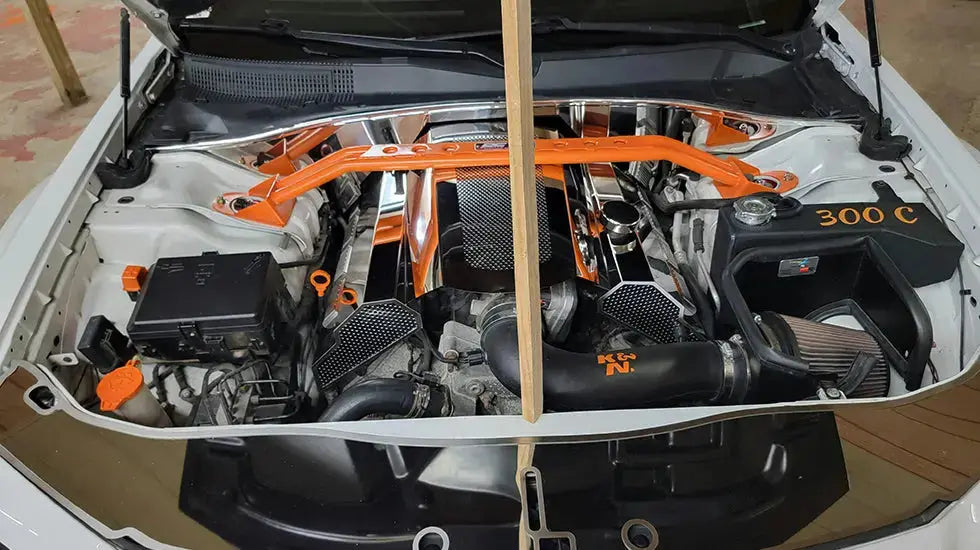
Shop Case Study #1: Just last month, we had a customer bring in a 2016 Dodge Charger. He had ignored a hairline crack in his OEM plastic degas bottle. While idling in traffic, the system lost pressure, the coolant boiled over, and he barely made it to our bay before the engine temp pegged the red zone. We immediately swapped out the brittle plastic for an upgraded aluminum unit. It’s a perfect example of why upgrading before a failure is cheaper than an engine rebuild.

How to Identify If Your Car is Low on Coolant or Has a Faulty Coolant Reservoir
To avoid driving with insufficient coolant, it’s important to know how to identify the signs of a low coolant level or a faulty coolant reservoir. By recognizing the symptoms early, you can prevent potentially expensive engine damage.
Signs of Low Coolant in the Reservoir
If your vehicle’s coolant levels are low, there are several signs you can look for:
Temperature Gauge Rising into the Red Zone: One of the first signs of low coolant is the temperature gauge on your dashboard. If the needle rises into the red zone, this often indicates that your engine is overheating due to insufficient coolant.
Coolant Warning Light: Many modern vehicles are equipped with a coolant warning light. This light will illuminate on your dashboard if the car’s computer detects a significant drop in coolant levels.
Unusual Smells: Another telltale sign of low coolant is unusual smells. You might notice a sweet or burnt odor, which can be a result of coolant leaking or burning off under high heat.
Steam or Smoke from the Engine: If coolant levels are too low, you might also notice steam or smoke coming from under the hood. Stop driving immediately if you see this.
How to Check Coolant Level and Condition
Checking the coolant level is a simple but vital process. Begin by ensuring that your car has cooled down completely. Never open a hot pressurized degas bottle—you risk severe burns from geysering boiling coolant.
Once the engine is cool, check the translucent plastic tank, often marked with “MIN” and “MAX” lines. The condition of the coolant is just as important. Clear, brightly colored coolant indicates it’s in good condition. If it appears dark, murky, or rusty, you need a coolant flush.
Common Signs of a Faulty Coolant Reservoir
A faulty coolant reservoir can lead to serious issues. Look out for:
- Visible Cracks or Damage to the Reservoir: Especially common in aging factory plastic tanks.
- Coolant Pooling Under the Car: Puddles of bright green, pink, or orange fluid under your parked car.
- Air Bubbles in the Coolant: Suggests a leak disrupting the closed-loop pressure.
- Coolant Disappearing Rapidly: Needing to top off your tank frequently means the fluid is escaping somewhere.
Can You Drive Without a Coolant Reservoir?
The short answer is no, but circumstances matter. Driving without a proper coolant reservoir is always a massive gamble with your engine's life.

Temporary Driving with a Damaged Coolant Reservoir
If your coolant reservoir is damaged, you may be able to limp the car a few blocks at low speeds, but it’s highly discouraged. If you absolutely must move the vehicle out of traffic, monitor the engine temperature closely. Turn your cabin heater to the maximum setting—this acts as a secondary radiator to pull heat off the engine.
Track Day Case Study #2: I remember a track day where a buddy noticed a small leak in his factory plastic reservoir on his heavily modified Chrysler 300C. He thought he could do "just one more lap" without fixing it. Halfway through the lap, the pressure blew the crack wide open, dumped the coolant on the exhaust, and warped his cylinder heads. That "one more lap" cost him an entire top-end rebuild. Don't risk it.
Why It’s Dangerous to Drive Without a Coolant Reservoir
Over time, driving without a coolant reservoir leads to serious engine damage. The primary danger is engine overheating, which warps metal components and causes head gaskets to blow. In extreme cases, continued operation results in complete engine seizure.
Risks of Driving Without a Coolant Reservoir
These risks can lead to both immediate and long-term engine damage, which will be expensive and time-consuming to repair.
Overheating and Its Effect on the Engine
Excessive heat damages crucial engine parts such as the cylinder head, gaskets, and pistons. This damage leads to warped parts, loss of compression, and the need for costly machine shop work or a full engine replacement.
Impact on the Radiator and Cooling System
Without the extra coolant and pressure regulation provided by the reservoir, the radiator may overheat, causing coolant to boil and cavitate, severely damaging the water pump and blowing out older rubber hoses.
Costly Repairs Caused by Overheating
Overheating is one of the most common causes of engine failure. From replacing blown head gaskets to needing a full engine overhaul, the costs can run into the thousands of dollars, making it crucial to address coolant system issues immediately.
How to Fix or Replace a Coolant Reservoir
If you find that your coolant reservoir is damaged, it’s essential to replace it as soon as possible.
Checking for Leaks and Damage
Start by visually inspecting the tank for micro-cracks, especially around the seams and mounting tabs. Check the hoses and clamps as well.
How to Replace a Coolant Reservoir Yourself
Replacing the coolant reservoir is a great DIY job for enthusiasts. First, safely drain the coolant. Remove the hoses and unbolt the damaged reservoir. Install the new one (we highly recommend upgrading to an aluminum reservoir for durability), reattach the hoses securely, and refill the system with the correct coolant mixture. Be sure to "burp" the system to remove trapped air.
When to Seek Professional Help
If you’re not comfortable bleeding a cooling system, or if your car overheated heavily before you caught the leak, take it to a professional to ensure the head gaskets weren't compromised.
Conclusion
Driving without a properly functioning coolant reservoir is playing Russian roulette with your engine. The reservoir isn't just a plastic jug; it's a vital pressure regulator and fluid manager. Without it, overheating isn't a possibility—it's a guarantee.
If you notice visible cracks, pooling coolant, or frequent low fluid warnings, fix it immediately. Ditching the brittle factory plastic for a high-quality aluminum replacement is one of the smartest preventative mods you can do. Keep an eye on your gauges, respect your cooling system, and your engine will deliver the performance you demand.
Frequently Asked Questions (FAQs)
Q1: What happens if I drive with an empty coolant reservoir?
A1: If your coolant reservoir is empty, your engine lacks the extra fluid needed to absorb excess heat. This will quickly lead to engine overheating, which can cause severe damage like a blown head gasket or a cracked engine block.
Q2: Can I put water in my coolant reservoir to get home?
A2: In an absolute emergency, you can use distilled water to top off your reservoir to limp home. However, water boils at a lower temperature and lacks the anti-corrosive properties of proper coolant, so it should be flushed and replaced with a 50/50 coolant mix as soon as possible.
Q3: Is a cracked coolant reservoir dangerous?
A3: Yes. A cracked reservoir allows pressurized coolant to escape as steam or liquid. This sudden loss of pressure lowers the boiling point of the remaining coolant, causing the engine to overheat rapidly and potentially leaving you stranded.
Q4: How much does it cost to replace a coolant reservoir?
A4: A basic OEM plastic replacement usually costs between $50 and $150 for the part, plus another $100 for labor. However, upgrading to a much more durable aftermarket aluminum reservoir is a smarter long-term investment that typically ranges from $100 to $250.
Q5: What is the difference between a degas bottle and an overflow tank?
A5: An overflow tank is an unpressurized container that catches expanding coolant from the radiator. A degas bottle is a pressurized part of the cooling system that actively removes trapped air bubbles while allowing coolant expansion. A leak in a degas bottle is far more immediately dangerous.
Q6: Can I bypass the coolant reservoir temporarily?
A6: No. Bypassing a pressurized degas bottle is impossible without destroying the engine. While you theoretically could block the overflow hose on a non-pressurized system, doing so will cause the radiator to build excessive pressure and blow off hoses or crack the radiator itself.
Q7: Why is my coolant boiling in the reservoir?
A7: Coolant boiling in the reservoir usually points to a bad radiator cap (or reservoir cap) not holding pressure, a blown head gasket pushing exhaust gases into the coolant, or a failed water pump causing the system to overheat.
Q8: How often should a coolant reservoir be replaced?
A8: There is no set mileage interval, but factory plastic reservoirs typically become brittle and prone to cracking after 70,000 to 100,000 miles due to constant heat cycling under the hood.
Q9: Does an aluminum coolant reservoir perform better than plastic?
A9: Absolutely. Aluminum reservoirs will not crack, shatter, or degrade from extreme engine bay temperatures like OEM plastic tanks do. They are highly recommended for performance vehicles, track cars, or aging daily drivers.
Q10: Will driving without coolant ruin my engine immediately?
A10: Yes. Without coolant to transfer heat, an engine can sustain catastrophic damage (like melting pistons or warping the block) within just a few minutes of driving.