Upgrading to aftermarket exhaust headers can unlock meaningful performance gains over a stock exhaust manifold. Headers reduce exhaust back‑pressure and enable more efficient exhaust flow.
When exhaust gases exit more freely, the engine enjoys improved volumetric efficiency. That means the engine can breathe better — helping boost horsepower and torque, especially under load or higher RPM.
Beyond power gains, a quality header often changes the exhaust note: many drivers enjoy deeper, more aggressive sound. Wider or properly tuned headers typically lead to a richer tone compared to stock manifolds.
Thus, for a Honda Civic owner seeking more performance, responsiveness, or audio character, a “best honda civic headers” upgrade is often a logical first (or early) mod.
How to Choose the Right Header for Your Civic: Engine / Year Compatibility
Civic models span many generations and engine variants; matching a header to the correct engine/chassis is critical.

- The older Civics (1988–2000) typically use the D‑series engines (e.g. D16A6 / D16Z6 / D16Y8). Headers for these require correct port spacing, flange shape, and exhaust routing.
- The 2001–2005 Civics often use the D17 series engines. Headers designed for D‑series likely won't fit directly due to differences in exhaust port layout and chassis components.
- For later models like the 2006–2011 8th-gen Civic Si (chassis FG2/FA5), exhaust routing, subframe & suspension layout change, so headers must be designed specifically for that generation.
A mismatched header can lead to poor fitment, exhaust leaks, or even prevent proper installation. Always ensure the header lists the correct engine code and chassis generation when shopping.
Material & Build Quality: Why Stainless Steel, Flange Machining, Welding Matter
Not all headers are built the same. Material, flange quality, and welding all affect performance, durability, and long‑term reliability.
Stainless steel headers are often preferred for performance builds. They resist heat, corrosion, and tend to maintain structural integrity longer than mild steel.
Headers with properly machined (e.g. CNC-cut) flanges and mandrel‑bent tubing help maintain consistent exhaust flow. Mandrel bending ensures the pipe diameter stays consistent through bends, minimizing turbulence or restrictions.
Poorly built headers can warp, leak at welds, or develop cracks under heat cycles. That compromises performance gains and may introduce exhaust leaks or reliability issues.
Header Design Types
When considering “best honda civic headers,” design type matters as much as material and fitment.
- 4‑2‑1 (Tri‑Y) design: Typically mixes two cylinders' exhaust pulses before merging, then finally joining at collector. This design tends to improve mid‑range torque and produces smoother, balanced power delivery. It’s often preferred for daily driving or street use.
- 4‑1 (long‑tube) design: All four runners merge into one collector. This often favors high-RPM horsepower and a more aggressive exhaust note. It may sacrifice some low‑end or mid-range torque but reward top-end power — more suited for racing or high-rpm driving.
Additionally, short‑tube vs long‑tube headers: long‑tube variants may offer better exhaust flow but can be harder to fit (clearance, heat management, packaging), especially on lowered cars or tight engine bays. Short‑tube headers are often easier to install but may give less performance advantage.
Choice between these designs should depend on your intended use: daily driving and drivability vs track/high‑RPM performance.

Legal, Emissions & Street‑Driving Considerations
Upgrading headers isn’t purely about power — it comes with potential trade‑offs.
Headers are often more restrictive to emissions compliance than stock setups. In many regions, replacing the stock manifold with an aftermarket header can affect emissions certification or smog compliance.
Also, headers — especially long‑tubes — tend to be bulkier. They may require clearance modifications, heat shielding, or rerouting underbody components. For lowered Civics or ones with tight ground clearance, this can be a concern.
Lastly, if you simply bolt a header to a stock or restrictive exhaust downstream (stock cat, small diameter piping, restrictive muffler), you may not see full benefit. A header upgrade works best when the full exhaust path is considered holistically (cat, mid‑pipe, muffler, routing).
Recommended Headers for Different Civic Generations
Choosing the right header for your Honda Civic depends on your engine type, model year, and performance goals. The headers listed below are specifically designed for different Civic generations, ensuring proper fitment, improved exhaust flow, and enhanced engine performance. Each option highlights key specifications, material quality, and installation features to help you make an informed decision.
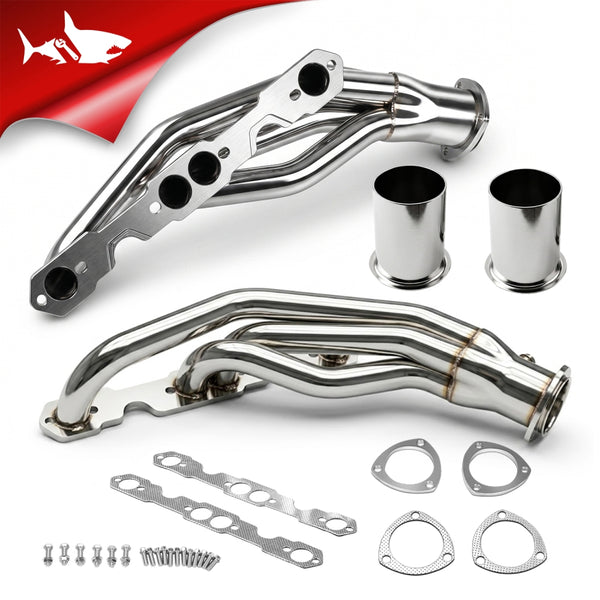
Flashark Exhaust Header for 1988–2000 Civic D16 Engine
This header is designed specifically for D16 engines in 1988–2000 Civic models, including EX, LX, and DX trims. Constructed from stainless steel with a mirror-polished finish, it improves exhaust flow and enhances throttle response, providing a reliable performance upgrade for daily driving. The direct-fit design ensures easy installation without major modifications.
- Fitment: 1988–2000 Civic EX, LX, DX (D16A6, D16Z6, D16Y8 engines)
- Material & Finish: Stainless steel, mirror-polished
- Dimensions: Inlet 1.75", Outlet 2.0"
- Performance Benefits: Enhanced exhaust flow and throttle response; durable for daily use
- Installation: Direct bolt-on, no modifications required

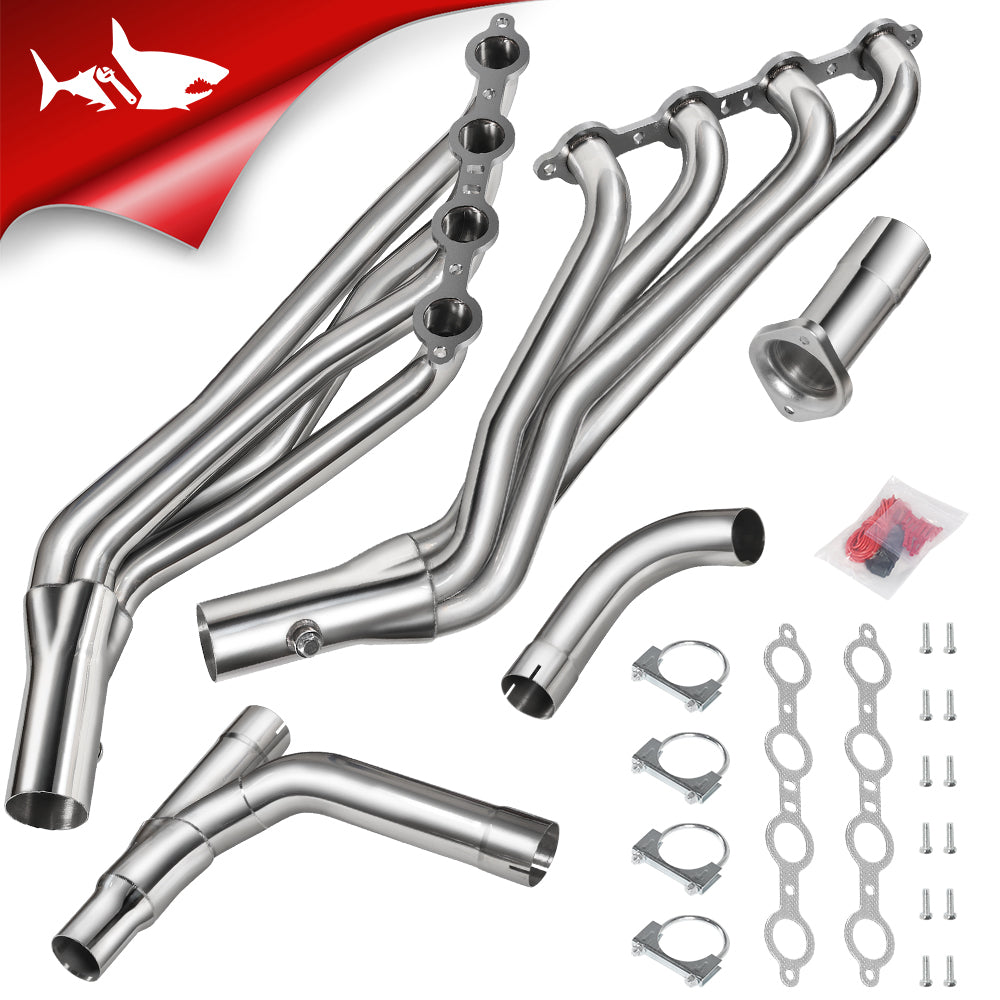
Flashark Short/Long Tube Headers for 2001–2005 Civic D17A1/D17A2
These headers offer flexible options for D17 engines. The long-tube version fits DX/LX models with D17A1 engines, while the short-tube version fits EX 2DR/4DR models with D17A2 engines. Made from stainless steel with TIG-welded CNC flanges, they include an O2 sensor insertion and a metal gasket for hassle-free installation. Expect improved horsepower, torque, and throttle response.
-
Fitment:
- Long-tube: DX/LX with D17A1 engines
- Short-tube: EX 2DR/4DR with D17A2 engines
- Material & Finish: Stainless steel, mirror-polished
- Performance Benefits: +10–15 HP/Tq, improved throttle response and exhaust flow
- Installation: Easy bolt-on with included hardware
- Design: TIG-welded CNC flanges, includes O2 sensor port and metal gasket

Flashark Exhaust Header for 2006–2011 Civic Si FG2/FA5
Engineered for the 8th-generation Civic Si (FG2/FA5), this 4-2-1 racing design header delivers a noticeable boost in horsepower and torque while producing a more aggressive exhaust tone. Made from 201 stainless steel with a mirror-polished finish, all necessary hardware and gaskets are included, allowing a direct bolt-on installation. Ideal for enthusiasts seeking enhanced performance on both street and track.
- Fitment: 2006–2011 Civic Si FG2/FA5
- Material & Design: 201 stainless steel, 4-2-1 racing design, mirror-polished
- Performance Benefits: Increased horsepower and torque, aggressive exhaust tone
- Installation: Direct bolt-on with included hardware and gaskets
- Use Case: Street and track performance upgrade

Installation & Tuning: What to Do After Installing a Header
Installing a header is more than just bolting on a new part. For best performance, proper installation and tuning are crucial.
First, check fitment: ensure header flange aligns perfectly, O2 sensor bung matches sensor position, and that underbody clearance is sufficient. Poor fitment can cause leaks or interference.
Second, after installation, you may need to retune your ECU / ignition / fuel mapping. Without proper tuning, the engine might not take full advantage of improved exhaust flow — you may see limited gains or even drivability issues.
Third, consider supporting mods: a freer-flowing cat, proper mid‑pipe or downpipe, high‑flow muffler, and heat shielding can help maximize gains and maintain reliability, especially under extended spirited driving.
Conclusion: How to Pick the Best Header for Your Civic
Choosing the “best honda civic headers” depends on your engine, driving goals, and willingness to tune or modify supporting exhaust components.
If you want a balanced, durable upgrade for daily driving on an older Civic, a stainless‑steel header that matches your engine (e.g. D16 or D17) is a solid choice.
If you aim for higher performance and are comfortable tuning your Civic, a 4‑2‑1 or even long‑tube header for an 8th‑gen Civic Si gives good balance of power and aggressive exhaust tone.
Finally, remember: a header alone is rarely the full story. For real gains, treat the exhaust system holistically — from header to cat to muffler — and follow up with proper tuning. This approach unlocks the full potential of an upgraded header.
Frequently Asked Questions (FAQ)
1. What are the benefits of installing the best Honda Civic headers?
Upgrading to aftermarket headers improves exhaust flow, increases horsepower and torque, enhances throttle response, and can create a more aggressive exhaust note compared to stock manifolds.
2. How do I know which header fits my Civic?
Check your Civic’s model year, engine code, and chassis generation. Headers are designed specifically for engine types like D16, D17, or 8th-gen FG2/FA5 to ensure proper fitment and avoid exhaust leaks.
3. Should I choose short-tube or long-tube headers?
Short-tube headers are easier to install and work well for daily driving, while long-tube headers can improve high-RPM performance but may require more space and additional modifications.
4. What is the difference between 4-2-1 and 4-1 header designs?
4-2-1 headers improve mid-range torque and provide balanced power for street driving. 4-1 headers favor high-RPM horsepower and create a more aggressive exhaust tone, making them suitable for track use.
5. Why is material and welding important in headers?
Headers made from stainless steel resist heat and corrosion. Quality welding and CNC-machined flanges ensure durability, consistent exhaust flow, and long-term reliability.
6. Will installing headers affect emissions or street legality?
Aftermarket headers can impact emissions compliance, depending on your region. Check local laws before installation, and consider how the header interacts with catalytic converters and other exhaust components.
7. Do I need to retune my engine after installing a header?
Yes, tuning the ECU, ignition, or fuel mapping may be necessary to maximize performance gains and maintain drivability after a header upgrade.