A 6.0 Powerstroke with coolant loss, repeated EGR concerns, smoke, rough running, or intake-side soot buildup deserves a careful diagnosis before any parts are ordered. The EGR system is only one part of a larger package that includes the EGR cooler, EGR valve, oil cooler, intake tract, coolant condition, wiring, and calibration.
The 6.0 Powerstroke was introduced by Ford in 2003 and is also associated with the International VT365 designation. Its EGR system is often discussed because the cooler and valve sit at the intersection of exhaust heat, engine coolant, and intake airflow. That does not make every EGR-related symptom an EGR cooler failure. A sound repair decision starts with the actual symptom and the truck's complete configuration.
- The EGR cooler transfers heat from recirculated exhaust gas before that gas enters the intake system.
- Coolant loss, white exhaust smoke, drivability changes, and visible soot are reasons to inspect the full cooling and intake system, not proof of one failed part.
- A 6.0 Powerstroke EGR delete discussion should be separated from legal repair, replacement, and maintenance decisions.
- Vehicle year, engine, emissions equipment, wiring condition, and installed hardware all matter when selecting parts or planning repairs.
- Review local emissions and road-use requirements before modifying emissions-related equipment.
What Does the 6.0 Powerstroke EGR System Do?
EGR means Exhaust Gas Recirculation. Under selected operating conditions, the engine control system routes a measured amount of exhaust gas back into the intake path. The purpose is emissions control. Because exhaust gas is hot, the 6.0 Powerstroke uses a coolant-fed EGR cooler to lower exhaust temperature before the gas reaches the intake side.
The system has a few parts that need to be considered together: the EGR valve controls flow, the EGR cooler transfers heat, the coolant circuit carries that heat away, and the intake system receives the cooled exhaust gas. A problem in one area can resemble a problem in another. For example, coolant contamination, restricted coolant flow, a leaking cooler, intake deposits, or an electrical fault can all change how the truck behaves.
For owners researching parts, the 6.0 Powerstroke collection is a useful starting point for comparing available applications. Match every selected part to the truck's year, engine, drivetrain, emissions equipment, and connection points before ordering.

Common 6.0 Powerstroke EGR and Cooling-System Concerns
The EGR cooler is often discussed as a reliability concern on this platform, but it should not be diagnosed in isolation. Exhaust heat, coolant quality, coolant flow, oil-cooler condition, thermostat operation, intake deposits, and prior repairs can all affect the system.
| What you notice | Systems worth checking | Why it matters |
|---|---|---|
| Unexplained coolant loss | Cooling system, EGR cooler, hose connections, coolant reservoir, oil cooler | Coolant can leave the system through more than one path. The source needs to be identified before repairs are chosen. |
| White smoke or steam-like exhaust | Coolant condition, intake path, EGR cooler, combustion-related concerns | Exhaust appearance alone does not identify the failed component. Temperature, odor, fluid level, and operating conditions matter. |
| Rough running or reduced response | EGR valve, intake tract, sensor wiring, boost system, fuel system, calibration | A drivability complaint can come from air, fuel, exhaust, sensor, or control-system issues. |
| Heavy soot around the intake-side EGR components | EGR valve movement, intake deposits, boost leaks, exhaust leaks | Deposits can affect airflow and component movement, but the cause should be addressed rather than masked. |
6.0 Powerstroke EGR Delete: What Owners Should Understand
Many owners use the phrase “6.0 Powerstroke EGR delete” when they are trying to solve cooler failures, reduce intake deposits, or plan a larger truck build. The phrase covers several different decisions, and those decisions should not be treated as interchangeable.
A legal repair or replacement approach focuses on restoring the system and correcting the underlying cause of failure. A modification discussion involves emissions-related equipment, electronics, road-use rules, and the rest of the truck's intake and exhaust system. Mechanical installation alone does not establish whether a vehicle may be used on public roads.
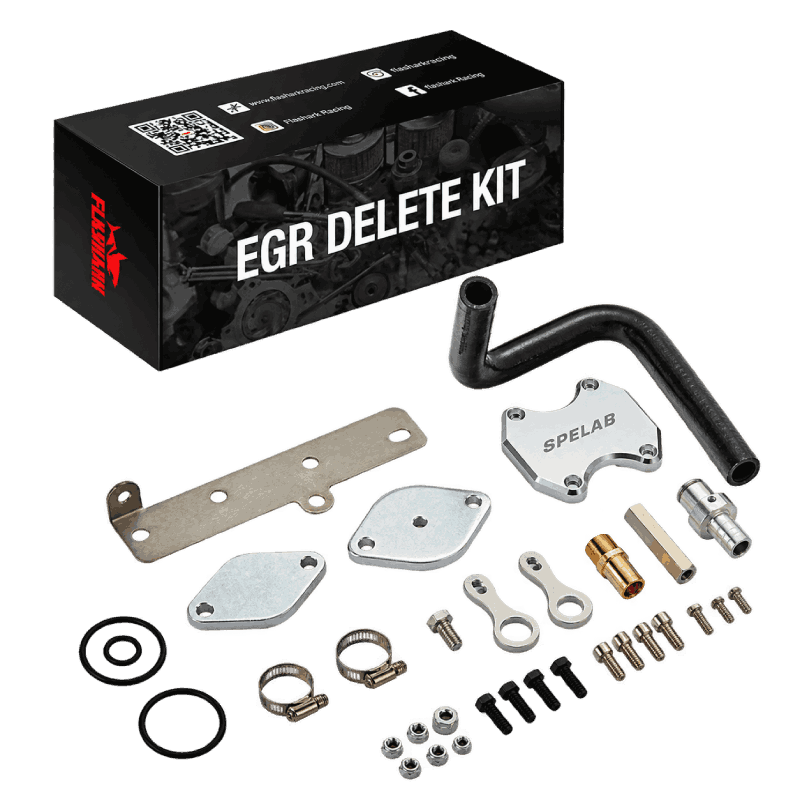
If you are comparing available hardware, browse the EGR delete kit collection only after narrowing the selection to the correct vehicle application. Similar-looking parts are not automatically interchangeable.
Potential reasons owners consider changes
- They are dealing with a recurring EGR cooler or EGR valve concern.
- They are diagnosing soot accumulation in the intake path.
- They are planning repairs alongside other cooling-system work.
- They want to understand how the EGR system affects the rest of the engine package.
What should not be assumed
- No fixed horsepower, torque, or fuel-economy outcome applies to every truck.
- Tune requirements vary by vehicle and installed hardware.
- Warning-light behavior can be affected by sensor location, wiring condition, exhaust leaks, emissions equipment, and calibration.
- A part that fits mechanically is not automatically suitable for every road-use situation.
Repair, Replacement, or a Broader Build?
The right direction depends on the truck's condition and intended use. A stock daily-driven truck with a cooling-system problem may need a careful diagnostic and repair plan. A truck with intake deposits may need attention to the EGR valve, intake path, boost system, and maintenance history. A modified truck can add more variables, including calibration, exhaust configuration, wiring, and prior changes made by previous owners.
| Situation | Useful focus | Parts-selection questions |
|---|---|---|
| Coolant loss or suspected cooler concern | Find the source of coolant loss and inspect the full cooling system. | Does the selected component match the truck's year, engine, emissions equipment, and connections? |
| Intake deposits or drivability concern | Inspect the EGR valve, intake path, boost plumbing, wiring, and related sensors. | Are all related gaskets, seals, and service parts appropriate for the selected configuration? |
| Modified or previously repaired truck | Identify existing intake, exhaust, electrical, and calibration changes before adding parts. | Will the new part work with the hardware already on the vehicle? |
Installation and Inspection Principles
Even when the correct parts are selected, installation quality affects the result. Take a minute before tightening clamps, bolts, or electrical retainers. Alignment, hose routing, heat clearance, and connector security should be checked as a system.
- Allow the engine to cool completely before opening any part of the cooling system.
- Keep coolant, exhaust, and intake openings protected from dirt and loose hardware during service.
- Inspect seals and mating surfaces before assembly. A damaged surface can create a leak that looks like a component failure.
- Route wiring and hoses away from sharp edges and high-heat areas.
- Do not force pipes, brackets, or hoses into place under tension.
- After reassembly, inspect the complete system for coolant leaks, exhaust leaks, loose connections, and abnormal operation.
How Tune, Sensors, and the Exhaust System Affect the Conversation
The 6.0 Powerstroke is a turbocharged diesel platform, so intake airflow, exhaust backpressure, exhaust temperature, sensor inputs, and calibration should be considered together. A change in one area can affect how another area behaves. That is why tune requirements and warning-light behavior should never be assumed from a product photo or from another truck's setup.
Sensor location, harness condition, exhaust leaks, the installed emissions equipment, and calibration can all influence drivability and warning lights. If the truck has prior modifications, identify them before ordering related parts. The complete intake, exhaust, emissions, and calibration combination should be treated as one system.
The DPF and CAT delete pipe collection is a separate product category. It is not a substitute for diagnosing a 6.0 Powerstroke EGR or cooling-system concern, and local emissions and road-use requirements should be reviewed before modifying emissions-related equipment.
Choosing Parts Without Creating More Problems
Fitment matters more than a broad product name. Before selecting a 6.0 Powerstroke EGR-related part, identify the truck's vehicle year, engine, drivetrain, emissions configuration, connection points, and any existing intake, exhaust, or calibration changes.
- Match the part to the specific vehicle rather than relying on a general “6.0 Powerstroke” label.
- Review the selected configuration and package contents before installation.
- Check whether previous repairs changed hoses, fittings, wiring routes, or exhaust connections.
- Use the correct sealing hardware and replace damaged service parts.
- Contact customer support if you need help identifying the appropriate configuration.
Owners of a different Powerstroke generation should not apply 6.0 information to a 6.7 truck. The systems, fitment, electronics, and hardware can differ. If you are working on a later model, see the 6.7 Powerstroke EGR kit application as a separate vehicle category.
Final Thoughts
A 6.0 Powerstroke EGR concern should be approached as a cooling, intake, exhaust, and control-system question—not as a one-part diagnosis. Start with the symptom, inspect the related systems, select parts by the actual truck configuration, and keep road-use requirements in view. That approach gives you a better chance of fixing the cause instead of repeating the repair.
Frequently Asked Questions
Q1: What does the EGR system do on a 6.0 Powerstroke?
A1: The EGR system recirculates a controlled amount of exhaust gas into the intake path under selected operating conditions. The EGR cooler lowers the temperature of that exhaust gas with engine coolant before it reaches the intake side.
Q2: Does coolant loss always mean the EGR cooler has failed?
A2: No. Coolant loss can come from several parts of the cooling system. The EGR cooler is one area to inspect, but hoses, connections, the reservoir, cooling-system condition, and other engine concerns should also be considered.
Q3: Can an EGR problem cause white smoke on a 6.0 Powerstroke?
A3: It can be part of the diagnosis when coolant enters a path where it should not be, but white exhaust smoke alone does not identify the failed component. Fluid level, odor, operating conditions, and a complete inspection matter.
Q4: What is the difference between an EGR valve and an EGR cooler?
A4: The EGR valve controls the flow of recirculated exhaust gas. The EGR cooler transfers heat from that exhaust gas to the engine coolant before the gas enters the intake system.
Q5: Does a 6.0 Powerstroke EGR delete guarantee more power or better fuel economy?
A5: No. Power and fuel-use results depend on the complete engine condition, intake and exhaust configuration, calibration, operating conditions, and supporting modifications. Do not rely on a fixed performance claim for every truck.
Q6: Does an EGR-related modification always require a tune?
A6: Tune requirements vary by vehicle and installed hardware. The truck's emissions equipment, sensor arrangement, wiring condition, exhaust system, and calibration should be considered together.
Q7: Will an EGR-related modification always cause a warning light?
A7: Warning-light behavior is not fixed. Sensor location, wiring, exhaust leaks, installed hardware, emissions equipment, and calibration can all affect the result.
Q8: What should I inspect before ordering 6.0 Powerstroke EGR-related parts?
A8: Check the vehicle year, engine, drivetrain, emissions equipment, connection points, existing modifications, and the selected product configuration. Review package contents and installation requirements before starting work.
Q9: Are 6.0 Powerstroke and 6.7 Powerstroke EGR parts interchangeable?
A9: No. These are different Powerstroke generations with different hardware, fitment, and electronic considerations. Select parts for the specific truck rather than applying one platform's information to another.
Q10: Is mechanical installation the same as legal road use?
A10: No. Mechanical installation does not determine road-use legality. Review local emissions and road-use requirements before modifying emissions-related equipment.

Steven Chen
Automotive Performance Specialist | Engine & Exhaust Systems
Steven focuses on practical engine performance, exhaust fitment, and real-world upgrade paths for classic and modern enthusiast vehicles. He reviews small-block Ford, LS, truck, and street/strip applications with one goal in mind: helping builders choose parts that actually work together. His philosophy: "Good power starts with the right combination, not the biggest part."