
I’ve spent 15 years smelling burnt oil and busting my knuckles in the shop. If there’s one thing I’ve seen hundreds of times, it’s a golden-era Honda Civic rolling through the bay doors sounding like a broken sewing machine. Honestly, it breaks my heart. You bought that 5th or 6th Gen Civic—or maybe a CRX or Del Sol—because that D16 engine is a legendary, unkillable workhorse. And now? You’re dealing with a nasty ticking noise and a cabin that smells like a gas station.
The diagnosis is almost always the same: a cracked exhaust manifold on your Honda Civic. Cast iron is tough, sure. But subjected to over two decades of extreme heat cycles, that old D-series manifold eventually gives up. It cracks. It leaks. It ruins your fuel economy and robs you of power.
Look, I know exactly what you're thinking right now. "Can I just weld it?" Stop right there. Put the welder down. In this guide, I'm taking off my mechanic's gloves to give you the brutal, unfiltered truth about why patching that 25-year-old cast iron is a massive waste of your hard-earned cash. Instead, I'll show you how to turn this annoying failure into a genuine performance upgrade for your D16. Let's get under the hood.
TL;DR: The Brutal Truth About Your D16 Cracked Manifold
Don't have time to read the whole teardown? Here is the bottom line based on a decade and a half of wrenching on Hondas:
- The Core Issue: If you drive a 1988-2000 Civic, CRX, or Del Sol with a D-series engine (like the D16Y8 or D16Z6), the OEM cast-iron manifold is highly susceptible to heat-stress fractures right down the middle.
- If you only want a temporary band-aid (Not Recommended): Welding or using exhaust putty on a vintage cast-iron piece might last 1 to 3 months. It will crack again due to thermal expansion.
- If you want a permanent, high-performance fix (Highly Recommended): Replacing the cracked cast iron with an aftermarket stainless steel tubular header completely eliminates the cracking risk, safely drops under-hood temperatures, and adds a proven 8-12 whp on the dyno.
- Cost Expectation: Finding an uncracked OEM replacement in a junkyard is getting impossible. A direct bolt-on aftermarket upgrade costs way less than dealership parts and takes about 2-3 hours with basic hand tools in your driveway.
Why Does Your D16 Sound Like a Tractor? (Symptoms & Diagnosis)
Before you start throwing parts at the car, you need to confirm the diagnosis. A cracked exhaust manifold on these older Civics isn't exactly subtle, but it can mimic a bad valve lash adjustment if you don't know what to look—and smell—for.
The Double Torture of Hearing and Smell
The most obvious giveaway? That annoying, high-pitched "tick-tick-tick" on cold starts. Here is the funny thing about exhaust leaks on these old D-blocks: the metal expands as the engine warms up. So, after 10 minutes of driving, the crack swells shut, and the noise mysteriously vanishes. Don't let it fool you. The crack is still there. Combine that ticking with a strong, raw exhaust gas smell seeping through your AC vents when you're stopped at a red light, and you've got a textbook manifold failure.
Traces Under the Hood
Pop the hood. Grab a 12mm socket and carefully pull off that rusty heat shield covering the front of the block. What are you looking for? Soot. Look right between cylinders 2 and 3. If you see black, powdery carbon tracking along the cast iron surface or near the primary oxygen sensor, you’ve found ground zero. Exhaust gases are pushing out at high pressure, bringing carbon with them.

Found a Crack in Your Civic's Exhaust Manifold? Don't Do These Stupid Things!
This is the part where I get a little worked up. The amount of hack-jobs I've had to fix because someone tried to take a shortcut on their Civic is staggering.
🛠️ Mechanic's Confession: The Welding Myth
Listen to me on this one. Many beginners watch online tutorials and directly try to patch it with high-temp JB Weld or pay a local muffler shop $50 to run a quick flux-core bead over the cast iron. The result? The extreme thermal cycling shatters that weld within two months. I highly recommend you never do this. Cast iron that has been heat-cycled a million times over 25 years has completely altered internal stress points. The weld bead cools faster than the surrounding metal, creating a brittle zone. You're just paying for labor twice, and worse, I've seen escaping hot gases from a blown weld completely melt a $150 O2 sensor wiring harness. Do it right the first time.

Crisis is Opportunity: Ditch the Cast Iron and Let Your D16 Breathe
Why replace a heavy, restrictive factory part with another heavy, restrictive factory part that's destined to fail the exact same way? If you have to take the manifold off anyway, this is the perfect excuse to upgrade. The D16 engine responds incredibly well to better airflow. It’s basic car guy math.
Stainless Steel Headers vs. OEM Cast Iron Manifold
Let's look at the raw data. Cast iron manifolds were manufactured for one reason in the 90s: they were cheap to cast in millions of units. But they are bulky, retain massive amounts of heat, and the short, log-style runners choke exhaust flow right out of the cylinder head. Stainless steel tubular headers feature smooth mandrel bends and equal (or near-equal) length runners that actually scavenge exhaust gases out of the combustion chamber.
| Spec / Feature | OEM D16 Cast Iron Manifold | Aftermarket Stainless Headers |
|---|---|---|
| Weight | 15 - 20 lbs (Heavy) | 6 - 9 lbs (Lightweight) |
| Durability | High risk of center-cracking | High flex tolerance, rarely cracks |
| Performance (Dyno) | Highly restrictive (Backpressure) | +8 to 12 whp (Better scavenging) |
| Heat Retention | Bakes the engine bay | Dissipates heat faster |
📖 From the Shop Floor:
"I remember back in '18, an EK chassis (6th gen Civic with a tired D16Y8 motor) came into the shop. The owner was dealing with this exact problem. When we tore it down, we found the factory manifold hadn't just cracked; it had three distinct hairline fractures, and the upstream flange was scorched black from the leak. I told him straight up, 'We aren't putting another cast iron anchor on this car.' We slapped on a set of high-flow stainless headers. Not only did it permanently cure the exhaust leak, but the throttle response completely woke up. When that single-cam VTEC crossed over, the engine breathed so much better it sounded like a completely different car on the dyno."
The Ultimate Fix: Flashark 1988-2000 D16 Headers
You don't need to spend $1,000 on a custom titanium setup for a daily driver or canyon carver. You just need quality 304 stainless steel, CNC-machined flanges, and TIG welding that lines up properly.
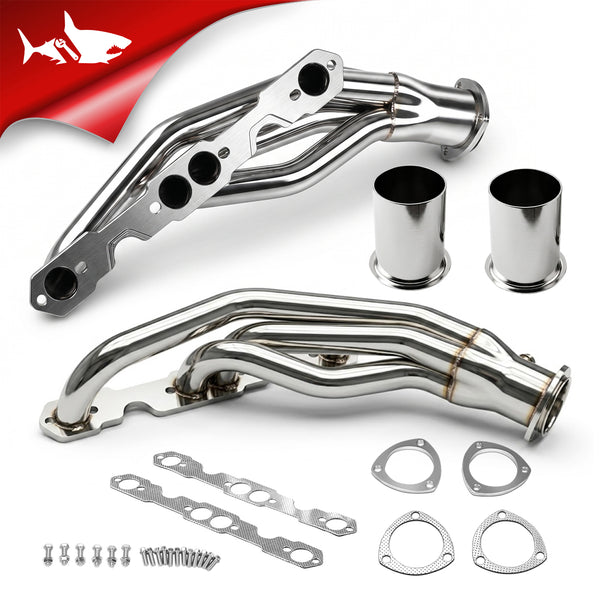
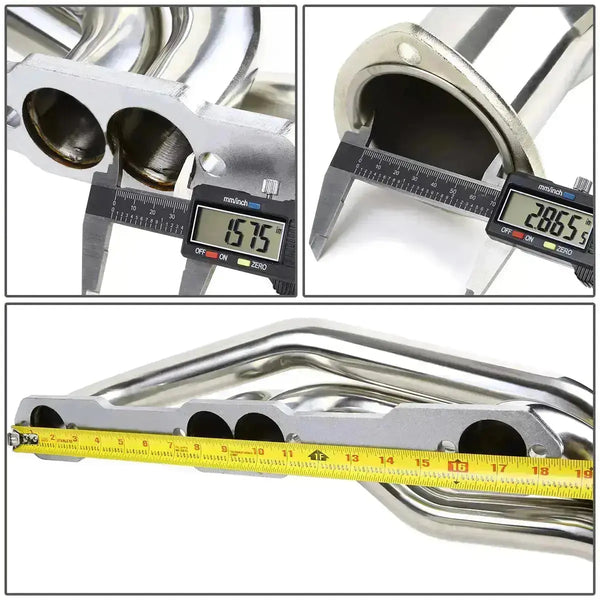
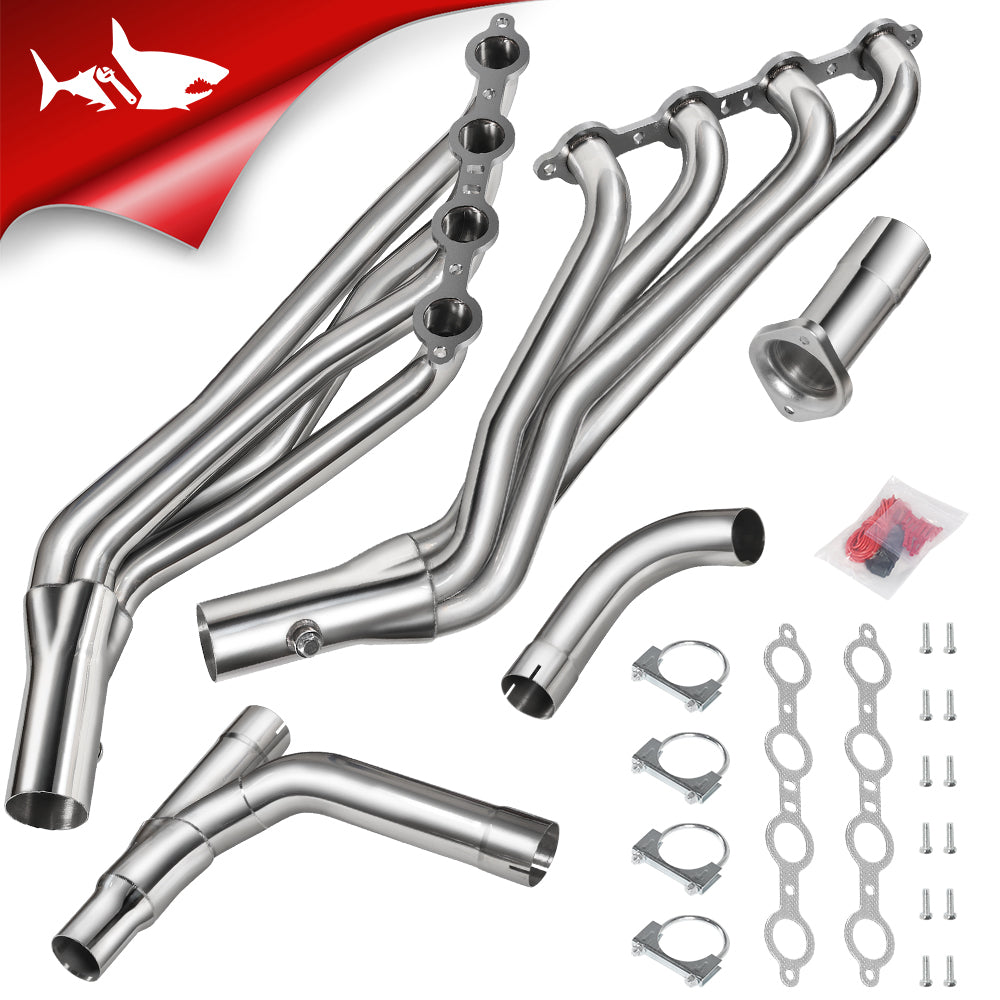
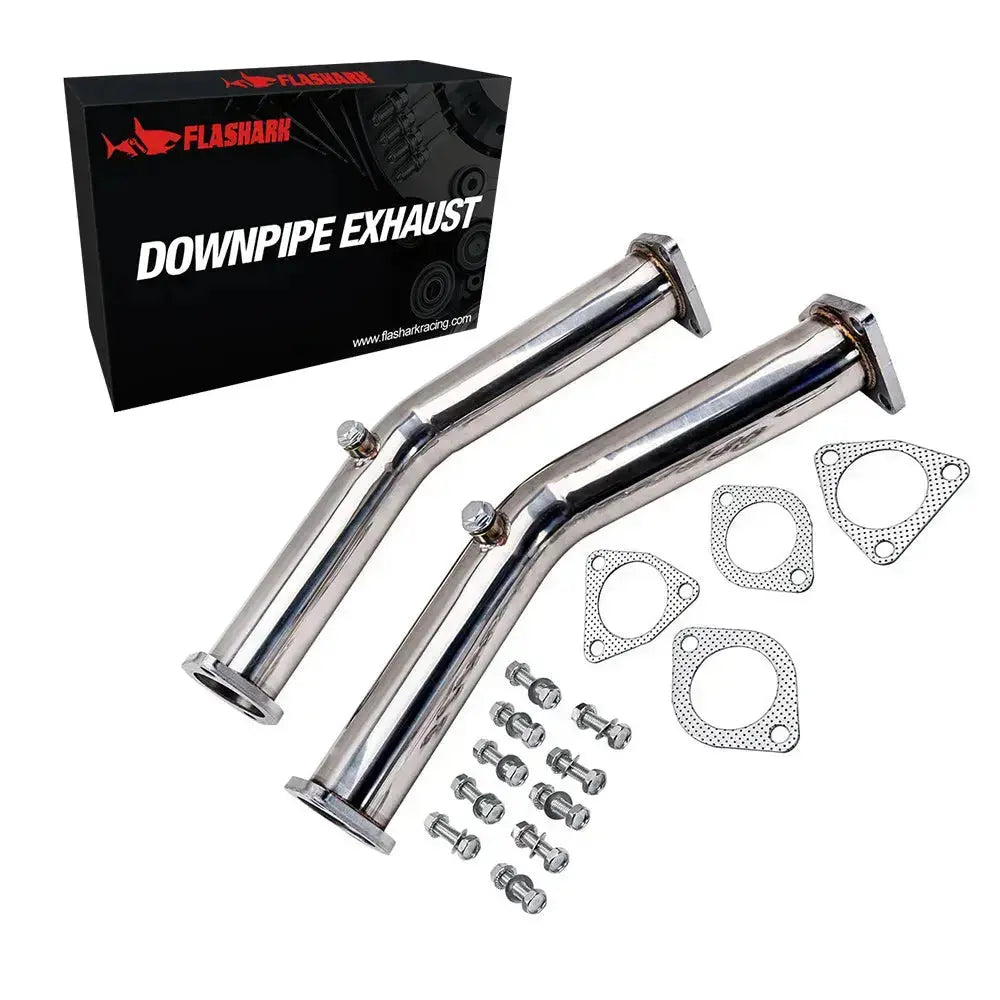
If you are rocking a 1988-2000 Civic, CRX, or Del Sol with any 1.5L or 1.6L D-Series engine (D15/D16), you have hit the jackpot. Upgrading is practically a bolt-on affair. Instead of hunting for used, soon-to-crack factory parts, I highly recommend installing a precision-engineered Flashark Honda Civic D16 Exhaust Header. This kit is designed specifically for the 88-00 chassis. It lines up perfectly with your factory exhaust mid-pipe and includes the necessary gaskets and hardware. No cutting, no welding. Just pure, unadulterated airflow and a permanent end to that ticking noise.

Hardcore Garage Talk: D16 Exhaust Manifold Removal & Pitfall Guide
Alright, so you’ve got your new stainless headers sitting in the box, looking like a piece of industrial art. Now comes the dirty work. Replacing a cracked exhaust manifold on a vintage Honda isn't rocket science, but on a 20+ year old car, it's a minefield for the unprepared.
The Secret to Dealing with the "Broken Stud" Nightmare
If you just grab a breaker bar and start cranking on exhaust nuts that have been baking since the Clinton administration, you will snap a stud flush with the aluminum cylinder head. Trust me, drilling out a hardened steel stud inside a cramped engine bay is a weekend-ruining event.
- Pre-soak is life: Hit every single nut on that D-block with a penetrating oil (like PB Blaster or WD-40 Specialist) 24 hours before you start the job. Do it again the morning of.
- Bring the heat: If a nut fights you, stop. Use a MAP gas torch to heat the nut (not the stud) until it's cherry red, then try again. The metal expansion breaks the rust seal.
- Impact, not leverage: Use a compact 3/8" impact wrench if you can fit it. The rapid tapping action shocks the threads loose much safer than the slow, twisting force of a long wrench.
The Deadly Details of Gaskets and Torque
I see guys re-using the old, crushed metal gaskets all the time. Don't be that guy. Always use a brand-new multi-layer steel (MLS) gasket (which is conveniently included in the Flashark kit). When bolting the new header to the D16 head, start from the center bolts and work your way outwards in a crisscross pattern. This ensures the flange seats perfectly flat. What's the torque spec for the D-series exhaust manifold? You are looking at exactly 23 ft-lbs (31 Nm). Over-tighten it, and you strip the aluminum threads. Under-tighten it, and you're back to leaking exhaust gases.
10 No-BS Questions About Your Civic's Cracked Exhaust Manifold (FAQ)
Q1: Can I drive my D16 Civic with a cracked exhaust manifold?
A1: You can for a short period, but it is highly advised against. A cracked manifold leaks raw exhaust fumes containing carbon monoxide directly into the engine bay, which easily gets pulled into the cabin through the AC vents. It's a severe health hazard and kills your MPG.
Q2: How much does it cost to fix a cracked exhaust manifold on a 90s Civic?
A2: Taking it to a shop to source an OEM-style replacement and pay for labor can easily exceed $400-$500. By purchasing an aftermarket stainless steel header like the Flashark D16 kit and doing it yourself, you solve the issue permanently for well under half that price.
Q3: Will a cracked exhaust manifold cause a check engine light on my Civic?
A3: Yes. The crack introduces outside air into the exhaust stream before the primary Oxygen (O2) sensor. The sensor reads this as a lean condition and commands the ECU to dump excess fuel into the engine, usually throwing a P0171 (System Too Lean) code.
Q4: Why do the D-Series (D15/D16) exhaust manifolds crack so often?
A4: It's a design flaw combined with age. The 4-into-1 log-style cast iron manifold holds immense heat right in the center. Over decades of expanding and contracting (thermal cycling), the rigid cast iron simply fatigues and splits, usually between the middle two runners.
Q5: Is it better to weld or replace my old Civic's cracked manifold?
A5: Absolutely replace it. Welding old, heat-fatigued cast iron is a temporary band-aid. The internal molecular structure is compromised, and the immense heat of the exhaust will almost guarantee the weld cracks again within a few months. Upgrade to tubular steel instead.
Q6: Does a cracked exhaust manifold affect my D16's fuel economy?
A6: Drastically. Because the leak tricks the O2 sensor into thinking the engine isn't getting enough fuel, the ECU constantly runs the engine "rich" (injecting more gas than necessary). You will watch your MPG drop significantly.
Q7: How long does it take to install headers on a 1988-2000 Honda Civic?
A7: Because there is plenty of room in the engine bay of an EG or EK Civic, a competent DIYer with the right tools can finish the job in 2 to 3 hours. The majority of the time is just being careful not to break the old rusty studs.
Q8: Will installing aftermarket headers void my Civic's warranty?
A8: Let's be real—if you're driving a 1988-2000 Civic, your factory warranty expired decades ago! You have nothing to worry about. Just make sure you retain your catalytic converter if your local emissions laws require it.
Q9: Do I need to tune my D16 after installing new exhaust headers?
A9: For a simple bolt-on header installation, no. The factory OBD1 or OBD2 ECU is smart enough to adapt to the slightly increased airflow via fuel trims. However, if you add an intake and full exhaust later, a tune (like Hondata or chipped ECU) will unlock the most horsepower.
Q10: What are the symptoms of exhaust gases leaking into the cabin?
A10: If you smell a strong sulfur or raw gasoline odor, experience sudden headaches, dizziness, or burning eyes while idling in traffic, you are likely inhaling exhaust gases. Roll down the windows immediately and fix that manifold.