The LS1 engine that dropped in the 1997 C5 Corvette is a legendary piece of aluminum engineering. It revs hard, takes a beating, and set the standard for modern V8s. But if you own an early model—specifically from 1997 to 2000—your engine is rolling around with a massive factory bottleneck bolted to the cylinder heads.
I’ve spent 15 years in the shop under the lifts, wrestling with GM exhausts. If you are chasing power, that aggressive V8 chop, or just want your throttle to actually respond when you put your foot down, upgrading your exhaust isn't just a suggestion. It's mandatory.
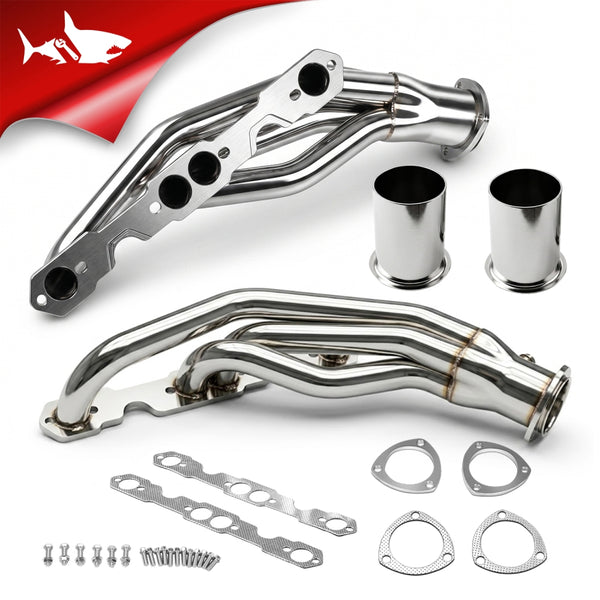
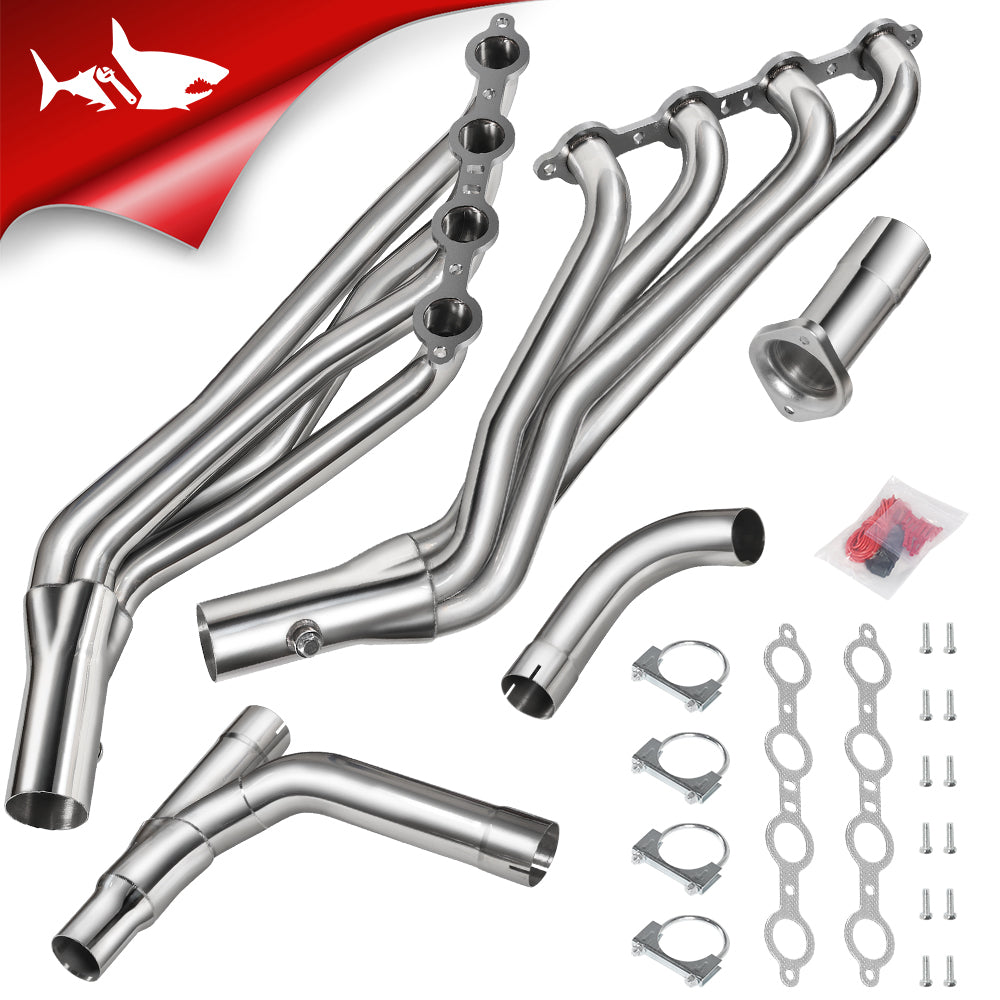
If you want to solve this the right way without fabricating parts in your driveway, grabbing a purpose-built set of c5 corvette headers is the highest-value wrench time you can invest in this platform.
Bottom Line Up Front
- The Real Bottleneck: Forget what you heard about early cast iron. 1997-2000 C5s use double-walled stainless steel manifolds. They look fine on the outside, but inside, the welds and internal sleeves create severe turbulence and restrict exhaust flow right at the port.
- The Power Jump: Swapping to long tube headers with a proper ECU tune reliably puts an extra 15 to 25 rear-wheel horsepower (whp) and 20+ lb-ft of torque to the ground.
- The Sound: It strips away that muffled, sedan-like tone. You get a raw, aggressive idle and a screaming top-end, without drone at highway cruising speeds.
- The Headache Saver: 97-00 models have specific AIR pump emissions routings. Buying year-specific headers is the only way to avoid cutting and welding during installation.
The Factory Flow Problem: What GM Actually Did in 97-00
To understand why this mod wakes the car up so violently, we have to clear up a massive myth in the Corvette community.
People think the early C5s had restrictive cast-iron logs. They didn't. GM used tubular, double-walled stainless steel manifolds for the 1997-2000 model years. The problem is that the inner wall is crinkled, the factory welds are sloppy, and the ports are choked down. The exhaust gases crash into these internal restrictions instead of flowing out smoothly.

Ironically, GM realized how bad this design was and switched to a thinner-walled cast iron manifold in 2001 (for the LS6 and later LS1s), which actually flowed significantly better. So, if you're driving a 97-00, you literally have the worst-flowing exhaust manifolds of the entire C5 generation.
Tubular headers fix this. By using individual, smooth mandrel-bent primary tubes, they create a scavenging effect. As one exhaust pulse rushes down the tube, it creates a vacuum that physically pulls the exhaust gas out of the next firing cylinder.
Real Numbers: What Happens on the Dyno
I don’t sell cardboard-box horsepower claims. Let’s talk about what happens on the rollers.
A healthy, bone-stock 1998 C5 on our Mustang Dyno usually baselines right around 295-300 whp. When we unbolt those double-walled restrictions, bolt up a set of 1-3/4 inch long tube headers, an X-pipe, and flash a custom tune to correct the air/fuel ratio, the numbers consistently jump to the 325-330 whp range.

| Component | Design / Material | Flow Characteristics | Expected WHP Gain (w/ Tune) |
|---|---|---|---|
| Factory 97-00 Manifolds | Double-Walled Stainless | Terrible (High internal turbulence) | Baseline (0) |
| Factory 01-04 Manifolds | Thin-Wall Cast Iron | Moderate (Better port velocity) | +3 to +5 whp (over 97-00) |
| Shorty Headers | Single-Wall T304 Stainless | Good (Direct replacement) | +8 to +12 whp |
| Long Tube Headers | Single-Wall T304 Stainless | Excellent (Max scavenging effect) | +15 to +25 whp |
More importantly, it’s not just peak horsepower. The mid-range torque curve fattens up beautifully. When you downshift to pass at 3,500 RPM, the engine actually pulls instead of feeling out of breath.
The Trenches: A Mechanic’s Warning on Installation
Let’s get our hands dirty. Installing headers on a C5 isn’t for the faint of heart. The engine bay is tight, the steering shaft is right in your way, and the car is sitting mere inches off the ground.

A few years back, a guy dragged his '99 manual C5 into my bay. He had bought a set of "universal LS" headers off a forum. He was pulling his hair out because the 1997-2000 C5s have very specific AIR (Secondary Air Injection) pump tube routings located on the factory manifolds. The cheap headers he bought didn't have the correct bungs. We had to spend three hours cutting, fabricating, and TIG welding his emissions tubes just so he wouldn't fail his state inspection.
This is why I tell early C5 guys: buy headers manufactured specifically for the 97-00 model years. It saves you blood, sweat, and hourly shop labor.
If you are doing this in your driveway on jack stands, do not touch a wrench until you have soaked every single manifold bolt and O2 sensor in PB Blaster for at least 24 hours. These bolts have been heat-cycling since the Clinton administration. If you snap a bolt off in the aluminum LS1 cylinder head, your weekend project just turned into a machine shop extraction nightmare.
Long Tube vs. Shorty: Making the Call
If you're browsing the catalog, you need to know what you're buying.
- Shorty Headers: These bolt directly in place of your factory manifolds and hook up to your stock mid-pipe and catalytic converters. They are easier to install and great if you live in a state with ruthless visual emissions inspections.
- Long Tube Headers: This is where the real power lives. They extend further under the floorboards, meaning you will need a new mid-pipe (usually an X-pipe) and you'll have to relocate or delete the cats. This is the setup you want for maximum sound and performance.

Whatever you choose, make sure it is T304 Stainless Steel. Mild steel headers will rust out incredibly fast from the under-hood heat of an LS1.
Time to Let It Breathe
Driving a '97-'00 Corvette with the stock double-walled manifolds is holding back everything that makes the LS1 great. If you are serious about waking up your car's throttle response, fixing the exhaust flow should be item number one on your build list.
Do it right, soak your bolts, get the correct year-specific parts, and go enjoy what an uncorked V8 is supposed to sound like.
Shop 1997-2000 C5 Corvette Headers Now
Frequently Asked Questions (FAQs)
Q1: Do headers void the C5 Corvette warranty?
A1: At this point, no 1997-2000 C5 Corvette is still under factory warranty, so you don't need to worry about the dealer voiding anything. However, you do need to check your local state emissions laws, as altering catalytic converter locations can impact visual emissions inspections.
Q2: Will installing headers on an LS1 throw a Check Engine Light (CEL)?
A2: Yes, it is highly likely if you use long tube headers. Because you are moving the downstream O2 sensors further away from the engine, they heat up slower and read differently. A proper ECU tune will recalibrate the sensor parameters and turn off the CEL.
Q3: Do I need a tune after installing headers on a 1997-2000 C5?
A3: Technically, the car will run without one, but it will run poorly. The engine will likely run lean because it is flowing far more air than the factory ECU expects. A custom dyno tune or a handheld flash tune is highly recommended to correct the air/fuel ratio and extract the maximum horsepower.
Q4: How much horsepower do long tube headers add to an LS1?
A4: With a proper tune and an upgraded air intake, a set of quality long tube headers will typically add between 15 and 25 rear-wheel horsepower (whp) and 20+ lb-ft of torque on a healthy 97-00 LS1 engine.
Q5: Are shorty headers worth it on a C5 Corvette?
A5: If you live in a state with strict emissions laws (like California) where long tubes are illegal, or if you want a simple bolt-on installation without changing your factory mid-pipe, shorties are worth it. They offer better flow than stock cast iron and give a nice bump in sound, even if the power gains are modest (8-12 whp).
Q6: Can I install C5 headers on jack stands in my garage?
A6: I’ll be honest with you: yes, you can, but it is physically punishing. The car needs to be raised exceptionally high (at least 20-24 inches) to slide long tube headers in from the bottom. A two-post lift makes the job 100 times easier. If you use jack stands, ensure they are heavy-duty and the car is absolutely stable.
Q7: What size header primaries are best for a stock LS1?
A7: For a mostly stock LS1, 1-3/4 inch primary tubes are the sweet spot. They maintain excellent exhaust gas velocity, which maximizes low-end and mid-range torque. If you plan on adding a supercharger or aggressive camshaft later, step up to 1-7/8 inch primaries.
Q8: Will headers make my C5 Corvette too loud?
A8: Headers will significantly increase the volume, but the final sound level depends on your axle-back exhaust system. If you run headers with the factory titanium or standard C5 mufflers, it will have a civilized rumble at idle and scream at wide-open throttle. If you pair them with straight pipes, it will be deafening.
Q9: Do I need heat shielding after installing headers?
A9: Absolutely. Tubular headers radiate a massive amount of heat. You must install high-temperature heat sleeves over your spark plug wires. I also highly recommend wrapping your starter motor in a heat shield blanket, as it sits dangerously close to the passenger side header and can fail from heat soak.
Q10: Do 2001-2004 C5 headers fit the 1997-2000 models?
A10: Generally, no. While the engine block exhaust ports are the same, GM changed the AIR pump fittings and emissions tubing routing on the 2001+ models. Buying a set specifically manufactured for the 97-00 years ensures you don't have to block off or weld new emissions tubes.