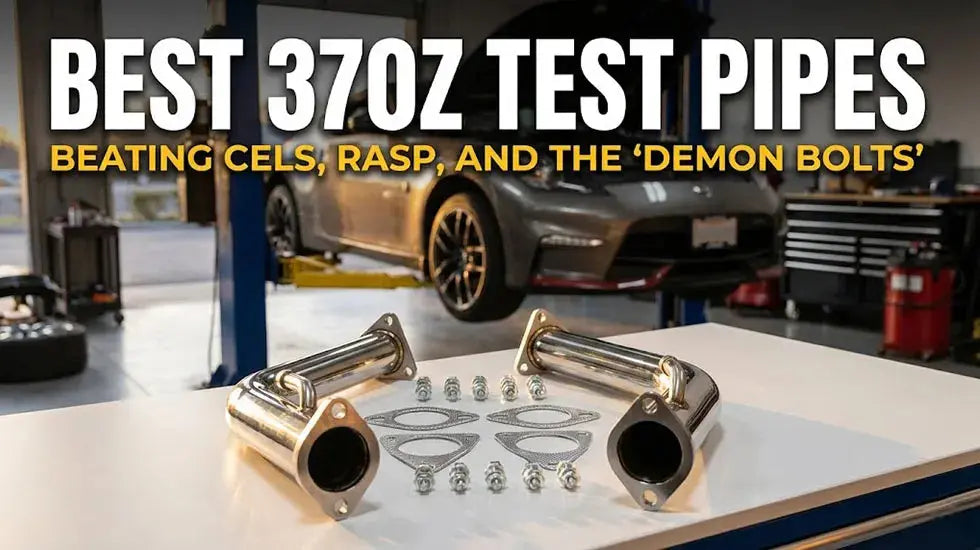
If you are tired of your VQ37VHR sounding like it's breathing through a wet towel, you are in the right place. Nissan built a masterpiece of a V6, but to meet global emissions, they choked it with massive, heavy ceramic catalytic converters. They kill the exhaust velocity, mute that signature VQ trumpet wail, and rob you of top-end power.
Ditching the cats is usually the first major breather mod for any Z34 owner. But finding the best 370z test pipes isn't just about ordering the cheapest metal tubes you can find. Get it wrong, and you will be punished with agonizing cabin drone at highway speeds, a permanent Check Engine Light (CEL), and an exhaust note that sounds like a rattling tin can.
Let's get under the car and look at what actually works on the street and the track.
TL;DR: The Bottom Line on 370z Test Pipes
Short on time? Here is the absolute truth based on hundreds of dyno runs and shop installs:
- If you want maximum track power and don't care about noise: Get non-resonated, 2.5-inch T304 stainless steel pipes. Expect to free up 8-12 whp before a tune.
- If you daily drive your Z and hate high-pitched rasp: You absolutely need resonated test pipes. They filter out the garbage frequencies and keep the VQ trumpet sound clean.
- The CEL (Check Engine Light) rule: If the pipes don't have extended J-style O2 sensor bungs, your light will come on. Period.
- Installation reality check: The factory header bolts (Demon Bolts) will fight you. Do not attempt this without penetrating oil and a torch.
Why Ditching the Factory Cats is a Rite of Passage
The Breathing Bottleneck of the VQ37VHR
Nissan engineers had to meet strict emissions and noise regulations. To do that, they slapped on a set of ceramic honeycomb catalytic converters that create severe backpressure. When you push past 5,000 RPM, the exhaust gases essentially hit a brick wall. You can literally feel the engine struggling to push the air out.

Releasing the Pent-up Horsepower
Removing that restriction changes the entire character of the car. When you bolt on the best 370z test pipes, exhaust gas velocity increases dramatically. We usually see a solid 8-12 wheel horsepower (whp) increase on the dyno just from bolting them on. Add an UpRev or EcuTek tune to fix the air/fuel ratio, and you're looking at 15-20 whp gains. Plus, it finally sounds like a proper sports car.
Types of 370z Test Pipes: Straight or Resonated?
Non-Resonated Test Pipes (Pure Straight Pipes)
These are straight-through pipes. They offer zero restriction and weigh next to nothing. However, unless your Z is a dedicated track missile or you are running a very specific, ultra-muffled catback system, avoid these. The interior cabin drone will give you a headache on long drives, and the rasp at wide-open throttle is often described by the community as sounding like "angry bees in a coffee can."
🛠️ Mechanic's Garage Story: I remember back in 2022, a guy brought his newly bought used Nismo 370z into the shop. He was complaining that when he hit 4,000 RPM, the exhaust sounded like someone throwing empty soda cans into a blender. We put it on the lift, took one look, and found out the previous owner slapped on some cheap, paper-thin straight pipes. The flanges were already warped and leaking exhaust gas. I had to rip them off and toss them in the scrap pile. Don't let bad metal ruin a good car.
Resonated Test Pipes (The Street Choice)
This is what goes on 90% of the street-driven Zs out there. They feature a built-in Helmholtz-style or glasspack resonator. They don't restrict the exhaust gas flow, but they act as an acoustic filter, canceling out those harsh, high-frequency sound waves. You get the deep, aggressive V6 growl and the horsepower, without the obnoxious rasp.
🛠️ Mechanic's Note: When looking at resonated pipes, make sure the internal resonator design doesn't neck down the diameter. True 2.5-inch piping should be maintained all the way through to prevent exhaust bottlenecking.
4 Hardcore Standards for Judging the Best 370z Test Pipes
I don't care what brand name is etched into the metal. When I inspect an exhaust component, I look at four things:
- Material Quality: It must be T304 stainless steel. Anything lesser (like 409) will eventually rust out, especially at the welds.
- TIG Welding: The welds need to look like stacked dimes. Sloppy MIG welds inside the pipe cause turbulence and kill exhaust velocity.
- Flange Thickness: Cheap pipes use thin flanges that warp under extreme heat, causing nasty exhaust leaks. You want thick, heavy-duty machined flanges.
- O2 Sensor Bung Extensions: Because you are removing the cats, the secondary O2 sensors will read excess emissions and throw a P0420 or P0430 code. The best pipes have extended bungs that pull the sensor out of the direct exhaust stream, tricking the ECU into thinking the cats are still there.

| Feature | Stock Catalytic Converters | High-Quality Test Pipes |
|---|---|---|
| Airflow | Highly Restrictive | Free Flowing |
| Weight | Approx. 24 lbs | Approx. 8-10 lbs |
| Horsepower | Baseline | +8 to +15 whp (Tuned) |
| Exhaust Note | Quiet / Muffled | Aggressive / Loud |
High-Value 370z Test Pipes Recommendation
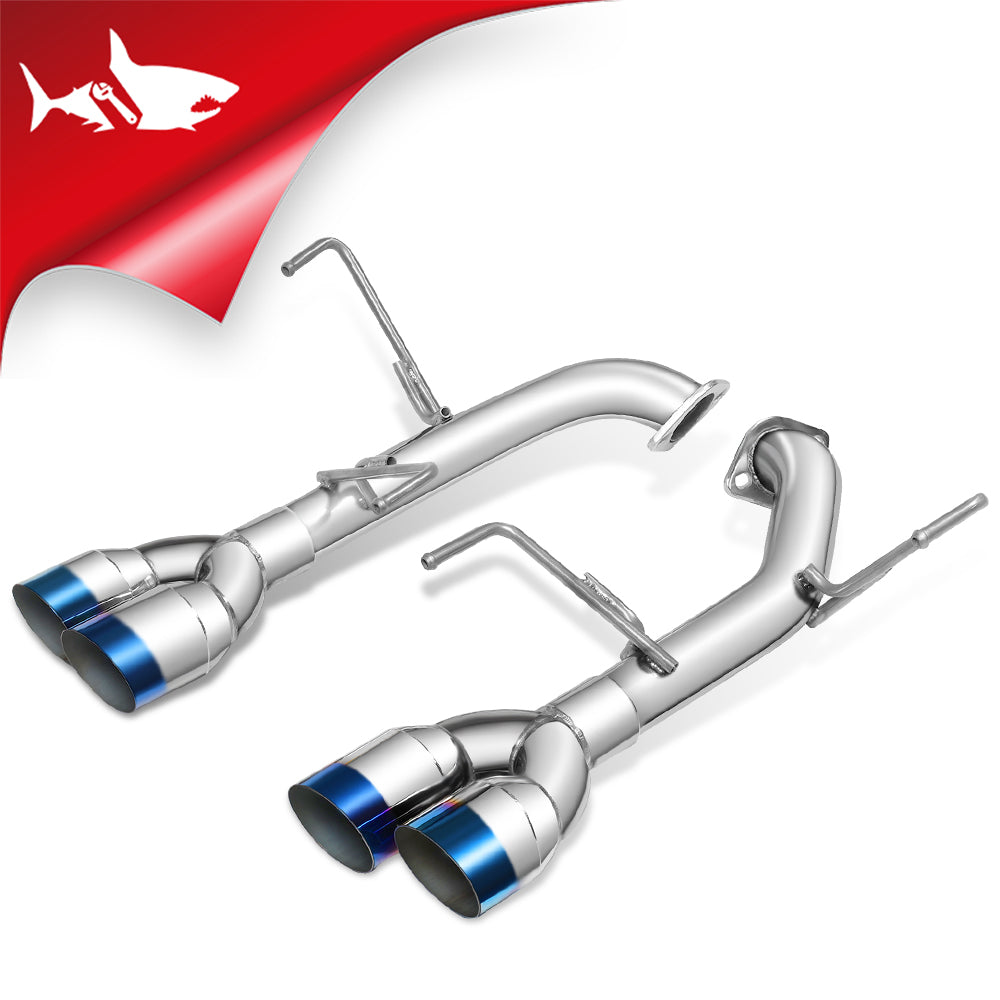
You don't need to spend $600 to get a good set of pipes. You just need proper engineering. If you refuse to pay massive "brand tax" but still demand flawless TIG welds and CEL-defeating O2 bungs, check out the Flashark 370z Test Pipes.
They tick all the mandatory boxes: genuine T304 stainless steel, flawless TIG welding (no interior slag to cause turbulence), thick anti-warp flanges, and the crucial extended O2 bungs. They mate up perfectly with the factory Y-pipe or any aftermarket 2.5-inch exhaust, making them a solid, reliable choice for freeing up that VQ power without draining your wallet.
Mechanic's Top Secret: 370z Test Pipes Installation Nightmares
Fighting the Infamous "Demon Bolts"
If you take anything away from this article, let it be this. The bolts connecting the stock cats to the exhaust manifold are subjected to thousands of heat cycles. They are rusted, seized, and practically welded into place. The community calls them the "Demon Bolts" for a reason.

⚠️ CRITICAL WARNING: A lot of rookies watch a five-minute YouTube tutorial, grab an impact wrench, and go straight to town on those three factory header bolts. Snap. The demon bolt breaks right off inside the manifold. Please, I'm begging you, do not do this! Just last month, we had a guy tow his Z in because he snapped a bolt in his driveway. It took us four miserable hours with drill bits and extractors to get that nightmare out.
The Pro Method: Spray those bolts with PB Blaster or Kroil. Let it sit overnight. The next day, get a MAP gas or acetylene torch and heat the flange (not the bolt itself) until it's glowing cherry red. Only then should you apply steady pressure with a breaker bar. Take your time.
Do You Need an ECU Tune?
Technically, no. You can bolt on test pipes, start the car, and drive it. The ECU will attempt to adjust. However, without the cats, the car will run slightly lean. If you want to actually feel those horsepower gains and smooth out the power delivery, you need a proper dyno or e-tune. A tuner will adjust your Air/Fuel Ratio (AFR) and optimize the VVEL system to match the new exhaust flow.
370z Exhaust Test Pipes FAQ
Q1: Do test pipes add horsepower to a 370z?
A1: Yes. By removing the restrictive factory catalytic converters, you drastically improve exhaust flow. Expect a raw gain of 8-12 whp, and up to 15-20 whp if you pair them with a professional ECU tune.
Q2: Will test pipes trigger a Check Engine Light (CEL) on my 370z?
A2: They will if you buy cheap ones. High-quality best 370z test pipes include extended J-bungs for the O2 sensors. This pulls the sensor out of the direct gas stream, which usually prevents the P0420/P0430 codes from popping up.
Q3: Resonated vs. Non-resonated test pipes for 370z: Which is better?
A3: It depends on your tolerance for noise. For a daily driven street car, resonated pipes are vastly superior because they eliminate high-rpm rasp. Non-resonated pipes should be strictly reserved for dedicated track cars where maximum flow and weight reduction matter more than sound quality.
Q4: Are test pipes street legal for a Nissan 370z?
A4: In the United States and many other countries, removing factory emissions equipment (catalytic converters) is illegal for street use. Test pipes are sold strictly for off-road and track use only.
Q5: Do I need a tune after installing test pipes on a VQ37?
A5: The car will run and drive without a tune, but it will likely run lean. To protect your engine in the long run and actually extract the horsepower you paid for, getting a tune (like UpRev or EcuTek) is highly recommended.
Q6: How hard is it to install test pipes on a 370z?
A6: The concept is simple (unbolt old, bolt on new), but the execution is brutal. The upper bolts connecting to the exhaust manifold are notoriously seized and prone to breaking. It requires heat, penetrating oil, and patience.
Q7: What are the "demon bolts" on the 370z exhaust?
A7: "Demon bolts" is the community nickname for the specific top bolts that secure the factory catalytic converters to the exhaust headers. Because of extreme heat cycling, they rust and seize badly, often snapping off during removal.
Q8: Will test pipes make my 370z smell like gas?
A8: Yes. Catalytic converters burn off unburnt fuel and emissions. Without them, you will definitely smell raw exhaust fumes, especially when idling at a stoplight or driving with the windows down.
Q9: High flow cats (HFC) vs test pipes: Which should I choose?
A9: If you want to avoid the raw fuel smell, pass visual emissions inspections, and keep exhaust volume moderate, choose HFCs. If you want maximum horsepower, the loudest sound, and are on a tight budget, test pipes are the answer. You can check out various options in our Test Pipes collection.
Q10: Can driving with test pipes cause engine damage to my VQ37VHR?
A10: No, the test pipes themselves won't damage the engine. In fact, reducing backpressure lowers exhaust gas temperatures (EGT). However, running extremely lean over a long period without a proper tune can cause issues, which is why tuning is advised.