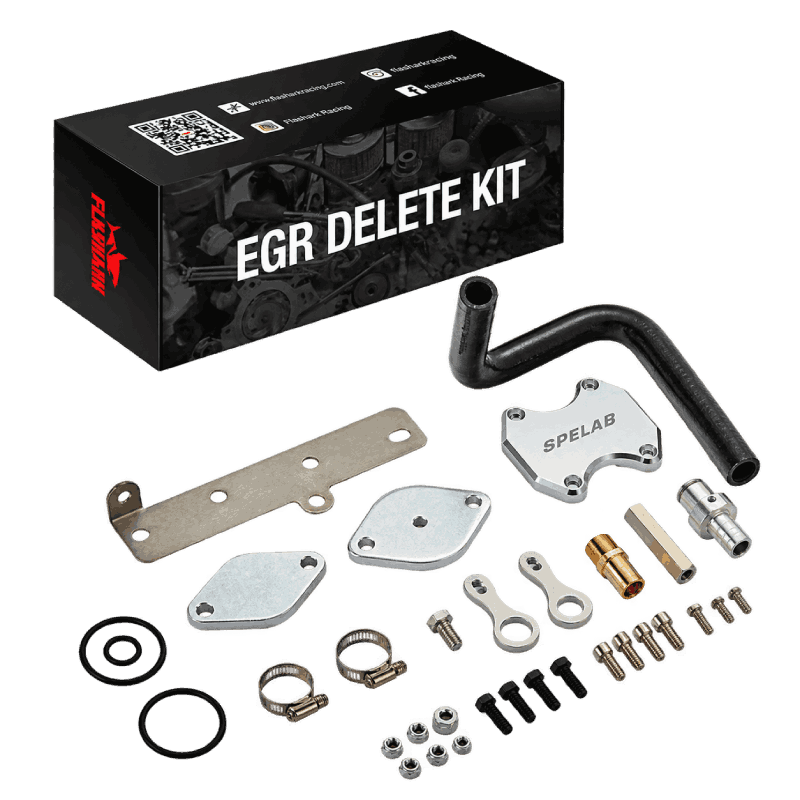
Deleting emissions equipment on a 6.7 Powerstroke is a complex modification with legal, diagnostic, mechanical, and ownership consequences. For a U.S. road vehicle, removing or disabling emissions controls can violate the Clean Air Act. A warning light or costly repair does not make a delete a compliant fix. If the truck has a problem, identify the fault and compare lawful repair options before buying parts or changing the vehicle.
- Difficulty depends on model year, installed equipment, vehicle condition, and the work proposed.
- EGR, DPF, and CCV refer to different systems; they are not interchangeable repairs.
- Consider inspection, warranty, resale, and emissions consequences before any modification.
- For a road truck, start with fault codes, service information, and a qualified diesel technician.
Best Delete Methods: What Do EGR, DPF, and CCV Mean?
Owners often search for the “best delete method,” but the first step is to identify the system and the actual fault. Exhaust gas recirculation (EGR) routes a measured portion of exhaust back into the intake to help control emissions. The diesel particulate filter (DPF) traps particulate matter and relies on regeneration and monitoring. Crankcase ventilation (CCV) manages crankcase gases and oil mist. These systems have different hardware, diagnostic checks, and consequences.
| System | What to check first | Why a delete is not a diagnosis |
|---|---|---|
| EGR | Codes, valve and cooler condition, related sensors, coolant loss, and applicable service information | Similar symptoms can have different causes; disabling EGR changes an emissions control. |
| DPF and aftertreatment | Soot load, regeneration history, exhaust leaks, pressure and temperature sensors, DEF/SCR faults | A warning or restriction may start elsewhere in the system; removing aftertreatment increases emissions. |
| CCV | Crankcase pressure, filter or separator condition, hose routing, and oil leaks | A CCV reroute is distinct from an EGR or DPF delete and may create venting or maintenance problems. |
The original article linked to an EGR product category. A collection listing does not establish that a part fits a specific truck or is lawful for its intended use. Verify both independently before considering a purchase.
Why Is It Hard to Delete a 6.7 Powerstroke?
Legal and inspection requirements
In the United States, the Clean Air Act prohibits tampering with emissions controls on motor vehicles and prohibits aftermarket defeat devices. State inspection and registration rules add another layer. An “off road only” label does not, by itself, establish that a modification is lawful for a particular vehicle or use. Check current federal and local requirements before making a decision. The EPA's tampering policy explains the federal framework.
Warning: Do not treat do-it-yourself installation as a legal workaround. Who performs the work does not make removal or disabling of required emissions equipment compliant.
Diagnosis, electronics, and mechanical scope
A modern 6.7 Powerstroke uses interacting sensors, aftertreatment hardware, and control strategies. A DPF warning, for example, can involve exhaust temperature or pressure sensing, regeneration conditions, fuel or air system faults, or a damaged filter. Servicing a failed component requires a different plan from altering the emissions system. Exact work varies by model year and configuration; a generic kit list or labor estimate cannot describe every truck.

Cost, resale, warranty, and environmental effects
Owners should account for diagnosis, parts, labor, inspection, future repairs, and resale disclosure. Warranty coverage depends on the warranty terms and the relationship between a modification and a failure; it should not be described as automatically void in every case. Removing aftertreatment can substantially increase particulate and nitrogen oxide emissions. Claimed gains in horsepower, fuel economy, or engine life are not predictable from a delete alone.
Technician tip: Record exact diagnostic trouble codes and freeze-frame data before replacing parts. Check model year, calibration, service history, leaks, and sensor readings against Ford service information. This makes a repair estimate more useful than guessing from a symptom.
Final Thoughts: What Should You Do First?
If you are asking how hard it is to delete a 6.7 Powerstroke, the practical answer is that the decision extends beyond removing hardware. Legal status, connected systems, diagnosis, and long-term ownership consequences make deletion a high-risk response to an unexplained fault. For a road vehicle, have a qualified diesel shop diagnose the truck and compare compliant repair options. If evaluating a part for a specialized application, verify the exact vehicle configuration and applicable rules before purchase.

Frequently Asked Questions
Q1. Can you delete a 6.7 Powerstroke?
A1. The phrase usually means disabling or removing emissions equipment, not removing the engine. For a U.S. road vehicle, tampering with required emissions controls can violate federal law; check applicable rules and diagnose the underlying issue first.
Q2. Is deleting a 6.7 Powerstroke difficult?
A2. Yes. The difficulty includes diagnosis, connected sensors and controls, vehicle-specific hardware, legal requirements, and future inspection and service consequences.
Q3. What is an EGR delete?
A3. It means disabling or removing exhaust gas recirculation components. EGR is an emissions control system; a fault should be diagnosed before any repair decision.
Q4. What is a DPF delete?
A4. It means removing or disabling the diesel particulate filter or related controls. A DPF warning can also be caused by sensors, regeneration conditions, or other faults that require diagnosis.
Q5. Is a CCV delete the same as a DPF delete?
A5. No. CCV manages crankcase gases, while the DPF traps particulate matter in the exhaust. They involve different components and risks.
Q6. Will a delete improve horsepower or fuel economy?
A6. There is no reliable fixed gain for every truck. Results depend on the vehicle, condition, calibration, and test method; do not assume a performance or economy benefit.
Q7. Will a delete fix a check engine light?
A7. A warning light identifies a need for diagnosis, not a specific repair. Read the codes and supporting data, then test the affected system using vehicle-specific service information.
Q8. Can I make a delete legal by doing the work myself?
A8. No. Doing the work yourself does not change whether removal or disabling of required emissions controls is lawful.
Q9. Can a deleted truck pass inspection?
A9. Inspection requirements vary by location, but a modified emissions system can prevent a vehicle from passing. Confirm current local requirements before making changes.
Q10. Does a delete automatically void the entire warranty?
A10. Not necessarily. Coverage depends on the warranty terms and the connection between the modification and the claimed failure. Ask the warranty provider for a case-specific determination.
Q11. What should I check before buying a 6.7 Powerstroke kit?
A11. Confirm the exact model year and configuration, the part's stated application, the system being addressed, and the rules for the vehicle's intended use. A collection page alone does not confirm fitment or road legality.

Steven Chen
Automotive Performance Specialist | Engine & Exhaust Systems
Steven focuses on practical engine performance, exhaust fitment, and real-world upgrade paths for classic and modern enthusiast vehicles. He reviews small-block Ford, LS, truck, and street/strip applications with one goal in mind: helping builders choose parts that actually work together. His philosophy: "Good power starts with the right combination, not the biggest part."