
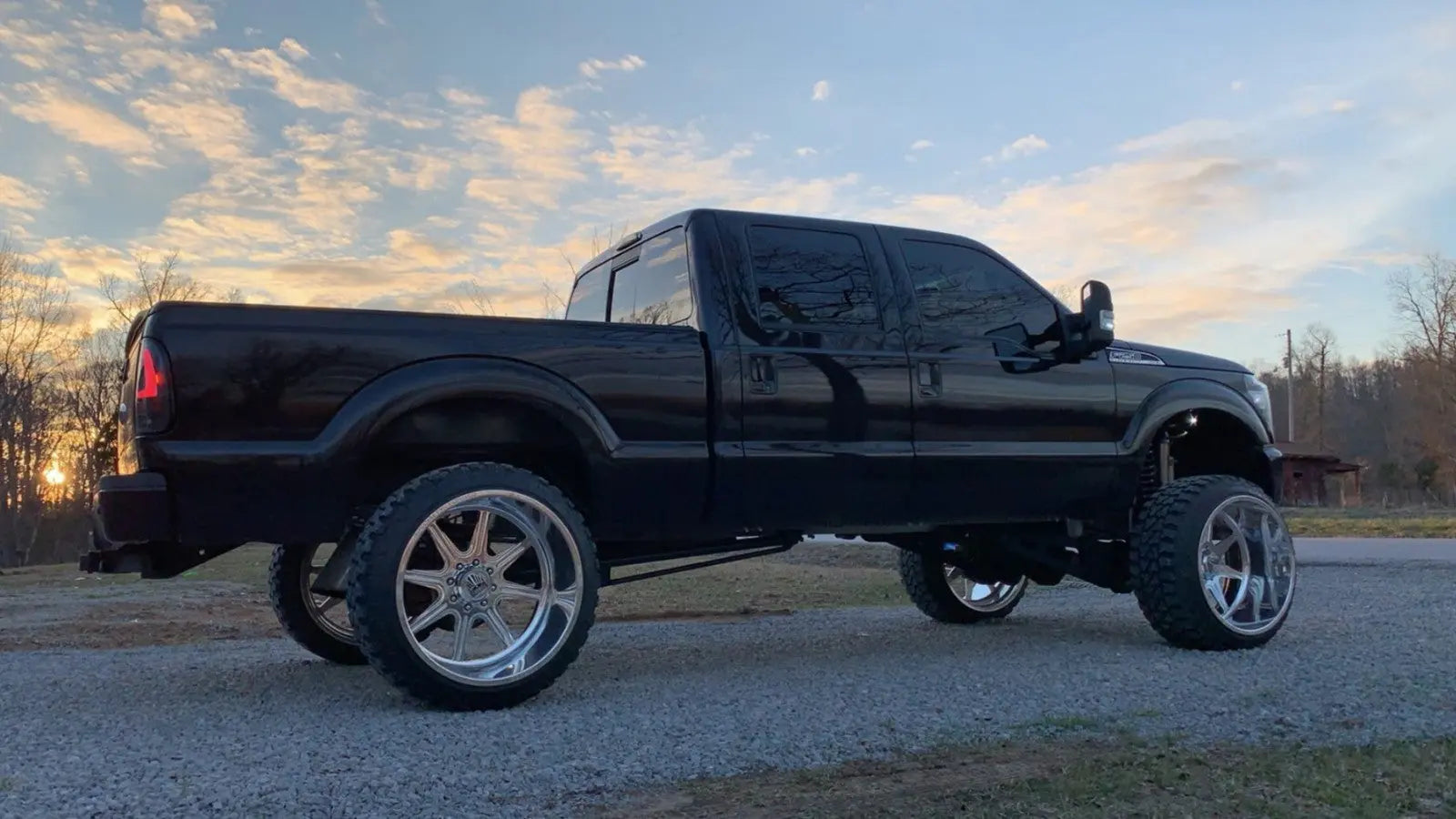
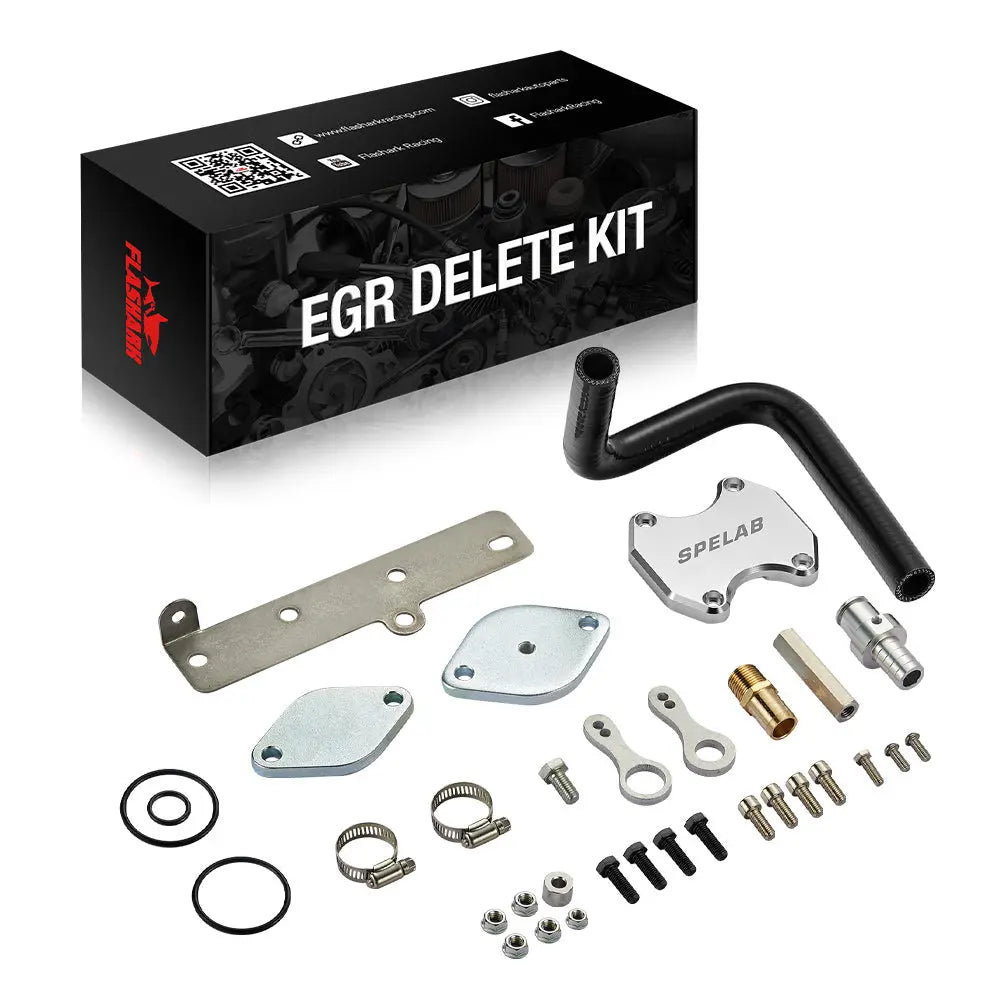
An EGR Delete Kit can be beneficial in many ways. However, one of the major ways it is great for your vehicle is that it improves the fuel economy, increases horsepower, and gives you better mileage. These are all benefits that arise from getting optimized engine performance.
With this setup, you will be able to completely remove your EGR valve & EGR cooler. Eliminating the EGR system will prevent soot from building up and clogging the intake manifold. Installing an EGR delete is one of the best upgrades you can do to increase the reliability and lifespan of your 6.7L pickup truck.
Below is the comprehensive, step-by-step installation guide for the 2015-2016 6.7L Ford Powerstroke.
The Bottom Line: What to Expect from This Install
Installing an EGR delete on your 2015-2016 6.7L Powerstroke completely removes the factory exhaust gas recirculation system, directly impacting engine longevity and performance. Based on general workshop outcomes, here is what you can typically expect:
- Reliability & Cleanliness: Eliminates the risk of EGR cooler failure (coolant leaks into the exhaust) and stops heavy carbon/soot buildup in the intake manifold.
- Thermal Management: In most towing or heavy-load scenarios, you will likely observe lower Engine Coolant Temperatures (ECT) and Exhaust Gas Temperatures (EGT), as superheated exhaust is no longer routed through the engine bay.
- Performance & Efficiency: Depending on driving habits and the specific custom tune applied, owners frequently report a fuel economy improvement of 1 to 3 MPG, alongside more responsive throttle behavior.
- Mandatory Tuning requirement: This physical hardware modification requires aftermarket ECU tuning. Without a proper delete tune, the vehicle will trigger multiple diagnostic trouble codes (DTCs) and will likely enter a reduced-power "limp mode".
Job Specifications & Required Tools
- Estimated Time: 3 - 5 Hours
- Difficulty Level: Advanced / Professional
- Required Tools: Metric Socket Set (8mm, 10mm, 13mm), Torx Bits, Extensions, Wrenches, Pliers, Flathead Screwdriver, Coolant Drain Pan, High-Quality Penetrating Oil (e.g., PB Blaster).
CAUTION!!! Never work on a hot vehicle. Serious injury in the form of burns can result if the vehicle has been in use. Allow the vehicle to cool completely prior to installation. Always wear eye protection when working on or under any vehicle.
Note: With a used vehicle, we highly suggest using a penetrating spray lubricant applied liberally to all exhaust fasteners. Allow a significant amount of time for the chemical to lubricate the threads before attempting to disassemble.
Phase 1: Preparation & Teardown
Step 1: Disconnect both batteries.
Step 2: Drain coolant from the hot and cold side of the radiator into a clean drain pan.

Step 3: Unplug the MAF (Mass Air Flow) sensor that is located on the intake. Release the red tab to unlock the plug for removal.

Step 4: Using an 8mm wrench, remove the two bolts holding the intake box and reservoir chamber in place.
Step 5: Loosen the two clamps on the intake coupling that attaches the intake box to the manifold.
Step 6: Pull up on the intake box to remove it from the rubber mounts that hold it in place.
Step 7: Pull the three coolant lines from the clips on the remaining intake tube. Then remove the remaining intake tube.
Step 8: Disconnect the clips and brackets that retain the two larger coolant lines going to the EGR Cooler. Remove the lines completely.


Step 9: Remove the two hose clamps on the small coolant line "T". Disconnect the lines and install the supplied straight barbed fitting.
Step 10: Install the supplied coolant line from the degas tank (radiator overflow tank) to the disconnected port near the bottom passenger side of the radiator.
Step 11: Disconnect the quick connect coolant line from the driver side of the EGR cooler.
Step 12: Disconnect the EGR temperature sensor. Zip-tie the vehicle side of the plug and harness out of the way from hot or moving parts.
Step 13: Unplug the PCM harness from the firewall on the passenger side. Secure it out of the way for installation.
Phase 2: EGR Cooler & Pipe Removal
Step 14: Unplug the harness on top of the EGR cooler. The harness contains three plugs: an orange plug with a yellow locking tab, a grey plug, and a black plug with a metal clip. Be sure to replace the clip after unplugging it so that it is not lost.
Step 15: Unplug the vacuum line on top of the EGR system, pull the hard plastic line from the rubber 90-degree fitting, and cap the line with the supplied rubber cap.
Step 16: Unplug the butterfly valve located next to the fan shroud.
Step 17: Remove the two bolts securing the wiring harness to the EGR cooler.
Step 18: Remove the two clips on the heat shield located on the passenger side under the EGR cooler.
Step 19: Remove the short EGR pipe secured by four bolts. Be sure to keep all hardware and gaskets for future use.
Step 20: Remove the longer EGR pipe secured in place by five bolts. Two bolts are on each flange and one is on the support bracket. Keep all hardware and gaskets.
Step 21: Remove the seven bolts holding the EGR cooler in place.
Step 22: Also remove the nut securing the hard pressure line to the back of the EGR cooler near the firewall.
Step 23: Pull the EGR system up and towards the front of the truck. You may need to twist it slightly to get it past some of the intake components. Once the cooler has been pulled forward a ways, remove the wiring harness clipped to the back of the cooler. Double-check and remove any clips or harnesses that may be attached to the cooler, then remove the cooler completely from the vehicle.

Phase 3: Block Off Plates & Reassembly
Step 24: Install the supplied exhaust block off plate using the factory hardware and gasket saved from disassembly.
Step 25: Install the coolant block off plate with the remaining supplied allen head bolts.
Step 26: Reconnect the PCM harness. Make sure that the harness plugs are properly connected and seated.
Step 27: Reconnect the quick connect coolant line. Be sure it is securely in place.
Step 28: Zip-tie the EGR wires and vacuum line to the PCM harness to keep the engine bay clean.
Step 29: Install the Intake block off plate with the O-ring on it using the provided allen head bolts. You will not need to use the factory gasket for this block off plate.

Step 30: Install the supplied mounting bracket and hardware to secure the hard pressure line that was bolted to the back of the EGR cooler. The bolt on the engine is located on the top passenger rear, where the black plastic intake manifold meets the cast aluminum intake manifold.
Step 31: Re-install all of the intake components (intake box, couplings, MAF sensor).
Step 32: Refill the coolant following factory specifications. Flash your custom delete tune to the ECU. Run the engine and check closely for any exhaust or coolant leaks. After the engine has reached normal operating temperature, re-check the coolant level and top off as needed.
Phase 4: Re-route Hose Installation
Step 1: Install the new bracket supplied in the kit.
Step 2: Install the new coolant re-route hose.
Step 3: Reconnect the 90-degree angle end of the coolant hose to the firewall securely.
Why Make the Switch? (Before vs. After)
Upgrading to a dedicated Powerstroke EGR Delete Kit is one of the most effective ways to protect your engine from premature failure. Here is a breakdown of the factory system versus the deleted setup:
| Metric | Factory EGR System | After EGR Delete |
|---|---|---|
| Intake Manifold | Clogged with thick soot and carbon | Clean, unrestricted airflow |
| Engine Temps | Higher due to recirculated hot exhaust | Runs cooler and more efficiently |
| Reliability | Prone to cooler failure and head gasket stress | Significantly increased lifespan |
Ready to tackle this project? Make sure you have the exact hardware needed for a leak-free install. Grab your Ford 6.7L Powerstroke EGR Delete Kit below and get to work.
Frequently Asked Questions (FAQs)
Q1: Do I absolutely need a custom tune after installing this EGR delete kit?
A1: Yes. The 6.7L Powerstroke's ECU heavily monitors the EGR system. If you physically remove the hardware without flashing a custom delete tune (via EZ Lynk, SCT, etc.), your truck will throw multiple diagnostic trouble codes (DTCs) and will likely enter a restricted "limp mode".
Q2: Will this kit fit my 2017 Ford F-250 6.7L?
A2: No. This specific kit and installation guide are tailored for the 2015-2016 Ford 6.7L Powerstroke engines. The intake manifolds and EGR routing changed for the 2017+ model years, requiring a different kit.
Q3: How long does the installation process typically take?
A3: For an experienced mechanic, this job takes about 3 hours. For a DIYer in their driveway with standard tools, expect it to take between 4 to 6 hours. Taking your time with rusted exhaust bolts is crucial.
Q4: Will deleting the EGR system improve my fuel mileage?
A4: In most cases, yes. By allowing the engine to breathe clean, fresh air instead of recirculating hot, oxygen-depleted exhaust gas, combustion efficiency increases. Owners typically report a 1 to 3 MPG increase, though this heavily depends on your specific tune and driving habits.
Q5: What happens if I snap an exhaust manifold bolt during removal?
A5: This is a common nightmare. If a bolt snaps flush with the manifold, you will have to drill it out and use an extractor bit. To prevent this, soak the factory bolts in a high-quality penetrating oil for at least 15-30 minutes before putting a wrench on them.
Q6: Do I need to drain the entire cooling system to do this job?
A6: No, you do not need a complete system flush. You only need to drain enough coolant from the primary radiator (hot and cold sides) to drop the fluid level below the EGR cooler, preventing a massive spill when you disconnect the cooler lines.
Q7: Can I reuse the factory metal gaskets for the block-off plates?
A7: Yes, for the exhaust block-off plate, it is highly recommended to clean and reuse the factory metal gasket if it is not warped or cracked. However, for the intake side, the kit provides an O-ring on the block-off plate, so the factory gasket is not needed there.
Q8: Is this modification street legal?
A8: No. Removing or bypassing any factory emissions control devices, including the EGR, is strictly for off-road or sanctioned closed-course racing only. It is not legal for use on public highways.
Q9: Will this delete kit lower my engine coolant temperatures (ECT)?
A9: Generally, yes. The factory EGR cooler uses your engine's coolant to drop the temperature of superheated exhaust gases. By removing the cooler, your cooling system no longer has to absorb that massive heat load, leading to more stable and lower overall engine temps, especially when towing.
Q10: Do I need to remove the intake manifold completely?
A10: No, full removal of the intake manifold is not required for the 2015-2016 models. You only need to remove the upper intake air box, coupling, and tubes to gain enough clearance to pull the EGR cooler up and forward.


1 comment
Eric Scott
Do I need to get with a hose or not?