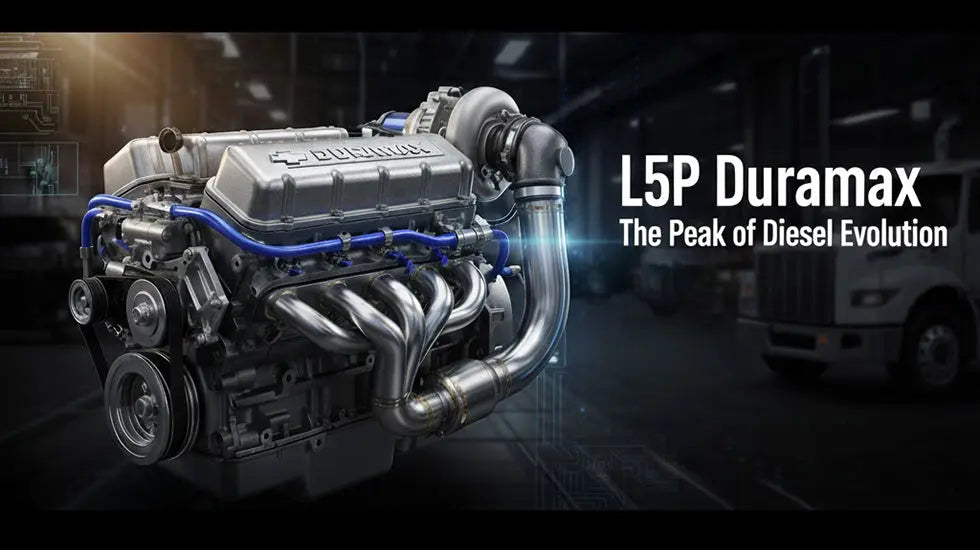
The L5P arrived for the 2017 model year as a major redesign of GM's 6.6L Duramax turbo-diesel used in Chevrolet Silverado HD and GMC Sierra HD trucks. It replaced the LML and brought a stronger engine structure, a new GM-developed engine control system, electronically controlled variable-geometry turbocharging, and a high-pressure common-rail fuel system.
The part that matters for owners is that not every L5P is identical. A 2018 truck and a 2021 truck share the same published 445-hp and 910-lb-ft engine rating, but they use different transmissions. Then GM revised the engine again for 2024, raising factory output to 470 hp and 975 lb-ft while changing the turbocharger, cylinder heads, combustion system, injectors, and engine controller.
- The first L5P model year was 2017.
- The engine is a 6.6L turbocharged V8 diesel with a cast-iron block and aluminum cylinder heads.
- 2017–2023 pickup applications are rated at 445 hp at 2,800 rpm and 910 lb-ft at 1,600 rpm.
- 2024 and newer versions are rated at 470 hp at 2,800 rpm and 975 lb-ft at 1,600 rpm.
- 2017–2019 trucks use a six-speed Allison automatic; 2020 and newer HD pickups pair the diesel with an Allison-branded 10-speed automatic.
- The factory engine uses cooled EGR and a diesel aftertreatment system that includes DOC, SCR/DEF, and DPF functions.
- Intake, downpipe, exhaust, and calibration changes should be treated as a complete system. A mechanical fit does not automatically mean the electronics or emissions equipment will behave the same way.
L5P Duramax Years: What Model Years Use the L5P?
The L5P started with the 2017 model year in Chevrolet Silverado HD and GMC Sierra HD applications. It replaced the 2011–2016 LML generation and remains part of GM's current 6.6L Duramax HD engine family.
There are three useful groups to remember when comparing parts or truck specifications: 2017–2019, 2020–2023, and 2024 and newer. The engine code may remain L5P, but transmission, engine hardware, electronics, and supporting systems changed along the way.
| Model Years | Factory Output | Transmission | What Changed |
|---|---|---|---|
| 2017–2019 | 445 hp / 910 lb-ft | Allison six-speed automatic | First L5P HD pickup configuration |
| 2020–2023 | 445 hp / 910 lb-ft | Allison-branded 10-speed automatic | New HD truck generation and transmission while retaining the earlier output rating |
| 2024–Present | 470 hp / 975 lb-ft | Allison-branded 10-speed automatic | Revised turbocharger, cylinder heads, combustion system, injectors, fuel-delivery strategy, and engine controller |
Engine code alone is not enough when ordering parts. Match the vehicle year, Silverado or Sierra model, pickup or chassis configuration, engine, exhaust connection, emissions hardware, and selected product configuration. The related L5D used in larger Chevrolet medium-duty trucks should not automatically be treated as interchangeable with L5P pickup hardware.

L5P Duramax Specs and Core Engineering
The 2017 engine was much more than a small update to the LML. GM described it as a next-generation redesign, with the earlier engine contributing little beyond the basic bore and stroke dimensions. That matters when comparing parts between LML and L5P trucks: two 6.6L Duramax engines are not automatically mechanically interchangeable just because their displacement matches.
| Specification | L5P Detail |
|---|---|
| Engine Type | 6.6L V8 turbo-diesel |
| Displacement | 403 cu. in. |
| Block | Cast iron |
| Cylinder Heads | Cast aluminum |
| Valvetrain | OHV, four valves per cylinder, mechanical roller lifters |
| Compression Ratio | 16.0:1 |
| Bore x Stroke | 103 x 99 mm |
| Fuel System | Direct injection, high-pressure common rail |
| 2017–2023 Injection Pressure | Up to approximately 29,000 psi |
| Turbocharger | Electronically controlled variable-geometry turbocharger |
| Charge-Air Cooling | Charge-air cooler / intercooler system |
| Fuel | Ultra-low-sulfur diesel; factory specifications also support B20 biodiesel |
| Firing Order | 1-2-7-8-4-5-6-3 |

High-Pressure Common-Rail Fuel System
The original L5P fuel system operates at pressures up to roughly 29,000 psi and uses solenoid-controlled injectors capable of multiple injection events during a combustion cycle. That allows the ECM to control fuel delivery more precisely than simply opening an injector once for each power stroke.
For 2024, GM revised the combustion and fuel-delivery system again, using higher-flow injectors and greater injection pressure. That is one reason an injector, pump, calibration, or fuel-system part should be matched to the model year instead of treating every L5P as one fixed specification.
Variable-Geometry Turbocharger
The electronically controlled VGT changes turbine vane position as operating conditions change. At lower engine speeds, vane control can help build turbine response and exhaust braking. At higher airflow demand, the system changes vane position to manage exhaust flow and boost.
GM revised the turbo system for 2024, including a more efficient turbocharger and stronger actuator strategy for improved low-speed torque and engine-braking performance.
Emissions and Aftertreatment System
The L5P is designed around an integrated diesel emissions system rather than a stand-alone muffler-and-catalyst layout. Factory hardware includes cooled EGR plus exhaust aftertreatment using diesel oxidation catalyst, SCR/DEF, and diesel particulate filtration functions.
Those systems communicate with the ECM through temperature, pressure, NOx, particulate, airflow, and other feedback. Changing one section of the intake or exhaust can therefore have consequences beyond simple pipe diameter.
A modern diesel exhaust should be treated as a system. Turbo outlet pressure, exhaust leaks, sensor placement, aftertreatment condition, calibration, and downstream restriction can all matter. Replacing one pipe does not automatically produce a predictable horsepower, fuel-economy, or warning-light result.
Is the L5P a 5th-Generation Duramax?
You may see the phrase 5th gen Duramax used around the L5P, but Duramax generation numbering is not completely consistent across the industry. Some sources group earlier engine codes differently, while others count LB7, LLY, LBZ, LMM, LML, and L5P as separate generations.
For parts selection, the generation label is less useful than the actual engine code. If the truck uses RPO L5P, shop and service it as an L5P rather than relying on a "fifth-gen" or "sixth-gen" description alone.
L5P vs. LML: Why the 2017 Change Matters
The L5P replaced the LML for 2017. GM retained the 6.6L displacement, but the redesign changed the engine structure, fuel system, electronics, turbo controls, and several internal components.
| Area | LML | L5P |
|---|---|---|
| Model Years | 2011–2016 | 2017 onward |
| Factory Output at Introduction | 397 hp / 765 lb-ft | 445 hp / 910 lb-ft |
| Fuel Injection | High-pressure common rail | Redesigned high-pressure common rail with solenoid injectors |
| Turbo Control | Variable-geometry turbo system | New electronically actuated/electronically controlled VGT system |
| Engine Control | Earlier GM diesel control architecture | GM-developed E41 controller at launch |
The 2017 rating increased peak torque by roughly 19 percent over the outgoing LML. More important for parts buyers, however, is the amount of hardware that changed. A component sold for an LML should never be assumed to fit an L5P simply because both engines say "6.6 Duramax."
How Long Does an L5P Duramax Last?
There is no useful single mileage number that guarantees L5P life expectancy. Two trucks showing the same odometer reading can have very different engine, turbo, fuel-system, and aftertreatment condition depending on towing load, idle time, maintenance history, fuel quality, operating temperature, and how often the truck completes normal regeneration cycles.
A truck that regularly works at heavy load needs a different inspection mindset from a lightly driven commuter. On the other hand, repeated short trips and extended low-load operation can create their own problems, particularly for an engine that relies on active emissions and aftertreatment strategies.
What Matters More Than a Mileage Claim
- Fuel quality and filtration: High-pressure common-rail components depend on clean fuel and effective water separation.
- Oil and cooling-system maintenance: Heavy towing increases thermal load, making fluid condition and cooling-system health especially important.
- Charge-air leaks: A loose or leaking CAC connection can reduce boost control accuracy and create driveability or emissions-related faults.
- DPF regeneration behavior: Repeated incomplete regeneration or abnormal soot loading deserves diagnosis rather than simply clearing a warning.
- Exhaust and sensor condition: Exhaust leaks, damaged wiring, contaminated sensors, or altered hardware can affect the way the ECM manages the engine.
- Modification quality: A well-matched part installed without leaks or wiring damage is very different from a system assembled under tension with poor clearances.
On some 2017–2019 L5P trucks, GM service information specifically directs technicians to inspect charge-air-cooler duct connections when certain low-boost, airflow, soot, or emissions faults appear. Check the entire pressurized intake path before assuming the turbocharger itself has failed.
L5P Intake and Exhaust Upgrades: What Each Part Actually Does
This is where terminology matters. The L5P is a turbo-diesel, so its exhaust path should not be described exactly like a naturally aspirated gasoline V8.
Exhaust Manifolds and Up-Pipes
The exhaust manifolds collect exhaust from the cylinders, and the up-pipe side of the system routes that exhaust toward the turbine. Some shoppers loosely use the word "headers," but on this platform exhaust manifold and up-pipe are usually more useful terms when discussing the factory turbo-side layout.
Reducing leakage and maintaining a clean exhaust path before the turbo can matter because turbine response depends on exhaust energy reaching the turbine. That still does not mean the largest pipe is automatically better. Cross-sectional area, temperature, pulse energy, sealing, routing, and turbine requirements all work together.
L5P Downpipe
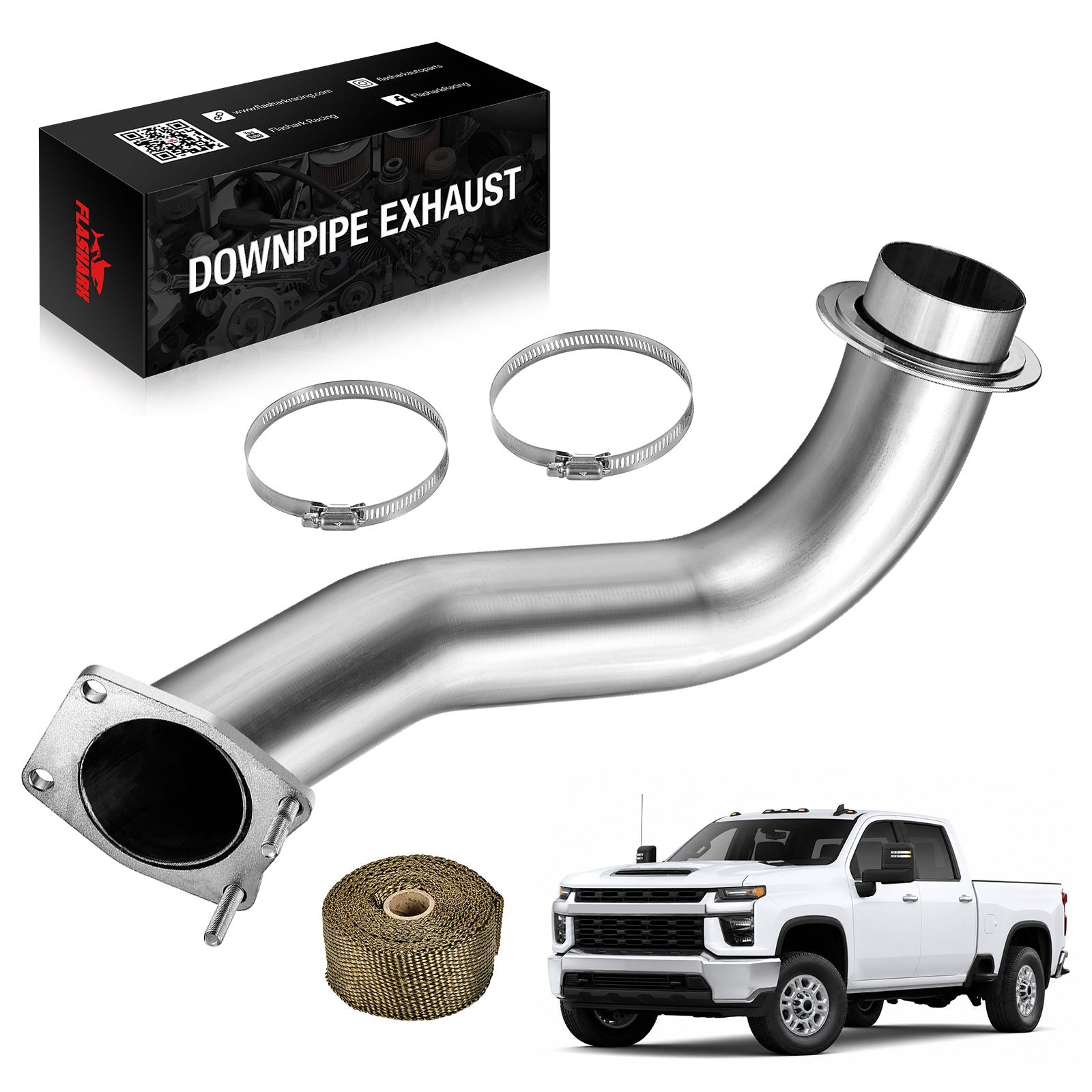
The downpipe carries exhaust away from the turbocharger outlet and into the downstream exhaust and aftertreatment path. Its job is different from an up-pipe, which works on the turbine-inlet side.
A larger or smoother downpipe can reduce restriction in that section of the exhaust, but the final result depends on the complete system. Turbo configuration, downstream components, sensors, calibration, and emissions hardware all affect what the truck actually does after installation.

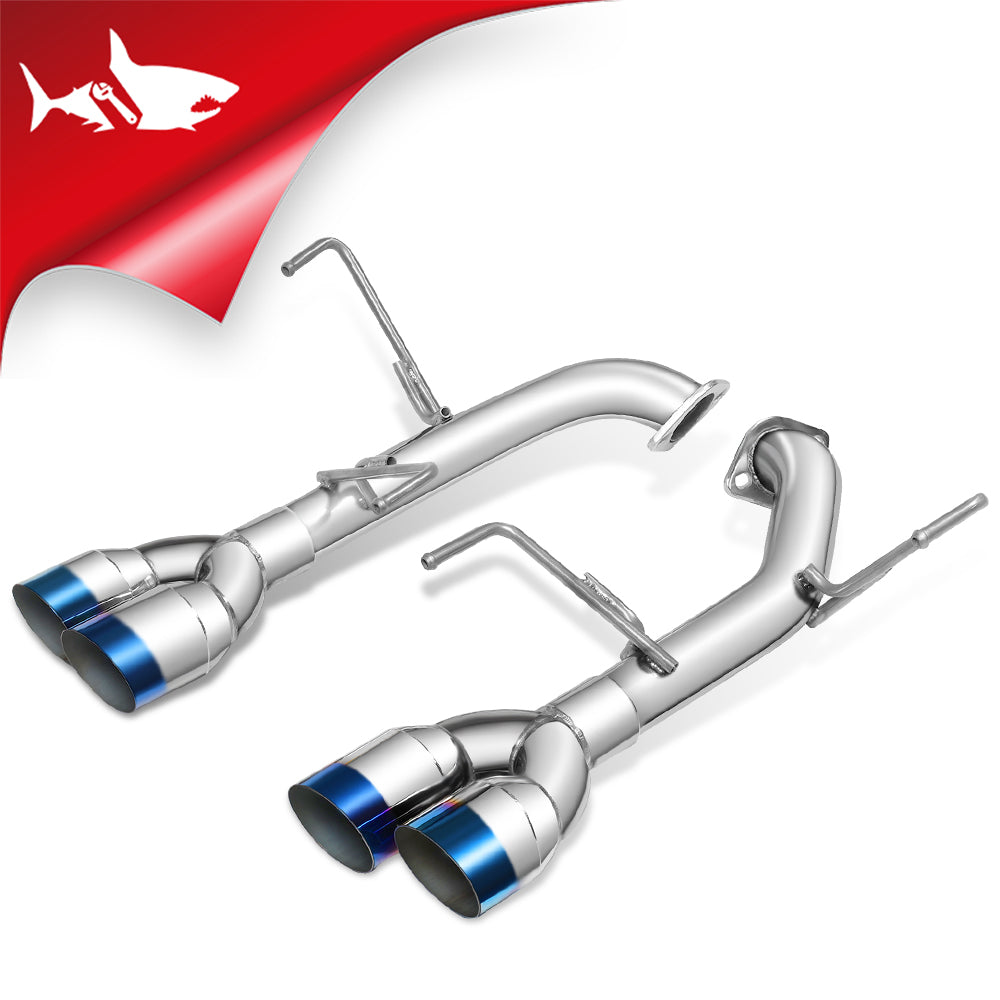
Flashark offers L5P downpipe product options. Before ordering, match the selected configuration to the truck's year, model, engine, turbo connection, downstream exhaust, emissions equipment, and intended use.
Cat-Back and Downstream Exhaust
"Cat-back" is a simple term on many gasoline cars, but modern diesel exhaust systems contain multiple aftertreatment components. When shopping for an L5P exhaust, check exactly where the replacement section begins and ends instead of relying only on a broad product label.
Downstream pipe diameter and muffler design can change exhaust tone and restriction, but the result depends on how much of the factory system remains in place. Exhaust sound, drone, temperature, and flow should not be predicted from pipe diameter alone.
L5P Intake System
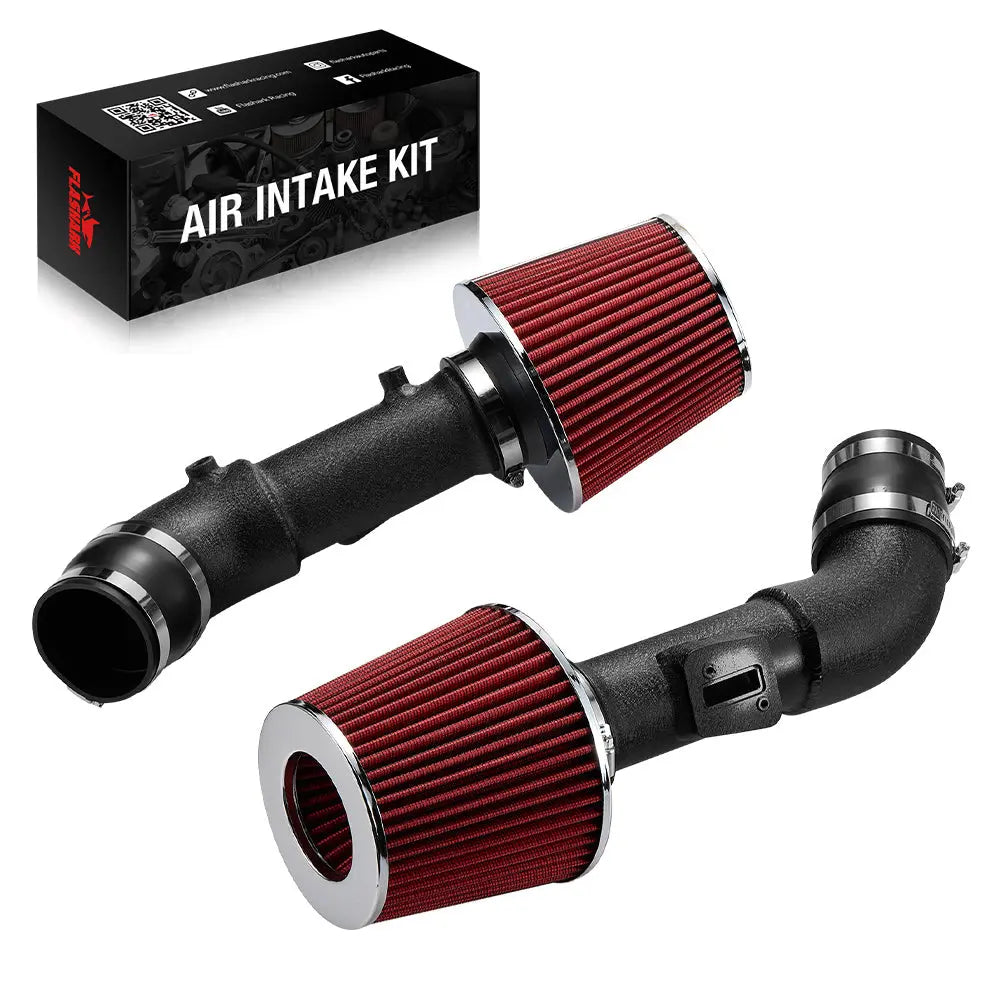
An intake system works on the compressor-inlet side of the turbo. Lower restriction can help the turbo receive air with less pressure drop, but an intake does not automatically guarantee colder charge air or additional horsepower.
Once air has been compressed by the turbocharger, the charge-air cooler becomes a major part of temperature control before the air reaches the engine. Filter quality, sealing, MAF behavior, duct geometry, underhood heat, turbo demand, and the condition of the charge-air system all matter.
Does an L5P Intake or Exhaust Upgrade Require a Tune?
There is no correct one-word answer for every L5P modification. Calibration requirements depend on what hardware has changed and whether the change alters airflow measurement, turbo operation, sensor feedback, emissions equipment, fueling, or diagnostic logic.
A modification that leaves emissions hardware and sensor locations untouched is not the same job as changing components integrated into the aftertreatment system. Similarly, a pipe that physically bolts in place does not prove that the ECM will accept the resulting operating conditions without faults.
Before changing hardware, consider the intake, turbo, exhaust, aftertreatment, sensors, and calibration as one system. Review local emissions and road-use requirements before modifying emissions-related equipment.
Will an Exhaust Upgrade Cause a Check Engine Light?
A warning light can be triggered by many things other than the pipe itself. Exhaust leaks, incorrect sensor placement, damaged wiring, loose charge-air connections, changes to emissions hardware, abnormal DPF operation, and calibration differences can all affect diagnostics.
Do not treat "no CEL" as a universal product feature unless the exact vehicle, hardware, emissions configuration, and calibration have been tested together. The better approach is to identify what section is being changed and what sensors or control functions interact with it.
What to Check Before Buying L5P Performance Parts
This is one of those jobs where fitment matters more than the marketing number. A 3.5-inch pipe that is beautifully made is still the wrong part if the turbo flange, downstream connection, chassis clearance, or model-year configuration does not match the truck.
| Check | Why It Matters |
|---|---|
| Model year | 2017–2019, 2020–2023, and 2024+ trucks have important hardware differences. |
| Engine code | Confirm L5P instead of relying only on the 6.6L Duramax name. |
| Truck configuration | Pickup, chassis-cab, and medium-duty configurations may not share the same routing or connections. |
| Turbo-side connection | Flange style, outlet geometry, and pipe routing must match. |
| Downstream exhaust | A downpipe still has to connect correctly to the rest of the system. |
| Emissions and sensor layout | Changes can affect diagnostic behavior, regeneration, and road-use compliance. |
| Calibration requirements | Do not assume a modification always requires a tune or never requires one. |
| Clearance after installation | Check heat shields, wiring, hoses, transmission area, frame clearance, and adjacent components before final tightening. |
A Better Installation Sequence
- Confirm the exact truck and selected part configuration before disassembly.
- Allow the exhaust and turbo area to cool fully before working nearby.
- Disconnect or protect electrical connections when the service procedure requires it.
- Inspect mating surfaces, clamps, flanges, hoses, wiring, and nearby heat-sensitive components.
- Install the system without forcing the pipe into position.
- Leave adjustable connections loose enough to align the complete exhaust path.
- Check clearance before final tightening.
- After the first heat cycle, inspect for leaks, contact marks, loose connections, or wiring too close to hot components.
Do not substitute generic torque values for the vehicle service information or the instructions supplied with the selected hardware. Fastener size, flange design, gasket type, and model year can change the correct procedure.
Technical References for L5P Owners
- GM 6.6L L5P Duramax engine specifications
- GM service introduction for the 2017 6.6L L5P Duramax
- GMC technical overview of the revised 2024 Duramax
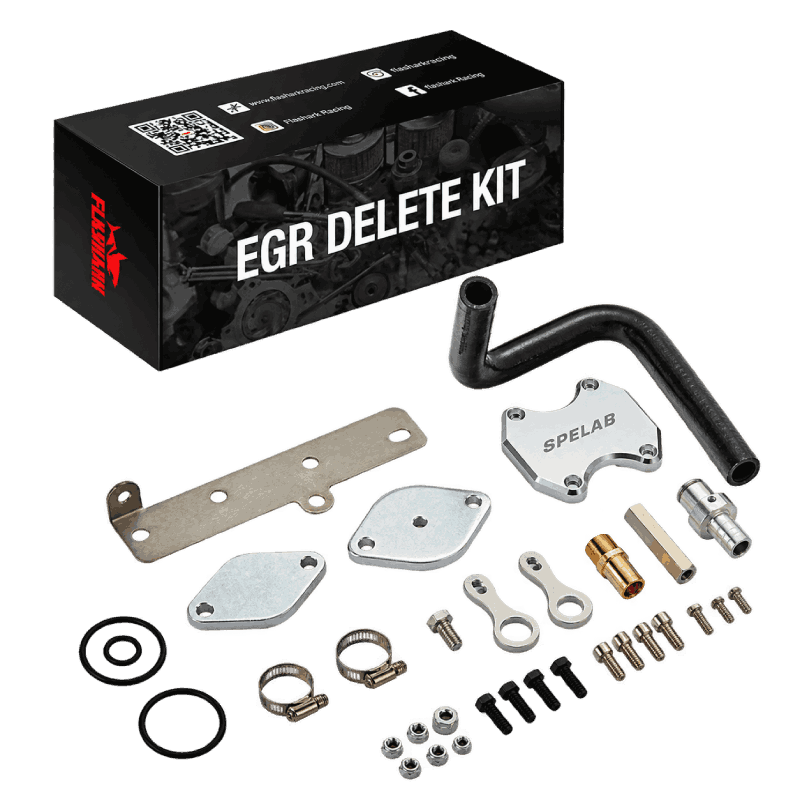
Owners researching larger emissions-system changes can also read the L5P delete kit components and fitment guide for a breakdown of the difference between EGR, DPF, SCR/DEF, CCV, downpipe, and calibration-related changes.
Final Takeaway
The L5P is important because GM did not simply add boost or recalibrate the outgoing LML. The 2017 engine brought major changes to the structure, fuel system, turbo control, electronics, and emissions strategy, followed by another substantial update for 2024.
For an owner, the practical lesson is simple: identify the model year and exact configuration before buying parts. A 2018 and a 2021 L5P have the same published engine output but different transmissions. A 2024 truck keeps the L5P name while using revised engine hardware and higher factory output. Those differences matter when the job moves from reading specifications to actually choosing hardware.
Frequently Asked Questions About the L5P
Q1: What years are L5P Duramax engines used in Silverado and Sierra HD trucks?
A1: The L5P was introduced for the 2017 model year in Chevrolet Silverado HD and GMC Sierra HD applications. Important breakpoints are 2017–2019, 2020–2023, and 2024 and newer because transmission and engine hardware changed across those groups.
Q2: How much horsepower and torque does an L5P make?
A2: 2017–2023 versions are factory-rated at 445 hp at 2,800 rpm and 910 lb-ft at 1,600 rpm. The revised 2024-and-newer engine is rated at 470 hp at 2,800 rpm and 975 lb-ft at 1,600 rpm.
Q3: Are 2018 and 2021 L5P Duramax specs the same?
A3: Both carry the 445-hp and 910-lb-ft factory engine rating, but the powertrains are not identical. A 2018 HD uses the earlier six-speed Allison automatic, while a 2021 HD uses the Allison-branded 10-speed automatic introduced for 2020.
Q4: What is the L5P compression ratio?
A4: The published L5P compression ratio is 16.0:1.
Q5: Is the L5P the fifth-generation Duramax?
A5: Generation numbering varies because different sources group earlier Duramax engine codes differently. For service and parts selection, RPO L5P and the vehicle model year are more reliable identifiers than a fifth-generation or sixth-generation label.
Q6: Is there a 5.7L L5P Duramax?
A6: No. The L5P used in Silverado HD and Sierra HD trucks is a 6.6L V8 turbo-diesel. A "5.7 Duramax" search does not describe the L5P engine displacement.
Q7: What fuel system does the L5P use?
A7: It uses direct injection with a high-pressure common-rail system. The 2017–2023 system operates at pressures up to roughly 29,000 psi, while the 2024 redesign uses revised injectors and greater injection pressure.
Q8: What is the life expectancy of an L5P Duramax?
A8: There is no single factory mileage number that guarantees engine life. Maintenance history, towing load, idle time, fuel quality, cooling-system condition, regeneration behavior, emissions-system health, and modification quality all influence long-term service life.
Q9: Does an L5P intake or exhaust upgrade require a tune?
A9: It depends on what the modification changes. Hardware that affects airflow measurement, turbo operation, sensor feedback, emissions equipment, fueling, or diagnostic logic may have different calibration requirements. Treat the complete hardware and electronics combination as one system.
Q10: Will an L5P downpipe cause a check engine light?
A10: There is no universal answer. Warning-light behavior depends on the exact downpipe design, remaining emissions hardware, sensor layout, exhaust sealing, wiring condition, model year, and calibration. A mechanical fit alone does not guarantee a particular diagnostic result.
Q11: Is an L5P downpipe the same as a cat-back exhaust?
A11: No. The downpipe begins at the turbo-outlet side of the exhaust path, while a downstream or cat-back-style system replaces a different section farther rearward. On a modern diesel, always check the actual start and end points of the product rather than relying only on the category name.
Q12: Is the 2024 L5P different from the 2017–2023 engine?
A12: Yes. The 2024 update increased output to 470 hp and 975 lb-ft and introduced changes including a more efficient turbocharger, revised cylinder heads and combustion system, higher-flow injectors with greater injection pressure, and a new engine controller. Do not assume every 2017–2023 performance part also fits a 2024-and-newer truck.

Steven Chen
Automotive Performance Specialist | Engine & Exhaust Systems
Steven focuses on practical engine performance, exhaust fitment, and real-world upgrade paths for classic and modern enthusiast vehicles. He reviews small-block Ford, LS, truck, and street/strip applications with one goal in mind: helping builders choose parts that actually work together. His philosophy: "Good power starts with the right combination, not the biggest part."