

If you've spent any time under the hood of a GM truck or SUV, or walked through a local junkyard looking for the perfect swap candidate, you already know the 5.3L Vortec. Introduced in the late 1990s as part of GM's Gen III small-block family, this engine earned its reputation the hard way: hauling trailers, surviving bad maintenance, and still taking boost when most engines would be begging for mercy.
And yes, let’s clear this up right away: the 5.3 Vortec is an LS-based engine. It is basically the truck-side branch of GM’s LS architecture, offered in iron-block and aluminum-block versions depending on the RPO code. That means a lot of LS cams, valvetrain parts, intakes, headers, and tuning strategies carry over—but not every part is automatically plug-and-play. Reluctor wheels, throttle control, fuel systems, oil pans, and AFM/DOD hardware matter.

Quick Answer: 5.3 Vortec Specs, HP & Best Years
- Displacement: 5.3L / 323 cubic inches.
- Stock horsepower: roughly 270–326 hp for most 1999–2014 Vortec truck engines, depending on year, RPO code, fuel type, and vehicle calibration.
- Best budget swap engines: 1999–2006 LM7 iron-block engines because they are cheap, simple, non-AFM, and boost-friendly.
- Best factory naturally aspirated 5.3: the 2005–2007 L33, thanks to its aluminum block, higher compression, and 799/243-style cylinder heads.
- Biggest warning: 2007–2014 Gen IV engines with AFM/DOD can suffer lifter failure and oil consumption. If you plan to cam it, budget for a real mechanical AFM delete.
- Common first upgrade: a tune, long-tube headers, and a healthy exhaust path before jumping into cam or boost.
The popularity of LS and Vortec engines has made them the default choice for performance upgrades. Their robust iron or aluminum blocks allow for serious horsepower gains without immediately needing forged internals. Whether you are bolting on long-tube headers for a 1999–2006 Silverado/Sierra 5.3L, swapping in a truck cam, or building a junkyard turbo setup, the aftermarket support is massive.
This guide breaks down the 5.3 Vortec engine by version, horsepower, year, specs, common failure points, and real-world upgrade limits. No brochure fluff. Just the stuff you actually need before buying, fixing, swapping, or modifying one.
Different Versions of the 5.3 Vortec
The 5.3 Vortec engine exists in several generations and configurations. They share the same basic 5.3L displacement, but the details change fast once you start looking at RPO codes, block material, reluctor wheels, throttle control, cylinder heads, AFM, and flex-fuel hardware.
| Generation | Common RPO Codes | Block Material | Key Features | Years |
|---|---|---|---|---|
| Gen III Vortec 5300 | LM7, L59, LR4 | Mostly iron | Cable throttle, 24x reluctor, early LS architecture, no AFM | 1999–2007 |
| Gen III High Output | L33 | Aluminum | Higher compression, 799/243-style heads, lighter block | 2005–2007 |
| Gen IV Aluminum 5.3 | LH6, LC9 | Aluminum | Drive-by-wire, 58x reluctor, AFM on many applications | 2005–2014 |
| Gen IV Iron-Block 5.3 | LMG | Iron | Flex-fuel capability, AFM, stronger later rods | 2007–2014 |
| Special Applications | LH8, LH9 | Aluminum | Used in Hummer H3, Colorado, and Canyon V8 applications | 2008–2012 |

The Swap Guide: Best Years to Buy & Years to Avoid
If you're hitting the salvage yard for a swap project, the 1999–2006 Gen III engines—especially the LM7—are still gold. They are cheap, everywhere, simple to wire, and they do not carry the AFM lifter headache. The L33 is the one I would grab for a cleaner naturally aspirated build, but good luck finding one cheap now. People know what they are.
Be more cautious with 2007–2014 Gen IV engines like the LC9 and LMG. They can make great power, and some later parts are stronger, but AFM/DOD changes the budget. Do not buy one assuming you can just tune AFM off and call it fixed. If the lifters, cam, valley cover, and oiling pieces are still physically there, the failure risk is still sitting in the engine.
Mechanic's Note: Do Not Shop by Year Alone
GM used overlapping engines across trucks, SUVs, vans, and special applications. Always verify the RPO code in the glovebox/service parts label, check the throttle body style, and confirm the reluctor wheel if you are buying for a swap. A “2007 5.3” can be a simple leftover-style setup or an AFM engine depending on the vehicle and production details.

How Much Horsepower Does the 5.3 Vortec Have?
Most 5.3 Vortec truck engines make somewhere between roughly 270 and 326 horsepower from the factory. Early LM7 engines sit on the lower end. Later Gen IV engines, flex-fuel calibrations, and high-output variants sit higher. The common mistake is quoting one number for every 5.3. That is how bad forum arguments start.
For example, a 2000 Silverado 5.3 and a 2014 Tahoe 5.3 are both “5.3 Vortec” in normal conversation, but they are not the same engine package. Different heads, electronics, cam specs, fuel capability, and calibration can all change the number.
5.3 Vortec Horsepower by Year & RPO Code
| Years | Common RPO | Typical Vehicles | Factory HP Range | Torque Range | Notes |
|---|---|---|---|---|---|
| 1999–2000 | LM7 | Silverado, Sierra, Tahoe, Yukon | Around 270–285 hp | Around 315–325 lb-ft | Early iron-block Gen III, excellent swap candidate |
| 2001–2003 | LM7, L59 | Silverado, Sierra, Suburban, Tahoe, Yukon | Around 285–295 hp | Around 325–335 lb-ft | Still simple, cheap, and non-AFM |
| 2004–2006 | LM7, L59, L33 | Silverado, Sierra, Avalanche, SUVs | Around 295–310 hp | Around 335 lb-ft | L33 high-output version appears in 2005–2007 |
| 2007–2014 | LMG, LC9, LH6 | Silverado, Sierra, Tahoe, Yukon, Suburban | Around 315–326 hp | Around 335–348 lb-ft | More power, but AFM/DOD becomes the big reliability concern |
For modified engines, the 5.3 responds especially well to airflow. A healthy tune, long-tube headers, and a better exhaust path can wake the truck up without touching the short block. Add a cam, springs, pushrods, and supporting fuel, and 50–100 extra horsepower is realistic. Add boost and things get much more serious—but ring gap, fuel system, cooling, and transmission strength become non-negotiable.
5.3 Vortec vs 5.3 LS vs 5.3 EcoTec3: Are They the Same?
This is where people get sloppy with terminology. In the garage, people use “5.3 LS,” “5.3 Vortec,” and “5.3 Chevy engine” like they all mean the same thing. Sometimes they do. Sometimes they absolutely do not.
| Name | What It Usually Refers To | Years | Key Difference |
|---|---|---|---|
| 5.3 Vortec | Truck/SUV 5.3L Gen III and Gen IV small-block engines | 1999–2014 | Used heavily in Silverado, Sierra, Tahoe, Yukon, Suburban, and related GM trucks/SUVs |
| 5.3 LS | A casual performance term for LS-based 5.3 engines | Mostly Gen III/IV context | Useful for swap/build talk, but you still need the RPO code |
| 5.3 EcoTec3 | Gen V 5.3L engines such as L83 and L84 | 2014+ | Direct injection, VVT, AFM or DFM depending on version, different tuning and fuel system considerations |
So, is a 5.3 Vortec an LS? In the Gen III/Gen IV truck-engine sense, yes, it is LS-based. Is every modern Chevy 5.3 a Vortec? No. The 2014+ EcoTec3 engines are a different Gen V family with direct injection and later fuel-management systems. If you are buying parts, tuning, or planning a swap, never stop at “5.3.” Get the year, vehicle, RPO code, reluctor wheel, throttle style, and transmission plan.
Common 5.3 Vortec Problems & Weak Points
The 5.3 Vortec is tough, but it is not magic. Most failures I’ve seen are not because the block is weak. They come from AFM lifters, oiling issues, old gaskets, bad maintenance, tired transmissions, or people throwing a cam and boost at the engine without doing the boring prep work.
- AFM Lifter Failure: Common on many Gen IV engines. A collapsed lifter can cause misfires, tapping, and eventually a wiped camshaft. If your 5.3 is ticking, do not panic first—read this guide on 5.3L Vortec ticking at idle before assuming the lifters are dead.
- Excessive Oil Consumption: Especially common in some 2007–2011 AFM engines due to piston ring, PCV, and cylinder deactivation-related oiling issues.
- Intake Manifold & Vacuum Leaks: Aging plastic manifolds and crushed gaskets can trigger rough idle, lean codes, and annoying drivability problems.
- Oil Pump Pickup Tube O-Ring: A hardened or pinched pickup tube O-ring can cause low oil pressure and cold-start valvetrain noise.
- Fuel Injector Limits: Stock injectors run out quickly when you add cam, boost, or E85. Do not tune around weak fuel delivery.
- Transmission Weakness: The 4L60E behind many 5.3 trucks is often the first thing to complain once torque rises.
Mechanic's Note: The Drivetrain Reality Check
After years of pulling these engines apart, I always tell people the same thing: if you plan to push past 400 wheel horsepower with cam, headers, or boost, budget for the transmission. The factory 4L60E has a glass jaw, especially the 3-4 clutch pack and sun shell. A built 4L60E can work for milder setups, but if you are serious about torque, a 4L80E swap starts looking very sensible.
Vehicles Equipped With the 5.3 Vortec
The 5.3 Vortec showed up across GM half-ton trucks, SUVs, vans, and a few special applications. This is why junkyards are full of them—and why swap builders love them.
| Brand | Models | Common Engine Versions | Years |
|---|---|---|---|
| Chevrolet | Silverado 1500, Tahoe, Suburban, Avalanche, Express Van | LM7, L59, LMG, LC9, LH6 | 1999–2014 |
| GMC | Sierra 1500, Yukon, Yukon XL, Envoy, Savana | LM7, L59, LMG, LC9, LH6 | 1999–2014 |
| Cadillac | Escalade | LM7, LC9 in select applications | Early 2000s applications |
| Hummer | H3 Alpha | LH8, LH9 | 2008–2010 |
| Chevrolet/GMC Midsize | Colorado, Canyon | LH8, LH9 | 2009–2012 |
5.3 Vortec Engine Block Specs
| Common Casting Numbers | 12558371, 12561168 and other application-specific castings |
| Material | Iron on many LM7/L59/LMG engines; aluminum on L33, LC9, LH6, LH8, LH9 |
| Displacement | 5.3L / 323 cubic inches |
| Bore | 3.780 in. |
| Stroke | 3.622 in. |
| Deck Height | 9.240 in. |
| Main Cap Style | 6-bolt main cap design |
5.3 Vortec Rotating Assembly
| Piston Material | Hypereutectic cast aluminum alloy |
| Piston Style | Flat top or dished, depending on RPO and year |
| Connecting Rod Material | Powdered metal |
| Connecting Rod Length | 6.098 in. |
| Crankshaft Material | Cast iron |
5.3 Vortec Cylinder Heads
The 706 and 862 heads are common on early truck engines. The 799 and 243-style heads are more desirable for performance builds because they flow better and are often tied to higher-output setups like the L33. Do not buy heads by internet hype alone, though. Check chamber volume, valve condition, deck flatness, and whether the machine work costs more than a better core.
| Common Casting Numbers | 799, 243, 706, 862 |
| Material | Aluminum |
| Combustion Chamber | Roughly 61cc to 64cc depending on casting |
| Intake Port Shape | Cathedral port |
| Intake Valve Diameter | Usually 2.000 in. |
| Exhaust Valve Diameter | Usually 1.550 in. |
5.3 Vortec Cam & Valvetrain Specs
| Lifter Style | Hydraulic roller |
| Factory Duration @ .050 | Around 196/207, varies by year and application |
| Factory Valve Lift | Around .467/.480 in., varies slightly by version |
| Lobe Separation Angle | Commonly around 116° |
| Pushrod Length | 7.400 in. is common, but always measure after head/cam/lifter changes |
| Rocker Arm Ratio | 1.7 ratio, roller fulcrum |
Other Key 5.3 Vortec Specs
- Intake manifold: truck-style tall intake, built for low-end torque.
- Throttle body: 78mm cable throttle on many early engines; larger drive-by-wire units on later engines.
- Fuel injectors: early engines often use smaller injectors; flex-fuel and later engines may have larger injectors.
- Firing order: 1-8-7-2-6-5-4-3.
- Engine size: 5.3 liters equals roughly 323 cubic inches. You may see people round it to 325, but 323 is the cleaner answer.
Swap Builder's Quick Tip: The Oil Pan Issue
Because the 5.3 Vortec came mostly from trucks and SUVs, the factory truck oil pan is deep. In a classic muscle car, Nissan 240SX, Foxbody Mustang, or tight swap chassis, that pan can hang dangerously low. Most swaps need an F-body-style pan or aftermarket low-profile LS swap pan for proper ground clearance.
Performance Potential: Best 5.3 Vortec Upgrades
The 5.3 Vortec has huge performance potential, but the order matters. I’ve seen people throw a cam into a tired engine with stock manifolds, weak fuel pressure, and a dying 4L60E, then act shocked when it drives worse. Do the boring foundation first. Airflow. Tune. Fuel. Cooling. Transmission plan.
Step 1: Fix the Factory Bottleneck with Headers & Airflow
Before you touch the internals, let the engine breathe. GM designed the original intake and cast-iron exhaust manifolds for quiet operation, emissions compliance, packaging, and cost—not maximum power above 4,000 RPM.
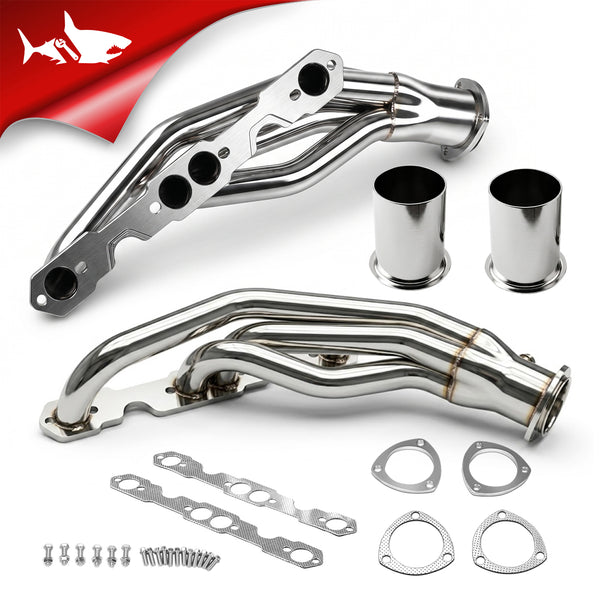
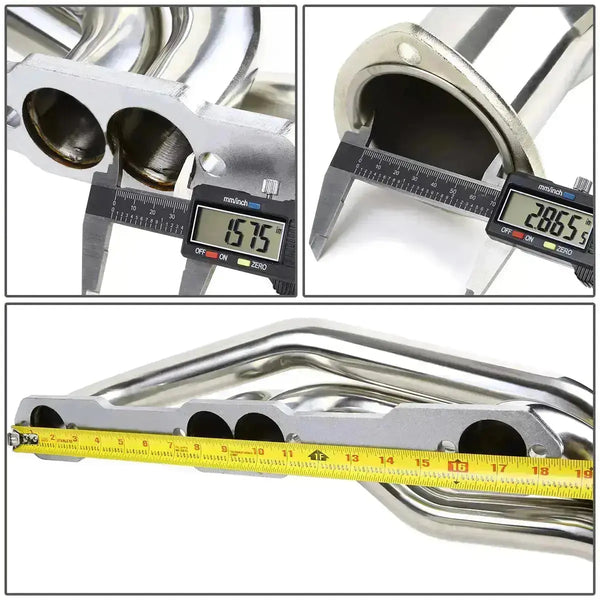
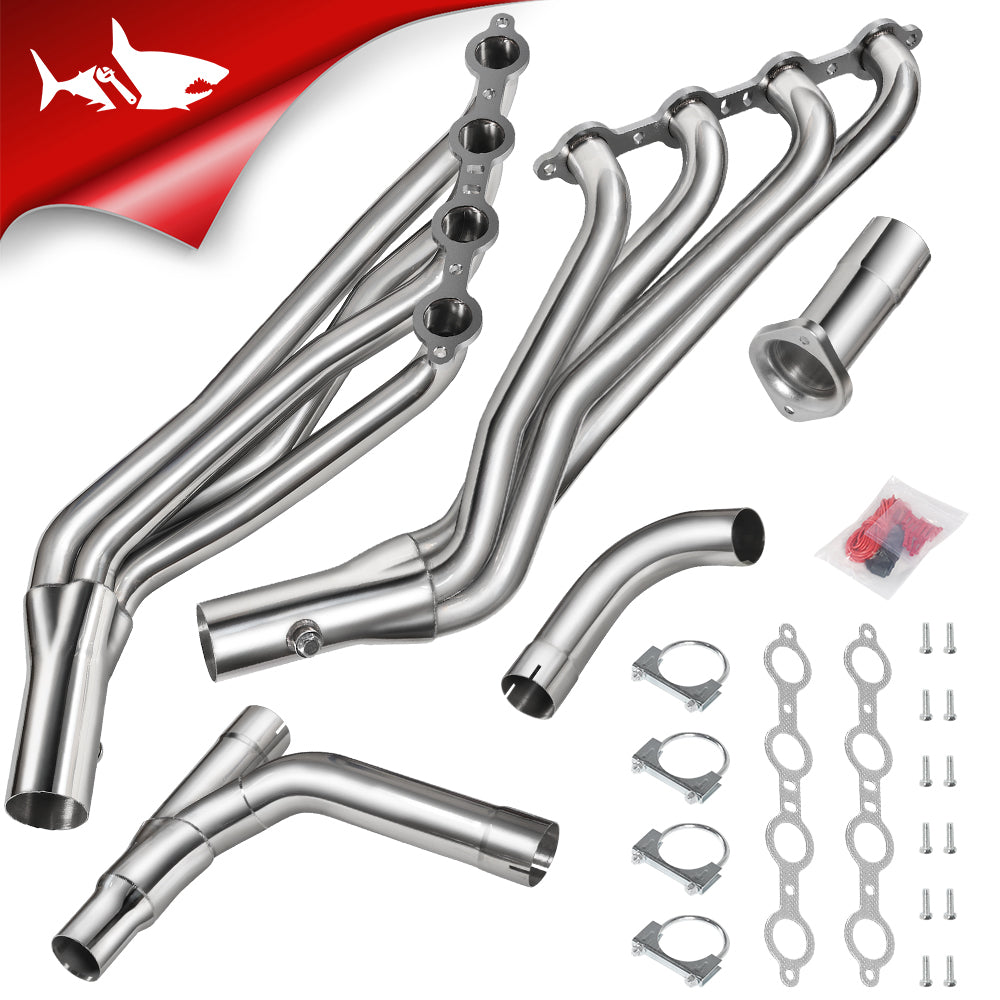
Upgrading to quality 304 stainless long-tube headers and a proper Y-pipe can free up real wheel horsepower, sharpen throttle response, and give the truck a much deeper V8 tone. For GMT800 trucks, the 1999–2006 Chevy/GMC 5.3L long-tube headers and Y-pipe are a common first move before cam or intake work. If you want the detailed dyno-style breakdown, read our guide on how much horsepower headers add to a 5.3L LS engine.
For earlier EGR-equipped GMC applications, Flashark also offers headers for 2000–2001 GMC Yukon and 1999–2001 Sierra 5.3L applications with EGR. Always confirm fitment before ordering, especially if the truck has EGR, 2WD/4WD differences, or swap-chassis clearance issues.
Step 2: Add a Truck Cam, Springs & Pushrods
A performance truck cam is where the 5.3 starts to feel like a completely different engine. Pair it with upgraded springs, hardened pushrods, fresh lifters, and a good tune. For a street truck that still tows, do not get greedy with duration. A cam that sounds nasty at idle but kills low-end torque is not fun when the truck is heavy and geared tall.
Step 3: Upgrade the Intake on Early Gen III Engines
If you have an early LM7, the factory intake manifold can limit top-end airflow. Swapping to a later Gen IV truck intake, often called an NNBS intake, or a Trailblazer SS-style setup with a larger throttle body is a proven budget move. It can improve top-end power without completely murdering the low-end torque these trucks need.
Step 4: Ported Heads or Forced Induction
Once the engine breathes, choose your path. CNC-ported 799 or 243-style heads with the right cam and tuning can push a naturally aspirated build into serious territory. If you go boosted, a stock iron-block 5.3 can make 500–600 hp with moderate boost when the tune, fuel system, ring gap, and cooling are right. Push past that and the margin gets thinner. Rods, pistons, head sealing, and transmission strength start deciding how expensive your weekend becomes.
Shop Case Study: Surviving Boost on a Stock Bottom End
A few years ago, we turbocharged a 180,000-mile LM7. The block and crank were not the scary part. Ring gap was. Factory ring gaps are tight, and under boost the rings heat up, expand, butt together, and break ringlands.
Instead of throwing forged pistons at it right away, we pulled the stock pistons, opened up the ring gap, added ARP head studs, and kept the tune conservative. That stock-bottom-end motor survived 14 psi and made more than 600 wheel horsepower. Not because it was lucky—because the prep work was done before the boost was turned up.
Best Upgrade Path for a Daily-Driven 5.3 Vortec Truck
For a daily truck, I would not start with the biggest cam on the shelf. I would build it in this order:
- Baseline the engine: compression test, leakdown if needed, oil pressure check, vacuum leaks, plugs, wires, coils, fuel pressure, and O2 sensor health.
- Fix known weaknesses: oil pickup tube O-ring, intake gaskets, AFM delete if applicable, cooling system issues, and exhaust leaks.
- Improve airflow: long-tube headers, Y-pipe, and a good exhaust setup.
- Get a proper tune: do not rely on a generic canned tune for a real build.
- Add cam and valvetrain: choose a cam matched to truck weight, gearing, converter, and use case.
- Upgrade fuel and transmission support: especially before boost, E85, or aggressive camshaft setups.
That sequence may sound boring. It also keeps the truck out of the tow yard.
Frequently Asked Questions: 5.3L Vortec Specs, HP & Build Limits
Q: What vehicles come with the 5.3 Vortec engine?
A: The 5.3 Vortec is commonly found in GM trucks and SUVs, including the Chevrolet Silverado, Tahoe, Suburban, Avalanche, GMC Sierra, Yukon, Yukon XL, Cadillac Escalade, Hummer H3 Alpha, and some Colorado/Canyon V8 applications.
Q: What is the horsepower of the 5.3 Vortec engine?
A: Most 5.3 Vortec truck engines make roughly 270–326 horsepower from the factory, depending on year, RPO code, fuel type, and vehicle calibration. Early LM7 engines sit lower, while later Gen IV and flex-fuel applications can sit higher.
Q: How much horsepower does a 2000 5.3 Vortec have?
A: A 2000 5.3 Vortec, typically the LM7, is usually rated around the high-200 hp range depending on application. It is an early Gen III iron-block engine and one of the better budget choices for swaps and turbo builds.
Q: How much horsepower does a 2003 5.3 Vortec have?
A: A 2003 5.3 Vortec is commonly rated around the upper-200 to mid-290 hp range depending on the specific truck or SUV calibration. The exact number depends on RPO code and vehicle platform.
Q: What are the specs of a 2004 5.3 Vortec?
A: A 2004 5.3 Vortec is typically a 5.3L / 323 cubic-inch Gen III small-block with a 3.780-inch bore, 3.622-inch stroke, cathedral-port heads, hydraulic roller lifters, and truck-style intake manifold.
Q: How much horsepower does a 2005 5.3 Vortec have?
A: A 2005 5.3 Vortec commonly makes around 295–310 horsepower depending on the engine version. The 2005 model year is also important because the L33 high-output aluminum 5.3 appears in select applications.
Q: How much horsepower does a 2006 5.3 Vortec have?
A: A 2006 5.3 Vortec is commonly rated around 295–310 hp depending on RPO code and vehicle. If it is an L33 high-output version, it is one of the more desirable factory 5.3 engines.
Q: Is the 5.3 Vortec the same as an LS?
A: In the Gen III and Gen IV truck-engine context, yes, the 5.3 Vortec is LS-based. It shares the basic LS architecture, but truck-specific parts such as intake manifolds, accessory drives, oil pans, reluctor wheels, and electronics can differ.
Q: What size engine is a 5.3 in cubic inches?
A: A 5.3L engine is roughly 323 cubic inches. Some people round it differently in casual conversation, but 323 cubic inches is the clean technical answer.
Q: What are the main differences between Gen III and Gen IV 5.3 Vortec engines?
A: Gen III engines are simpler, usually use a 24x reluctor, and do not have AFM. Gen IV engines often use a 58x reluctor, drive-by-wire throttle, improved electronics, and AFM on many applications. Gen IV can make more factory power, but AFM adds risk when mileage climbs or modifications begin.
Q: What are common issues with the 5.3 Vortec engine?
A: Common issues include AFM lifter failure, oil consumption, intake manifold leaks, vacuum leaks, oil pickup tube O-ring problems, exhaust leaks, and transmission weakness once power is increased.
Q: How reliable is the 5.3 Vortec engine?
A: The 5.3 Vortec is generally very reliable, especially early Gen III iron-block engines. Many go well past 200,000 miles with basic maintenance. Gen IV AFM engines can also last, but they need clean oil, correct service intervals, and often benefit from an AFM delete when performance work is planned.
Q: Can I modify the 5.3 Vortec for more horsepower?
A: Absolutely. The 5.3 responds well to headers, exhaust, intake, tuning, camshaft upgrades, better cylinder heads, and forced induction. A mild bolt-on setup feels noticeably better. A cam-and-header setup can be a night-and-day difference. Boost can double factory output when the supporting parts are right.
Q: How much horsepower can a stock-bottom-end 5.3 Vortec handle?
A: A healthy stock-bottom-end iron-block 5.3 can often survive around 500–600 horsepower with conservative boost, proper ring gap, strong fuel delivery, and a safe tune. Some builds go higher, but the risk climbs quickly. The tune and prep work matter more than internet bragging numbers.
Q: Is the 5.3 Vortec good for towing?
A: Yes. The 5.3 Vortec is well-suited for half-ton towing because it makes useful mid-range torque and came in many GM trucks and SUVs. For towing builds, avoid an oversized cam that kills low-end torque, and pay attention to gearing, cooling, and transmission health.
Final Take: Is the 5.3 Vortec Still Worth Building?
Yes. The 5.3 Vortec is still one of the best bang-for-the-buck V8 platforms you can build. It is not the biggest LS-based engine. It is not the rarest. It is not the one that wins spec-sheet arguments at the bar. But it is cheap, common, durable, and stupidly responsive to the right upgrades.
If you want a reliable daily truck, keep it healthy, add headers, tune it properly, and do not ignore the transmission. If you want a swap engine, grab a clean Gen III LM7 or L33 and plan your oil pan, wiring, and accessory drive before the engine is hanging from the hoist. If you want boost, respect ring gap and fuel delivery. That is where these engines live or die.
The short version from the garage floor: the 5.3 Vortec is not perfect, but it is honest. Build it correctly and it will take a beating.

Steven Chen
Automotive Performance Specialist | Engine & Exhaust Systems
Steven focuses on practical engine performance, exhaust fitment, and real-world upgrade paths for classic and modern enthusiast vehicles. He reviews small-block Ford, LS, truck, and street/strip applications with one goal in mind: helping builders choose parts that actually work together. His philosophy: "Good power starts with the right combination, not the biggest part."
References & Technical Notes
- General Motors service and powertrain data for Gen III, Gen IV, and Gen V small-block V8 engines.
- GM 5.3L L84 Gen V small-block engine specifications, including 355 hp and 383 lb-ft factory output in current truck applications.
- Common GM RPO references for LM7, L59, L33, LMG, LC9, LH6, LH8, LH9, L83, and L84 5.3L engines.
- Flashark fitment and product data for 1999–2006 Chevy/GMC Silverado/Sierra 5.3L long-tube headers and related truck exhaust applications.




3 comments
Miguel Gonzalez
Buen día, que cambios tengo que hacer para montar un motor Vortec 5.3 en una land Cruiser FJ 61
Keith
Looking for a set of headers ,v8 swap 1999 s10 ,with vortec heads aluminum, with angled plugs ,what headers will fit me
BenJohnson
thank you in advance