You walk out to your driveway, fire up your 2004-2008 Nissan Titan, and instead of the smooth VK56DE rumble you expect, you're greeted by it. That rhythmic, persistent tick-tick-tick echoing from the wheel well area, usually loudest on the passenger side. It makes a powerful V8 sound like it's on its last legs.
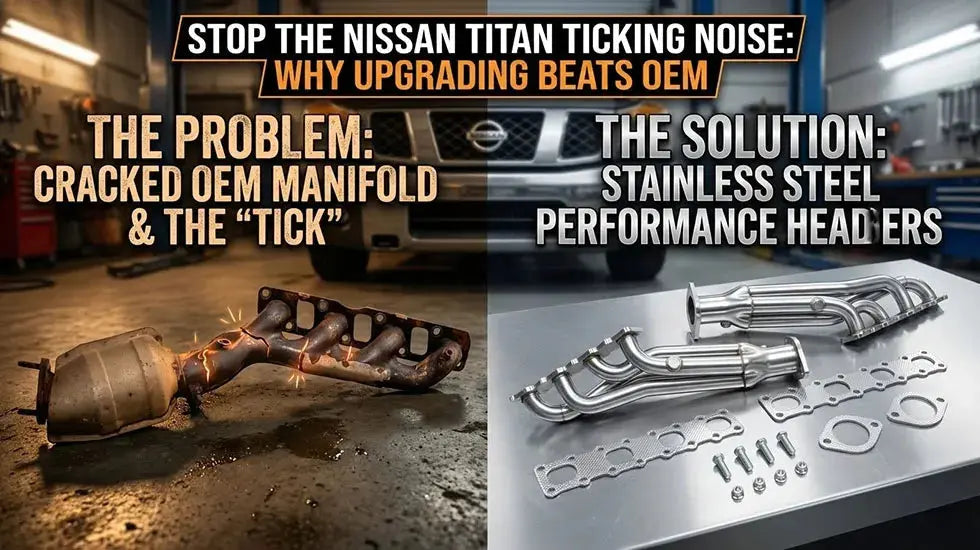
Many owners immediately fear the worst—collapsed lifters or valve train damage. But after 15 years turning wrenches on these trucks and building exhaust systems, I can tell you that nine times out of ten, that specific Titan ticking noise isn't internal engine damage. It’s the infamous Nissan Titan cracked exhaust manifold. It is essentially an engineering defect built into almost every first-generation Titan.
🛠️ The Tech's Perspective: Stop Throwing Parts at It
I've seen too many Titan owners waste hundreds of dollars and entire weekends blindly swapping out fuel injectors, coil packs, or dumping thick additives into their oil based on bad forum advice. Don't do it. Before you buy a single part, pull the passenger side inner fender liner and get a flashlight up under the heat shield near the rear cylinders. You will almost certainly find black soot marks around a stress fracture in the factory welds. That's your leak.

Nissan's original design involved welding heavy catalytic converters directly to thin-walled, restrictive manifolds. Add years of extreme thermal cycling (heating up and cooling down), towing loads, and normal engine vibration, and those factory welds eventually fatigue and fail. The question isn't if it will happen, but when.
The Bottom Line: Quick Diagnosis & Action Plan
If you want the straight answer without the fluff, here is the situation:
- If the tick gets quieter as the engine warms up: You have a manifold crack. The metal expands due to heat, temporarily sealing the fracture. This confirms it's an exhaust leak, not a lifter.
- If you smell exhaust fumes in the cabin: The crack is severe enough that raw exhaust is being pulled into the HVAC intake near the cowl. This is a safety hazard—get it fixed immediately.
- If you're weighing OEM vs Aftermarket: Do not install another factory Nissan manifold. You will pay a premium just to reinstall the exact same design flaw that failed the first time.
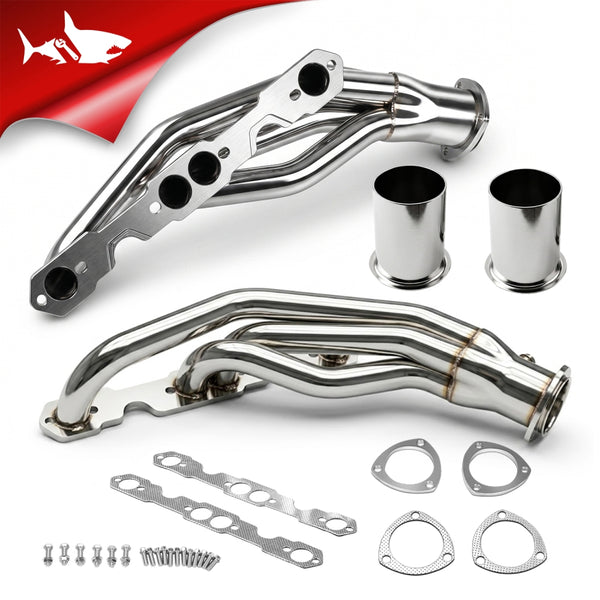
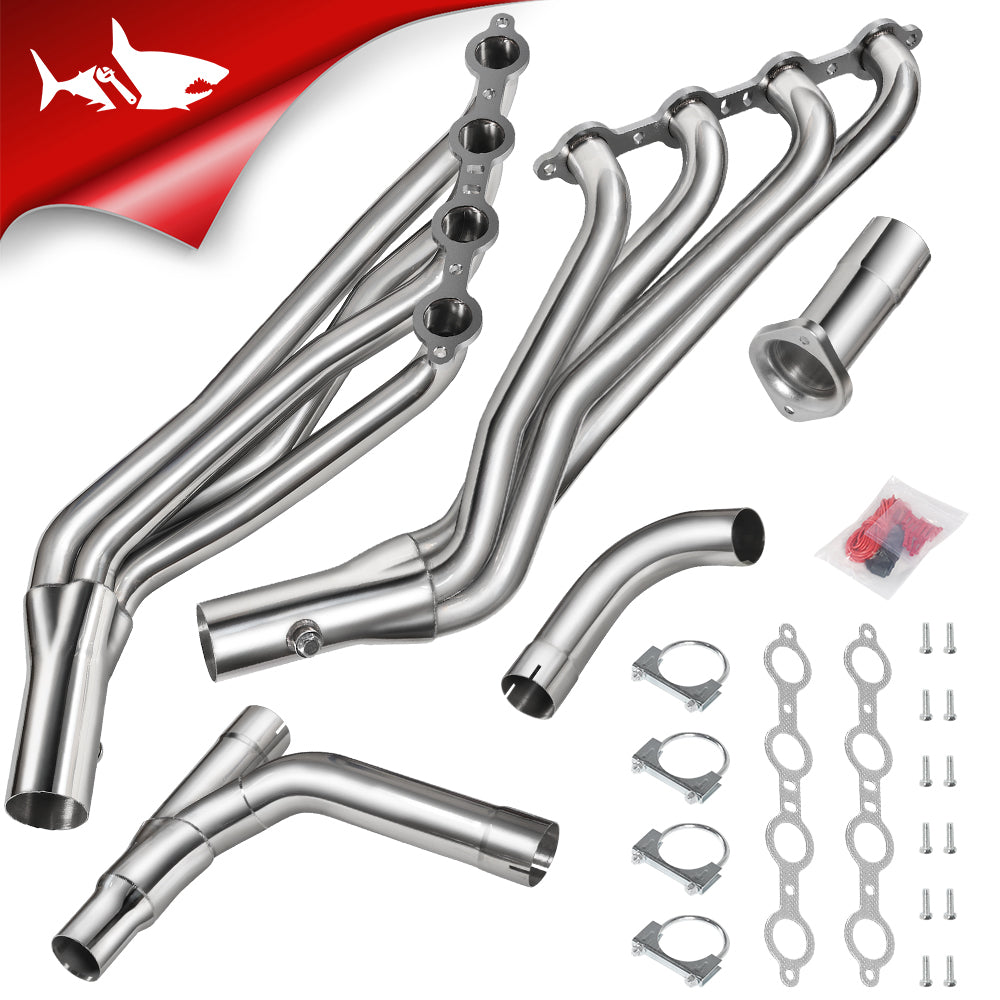
- The Engineered Fix: The only permanent solution is to eliminate the weak point. Ditch the restrictive factory log manifold and upgrade to aftermarket headers with thick flanges and better weld penetration (like these precision-built Nissan Titan exhaust headers from Flashark). You fix the leak forever, lower EGTs, and pick up noticeable throttle response.
Let’s get the truck on the lift and dive into why these fail, how to confirm the diagnosis in your driveway, and why upgrading is the only logical path forward.
Diagnosing the VK56DE Ticking Noise
The internet is full of noise when it comes to engine diagnostics. Many novices hear a tick and immediately assume internal failure, leading them to pour viscous "magic fix" oil additives into the crankcase. As a technician, I highly advise against thickening your oil to mask a sound; it's a waste of money and doesn't address the root cause.
Before you start tearing into the valve covers, use this simple, zero-cost diagnostic method to isolate the issue.
Is it a Cracked Manifold or Engine Lifters?
To an untrained ear, a severe exhaust manifold leak can sound remarkably similar to a collapsed hydraulic lifter. The key differentiator is thermal expansion.
🔧 The "Cold Start" Diagnostic Trick
Leave your Titan parked overnight. The next morning, pop the hood, start the truck ice cold, and listen near the passenger side wheel well. Hear that loud, aggressive ticking? Now, let it idle for about 10 to 15 minutes until the temperature gauge hits dead center. If the ticking suddenly gets noticeably quieter or completely disappears, you 100% have a nissan titan cracked exhaust manifold. As the cheap factory steel heats up, it expands, temporarily pinching that hairline fracture shut. A bad lifter, on the other hand, will keep tapping consistently whether the engine is freezing cold or blazing hot.
Why Do 5.6L VK56DE Manifolds Crack?
If you're wondering why this happens to otherwise robust trucks, the answer is a structural engineering oversight in the 2004-2008 design.
I’ve pulled countless systems apart. The failure almost always occurs on the passenger side, usually right at the flange where the rear cylinder (Cylinder 8) primary meets the collector. Nissan designed the system with a heavy catalytic converter hanging directly off a relatively thin-walled manifold.
Under load—especially when towing—exhaust gas temperatures can exceed 1,200°F. This causes rapid thermal expansion. When you park, it cools and contracts. This cycle, combined with the sheer weight of the converter hanging off that hot metal and normal engine vibration, creates immense stress fatigue. The factory welds simply give up over time. It's a physical limitation of the OEM materials.
The Crossroads: OEM Replacement vs. Aftermarket Headers
Once the diagnosis is confirmed, you have a choice. Many owners take it to the dealership and get hit with a quote upwards of $2,000. The tragedy is that this money goes toward installing the exact same part that just failed. You are replacing a flawed design with another flawed design, and it will likely crack again in another 50k miles.
From an engineering and modification standpoint, this is the wrong approach. If a part fails due to design, you don't replace it; you upgrade it.
The Reality of OEM Replacements
Here is the brutal truth about buying an OEM Nissan replacement manifold: they never updated the design. You are paying top dollar for a thin-walled, restrictive piece of stamped steel with a heavy catalytic converter hanging off it like a pendulum.
I had a customer, Dave, who did exactly this back in 2021. He paid a shop over $2,000 to slap on brand new factory passenger and driver side manifolds. Fast forward to last winter? He brought the truck to my garage, furious, because the passenger side was ticking loudly again. The factory weld tore in the exact same spot. It’s a vicious cycle of heat cycling and poor engineering.

Why Performance Headers are the Ultimate Fix
To permanently stop the ticking, you need to address the root causes: poor material quality and heat stress.
Performance exhaust headers solve this. They replace the cramped, cast log-style manifold with individual primary tubes. This design separates the heavy catalytic converter from the immediate exhaust ports and uses better materials designed for high-heat applications. Furthermore, individual tubes create a scavenging effect—helping pull exhaust pulses out of the cylinder head—which allows the engine to breathe more efficiently than the restrictive stock setup.
Choosing the Right Upgrade: The Flashark Option
The aftermarket is flooded with options, ranging from cheap eBay headers with warped flanges that never seal right, to expensive long-tube race headers that require custom tuning and fabrication. For a daily driven truck or tow rig, you want a direct bolt-on upgrade that balances durability and performance.
When modifying these trucks, I look for specific build features that address the OEM weaknesses. Flashark headers are a solid choice here because they utilize thick, CNC-machined flanges (usually 3/8") which are crucial for preventing warping under heat—the primary cause of repeated gasket failures. They also use TIG-welded stainless steel tubing, which offers superior structural integrity compared to the factory MIG welds.

| Feature / Spec | Factory OEM Manifold | Flashark Performance Headers |
|---|---|---|
| Material & Build | Thin stamped steel / Cast mixture | Stainless Steel tubing, TIG Welded |
| Flange Design | Thinner, prone to heat warping | 3/8" Thick CNC Machined Flanges |
| Performance Impact | Restrictive log design | Improved throttle response & mid-range torque |
| Exhaust Note | Stock, often accompanied by ticking | Slightly deeper tone (No highway drone) |
| Longevity Solution | Temporary fix (will likely crack again) | Permanent engineered solution |
If you are going through the labor-intensive process of unbolting the exhaust system on a Titan, do not put the factory junk back on. Installing proper shorty headers drastically lowers exhaust backpressure. While massive dyno gains usually require a full exhaust and tune, you will absolutely feel crisper throttle response off the line and better pull in the mid-range when towing.
Direct bolt-on fitment for 2004-2008 Nissan Titan 5.6L V8.
Tech Tips: Reality of the Installation
I won't sugarcoat it—installing headers on a 1st Gen Titan is a tough job due to tight clearances, particularly near the passenger side frame rail. If you are tackling this DIY, you need the right mindset and preparation.
⚠️ Critical Warning: The Broken Stud Risk
The factory exhaust studs have been heat-cycled at extreme temperatures for over a decade. They are extremely brittle. If you just grab a breaker bar and pull, you are almost guaranteed to snap a stud flush inside the aluminum cylinder head. Drilling out a hardened steel bolt in that tight space is a miserable experience that turns an 8-hour job into a multi-day ordeal. Patience and chemical assistance are mandatory.
Here is my standard workflow for this job in the shop to minimize disaster:
- Chemical Soak is Non-Negotiable: At least 24 hours before turning a wrench, soak every manifold nut you can reach with a high-quality penetrating oil like Kroil or PB Blaster. Re-apply several times.
- Create Access: Don't fight the truck. Put the front end on jack stands, remove the front wheels, and pull the plastic inner fender liners entirely. This gives you the best possible line of sight to the exhaust ports.
- Heat is Your Friend: If a nut feels seized, do not force it. Use a MAP gas or induction heater on the nut (try to avoid overheating the stud itself) to break the rust bond.
- Use Quality Gaskets: Throw away cheap composite gaskets. For the VK56DE, always use premium Multi-Layer Steel (MLS) gaskets. They handle heat expansion much better and rarely blow out if torqued correctly.
Conclusion: Fix It Right, Fix It Once
Tolerating that embarrassing ticking noise or inhaling exhaust fumes isn't necessary. You aren't dealing with catastrophic engine failure; you are dealing with a well-documented factory flaw in the exhaust system.
When weighing an OEM replacement versus aftermarket headers, the choice is clear from a mechanical standpoint. Paying premium prices to bolt on the exact same rust-prone design is a bad investment. By stepping up to precision-built, thick-flange aftermarket headers, you permanently cure the cracking issue, reduce engine bay heat, and restore the performance of your V8.
Frequently Asked Questions About Titan Exhaust Leaks
Q1: Is it safe to drive with a cracked exhaust manifold?
A1: Short-term, yes, but it's not recommended long-term. An exhaust leak introduces fresh oxygen into the exhaust stream upstream of the O2 sensor. The truck reads this as a "lean" condition and dumps excess fuel to compensate. Over time, running rich can clog catalytic converters and even damage exhaust valves.
Q2: What is the typical dealership cost for this repair?
A2: Dealership quotes for 2004-2008 Titans generally range from $1,500 to $2,500, depending on labor rates and if studs break. This high cost for standard OEM parts is why most enthusiasts opt for aftermarket upgrades at independent shops or DIY.
Q3: Will installing shorty headers make my truck obnoxious/loud?
A3: No. Assuming you keep your factory resonators and muffler intact, "shorty" headers like the Flashark units only add a slightly deeper, more aggressive tone under heavy acceleration. They are generally drone-free at highway cruising speeds.
Q4: Will aftermarket headers void my warranty?
A4: On a 2004-2008 Titan, factory warranties have long expired. For general knowledge, in the US, the Magnuson-Moss Warranty Act protects consumers; a dealer must prove an aftermarket part caused a specific failure to deny a warranty claim on that failure.
Q5: How do I definitively tell the difference between a tick and a knock?
A5: An exhaust leak tick is usually sharper and, crucially, gets quieter as the engine heats up due to metal expansion sealing the leak. An internal engine knock (rod knock) is deeper, louder lower in the engine, and generally gets worse or changes pitch with RPM, regardless of temperature.
Q6: Do I need a custom ECU tune for shorty headers?
A6: No, it is not mandatory for direct-replacement shorty headers. The factory ECU can adjust fuel trims sufficiently to run safely. However, a custom tune is highly recommended to maximize performance and fully realize the horsepower gains from the improved flow.
Q7: Why am I smelling exhaust inside the cab?
A7: The passenger-side manifold crack often occurs near the rear cylinders, right next to the firewall. Your truck's fresh air intake for the A/C and heat sits at the base of the windshield (the cowl). It easily sucks these fumes in and blows them into the interior. This is a significant health issue and should be fixed immediately.
Q8: Will a cracked manifold hurt my MPG?
A8: Yes. Because the leak tricks the O2 sensors into thinking the engine is running lean, the computer commands more fuel injection. You will likely notice a drop of 1-3 MPG depending on the severity of the crack.
Q9: Shorty headers vs. Long Tube headers for a Titan?
A9: For 95% of Titan owners using their truck for daily driving and towing, shorty headers are the better choice. They are direct bolt-ons and maintain emissions compliance in most jurisdictions. Long tube headers offer more peak high-RPM horsepower for racing applications but usually require custom exhaust fabrication and deleting catalytic converters, making them illegal for street use.
Q10: What is the realistic install time for headers on a 5.6L Titan?
A10: This is labor-intensive. For an experienced mechanic with a lift and air tools, budget 6-8 hours, assuming no major stud breakage. For a DIYer on jack stands, plan for a full weekend and take your time with bolt preparation.