I’ve spent the last 15 years knuckle-deep in the engine bays of 4th Gen RAMs, drilling out snapped bolts and smelling burnt PB Blaster. If there’s one sound that haunts my sleep, it’s that metallic tapping on a cold start. The infamous "Hemi Tick."
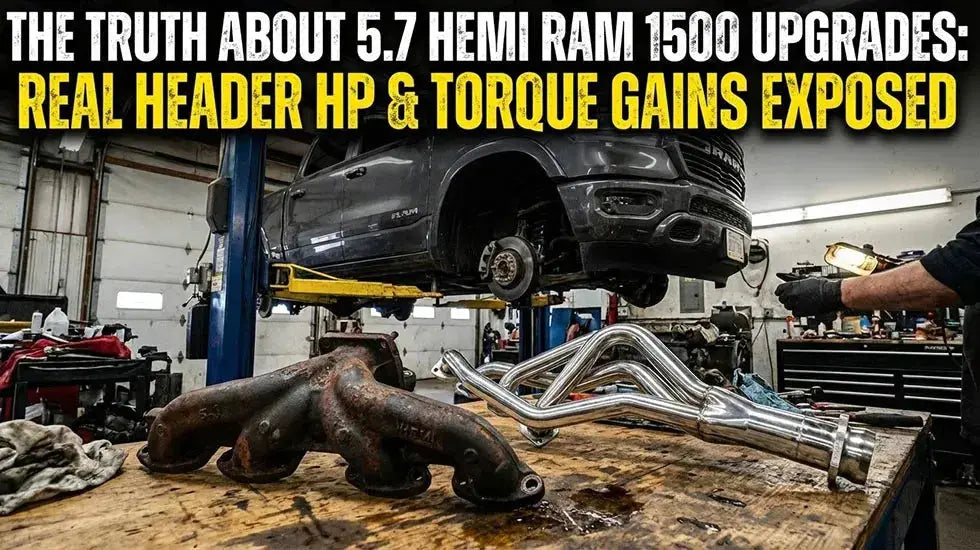
Dealerships will try to sell you a $4,000 lifter job. But nine times out of ten? It’s your passenger-side factory exhaust manifold. The cheap cast iron gets blazing hot, warps like a potato chip, and shears the rear bolts right off the aluminum cylinder head.
Replacing a warped factory log with another factory log is a fool's errand. You're just resetting the timer until it fails again. You need aftermarket headers. But the second you hit the forums asking, "how much hp do headers add to a 5.7 hemi?", you get blasted with dyno-sheet fairy tales. Guys claiming 50 horsepower from a bolt-on. Guys claiming their truck suddenly lost all its bottom-end grunt.
I’m putting my shop reputation on the line today. No marketing BS. We’re going to break down the realistic 5.7 HEMI headers horsepower increase you can actually expect on the dyno, what it does to your drivability, and how to avoid a $2,000 machine shop bill when doing the install.
Quick Takeaways: The Reality of 5.7 HEMI Header Upgrades
Before we get our hands dirty with the technicals, here is exactly what you need to know about the power gains:
- Shorty Headers: Expect a realistic 10 to 15 wheel horsepower (WHP) increase. Depending on your setup, they significantly boost mid-range and low-end torque. Ideal for daily drivers, towing scenarios, and fixing the Hemi Tick without throwing check engine lights. (No custom tune strictly required, though always beneficial).
- Long Tube Headers: Expect to see 25 to 35+ WHP gains. They dominate the high RPM range but shift your powerband higher. You absolutely must get a custom tune to manage air/fuel ratios and prevent low-end torque loss.
- The Bottom Line: If you tow heavy or just want a reliable daily, go shorty. If you are building a street truck or plan on doing a cam swap later, go long tube.
Stop Choking Your Engine: The Scavenging Effect

Before we talk numbers, you need to understand why the factory setup is hot garbage. Dodge accountants designed those cast-iron manifolds, not their performance engineers. They dump exhaust gases from four cylinders into one blocky, restrictive chamber. The exhaust pulses violently crash into each other, creating massive backpressure. Imagine trying to sprint a 400-meter dash while breathing through a cocktail straw.
Tubular headers fix this using exhaust scavenging. Each cylinder gets its own primary tube. As a high-velocity pulse of exhaust gas flies down the pipe, it creates a vacuum right behind it. That vacuum literally sucks the exhaust out of the next firing cylinder. The engine stops wasting energy pushing dead air out the tailpipe. That is exactly why adding headers to a 5.7 HEMI increases torque—you're freeing up rotational force at the crankshaft that was previously being choked out.
Shorty Headers for the 5.7 HEMI: HP Gains & The Bolt-On Reality
Most truck guys coming into my shop want a reliable fix for the Hemi Tick that gives the truck a little more punch without requiring a complete drivetrain overhaul. Enter the shorty header.
Realistic Horsepower Increase
Let's talk real-world shorty headers 5.7 hemi hp gains. On a stock RAM 1500, a quality set of shorties will put an extra 10 to 15 wheel horsepower (WHP) to the ground. Period. Don't let a catalog tell you otherwise.
The Low-End Torque Magic
But horsepower isn't the point here. You drive a 5,000-pound brick, not a Hellcat. The magic of shorties happens between 2,000 and 4,000 RPM. They drastically smooth out the flow right at the head, gifting you an extra 15-20 lb-ft of torque right in the middle of your daily driving rev range. When you're towing a camper up a steep grade or trying to pass a semi on the highway, that mid-range grunt makes the truck feel half a ton lighter.
⚠️ From the Shop Floor: Don't Be a Hero
I see rookies watch a 5-minute YouTube video, grab a breaker bar, and immediately snap a rusted bolt flush with the block. Listen to me: soak those factory studs in PB Blaster or Kroil for two days before you touch a wrench to them. Hit the flange with a torch. Heat cycles are your friend. If you snap a bolt and don't know how to weld a nut to the broken stud to extract it, you're paying me (or someone like me) a lot of money to pull your engine block.

5.7 HEMI Long Tube Headers: HP Gains & Unleashing the True Beast
Now, if you want to hurt feelings at the stoplight, we need to talk about long tube headers. When guys stand by the lift and ask about max power, they are usually looking for the big numbers that only a long-tube setup can deliver.
Maximize Peak Horsepower & High RPM Pull
Because the primary tubes are significantly longer, the scavenging effect I mentioned earlier is optimized for higher engine speeds. On the dyno, the typical 5.7 HEMI long tube headers HP gain usually sits around 25 to 35 WHP, sometimes pushing past 40 WHP if you pair it with a good cold air intake and a ported throttle body. Once the tachometer swings past 4,000 RPM, the truck just screams.
The "Custom Tune" Requirement
Here is the catch that a lot of forum experts conveniently forget to mention. Long tubes move your O2 sensors further downstream. This messes with the factory computer's readings, causing it to run rich or lean, throwing Check Engine Lights (CEL), and completely gutting your low-end torque.
I remember back in '18, a guy brought his 2014 RAM 1500 into the shop. He was complaining about dead low-end torque—said the truck couldn't pull a greasy string out of a dog's ass off the line. We put it on the lift and saw he’d slapped on some no-name, oversized long tubes he found on eBay. Complete overkill pipe diameter. It totally killed the exhaust velocity. We ripped that junk out, bolted up a properly sized 5.7 HEMI RAM 1500 long tube header setup from Flashark, and flashed a proper custom tune. The throttle response and low-end grunt came right back, and the high-end pull was violent.
The Verdict: Shorty vs. Long Tube for Your RAM 1500
Deciding between the two comes down to how you actually use the truck. Don't buy parts for a race car if you only use it to tow a boat.

| Feature | Shorty Headers | Long Tube Headers |
|---|---|---|
| HP Gains | 10 - 15 WHP | 25 - 35+ WHP |
| Torque Focus | Low to Mid-Range (2k-4k RPM) | Mid to High-Range (4k+ RPM) |
| Installation | Direct Bolt-On (Easier) | Complex (May require Y-pipe mods) |
| Tuning Required? | No (But recommended) | Yes. Absolutely. |
| Best For... | Daily driving, Towing, Fixing Hemi Tick | Street builds, Cam swaps, Max power |
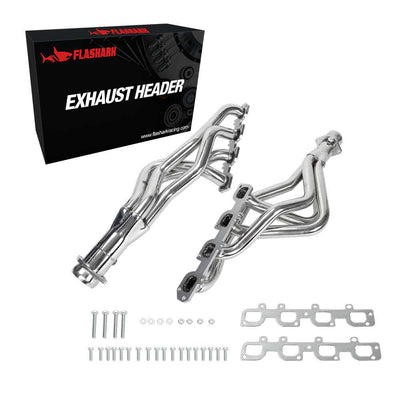
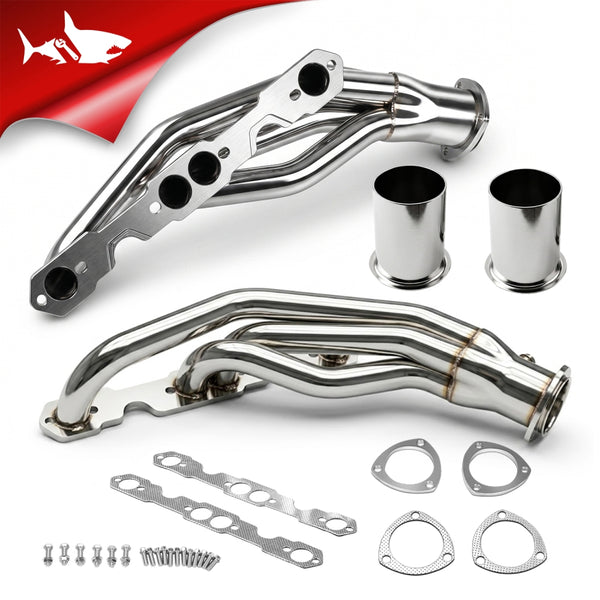
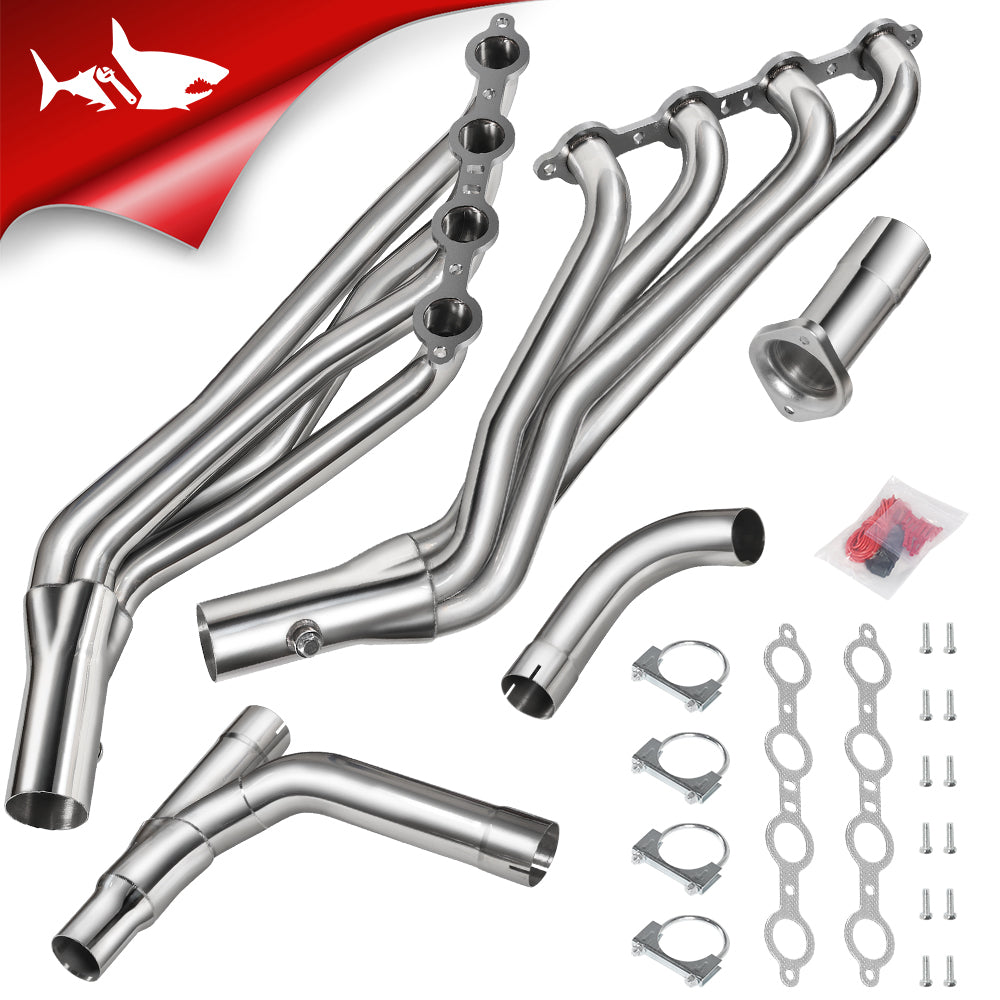
Short & Long Tube Headers for 09-18 Dodge RAM 1500 Hemi 5.7L
- Fix the "Hemi Tick": Heavy-duty 201 stainless steel resists heat warping permanently.
- Power Gains: Unlock +15-30 HP and instantly improve throttle response.
- Direct Fit: Includes extra-thick gaskets and all mounting hardware.
Frequently Asked Questions (FAQ)
Q1: How much HP do headers add to a 5.7 Hemi Ram 1500?
A1: It depends heavily on the type of header. Shorty headers will generally add between 10 to 15 wheel horsepower. Long tube headers, when paired with the required custom ECU tune, will add between 25 and 35 wheel horsepower, sometimes more if you have other intake modifications.
Q2: Do shorty headers increase horsepower on a 5.7 Hemi?
A2: Yes, they do. While the peak gains aren't as aggressive as long tubes, you can consistently expect a 10-15 WHP increase. More importantly, they smooth out the exhaust flow, drastically improving throttle response.
Q3: Does adding headers to a 5.7 Hemi increase torque?
A3: Absolutely. Shorty headers excel at increasing low-end to mid-range torque (2,000 - 4,000 RPM). Long tube headers also increase torque, but they shift the powerband higher, making the engine pull much harder above 4,000 RPM.
Q4: Are long tube headers worth it for a daily driven Ram 1500?
A4: For a strict daily driver that rarely sees wide-open throttle, long tubes might be overkill. They require a custom tune, can be exceptionally loud, and shift torque away from the low-end where daily drivers need it most. Shorties are usually the smarter daily choice.
Q5: Do I need a custom tune after installing headers on a 5.7 Hemi?
A5: If you install shorty headers, your factory computer can usually adapt, so a tune isn't mandatory (though it helps). If you install long tube headers, a custom tune is 100% mandatory. Without it, the engine will run poorly, lose torque, and throw Check Engine Lights.
Q6: Shorty vs. long tube headers for towing: which is better?
A6: Shorty headers are vastly superior for towing. When you are pulling a heavy load, you need grunt right off idle and in the mid-range. Shorties provide this low-end torque boost, whereas long tubes require you to rev the engine out to feel the power.
Q7: Will installing aftermarket headers fix the infamous Hemi tick permanently?
A7: If the tick is caused by warped factory manifolds and broken bolts (which is the most common cause), then yes. Upgrading to high-quality aftermarket headers with thick, machined flanges and premium gaskets will prevent the warping from happening again.
Q8: How long does it take a mechanic to install headers on a Ram 1500 5.7?
A8: In a professional shop with a lift, expect to pay for 6 to 8 hours of labor. If broken bolts need to be extracted from the cylinder head—which happens frequently on older trucks—add another 2 to 4 hours to that estimate.
Q9: Can you install headers on a 5.7 Hemi without pulling the engine?
A9: Yes, you do not have to pull the engine. However, it is a tight squeeze. You will typically need to remove the inner fender liners and potentially loosen the engine mounts to lift one side of the block slightly for clearance.
Q10: Do headers make a 5.7 Hemi significantly louder?
A10: Yes. Shorty headers will give the exhaust a deeper, more refined V8 rumble without being obnoxious. Long tube headers, especially if you remove the catalytic converters (for off-road use), will make the truck violently loud and aggressive under acceleration.