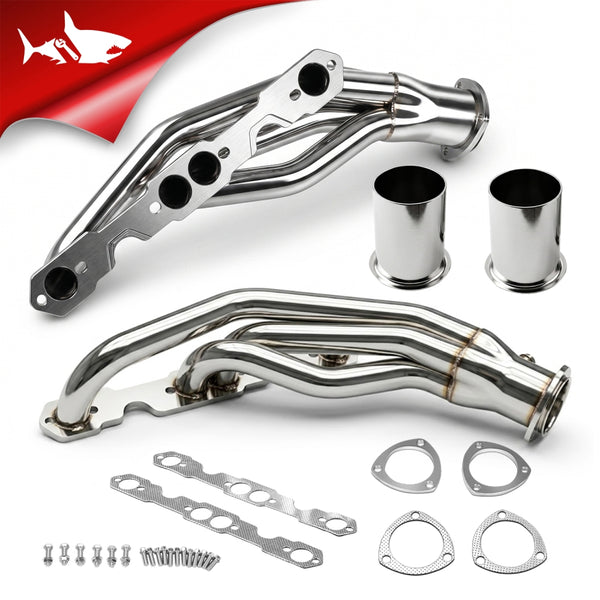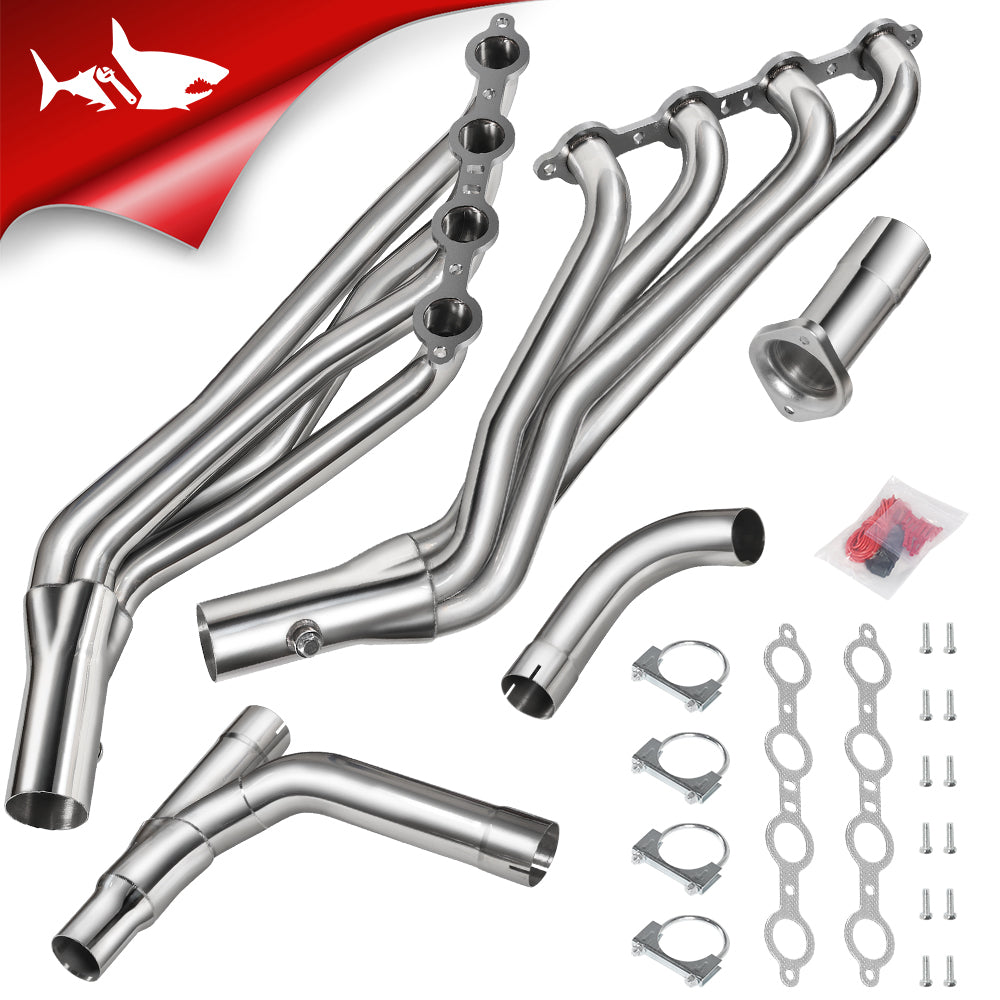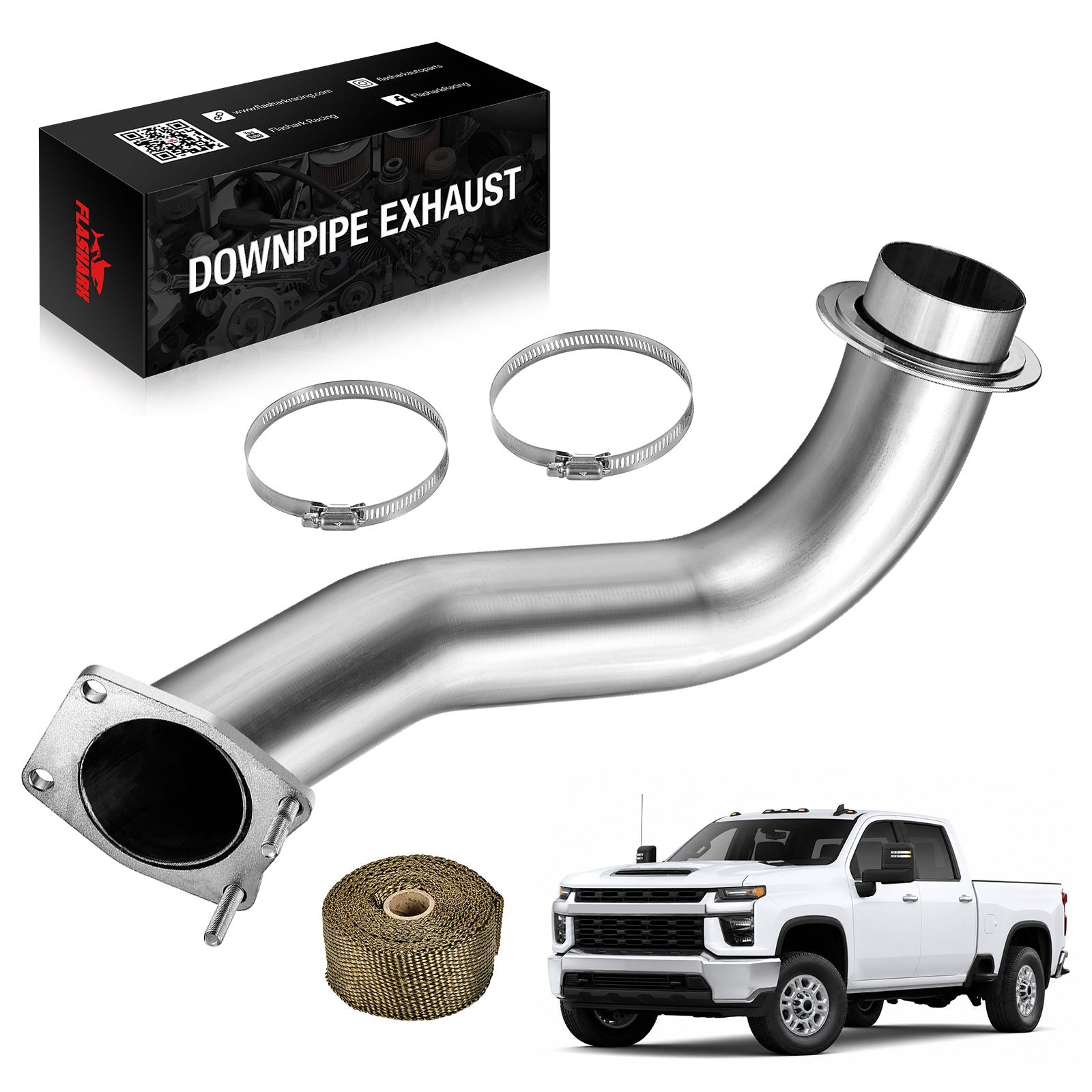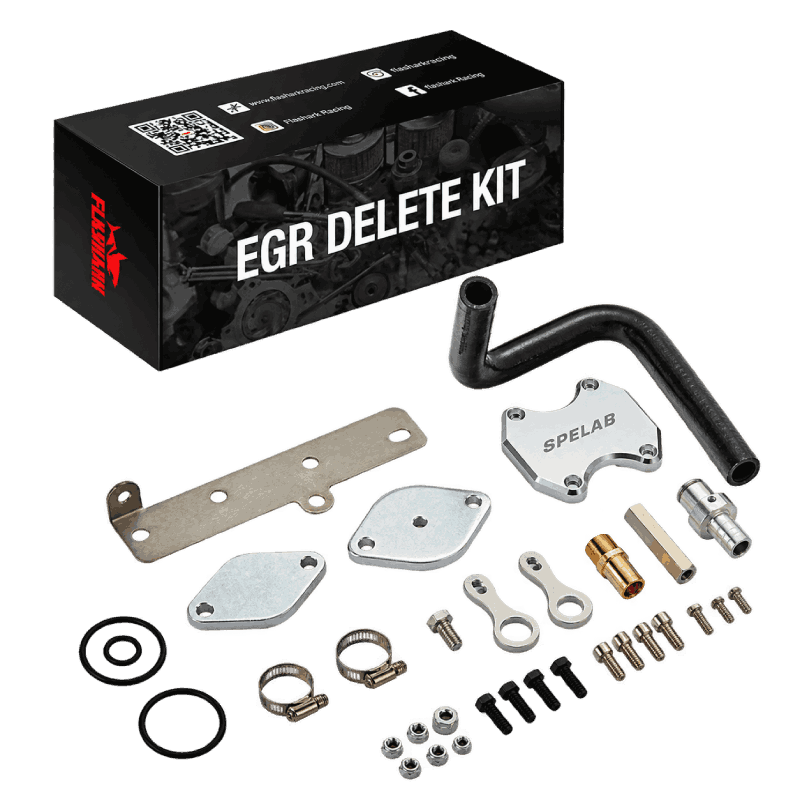
An EBPV delete can remove a restriction from the turbine outlet and eliminate several failure-prone parts around the turbo pedestal. That does not mean every 7.3L Power Stroke needs one. The right choice depends on whether the valve still works correctly, whether the actuator or pedestal is leaking oil, how the truck is used in cold weather, and which repair or replacement parts fit its specific configuration.
The exhaust back pressure valve is part of the factory warm-up system. During a cold start, it can partially restrict exhaust flow to simulate engine load and help the engine reach operating temperature sooner. Once the required operating conditions are reached, a functioning valve should return to its open position. That difference matters: deleting a working EBPV is not the same decision as addressing a valve that sticks, fails to open, or leaks through the actuator system.
- The EBPV is a butterfly valve located at the turbine outlet of the turbocharger on applicable 7.3L Power Stroke configurations.
- Its actuator and control solenoid are associated with the turbo pedestal and use engine-oil pressure to move the valve.
- A working EBPV helps with cold-engine warm-up and should open when its warm-up function is no longer required.
- Deleting the system can remove the valve from the exhaust path and may eliminate actuator or pedestal-related leak points, depending on the parts used.
- The change does not guarantee additional horsepower, better fuel economy, a warning-light-free result, or a specific turbo response.
- Cold-weather operation, local emissions rules, vehicle configuration, existing faults, and the selected delete method should be considered before making the change.
What Does the EBPV Do on a 7.3L Power Stroke?
EBPV stands for exhaust back pressure valve. Some owners shorten the name to “EBP valve,” although the valve should not be confused with the exhaust back pressure sensor. These components participate in the same broader control strategy, but they are not interchangeable parts.
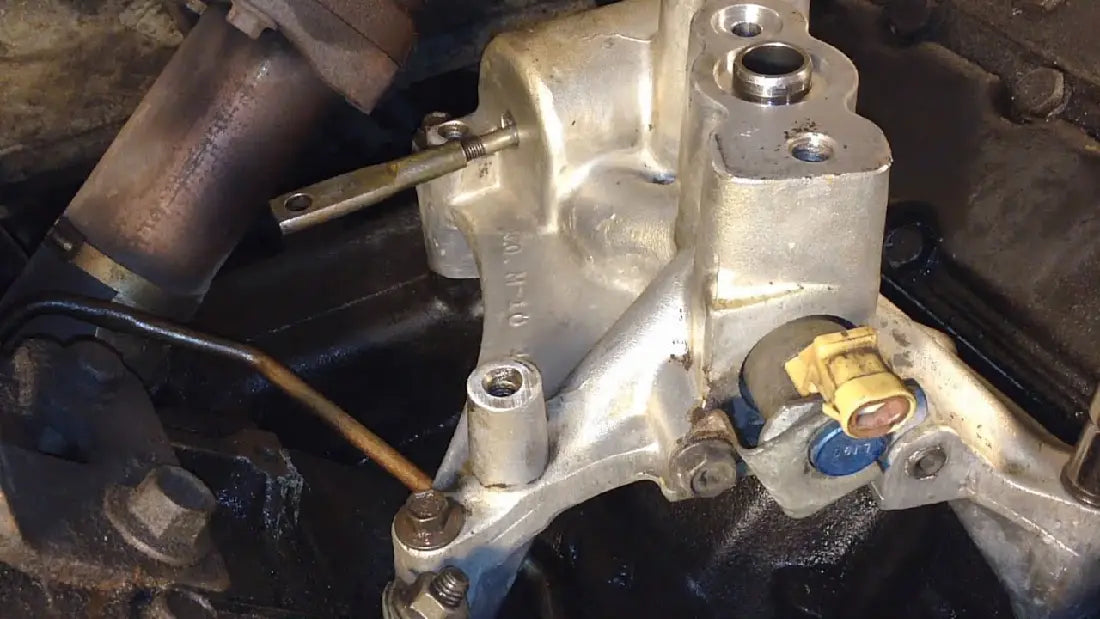
The valve itself is a butterfly-style assembly positioned at the outlet of the turbocharger turbine housing. A linkage connects it to an oil-operated actuator in the turbo pedestal. A solenoid or regulator controls oil flow to that actuator. Under the conditions programmed into the truck’s control system, the valve can move toward a restricted position during warm-up and return to an open position afterward.
This arrangement gives the engine an artificial load when it is cold. A diesel produces relatively little waste heat at idle, so restricting the exhaust during the warm-up period can help raise operating temperature sooner. The trade-off is additional mechanical complexity around an already crowded turbocharger installation.

Where Is the EBPV on a 7.3 Power Stroke?
The EBPV is not a valve located somewhere farther down the exhaust pipe. On applicable 7.3L Power Stroke turbo systems, the butterfly valve is mounted at the turbine outlet, where exhaust leaves the turbocharger before entering the downpipe.
The related actuator and regulator are associated with the turbo pedestal. This is why an EBPV repair or delete can involve more work than the phrase “remove the valve” suggests. Access may require moving or removing intake plumbing, separating the downpipe connection, releasing the actuator linkage, and working with fasteners at the rear of the engine.
Early and late 7.3L Power Stroke arrangements can look similar while using different pedestal, linkage, connector, and removal details. Two similar-looking parts are not automatically interchangeable. Match the replacement outlet, pedestal, seals, electrical arrangement, and hardware to the truck before disassembly.
7.3 EBPV Delete Pros and Cons
| Consideration | Keeping or repairing the EBPV | Deleting the EBPV |
|---|---|---|
| Cold-engine warm-up | Retains the factory warm-up function when the system operates correctly. | Removes that warm-up function, which may be more noticeable in cold climates or during extended idling. |
| Exhaust path | Leaves the butterfly assembly in the turbine outlet, even when the valve is open. | A complete delete can remove the butterfly assembly from the exhaust path. |
| Oil-leak points | The actuator, regulator, seals, and pedestal remain in service and can be repaired when necessary. | A non-EBPV pedestal can eliminate actuator-related components; deleting only the outlet valve may leave pedestal leak points in place. |
| Electronic behavior | Retains the original control arrangement when all parts and wiring are functional. | Results depend on the deletion method, electrical connection, calibration, and condition of related sensors and wiring. |
| Repair scope | May involve rebuilding the actuator and replacing seals while retaining the factory function. | May involve an outlet change, pedestal change, or modification of existing parts, depending on the chosen approach. |
| Road-use considerations | Preserves the original emissions-related configuration. | Local emissions, inspection, registration, and road-use requirements must be reviewed before modification. |
When an EBPV Delete May Be Worth Considering
A sticking or restricted valve
A valve that does not return fully to its open position can create a restriction after the engine is warm. Possible symptoms can overlap with other turbo and exhaust problems, so valve position and linkage movement should be checked before parts are replaced. Exhaust leaks before the turbo, damaged up-pipes, sensor faults, or a turbocharger problem can produce some of the same complaints.
Oil leakage around the turbo pedestal
The actuator and regulator rely on engine oil. Hardened seals or worn components can allow oil to collect in the engine valley or appear around the rear of the turbocharger. A complete non-EBPV pedestal removes more of this mechanism than a valve-only modification. If the factory pedestal remains, its actuator bore, solenoid, and seals can still be potential leak points.
A turbocharger service already requires disassembly
When the turbocharger is already being removed for another supported repair, access to the pedestal and turbine outlet is less of a separate burden. That can be a practical time to compare rebuilding the factory system with installing properly matched non-EBPV components.
A vehicle built for a specific non-road application
Some owners prioritize mechanical simplicity or a particular turbo and exhaust arrangement. The complete combination still matters. Match the pedestal, turbine outlet, downpipe connection, linkage or block-off method, seals, wiring strategy, and calibration to the vehicle and its permitted use.
When Keeping or Repairing the EBPV Makes More Sense
Deleting the system is not automatically the better repair. Retaining it may be the more appropriate choice when:
- The valve opens correctly after warm-up and the system is not leaking.
- The truck is regularly used in cold weather and quicker warm-up is valuable.
- The owner wants to preserve the original engine and emissions configuration.
- The fault is limited to serviceable seals, linkage, or actuator components.
- Inspection or road-use requirements make removal unsuitable.
- The replacement parts have not been matched to the turbocharger and pedestal configuration.
A rebuild can retain the factory warm-up function while addressing an oil leak or worn actuator parts. That option deserves consideration before a working system is removed solely on the assumption that every factory valve causes a major performance loss.

Will an EBPV Delete Add Power or Reduce Turbo Lag?
Removing the butterfly assembly eliminates one physical object from the turbine-outlet path. The practical effect depends on how restrictive the original assembly is in its open position and whether it was working correctly in the first place.
A stuck or partially closed valve can create a meaningful restriction. Correcting that condition may restore response that the truck had lost. A healthy valve already stored in its open position presents a different starting point, so the change may be less dramatic.
Turbo response is also influenced by exhaust leaks before the turbine, up-pipe condition, turbine and compressor sizing, exhaust housing design, downpipe restriction, injector and fuel-system condition, engine load, elevation, and calibration. Removing the EBPV does not override those variables.
No fixed horsepower or torque result should be expected without a controlled before-and-after test on the same truck. Sound, throttle feel, and measured power are different outcomes and should not be treated as interchangeable evidence.
Can an EBPV Delete Improve Fuel Economy?
Reducing an unnecessary exhaust restriction can reduce pumping work under some operating conditions. That engineering relationship does not provide a guaranteed MPG improvement. A correctly functioning EBPV should be open after warm-up, and fuel consumption is heavily affected by vehicle speed, axle ratio, tire size, trailer weight, idle time, terrain, weather, engine condition, calibration, and driving behavior.
If the original valve was sticking, repairing or removing the restriction may improve how the truck operates. If the valve was already functioning normally, the fuel-economy difference may be small or difficult to separate from ordinary tank-to-tank variation.
Common 7.3L Power Stroke Applications and Fitment Checks
The 7.3L Power Stroke appeared in several Ford truck and van platforms, and the hardware is not identical across every application. Use the vehicle build information and the installed turbo components—not engine displacement alone—to select parts.
| Application group | Common 7.3L Power Stroke use | What to check |
|---|---|---|
| OBS F-Series | Selected 1994.5–1997 F-250, F-350, and related heavy-duty applications | Turbo model, pedestal design, outlet housing, actuator linkage, downpipe connection, and production date |
| Super Duty | Selected 1999–2003 F-250, F-350, F-450, and F-550 applications | Early-versus-late 1999 hardware, pedestal and regulator design, turbo outlet, connector, and existing modifications |
| Excursion | Selected 2000–2003 7.3L Power Stroke applications | Engine identification, turbo and pedestal configuration, downpipe connection, emissions label, and production date |
| E-Series and medium-duty platforms | Selected Econoline and medium-duty applications equipped with the 7.3L Power Stroke | Chassis-specific access, turbo arrangement, pedestal, exhaust outlet, wiring, body clearance, and part fitment |
Production changes within a model year can matter. Check the turbocharger identification, pedestal shape, electrical connector, valve linkage, outlet housing, and downstream exhaust connection before ordering. A part listed only as “for 7.3 Power Stroke” does not establish fitment for every truck, van, or medium-duty chassis using that engine family.
EBPV Delete Methods Are Not All the Same
Replacing the pedestal and turbine outlet
A non-EBPV pedestal paired with a compatible non-EBPV turbine outlet removes the valve hardware and the pedestal-mounted actuator mechanism. This is the most complete mechanical change, but both parts must match the turbocharger, oil passages, seals, mounting arrangement, and downstream exhaust connection.
Replacing only the turbine outlet
A compatible non-EBPV outlet can remove the butterfly valve while leaving the original pedestal in place. This reduces the number of parts changed, but it does not automatically eliminate actuator- or regulator-related oil-leak points inside the retained pedestal.
Modifying the original outlet
Some approaches remove the butterfly and close the resulting shaft openings in the original housing. The plug material, retention method, temperature capability, sealing method, and clearance all matter. A loose or poorly retained plug near the turbine outlet can create a serious mechanical problem.
Disconnecting the system without removing the valve
Unplugging the control system is not the same as removing the butterfly from the exhaust path. It may also affect diagnostic behavior. Do not assume that an electrical disconnect provides the mechanical result of a complete delete.

Planning the Installation Safely
This job should not be reduced to “unplug the connector and remove a few bolts.” The valve is positioned at the turbocharger outlet, where access, heat, corrosion, and nearby oil passages make careful preparation important.
- Identify the installed hardware. Record the vehicle year, production date, engine, turbocharger, pedestal, outlet housing, connector, linkage, and downpipe arrangement.
- Choose the repair path. Decide whether the system needs diagnosis, a seal or actuator rebuild, an outlet change, or a full pedestal-and-outlet conversion.
- Disconnect both batteries. Protect the electrical system before working around the starter feed, engine wiring, and turbo area.
- Allow the engine and exhaust to cool completely. The turbocharger and turbine outlet can retain dangerous heat long after the truck is parked.
- Protect open intake and oil passages. Dirt, loose hardware, old gasket material, and shop debris must not enter the intake, turbocharger, or pedestal oil openings.
- Release surrounding connections without forcing them. Intake plumbing, the downpipe connection, actuator linkage, and electrical connector may need to be moved before the outlet can be serviced.
- Inspect related components. Check the up-pipes, turbocharger, pedestal seals, linkage, oil residue, downpipe connection, and wiring while access is available.
- Use new seals where the service procedure requires them. Reusing hardened or disturbed seals can turn an EBPV job into a new oil or exhaust leak.
- Confirm free movement and clearance. Nothing should contact the turbine wheel, linkage, firewall, engine harness, or downpipe.
- Check for leaks after reassembly. Inspect the pedestal area for oil and the turbine outlet and downpipe connections for exhaust leakage.
For the detailed model-year-specific removal sequence, use the 7.3L Power Stroke EBPV removal guide and match each step to the hardware installed on the vehicle.
Tools and Conditions That Affect the Job
Tool requirements vary with the turbocharger and model-year configuration. Basic hand tools alone may not cover every installation. The work can involve metric sockets, a 12-point socket for outlet fasteners on certain configurations, extensions, swivels, picks for seals, penetrating lubricant, torque tools, intake plugs, cleaning supplies, and equipment for safely handling the turbo assembly.
Corroded turbine-outlet hardware, limited firewall clearance, previous exhaust modifications, damaged fasteners, oil contamination in the engine valley, and misaligned downpipes can all increase difficulty. Take a minute before forcing a connection. A downpipe or outlet installed under tension can shift as it heats and cools, contribute to leakage, or place unnecessary load on nearby parts.
Tune, Warning-Light, and Sensor Considerations
An EBPV delete should not be described as always requiring a tune or never requiring one. The result depends on the control strategy, deletion method, electrical connection, calibration, and condition of related sensors and wiring.
Disconnecting a regulator, changing the mechanical system, and replacing the full pedestal-and-outlet assembly are different modifications. Diagnostic behavior may differ between them. A warning light is also not the only possible sign of a stored fault; some conditions may be recorded without producing an immediate dashboard warning.
Do not use calibration changes to hide a mechanical restriction, exhaust leak, damaged wire, contaminated sensor tube, or failing actuator. Diagnose the system as a complete combination before changing software.
Repair, Rebuild, or Delete?
| Condition | Practical starting point | Reason |
|---|---|---|
| System works and does not leak | Keep and monitor | Preserves the warm-up function and avoids unnecessary disassembly. |
| Pedestal or actuator seals leak but the warm-up function is wanted | Rebuild or repair | Addresses worn seals while retaining the factory system. |
| Valve sticks or fails to open correctly | Diagnose, then repair or delete | Confirms that the restriction is in the EBPV rather than another turbo, exhaust, sensor, or wiring fault. |
| Turbo removal is already required | Compare rebuild and complete conversion | Access to the pedestal and outlet is already available. |
| Part fitment or road-use status is unclear | Pause the modification | A similar-looking component or mechanically possible installation may still be unsuitable. |
Frequently Asked Questions About the 7.3 EBPV
Q1: What does the EBPV do on a 7.3L Power Stroke?
A1: The EBPV partially restricts exhaust flow during certain cold-engine operating conditions to simulate load and help the engine warm more quickly. A functioning system should return the valve to its open position when the warm-up function is no longer required.
Q2: Where is the EBPV valve located on a 7.3 Power Stroke?
A2: The butterfly valve is located at the outlet of the turbocharger turbine housing, before the downpipe. Its actuator and control solenoid are associated with the turbo pedestal.
Q3: Is an EBPV delete worth it on every 7.3 Power Stroke?
A3: No. Deletion may be worth considering when the valve sticks, the actuator system leaks, or the turbo is already being serviced. Keeping or rebuilding the system may make more sense when it works correctly, cold-weather warm-up matters, or the original emissions configuration must be retained.
Q4: Will an EBPV delete add horsepower?
A4: No fixed horsepower gain can be assumed. Removing a stuck or partially closed valve can restore lost exhaust flow, while removing a healthy valve that already opens correctly may produce a smaller difference. Engine condition, turbo configuration, exhaust leaks, the downpipe, fueling, and calibration all affect the result.
Q5: Will deleting the EBPV reduce turbo lag?
A5: It can reduce a restriction if the valve is not opening fully, but turbo response also depends on exhaust leaks, up-pipe condition, turbine sizing, the exhaust housing, fueling, load, elevation, and calibration. Deleting the valve does not correct unrelated turbo or exhaust faults.
Q6: Can an EBPV delete improve fuel economy?
A6: Better fuel economy is not guaranteed. Correcting an abnormal restriction may help efficiency under some conditions, but a healthy EBPV should be open after warm-up. Speed, towing weight, axle ratio, tires, terrain, idle time, weather, engine condition, and driving style can have a greater effect on MPG.
Q7: Does an EBPV delete require a tune?
A7: Tune requirements vary with the vehicle, deletion method, installed hardware, electrical connection, and calibration. Do not assume that every truck needs tuning or that every configuration can be changed without diagnostic consequences.
Q8: Will an EBPV delete cause a check-engine light?
A8: Warning-light and stored-fault behavior depend on how the system is modified, the calibration, and the condition of related sensors and wiring. A mechanical outlet change, an unplugged regulator, and a full non-EBPV pedestal conversion are not electronically identical.
Q9: Is an EBPV delete the same as an EGR delete?
A9: No. EBPV refers to the exhaust back pressure valve at the turbocharger outlet. EGR refers to exhaust gas recirculation. The names, components, functions, and modification requirements are different.
Q10: Is the EBPV the same part as the exhaust back pressure sensor?
A10: No. The EBPV is the mechanical butterfly valve and its operating system. The exhaust back pressure sensor measures pressure for the engine-control strategy. A problem with one should not be diagnosed by automatically replacing or deleting the other.
Q11: Can I delete the EBPV by unplugging it?
A11: Unplugging the control system does not remove the butterfly valve from the turbine outlet. It may also affect diagnostic behavior. A valve-only modification, an outlet replacement, and a complete pedestal-and-outlet conversion have different mechanical results.
Q12: Should I replace the pedestal when deleting the EBPV?
A12: That depends on the objective and the installed hardware. Replacing the pedestal can remove actuator- and regulator-related components, while retaining the factory pedestal may leave those potential oil-leak points in service. The pedestal, outlet, seals, oil passages, turbocharger, and downpipe connection must be compatible.
Q13: What should I check before ordering an EBPV delete kit?
A13: Check the vehicle year, production date, engine, chassis, turbocharger, pedestal design, turbine outlet, actuator linkage, electrical connector, downpipe connection, existing modifications, package contents, and permitted vehicle use. Engine displacement alone is not enough to establish fitment.
Q14: Is an EBPV delete legal for street use?
A14: Mechanical fitment does not establish road legality. Emissions and inspection requirements vary by jurisdiction and vehicle configuration. Review the rules that apply to the vehicle before modifying emissions-related equipment.
Technical References
- 7.3L Power Stroke EBPV pedestal and actuator technical overview
- 1994–1997 7.3L Power Stroke turbocharger removal considerations
- U.S. EPA information on emissions tampering and aftermarket defeat devices
An EBPV delete is best treated as a system decision, not a shortcut to guaranteed power. Identify the fault, match the parts to the truck, consider cold-weather operation and road-use requirements, and decide whether repair, rebuilding, or deletion solves the actual problem.

Steven Chen
Automotive Performance Specialist | Engine & Exhaust Systems
Steven focuses on practical engine performance, exhaust fitment, and real-world upgrade paths for classic and modern enthusiast vehicles. He reviews small-block Ford, LS, truck, and street/strip applications with one goal in mind: helping builders choose parts that actually work together. His philosophy: "Good power starts with the right combination, not the biggest part."