


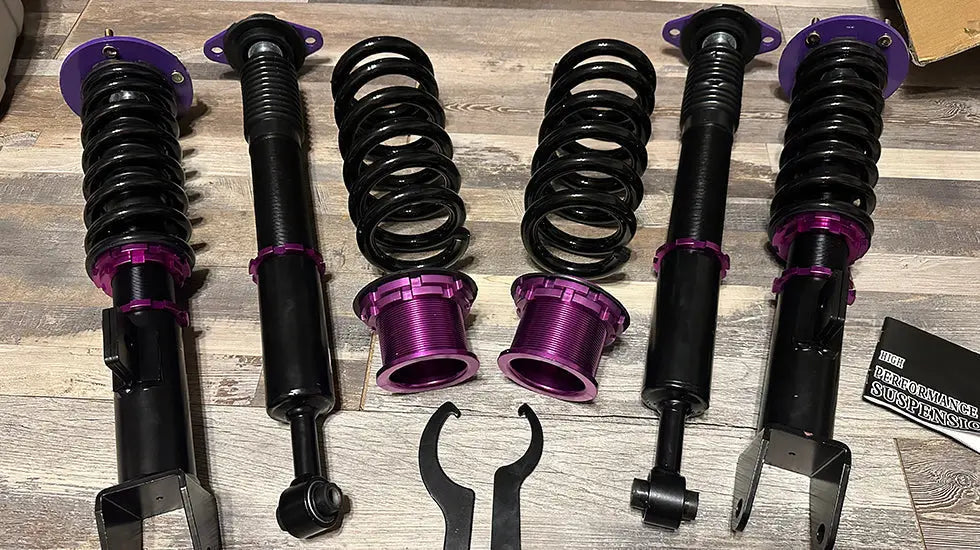
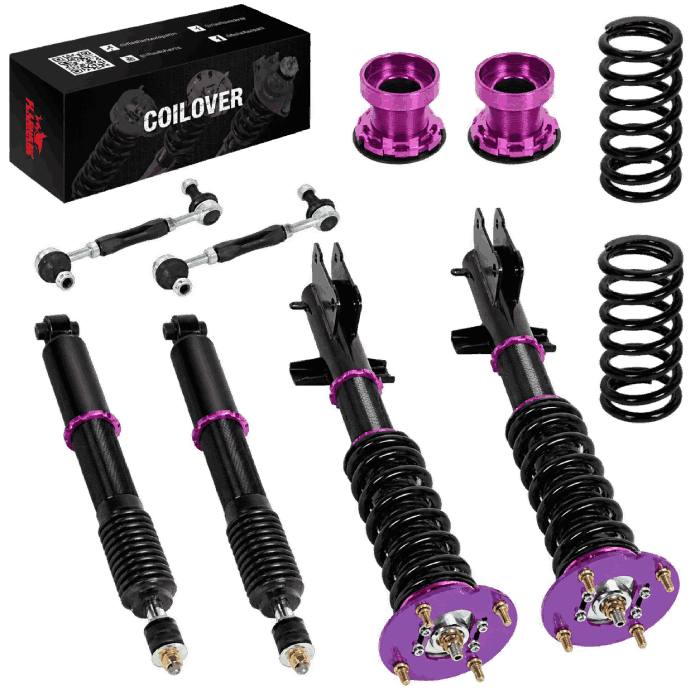
Coilovers combine a spring and a damper into one suspension assembly. Depending on the design, they can let you adjust ride height and, on some models, damping. That gives drivers more control over stance and suspension behavior, but it also makes setup, available suspension travel, tire clearance, and alignment more important.
Quick Answer: What Do Coilovers Do?
- They combine the spring and damper: the spring supports vehicle weight while the damper controls suspension movement.
- They can change ride height: the exact adjustment method depends on the coilover design.
- Some models allow damping adjustment: this can help tailor body control and ride feel, but not every coilover has this feature.
- They require the right setup: ride height, available travel, spring rate, tire clearance, and wheel alignment all affect the final result.
- They are not automatically the right choice for every vehicle: a daily driver, track car, show car, and off-road vehicle need different suspension priorities.
Introduction to Coilovers
Coilovers are commonly used when a driver wants more control over suspension setup than a fixed spring-and-shock arrangement can provide. The name comes from the coil spring mounted over the damper body. This layout is widely used in performance suspension, but the term alone does not guarantee a specific adjustment range, ride quality, or use case.
For many street cars, the decision is less about making the vehicle as low as possible and more about choosing a suspension setup that works with the intended use. A comfortable commuter, a canyon-road car, a track-day build, and a vehicle built mainly for appearance can all need different ride-height and damping choices.
How a Coilover Suspension Works
A coilover assembly has two main jobs. The spring supports the vehicle and allows the suspension to move over bumps. The damper controls the speed of that movement so the body does not continue bouncing, pitching, or rolling after the wheel encounters a bump, braking load, or cornering force.
Some coilovers have a threaded spring perch. Others also use an adjustable lower mount or body-length adjustment. These designs should not be treated as interchangeable: adjusting spring preload is not the same thing as adjusting ride height on every coilover. Follow the instructions for the selected suspension system before making any changes.

Ride Height, Preload, and Damping: The Differences That Matter
| Adjustment or Setup Area | What It Can Affect | What to Watch For |
|---|---|---|
| Ride height | Ground clearance, appearance, suspension geometry, and tire clearance | Lowering too far can reduce usable travel or create rubbing and geometry issues. |
| Spring preload | Spring seating and the operating condition of the assembly | Preload should be set according to the coilover design and manufacturer guidance. |
| Damping adjustment | How quickly the suspension responds to compression and rebound movement | Not every coilover offers damping adjustment, and a stiffer setting is not automatically better. |
| Wheel alignment | Tire wear, steering feel, stability, and cornering behavior | Alignment should be checked after a meaningful ride-height change. |
A lower ride height can look cleaner, but it can also reduce bump travel and change suspension geometry. Check tire-to-fender clearance, brake-line and ABS-wire routing, steering movement, and alignment before treating the setup as finished.
What Are the Benefits of Coilovers?
The main benefit of coilovers is adjustability. They can help a driver move beyond a one-size-fits-all suspension setup and tune the vehicle around a specific use. The final result still depends on the suspension design, spring rate, damper valving, tire choice, wheel fitment, alignment, and the condition of the rest of the chassis.

Improved Control Over Ride Height
Ride-height adjustment is one reason many owners choose coilovers. It can help achieve a preferred stance or create more room for a planned wheel-and-tire setup. The practical limit is determined by suspension travel, chassis clearance, tire clearance, and the adjustment range of the selected system.
More Suspension Tuning Options
On coilovers with adjustable damping, a driver can make measured changes to suspension response. A firmer setting may reduce some body movement in certain conditions, while a softer setting may improve comfort over uneven roads. The best setting depends on the vehicle, road surface, tire, spring rate, and driving use.
Potentially Better Support for Performance Driving
A properly matched coilover setup can support repeatable suspension behavior during performance driving. That does not mean every coilover will improve lap times or grip. Suspension travel, alignment, tire temperature, driver input, and the rest of the vehicle setup all matter.
More Control Over Vehicle Appearance
For drivers building a street car or show-oriented vehicle, coilovers can make it easier to set a purposeful ride height. Appearance should still be balanced with drivability. A car that rubs tires, bottoms out, or runs out of suspension travel is not a finished setup.
Coilover Benefits and Trade-Offs by Use
| Use Case | What Coilovers May Help With | Important Trade-Offs |
|---|---|---|
| Daily-driven street car | Moderate ride-height adjustment and a more controlled feel | Ride comfort, pothole clearance, tire wear, and regular inspection still matter. |
| Track-day or autocross car | A broader range of suspension tuning when the system is matched to the vehicle | Alignment, tire setup, travel, corner balance, and event rules can be as important as the coilovers themselves. |
| Stance-focused build | More control over vehicle height and wheel-to-fender appearance | Clearance, steering movement, suspension travel, and road conditions should set the real limit. |
| Rally or off-road use | Purpose-built systems can be selected around travel and terrain requirements | Street-focused lowering coilovers are not automatically suitable for rough-terrain use. |
What Are the Downsides of Coilovers?
Ride Comfort Can Change
A suspension setup that feels controlled on smooth pavement can feel harsh on broken roads. Spring rate, damper setting, tire sidewall, ride height, and available travel all influence comfort. If the vehicle is used every day, that trade-off deserves more attention than the lowest possible ride height.
Installation and Setup Take More Care
Coilovers are not simply a cosmetic modification. Correct installation requires the right hardware, safe lifting practices, proper torque procedures, and a final inspection of all moving and heat-sensitive areas. After installation, the vehicle should be aligned and checked for tire clearance through steering and suspension movement.
Maintenance Matters
Threaded suspension bodies, adjustment collars, mounts, and fasteners should be inspected periodically. Road salt, debris, corrosion, and seized adjustment threads can make future changes more difficult. Cleaning exposed threads and checking hardware condition can help keep the system serviceable.
Who Should Consider Coilovers?

Coilovers can make sense for drivers who need adjustable ride height, want to tune suspension response, or are building around a defined street or performance goal. They are less compelling when the vehicle needs maximum ride comfort, sees poor roads every day, or does not have a clear reason to change suspension geometry.
Before choosing a system, confirm the vehicle year, engine, drivetrain, body style, suspension layout, wheel-and-tire combination, and intended use. Two similar-looking coilover kits are not automatically interchangeable.
If you are comparing available suspension options, review the Flashark Coilovers collection alongside the fitment details for the selected configuration. If your main question is whether coilovers replace conventional shocks and struts, see Do Coilovers Replace Shocks and Struts?.
Coilover Installation Basics
Installation requirements vary by platform, but the preparation principles are consistent. Read the instructions for the selected kit, inspect the surrounding suspension parts, and do not tighten every connection before the assembly is correctly positioned.
- Confirm the selected suspension configuration matches the vehicle before disassembly.
- Support the vehicle safely and keep the suspension components organized during removal.
- Inspect mounts, bushings, fasteners, brake lines, ABS wiring, and nearby clearance points.
- Install the coilover assembly according to the supplied instructions and torque requirements.
- Set ride height conservatively before final alignment; avoid using an extremely low setting as the starting point.
- Check tire, fender, axle, steering, brake-line, and wiring clearance before driving.
- Complete a wheel alignment after the ride height is set.
- Recheck fasteners and inspect the setup after the initial drive cycle.
A suspension system installed under tension can shift as the vehicle moves through its travel. Take a minute to check clearance before final tightening, especially around tires, brake hoses, sensor wiring, and chassis contact points.
Conclusion: Are Coilovers Right for Your Car?
Coilovers give a vehicle more suspension-adjustment potential, but they are not a universal upgrade. Their value comes from matching the suspension to the vehicle and the intended use. A moderate street setup may prioritize clearance and comfort, while a performance-focused setup may prioritize consistency and adjustability.
The best approach is to choose the correct application first, set ride height within the usable travel range, complete a proper alignment, and make changes one at a time. That keeps the suspension work focused on how the car actually drives rather than how low it sits in the driveway.
Frequently Asked Questions About Coilovers
Q1. What do coilovers do for a car?
A1. Coilovers combine a spring and damper into one suspension assembly. Depending on the design, they can change ride height and may offer damping adjustment. Their effect on handling and comfort depends on the complete suspension setup, tire choice, alignment, and available travel.
Q2. Are coilovers better than springs and shocks?
A2. Coilovers are not automatically better for every vehicle. They can offer more adjustment, while a fixed spring-and-shock setup may be simpler and more suitable for drivers who prioritize comfort, low maintenance, or a specific factory-like ride height.
Q3. Do all coilovers adjust ride height?
A3. No. Adjustment range and method vary by design. Some systems use threaded spring perches, while others use an adjustable lower mount or body-length adjustment. Review the instructions for the selected system before changing ride height.
Q4. Does adjusting spring preload lower a car?
A4. Not necessarily. Spring preload and ride-height adjustment are related differently depending on the coilover design. On systems with independent height adjustment, the lower mount may control ride height while preload is set separately.
Q5. Do coilovers make a car handle better?
A5. A well-matched and correctly adjusted setup can improve suspension control for a vehicle’s intended use. The outcome also depends on spring rate, damper valving, tire grip, alignment, ride height, suspension travel, and the condition of other chassis components.
Q6. Are coilovers comfortable for daily driving?
A6. They can be, but comfort depends on the selected spring and damper setup, tire sidewall, road conditions, ride height, and adjustment settings. A street-focused setup usually needs more travel and a more moderate tune than a track-focused setup.
Q7. Do coilovers need an alignment?
A7. Yes. A meaningful ride-height change can alter alignment angles and affect steering feel, tire wear, and stability. Schedule an alignment after the final ride height is set.
Q8. Can coilovers cause tire rubbing?
A8. They can if ride height, wheel width, tire size, offset, steering angle, or suspension travel create insufficient clearance. Check clearance at full steering lock and through suspension movement before regular driving.
Q9. How often should coilovers be inspected?
A9. Inspect them regularly, especially after seasonal road changes, hard use, or suspension adjustments. Check for damaged threads, loose hardware, leaking dampers, worn mounts, corrosion, and contact marks from tires or chassis components.
Q10. What should I check before ordering coilovers?
A10. Match the selected system to the vehicle year, engine, drivetrain, body style, suspension layout, and intended use. Also consider wheel and tire fitment, ride-height goals, local road conditions, alignment needs, and installation support.

Steven Chen
Automotive Performance Specialist | Engine & Exhaust Systems
Steven focuses on practical engine performance, exhaust fitment, and real-world upgrade paths for classic and modern enthusiast vehicles. He reviews small-block Ford, LS, truck, and street/strip applications with one goal in mind: helping builders choose parts that actually work together. His philosophy: "Good power starts with the right combination, not the biggest part."







1 comment
Richard D Brown
Very informative !!!!!!