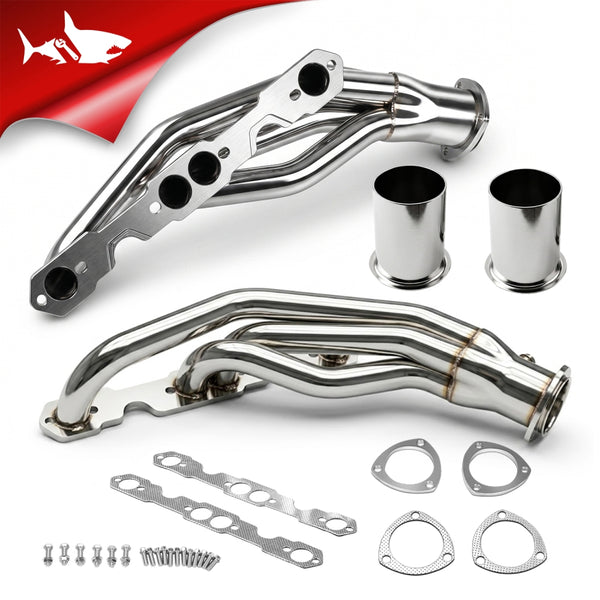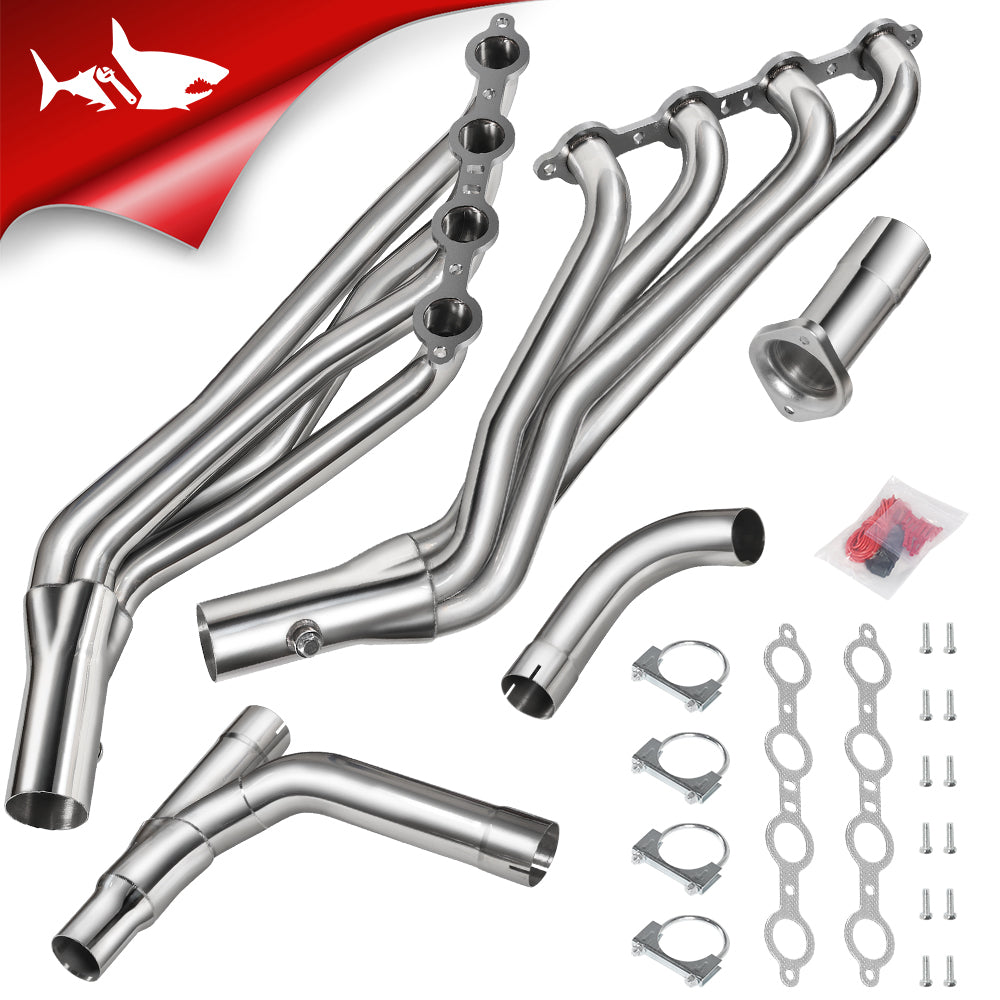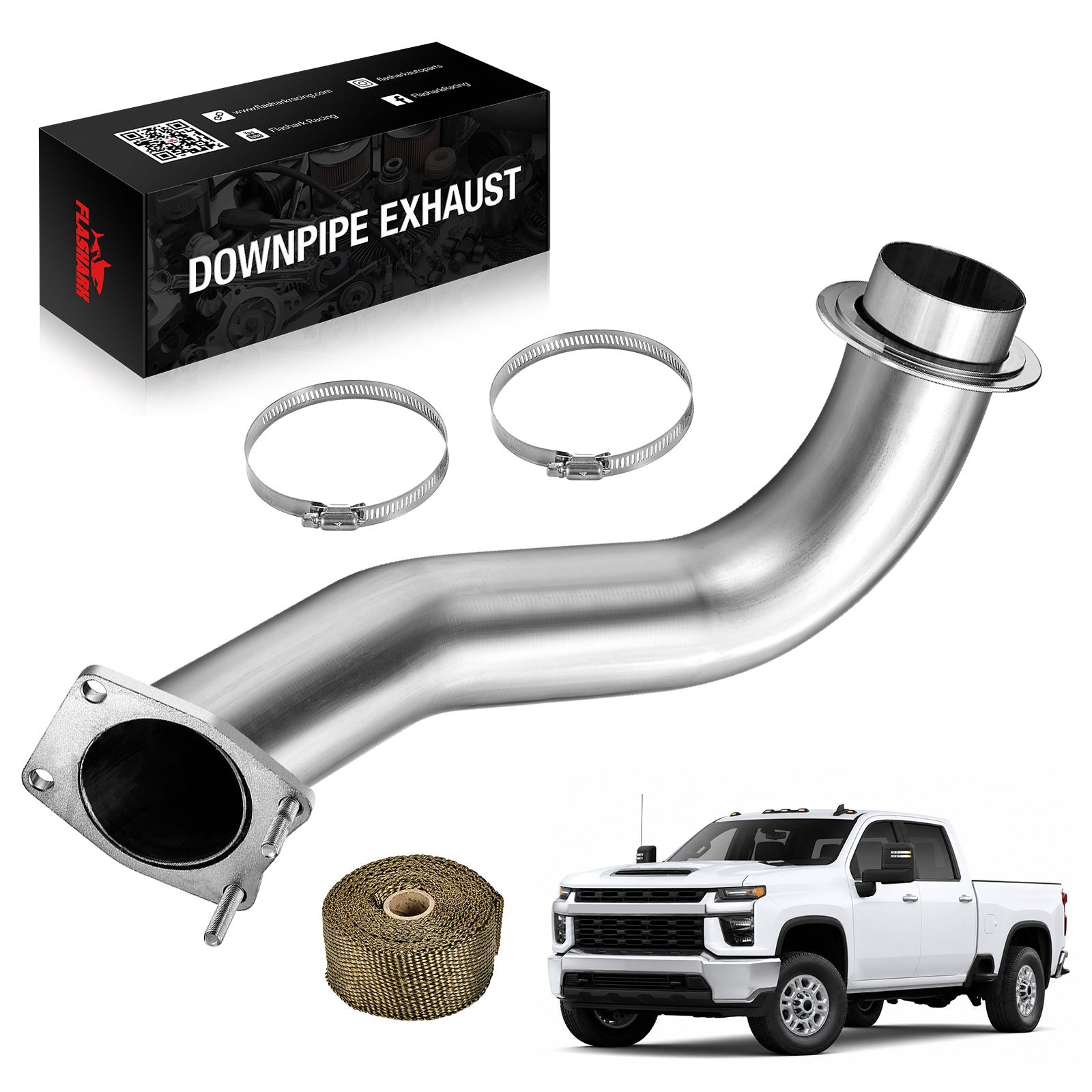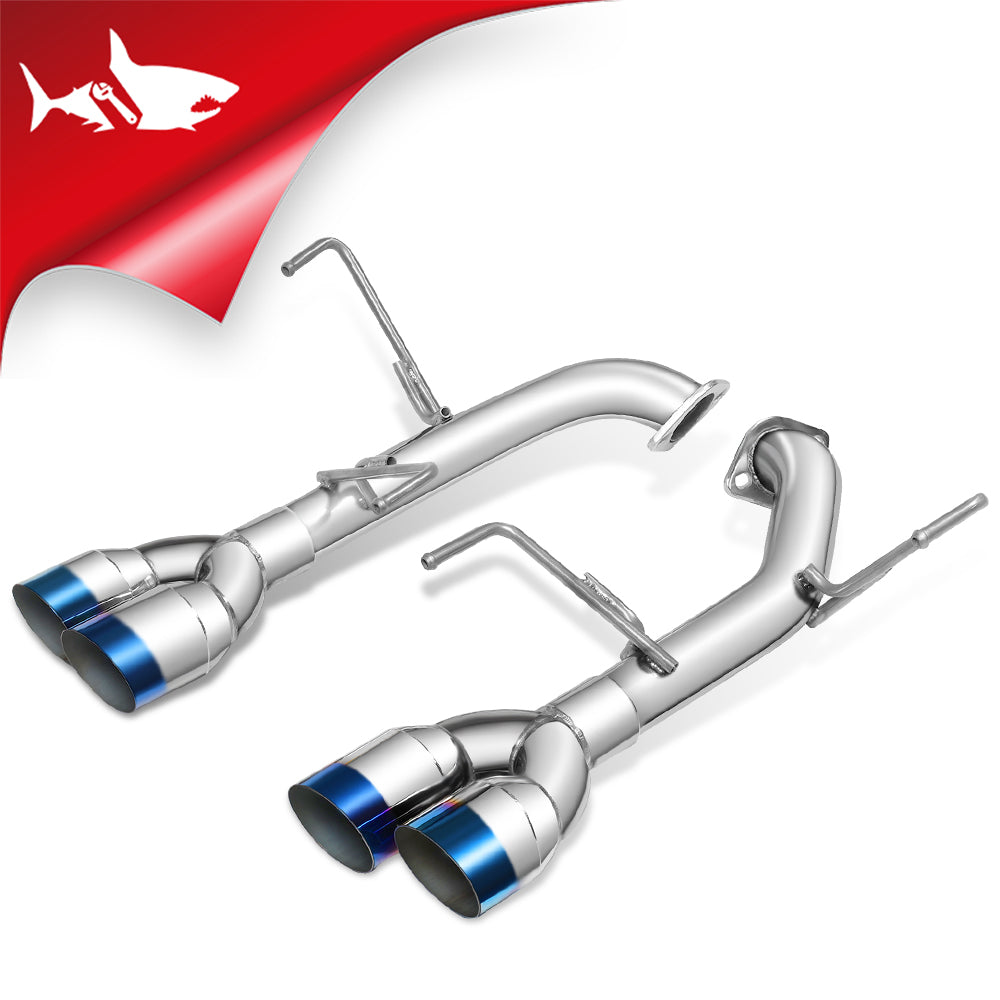
A catless downpipe is an exhaust section that does not contain a catalytic converter. On many turbocharged vehicles, the downpipe carries exhaust gas from the turbocharger outlet toward the rest of the exhaust system. Removing the catalyst from this section can reduce restriction, but it also increases emissions and can affect sound, odor, engine-management behavior, inspection results, and road-use compliance.
The exact layout is vehicle-specific. Some platforms place a catalyst inside the downpipe, while others use separate converter, front-pipe, test-pipe, or Y-pipe sections. Check the vehicle year, engine, emissions equipment, and exhaust layout before choosing any part.
- A catless downpipe replaces an exhaust section without retaining a catalytic converter in that section.
- The term most often applies to turbocharged vehicles, but exhaust layouts and component names vary by platform.
- Reduced restriction can change turbo response and exhaust flow, but the result depends on the engine, tune, turbocharger, and complete exhaust combination.
- Removing a catalyst increases regulated emissions and can cause an emissions-related warning light or readiness-monitor issue.
- Tune requirements vary by vehicle and installed hardware.
- Review local emissions, inspection, noise, and road-use requirements before modifying emissions-related equipment.
- A catted downpipe is often the more practical choice when emissions control, odor, and inspection requirements matter.

Purpose of a Downpipe in a Car
On a typical turbocharged engine, the downpipe begins at or near the turbocharger outlet and routes exhaust toward the center section of the exhaust system. This section operates in a high-temperature, high-flow area, so flange alignment, sensor placement, pipe routing, and clearance all matter.
A factory downpipe may contain a catalytic converter, but that arrangement is not universal. Some vehicles use multiple catalysts or place the relevant converter in another exhaust section. That is why a part called a downpipe on one platform may resemble a front pipe, test pipe, or Y-pipe on another.
This is one of those jobs where fitment matters more than the marketing number. Pipe diameter alone does not establish compatibility. The flange pattern, outlet location, oxygen-sensor position, transmission clearance, steering layout, and connection to the remaining exhaust must all match.
How a Catless Downpipe Works
Exhaust Flow and Turbo Response
A catalytic converter places a dense substrate in the exhaust stream so chemical reactions can reduce harmful pollutants. Removing that substrate reduces restriction in that part of the system. On a turbocharged engine, this can change the pressure relationship around the turbine and may help the turbocharger respond differently.
That does not guarantee a particular horsepower or torque increase. The result depends on the factory converter, turbocharger, engine calibration, fuel, supporting hardware, exhaust diameter, engine condition, and installation quality. A larger pipe is not automatically the right pipe, and one less-restrictive section cannot correct a poorly matched system.

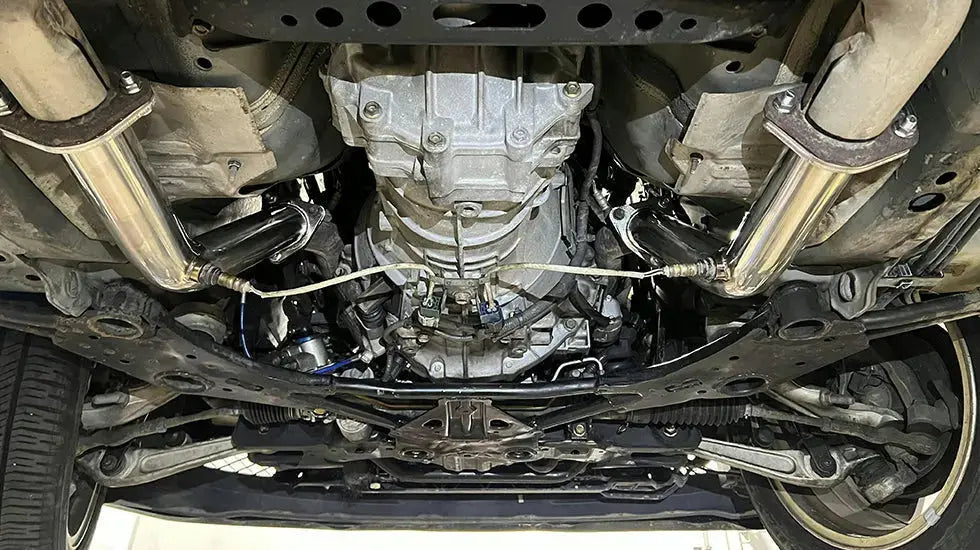
The downpipe shown above is a platform-specific example for listed Mini Cooper R55–R61 1.6-liter turbo applications. It should not be treated as a universal downpipe layout or fitment reference.
Catless Downpipe vs. Catted Downpipe
A catted downpipe retains a catalytic converter in the replacement section. A catless version does not. Both can differ from the factory pipe in shape, diameter, catalyst construction, and connection design, so the presence or absence of a catalyst is only one part of the comparison.
| Decision Point | Catless Downpipe | Catted Downpipe |
|---|---|---|
| Catalyst in the downpipe | No | Yes |
| Exhaust restriction | Removes the catalyst restriction from that section | Retains a catalyst; restriction depends on its construction and the complete system |
| Emissions | Increases harmful exhaust emissions compared with a functioning catalyst | Retains emissions treatment, although that alone does not establish road-use approval |
| Sound and odor | Usually louder and more likely to produce a noticeable raw-exhaust odor | Generally controls odor and sound more effectively than a catless design |
| Engine management | Can trigger catalyst-efficiency faults or readiness-monitor problems | Behavior still depends on the vehicle, catalyst, sensors, and calibration |
| Road-use considerations | Conflicts with emissions-control requirements in many jurisdictions | Product-specific approval and local rules still apply |
| Common use case | Closed-course or other permitted applications where the complete configuration is appropriate | Drivers seeking a less-restrictive replacement while retaining a catalyst |

What “Catless Exhaust” Means
Drivers often use catless exhaust, catless converter, and catless pipe as broad terms. They are not always technically interchangeable.
- Downpipe: The exhaust section immediately downstream of the turbocharger on many turbocharged platforms.
- Test pipe: A pipe that replaces a catalytic-converter section on certain exhaust layouts.
- Y-pipe: A section that joins or divides exhaust flow into a Y-shaped path.
- Mid-pipe: A section between the front exhaust components and the rear exhaust system.
- Catback: The exhaust system behind the catalytic-converter area; installing a catback does not automatically remove a catalyst.
The physical component and its name depend on the platform. For a closer comparison, see the differences between test pipes and downpipes.
Benefits of a Catless Downpipe
Lower Restriction in the Downpipe Section
Removing the catalyst eliminates a restriction from that section of the exhaust. On a compatible turbocharged setup, the change can affect exhaust flow and turbo response. The size of that effect cannot be separated from the engine calibration and the rest of the hardware.
More Exhaust Sound
Without a catalyst absorbing heat and sound energy, the exhaust is generally louder and sharper. Turbo and wastegate sounds can also become more noticeable on some configurations. Sound quality depends on the engine, turbocharger, resonators, mufflers, pipe diameter, and exhaust-tip arrangement.
Louder is not automatically better. Cold starts, highway cruising, and operation near buildings can make the increase more intrusive than it first appears.
Lower Component Cost
A catless pipe can cost less than a comparable catted design because it does not contain a catalytic-converter substrate or the precious metals used in that substrate. Purchase price is only part of the decision. Installation, calibration, inspection failure, diagnostic work, and returning the vehicle to a compliant configuration can add cost later.
Drawbacks and Risks
Higher Harmful Emissions
A functioning catalytic converter reduces carbon monoxide, hydrocarbons, and nitrogen oxides in the exhaust stream. Removing it allows more of these pollutants to leave the tailpipe. It can also create a stronger raw-exhaust odor around the vehicle.
Check-Engine Light and Readiness-Monitor Problems
Many modern vehicles compare readings from oxygen sensors positioned before and after the catalyst. Removing the catalyst can cause the engine-control system to detect low catalyst efficiency, illuminate the check-engine light, or leave an emissions monitor incomplete.
Tune requirements vary by vehicle and installed hardware. A calibration change must not be treated as a guaranteed way to eliminate a warning light, correct mechanical fitment, or make an emissions modification acceptable for road use.
Do not ignore a warning light simply because it appeared after an exhaust modification. Exhaust leaks, damaged wiring, incorrect sensor placement, installation strain, and unrelated engine faults can produce symptoms that deserve proper diagnosis.
Heat, Noise, Odor, and Cabin Comfort
A catless setup can change underbody heat distribution, exterior noise, cabin resonance, and exhaust odor. Leaks near the front of the system can also allow exhaust gas to collect around the engine bay or passenger compartment. Stop driving and correct the problem if exhaust fumes enter the cabin.
Are Catless Downpipes Legal?
For road vehicles in the United States, the Clean Air Act prohibits knowingly removing or rendering inoperative an emissions-control device installed to meet federal requirements. The manufacture, sale, and installation of parts intended to bypass or defeat required emissions controls can also violate federal law. The U.S. Environmental Protection Agency’s vehicle emissions guidance explains the federal restrictions on catalytic-converter removal and emissions tampering.
State and local inspection, registration, and noise rules can add further requirements. Outside the United States, the applicable rules depend on the country and region. A part being sold online, containing a catalyst, or physically fitting the vehicle does not by itself establish road legality.
Review the rules that apply where the vehicle is registered and operated. For an emissions-controlled road vehicle, retaining the required emissions equipment is the safer compliance path.
Installation Considerations
Downpipe installation varies widely. Access can be limited by heat shields, braces, oxygen sensors, turbocharger hardware, underbody panels, and the connection to the remaining exhaust. Rust and repeated heat cycles can make fasteners difficult to remove.
- Let the exhaust and turbocharger area cool fully before beginning work.
- Support the vehicle with equipment intended for its weight and lifting points.
- Identify every flange, bracket, sensor, gasket, clamp, and exhaust connection before removal.
- Protect oxygen-sensor wiring from twisting, stretching, and hot surfaces.
- Position the new section without forcing the flanges or pulling the remaining exhaust out of alignment.
- Check clearance around the body, heat shields, steering components, transmission, braces, and wiring.
- Align the complete system before applying final torque to the connections.
- After installation, inspect for exhaust leaks, contact points, loose wiring, and abnormal noise.
A common mistake is tightening every connection before the system is aligned. That can place the exhaust under tension and cause a flange leak or contact with the body after the system heats up. Take a minute before tightening the final clamp and check the entire routing.
Choosing Between Catless and Catted Options
A catless downpipe is not the automatic choice for every performance build. Consider how the vehicle is used, where it is operated, its emissions equipment, the likelihood of inspection, acceptable sound and odor, and the calibration strategy for the complete setup.
A catted downpipe or another catalyst-equipped exhaust solution may offer a more practical balance for drivers who want a replacement front exhaust section while retaining emissions treatment. A high-flow catalyst can reduce restriction compared with some factory designs, but its construction and legal status are product-specific.
Browse Flashark downpipe exhaust options by vehicle configuration. Match the selected part to the vehicle year, engine, emissions equipment, and exhaust connections before ordering. Contact customer support if you need help identifying the correct configuration.
Is a Catless Downpipe Right for You?
For a road-driven vehicle, the emissions, inspection, warning-light, odor, and noise consequences usually matter more than the promise of lower restriction. A catalyst-equipped option is often the more practical route when the vehicle must remain compatible with road-use requirements.
For a permitted closed-course application, the decision still requires careful part matching, safe installation, and a calibration strategy suited to the exact vehicle and hardware. Choose the complete combination—not just the largest pipe or the loudest option.
Frequently Asked Questions About Catless Downpipes
Q1: What is a catless downpipe?
A1: A catless downpipe is an exhaust section without a catalytic converter. On many turbocharged vehicles, it connects the turbocharger outlet to the rest of the exhaust, although component names and layouts vary by platform.
Q2: Is a catless downpipe the same as a catless exhaust?
A2: Not necessarily. A downpipe is one section of the exhaust. “Catless exhaust” is a broader term that drivers may use for any system or section operating without a catalytic converter.
Q3: Does a catless downpipe add horsepower?
A3: Removing the catalyst reduces restriction in that exhaust section, but it does not guarantee a specific power increase. Results depend on the engine, turbocharger, calibration, fuel, supporting hardware, and complete exhaust configuration.
Q4: Will a catless downpipe make the exhaust louder?
A4: It generally increases exhaust volume and can make the tone sharper. The final sound also depends on the engine, turbocharger, resonators, mufflers, pipe diameter, and exhaust-tip arrangement.
Q5: Can a catless downpipe cause a check-engine light?
A5: Yes. A vehicle may detect reduced catalyst efficiency, illuminate the check-engine light, or leave an emissions readiness monitor incomplete. Behavior varies by vehicle and engine-control strategy.
Q6: Does a catless downpipe require a tune?
A6: Tune requirements vary by vehicle and installed hardware. A calibration change should not be assumed to correct mechanical problems, guarantee the absence of warning lights, or make an emissions modification acceptable for road use.
Q7: Is a catless downpipe legal for street use?
A7: Removing or disabling required emissions equipment is prohibited for road vehicles in many jurisdictions. In the United States, federal law restricts catalytic-converter removal and emissions tampering, while state and local rules can add further requirements.
Q8: What is the difference between a catless downpipe and a test pipe?
A8: A downpipe is commonly the exhaust section after a turbocharger. A test pipe replaces a catalytic-converter section on certain layouts. The correct term depends on the vehicle’s exhaust design.
Q9: Is a catted downpipe always street legal?
A9: No. The presence of a catalyst does not automatically establish road-use approval. Legality depends on the specific part, vehicle application, emissions certification, and local requirements.
Q10: What should be checked during downpipe installation?
A10: Check flange alignment, gasket condition, oxygen-sensor wiring, exhaust support, and clearance around the body, heat shields, steering components, transmission, braces, and nearby wiring. Inspect the completed system for leaks and contact points.
Q11: Why does a catless setup produce more exhaust odor?
A11: Without a functioning catalyst treating the exhaust gases, more unconverted pollutants leave the tailpipe. This can create a stronger raw-exhaust smell, especially during cold starts and low-speed operation.
Q12: Can a downpipe be installed on any car?
A12: No. Downpipes are platform-specific. Match the part to the vehicle year, engine, turbocharger and exhaust layout, emissions equipment, sensor arrangement, flange pattern, and downstream connection.

Steven Chen
Automotive Performance Specialist | Engine & Exhaust Systems
Steven focuses on practical engine performance, exhaust fitment, and real-world upgrade paths for classic and modern enthusiast vehicles. He reviews small-block Ford, LS, truck, and street/strip applications with one goal in mind: helping builders choose parts that actually work together. His philosophy: "Good power starts with the right combination, not the biggest part."