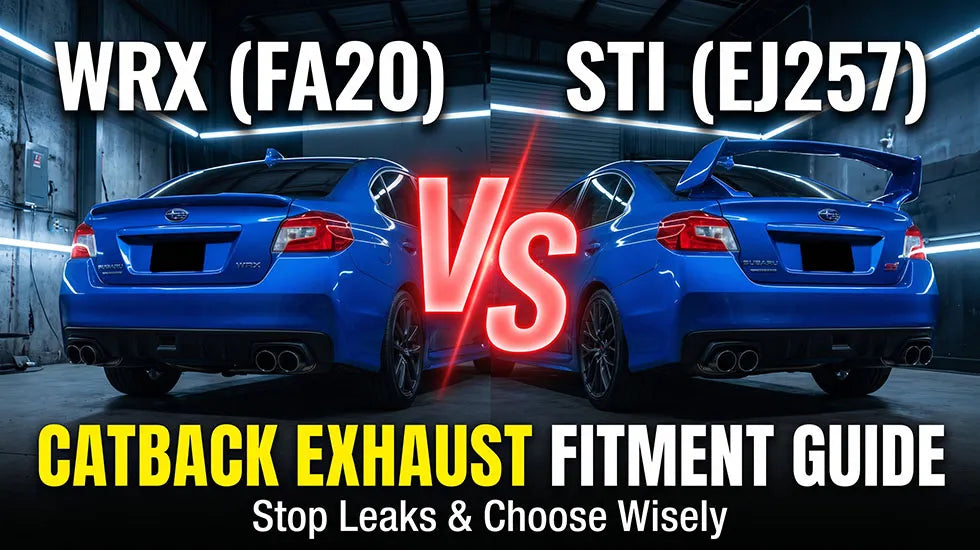
Let's get one thing straight right out of the gate. You just bought a 2015+ Subaru, you want it louder, and you see a guy selling a used STI exhaust online for your base model. Same VA chassis, so it bolts right up, right?
Wrong. Honestly, I’ve spent half my career under a lift grinding off rusted Subaru exhaust flanges, and this single assumption causes endless headaches for owners. The WRX and STI look identical from the outside, but the mechanicals under the hood—and the exhaust geometries they dictate—are completely different.
Let's cut the marketing fluff and look at exactly which Subaru catback exhausts fit, what leaks, and what actually makes power. Wrong pipe on the wrong car and you're chasing highway drone, fumbling with misaligned tip brackets, or blowing exhaust fumes straight under your cabin.
The Bottom Line Up Front: Compatibility Summary
- The Hangers: Chassis routing and rubber hanger locations are nearly identical for the VA chassis (2015-2021).
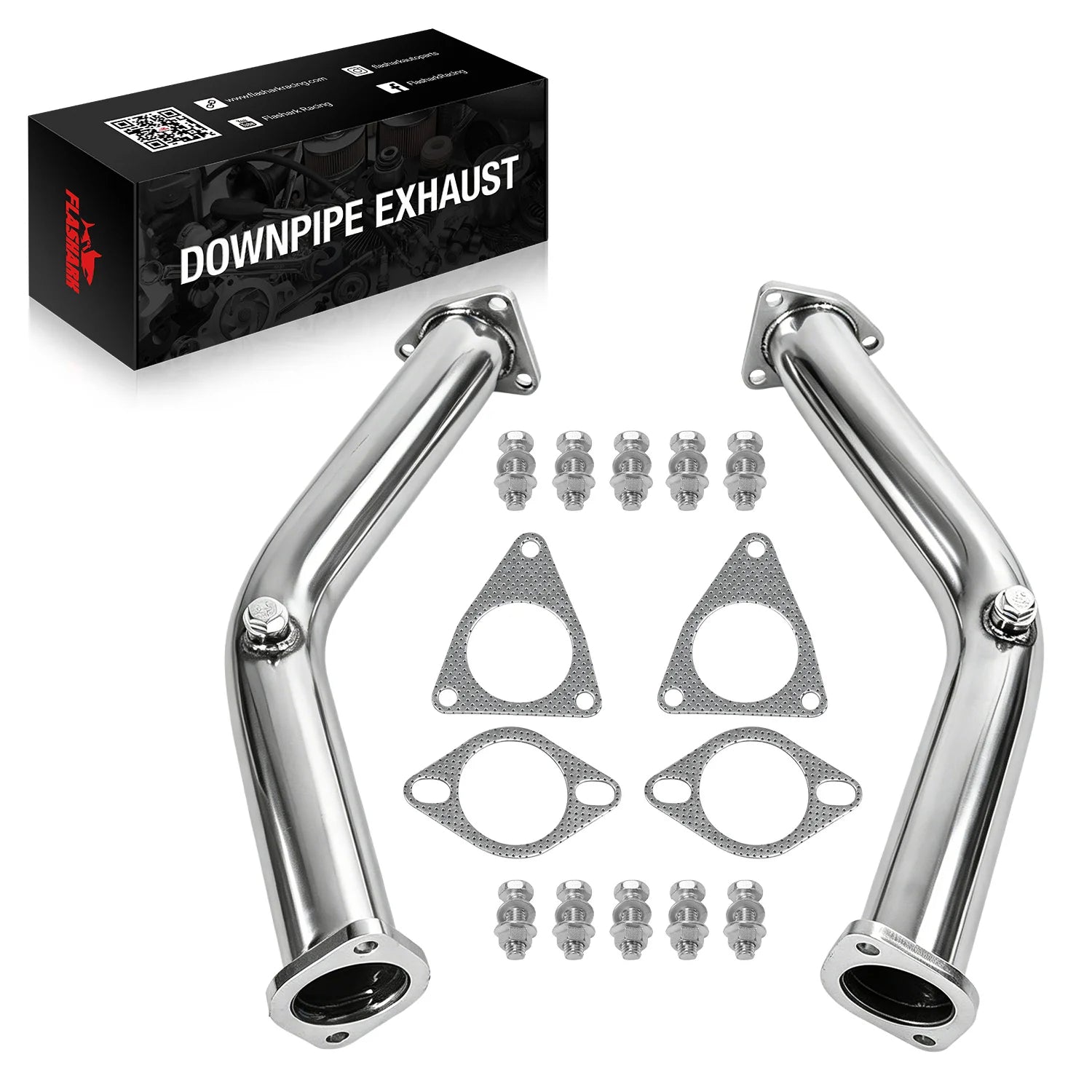
- The Connection Point: The WRX uses a twin-scroll J-Pipe. The STI uses a traditional Downpipe. The mid-pipe flange rotation differs.
- The Leak Risk: Bolting an aftermarket 3-inch flat flange to your OEM 2.5-inch donut gasket will cause a massive exhaust leak without a step-down adapter.
- The Sound: The STI has Unequal Length Headers (UELH) for the iconic rumble. The WRX has Equal Length Headers (ELH) for a smoother tone.
- The Tune: A catback-only swap does not require an ECU tune or cause Check Engine Lights (CEL).
Anatomy of the Subaru Exhaust: The Engine Dictates the Pipe
Before you pick a tip style, you have to understand what you're working with. The front half of the exhaust dictates what happens at the back.
The 2015-2021 WRX runs Subaru's FA20DIT—a direct-injected engine that uses Equal Length Headers to feed a low-mounted twin-scroll turbo efficiently. It's a smooth engine, but the exhaust note at idle is deliberately quiet.
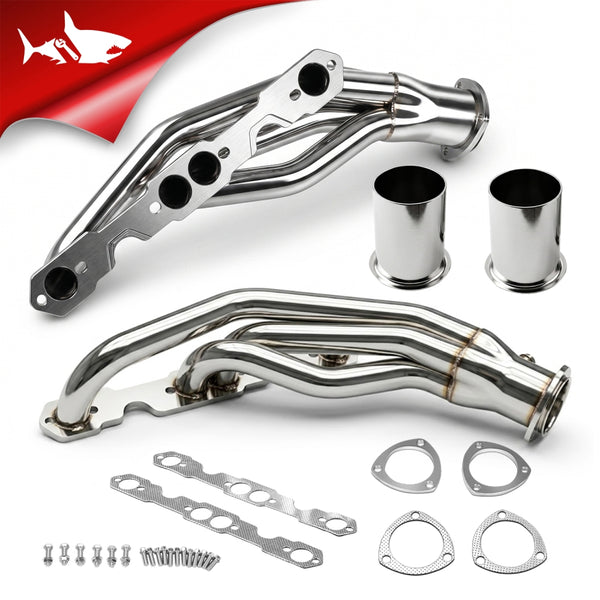
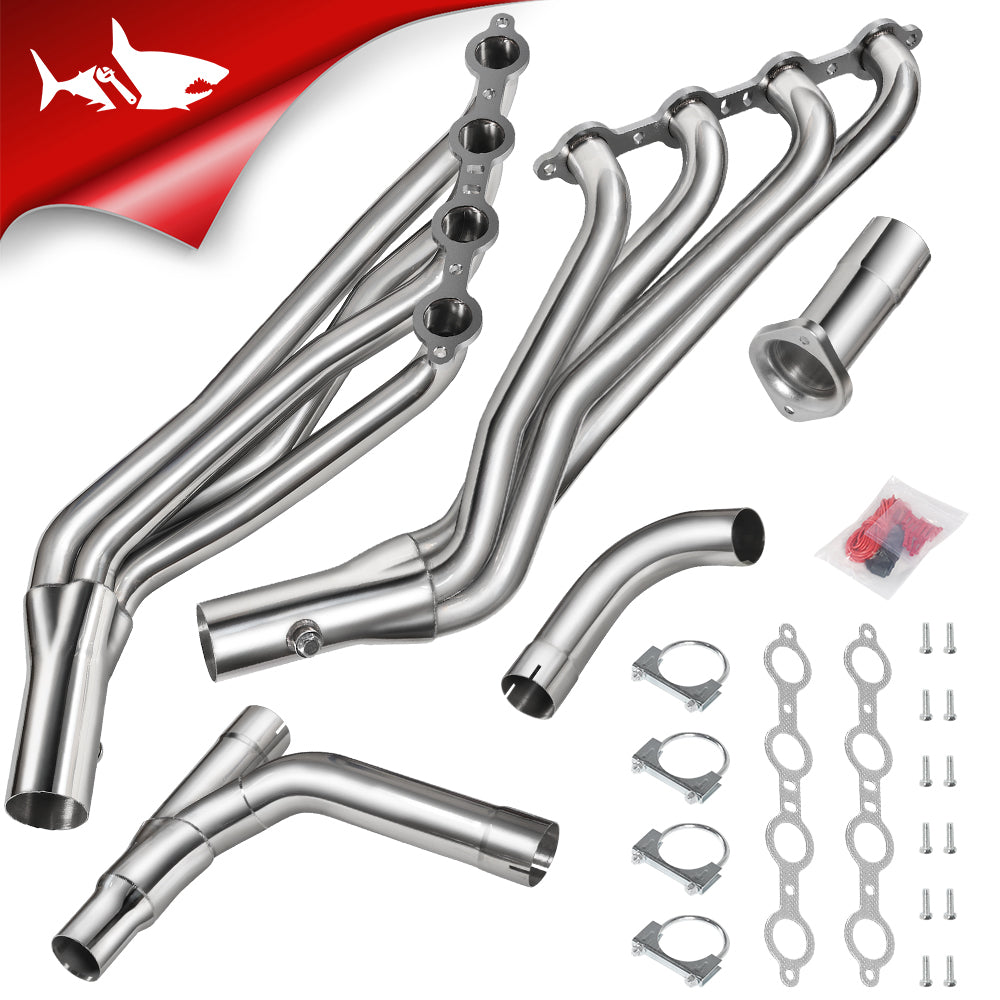
The STI clings to the legendary EJ257. Older design, higher compression, and that famous unequal firing order (UELH). The EJ is a high-revving engine that rewards exhaust scavenging—pull gases out of the chamber faster, and it responds with more aggressive top-end pull. If you truly want to change the flow dynamics or enhance that rumble, it starts at the engine block with precision-welded headers.

Beyond Sound: Weight Savings and Material Upgrades
We all talk about the sound, but let's look at the physical pipe. The factory Subaru exhaust is heavy, restrictive, and prone to surface rust if you live in a state that salts its roads.
Upgrading to a high-quality aftermarket catback usually means stepping up to T304 Stainless Steel. Not only does this resist winter corrosion far better than the OEM mild steel, but the manufacturing process is different. Premium systems use mandrel bending, meaning the pipe maintains its true 3-inch diameter entirely through the bends without crushing or restricting airflow. Plus, ditching those massive OEM rear mufflers can easily shave 15 to 20 pounds off the rear of the car.
The Fitment Trap: Why Your New Catback Might Leak
Because the FA20 and EJ257 exit their turbos at completely different coordinates (J-pipe vs. Downpipe), the angle where they meet the mid-pipe is slightly off. Forcing an STI mid-pipe onto a WRX causes minor stress at the flex joint, which eventually cracks the weld.

But the biggest trap is the flange connection. OEM Subaru exhausts step down to a 2.5-inch diameter and use a spherical "donut" gasket with spring bolts to allow for engine flex. Almost every aftermarket catback exhaust upgrades to a 3-inch diameter with a flat flange. If you try to mate a 3-inch flat flange to a 2.5-inch OEM donut gasket, you are going to have a bad time.
🛠️ Tech Garage Notes: The FB Marketplace Disaster
I remember a kid bringing his 2018 FA20 WRX into the shop. He snagged a used, high-end STI exhaust off Facebook Marketplace and bolted the 3-inch flat flange straight to his stock WRX J-pipe without an adapter. When I pulled it onto the lift and turned the key, it sounded like a broken tractor. The gap at the flange was easily a quarter-inch wide. Never do this. Always order an OEM 2.5-inch to aftermarket 3-inch adapter to properly seal the mating surface.
No. A "catback" system replaces components after the catalytic converter. It does not touch your O2 sensors or alter your vehicle's emissions equipment. You will not get a P0420 code, and you do not need an Accessport tune just to run a catback.
Side-by-Side Spec Comparison
| Spec | 2015-2021 WRX (FA20DIT) | 2015-2021 STI (EJ257) |
|---|---|---|
| Flange Angle | Tuned for J-Pipe | Tuned for Downpipe |
| Expected WHP Gain | 4–8 WHP (Catback only) | 5–10 WHP (Catback only) |
| Exhaust Note Character | Deep, clean, continuous | Aggressive burble, decel pops |
| Highway Drone Risk | Moderate (worse on CVT models) | High (due to EJ firing order) |
Exhaust Drone: The Problem Nobody Talks About Enough
Drone—that resonant buzzing at 65-75 MPH cruise—is miserable. If you daily drive your car, especially a WRX with a CVT transmission, do not get a non-resonated system. Multi-chamber designs or systems with a resonator section specifically target this frequency. The chamber geometry creates interference that cancels out the resonant frequency, killing the brutal 3,000 RPM highway buzz while still letting the exhaust scream at wide-open throttle.
Installation: Can You Do It Yourself in the Driveway?
A catback on the VA chassis is a very DIY-friendly bolt-on job that takes about 1 to 2 hours. You don't need a professional lift; a good set of jack stands will do. But there is one major trap: Rust.
If your Subaru has seen a few winters, those OEM mid-pipe flange bolts are likely fused solid. Spray penetrating oil on every bolt and rubber hanger the night before you plan to do the install. Come back the next day with a breaker bar.

Pro Tip: Always remove the two rubber hangers at the rear of the OEM muffler first to free up the weight. Before fully tightening the new flanges, visually center the quad tips in your bumper cutouts.
Which System for Which Build Goal?
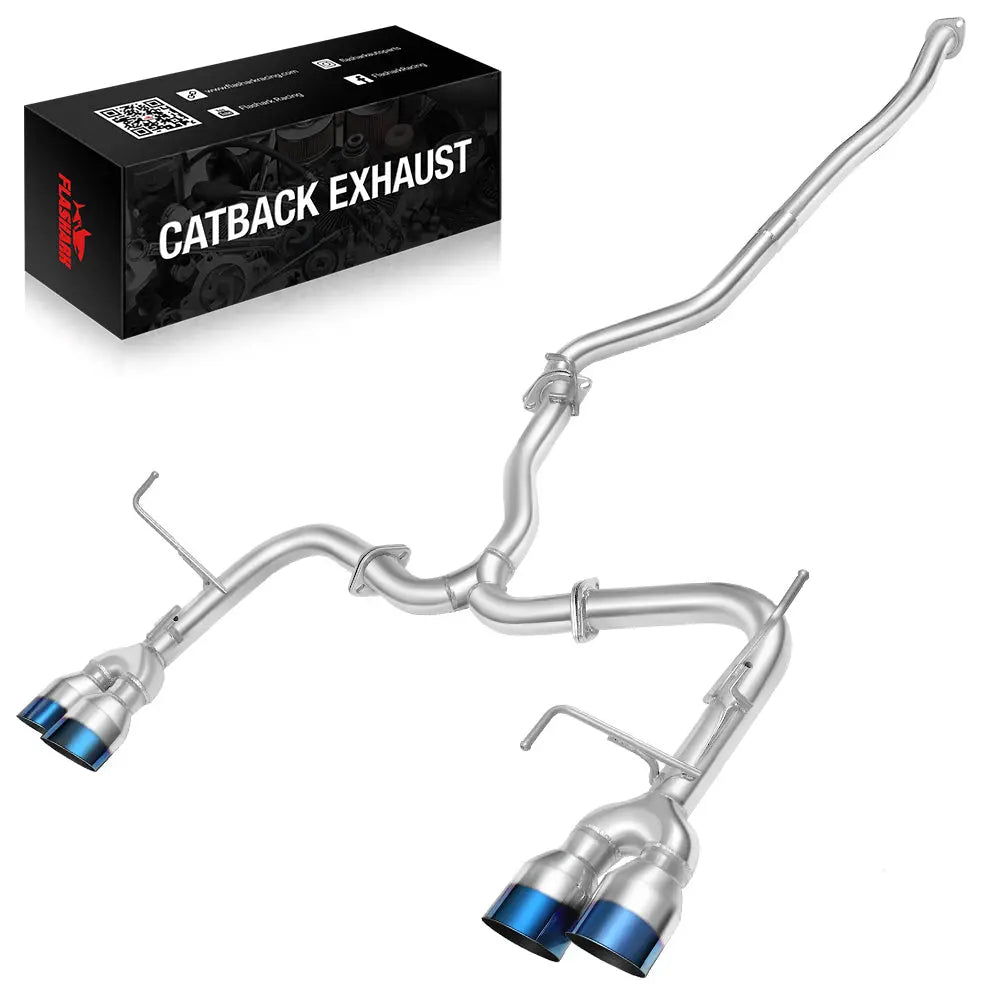
- Daily Driver WRX (Street Only): You want sound improvement and a clean finish. The Subaru WRX / STI 4" Quad Tip Catback Exhaust with polished tips fills the rear bumper cutouts perfectly and offers a premium, understated look.
- STI (Sound Priority & Track Aesthetic): The EJ257 wants to be heard. For an aggressive look, the WRX / STI Catback Exhaust with N1 Burnt Tips is hard to beat. The heat-treated iridescent finish looks exceptional against dark-painted cars.

Bottom Line: WRX vs STI Catback—What Actually Matters
Same platform. Different engines. Different sound character. The STI will sound more aggressive through any Given catback because of the EJ257's firing order. The WRX will be smoother and slightly less prone to drone—but it won't have that signature "Subie Rumble" without significant engine modifications like unequal length headers.
Both cars, though, benefit enormously from ditching the OEM system. Subaru built those exhausts to pass regulatory hurdles and hit a price target; they didn't build them for the person who wants to actually hear their car. Pick a system designed for your specific engine, use an adapter to stop the leaks, and enjoy the drive.
Frequently Asked Questions (FAQs)
Q1: Will a 2015+ STI catback exhaust fit a 2015+ WRX?
A1: Physically, yes. The hanger locations, chassis routing, and rear bumper cutouts for the quad tips are identical for the VA chassis. However, the connection to the front pipe requires a specific 3-inch to 2.5-inch adapter to prevent exhaust leaks.
Q2: Do I need an adapter to run an aftermarket catback on my stock WRX/STI downpipe?
A2: Yes. If you are bolting a 3-inch aftermarket flat flange to your stock 2.5-inch donut gasket J-pipe or downpipe, you absolutely need an adapter to prevent catastrophic exhaust leaks.
Q3: Why does my WRX sound completely different from my buddy's STI when we have the exact same exhaust?
A3: It all comes down to the exhaust manifold. The STI has Unequal Length Headers (UELH) creating the classic "rumble." Your WRX has Equal Length Headers (ELH) optimized for a twin-scroll turbo, resulting in a smoother, higher-pitched tone.
Q4: Does upgrading to an aftermarket catback void my Subaru powertrain warranty?
A4: Generally, no. A catback system is considered a "sound modification" and occurs after the catalytic converters. It doesn't alter emissions. However, warranty claims are always subject to dealership discretion under the Magnuson-Moss Warranty Act.
Q5: Will installing a WRX vs STI catback exhaust require a new Cobb Accessport tune?
A5: No. Catback exhausts do not significantly alter the air/fuel ratios or boost dynamics enough to require an ECU recalibration. You only need a tune if you upgrade the J-pipe or downpipe.
Q6: What size exhaust piping is best for a stock turbo WRX or STI?
A6: 3-inch piping is the industry standard for aftermarket VA chassis setups. It provides optimal flow and backpressure reduction without losing low-end torque.
Q7: Why is my newly installed WRX exhaust droning so badly on the highway?
A7: Severe highway drone usually happens when you install a non-resonated mid-pipe or a "muffler delete" axle-back system, especially on CVT transmission models that sit at specific RPM bands for long periods.
Q8: Can I install a WRX or STI catback exhaust by myself on jack stands?
A8: Absolutely. It is a straightforward 1 to 2-hour bolt-on job. The only real headache is typically snapping or stripping the heavily rusted OEM bolts at the mid-pipe connection.
Q9: Are STI quad-tip exhausts compatible with the WRX rear bumper cutouts?
A9: Yes. Both the base WRX and the STI share the exact same rear bumper cover and lower diffuser cutouts. A quad-tip system will fill out the WRX bumper perfectly.
Q10: Should I get a resonated or non-resonated mid-pipe for my daily driver?
A10: If it's a daily driver, always go resonated. It acts as a frequency filter to kill highway drone at 3000 RPM while still allowing the exhaust to be loud when you step on the gas.