
Search By Year,Make and Model


Audi Downpipe Exhaust & Test Pipes: What Actually Changes in the Exhaust Path
Let’s be honest. Most Audi owners do not start looking at a downpipe because they read a nice little brochure. They start looking because the car feels choked, the throttle response feels lazy, the exhaust sounds too polite, or the factory catalytic section is turning into a hot, restrictive brick after years of heat cycles.
An Audi downpipe exhaust is not just a louder pipe. On turbocharged Audi and VW platforms, it sits right after the turbocharger, where heat, pressure, sensor readings, and exhaust flow all crash into each other. On the supercharged 3.0T V6, the logic is a little different: you are dealing more with exhaust restriction, heat, catalyst stress, and sound than turbo spool. Get the setup right, and the car feels sharper. Get it wrong, and you get leaks, rattles, a check engine light, and a car that smells like raw fuel every cold morning.
BLUF — Bottom Line Up Front:
- Best reason to upgrade: better exhaust flow, quicker response, stronger mid-range pull, and a more aggressive Audi/VW exhaust tone.
- Expected power range: on many tuned 1.8T and 2.0T turbo setups, a proper downpipe can support roughly 15–25 whp gains when paired with the right software and supporting parts. Stock-tune gains are usually smaller.
- Best daily-driver choice: a well-built catted downpipe, if available for your application, is usually easier to live with than a catless test pipe.
- Best race/off-road flow choice: a catless downpipe or test pipe usually flows more, sounds louder, and carries more CEL, smell, and emissions risk.
- Most important rule: buy by exact chassis, engine, drivetrain, turbo flange, and exhaust layout. Not by “it looks close.” Close is how exhaust leaks are born.
Why the Factory Audi Downpipe Feels Restrictive
The factory Audi downpipe is designed for noise control, emissions compliance, packaging, warranty comfort, and cost. Performance is only one part of that equation. That is why a stock pipe can work fine on a commuter car but start feeling restrictive once you add a tune, raise boost, install a freer-flowing intake, or push the engine harder than Audi expected most owners to.
Factory Restriction, Backpressure, and Turbo Response
On turbocharged Audi engines, exhaust gas has to leave the turbine housing cleanly. If the pipe after the turbo is narrow, sharply bent, or packed with a restrictive catalytic section, the turbo has to push against more pressure. You feel that as slower spool, softer throttle response, and a car that does not pull as cleanly in the mid-range.
Listen, a downpipe will not magically fix a weak turbo, bad diverter valve, boost leak, or tired ignition coils. But when the rest of the car is healthy, reducing restriction right after the turbo is one of the few exhaust upgrades you can actually feel from the driver’s seat.
Old Catalytic Converters, Heat, and Flow Loss
Older Audi platforms live a hard life. Heat, oil vapor, rich cold starts, misfires, and years of stop-and-go driving can all punish the factory catalytic converter. Sometimes the cat is still technically working, but the car feels heavy because flow is not what it used to be.
That is why many Audi owners look at Audi Downpipe Exhaust & Test Pipes when refreshing an older 1.8T, 2.0T, 2.7T BiTurbo, or 3.0T build. The goal is not just noise. The goal is to clean up the exhaust path and give the engine room to breathe.
Sound Without Guesswork
A downpipe usually makes the car deeper and more aggressive. A catless test pipe makes it sharper and louder. But do not let forum clips fool you. The final sound depends on your catback, resonators, mufflers, pipe diameter, turbo size, engine load, and whether the car is cold or fully warmed up.
Mechanic’s note: I remember a B7-style 2.0T car that rolled into the shop after the owner installed a cheap downpipe he found online. The pipe technically bolted up. That was the good news. The bad news? The rear O2 sensor angle was wrong, the wiring was stretched tight against the tunnel, the flange had a tiny leak, and the car threw a catalyst-efficiency code before the second tank of fuel. We fixed it, but he paid twice — once for the wrong pipe, once to make the car right. Do not buy “almost fits” exhaust parts for an Audi.
What a Flashark Audi Downpipe Can Actually Improve
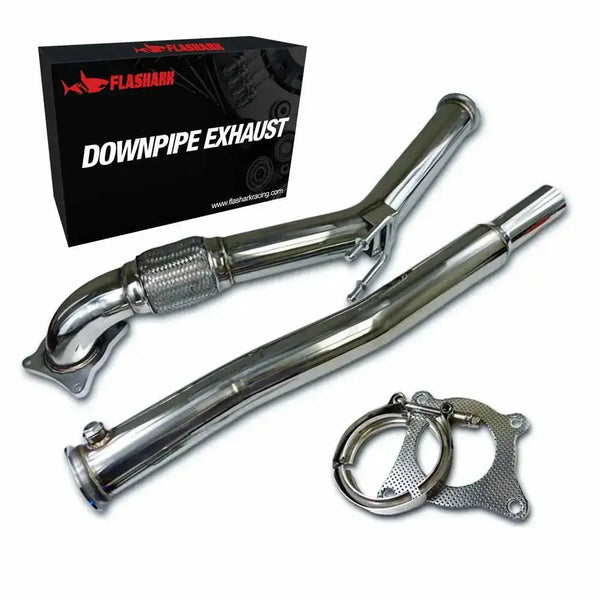
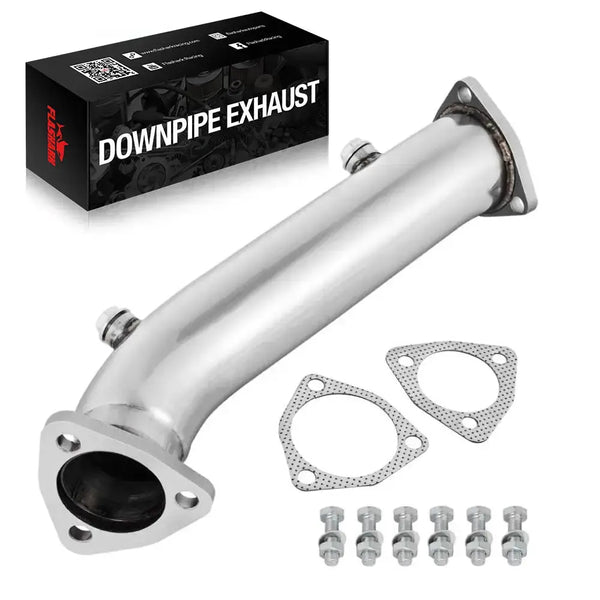
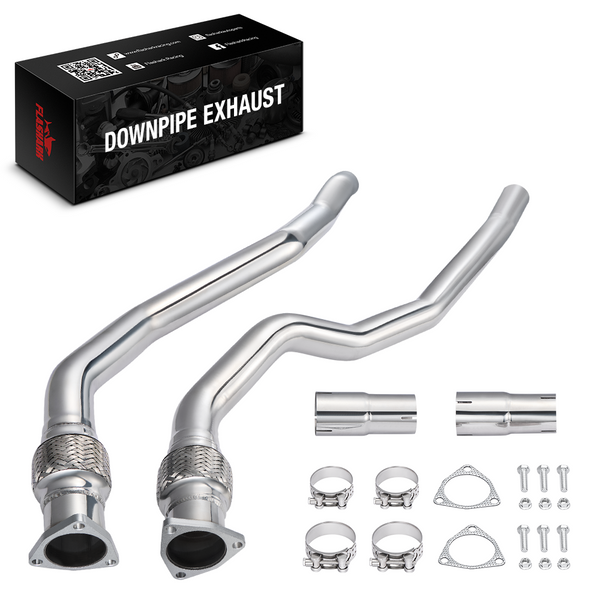
Flashark downpipes and test pipes are built for owners who want a cleaner, less restrictive exhaust path without turning the whole install into a fabrication project. The goal is simple: reduce unnecessary restriction, improve flow, and give the car a better foundation for tuning, sound, and long-term exhaust reliability.
Better Exhaust Flow Where the Factory Pipe Feels Tight
A smoother, larger-diameter pipe helps exhaust gas move through the system more efficiently. On common Audi/VW 1.8T and 2.0T setups, that can help the engine feel less strangled under boost. On a tuned car, the difference is usually more noticeable than on a completely stock ECU.
Sharper Throttle Response and Stronger Mid-Range Pull
The first thing many owners notice is not peak horsepower. It is response. The car rolls into boost cleaner. Passing throttle feels less lazy. Third gear has more bite. That is the kind of change people actually talk about after driving the car, not just staring at a dyno sheet.
More Aggressive Audi Exhaust Tone
A downpipe changes the voice of the car before the catback ever gets involved. A catted setup usually sounds deeper and more mature. A catless test pipe is louder, rawer, and sometimes raspier. If your Audi is a daily driver, be honest with yourself before choosing the loudest option.
A Better Foundation for Stage 2-Style Tuning
Many Audi and VW tuning paths treat the downpipe as a major supporting part. On 2.0T cars especially, Stage 2-style setups often expect a freer-flowing downpipe. That does not mean every car needs the same pipe. Tune, turbo, fuel quality, intercooling, exhaust layout, and emissions rules all matter.
Material and Construction: What to Look for in an Audi Downpipe
Downpipes live in a nasty place. Heat, vibration, road spray, engine movement, and tight clearances all attack the part. A pretty pipe with bad flanges is still a bad pipe. A shiny weld does not help if the O2 bung points straight into the firewall.
Stainless Steel Tubing and Corrosion Resistance
Stainless steel is the right material for this job because exhaust parts see repeated heat cycles and moisture. If the car lives anywhere with rain, snow, road salt, or humid summers, corrosion resistance matters. A downpipe is not something you want to replace every season.
Mandrel Bends vs Crushed Bends
Mandrel bends keep the tubing diameter more consistent through curves. Crushed bends pinch the pipe and create turbulence. In a cramped Audi engine bay, where the pipe already has to snake through tight space, that difference matters more than people think.
TIG Welding, CNC Flanges, and Leak Prevention
Good welds and flat flanges help prevent leaks. Exhaust leaks before or near the O2 sensor can confuse readings, create ticking sounds, and make the car smell rough at idle. This is one area where Flashark’s focus on proper pipe shape, flange fitment, and usable hardware solves a real physical problem, not a fake marketing problem.
Pipe Diameter: Why Bigger Is Not Always Automatically Better
On many 1.8T and 2.0T street cars, a 2.5-inch to 3-inch style downpipe is common depending on the setup. On bigger turbo or 2.7T BiTurbo builds, pipe diameter and merge design become even more important. But do not chase the largest number blindly. A pipe that fits poorly, rattles, or mismatches the rest of the exhaust is not an upgrade. It is a headache.
O2 Sensor Bung Placement and CEL Risk
O2 sensor placement affects wiring reach, heat exposure, sensor behavior, and check engine light risk. The rear sensor is especially sensitive on many Audi/VW platforms. If the ECU sees catalyst behavior outside its expected range, you may get a CEL even if the car feels strong.
Catted vs Catless Audi Downpipes and Test Pipes
This is where owners need to slow down. Catted and catless setups do not behave the same. They do not smell the same. They do not sound the same. And they do not carry the same legal or inspection risk.
| Setup | Best For | Sound & Smell | CEL / Inspection Risk |
|---|---|---|---|
| Catted Downpipe | Daily drivers, street-focused builds, owners who want better flow without going fully raw. | Deeper tone, usually less smell, more controlled cold starts. | Lower risk than catless, but not a guarantee. Local rules and OBD readiness still matter. |
| Catless Downpipe | Off-road, race, and maximum-flow builds where legal restrictions are understood. | Louder, sharper, more raw exhaust smell, especially at cold start and idle. | High risk of CEL, emissions failure, and street-use compliance issues. |
| Test Pipe | Catalytic-converter replacement sections, usually race/off-road oriented. | Raw, loud, sometimes raspy depending on the rest of the exhaust. | Very high risk if used on emissions-controlled street vehicles. |
What Is a Catted Audi Downpipe?
A catted downpipe includes a catalytic converter in the exhaust path. It is usually designed to flow better than the restrictive factory section while keeping some catalyst function. That said, “high-flow cat” does not automatically mean street legal in every state, country, or inspection area.
What Is a Catless Downpipe or Test Pipe?
A catless downpipe or test pipe removes the catalytic converter from that section of the exhaust path. Flow usually improves. Sound gets louder. Smell increases. CEL risk goes up. Legal risk can get serious on public-road vehicles. That is the trade.
Power Difference: What Owners Should Expect
On many tuned turbo Audi/VW cars, a freer-flowing downpipe can support measurable gains. A healthy 2.0T with proper software may show around 15–25 whp improvement compared with a more restrictive stock setup. A lightly tuned 1.8T might feel more responsive with a smaller peak gain. A larger 2.7T K04-style build can see a bigger benefit because the engine is moving more air. But no pipe makes power in isolation. Tune, fuel, turbo condition, boost target, intake temps, and the rest of the exhaust all decide the final number.
Hidden Advantages and Hard-Core Technical Notes
Here is the part most thin product listing copy never explains: the downpipe is not only about peak flow. It changes heat behavior, turbine discharge pressure, sensor environment, flex movement, and how the rest of the exhaust sits under the car.
On Turbo Audis, Spool Comes Down to Pressure, Heat, and Flow
A turbo works better when exhaust gas can leave the turbine efficiently. If pressure after the turbine is too high, the turbo has to work against it. A smoother downpipe helps reduce that downstream restriction. That can improve spool behavior and make the car feel cleaner when boost comes in.
Why the Front Exhaust Section Matters More Than a Rear Muffler Swap
A rear muffler mostly changes sound. The downpipe, test pipe, or front catalytic section changes the pressure and heat environment closer to the engine. On turbocharged Audi platforms, that can affect how freely the turbo discharges exhaust. On 3.0T supercharged cars, it can affect exhaust heat, catalyst load, sound, and high-RPM breathing. Either way, this part of the exhaust does more work than most people think.
Exhaust Heat Around the Firewall and Transmission Tunnel
Audi engine bays can be tight. Very tight. The downpipe may sit near the firewall, transmission tunnel, driveshaft area, CV boots, O2 wiring, and heat shields. If the pipe is poorly shaped, it can rattle, cook wiring, or sit too close to surrounding parts.
Flex Pipe Quality and Engine Movement
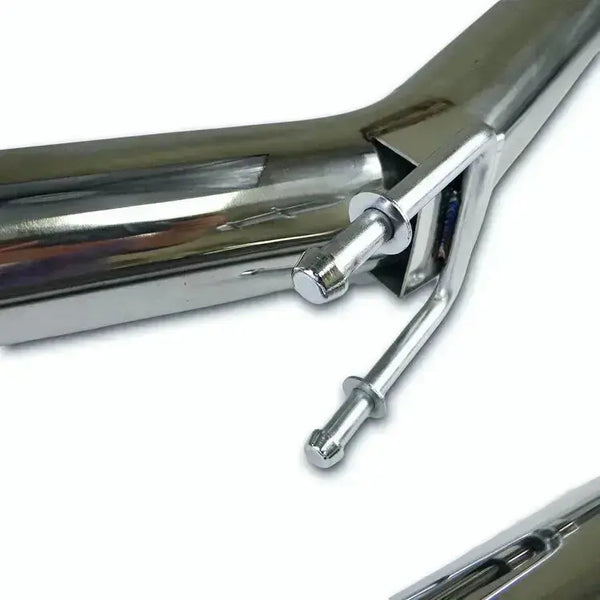
The engine moves under load. The exhaust does not like being used as a solid brace. A good flex section helps absorb movement and protects welds, flanges, and the rest of the exhaust from stress cracks. Ignore the flex section and you may hear the mistake later as a buzz, tick, or broken weld.
Why Cheap Test Pipes Cause Leaks and Rattles
Cheap parts usually fail in boring ways: flange angle slightly off, gasket surface not flat, O2 bung in a bad spot, weak hardware, thin tubing, bad flex section. None of that sounds exciting in a product listing, but in the shop those details decide whether the car leaves clean or comes back angry.
Which Audi Engines and Models Benefit Most from a Downpipe or Test Pipe Upgrade
The phrase Audi Downpipe Exhaust & Test Pipes covers several very different engines. A 1.8T A4, a 2.0T A3, a B5 S4 2.7T, and a B8 S4 3.0T do not use the same exhaust logic. Same brand. Different animals.
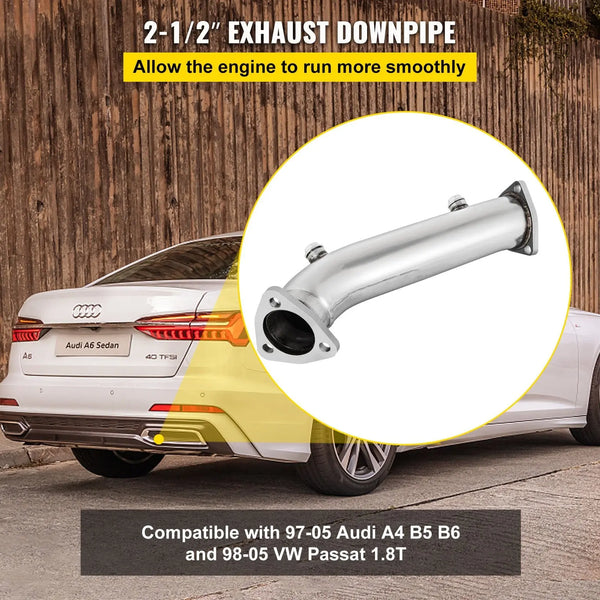
Audi/VW 1.8T Downpipes: A4 B5/B6, Passat, S3, TT, and Early Turbo Builds
The 1.8T is one of the classic Audi/VW turbo platforms. It responds well to smart breathing mods because the factory turbo and exhaust path can feel restrictive once boost and tuning increase. A downpipe upgrade can help spool, mid-range response, and exhaust tone.
But here is the trap: not all 1.8T cars are laid out the same. A longitudinal A4 1.8T is not the same as a transverse Golf, Jetta, TT, or A3-style layout. Before buying, check chassis, year, engine code, turbo outlet, transmission, and drivetrain. Quattro and FWD routing can also change the story.
1.8T A4 B5/B6 and VW Passat Fitment Notes
Longitudinal 1.8T cars place the engine front-to-back. That changes pipe routing and clearance. Many new owners see “1.8T” and think the parts interchange. They often do not. Check the flange, lower connection, O2 sensor placement, and whether the pipe is designed for your exact chassis.
1.8T S3 / TT / K03 and K04-Style Builds
On K03 and K04-style setups, a properly matched downpipe helps the turbo breathe without turning the car into an unpleasant daily. For street cars, pipe size and catback pairing matter. Too loud, too raspy, or badly fitted is not performance. It is just noise with regret attached.
Audi/VW 2.0T Downpipes: A3 8P, Golf GTI, Jetta, and Similar Turbo Builds
The Audi A3 2.0T shares a lot of upgrade culture with VW GTI and Jetta 2.0T owners because these cars often use closely related turbocharged engine families and front-wheel-drive or Haldex-style platform layouts. That overlap is useful, but it can also get people in trouble. A pipe that fits one 2.0T chassis may not fit another just because the engine badge looks familiar.
For a tuned 2.0T, the downpipe is often one of the biggest hardware changes after software. On a typical Stage 2-style setup, a good downpipe can support stronger boost response and better top-end flow. But do not skip the boring checks: engine code, chassis generation, turbo outlet, transmission, O2 sensor count, and outlet diameter.
Audi A3 2.0T and VW GTI/Jetta Fitment Notes
A3, GTI, and Jetta owners often compare similar-looking downpipes, but exact fitment still depends on the model year, chassis, engine code, turbo outlet, transmission, and exhaust connection. Do not buy a pipe just because someone online said, “It fits a 2.0T.” That sentence has caused a lot of garage-floor regret.
2.0T Tuning and CEL Expectations
A 2.0T with a catless pipe can easily trigger catalyst-efficiency codes. A catted pipe can still trigger a CEL if the catalyst, O2 position, ECU calibration, or drive cycle does not line up. Do not believe anyone who says “all you need is this one spacer” like it is magic. Sometimes it works. Sometimes it does not. And it does not automatically make the car legal.
Audi 2.7T BiTurbo Downpipes: S4 B5, A6 C5, and Allroad C5
The 2.7T BiTurbo is a different beast. Two turbos. Two downpipes. Tight packaging. Old hardware. Heat everywhere. This platform rewards good exhaust flow, especially on K04, hybrid, or RS6-style turbo builds, but installation is not something to take lightly.
On a healthy 2.7T with upgraded turbos and proper tuning, restrictive stock-style downpipes can become a real choke point. Larger, smoother downpipes help the turbos discharge exhaust more efficiently. The gains can be meaningful, but only when the rest of the setup is ready to use the airflow.
Why 2.7T Downpipes Are Different From Single-Turbo Pipes
A 2.7T downpipe kit usually comes as a pair, and each side has to route around a crowded engine bay and drivetrain layout. Flange angle, pipe taper, transmission clearance, heat shielding, and connection style all matter. A small mistake on one side can ruin the whole install.
K03, K04, and RS6-Style Turbo Upgrade Considerations
Many 2.7T owners shop by turbo type, not just by model year. K03 replacement cars, K04 Stage 3-style cars, and RS6-style turbo builds may have different flow needs. Before buying, confirm turbo outlet style, lower exhaust connection, pipe diameter, and whether the part supports your actual build plan.
Installation Reality on the B5 S4 / C5 A6 / Allroad
Old 2.7T hardware can fight you. Rusted nuts, seized O2 sensors, tight bellhousing access, cooked heat shields — all normal. I have seen “one afternoon” downpipe jobs turn into a two-day mess because one sensor rounded off and one flange nut decided it wanted to become part of the car forever.
Audi 3.0T Test Pipes and Downpipes: S4 B8/B8.5, S5, A6, A7, Q5, and SQ5
The Audi 3.0T is supercharged, not turbocharged, so do not talk about turbo spool here. The upgrade logic is different. On 3.0T cars, test pipes and downpipes are more about exhaust flow, heat reduction, sound, and supporting pulley/tune setups.
A B8/B8.5 S4 or S5 with intake, pulley, tune, heat exchanger, and exhaust work can become a very strong street car. But the catalytic area on 3.0T cars sees serious heat, especially when power levels rise. That is why many owners research test pipes, high-flow cats, and downpipe options after hearing rattles, smelling heat, or planning a more aggressive tune.
B8/B8.5 S4 and S5 3.0T Upgrade Path
For S4 and S5 3.0T owners, exhaust upgrades often happen alongside ECU/TCU tuning, pulley ratios, intake upgrades, and heat exchanger improvements. A downpipe or test pipe can sharpen the sound and reduce restriction, but the car needs to be treated as a system. Heat control matters. Fuel quality matters. Software matters.
A6/A7/Q5/SQ5 3.0T Fitment Differences
Do not assume every 3.0T pipe fits every 3.0T car. Sedans, sportbacks, and SUVs can have different exhaust routing, wheelbase packaging, subframe clearance, and installation access. Same engine family does not always mean same part.
Audi RS4 and High-Performance Audi Models: Fitment Must Be Exact
RS models and performance trims need extra caution. Engine layout, exhaust routing, flange design, and space around the drivetrain can differ from mainstream A4/S4 applications. If you own an RS4 or another high-performance Audi trim, check the product fitment details carefully before ordering anything labeled broadly as “Audi downpipe.”
Fitment Checklist Before Buying an Audi Downpipe
This is the boring part that saves money. Before buying, slow down and check the details. Audi fitment mistakes are common because model names overlap, engine codes get confusing, and VW/Audi shared platforms make people overconfident.
- Year: confirm the exact model year, not just generation nickname.
- Chassis: B5, B6, B7, B8, 8P, C5, C6, and other chassis codes can change fitment.
- Engine: 1.8T, 2.0T, 2.7T, and 3.0T use different exhaust layouts.
- Drivetrain: Quattro and FWD routing may not be the same.
- Transmission: manual and automatic cars may have different clearance issues.
- Turbo or catalytic layout: check turbo outlet, cat position, and flange style.
- O2 sensors: confirm sensor count, position, and wiring reach.
- Outlet connection: make sure the downpipe matches the mid-pipe or catback connection.
Real shop warning: A lot of new DIY guys watch one clean install video and go straight at the O2 sensor with the wrong wrench. I have seen sensors rounded off, wires twisted like phone cords, and fresh downpipe threads ruined before the old pipe even hit the floor. My rule is simple: soak the hardware first, use the correct O2 sensor socket, support the exhaust, and have fresh gaskets ready. If the car has 120,000 miles on it, assume at least one bolt is going to act like it hates you.
Emissions, Catalytic Converters, CEL, and Street-Legal Warnings
No sugarcoating here. Downpipes and test pipes can create emissions problems if used the wrong way. A car can run strong and still fail inspection. A car can have no visible smoke and still fail readiness. A car can have the check engine light turned off and still not be legally compliant.
Important warning: Removing, disabling, or bypassing emissions equipment on a street-driven vehicle may violate federal, state, provincial, or local emissions laws. Catless downpipes and test pipes are often intended for off-road, racing, or competition use only. Always check the rules where the vehicle will be driven and inspected.
Will a Catless Audi Downpipe Trigger a Check Engine Light?
Often, yes. A catless setup can trigger catalyst-efficiency codes because the rear O2 sensor sees exhaust behavior outside the factory target range. On many Audi/VW platforms, P0420 or P0430-style codes are common after a test pipe or catless downpipe install.
Does a Catted Downpipe Guarantee No CEL?
No. A catted downpipe can reduce CEL risk compared with a catless pipe, but it does not guarantee a clean dash. Catalyst quality, sensor placement, tune, ECU sensitivity, and drive cycle all matter. Anyone promising “zero CEL forever” is talking too clean for a dirty job.
Can You Pass Emissions With an Audi Downpipe?
It depends on the exact part, catalytic converter status, OBD readiness monitors, local testing rules, and how the vehicle is used. Some areas check only OBD readiness. Some do visual inspections. Some do both. If the car needs to pass street inspection, plan the exhaust around that before buying.
Why “No CEL” Is Not the Same as Legal Compliance
A check engine light is only one signal. Turning off a warning, using a spacer, or changing software behavior does not automatically make a vehicle emissions-compliant. That difference matters. Especially if the car is registered, inspected, and driven on public roads.
Installation Difficulty: What Audi Owners Should Expect
Some downpipe jobs are reasonable. Some are miserable. A transverse 2.0T car with lift access can be fairly straightforward for an experienced DIY owner. A rusty 2.7T BiTurbo car can make a grown man stare silently at the ceiling for five minutes.
DIY-Friendly on Some Cars, Frustrating on Others
If you have a lift, proper sockets, extensions, swivel joints, an O2 sensor tool, and patience, some Audi/VW downpipe installs are doable. If you are working on jack stands with rusty hardware and no backup plan, be honest. Paying a shop once may be cheaper than breaking three things and paying a shop anyway.
Common Tools and Prep Work
- Penetrating oil applied before the job, not five seconds before the wrench slips.
- O2 sensor socket or proper sensor wrench.
- Long extensions and swivel joints.
- Fresh gaskets, clamps, and hardware.
- Exhaust hanger tool or pry tool.
- Gloves, eye protection, and time. More time than the video said.
Common Installation Problems
The usual enemies are seized O2 sensors, rounded nuts, broken studs, gasket leaks, flange misalignment, exhaust rattles, heat shield contact, and sensor wires sitting too close to hot tubing. After installation, always check for leaks and rattles after the first full heat cycle.
Supporting Mods That Make an Audi Downpipe Work Better
A downpipe works best when the rest of the build makes sense. Do not throw one part at the car and expect the whole system to become perfect.
Performance Tune
Many Audi downpipe setups work better with software calibrated for the hardware. This is especially true when changing catalyst flow, pipe diameter, or turbo behavior. Just remember: tuning may help drivability and performance, but it does not erase emissions responsibility.
Catback Exhaust
A catback changes the final sound and can reduce downstream restriction. Pairing a downpipe with a catback can make the car sound much more aggressive. Sometimes too aggressive. If you daily the car, think about drone before chasing volume.
Intercooler or Heat Exchanger Upgrades
Turbo 1.8T and 2.0T cars often benefit from better charge-air temperature control when power rises. Supercharged 3.0T cars often benefit from heat exchanger upgrades. More airflow and more boost usually mean more heat. Heat is where power goes to die.
Fresh Gaskets, Clamps, Hangers, and O2 Sensors
Do not reuse destroyed hardware and then blame the pipe for leaking. Fresh gaskets, clamps, hangers, and healthy O2 sensors can make the difference between a clean install and a ticking, rattling mess.
How to Choose the Right Flashark Audi Downpipe
The right Flashark downpipe or test pipe is the one that matches your exact car and your real use case. Not the loudest. Not the biggest. Not the one some random comment said “fits all Audis.”
For Daily Drivers
Prioritize fitment, controlled sound, lower smell, and emissions awareness. If a catted option is available and fits your goals, it is usually easier to live with than a full catless setup.
For Weekend Street/Track Builds
Balance flow, sound, tune compatibility, heat management, and inspection rules. A weekend car can tolerate more noise, but nobody enjoys a bad rattle under load or a cabin that smells like unburned fuel at every stoplight.
For Big-Turbo or Stage 3-Style Builds
Focus on pipe diameter, turbo outlet compatibility, V-band or flange quality, heat control, and how the downpipe connects to the rest of the exhaust. This matters a lot on 2.7T K04, hybrid, and RS6-style builds.
For Sound-Focused Owners
If your main goal is sound, choose carefully. A downpipe can deepen the tone, but a catless pipe with an aggressive catback can get loud fast. Great for some owners. Annoying for others. Be honest about how and where you drive.
Final Garage Advice Before You Choose an Audi Downpipe
Audi Downpipe Exhaust & Test Pipes can wake up the car when the part matches the platform. The right setup can support better response, stronger flow, sharper sound, and a cleaner tuning path. The wrong setup can bring leaks, CEL issues, inspection problems, and installation pain.
So here is the garage-floor advice: match the pipe to the exact chassis, engine, drivetrain, turbo or catalytic layout, sensor setup, and driving purpose. Then worry about sound and power. Flashark gives Audi/VW owners a practical way to upgrade the exhaust path, but the smartest build always starts with fitment.
FAQ: Audi Downpipe Exhaust & Test Pipe Questions
Q1: What does a downpipe do on an Audi?
A1: A downpipe routes exhaust gases from the turbocharger or catalytic section toward the rest of the exhaust system. An upgraded Audi downpipe can reduce restriction, improve response, support tuning, and make the exhaust tone more aggressive.
Q2: Is an Audi test pipe the same as a catless downpipe?
A2: The terms often overlap, but they are not always identical. A test pipe usually replaces a catalytic-converter section, while a downpipe may describe a larger pipe assembly depending on the platform.
Q3: Will a downpipe make my Audi faster?
A3: It can, especially on tuned turbo platforms. Many 1.8T and 2.0T setups see stronger response and may support roughly 15–25 whp gains with proper tuning, but results depend on the engine, turbo, fuel, software, and supporting parts.
Q4: Do I need a tune after installing an Audi downpipe?
A4: Many cars run better with software matched to the downpipe, especially if the catalyst flow or pipe diameter changes. A tune may also affect CEL behavior, but it does not automatically make the vehicle emissions-compliant.
Q5: Will a catless downpipe cause a check engine light?
A5: Often, yes. Catless downpipes and test pipes can trigger catalyst-efficiency codes because the rear O2 sensor detects exhaust behavior outside the factory range.
Q6: Can a catted downpipe still cause a CEL?
A6: Yes. A catted downpipe can still cause a CEL depending on catalyst quality, sensor location, ECU sensitivity, tune, and drive cycle.
Q7: Is a catless downpipe legal for street use?
A7: In many places, removing or bypassing emissions equipment on a street-driven vehicle can violate emissions laws. Catless downpipes and test pipes are commonly intended for off-road, racing, or competition use only.
Q8: What is better for an Audi: catted or catless downpipe?
A8: A catted downpipe is usually better for daily drivers who want less smell, lower noise, and reduced CEL risk. A catless downpipe usually offers maximum flow and sound but brings more emissions, inspection, smell, and CEL concerns.
Q9: How much horsepower does an Audi downpipe add?
A9: Gains vary widely. A tuned 2.0T may see around 15–25 whp support from a proper downpipe setup, while stock or lightly modified cars may see smaller gains. Bigger turbo builds can benefit more if the rest of the setup supports the airflow.
Q10: Will an Audi downpipe make the car too loud?
A10: It depends on the pipe and the rest of the exhaust. A catted downpipe usually sounds deeper and more controlled, while a catless pipe can be much louder and sharper, especially with an aggressive catback.
Q11: Does an Audi A3 downpipe fit a VW GTI or Jetta?
A11: Some Audi and VW platforms share similar engines, but fitment is not guaranteed. Always check year, chassis, engine code, turbo outlet, transmission, O2 sensor layout, and exhaust connection before buying.
Q12: Are 1.8T and 2.0T Audi downpipes interchangeable?
A12: Usually no. Engine generation, chassis layout, turbo flange, O2 sensor placement, and exhaust routing can be different. Do not buy by displacement alone.
Q13: Why does my Audi smell more after installing a test pipe?
A13: A test pipe reduces or removes catalytic conversion in that exhaust section, so more raw exhaust smell can reach the tailpipe. The smell is usually strongest during cold starts, idle, and low-speed driving.
Q14: Can I install an Audi downpipe at home?
A14: Some experienced DIY owners can, especially with the right tools and lift access. Older Audis, rusty hardware, tight clearances, and seized O2 sensors can make the job much harder than expected.
Q15: What should I replace during downpipe installation?
A15: Inspect or replace gaskets, clamps, bolts, exhaust hangers, and worn O2 sensors. Reusing damaged hardware is one of the fastest ways to create leaks and rattles.